Fagus sylvatica - Beech hedging
✓ Native
✓ Excellent winter screening
✓ Suitable for formal clipping
✓ Wildlife friendly
✓ Sun or partial shade
✓ Mature hedging available
Plant Specification
Growth rate: Moderate
Foliage: Deciduous, often retaining leaves in winter
Foliage colour: Fresh green → deep green → copper/bronze
Typical hedge height: 1.2–4m+
Position: Full sun or partial shade
Maintenance: Moderate
Wildlife value: High
UK Native: Yes
Best for: Formal hedging, boundaries, screening, traditional gardens and larger landscapes
Appearance & Character
Overall character: Traditional, elegant and natural
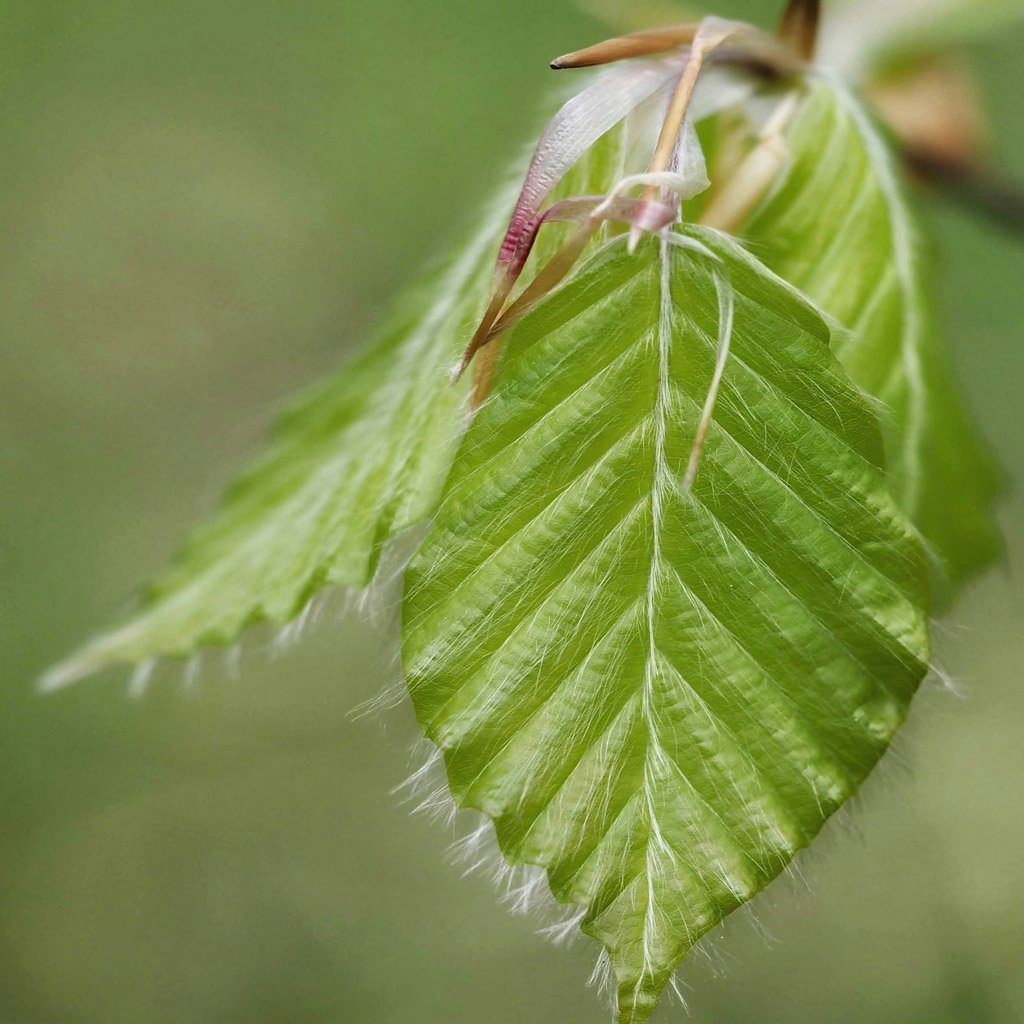
Leaf shape: Oval with gently undulating edges
Summer colour: Fresh to medium green
Autumn colour: Gold, bronze and copper
Winter appearance: Copper-brown retained foliage on established clipped hedges
Texture: Fine to medium
Habit: Dense and highly responsive to clipping
Elegant • Seasonal Colour • Dense Screening • Native
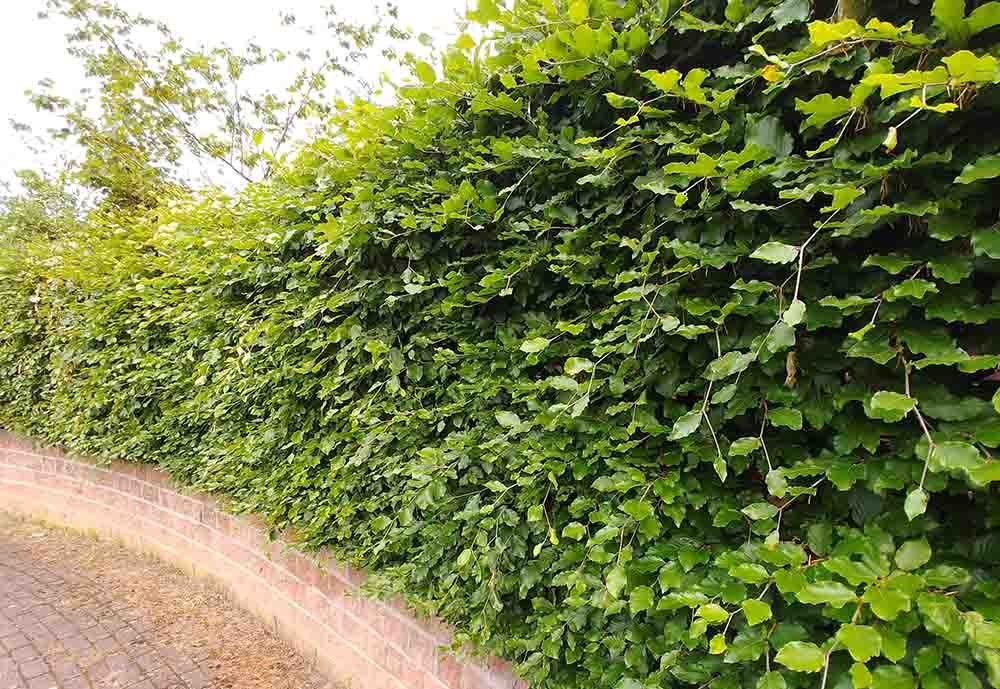
Green beech, Fagus sylvatica, is a classic British hedging plant valued for its fresh spring growth, dense summer foliage and warm copper-brown autumn colour.
Although beech is deciduous, a regularly clipped hedge will often retain much of its dried foliage through winter. This gives it greater winter structure and screening than many other deciduous hedges.
Beech creates a refined formal hedge but can also suit rural, traditional and wildlife-friendly gardens. Landscaping Emporium supplies beech hedging in a choice of plant sizes and stock types, with professional planting available across North West England.
Choose your beech hedging
Best-value option for seasonal planting
Available approximately October–March
Larger plants for greater initial impact
Available approximately October–March
Best-value option for seasonal planting
Available approximately October–March
Why choose green beech hedging?
Beech is a good choice where you want:
A traditional garden hedge
Fresh green spring foliage
Dense summer screening
Copper and bronze autumn colour
Some retained winter leaves
A formal clipped appearance
A hedge that responds well to regular maintenance
Wildlife value
A long-lasting boundary
A native hedging species
It’s changing seasonal appearance gives beech more visual interest than a permanently green evergreen hedge.
What does beech hedging look like through the year?
Spring
Fresh leaves emerge in a bright, soft green. This is one of the most attractive stages of the beech hedge’s seasonal cycle.
Summer
The foliage develops into a deeper green and forms a dense living screen.
Autumn
Leaves change through yellow, bronze and copper tones.
Winter
A clipped hedge may retain a significant proportion of its dry copper-brown leaves. These remain until new spring growth pushes them away.
This changing appearance makes beech particularly attractive in gardens where seasonal interest is important.
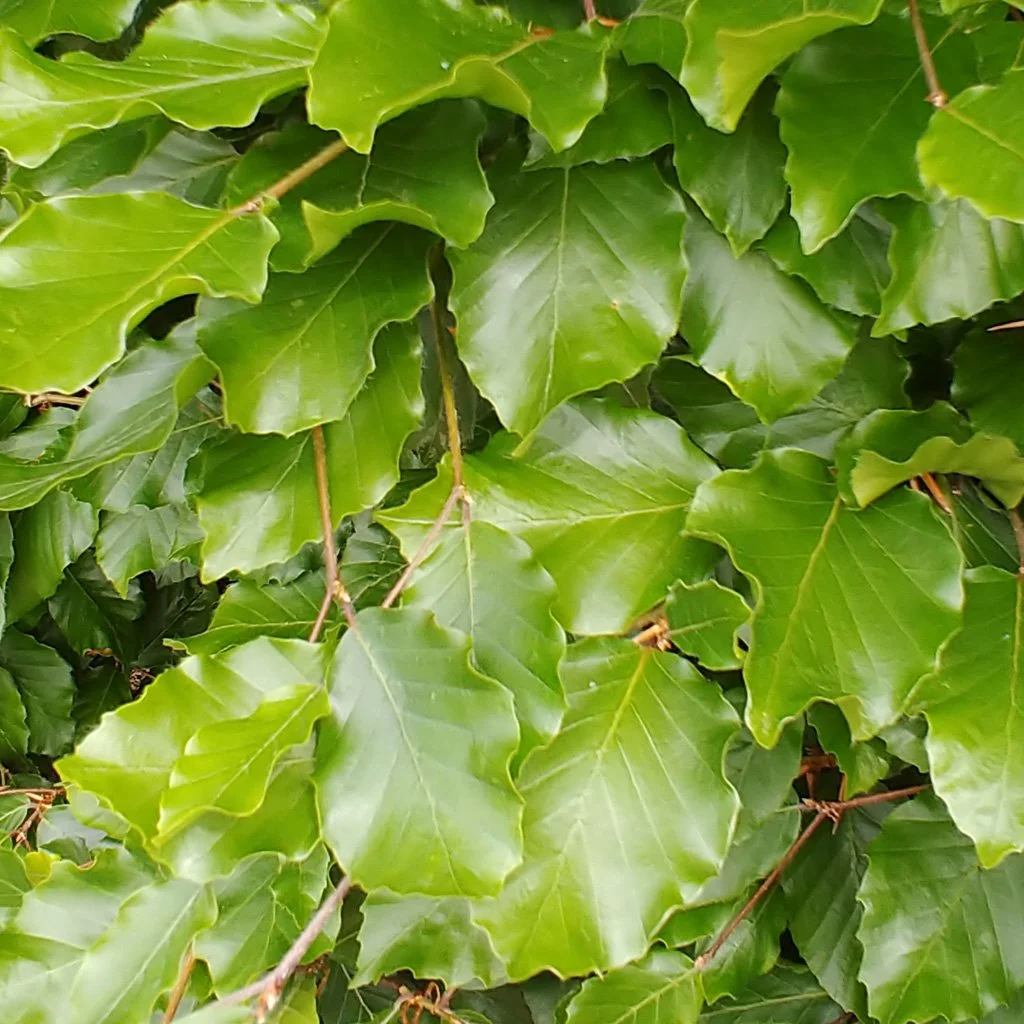
Beech leaves in Summer
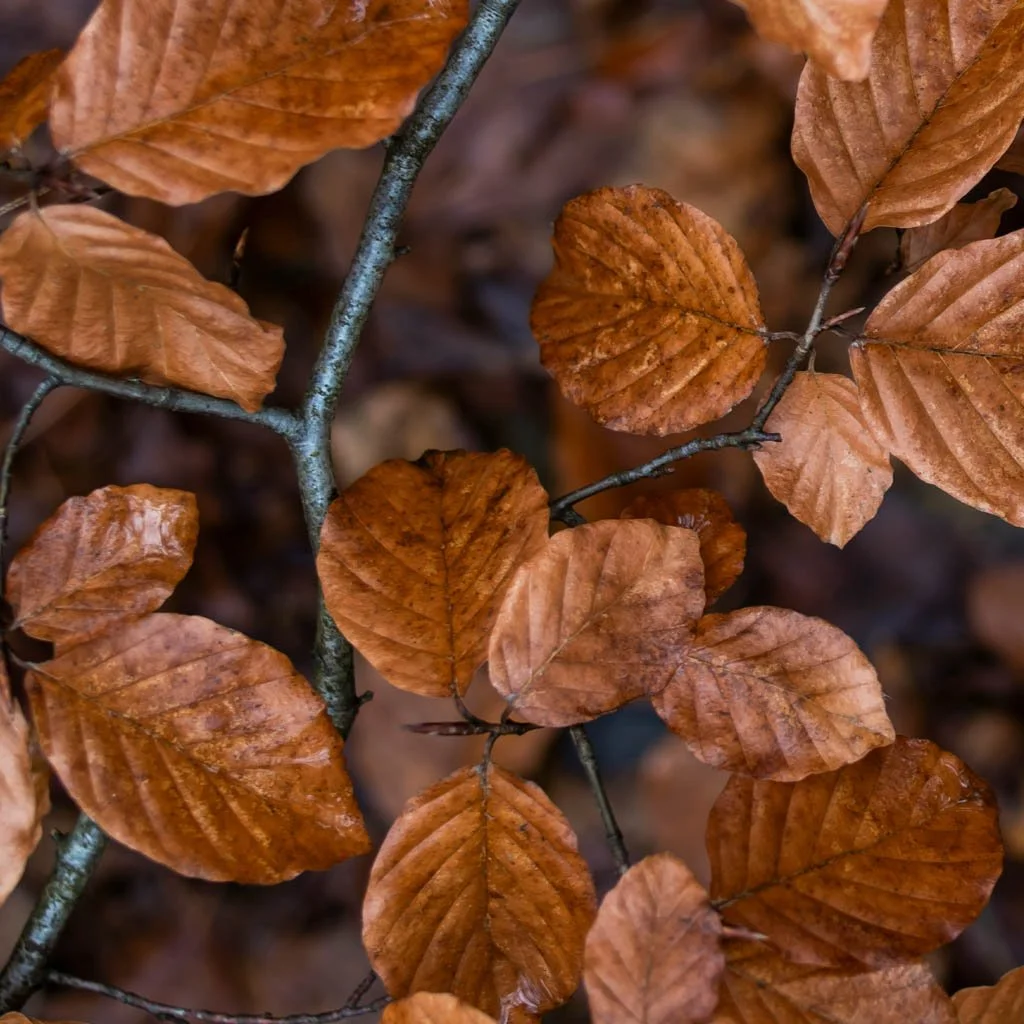
Beech hedge in Winter
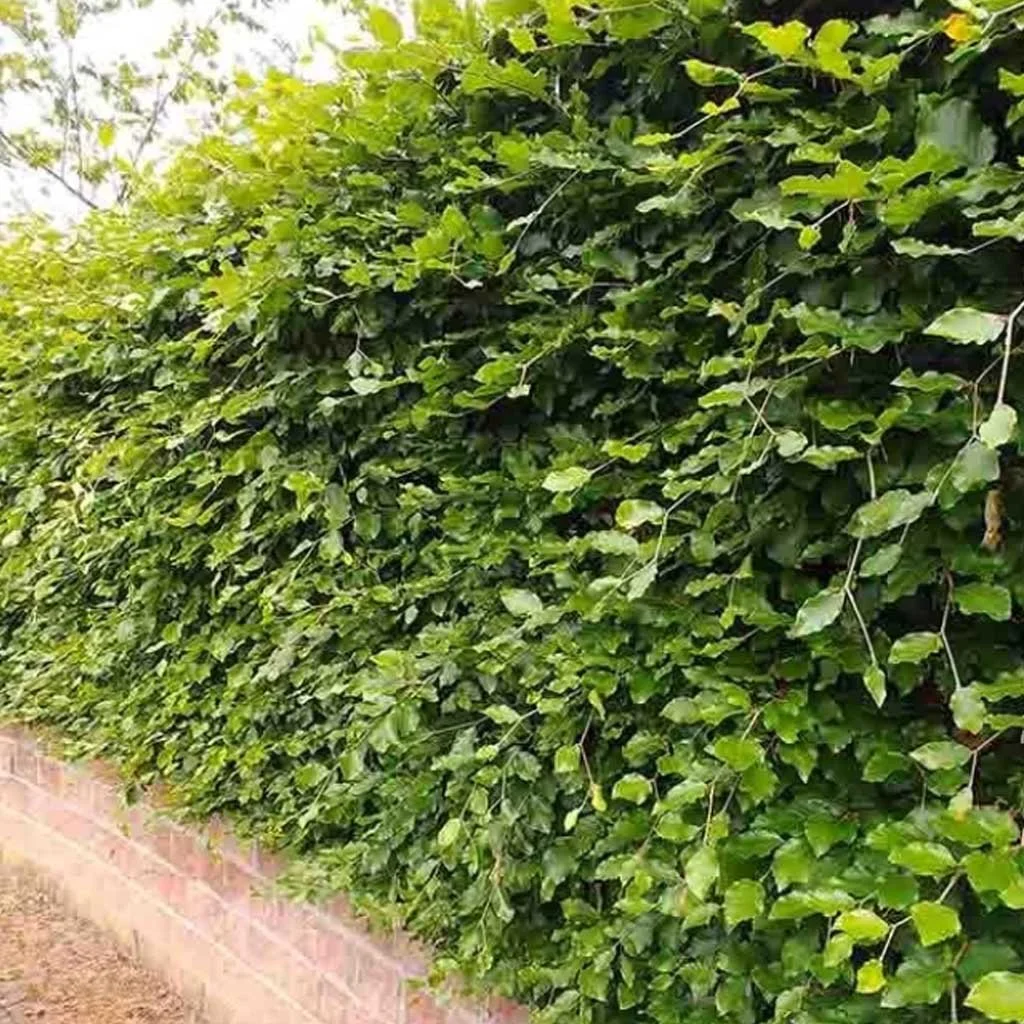
Beech hedge in summer
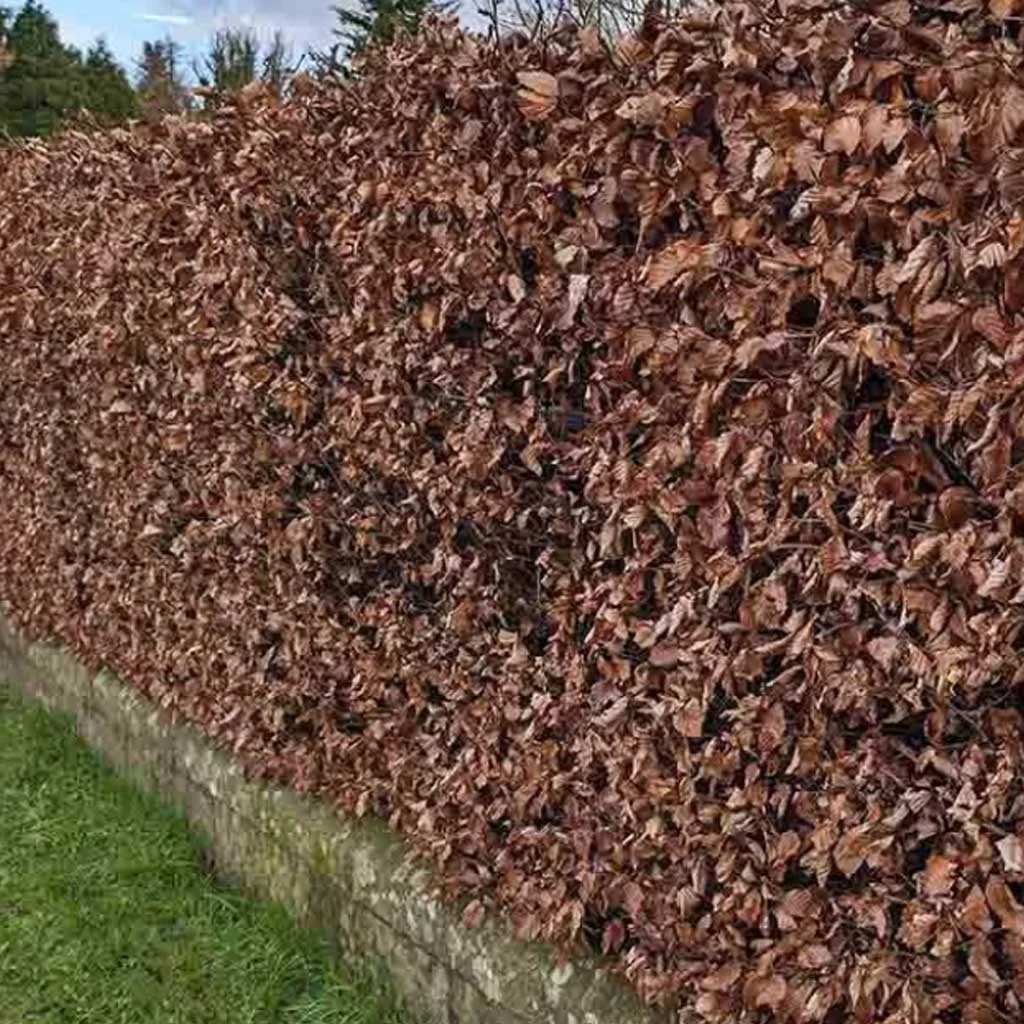
Beech hedge in Winter
Is beech hedging evergreen?
No. Green beech is deciduous, which means its leaves naturally change colour and eventually fall.
However, clipped beech behaves differently from many other deciduous hedges. Regular trimming encourages the hedge to retain a proportion of its dry copper-coloured leaves through autumn and winter.
These leaves are gradually displaced when new growth appears in spring.
Winter leaf retention varies according to:
The age of the hedge
How regularly it is clipped
Exposure
Weather
Plant health
Local growing conditions
Beech should not be sold as an evergreen hedge, but an established clipped hedge can provide useful winter screening and structure.
Is Beech Hedging Right For My Garden?
Beech is a particularly good choice if you want:
✓ A traditional, elegant hedge
✓ Seasonal colour
✓ Good winter screening without using an evergreen
✓ A hedge that can be clipped formally
✓ A native hedging species
✓ A long-lived boundary
You may want to consider another species if:
— Your soil remains wet for long periods → consider Hornbeam
— You require completely evergreen screening → consider Yew or Portuguese Laurel
— You require particularly rapid evergreen screening → consider Cherry Laurel
Is beech suitable for clay soil?
Beech can grow in clay where the soil is reasonably structured and drains adequately.
It is less suitable where heavy clay remains saturated for prolonged periods.
Hornbeam is generally the more dependable choice for heavy, damp or poorly drained clay. Its appearance is similar to beech, but it tolerates more challenging ground conditions.
Read our comparison of beech and hornbeam hedging, or see our guide to hedging for clay soil.
How Quickly Does Beech Hedging Grow?
Once established, Beech has a moderate growth rate and under good growing conditions can typically produce around 30–60cm of new growth per year.
Actual growth will depend upon factors including soil conditions, exposure, available moisture, plant size and establishment.
Good soil preparation and appropriate watering during the establishment period can make a significant difference to the speed at which a newly planted Beech hedge develops.
How Tall Does Beech Hedging Grow?
Left untrimmed, Fagus sylvatica eventually develops into a very large forest tree.
As a hedge, however, it is extremely tolerant of regular clipping and can be maintained at a wide range of heights.
Beech is commonly maintained at approximately 1.2–3 metres, although substantially taller hedges can be created where greater screening or enclosure is required.
This makes it particularly useful where a substantial long-term boundary is required.
Where Should Beech Hedging Be Planted?
Beech performs particularly well in full sun or partial shade and prefers fertile, well-drained soil.
It is adaptable to a range of soil types but generally dislikes persistently waterlogged ground.
Site conditions should therefore be considered carefully before selecting Beech. Where soils remain very wet for prolonged periods, Hornbeam (Carpinus betulus) may sometimes provide a more suitable alternative while achieving a broadly similar visual effect.
Beech or Hornbeam?
Beech and Hornbeam are frequently confused because both can create beautiful formal deciduous hedges and both often retain brown foliage during winter.
There are, however, noticeable differences.
Beech – Fagus sylvatica
Smoother, more refined foliage
Gently wavy leaf margins
Particularly attractive copper winter colouring
Prefers reasonably free-draining soil
Creates an elegant, formal appearance
Hornbeam – Carpinus betulus
More strongly ribbed and textured foliage
Serrated leaf margins
Generally more tolerant of heavier and wetter soils
Slightly more rustic appearance
Excellent for exposed and challenging locations
If your garden has heavier or seasonally wet soil, Hornbeam hedging (Carpinus betulus) may be a more suitable alternative.
How Many Beech Hedging Plants Do I Need?
The correct planting density depends upon the size and form of the plants being supplied and how quickly a dense hedge is required.
Smaller bare-root or rootballed plants may be planted relatively closely, while larger specimens require different spacing.
For larger hedging projects, we can advise on the appropriate plant size, spacing and quantities required to achieve the desired result rather than simply applying the same planting density to every hedge. Check our hedge plant numbers planting guide.
When Should Beech Hedging Be Planted?
Container-grown Beech can potentially be planted throughout much of the year provided soil and weather conditions are suitable and adequate irrigation can be provided.
Bare-root and rootballed Beech are normally planted during the dormant season.
Autumn and winter planting can be particularly advantageous because plants have an opportunity to begin establishing their root systems before the demands of spring and summer growth.
Planting should be avoided when the ground is frozen, waterlogged or otherwise unsuitable.
How Should Beech Hedging Be Maintained?
Once established, Beech is relatively straightforward to maintain.
Regular trimming encourages dense branching and helps create the characteristic solid appearance of a mature Beech hedge.
Established hedges are commonly given their main trim in late summer, which also helps encourage retention of the foliage through winter.
Young hedges may require more formative pruning while they establish to encourage a dense structure from the base upwards.
Adequate watering is particularly important during establishment, especially for larger specimens and during prolonged dry weather.
Beech Hedging for Wildlife
As a native species, Beech can make a valuable contribution to a wildlife-friendly garden.
A mature hedge creates shelter and potential nesting habitat for birds, while its dense branch structure provides cover for a range of garden wildlife.
Allowing surrounding planting to complement the hedge can further increase its ecological value while still maintaining the strong architectural structure that Beech provides.
Available Beech Hedging Sizes
Fagus sylvatica can be supplied in a wide range of sizes depending upon the required budget and how quickly you would like to achieve an established appearance.
Options may include:
Young hedging plants
Bare-root Beech
Rootballed Beech
Container-grown plants
Semi-mature hedging
Mature Beech plants
Instant hedging
For projects where immediate privacy is important, larger plants or mature hedging can dramatically reduce the time required to establish an effective screen.
Mature & Instant Beech Hedging
You don't necessarily have to wait several years for a new Beech hedge to become an established feature.
For suitable projects, larger and semi-mature plants can be sourced to create substantially greater impact from the outset.
Mature hedging can be particularly valuable around terraces, boundaries, driveways and properties where privacy is required immediately.
The larger the plants, however, the more important correct handling, ground preparation, planting, support and establishment watering become.
Professional Beech Hedge Supply & Planting
Choosing the right plants is only part of creating a successful hedge.
Where required, we can provide a complete hedging service including:
Site assessment → Species selection → Plant sourcing → Ground preparation → Planting → Staking and support → Mulching → Establishment advice
We can assess the site and recommend the appropriate species, plant size and spacing for the required appearance rather than simply supplying plants based on height alone.
This is particularly important when using mature or semi-mature hedging, where correct preparation and establishment can have a significant influence on long-term performance.
Frequently Asked Beech Hedge Questions
-
No. Beech is deciduous. Its green leaves change to copper and brown during autumn, although established clipped hedges commonly retain much of this foliage throughout winter.
-
A well-established and regularly clipped Beech hedge can retain a substantial amount of its dead foliage during winter, providing considerably more screening than many completely deciduous hedges.
-
Under suitable conditions, established Beech can typically produce approximately 30–60cm of growth per year.
-
Yes. Beech responds extremely well to clipping and can be maintained as a very neat, architectural hedge.
-
They create very different effects. Laurel provides large, glossy evergreen foliage and generally establishes screening quickly. Beech has finer foliage, seasonal colour and a more traditional, refined character.
-
Beech has smoother foliage and generally prefers better-drained soils. Hornbeam has more heavily ribbed leaves and is often better suited to heavier, wetter or more difficult ground.
-
Larger, semi-mature and mature Beech plants can be used where a more established appearance or faster screening is required, subject to availability and site conditions.
Ready to create your beech hedge?
Best-value option for seasonal planting
Available approximately October–March
Larger plants for greater initial impact
Available approximately October–March
For year-round planting and immediate impact
Generally available year-round
Complete your hedge installation
Bark Mulch — Protect moisture, suppress weeds and improve establishment.
Irrigation — Consistent watering to help establish newly planted hedging.
Professional Planting — Ground preparation, planting, staking, mulching and establishment.
Looking after your new hedge
Correct aftercare is essential to the successful establishment of newly planted hedging. Watering, weed control, mulching and appropriate pruning during the establishment period will help your new hedge develop a strong root system and dense, healthy growth.
Read our guide to caring for newly planted hedging
Need help in choosing? Talk to us: 01942 604976 or drop us an email: hello@landscapingemporium.co.uk.