
Fire
Frequently asked questions.
Fire Pit Frequently Asked Questions
A well-positioned fire pit creates warmth, atmosphere and a natural focal point within the garden. It can extend the time you spend outside and bring people together long after the sun has gone down.
The answers below cover some of the most common questions about choosing, positioning, using and caring for an outdoor fire pit.
You can also explore our complete fire-pit collection.
What is a fire pit?
A fire pit is an outdoor feature designed to contain a controlled fire. Depending on its design, it may be formed as an open bowl, sculptural sphere or built-in garden feature.
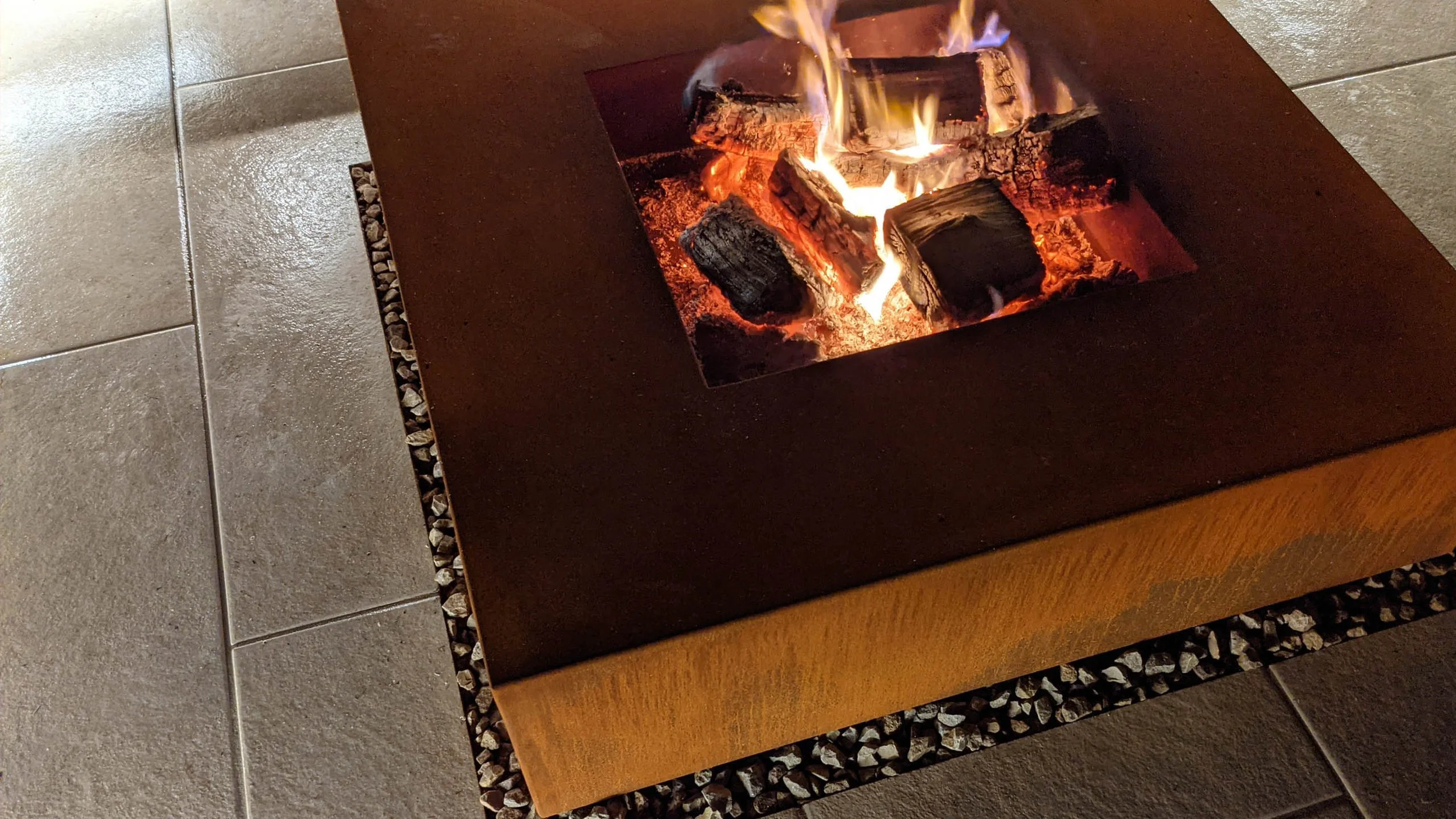
Our sculptural steel fire pits are intended to work as garden focal points when unlit and create dramatic patterns of fire and shadow when in use.
What is a fire-pit sphere?
A fire-pit sphere is a sculptural steel fire pit with decorative designs cut into its surface.
When lit, the flames become visible through the cut-out design, projecting light and shadow into the surrounding garden. As the steel naturally weathers, the sphere develops additional character and becomes part of the landscape.
Fire-pit spheres work particularly well as focal points within patios, gravel areas and dedicated seating spaces.
How do I choose the right fire pit?
Consider the following points:
The size of the garden
The dimensions of the seating area
The number of people likely to gather around it
The surrounding surface
The available clearance
Whether it will remain permanently in position
The amount of heat and visual impact required
The style of the garden
Whether it is primarily a sculpture, heat source or both
A larger fire pit may suit an open garden or substantial patio, while a smaller model may be more appropriate for an intimate seating area.
The fire pit should feel in proportion with its surroundings without restricting circulation around the space.
Where should I position a fire pit?
Position the fire pit outdoors on a stable, level and non-combustible surface, with generous clearance from anything that could catch fire.
Keep it away from:
Buildings
Timber fences
Decking
Overhanging trees
Hedges and shrubs
Pergolas
Parasols
Garden furniture
Sheds
Stored materials
Dry grass and planting
Property boundaries where smoke could cause a nuisance
Always follow the specific positioning and clearance instructions supplied by the manufacturer.
Wind direction should also be considered. Smoke and sparks should not be drawn towards the house, neighbouring properties, seating or planting.
Can I place a fire pit on a patio?
A fire pit can be used on a suitable non-combustible patio, provided it is stable, level and positioned in accordance with the manufacturer’s instructions.
Heat, ash and rust run-off may mark some surfaces. A suitable heat-resistant base or protective plate may therefore be required.
Take particular care with porcelain paving, natural stone and decorative surfaces. Avoid dragging a heavy steel fire pit across the paving, as this could scratch or damage the finish.
Explore our paving and patio options if you are planning a complete fire-pit seating area.
Can I put a fire pit on decking?
A wood-burning fire pit should not be placed directly onto combustible timber or composite decking unless the fire-pit and decking manufacturers expressly approve the arrangement and an appropriate purpose-designed protective system is used.
Heat, falling embers and sparks create a significant fire risk.
The safest approach is usually to create a dedicated non-combustible area using paving, gravel or another suitable fire-resistant material.
Can a fire pit be used beneath a pergola?
A wood-burning fire pit should not be used beneath a pergola, canopy, tree or other overhead structure unless the complete installation has been specifically designed and approved for that purpose.
Heat, smoke and sparks rise directly above the fire. Even an open-sided structure may trap heat or place combustible materials too close to the flames.
Position the fire pit in a fully open outdoor space and follow the manufacturer’s clearance guidance.
How much space is needed around a fire pit?
There should be enough clear space for people to sit and move safely without being uncomfortably close to the fire.
The precise clearance depends on the fire pit, its size and the manufacturer’s instructions. The surrounding layout should also allow users to step away from the fire without encountering furniture, walls or changes in level.
Avoid positioning chairs where people must squeeze behind them or walk directly beside the fire.
What should I burn in a fire pit?
Only burn clean, dry fuel that is suitable for the particular fire pit.
For a wood-burning fire pit, properly seasoned firewood with a low moisture content will generally burn more efficiently and produce less smoke than wet or unseasoned wood.
Never burn:
Household rubbish
Painted or treated timber
MDF, chipboard or plywood
Plastics
Rubber
Upholstered materials
Garden chemicals
Waste oil
Aerosols
Batteries
Anything containing glue, preservatives or an unknown coating
Always follow the manufacturer’s fuel instructions and check any relevant local restrictions.
Can I use wet wood?
Wet or unseasoned wood tends to produce more smoke, less useful heat and increased deposits within the fire pit.
Use clean, dry, properly seasoned firewood and store it somewhere protected from rain.
Can I use coal in my fire pit?
Only use coal or manufactured solid fuel if the fire-pit manufacturer confirms that the model is suitable for it.
Some fire pits are designed specifically for wood and may be damaged by the higher or more concentrated temperatures generated by other fuels.
Check the product instructions before changing fuel type.
Can I cook on a fire pit?
Do not cook on a fire pit unless it has been specifically designed and supplied for cooking.
Decorative coatings, weathered steel, previous fuels and the construction of a sculptural fire pit may make it unsuitable for food preparation.
If cooking is an important requirement, select a product designed and certified for that purpose.
How do I light a fire pit safely?
Before lighting the fire:
Check that the fire pit is stable and correctly positioned.
Remove nearby combustible materials.
Consider the wind direction.
Keep water, sand or another appropriate extinguishing method nearby.
Make sure children and pets are supervised.
Use clean, dry kindling and suitable firewood.
Follow the manufacturer’s lighting instructions.
Never use petrol, paraffin, methylated spirits or other unsuitable accelerants.
Build the fire gradually rather than overfilling the fire pit.
Can I use a fire pit in windy weather?
Avoid using a fire pit during strong or gusty winds.
Wind can carry sparks, embers and smoke beyond the intended area. It can also make the fire burn unpredictably and increase the risk to nearby planting, buildings and neighbouring properties.
If conditions become unsafe after the fire has been lit, stop adding fuel and extinguish it carefully.
Can I leave a fire pit unattended?
No. A lit fire pit should never be left unattended.
A responsible adult should remain present until the fire has been fully extinguished and the remaining fuel and ash are no longer producing heat.
Do not assume a fire is safe simply because visible flames have disappeared.
How do I extinguish a fire pit?
Stop adding fuel well before you intend to leave the area and allow the fire to reduce naturally.
Follow the manufacturer’s extinguishing instructions. Depending on the fire pit, this may involve spreading the remaining embers and applying water, sand or another suitable extinguishing medium carefully.
Be aware that metal surfaces, ash and embers can remain extremely hot for a considerable period after the visible fire has gone out.
Never move, cover or empty the fire pit until it is completely cold.
Are fire pits safe around children and pets?
Fire pits become extremely hot and must be treated as an open fire.
Children and pets should be closely supervised and kept well away from:
Flames
Hot metal surfaces
Sparks
Fuel
Ash
Fire-lighting equipment
The metal can remain hot long after the fire has been extinguished. Do not rely on a child or pet recognising that the fire pit is still dangerous when no flames are visible.
Will a steel fire pit rust?
Many sculptural steel fire pits are intended to develop a natural weathered finish.
Exposure to moisture and air changes the colour of the steel and creates a distinctive patina. This is usually part of the product’s appearance rather than a defect.
Weathering may not develop evenly. Different areas can change colour at different rates depending on rain, heat, exposure and use.
Rust-coloured water can run from weathering steel and may stain pale paving. Consider the final position and surface before installation.
Should I cover my fire pit?
Follow the manufacturer’s care instructions for the specific product.
A cover may reduce the amount of water, leaves and debris entering the fire pit, but it should only be fitted when the metal is completely cold and dry.
Covering damp steel can trap moisture and may affect weathering.
If the fire pit has drainage openings, keep these free from ash and debris.
Can a fire pit be left outside throughout the year?
Many substantial steel fire pits are designed to remain outdoors, but exposure will change their appearance over time.
Check the manufacturer’s guidance regarding:
Weather exposure
Covers
Drainage
Cleaning
Moving and storage
Protective finishes
Coastal locations
If the fire pit remains outside, make sure water can drain freely and leaves are not allowed to accumulate inside it.
How do I clean a fire pit?
Wait until the fire pit and its contents are completely cold.
Remove ash and unburnt debris using appropriate tools and protective gloves. Keep any drainage openings clear.
Avoid using harsh chemicals or abrasive cleaning methods unless recommended by the manufacturer. Sculptural weathered steel is normally intended to retain its natural patina.
Dispose of cold ash responsibly. Ash can conceal hot embers, so it should not be placed into a combustible bin or container until you are certain that it is completely cold.
Will smoke from a fire pit annoy neighbours?
It can. Even where a fire pit is permitted, smoke can cause a nuisance if it repeatedly affects neighbouring homes, washing, windows or seating areas.
To reduce smoke:
Burn only clean, dry fuel.
Do not burn garden or household waste.
Avoid lighting the fire in unsuitable wind conditions.
Keep the fire burning efficiently.
Position it away from neighbouring windows and boundaries.
Do not allow it to smoulder for extended periods.
Be considerate about when and how often it is used.
Check local authority requirements and any rules applying to your property or development.
Can I use a fire pit in a smoke-control area?
Restrictions may apply to the fuels and appliances that can be used in smoke-control areas.
Requirements can vary according to the appliance, fuel and local circumstances. Check the current rules with your local authority before using a wood-burning fire pit if you are uncertain.
Regardless of location, never burn waste or allow smoke to create a nuisance.
Do I need planning permission for a fire pit?
A portable fire pit will not normally require planning permission, but associated structures or substantial construction work may do.
Planning or other permission may be relevant where the project includes:
A large permanent fireplace
A chimney or flue
A covered structure
Raised decking
Significant changes in garden levels
Work at a listed property
Work within a conservation area
Restrictions imposed by a property covenant or development management company
Seek appropriate advice if your project involves more than placing a portable fire pit on an existing suitable surface.
Can a fire pit be incorporated into a garden design?
Yes. A fire pit is most successful when the surrounding space is designed around it.
A complete fire-pit area might include:
A non-combustible paved or gravel surface
Curved or straight garden seating
Space for moveable chairs
Low planting
Subtle garden lighting
Log storage
Safe circulation routes
Shelter from prevailing wind without enclosing the fire
A clear view from the house
Explore our outdoor furniture and garden-lighting collection when planning the wider area.
How large should a fire-pit seating area be?
The space should accommodate the fire pit, the manufacturer’s required clearance, seating and safe circulation.
Consider:
The fire pit’s overall diameter
The number and size of chairs or benches
Space needed to pull chairs back
Safe access into and out of the seating area
Clearance from planting and structures
The direction of smoke
Whether users can move without stepping too close to the fire
Marking out the proposed arrangement on the ground can help determine whether the area is large enough before purchasing the fire pit.
Do fire pits produce much heat?
The heat output depends on the fire pit’s size, design, fuel and the amount of fuel being burned.
An open fire can provide useful radiant warmth nearby, but it should not be treated as a controlled heating appliance. Wind and outdoor temperature will significantly affect how the heat is experienced.
Choose a fire pit for its combination of atmosphere, appearance and warmth rather than expecting it to heat a large outdoor area evenly.
How heavy are sculptural steel fire pits?
Weight varies according to the fire pit’s diameter, steel thickness and design.
Substantial steel fire pits can be extremely heavy. The delivery route and final position should therefore be considered in advance.
Check:
Gate widths
Steps
Narrow paths
Changes in level
Soft ground
Access through buildings
The number of people or lifting equipment required
Whether the fire pit will need to be moved again
Confirm the product dimensions and weight before ordering.
Will my fire pit arrive fully assembled?
This depends on the individual product.
Check the product description and delivery information before ordering. Some sculptural steel fire pits may arrive as complete units, while accessories or bases may be supplied separately.
Where do you deliver fire pits?
Delivery availability and cost depend on the product, destination and access requirements.
Landscaping Emporium supplies distinctive garden fire features across the UK, with additional landscaping and installation services available across North West England.
Contact us before ordering if access is restricted or if specialist positioning may be required.
Can Landscaping Emporium design the surrounding area?
Yes. Landscaping Emporium is brought to you by Kirman Design, an established garden design and landscaping company working throughout North West England.
We can help incorporate a fire pit into a wider garden scheme that may include:
Paving
Decking
Seating
Lighting
Planting
Privacy screening
Sculpture
Water features
Outdoor kitchens
Learn more about Landscaping Emporium and Kirman Design.
Explore our fire-pit collection
Browse our fire-pit collection to compare available designs.
If you need help choosing the right size, checking delivery access or planning the surrounding seating area, contact Landscaping Emporium for practical advice before ordering.
-
There are two types of Eco Firepit Fuel Refills. The refills for new fitments last approximately 8hrs and the specially created retrofit refills last approximately 4hrs.
-
Eco Firepit Fuel refills can be purchased directly from us, either in 4hr or 8hr refills, depending which kind of firepit you have.
-
If your Eco Firepit is not lighting and is not producing a full flame after 10 mins, try screwing up a piece of newspaper or kitchen towel into the size of a golf ball and carefully put it into the melted liquid wax between the side of the drum and the wick – That will get it going. You should only have to do this on the first burn.
The top layer of wax has to be fully melted liquid for the wax to ignite as well as the wick to give full impact flame. The Wick heats up the wax and the wax then burns to full potential and sometimes needs a little help. 1 in a 100 of our Eco Firepit Fuels will be what we call “Flooded” with liquid wax and the wick cannot get to full potential. If your candle is not lighting the above solution will sort it out for you.
-
There is 6.5kg of wax, the part that’s burning turns to liquid (Similar to a normal candle) the rest remains solid until the last hour.
-
100% biodegradable vegetable which has been sustainable sourced from recommended audited suppliers.
-
There are two types of Eco Firepit Fuel Refills. The refills for new fitments last approximately 8hrs and the specially created retrofit refills last approximately 4hrs.
-
The Eco Firepit Fuel is super easy to light. Place the candle in the specially designed holder then light the cardboard wick. If you are lighting for a second time you may need to remove any loose bits of wick before lighting.
-
We suggest that when burning on grass or wooden decking you put a heat resistant tile or stone slab under the burner to avoid it scorching.
-
No! You will need to use the Eco Firepit Kit in your carved Firepit to put the refills in. When it is empty all you do is drop the refill into the empty container and use again.
If there are any other questions or queries which you do not see here, then visit the product page of the item that you are interested in and you will find specific information there and if you can’t find the information you need or you need anything else, please feel free to give us a call to find out more on 01942 604976 or drop us a line at hello@landscapingemporium.co.uk.