Landscaping Emporium | Hedging
Best Hedging Plants for Full Sun
Looking for hedging plants that thrive
in sunny or south-facing gardens?
Explore evergreen, deciduous and
flowering hedges suitable for
positions receiving plenty of
direct sunlight.
Compare our recommended plants,
browse available buying options
and discover how to establish
a healthy hedge in a sunny garden.
Shop Hedging Plants for Full Sun
Sunny garden boundaries can support
many attractive hedging plants,
but soil moisture, drainage and
exposure still matter.
Choose from these six species,
each offering different benefits
for privacy, flowering, wildlife
and garden structure.
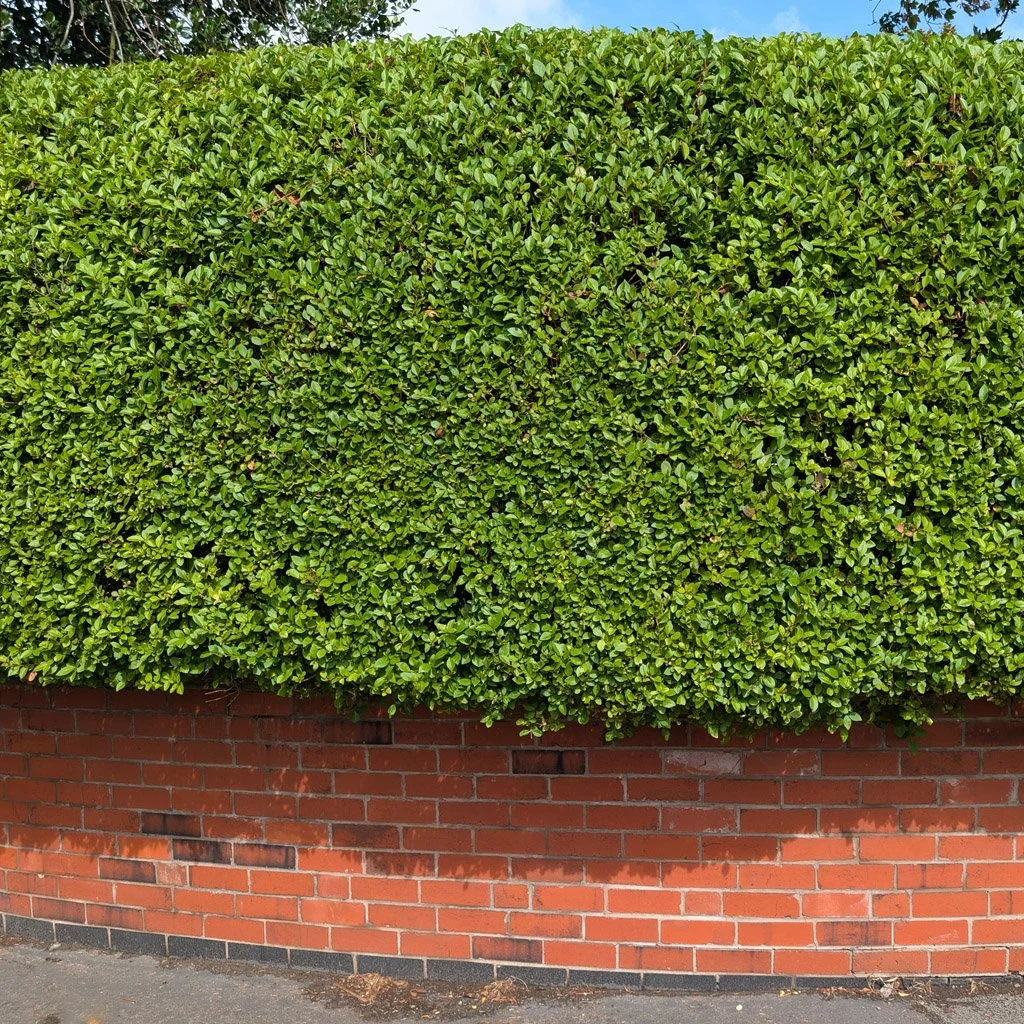
Traditional | Formal Hedging
Green Privet
Ligustrum ovalifolium
An adaptable and relatively
fast-growing hedge for sunny
gardens. Privet creates a
dense, neatly clipped
boundary and performs well
in many adequately drained
soils. It may lose some
leaves during cold winters.
Shop Green Privet →
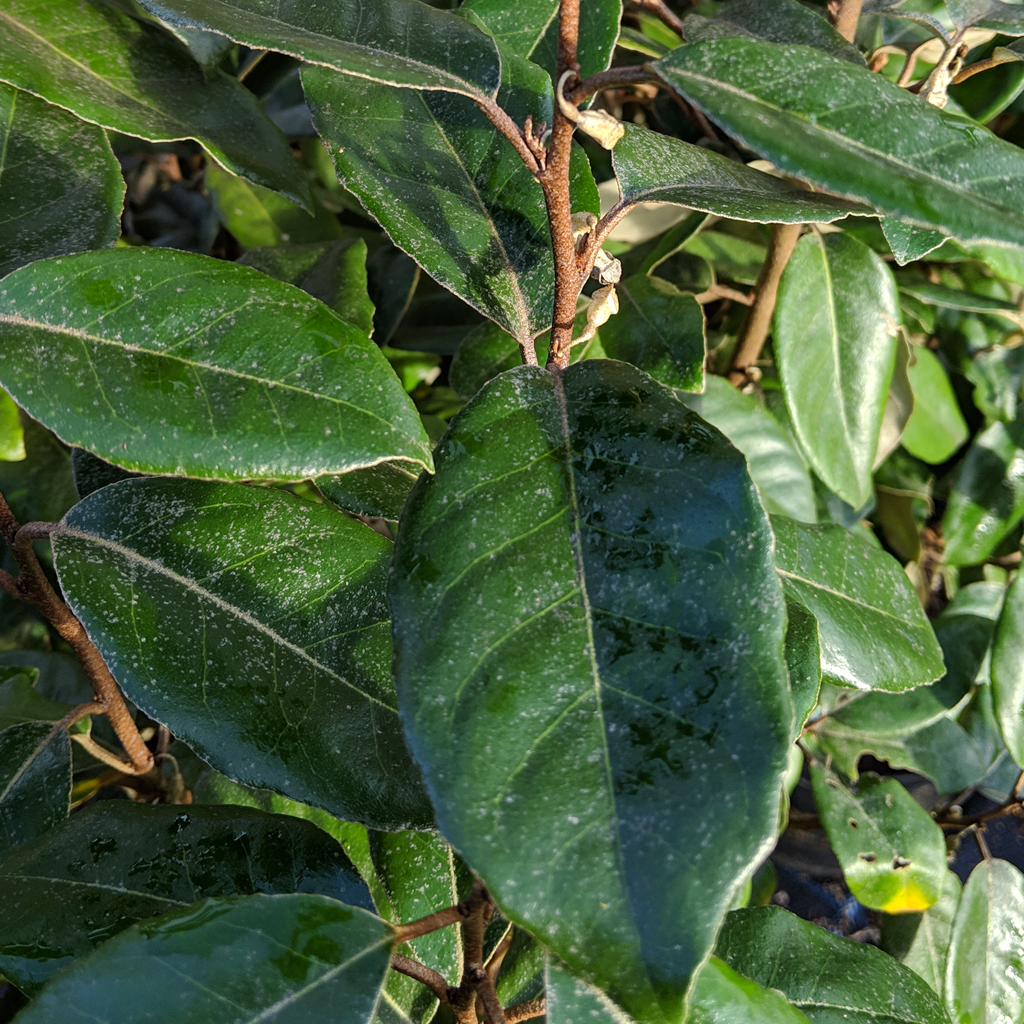
Evergreen | Sunny & Exposed Sites
Oleaster Hedging
Elaeagnus × submacrophylla
A robust evergreen with
attractive silvery-backed
foliage. Oleaster is an
excellent choice for many
sunny, windy and
free-draining locations.
It offers year-round
screening and fragrant
autumn flowers.
View Oleaster Hedging →
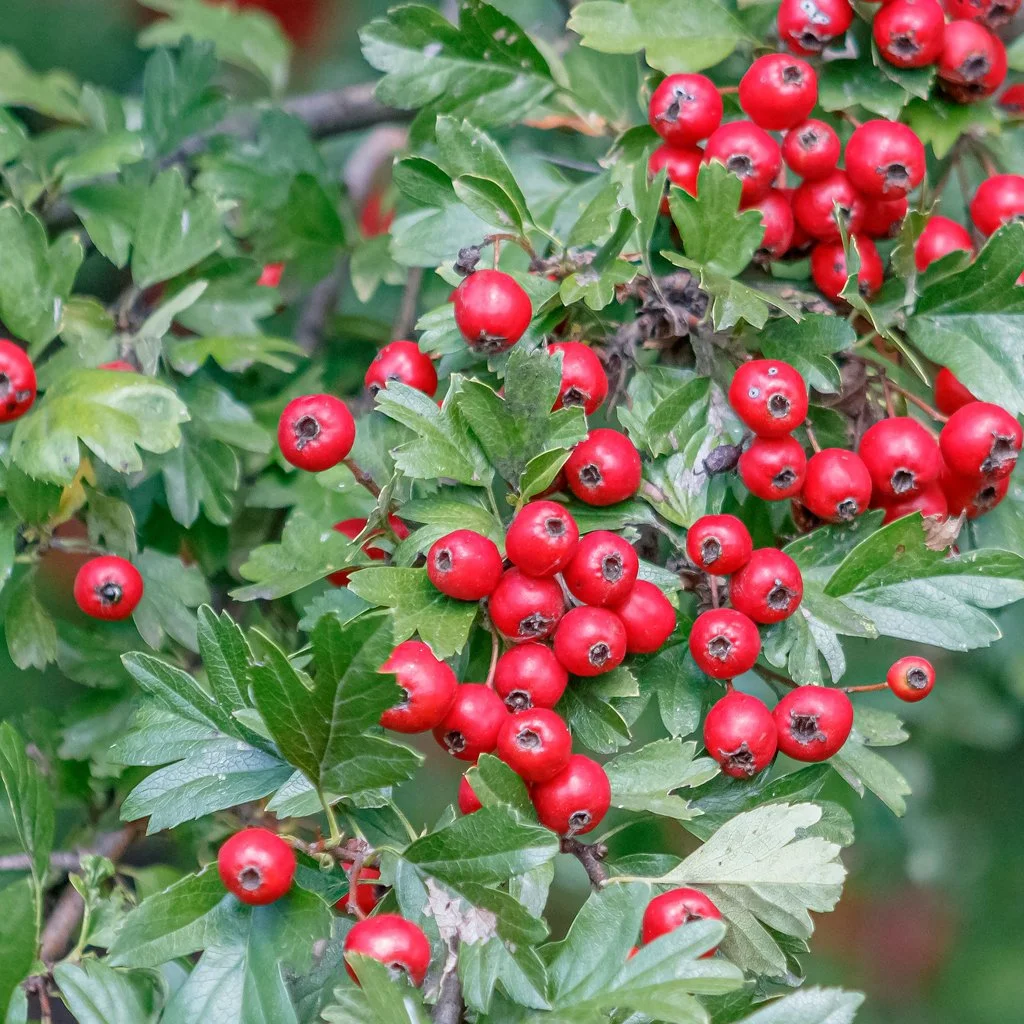
Native | Wildlife | Flowering
Hawthorn Hedging
Crataegus monogyna
A hardy native hedge
particularly useful for
sunny rural boundaries.
Hawthorn develops
dense thorny growth,
white spring blossom
and autumn berries,
providing excellent
wildlife value.
Shop Hawthorn →
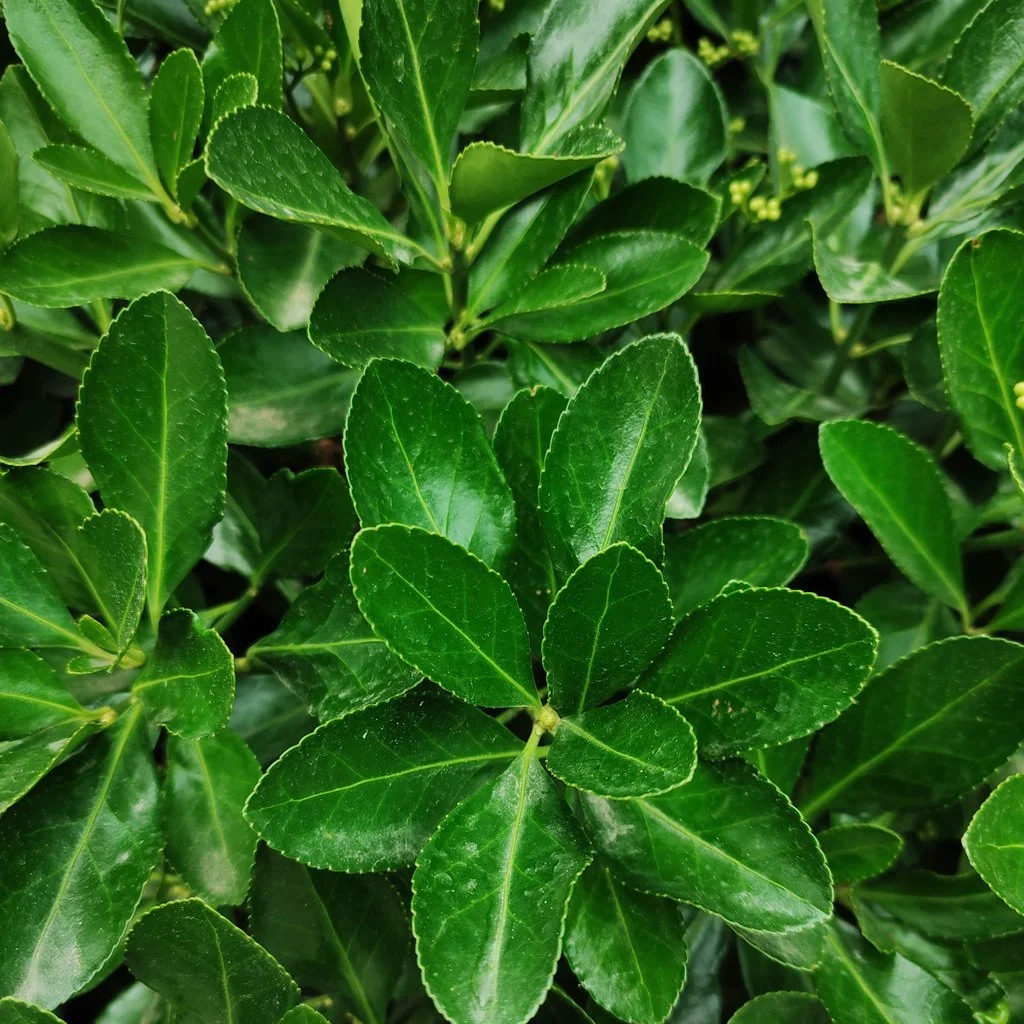
Evergreen | White Summer Flowers
Escallonia 'Iveyi'
Escallonia 'Iveyi'
An attractive flowering
evergreen hedge for
sunny positions.
Glossy foliage is
complemented by clusters
of white summer flowers.
Best suited to adequately
drained gardens with
suitable winter shelter.
View Escallonia Hedging →
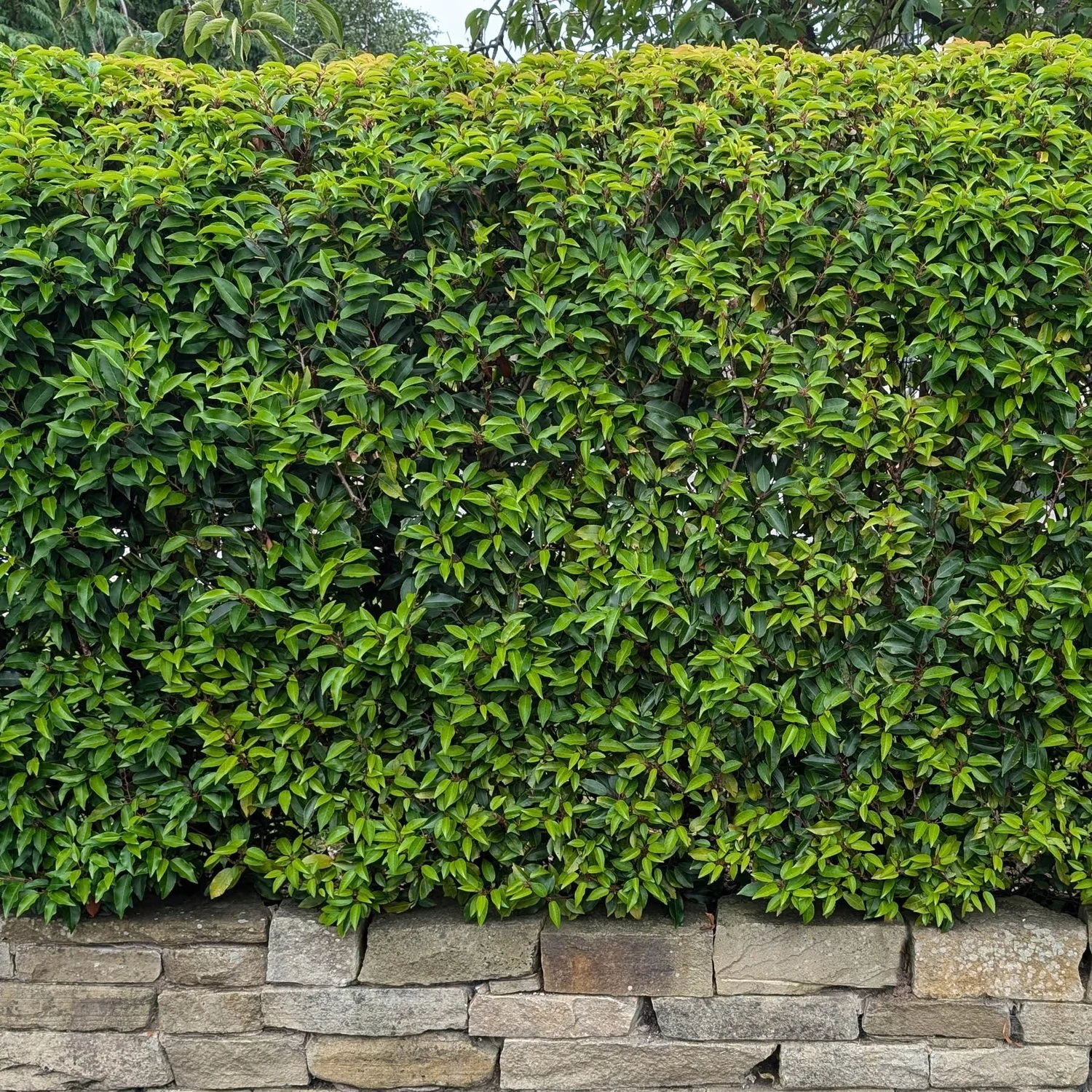
Evergreen | Privacy & Screening
Portuguese Laurel
Prunus lusitanica
An elegant evergreen
hedge with attractive
small, glossy foliage.
Portuguese Laurel
performs well in full
sun when given suitable
soil, moisture and
establishment care.
Ideal for formal privacy.
Shop Portuguese Laurel →
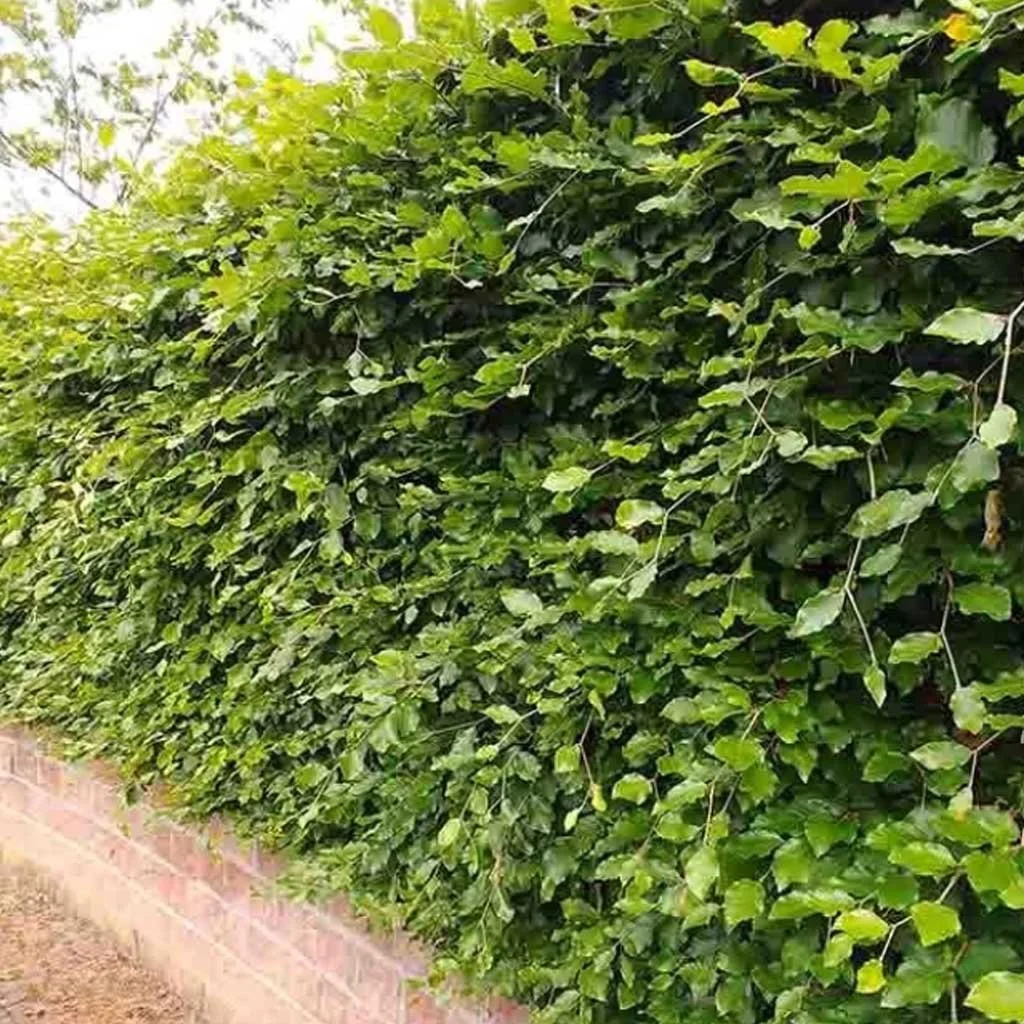
Deciduous | Traditional Hedging
Green Beech
Fagus sylvatica
A traditional formal
hedge that grows well
in full sun on suitable
well-drained soil.
Fresh green summer
leaves turn copper-brown
in autumn. Avoid
severely drought-prone
positions.
Shop Green Beech →
Full Sun Does Not Always Mean Dry Soil
A sunny garden can have heavy clay,
well-drained loam or sandy soil.
The amount of sunlight alone
does not determine which hedging
plant will perform best.
A south-facing boundary may
experience hot summer conditions,
but the soil beneath it could
remain relatively moist.
Conversely, soil beside a
south-facing wall may become
exceptionally dry because of
reflected heat and restricted
rainfall.
Match hedging to both sunlight
and soil conditions, particularly
when selecting larger plants
for immediate screening.
Which Hedge Is Best for a Sunny Garden?
The following comparison
highlights the main benefits
and limitations of each
recommended species.
| Hedging Plant |
Foliage |
Best Feature |
Important Consideration |
| Green Privet |
Semi-evergreen |
Dense, adaptable boundary |
May lose leaves in winter |
| Oleaster |
Evergreen |
Sunny, windy and dry sites |
Allow enough growing width |
| Hawthorn |
Deciduous |
Flowers and wildlife |
Thorny, with limited winter screening |
| Escallonia 'Iveyi' |
Evergreen |
White summer flowers |
Needs suitable winter conditions |
| Portuguese Laurel |
Evergreen |
Refined privacy screening |
Needs suitable moisture |
| Green Beech |
Deciduous |
Traditional formal hedge |
Not ideal for severe drought |
Choosing Hedging for a South-Facing Garden
South-facing gardens often
receive direct sunshine
for much of the day.
This can support strong
growth, attractive foliage
and good flowering.
However, planting conditions
may vary along the same
boundary, particularly
where buildings, walls
and mature trees create
local shade or dry areas.
Evergreen Hedging for Full Sun
Evergreen hedges are useful
where year-round privacy,
screening and structure
are important.
Oleaster and Portuguese Laurel
are attractive choices
for many suitable sunny
positions.
Oleaster can be especially
useful where the site is
windy or relatively dry.
Portuguese Laurel generally
benefits from more reliable
soil moisture during
establishment.
Flowering Hedging for Full Sun
Many flowering hedges perform
best when they receive
sufficient sunlight.
Flowering can be reduced
where plants grow in
excessive shade.
Escallonia 'Iveyi' produces
white flowers in suitable
sunny positions, while
Hawthorn provides spring
blossom and autumn berries.
Browse our
Flowering Hedging Guide
to discover additional plants.
Native Hedging for Sunny Gardens
Native hedging is particularly
valuable for rural gardens
and wildlife-focused
landscapes.
Hawthorn is an excellent
choice for sunny, exposed
boundaries and can be
combined with other
suitable native species.
Read our
Native Hedging Guide
for more options.
Hedging for Hot, Dry and Sunny Gardens
Sunny gardens with sandy
or free-draining soil
can become very dry
during warm weather.
In these situations,
choose plants that can
tolerate periods of
reduced soil moisture
once established.
Oleaster, Hawthorn and
Privet are useful
candidates for many
appropriately drained
and prepared sites.
Beech is less suitable
where the soil suffers
prolonged drought.
Even drought-tolerant
plants require reliable
watering during establishment.
For more detailed advice,
visit our
Hedging for Dry Soil Guide
.
How to Plant Hedging Successfully in Full Sun
1. Assess Your Soil
Check the texture and
drainage of the planting
area before ordering.
Full sun does not
compensate for poor
drainage or extremely
dry, impoverished soil.
2. Prepare the Planting Strip
Remove turf and persistent
weeds. Relieve compaction
where necessary and prepare
a continuous planting area.
3. Choose an Appropriate Plant Size
Larger plants provide
more immediate screening
but often need more
careful watering and
support during establishment.
Smaller plants can be
easier to establish
and more economical
for longer hedge runs.
4. Water Carefully
Newly planted hedging
requires watering even
when the chosen species
tolerates dry conditions.
Check moisture within
the root zone and
water thoroughly as
required rather than
relying on occasional
surface watering.
5. Apply Mulch
Suitable organic mulch
can reduce evaporation
and limit competition
from weeds.
Keep mulch clear of
stems and root collars.
6. Avoid Planting During Extreme Heat
Container-grown plants
can often be planted
across much of the year,
but hot, dry weather
increases establishment
risks and watering demand.
Autumn and spring
are frequently more
favourable planting
periods when conditions
are suitable.
7. Maintain the Hedge
Formative pruning
encourages dense
branching and helps
create a balanced
hedge structure.
Avoid unnecessarily
severe pruning during
periods of drought
or intense heat.
For larger plants,
read our
Hedge Delivery, Access
and Planting Guide
.
Hedging for Sunny Gardens Across North West England
Landscaping Emporium supplies
hedging plants for domestic,
rural and commercial
planting projects across
North West England.
Through Kirman Design,
professional installation
may also be available
in applicable areas
of Lancashire,
the Ribble Valley,
Greater Manchester,
Cheshire and Merseyside.
Whether you are planting
a south-facing garden
boundary, creating
evergreen privacy
or introducing flowering
hedging, we can advise
on suitable species,
plant sizes and
establishment requirements.
Frequently Asked Questions
What is the best hedge for full sun?
Privet, Oleaster,
Portuguese Laurel
and Hawthorn are
useful choices for
many sunny gardens.
The best option
depends on soil,
exposure, privacy
requirements and
available space.
Which evergreen hedges grow well in full sun?
Oleaster and Portuguese
Laurel are good options
for suitable sunny sites.
Escallonia can also
provide evergreen
flowering hedging
in appropriate
sheltered locations.
What is the best flowering hedge for a sunny garden?
Escallonia 'Iveyi'
provides white
summer flowers,
while Hawthorn
produces white
spring blossom
and autumn berries.
Can hedging grow against a south-facing wall?
Yes, but soil beside
walls can become
exceptionally dry
due to reflected
heat and reduced
rainfall.
Choose suitable
plants and provide
reliable establishment
watering.
Is full sun the same as dry soil?
No. A sunny garden
may have moist clay,
fertile loam or
dry sandy soil.
Drainage and
soil moisture
must be considered
separately from
light levels.
Can Beech hedging grow in full sun?
Yes. Beech can grow
well in full sun
where the soil
is sufficiently
fertile and
well drained.
Avoid severely
drought-prone
planting sites.
Do hedges in full sun need more watering?
Sunny and windy
conditions can
increase moisture
loss. Newly planted
hedges may therefore
require particularly
careful watering,
depending on soil
and weather conditions.
When should I plant hedging in a sunny garden?
Autumn and spring
are often favourable
planting periods.
Bare-root and rootballed
plants are generally
available in the
dormant season.
Avoid extreme heat,
frost and unsuitable
soil conditions.
Find the Right Hedge for Your Sunny Garden
Whether you need
evergreen privacy,
flowering hedging
or an attractive
south-facing boundary,
Landscaping Emporium
can help you select
suitable plants.
Explore the full
hedging collection,
compare species
and choose available
plant sizes.
