
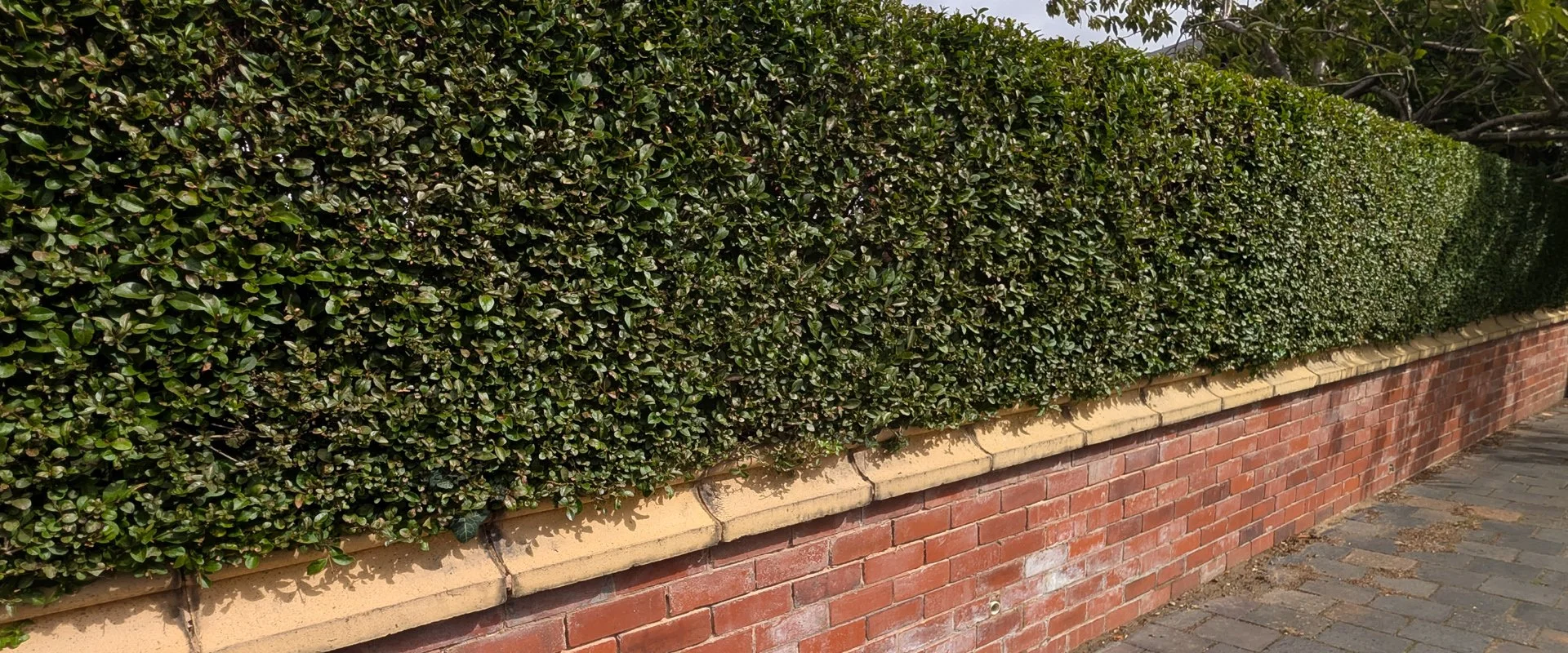
Hedging Plants & Professional Hedge Planting in Ince-in-Makerfield
Quality hedging plants for privacy, replacement garden boundaries and attractive residential landscaping in Ince-in-Makerfield, Higher Ince, Lower Ince and surrounding Wigan areas.
Replacing an old fence with a living hedge can transform the appearance of a garden, creating a softer boundary that develops naturally over time.
Landscaping Emporium supplies evergreen, deciduous and native hedging plants, with professional supply and planting available for suitable projects.
Whether you are working with a narrow residential boundary, an established garden or a newly prepared planting area, choosing the correct species and preparing the ground properly are essential.
Selected by designers. Installed by professionals.
Choosing Hedging for Established Gardens in Ince-in-Makerfield
Ince-in-Makerfield has a mixture of established residential streets and more recently developed areas. Garden sizes, boundary arrangements and ground conditions vary between individual properties.
In a compact garden, a hedge must provide sufficient privacy without occupying too much valuable outdoor space.
Where an existing boundary is being replaced, it is important to check whether old foundations, buried rubble, services or neighbouring structures may restrict the planting area.
Narrow Garden Boundaries
Select species that respond well to clipping and can be maintained at a practical finished width.
Overlooked Patios
Evergreen screening can improve privacy around seating areas where year-round foliage is important.
Replacing Old Fencing
A living hedge can soften a boundary, but requires sufficient rooting space and room for maintenance.
Established Garden Borders
Consider existing shrubs, trees and underground roots before introducing a new hedge line.
Replacing a Garden Fence with a Living Hedge
A hedge can provide an attractive long-term alternative to timber fencing, particularly where a more natural garden boundary is preferred.
However, removing a fence and planting a hedge are not always straightforward operations.
Existing fence posts may be surrounded by concrete, while old wall foundations or buried materials can restrict root development.
Important: Check the Boundary Before Removing Anything
Confirm ownership and any relevant boundary obligations before removing fencing or other structures.
Where a fence is shared or its ownership is uncertain, establish the position with the relevant neighbour before carrying out work.
A new hedge also needs adequate space within the property for growth and future maintenance.
Four Checks Before Planting a Replacement Hedge
Ground preparation is especially important where a new hedge will occupy a previously developed or restricted garden boundary.
Remove Obstructions
Identify old concrete post foundations, buried rubble and other obstacles that could restrict root development.
Check for Services
Establish the likely location of underground electricity, gas, water, drainage and communication services before excavation.
Assess the Soil
Check for compaction, drainage problems and unsuitable imported material. Where contamination is suspected, obtain appropriate professional assessment before disturbing the ground.
Allow Planting Width
Consider the eventual hedge width, distance from structures and access for trimming and maintenance.
Where the existing soil is compacted, preparation may involve loosening suitable ground across the planting area rather than digging isolated, narrow planting holes.
Six Hedging Plants to Consider for Gardens in Ince-in-Makerfield
For restricted residential gardens, selecting a species that tolerates regular clipping is often more important than choosing the fastest-growing option.
The following plants offer different approaches to privacy, wildlife value, formal boundaries and seasonal interest. Not every species will suit every garden or soil condition.
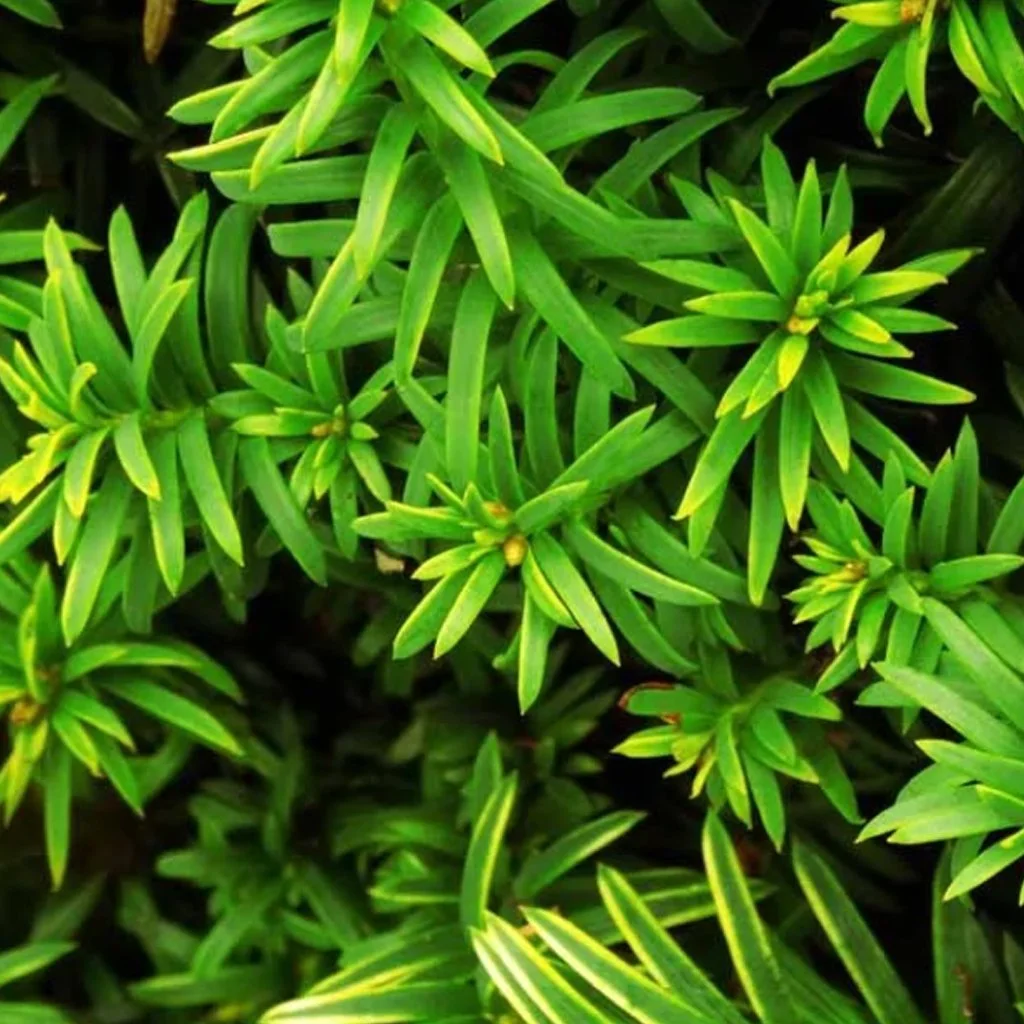
English Yew
Dense evergreen hedging that responds well to careful clipping. Suitable for formal, relatively narrow hedges where soil drainage is adequate.
Yew is poisonous if eaten, so consider the suitability of the planting location.
Best for: Formal evergreen boundaries and controlled screening.
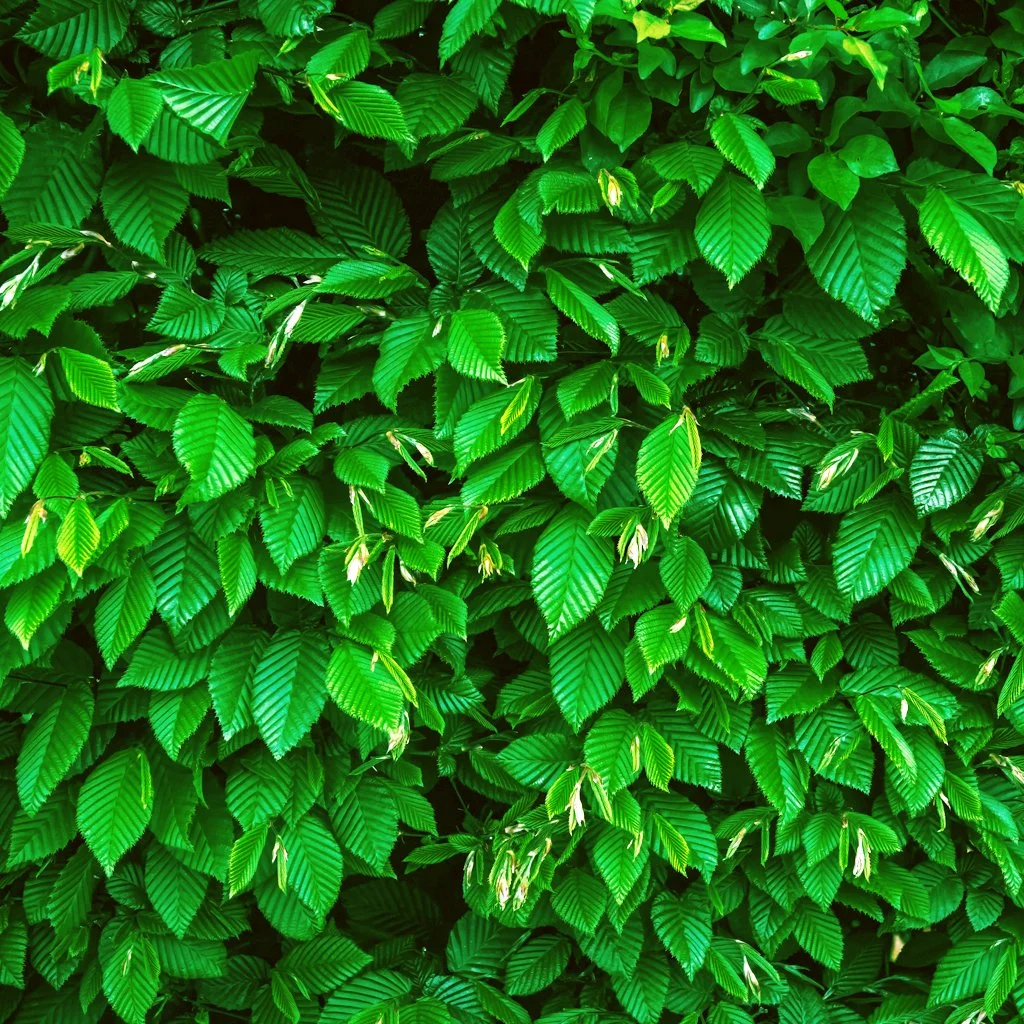
Hornbeam
A deciduous hedge that can be maintained in a formal shape. Tolerates many heavier soils and may retain some dry leaves during winter.
It can be particularly useful where Beech may struggle with heavier, moisture-retentive ground.
Best for: Clipped boundaries and heavier garden soils.
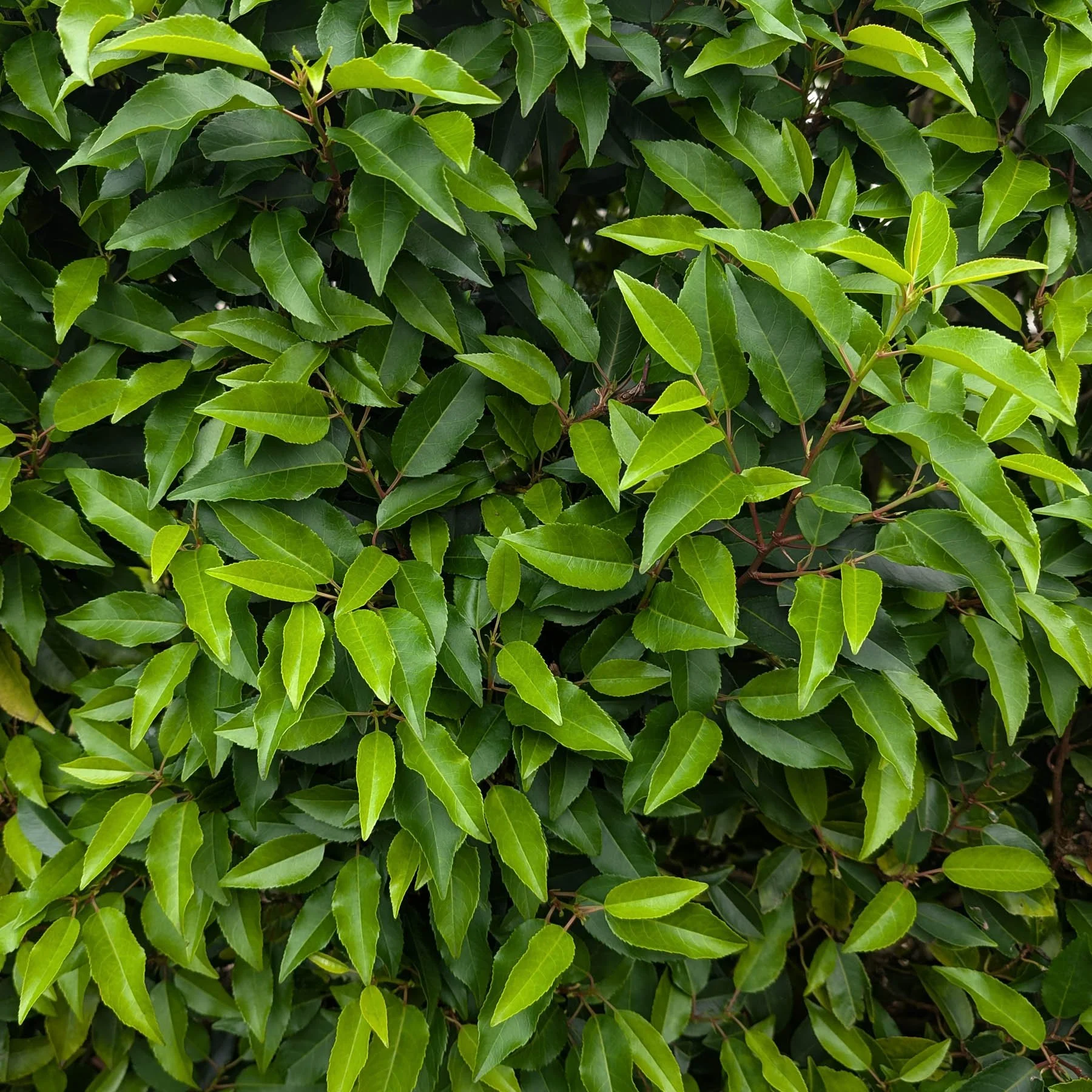
Portuguese Laurel
Attractive evergreen hedging with dark foliage and reddish stems. Can be clipped into a structured garden boundary where sufficient space is available.
Its relatively small leaves make it attractive for contemporary garden designs.
Best for: Evergreen privacy and formal residential boundaries.
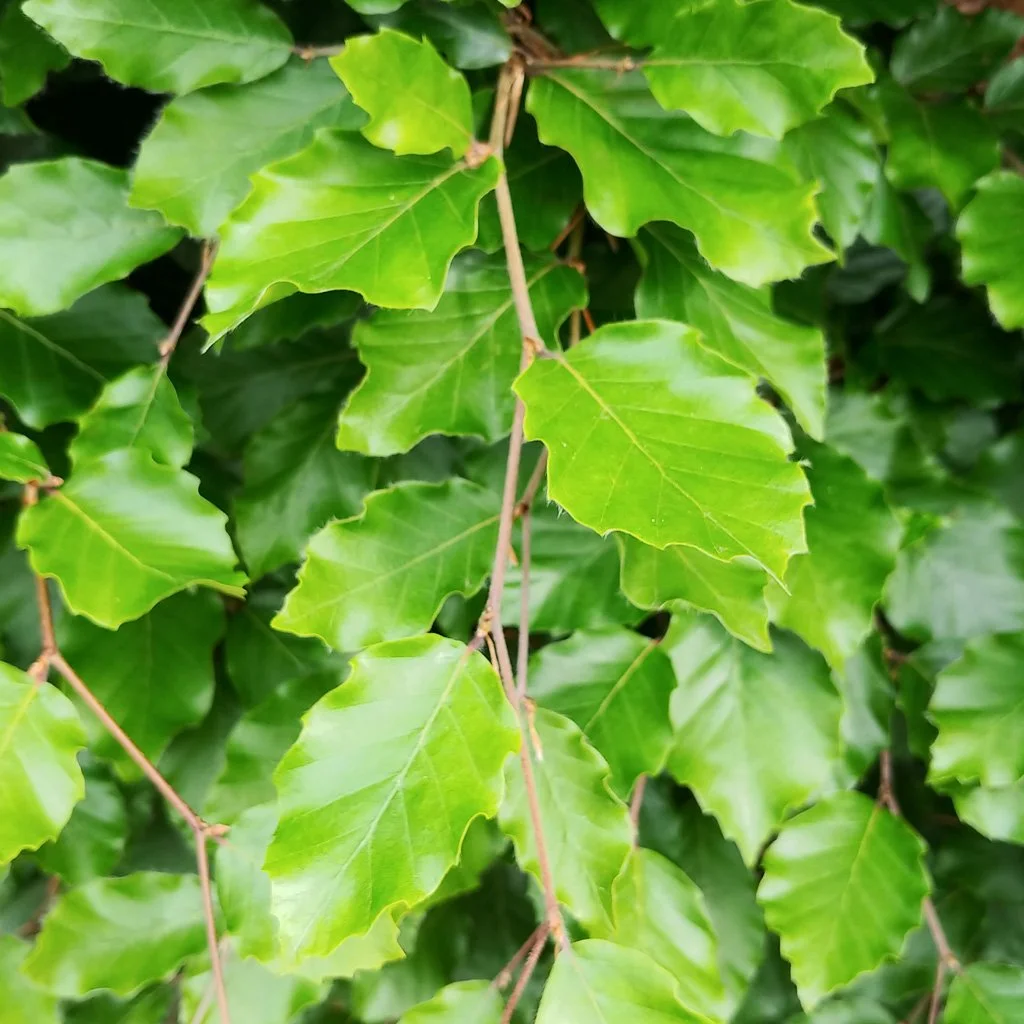
Green Beech
A traditional deciduous hedge that responds well to regular clipping and develops an attractive formal appearance.
Fresh green leaves develop in spring, changing to warm copper-brown shades in autumn. Some dry leaves may remain on clipped plants in winter.
Best for: Formal boundaries with reasonably well-drained soil.
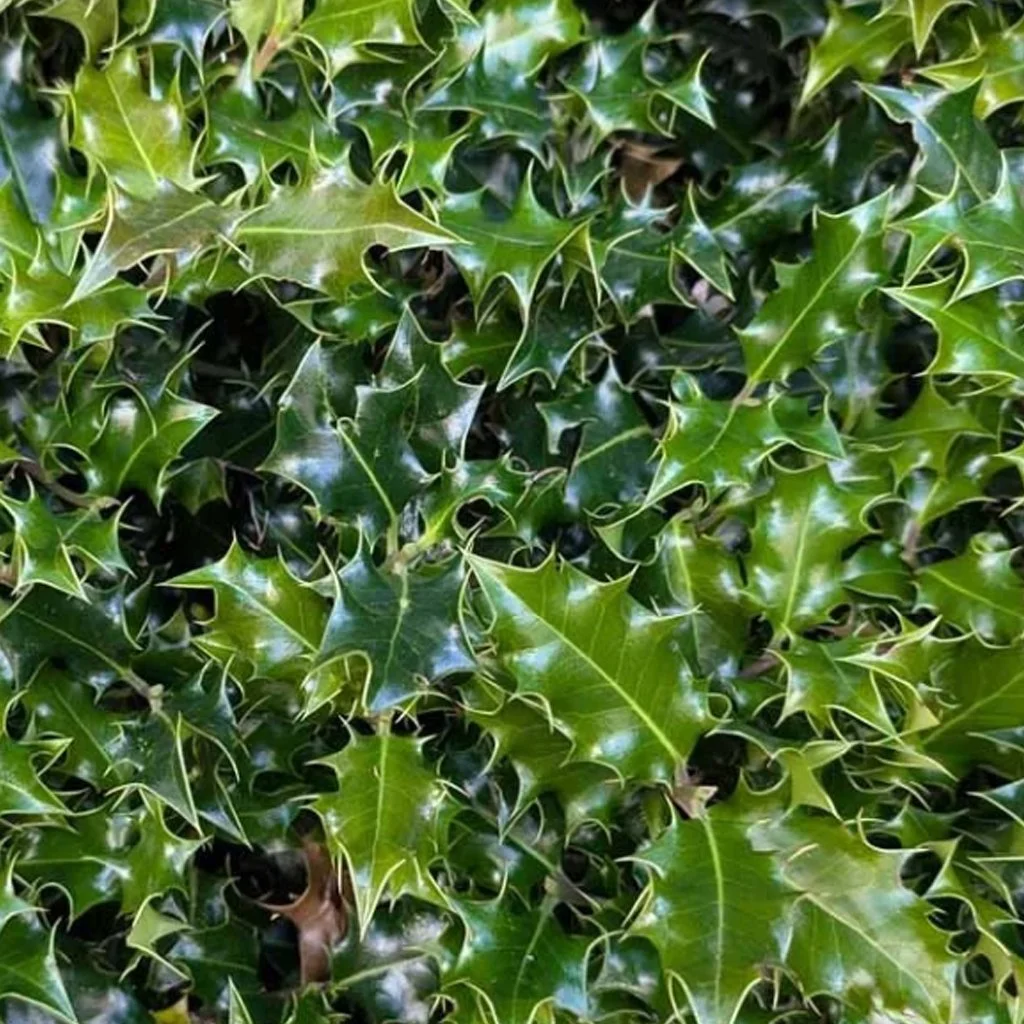
English Holly
A native evergreen hedge with glossy leaves that provides year-round structure and valuable wildlife habitat.
Holly generally establishes and grows more slowly than some other hedging species, making plant size an important consideration where privacy is required quickly.
Best for: Traditional evergreen boundaries and wildlife gardens.
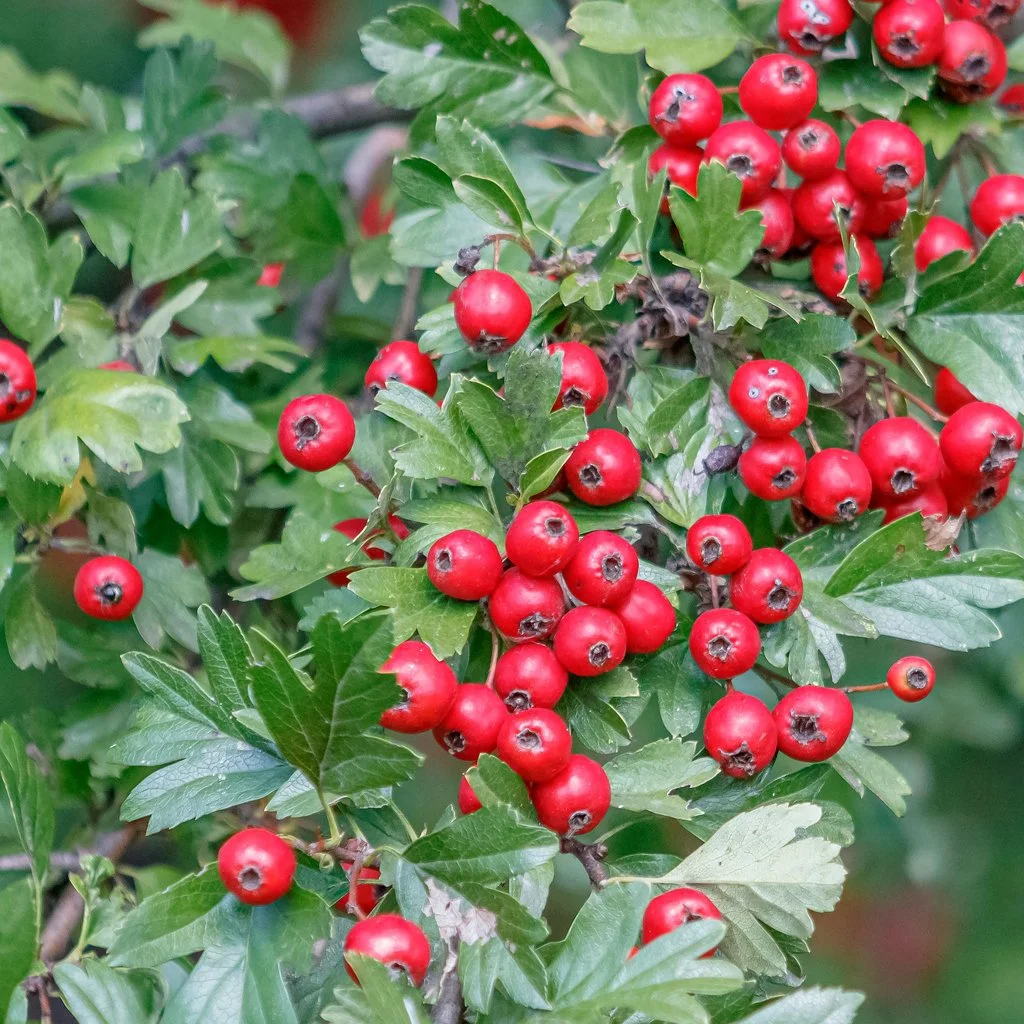
Hawthorn
A traditional native hedging plant with spring blossom, autumn berries and considerable wildlife value.
Its thorny growth makes it useful for more substantial boundaries, although it may be less appropriate immediately beside narrow paths or frequently used seating areas.
Best for: Native boundaries, wildlife and longer hedges.
Plant photographs show the relevant species. Supplied plants may differ according to season, stock type, height and maturity.
For gardens where width is severely restricted, a conventional hedge may not be the most practical screening solution. The available space should be assessed before choosing the planting method.
Hedge or Fence? Comparing the Practical Requirements
A living hedge and a conventional fence provide different benefits. The best option depends on available space, desired appearance and maintenance requirements.
| Consideration | Living Hedge | Timber Fence |
|---|---|---|
| Appearance | Natural, living boundary with seasonal development | Immediate, defined structure |
| Privacy | Develops as plants grow; evergreen options available | Usually immediate where panels are solid |
| Space | Requires rooting space and room for foliage | Usually occupies less ground width |
| Maintenance | Watering during establishment and ongoing trimming | Inspection, repairs and eventual replacement |
| Wildlife | Can provide food, shelter and habitat | Generally offers fewer habitat benefits |
The comparison is general. Boundary permissions, maintenance and installation requirements vary by property.
Planning Hedge Height for an Overlooked Garden
Before selecting a hedge, identify the view you want to screen.
Screening a seated patio from a neighbouring ground-floor window is different from attempting to screen views from an upstairs window.
The required height depends on the position of the viewer, the distance between properties and the layout of the garden.
Rather than automatically planting the tallest available specimens, consider whether targeted screening near a seating area would be more effective.
Avoid Creating Unnecessary Shade
A tall evergreen hedge can improve privacy, but it may also reduce sunlight to neighbouring planting areas.
Consider the orientation of the garden and eventual hedge height before committing to a planting specification.
Where evergreen hedging may affect neighbouring properties, consider the potential implications of high hedge legislation before planting.
Choosing Hedging for Immediate or Gradual Screening
Bare-Root Hedging
Often economical for longer deciduous and native hedges. Generally supplied during the dormant planting season.
Rootballed Hedging
Suitable for larger established plants. Generally available from mid-October to late April, weather permitting.
Container-Grown Hedging
Can provide greater planting flexibility, subject to suitable soil conditions and establishment watering.
Larger plants can provide earlier screening but need careful handling and aftercare.
Smaller plants may be more economical and can establish effectively when planted and maintained correctly.
Professional Hedge Supply & Planting in Ince-in-Makerfield
Landscaping Emporium works alongside Kirman Design to offer professional hedge supply and planting for suitable projects in Ince-in-Makerfield and surrounding Wigan areas.
Depending on the agreed specification, services may include plant selection, quantity calculations, ground preparation, delivery, setting out, planting, irrigation and aftercare advice.
Request a Replacement Hedge Planting Quotation
Please provide your postcode, approximate boundary length, required screening height, photographs and any known access restrictions.
If an existing fence, wall or hedge needs removing, please include photographs and details of the existing structure.
Learn more about our professional hedge supply and planting service .
Ince-in-Makerfield Hedging FAQs
Can I replace an old fence with a hedge?
Yes, provided the boundary arrangements are appropriate and sufficient planting space is available.
Do old concrete fence foundations need removing?
Concrete that obstructs the proposed rooting area may need removing or the planting line may need adjusting.
Which hedge is suitable for a narrow garden?
English Yew and Hornbeam can be maintained as relatively narrow formal hedges where site conditions are suitable.
Can a hedge screen an upstairs window?
Screening depends on viewing angles, distance and hedge height. A targeted planting arrangement may be more practical.
What if my soil contains rubble or building waste?
The planting area should be assessed and unsuitable material addressed before planting. Suspected contamination requires appropriate professional advice.
Can I plant hedging close to a garden wall?
It may be possible, but sufficient rooting space and clearance for future growth are important.
Is evergreen hedging better for privacy?
Evergreen species provide foliage throughout the year, making them useful where winter screening is important.
How quickly will my new hedge grow?
Growth depends on species, supplied size, soil, weather and aftercare. Establishment should take priority over rapid growth.
Do you supply and plant hedging in Ince-in-Makerfield?
We welcome enquiries for suitable projects, subject to site conditions, access, scope and availability. Request a quotation .
Hedging in Ince-in-Makerfield & Surrounding Wigan Areas
Landscaping Emporium welcomes hedging enquiries from Higher Ince, Lower Ince and neighbouring communities.
Explore our Wigan Hedging Guide , Hindley Hedging Guide and Greater Manchester Hedging Guide .
You can also browse hedging plants or use our Hedge Selector to compare species.
Planning a New Hedge in Ince-in-Makerfield?
Whether you are replacing old fencing, creating privacy around a patio or introducing a living garden boundary, we can help you consider suitable hedging plants and planting requirements.
Telephone: 01942 604976
Email: hello@landscapingemporium.co.uk
Selected by designers. Installed by professionals.