
Specimen Trees for
Sale in North West England
A well-chosen tree can completely change a garden.
It can provide height where a new garden feels flat, screen an overlooking window, create a focal point, introduce spring blossom or autumn colour, provide habitat for wildlife and give a garden the maturity that smaller plants simply cannot achieve.
At Landscaping Emporium, we offer a carefully selected range of specimen trees for sale, with options suitable for gardens of different sizes, styles and growing conditions.
Rather than simply selling trees by name, we want to help you choose the right tree for the right position.
Our collection includes ornamental trees, native trees, flowering trees, evergreen trees, multi-stem specimens, trees for screening and larger mature trees for customers wanting more immediate impact. We can supply trees individually, and professional delivery and planting is available across North West England, including Lancashire, the Ribble Valley, Greater Manchester, Cheshire, Merseyside and surrounding areas.
Struggling choosing a tree? Why not use our Specimen Tree selector to help you choose?
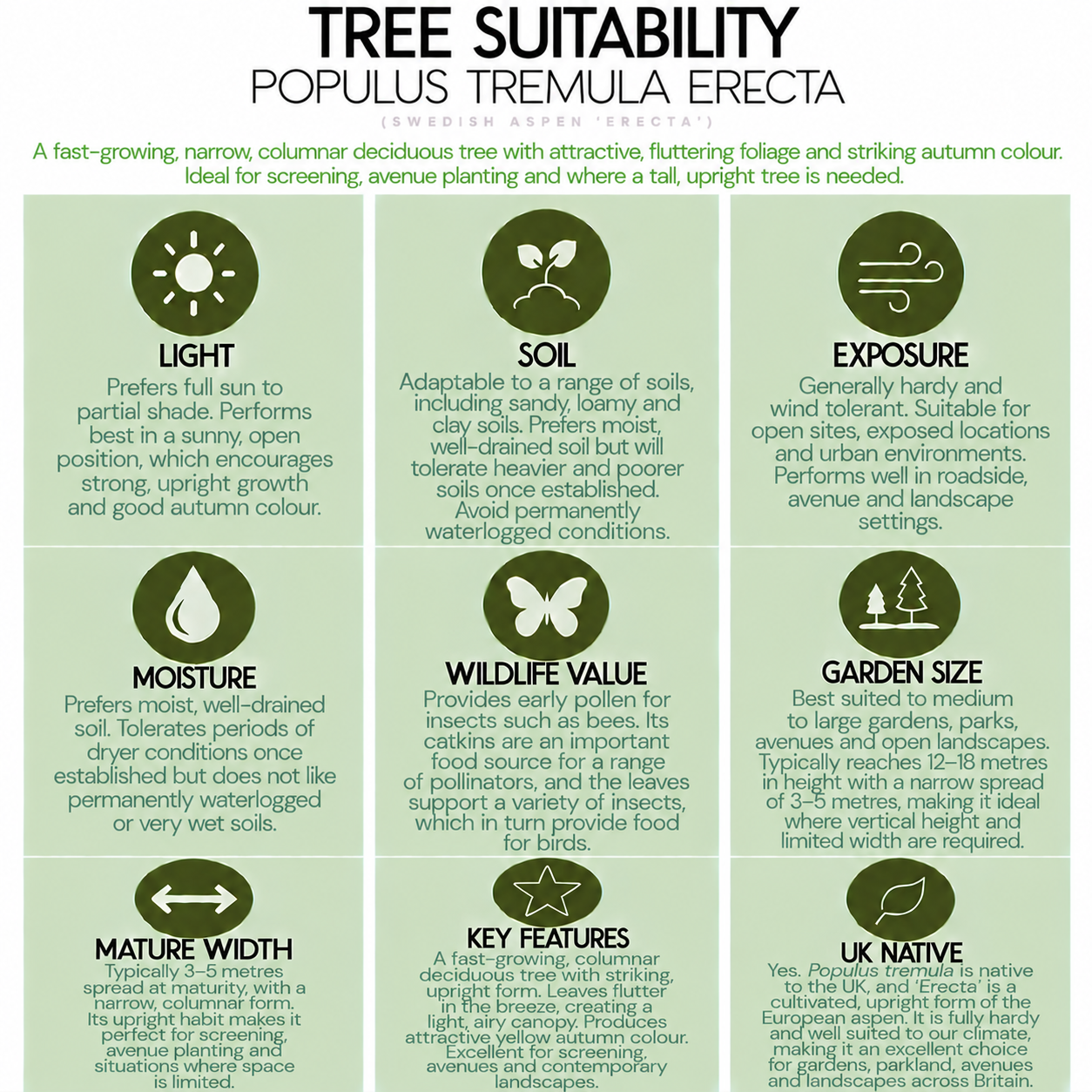
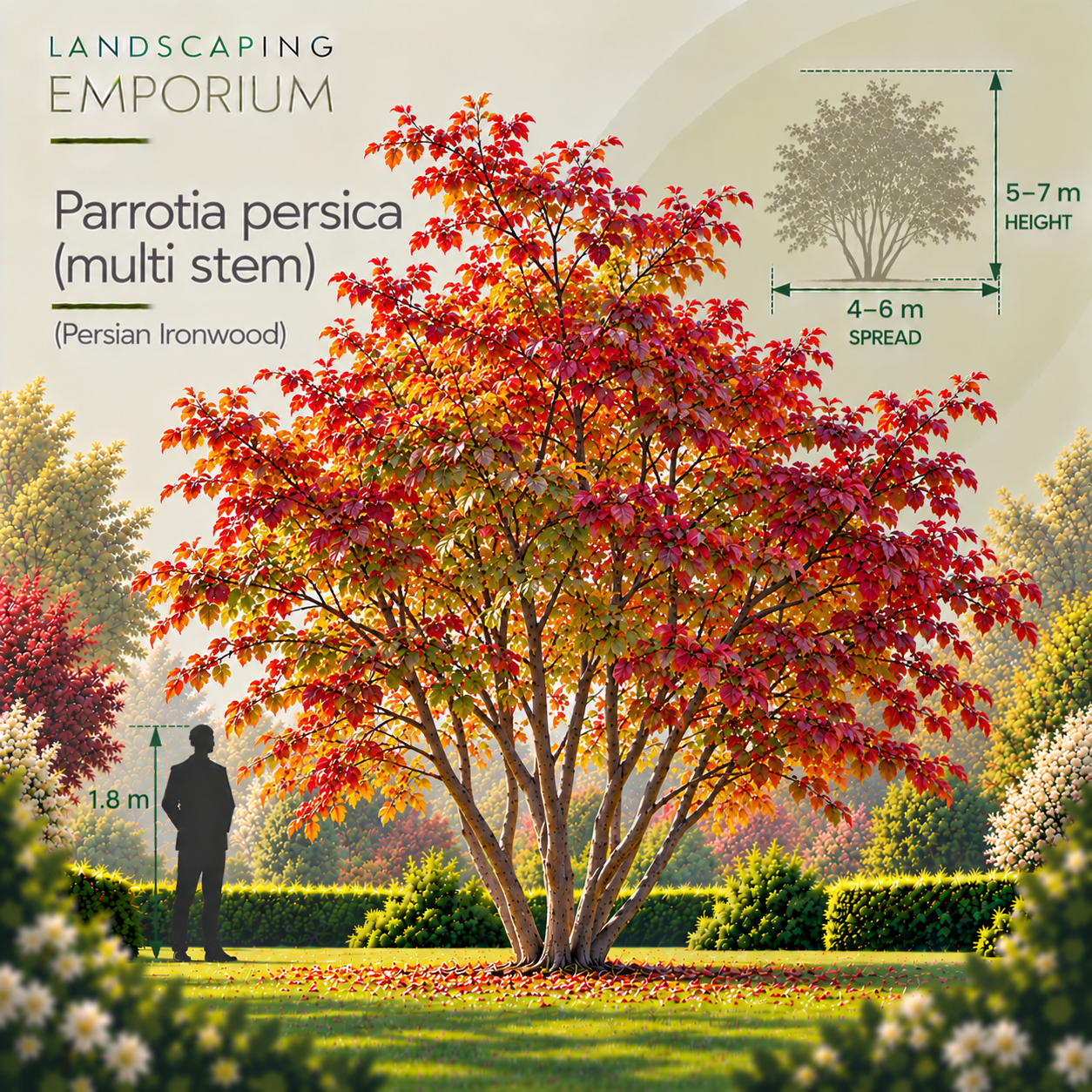
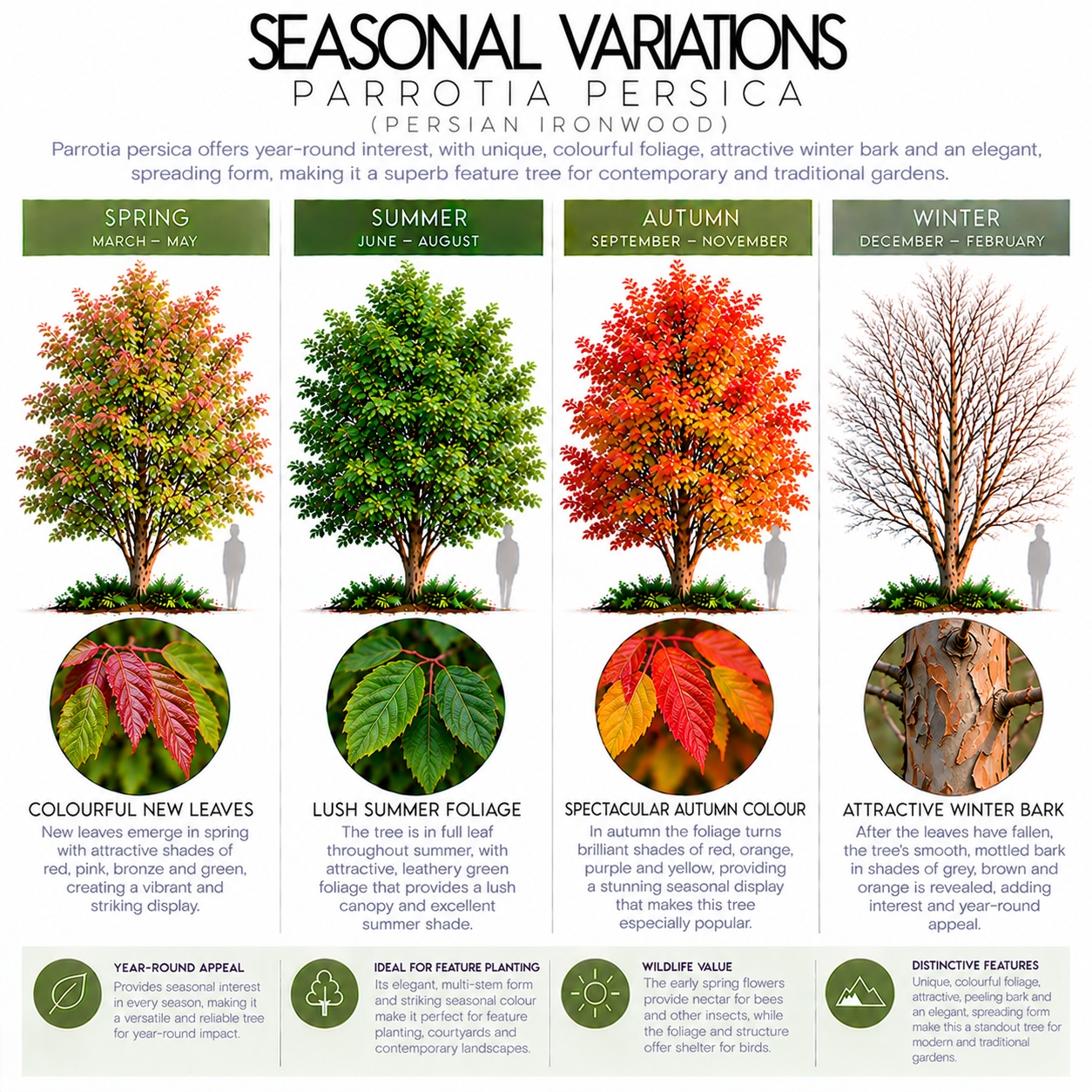
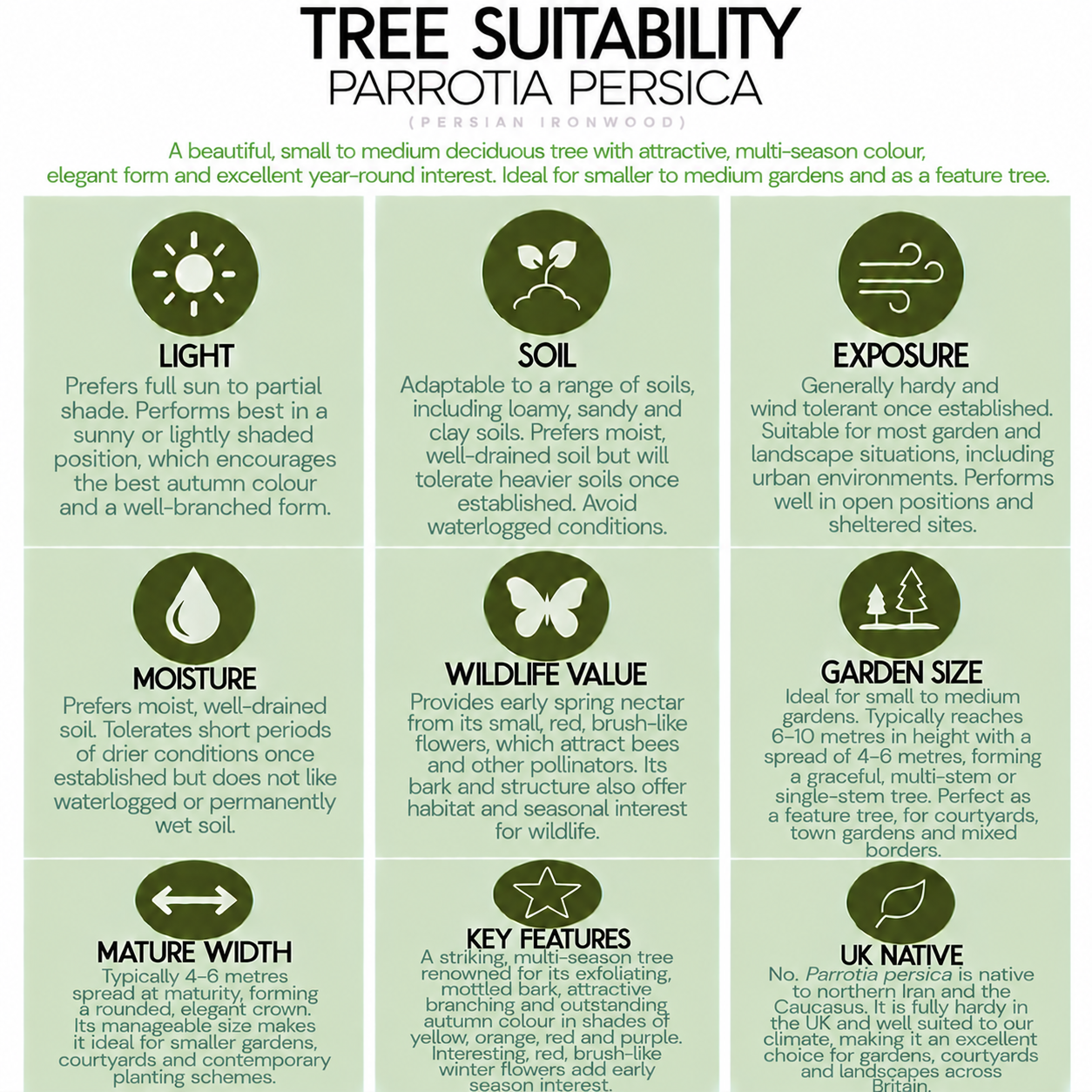
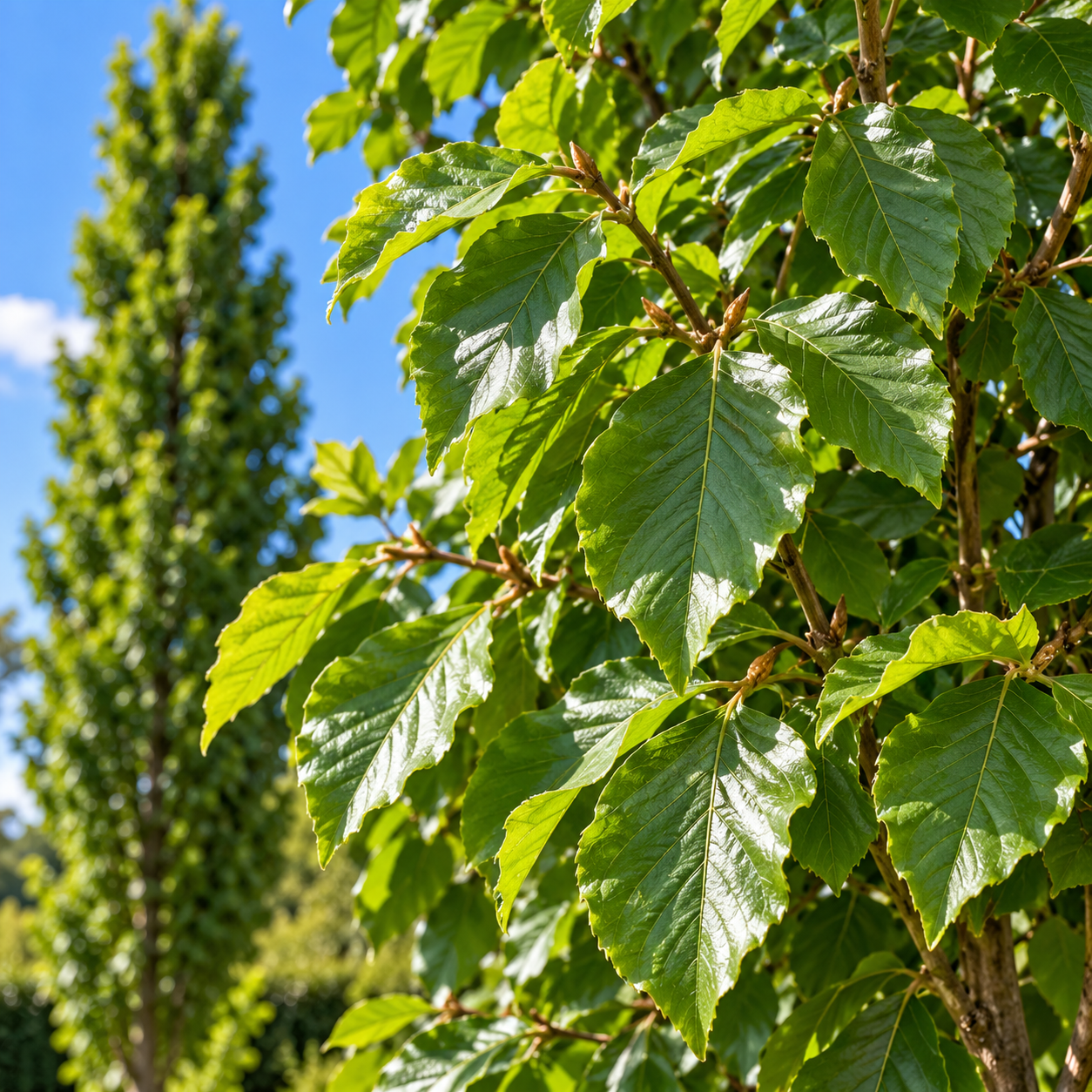
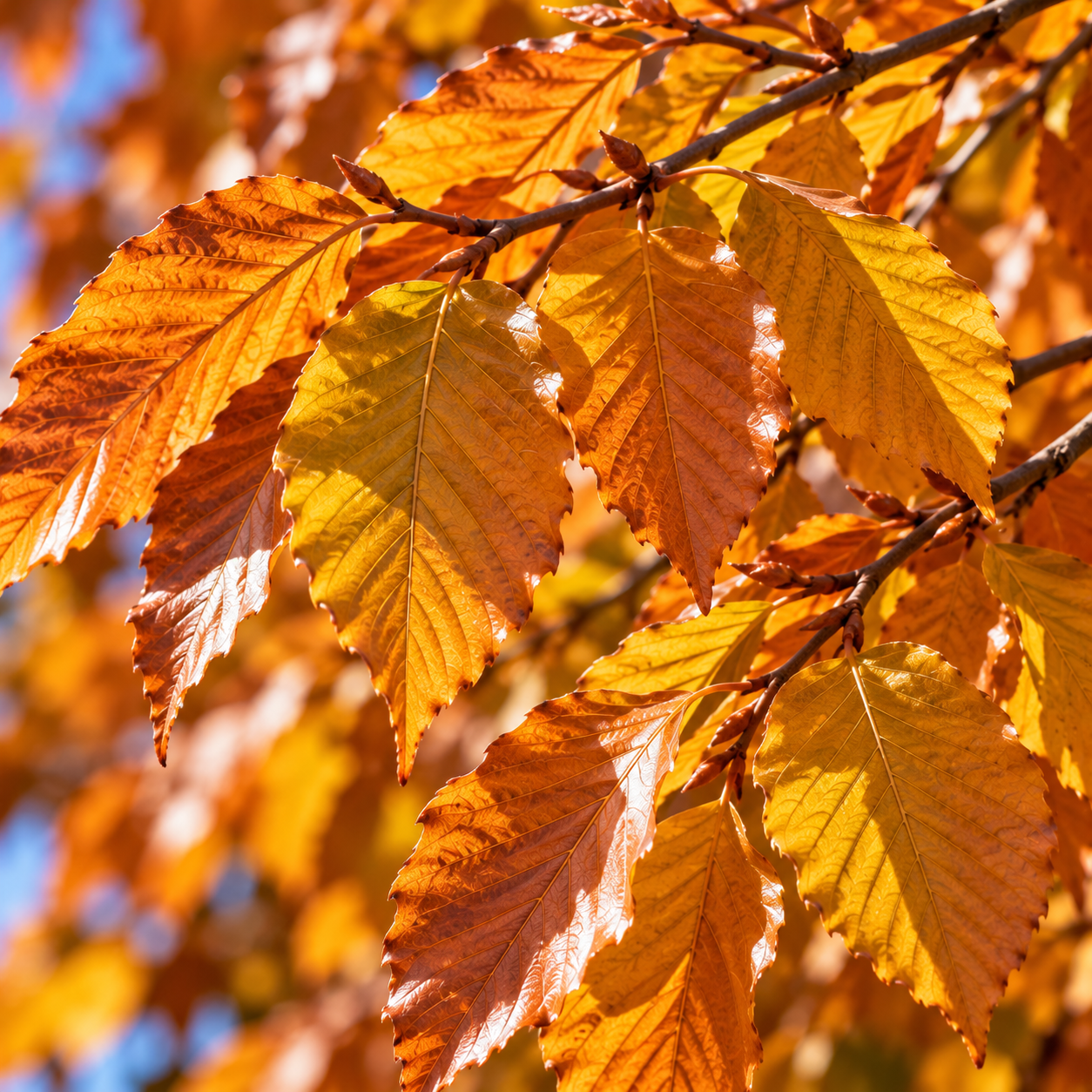
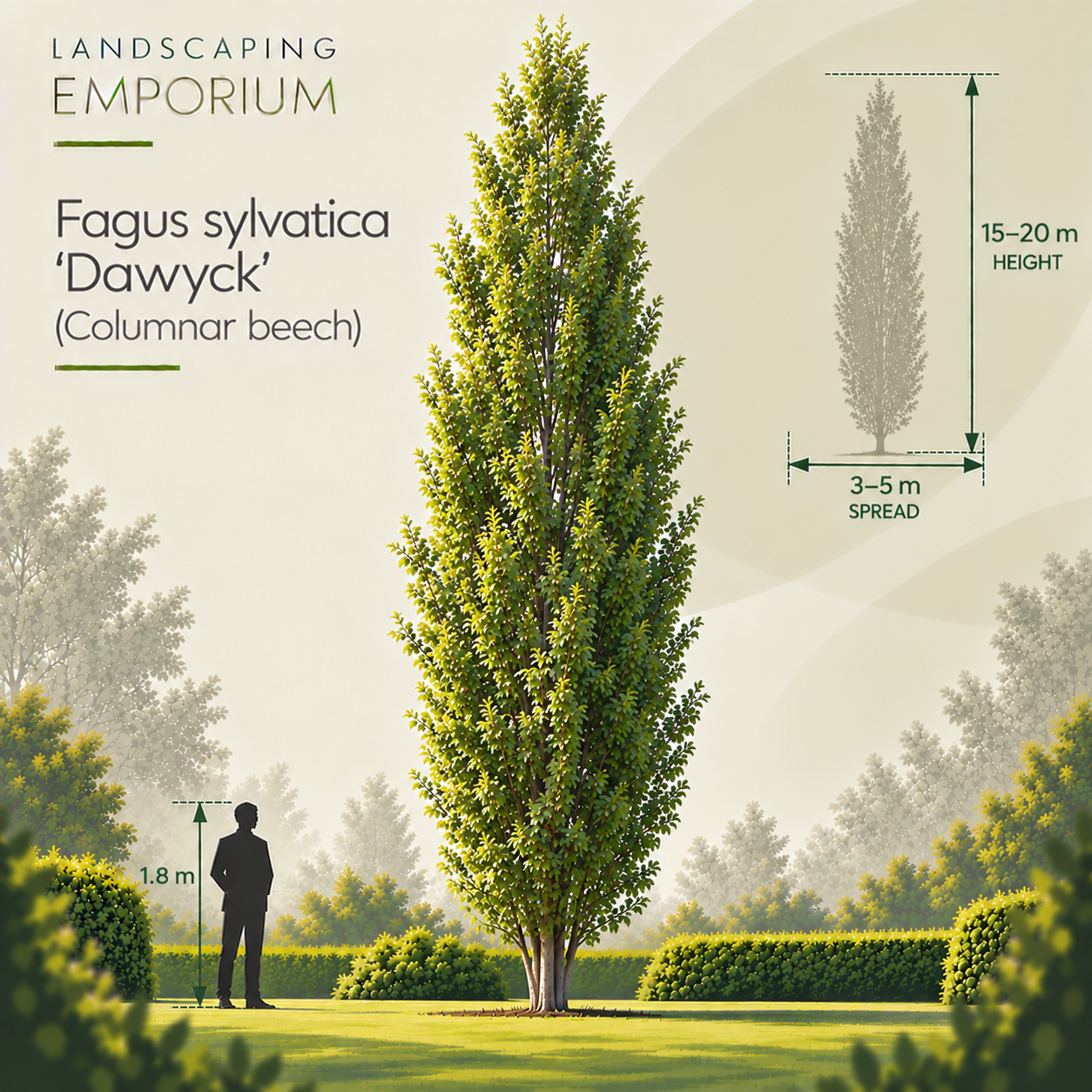
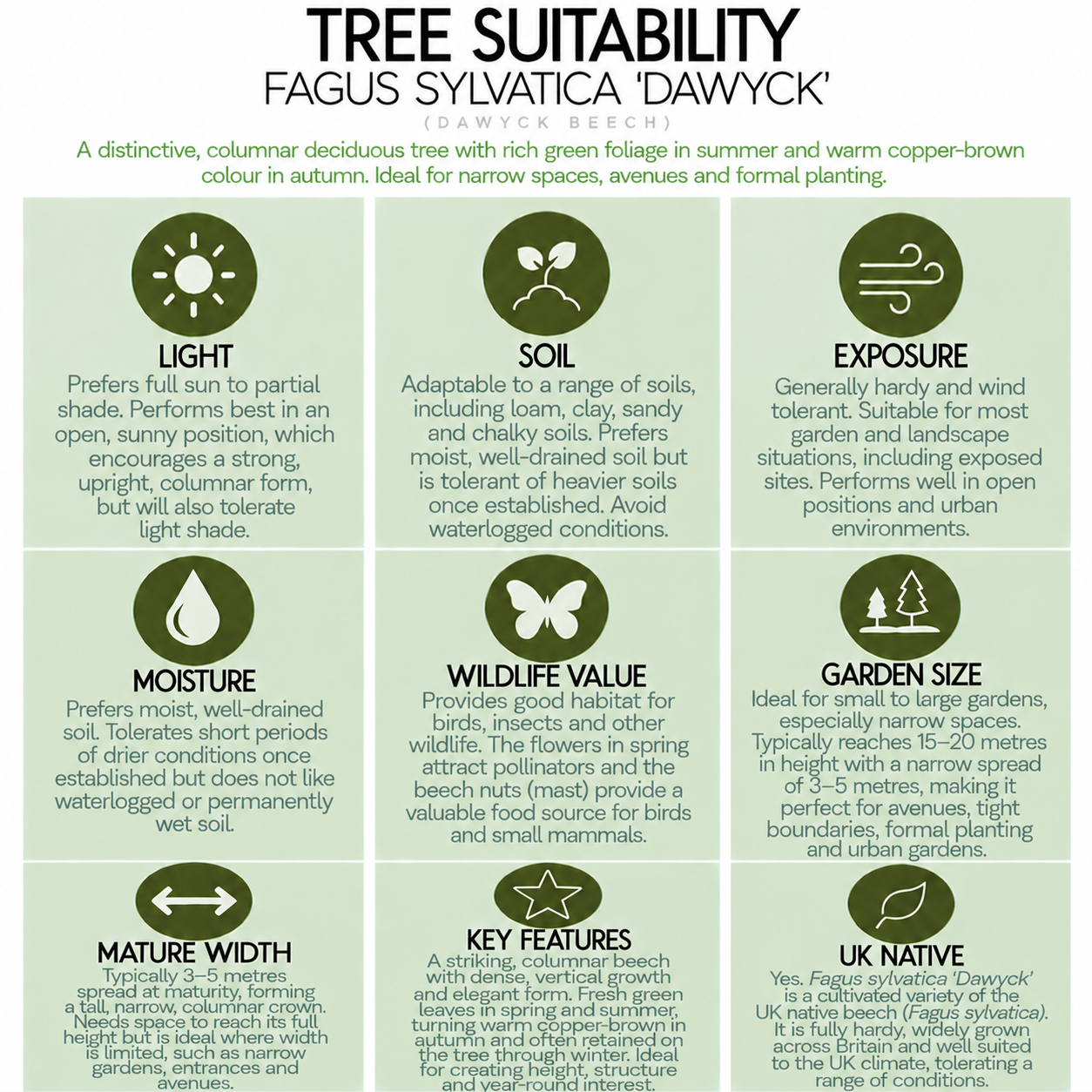
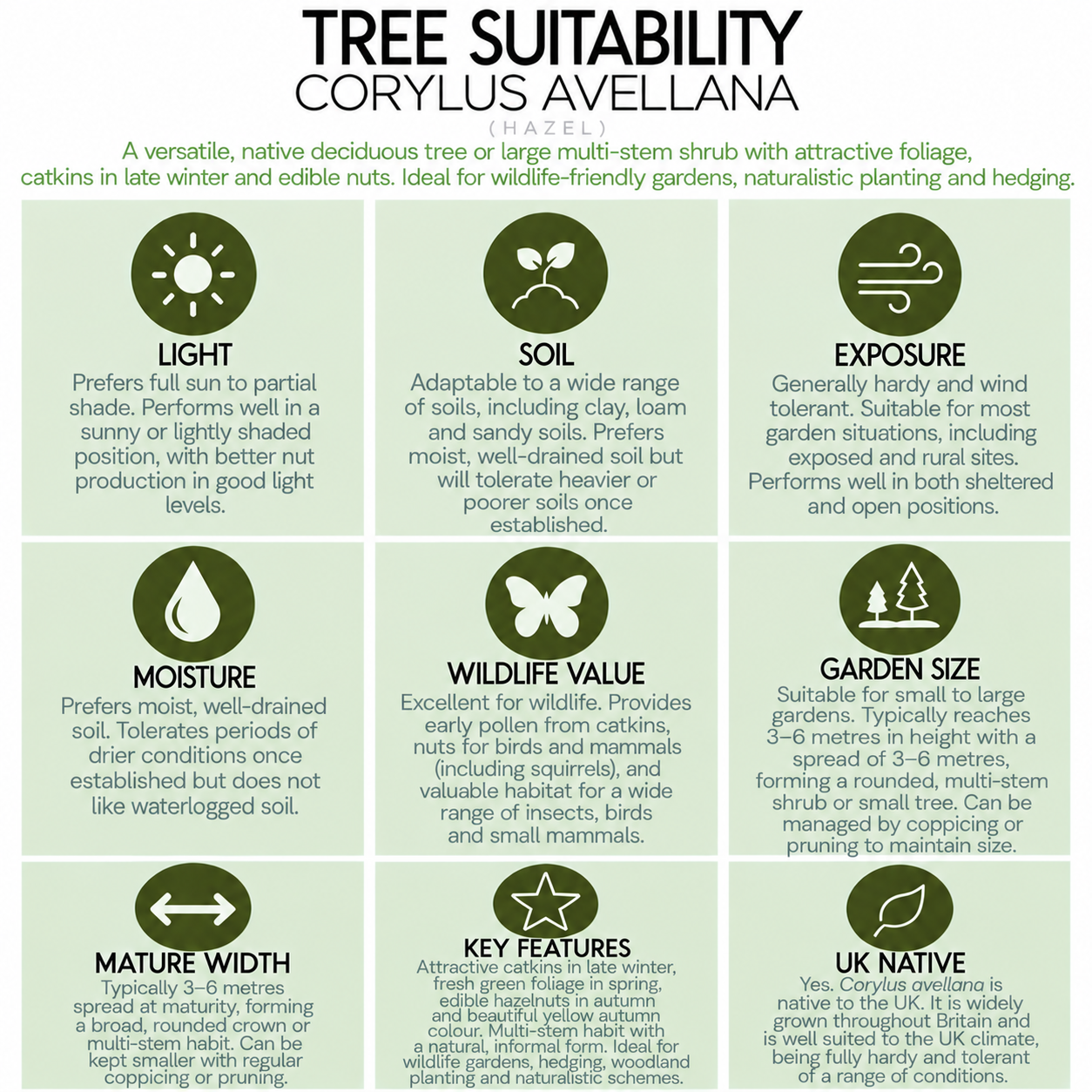
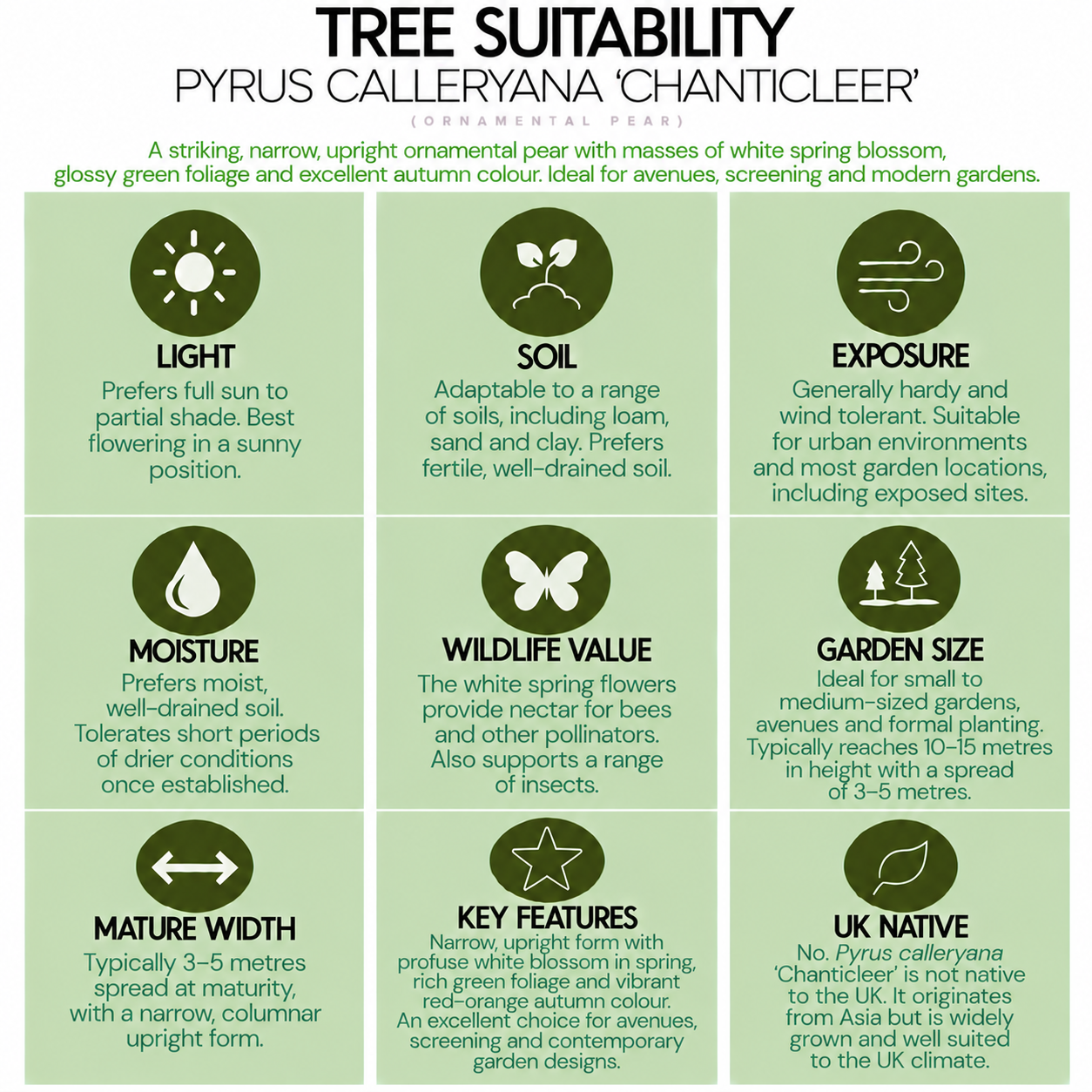
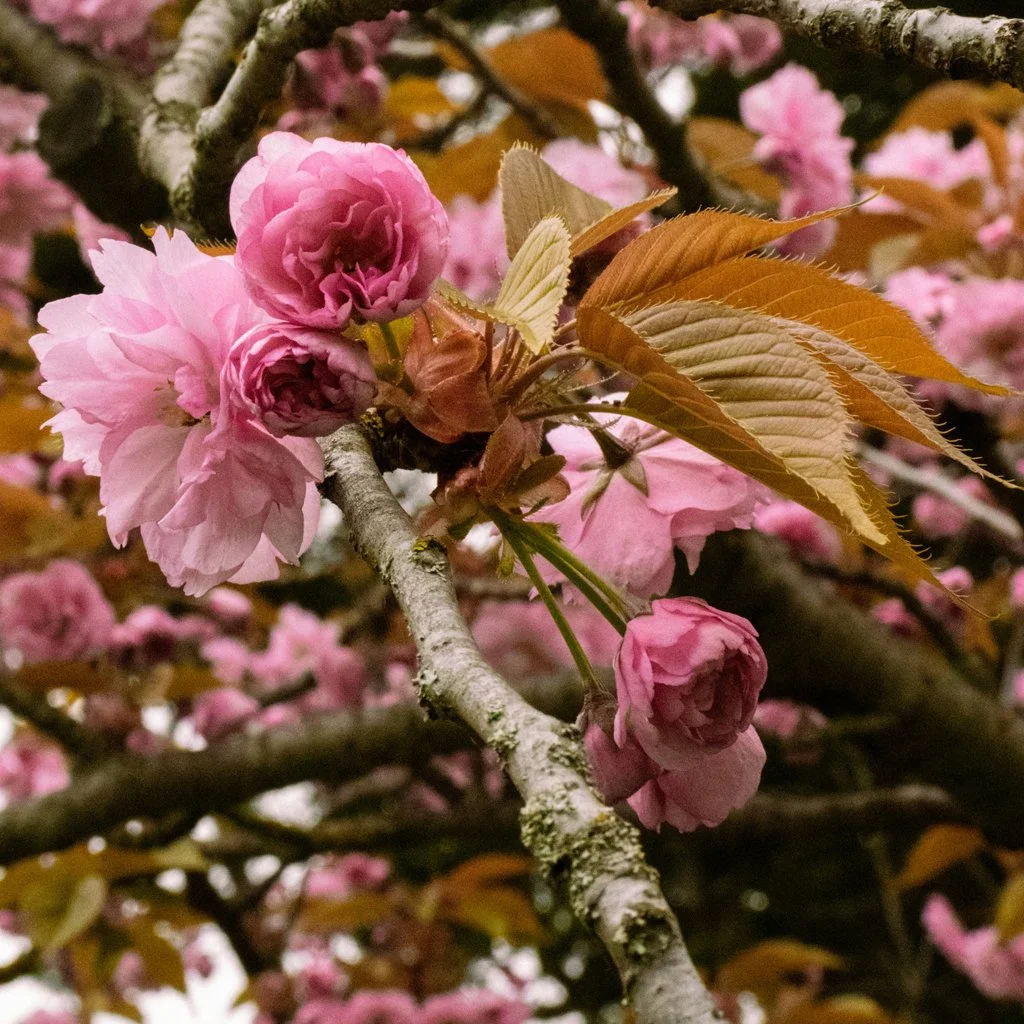
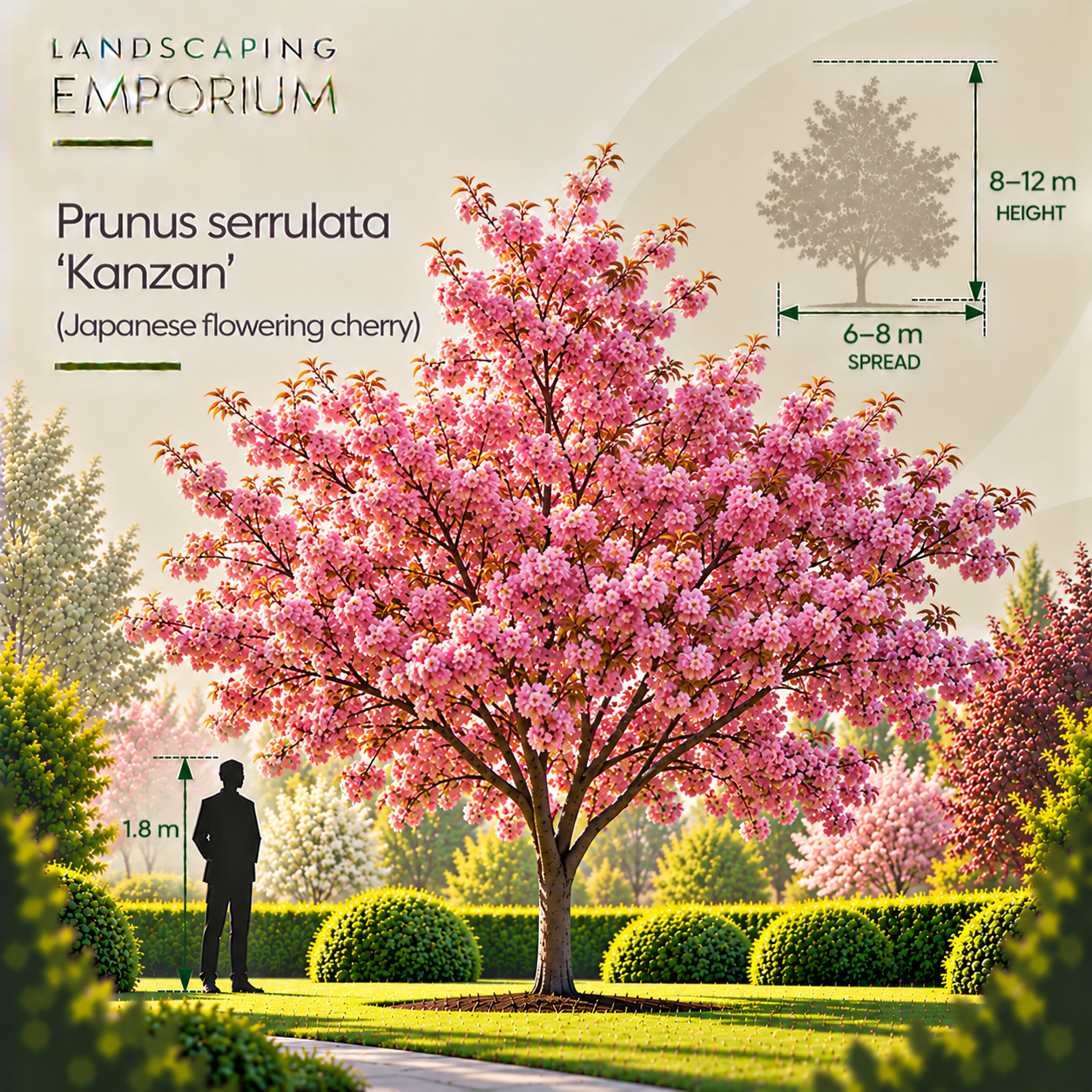
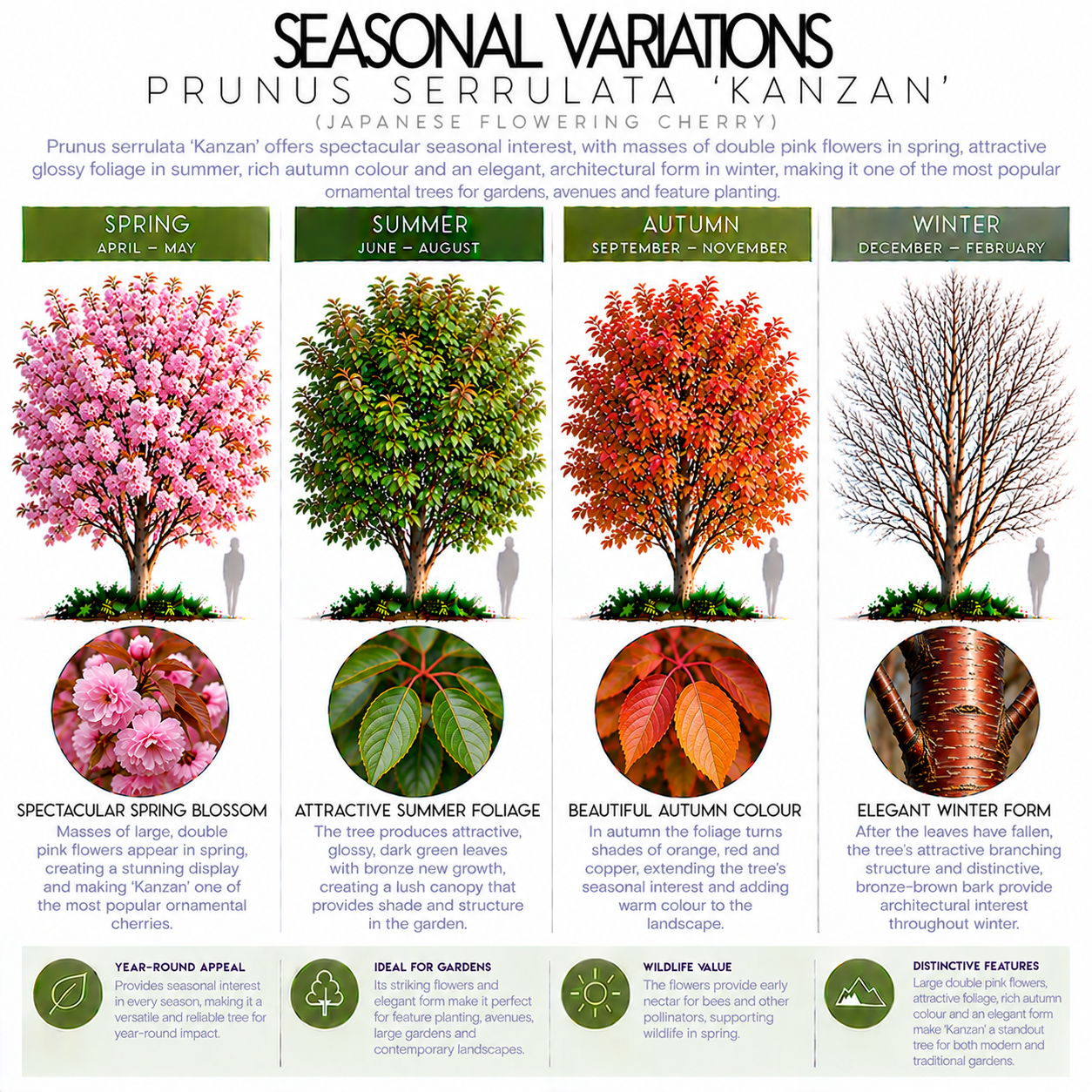
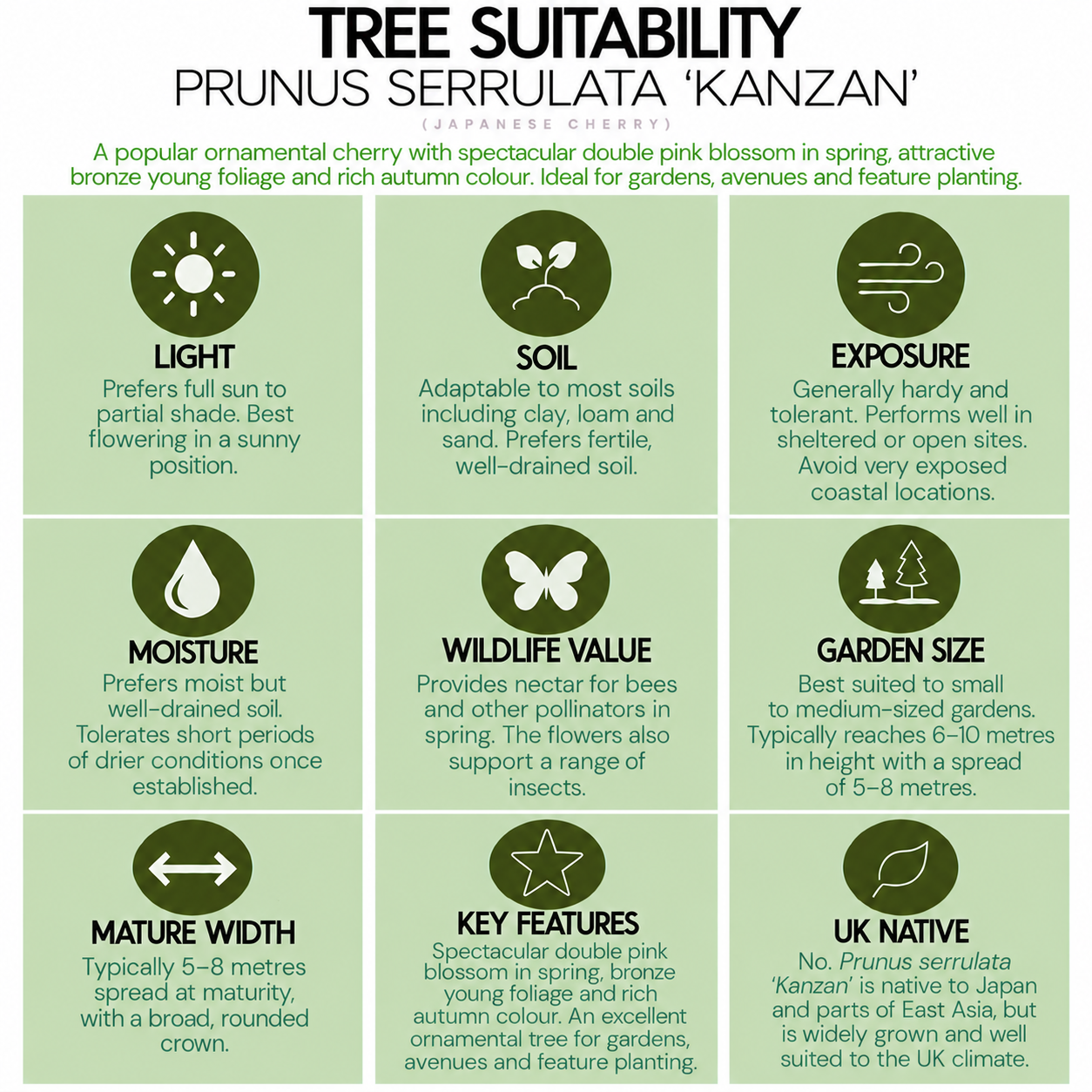
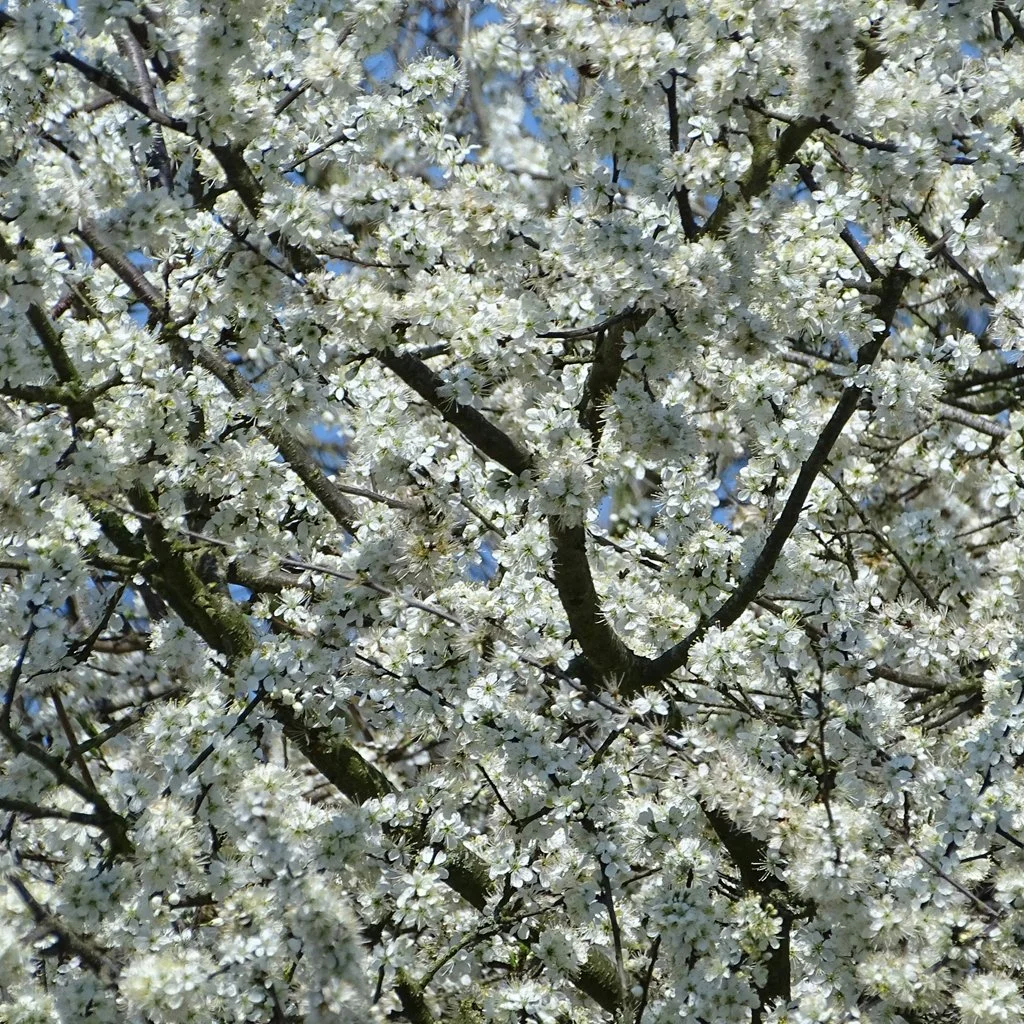
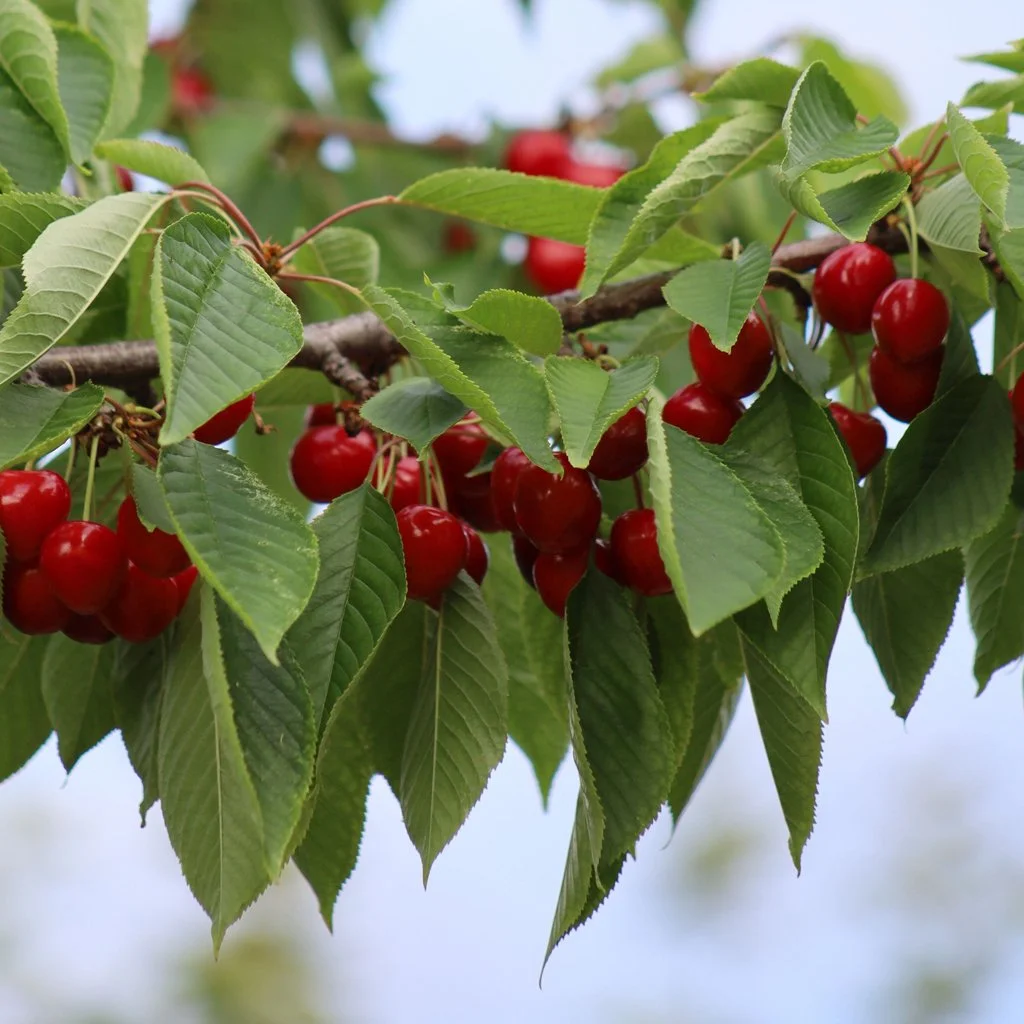
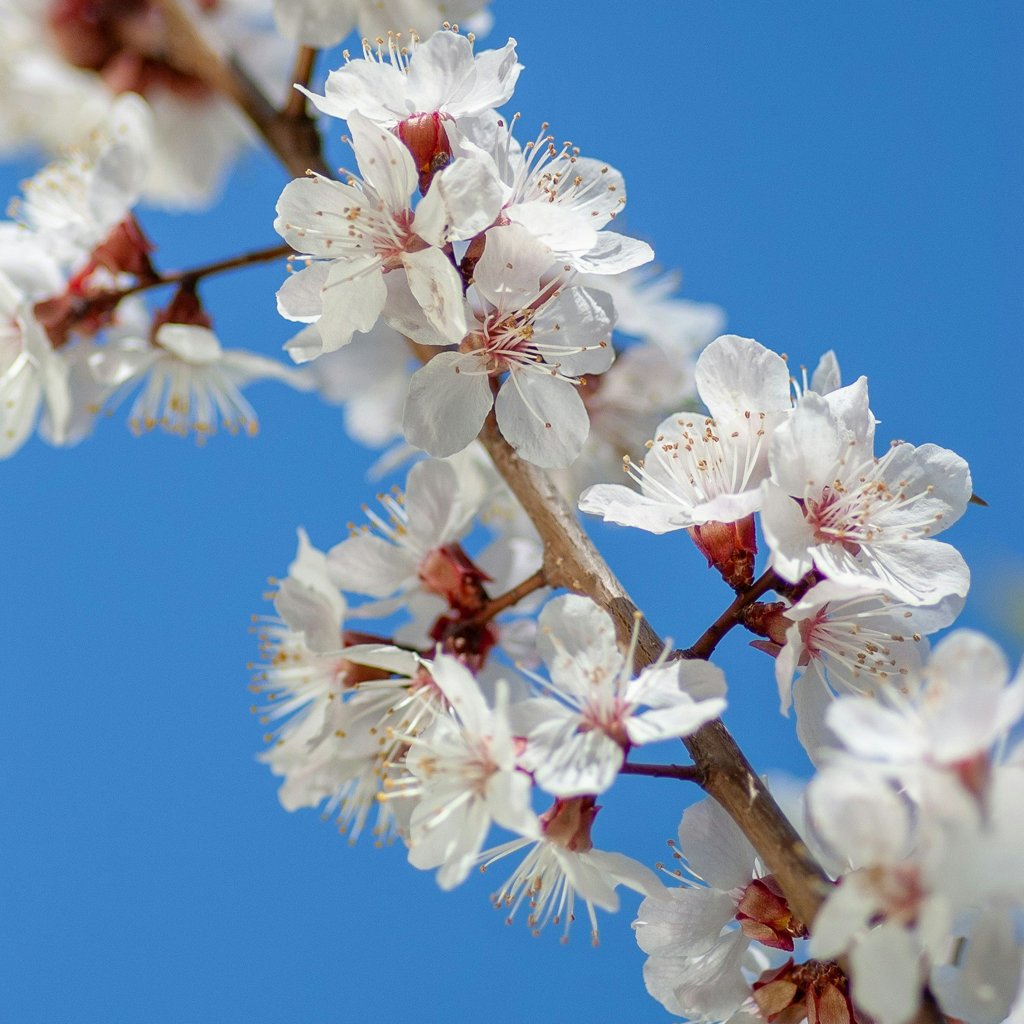
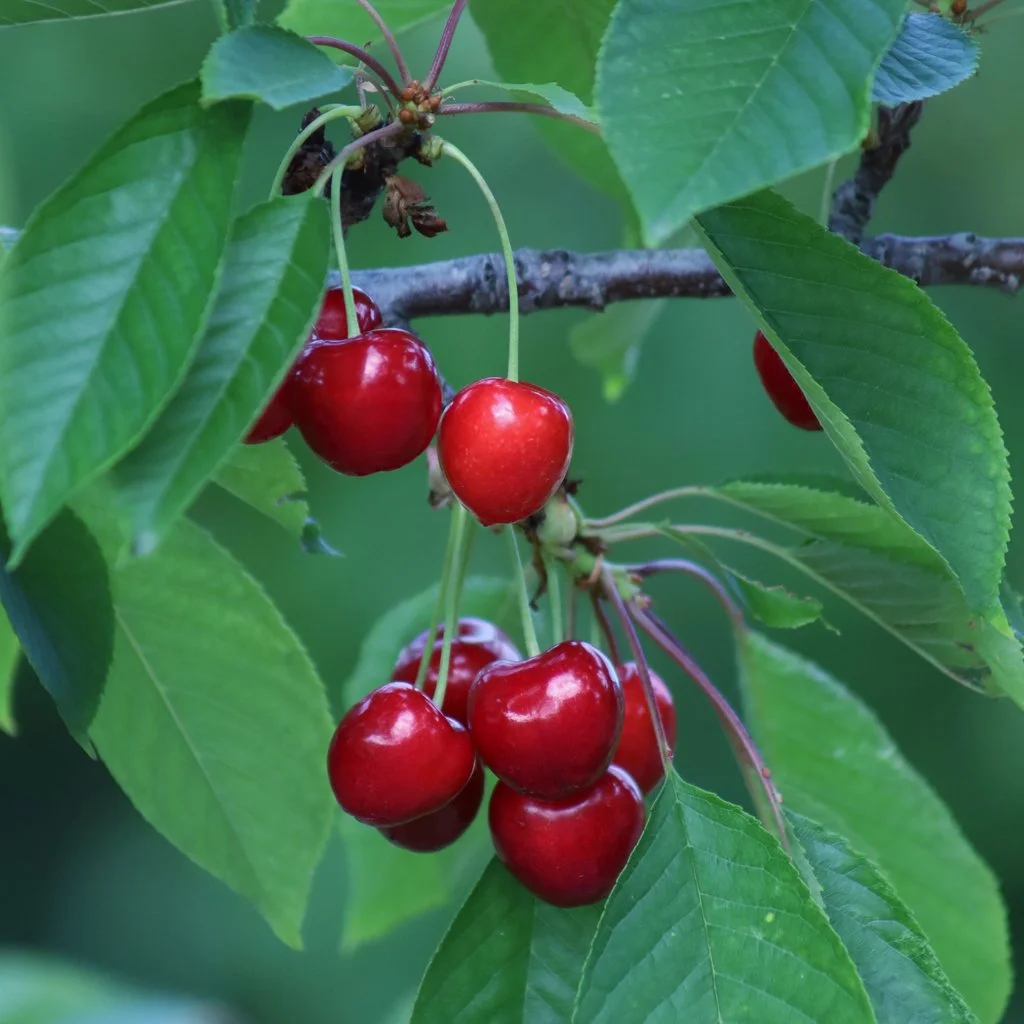
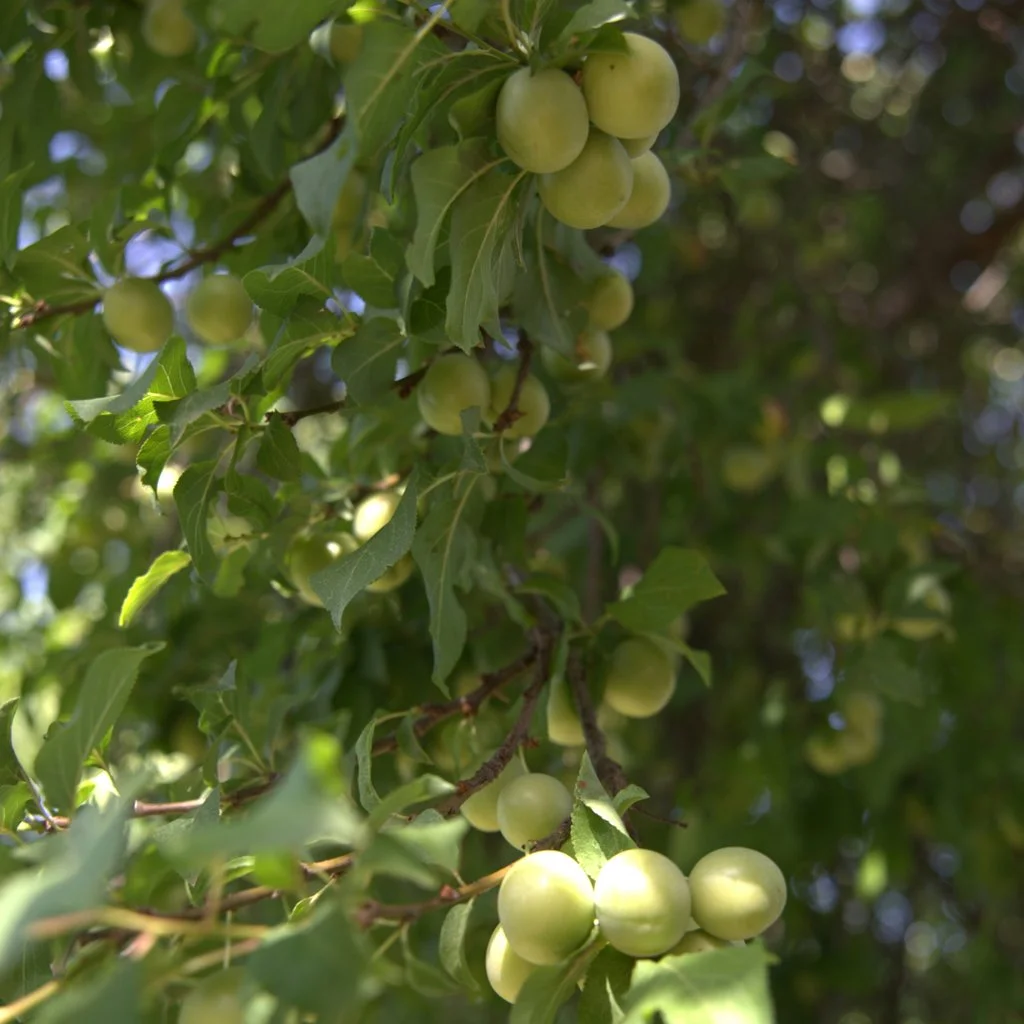
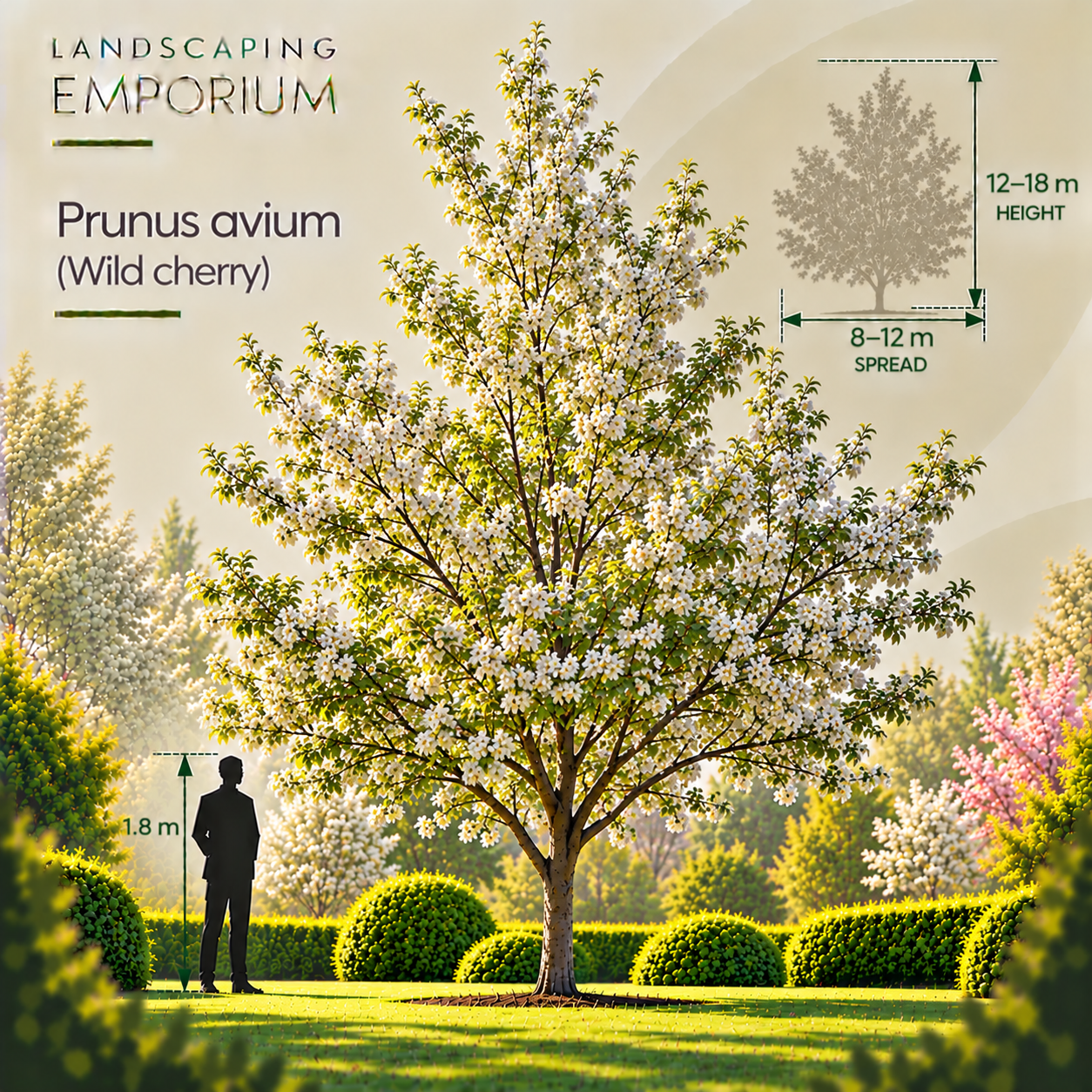
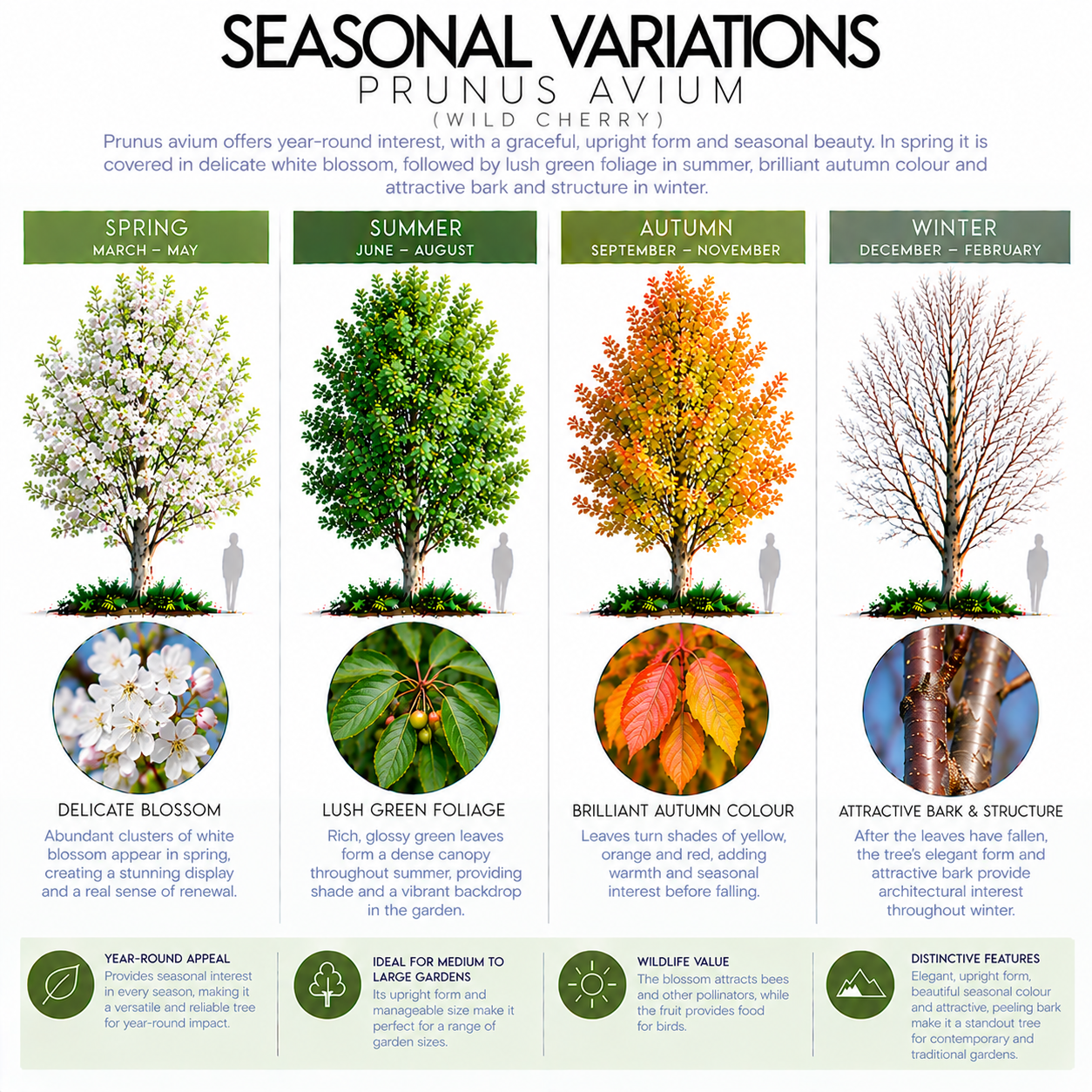
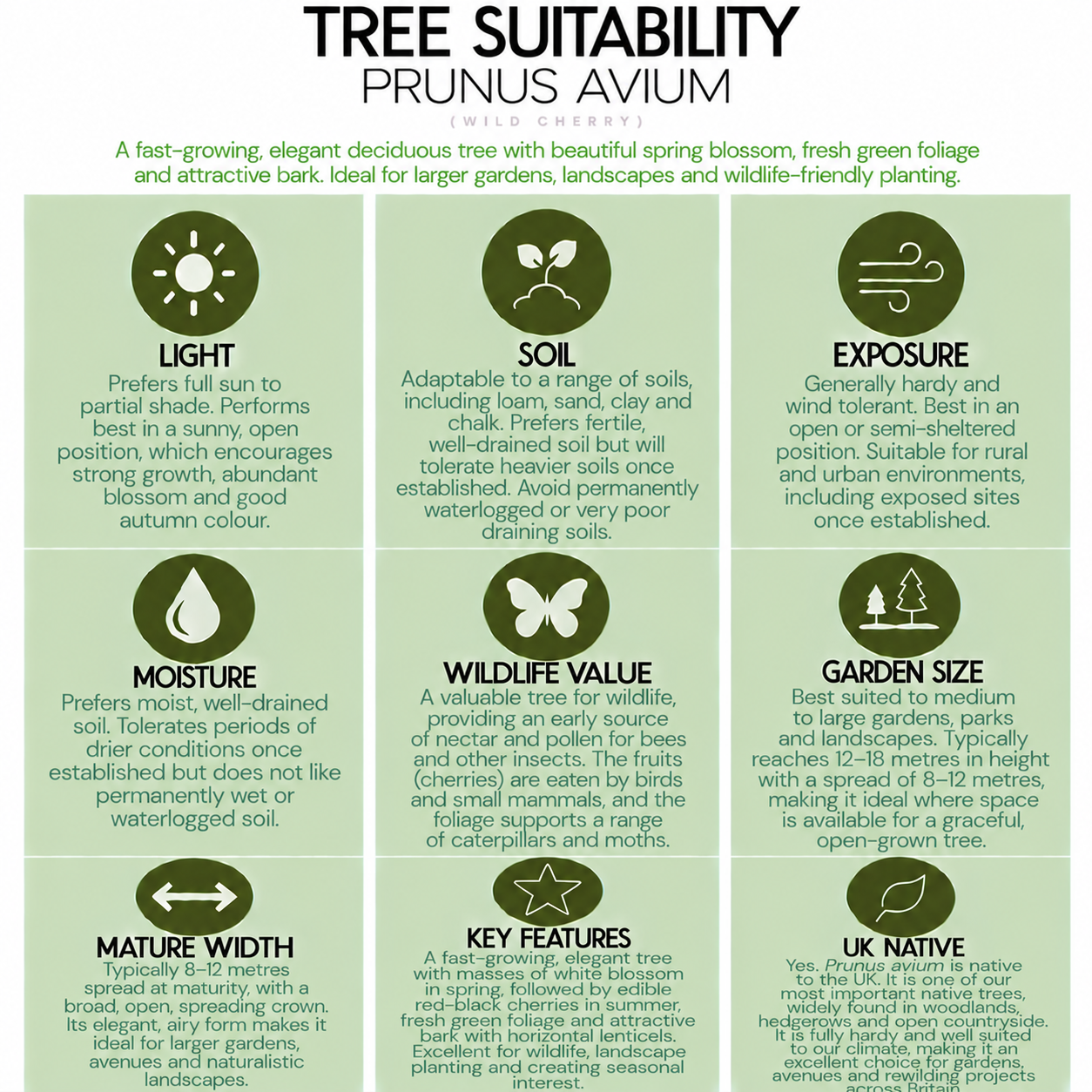
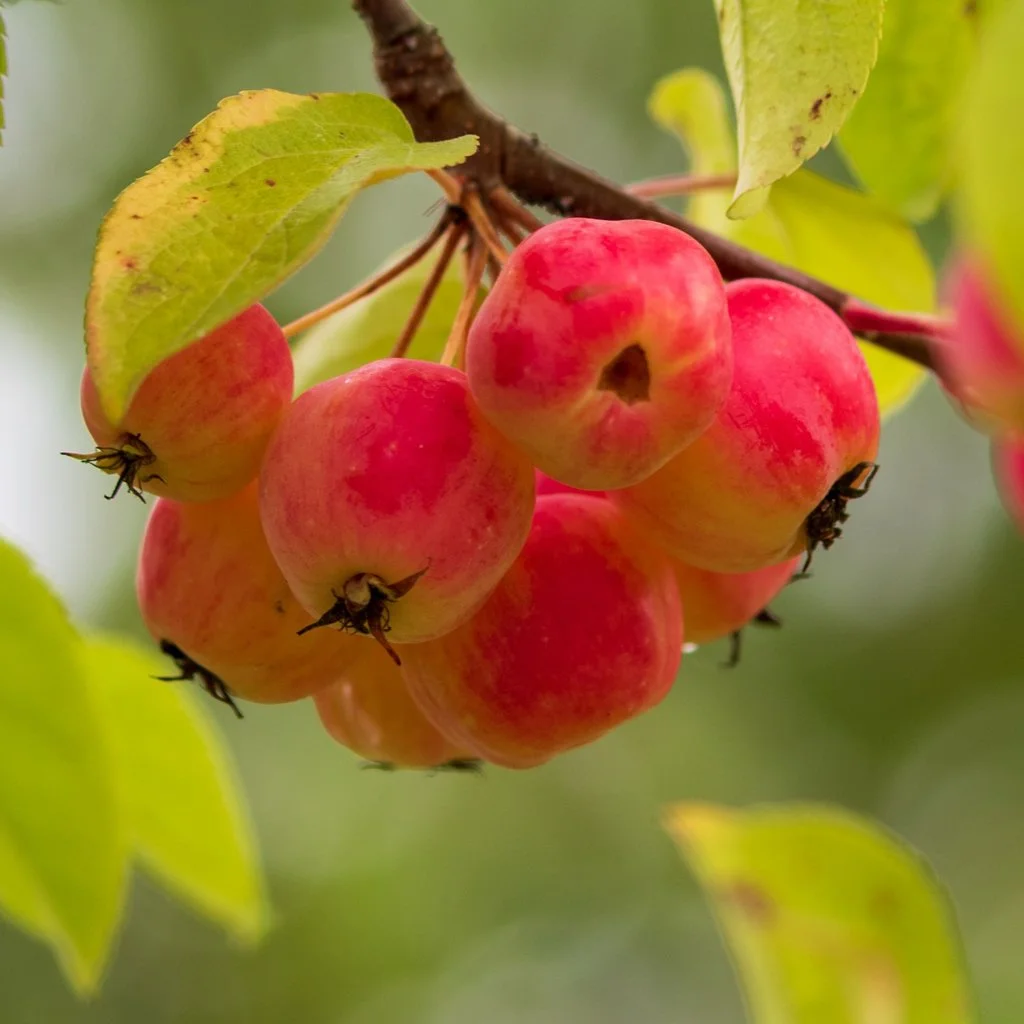
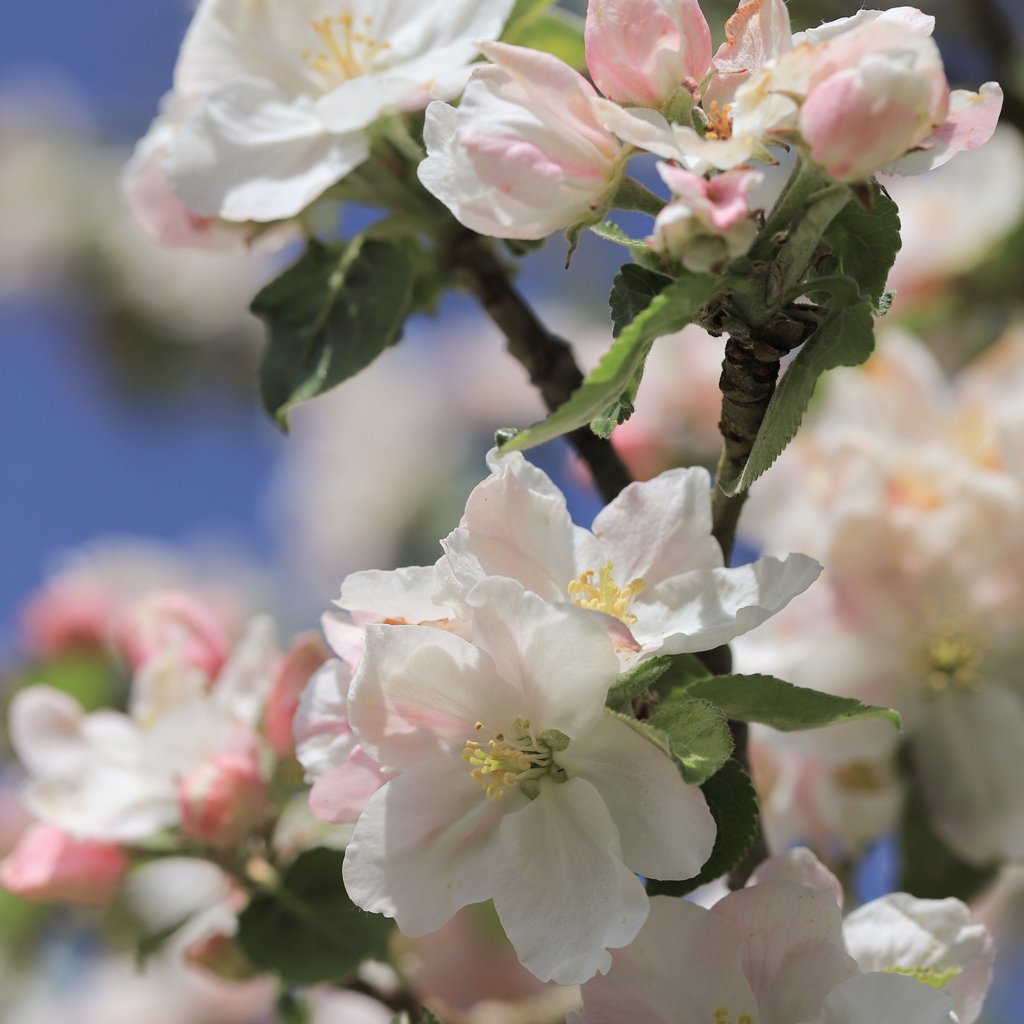
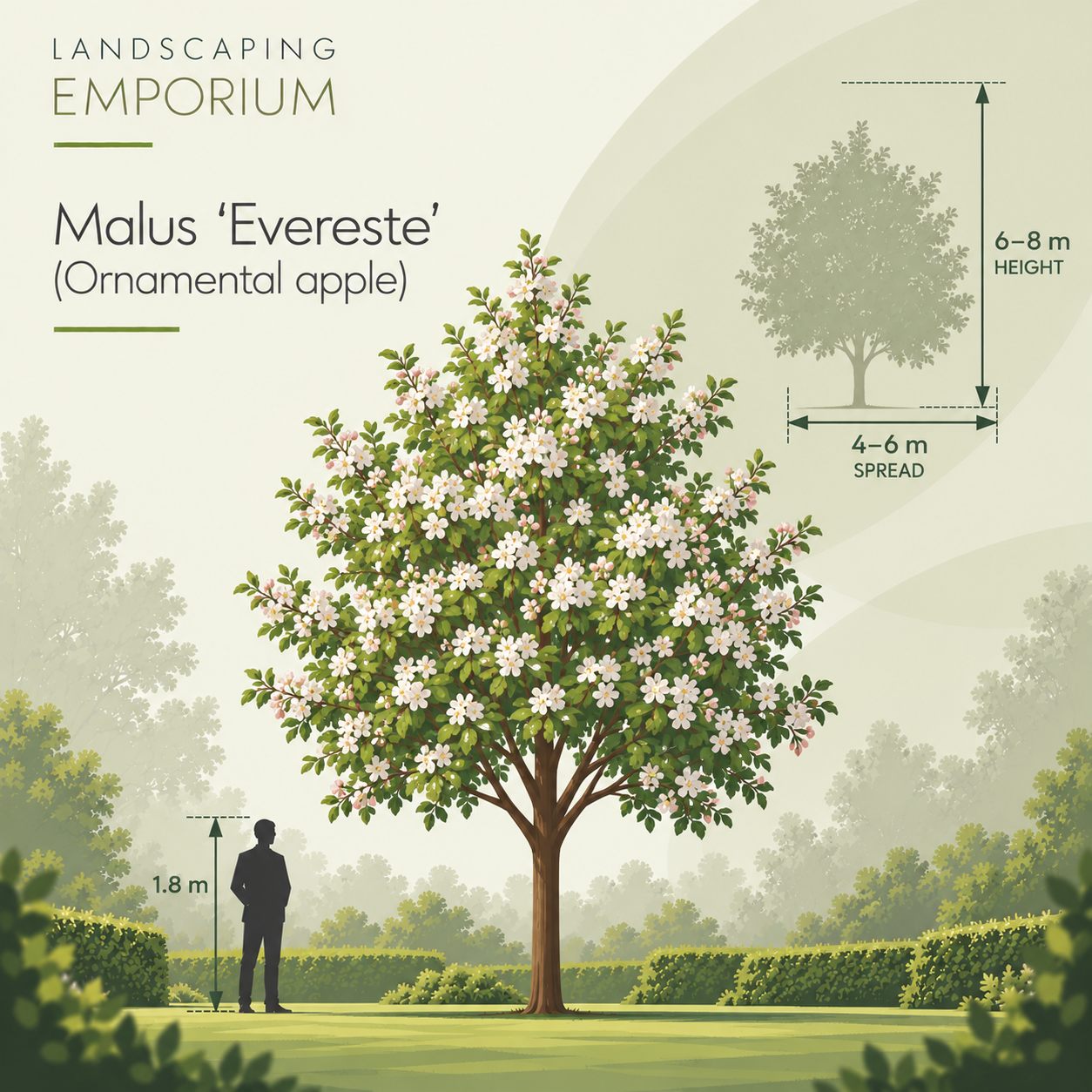
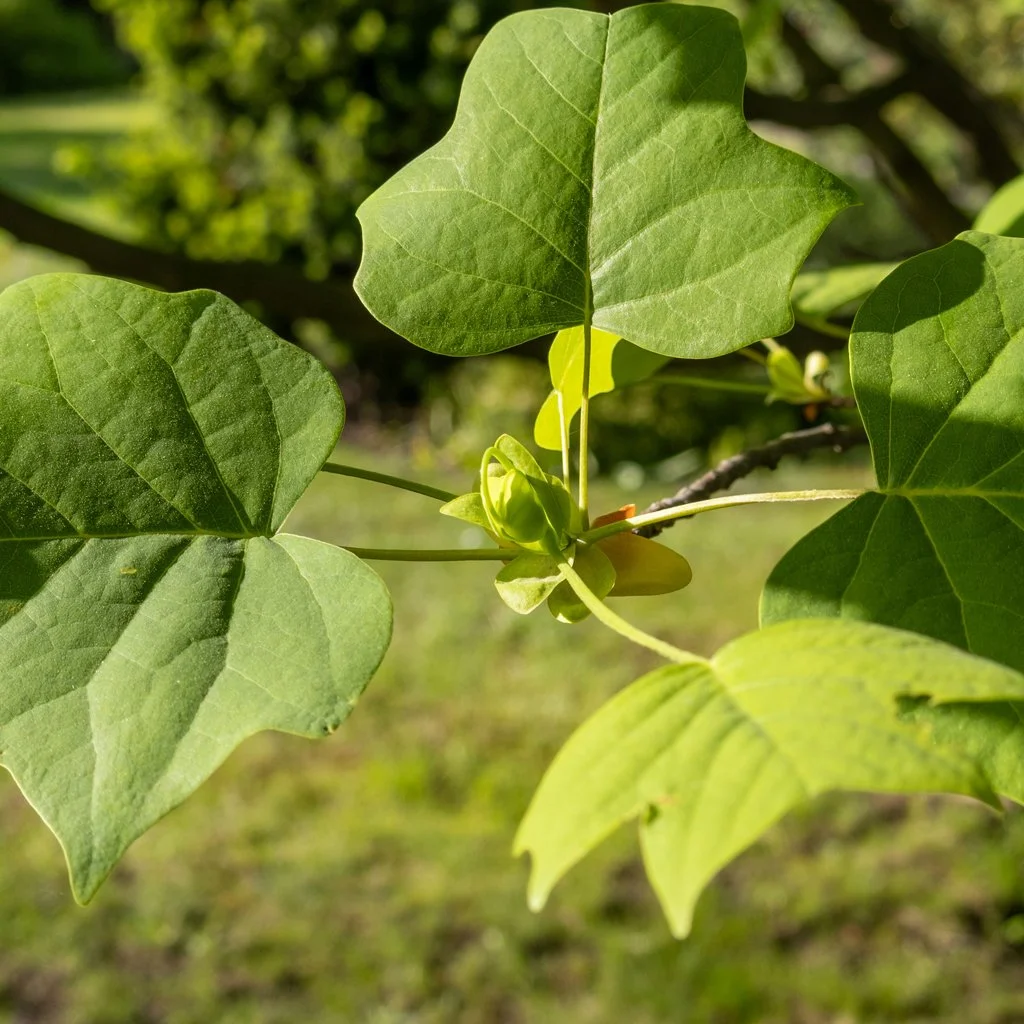
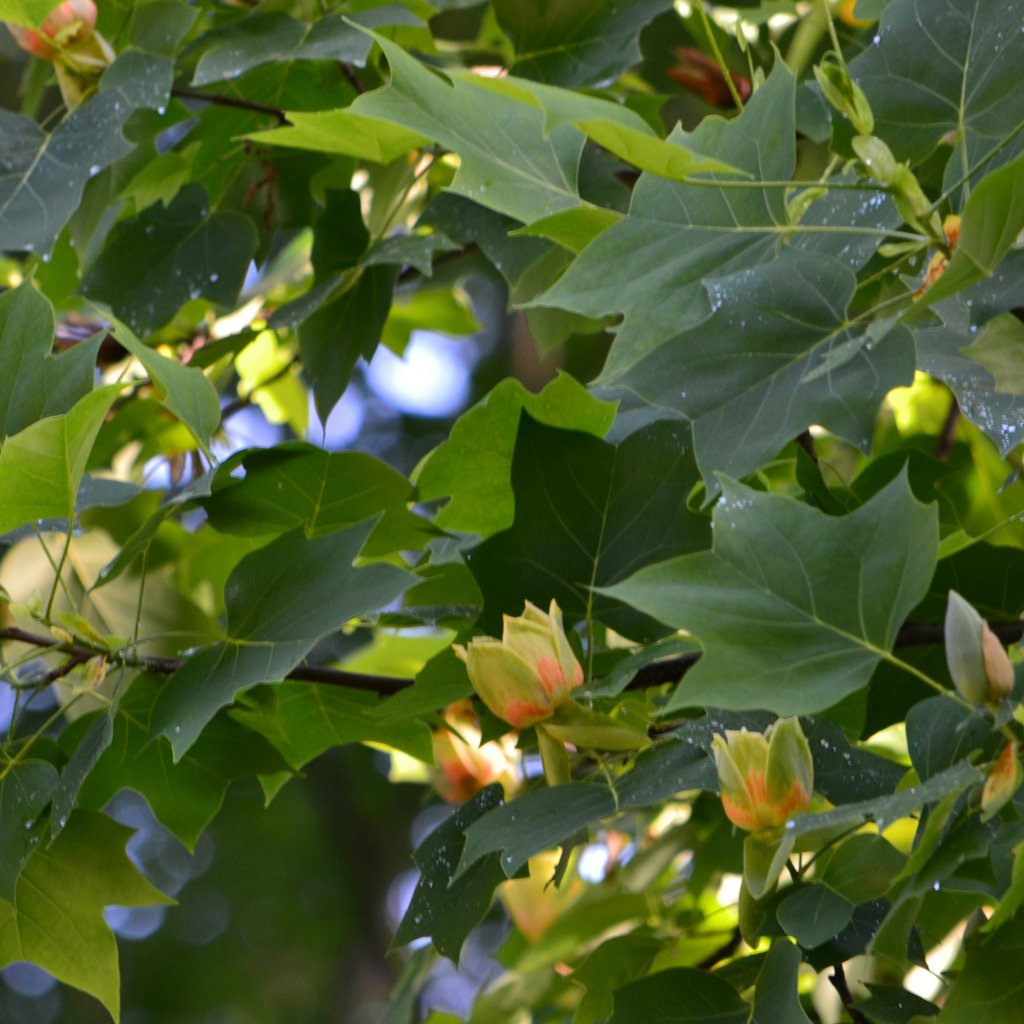
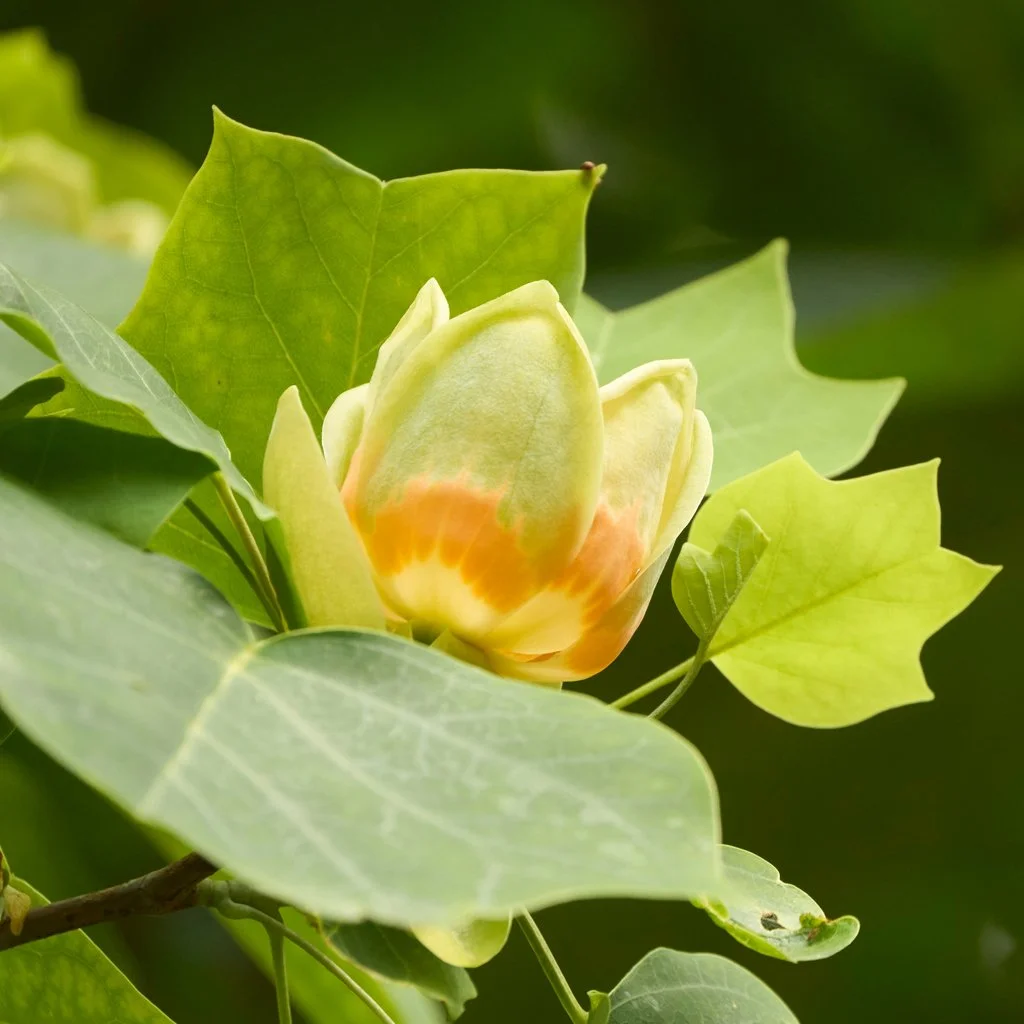
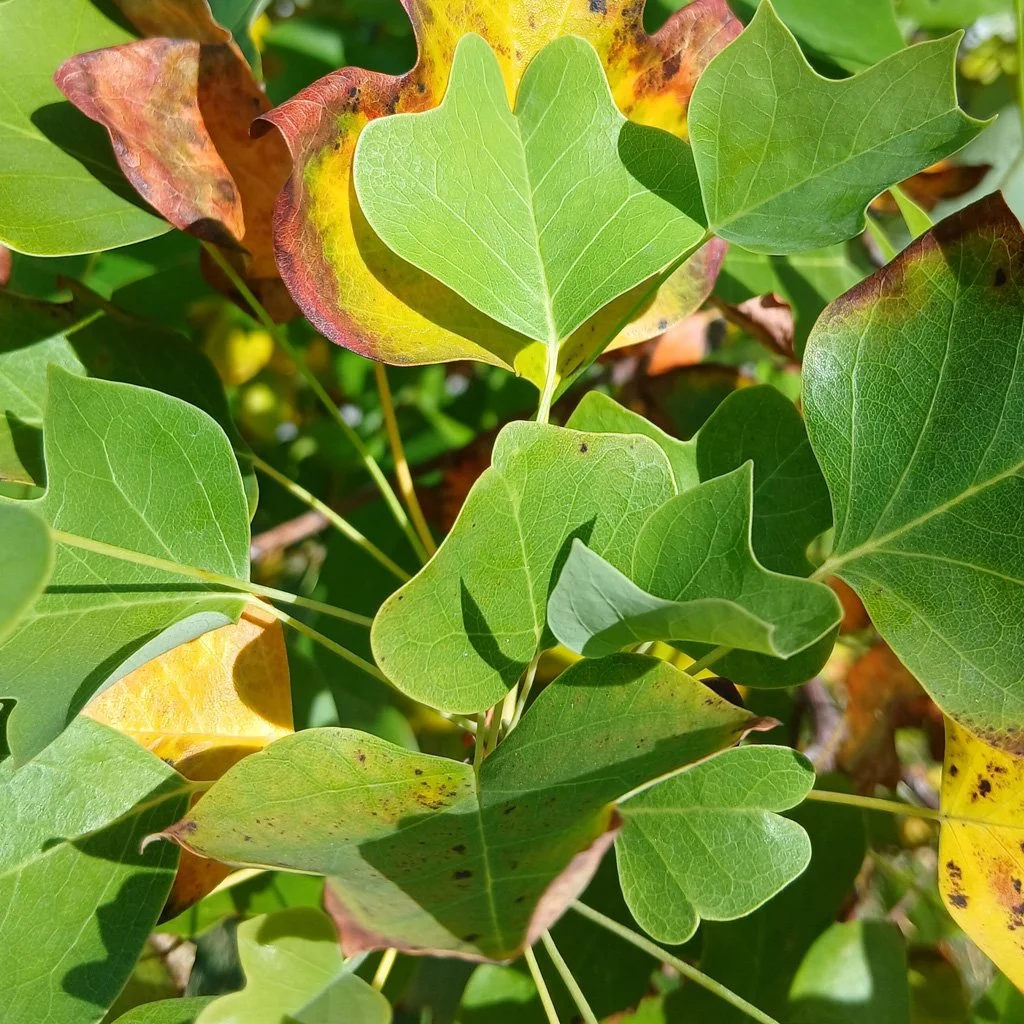
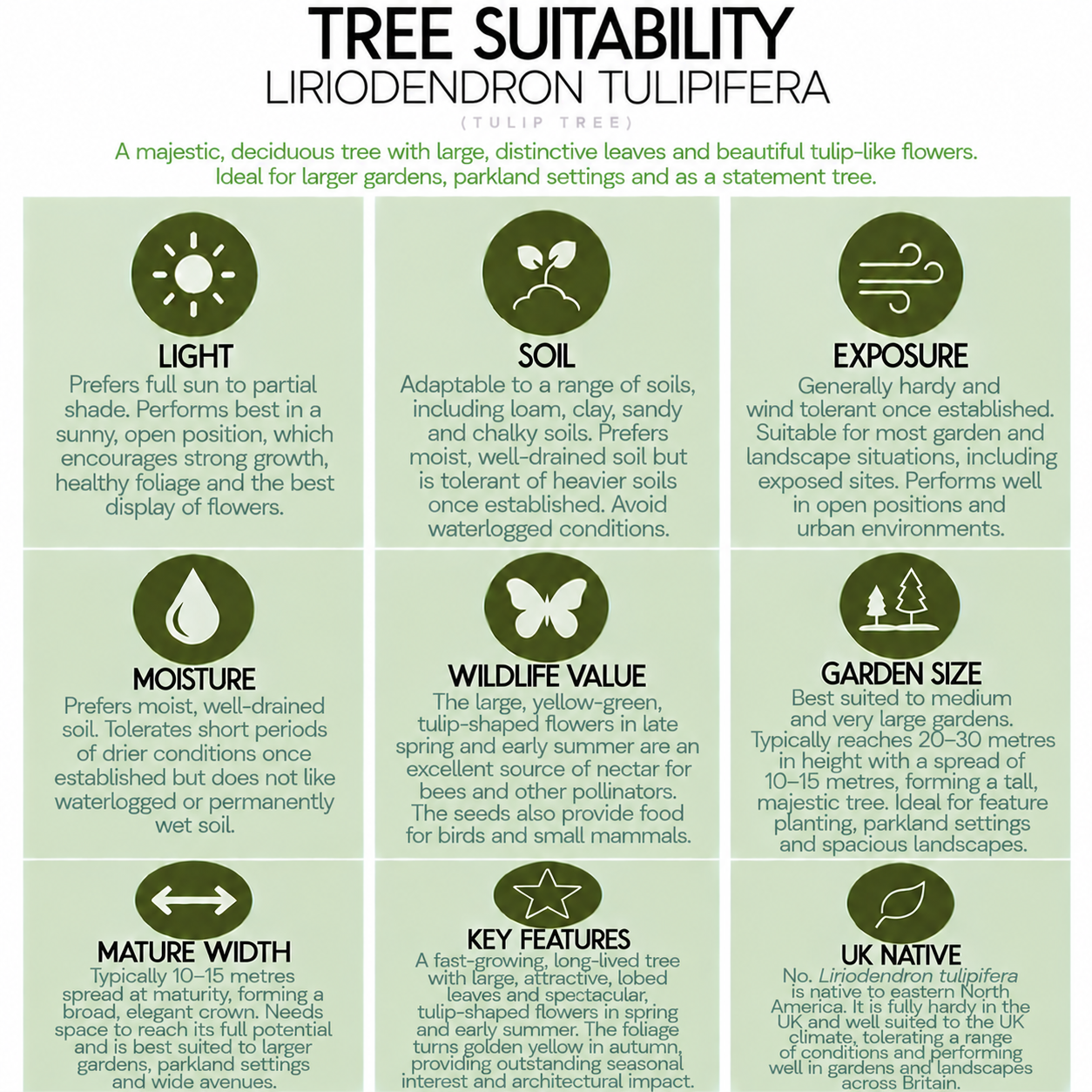
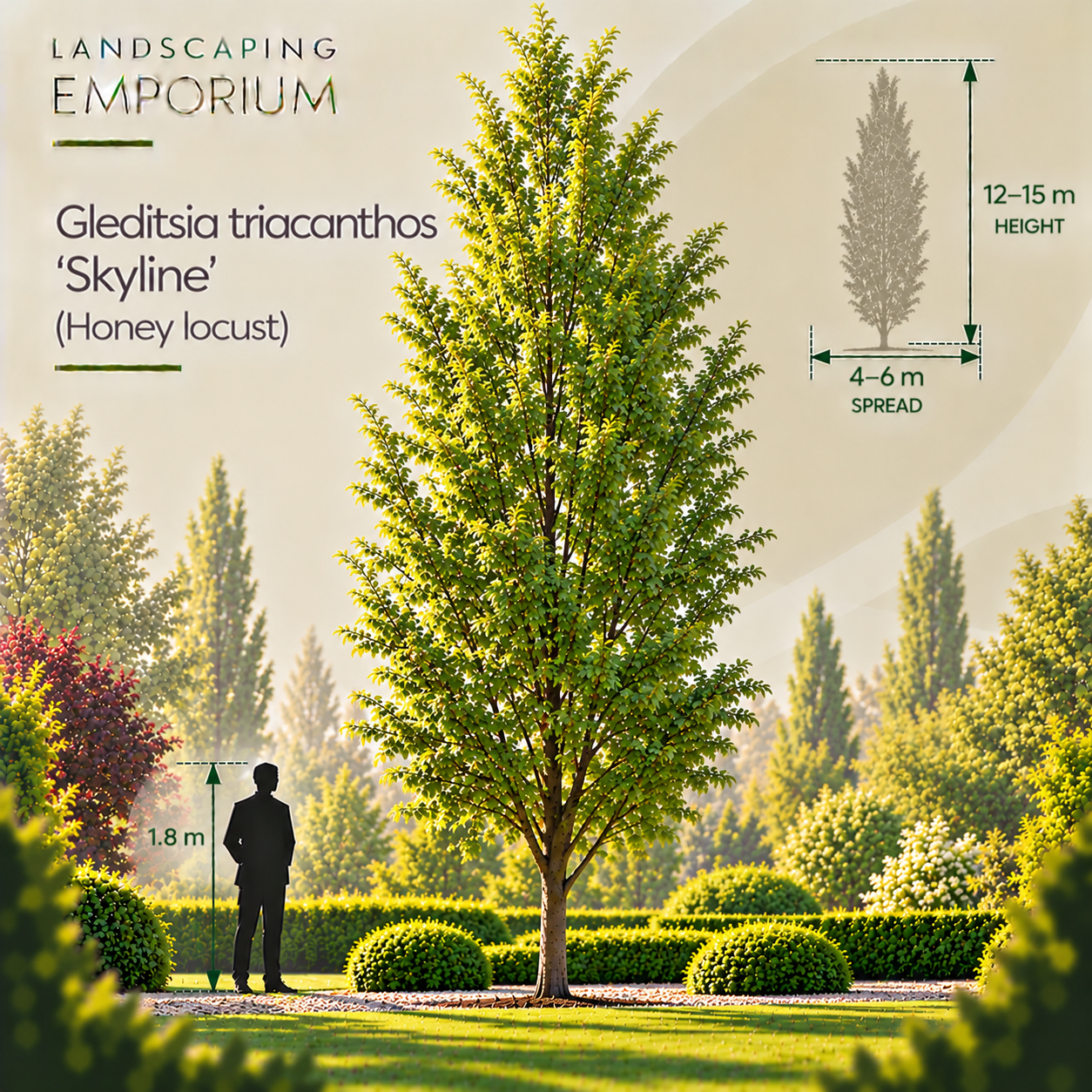
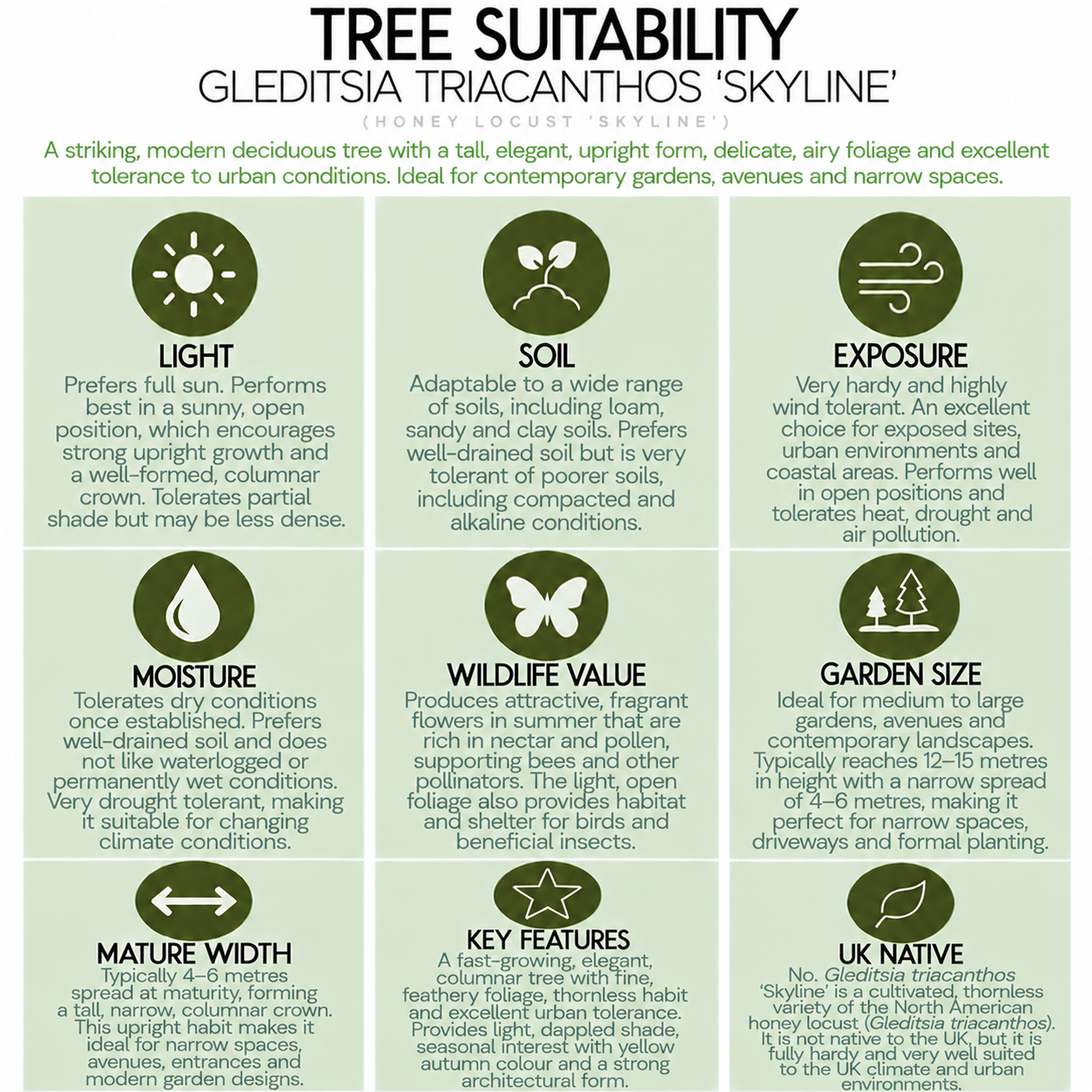
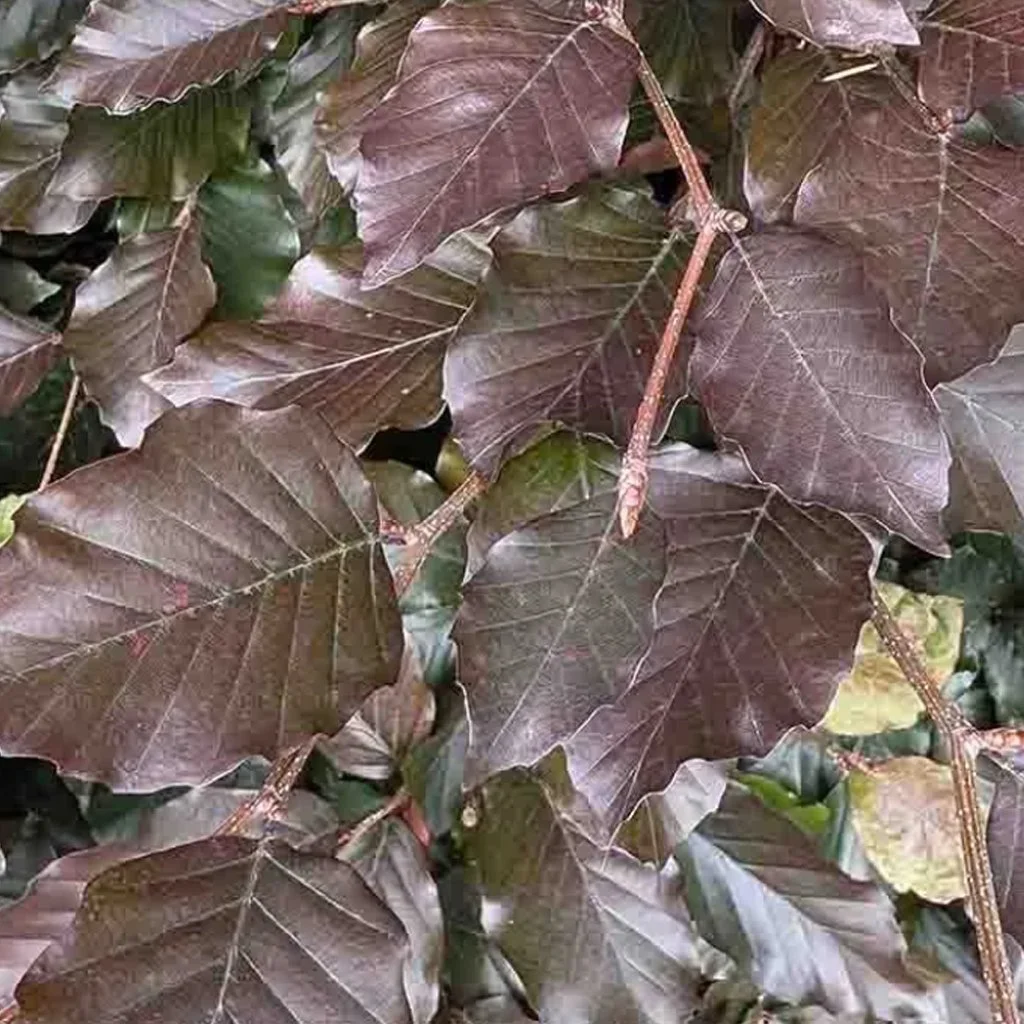
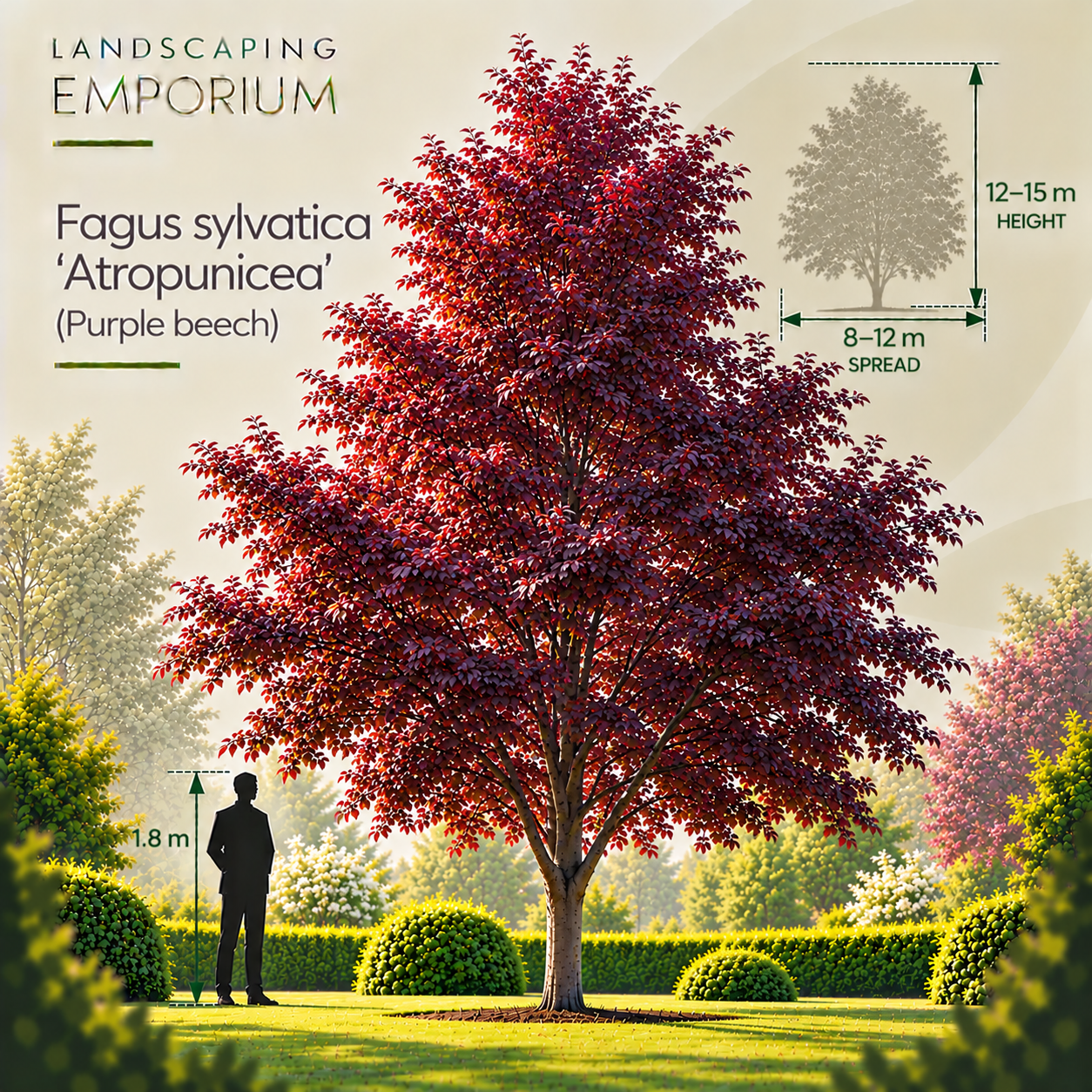
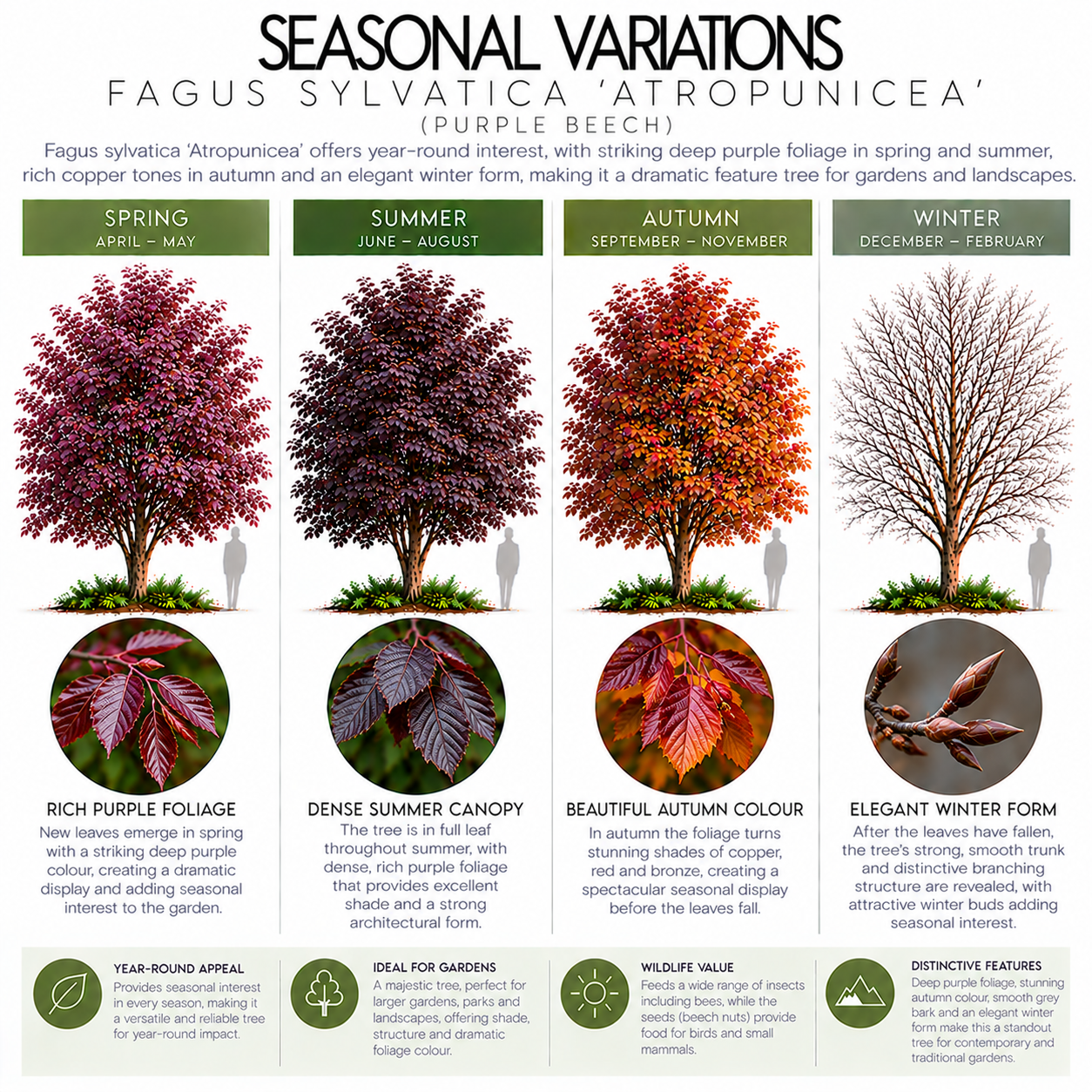
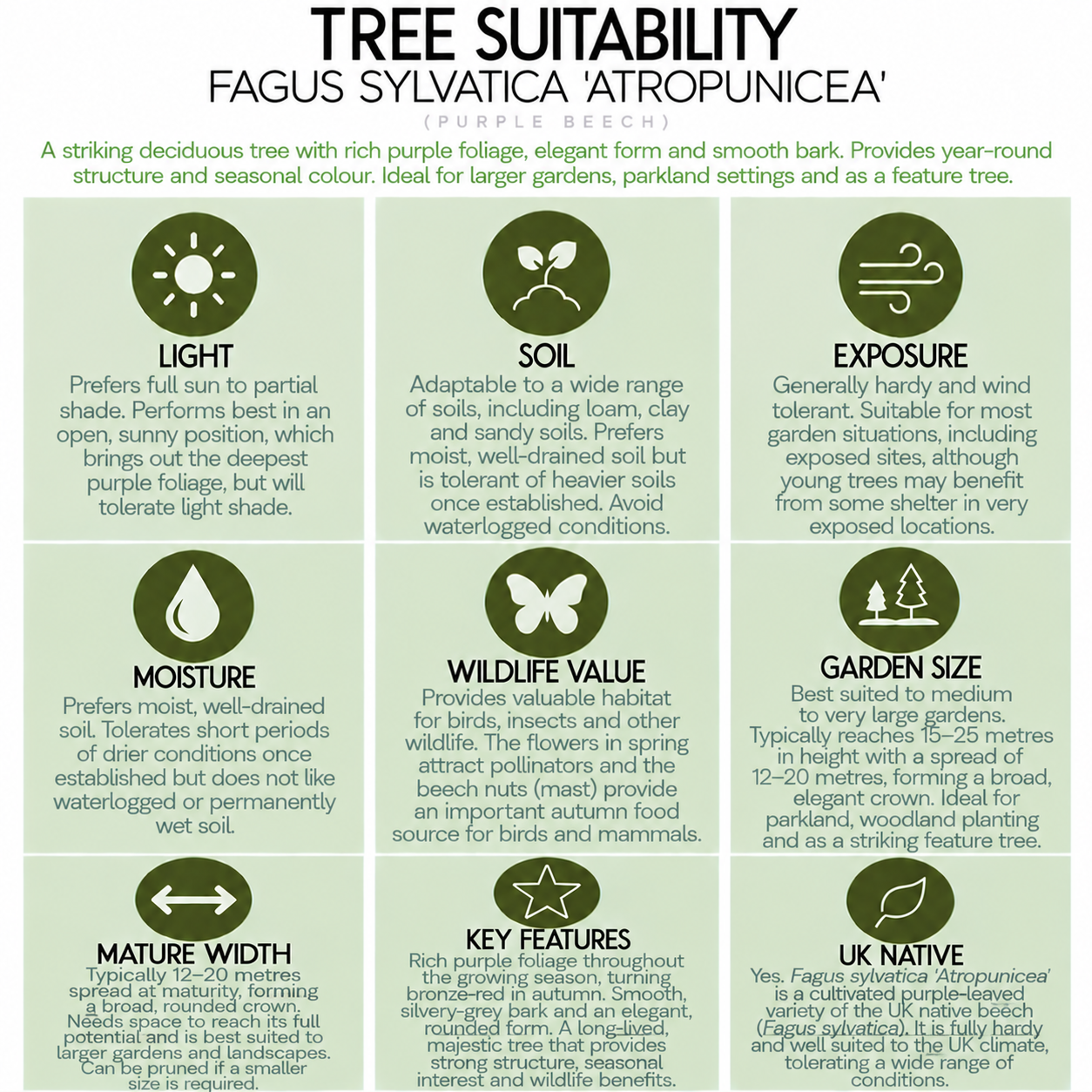
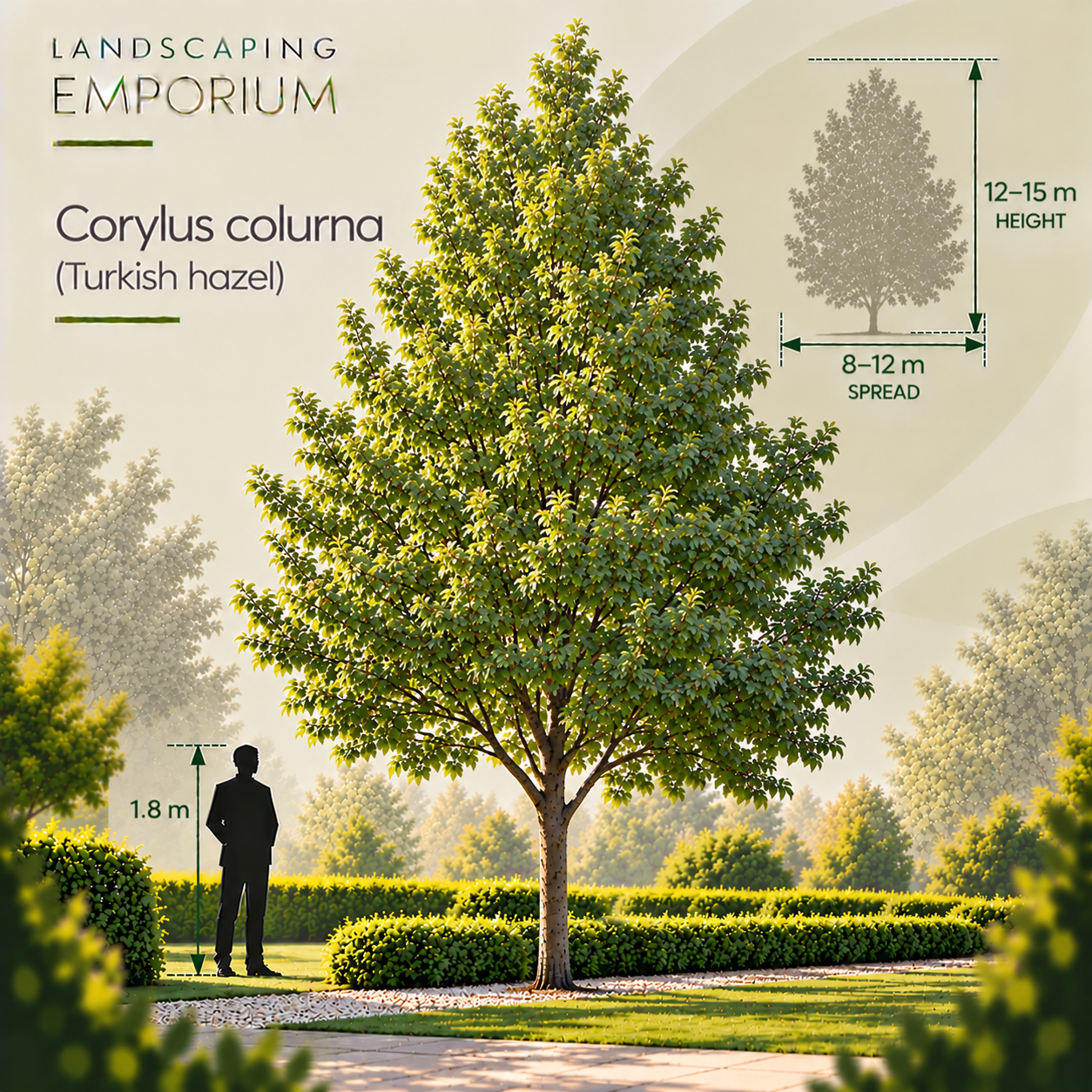
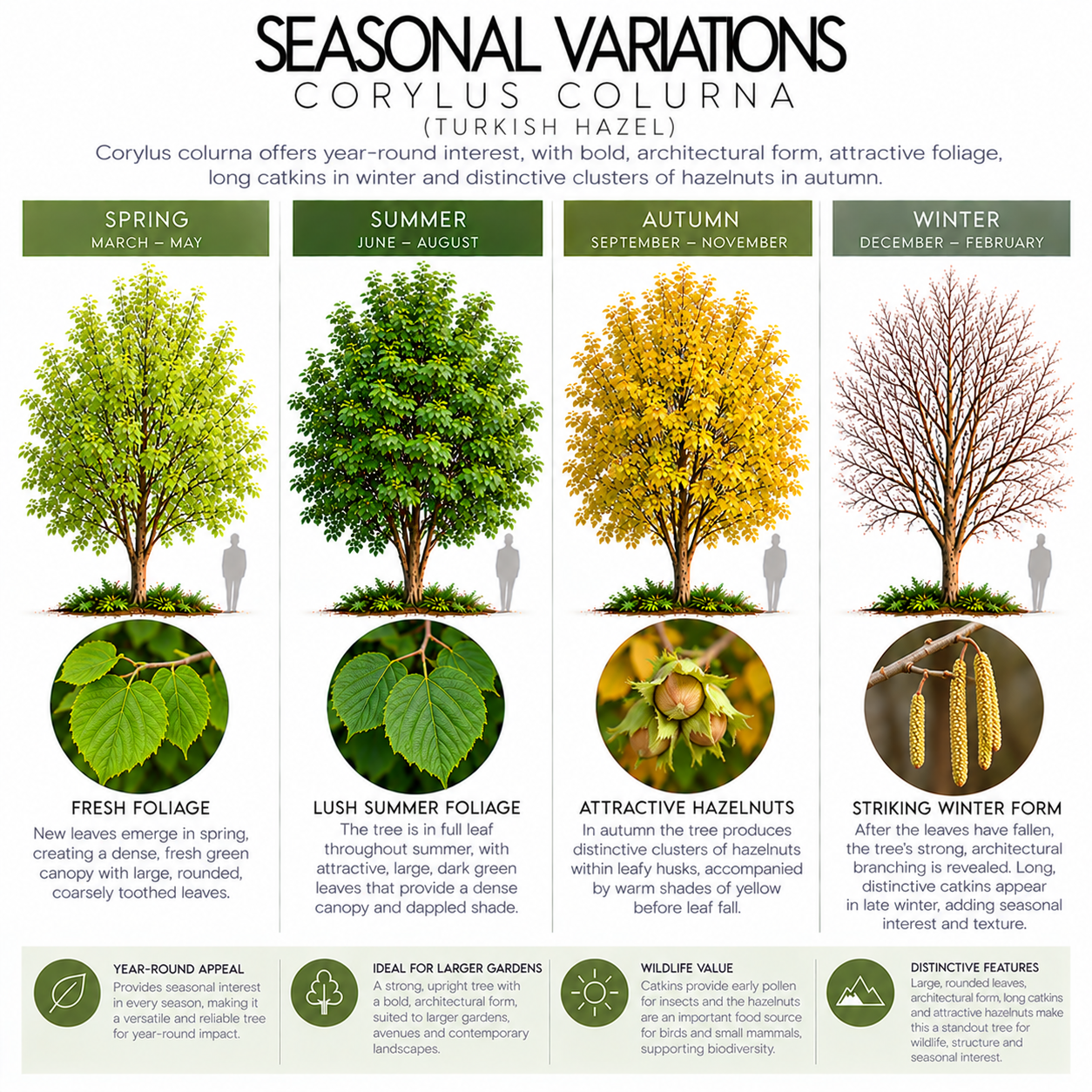
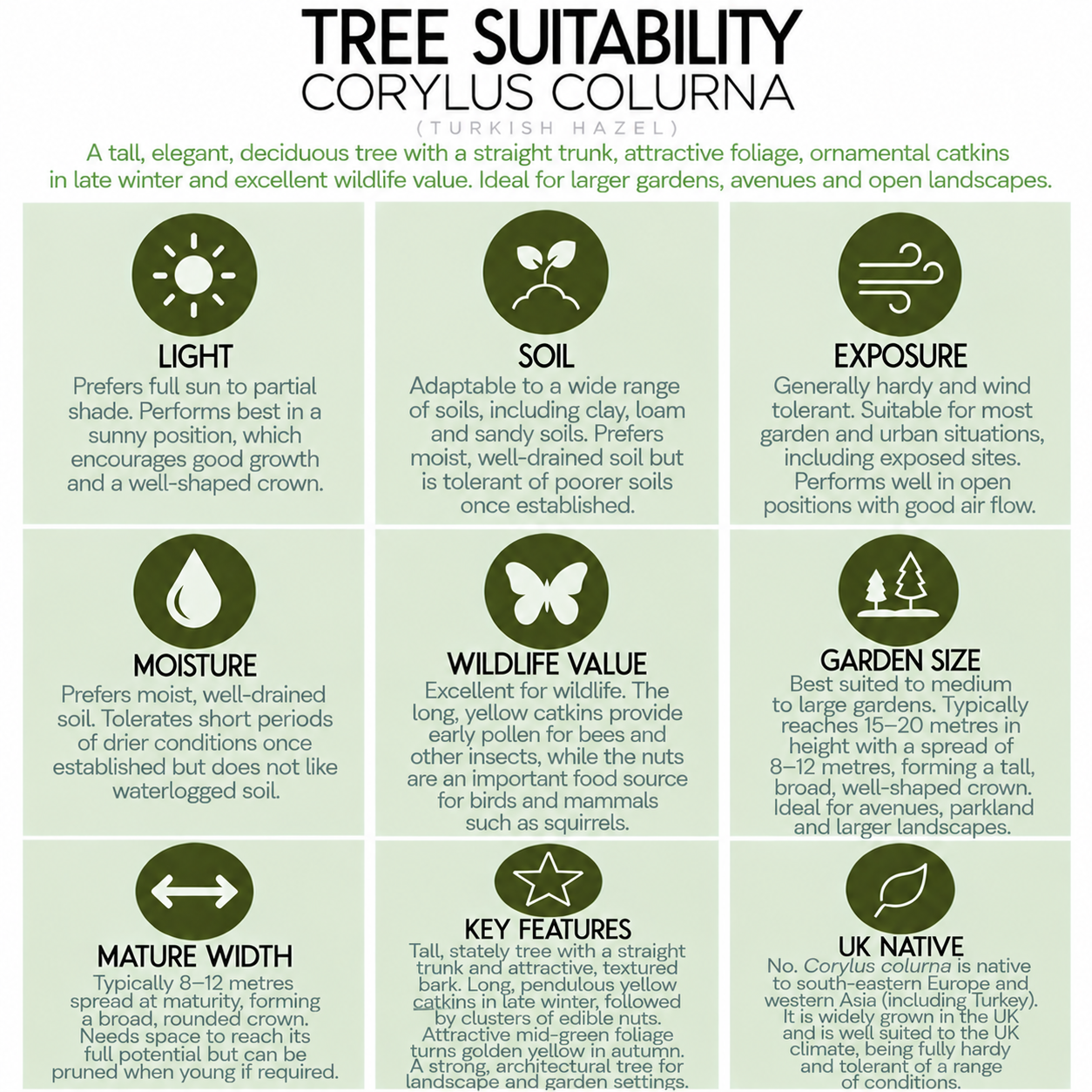
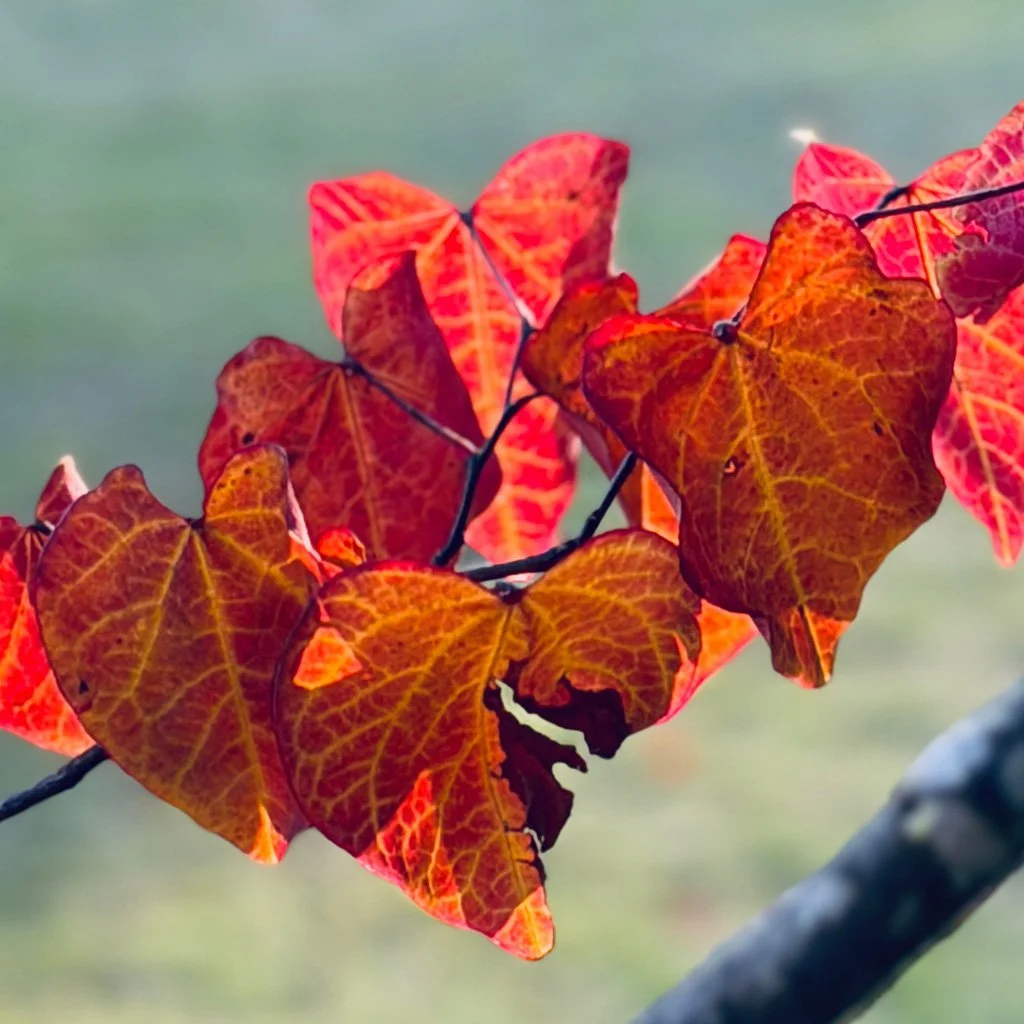
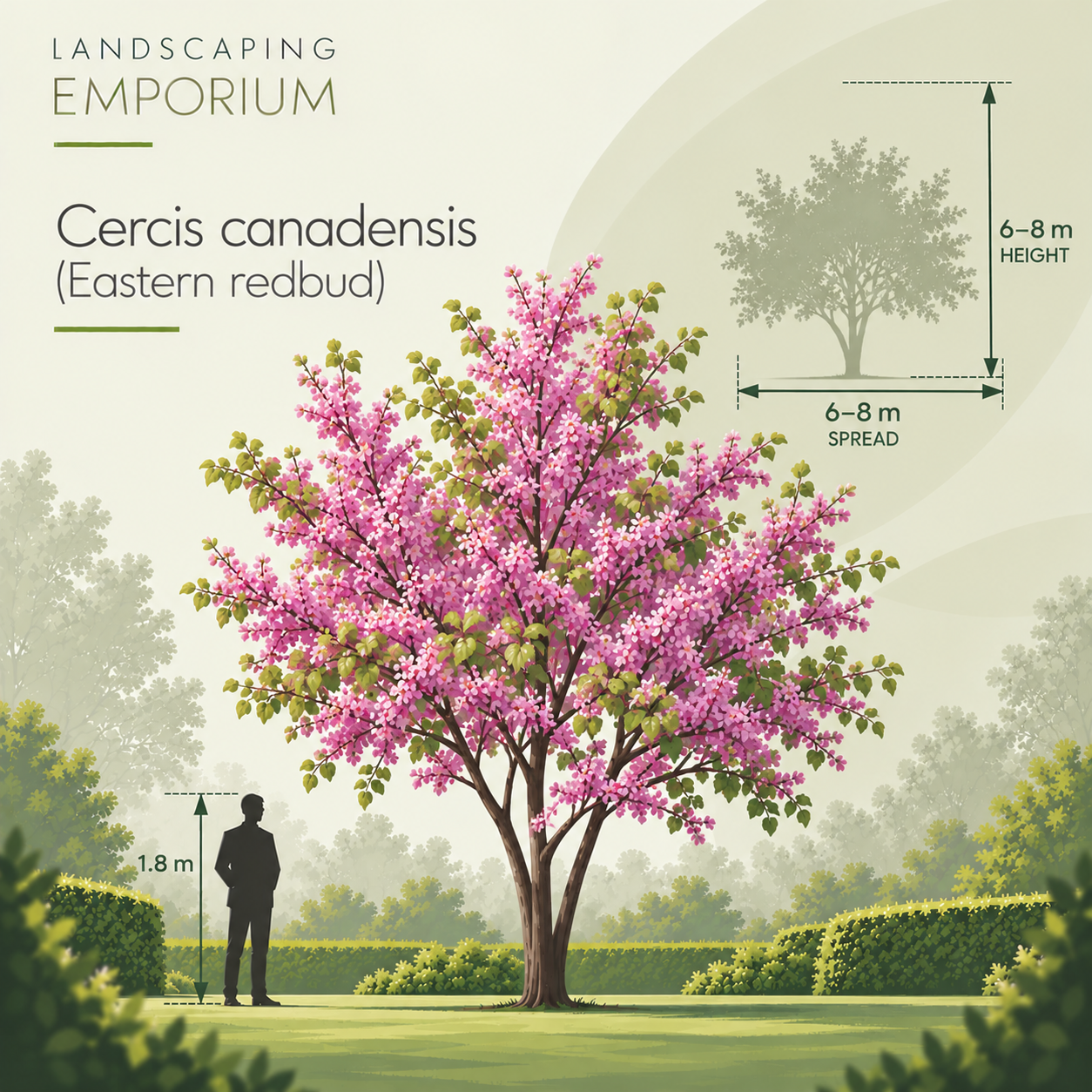
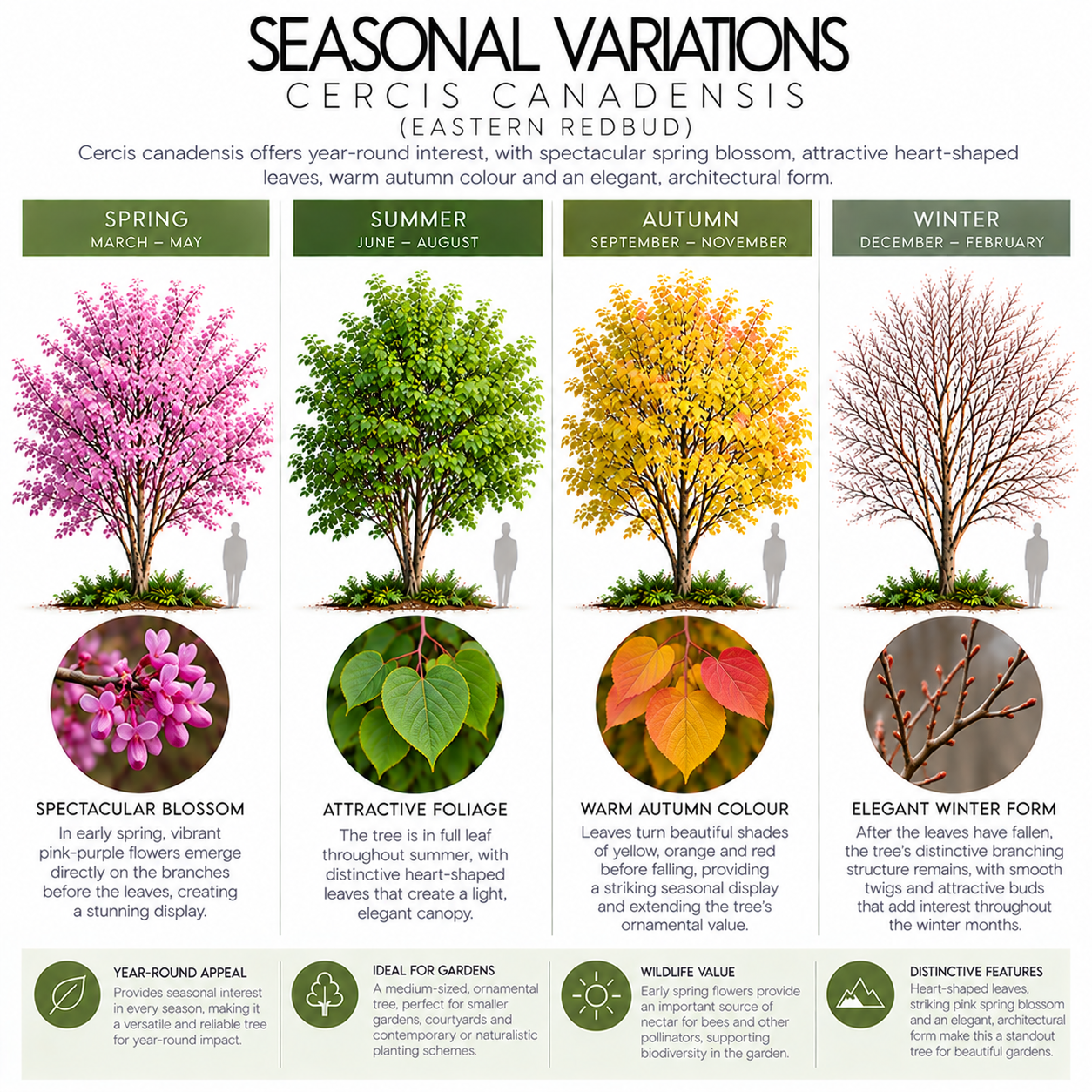
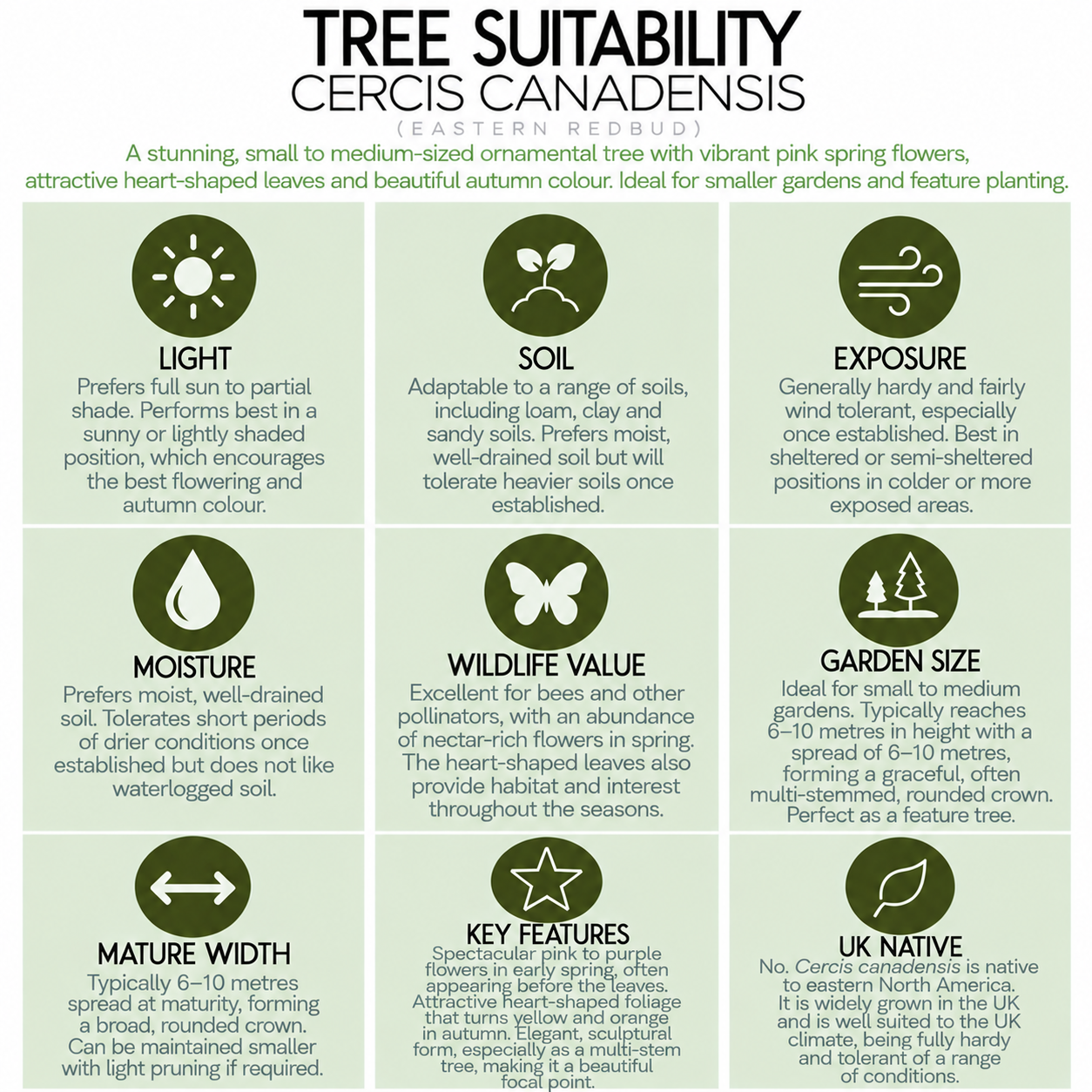
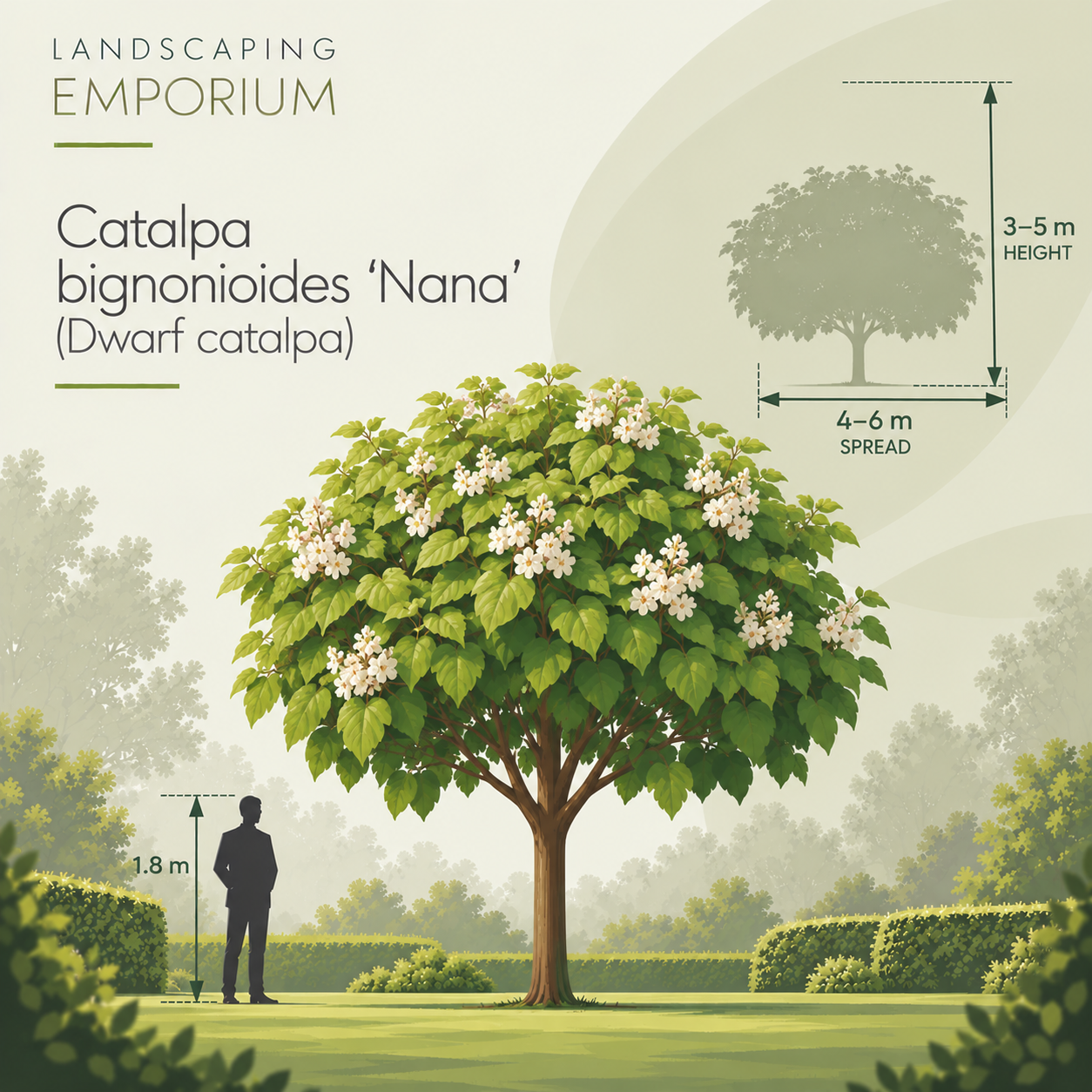
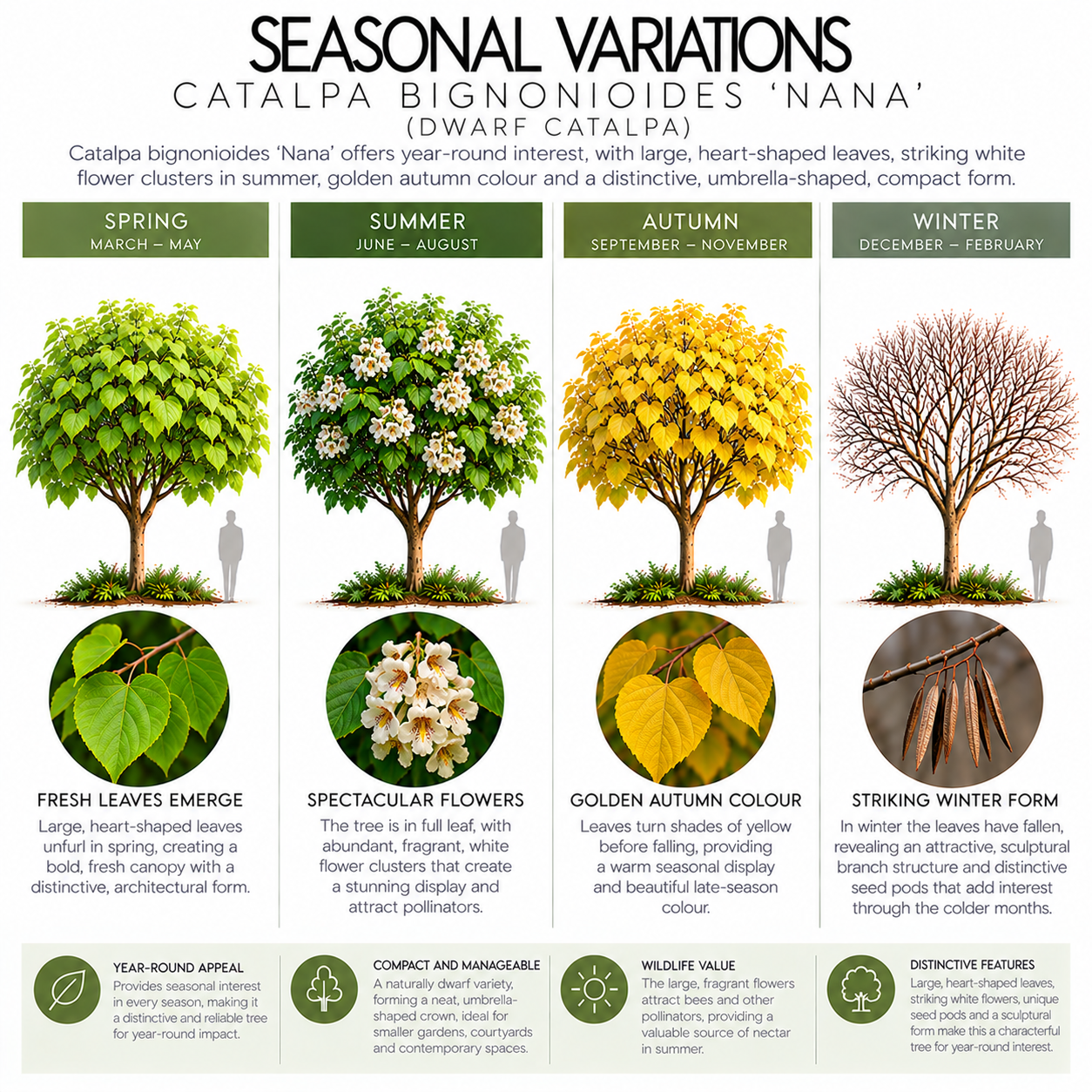
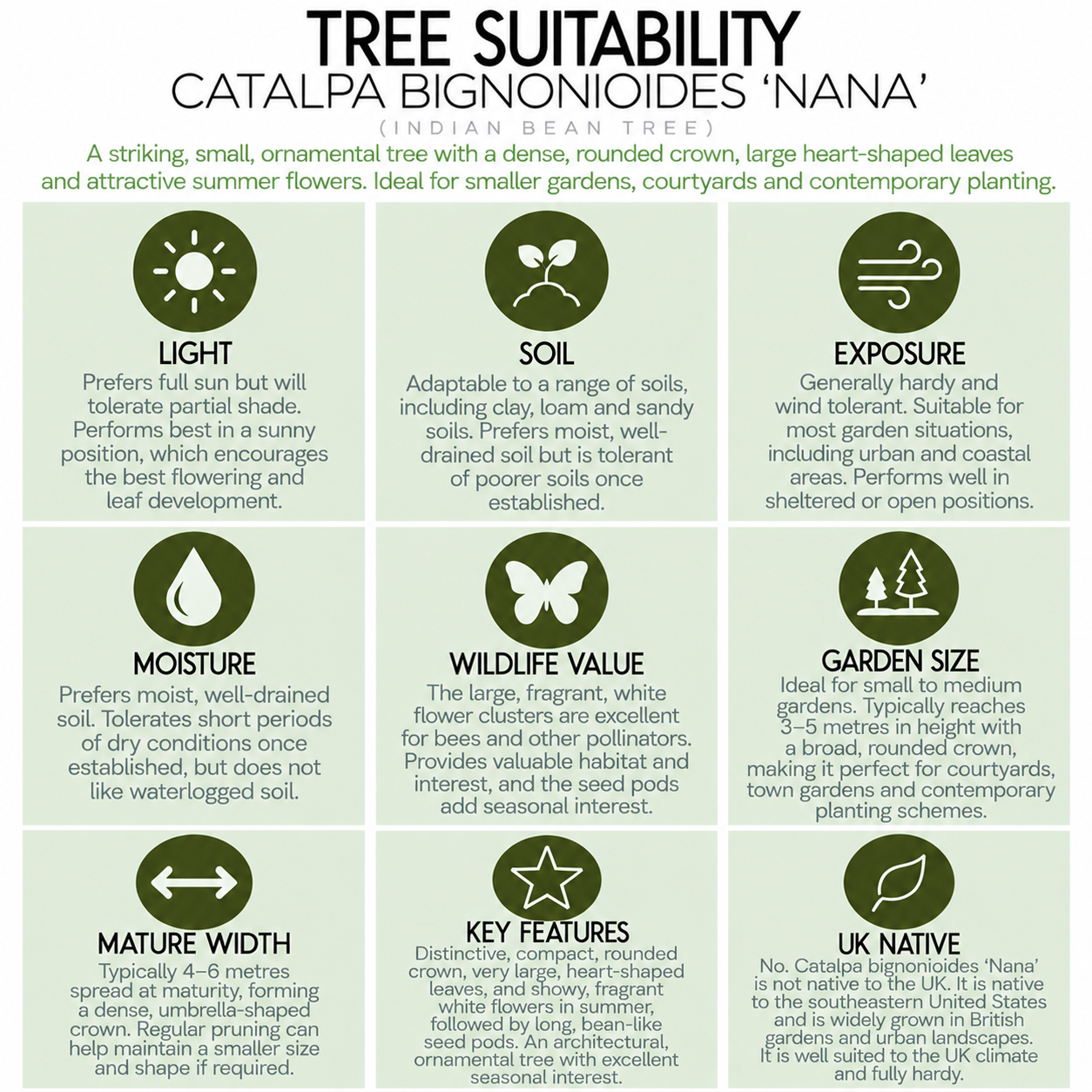
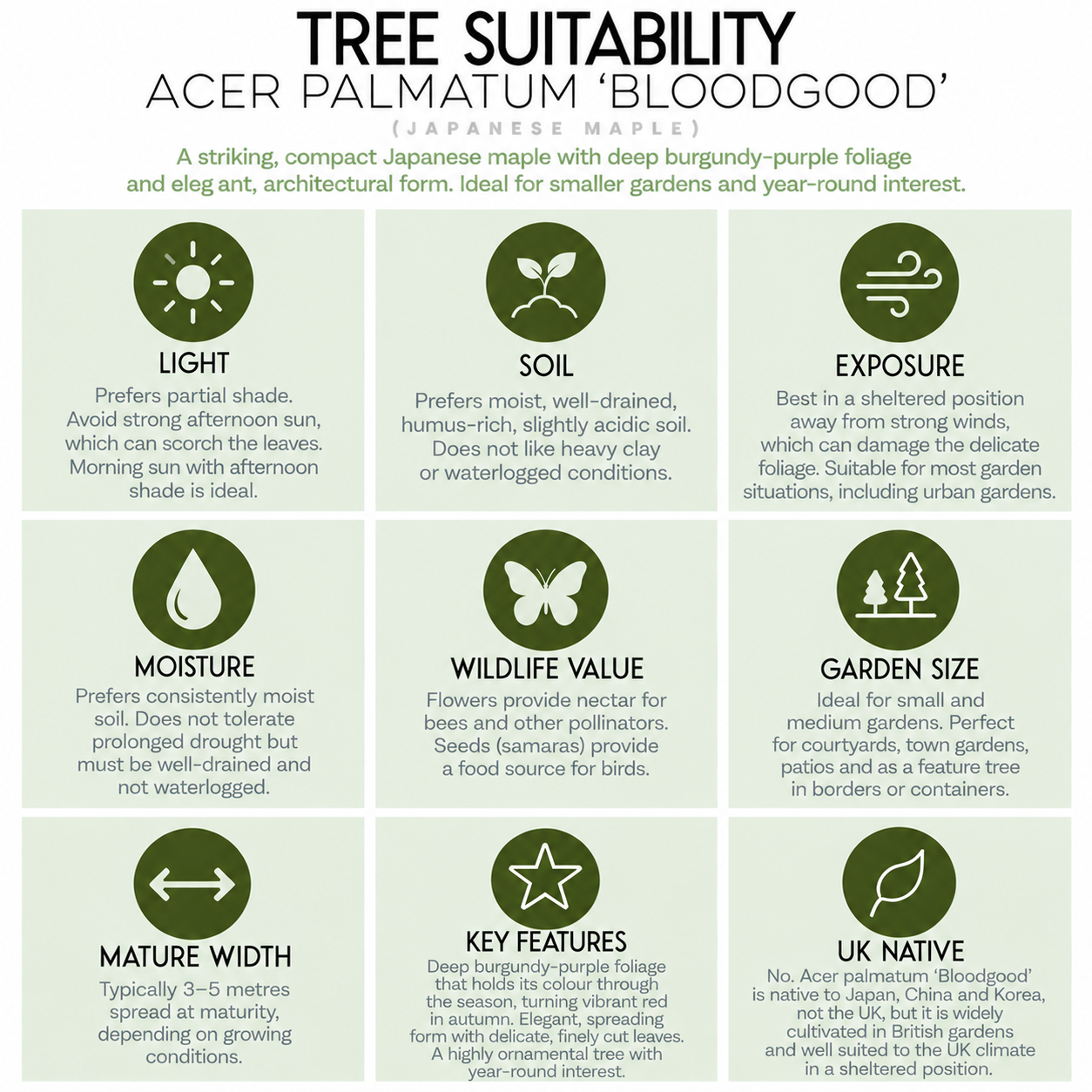
Choosing the Right Specimen Tree
Buying a tree should be considered differently from buying a short-lived garden accessory.
A tree can remain in the garden for decades and, in some cases, considerably longer.
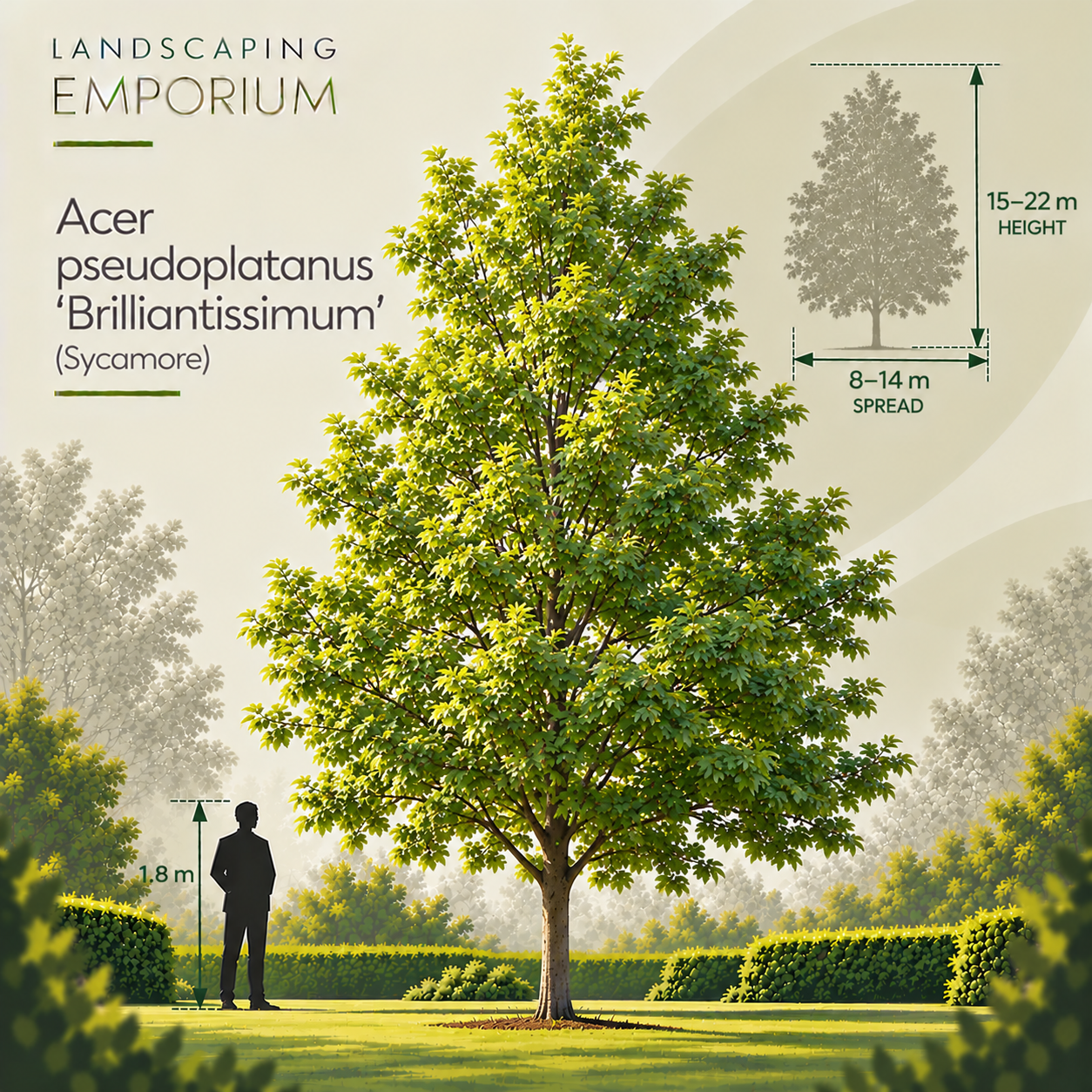
Its eventual height, spread, root system and relationship with the house and surrounding garden therefore matter.
The most attractive tree in the nursery is not necessarily the right tree for your particular garden.
Before choosing, think about what you want the tree to achieve.
Do you need privacy? Are you looking for spring blossom? Do you want autumn colour? Is wildlife important? Is the garden small? Is the soil wet? Do you need evergreen foliage?
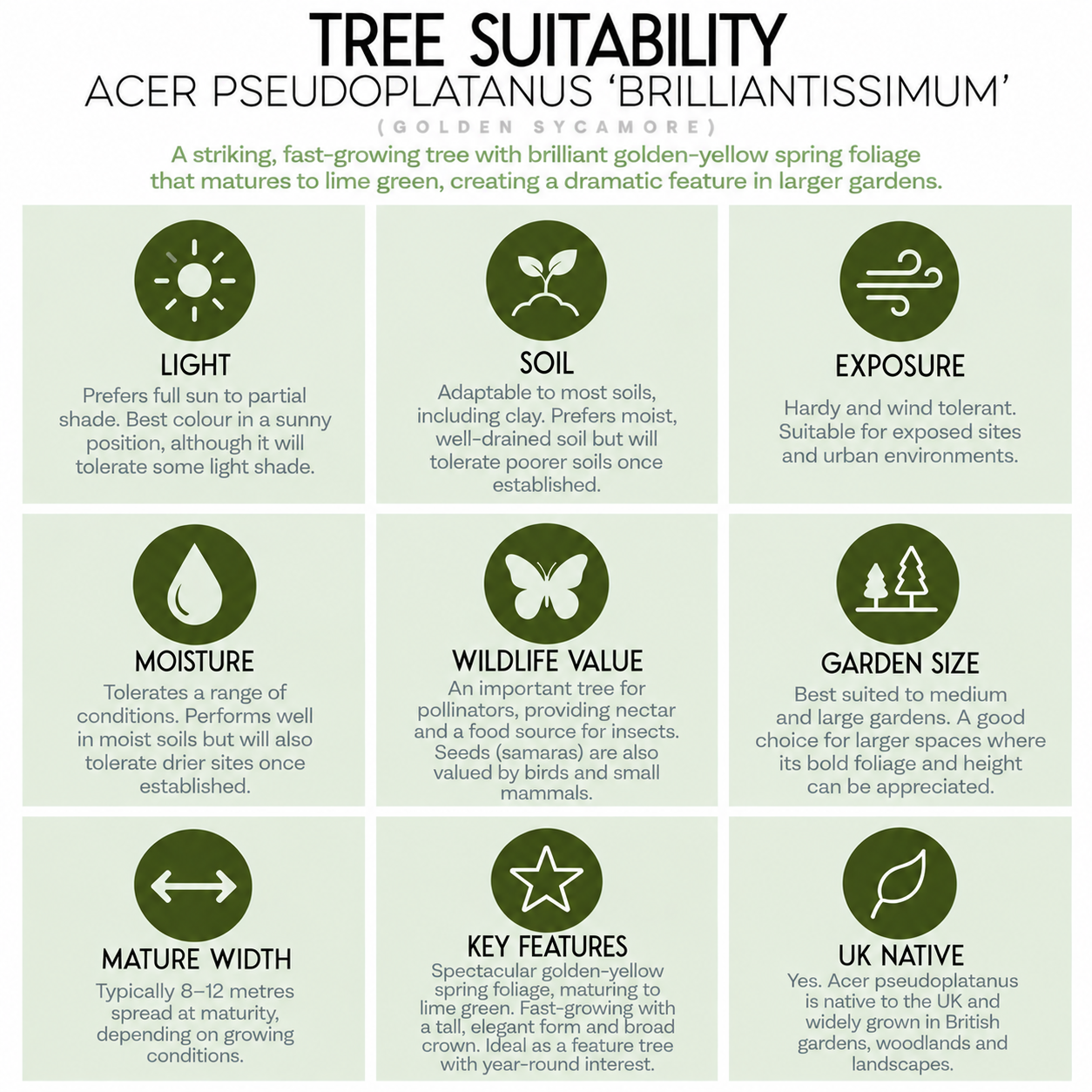
Once the purpose is clear, the list of suitable trees becomes much easier to narrow down.
What Is a Specimen Tree?
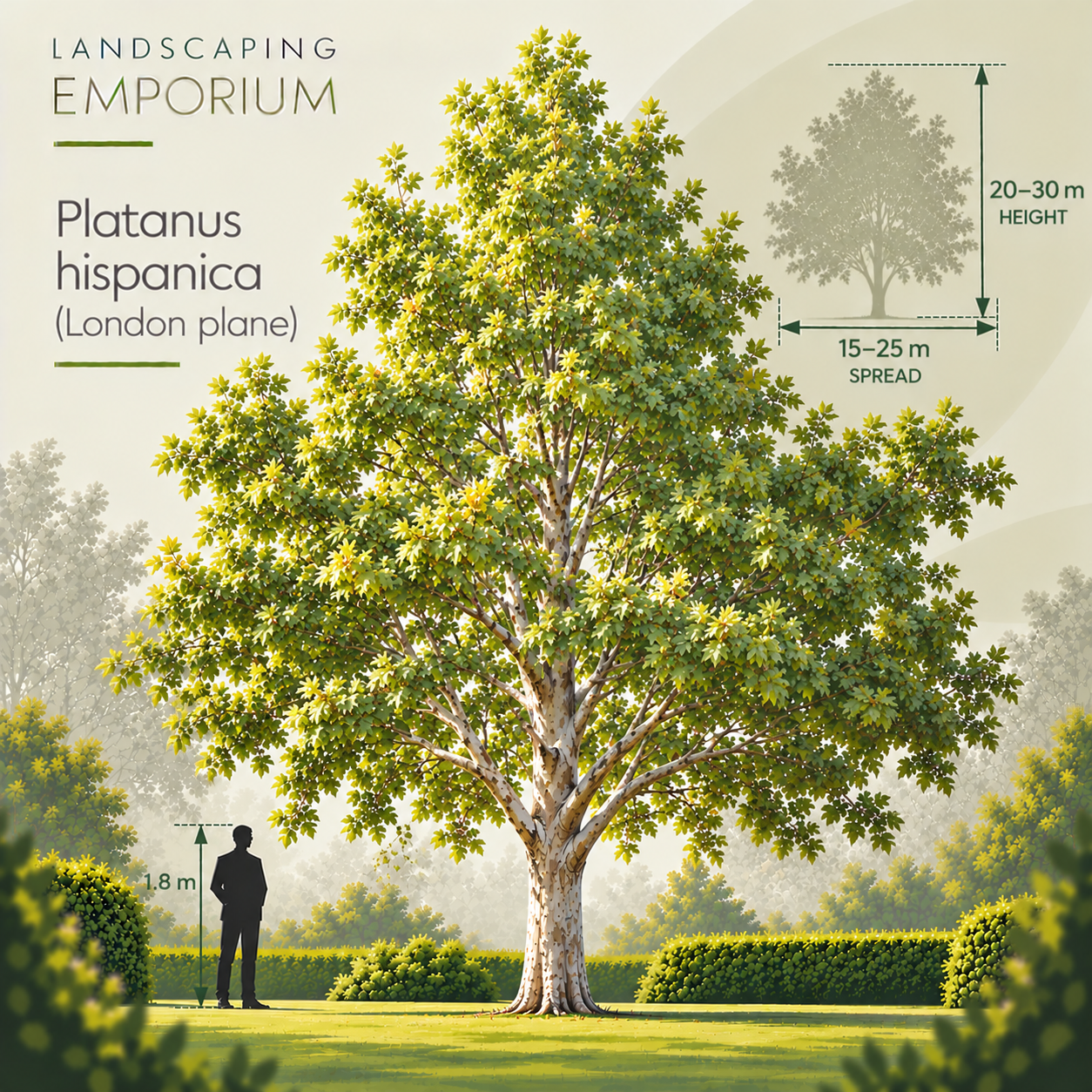
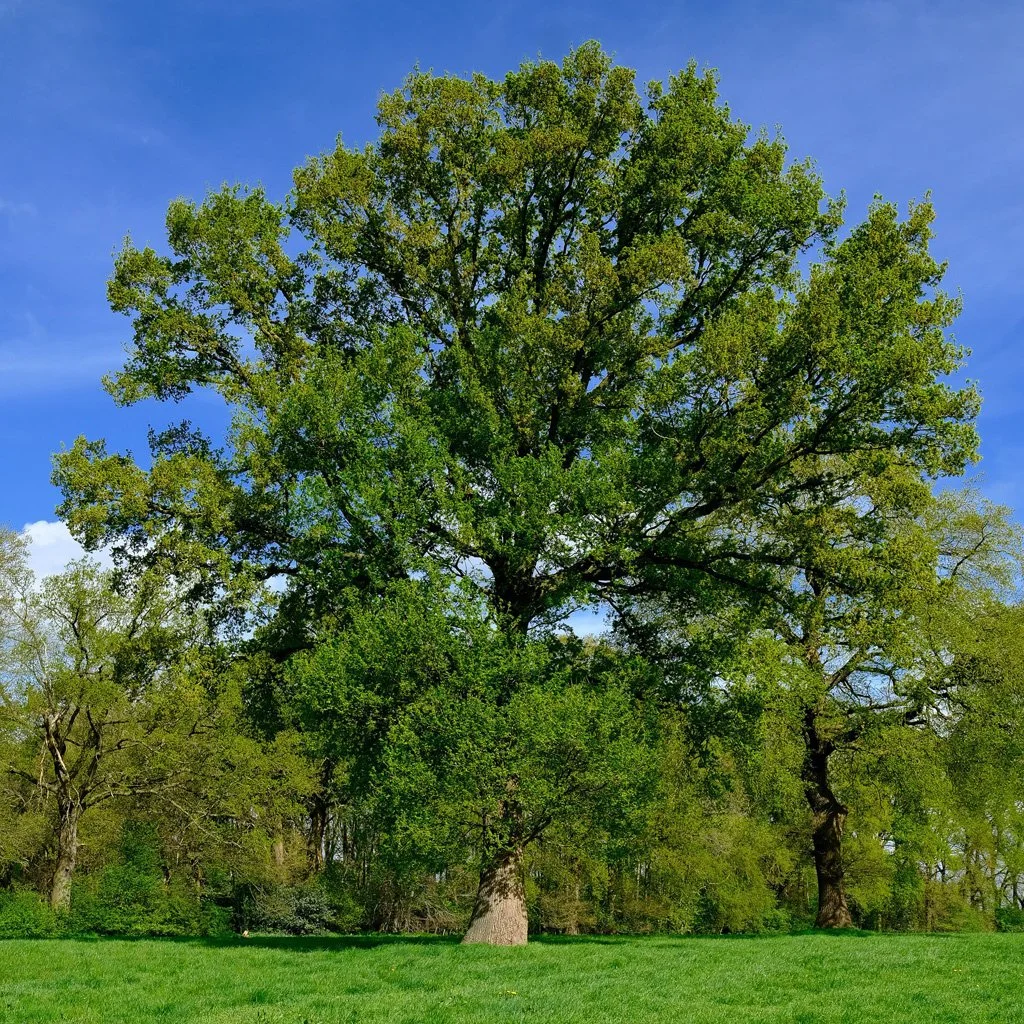
A specimen tree is generally a tree selected to make a significant visual contribution to the landscape.
It might be planted as a focal point in a lawn, positioned within a large border, used to frame a view or selected to provide screening.
The term does not refer to one particular botanical group.
A specimen tree could be a flowering cherry, ornamental apple, birch, maple, oak, evergreen tree or carefully selected multi-stem specimen.
What matters is the role it plays within the garden.
Specimen Trees as Living Architecture
We often think of trees as the largest pieces of planting within a garden, but they can also be considered part of its architecture.
Their trunks establish vertical lines.
Their canopies create ceilings and enclosure.
Repeated trees can establish rhythm.
A single tree can create a focal point at the end of a view.
Carefully positioned trees can also divide a large garden into smaller spaces without introducing solid walls or fences.
This is why tree selection and positioning are such important parts of garden design.
The tree needs to work with the architecture of the house, the scale of the garden and the planting around it.
Mature Trees for Immediate Impact
There are situations where waiting many years for a young tree to develop is simply not desirable.
A newly landscaped garden may need height immediately. A neighbouring development may have created an urgent privacy problem. A substantial house may require planting with enough scale to balance its architecture.
In these situations, larger mature or semi-mature specimen trees can transform the landscape remarkably quickly.
They cost more than younger trees and require more careful handling, transport, planting and establishment, but they provide something that cannot easily be replicated with small plants: instant scale.
If this is your priority, read our guide to Mature Trees for Sale.
Specimen Trees for Privacy
Trees can provide privacy without creating the visual heaviness of a continuous high fence.
The important point is that privacy planting should be designed around the sightline rather than simply selecting the tallest tree available.
If the problem is an upstairs window overlooking a patio, for example, the tree needs foliage positioned between that window and the patio.
A carefully positioned medium-sized tree may solve the problem better than a much larger tree planted in the wrong place.
Trees can also be combined with hedging, fencing and other planting to create layered screening.
Trees for Screening Neighbours
Screening is one of the most common reasons customers approach us about specimen trees.
Modern houses can be relatively close together, while extensions and upper-storey windows can create direct views into neighbouring gardens.
Trees provide a softer alternative to increasing the height of solid boundaries.
Evergreen trees can provide screening throughout the year, while deciduous trees can be highly effective where privacy is primarily required during spring and summer, when the garden is used most.
The best solution depends on the viewing angle, distance, garden size and site conditions.
Our detailed Trees for Screening Neighbours guide explains the options in more detail.
Evergreen Specimen Trees
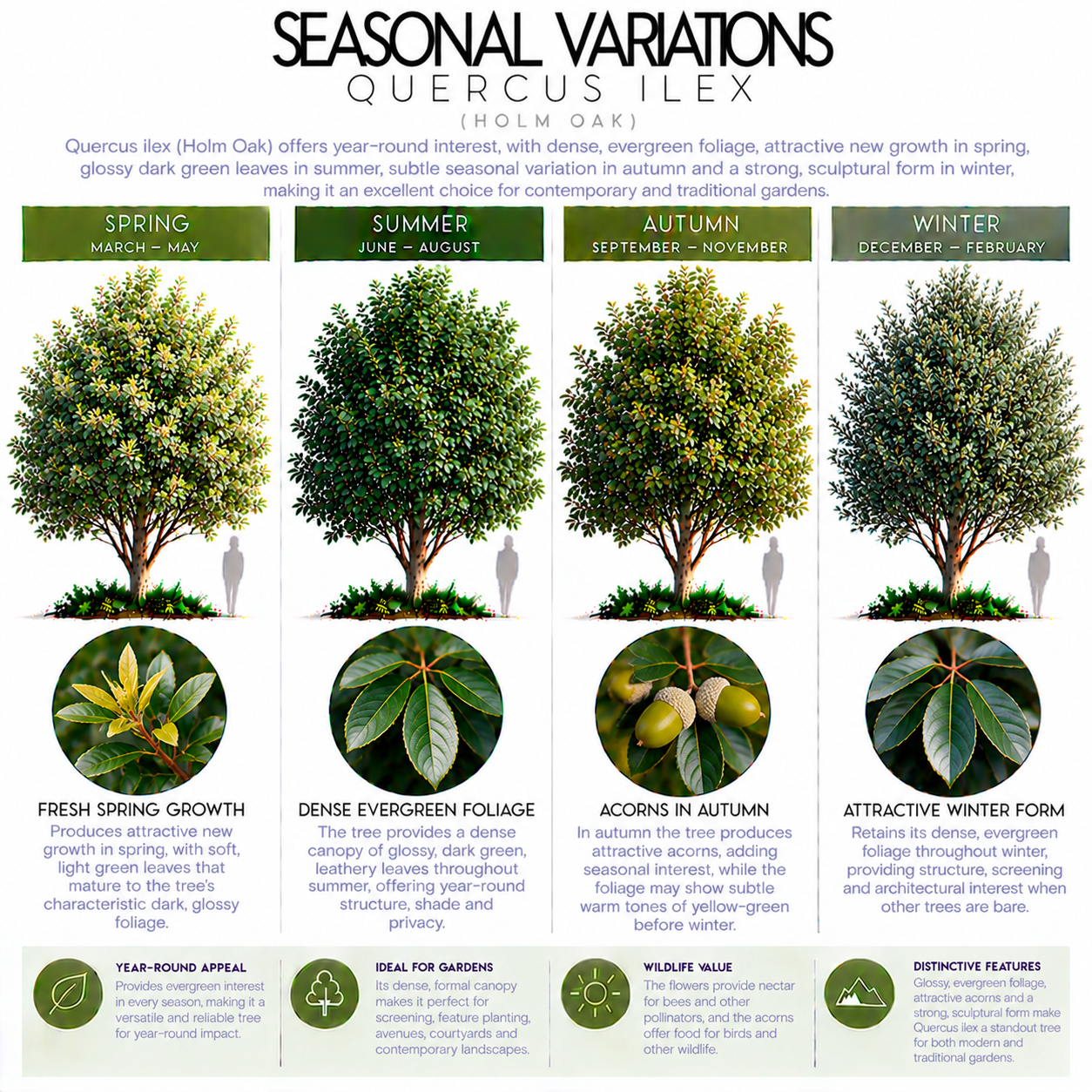
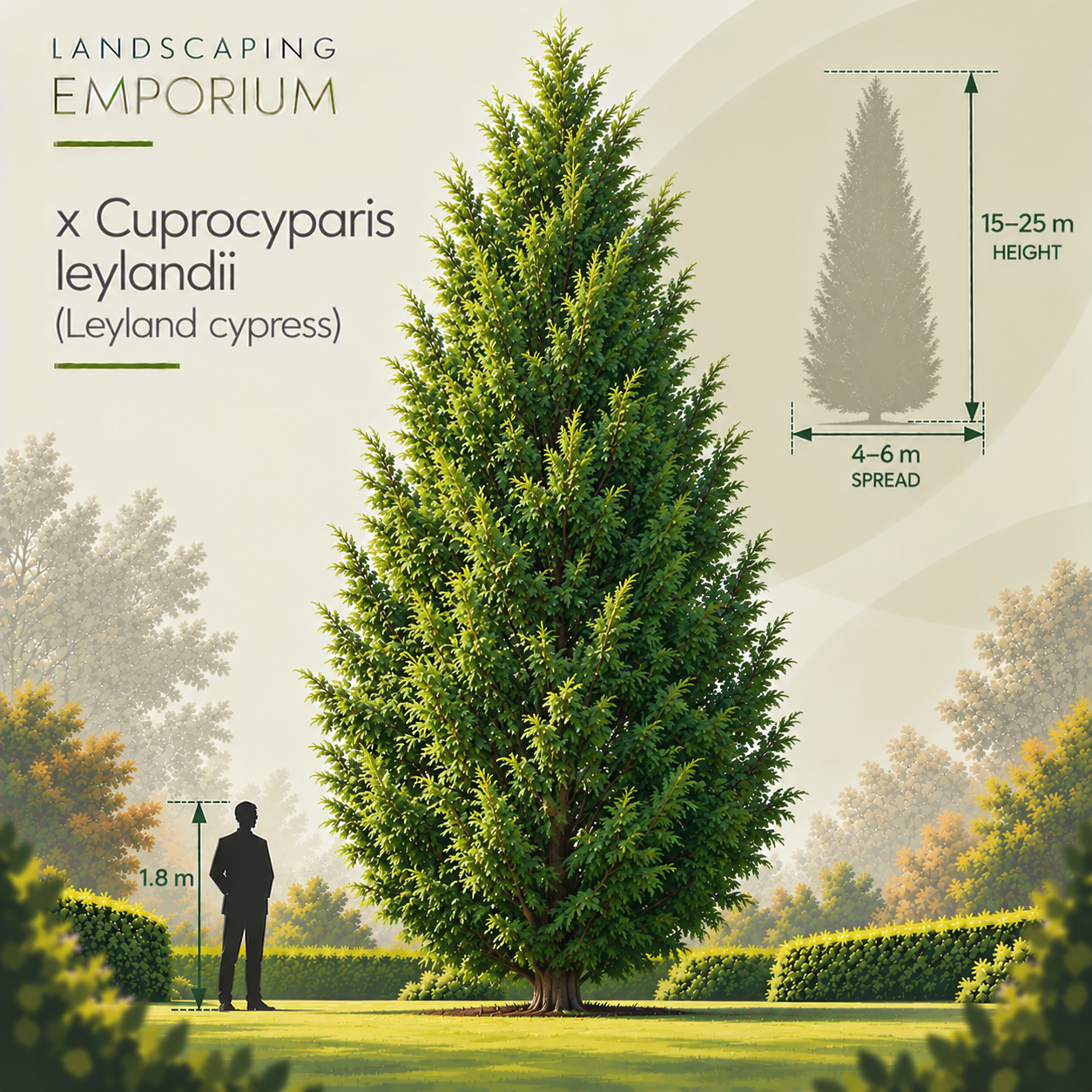
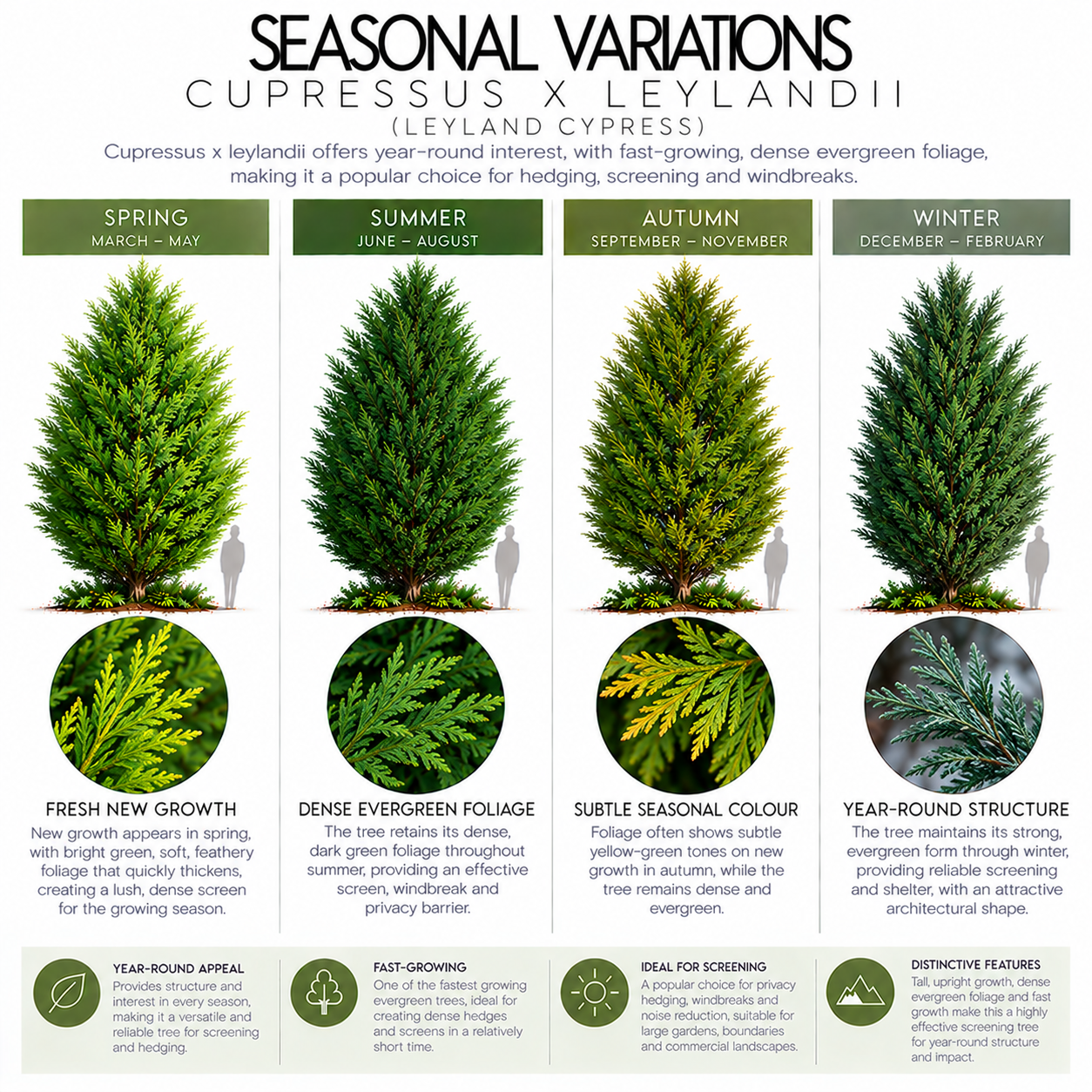
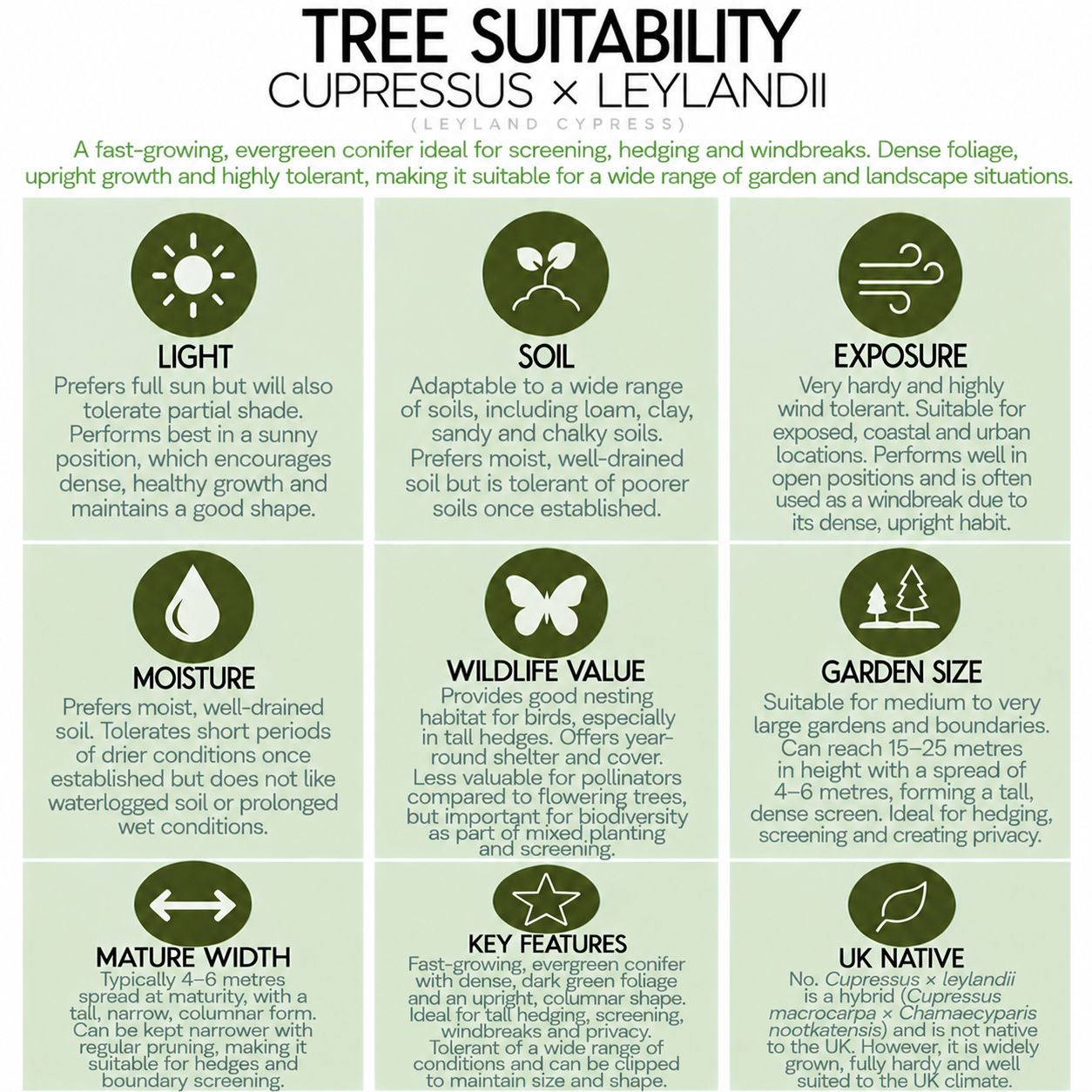
Evergreen trees retain foliage throughout the year, making them particularly useful where permanent structure or screening is required.
However, evergreen should not automatically mean planting a large conifer.
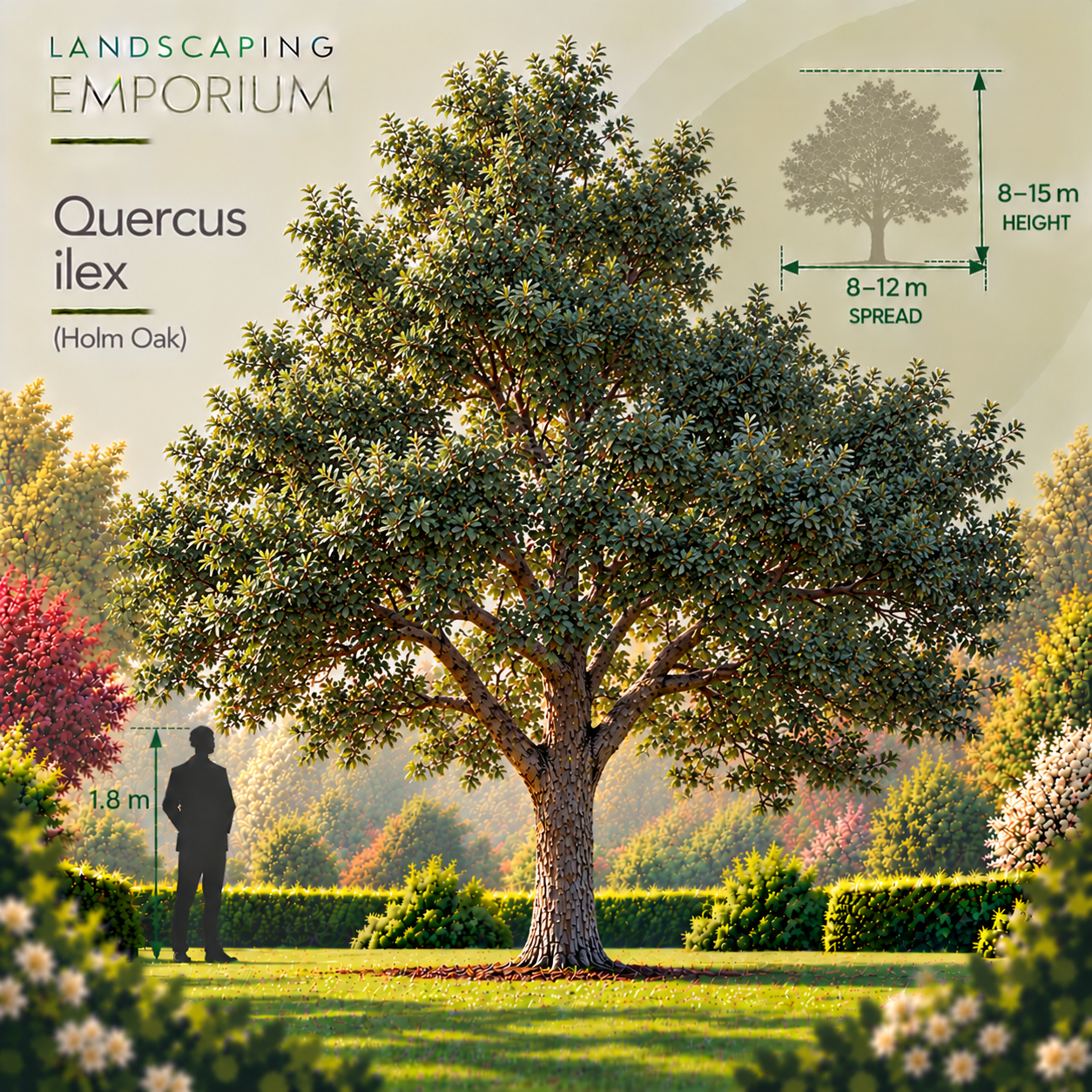
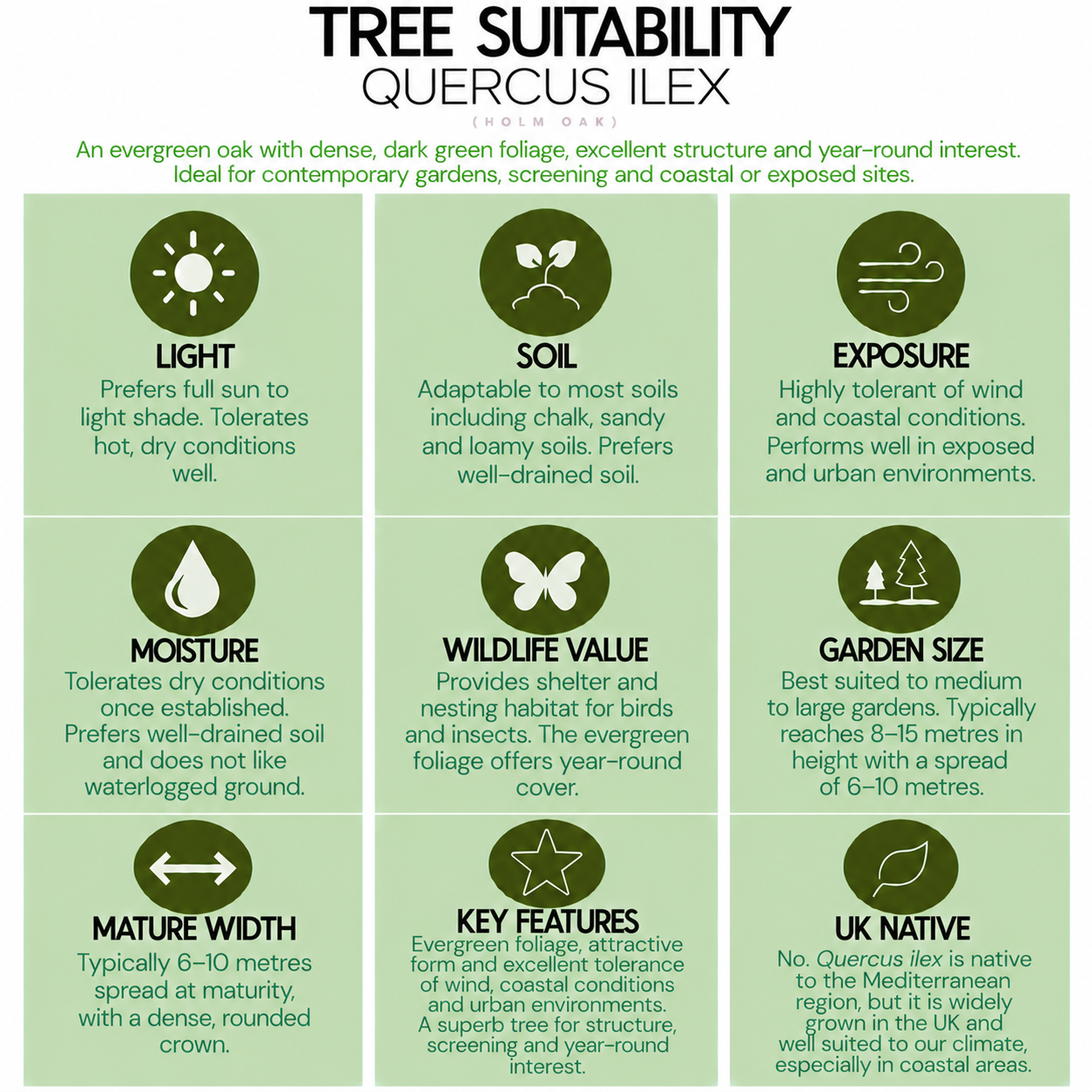
Trees such as Quercus ilex can provide substantial evergreen structure, while other evergreen and semi-evergreen specimens can fulfil very different design roles.
Evergreen trees tend to create a stronger visual mass than deciduous trees, so eventual size and positioning need particularly careful consideration.
For year-round privacy, they can be extremely effective when used in the right location.
Deciduous Specimen Trees
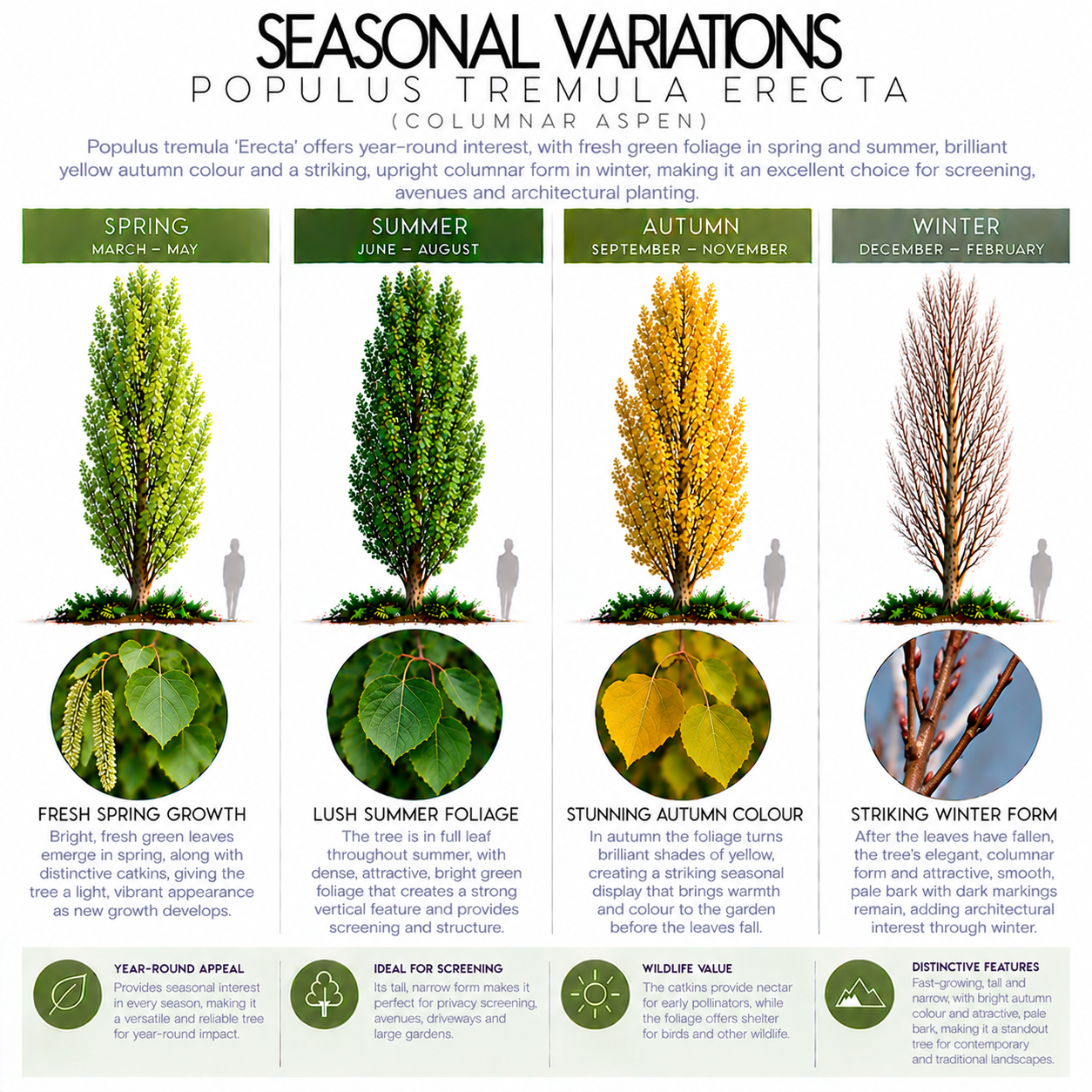
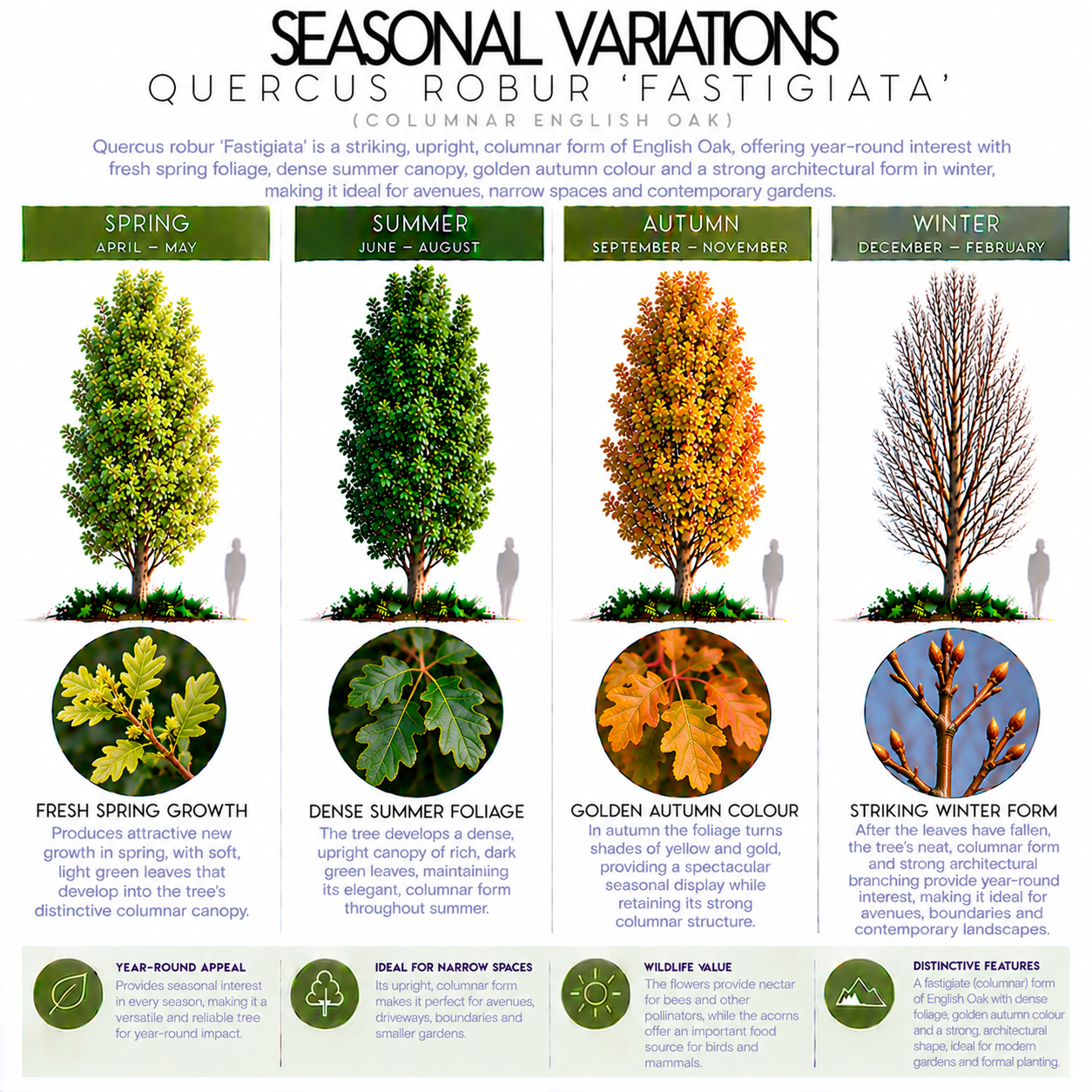
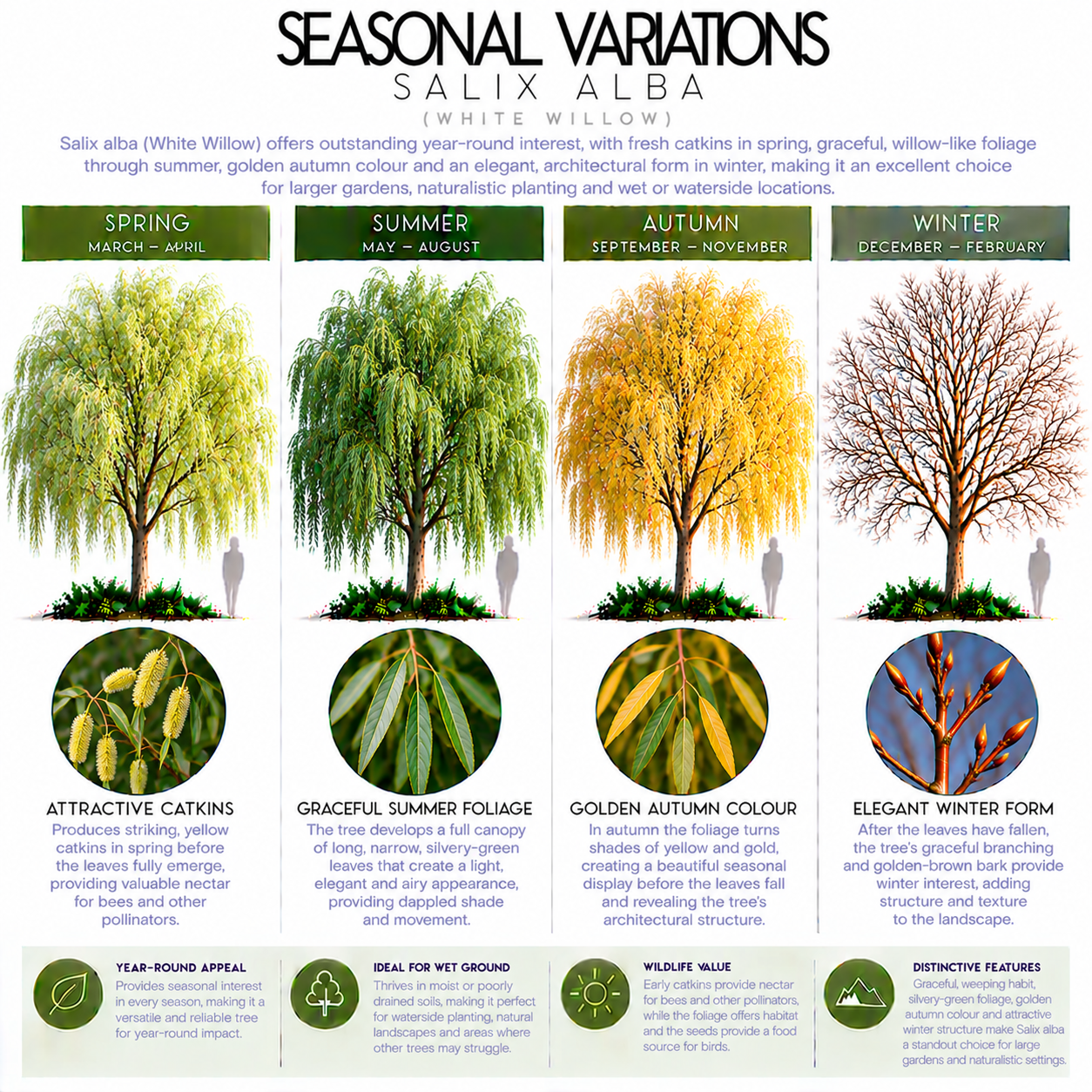
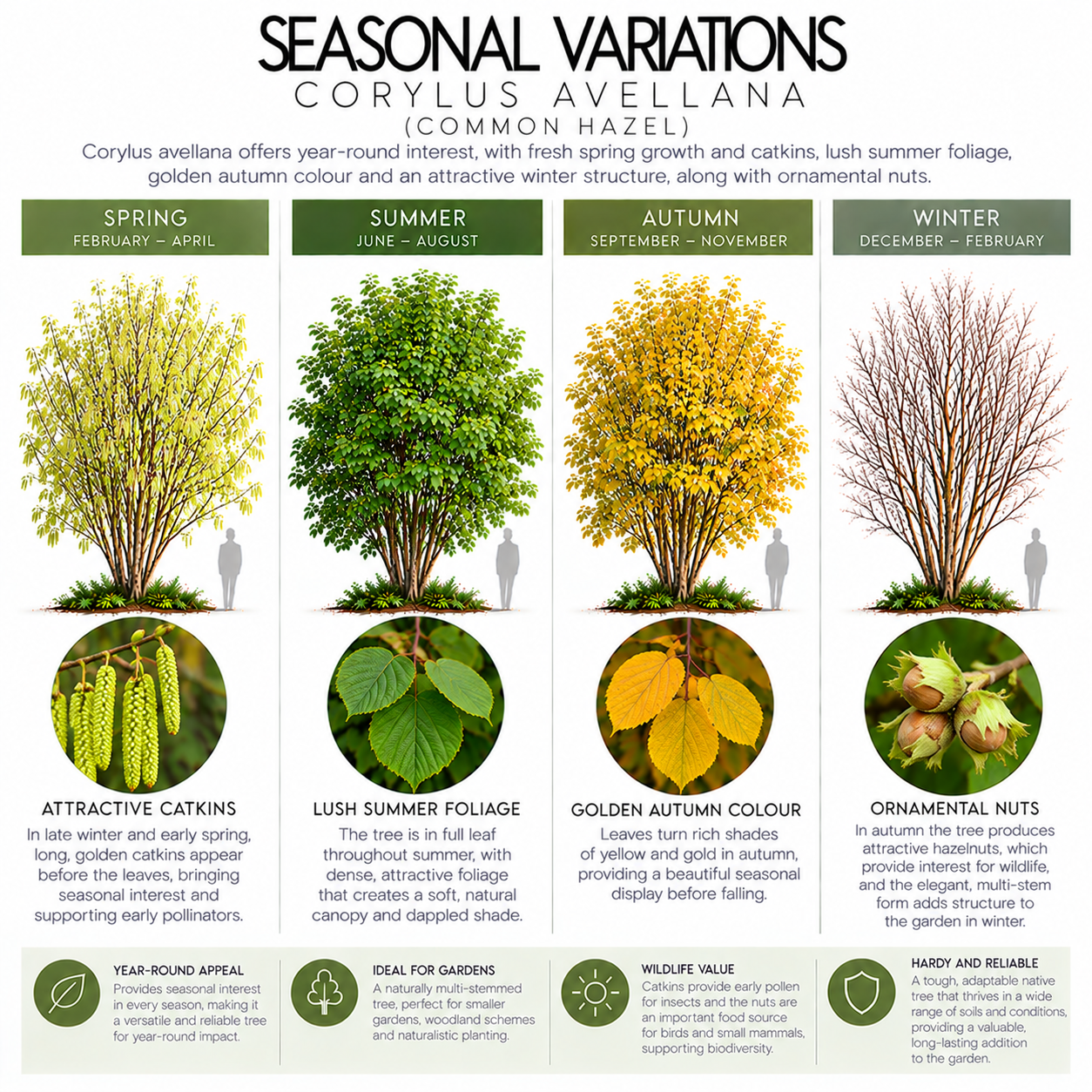
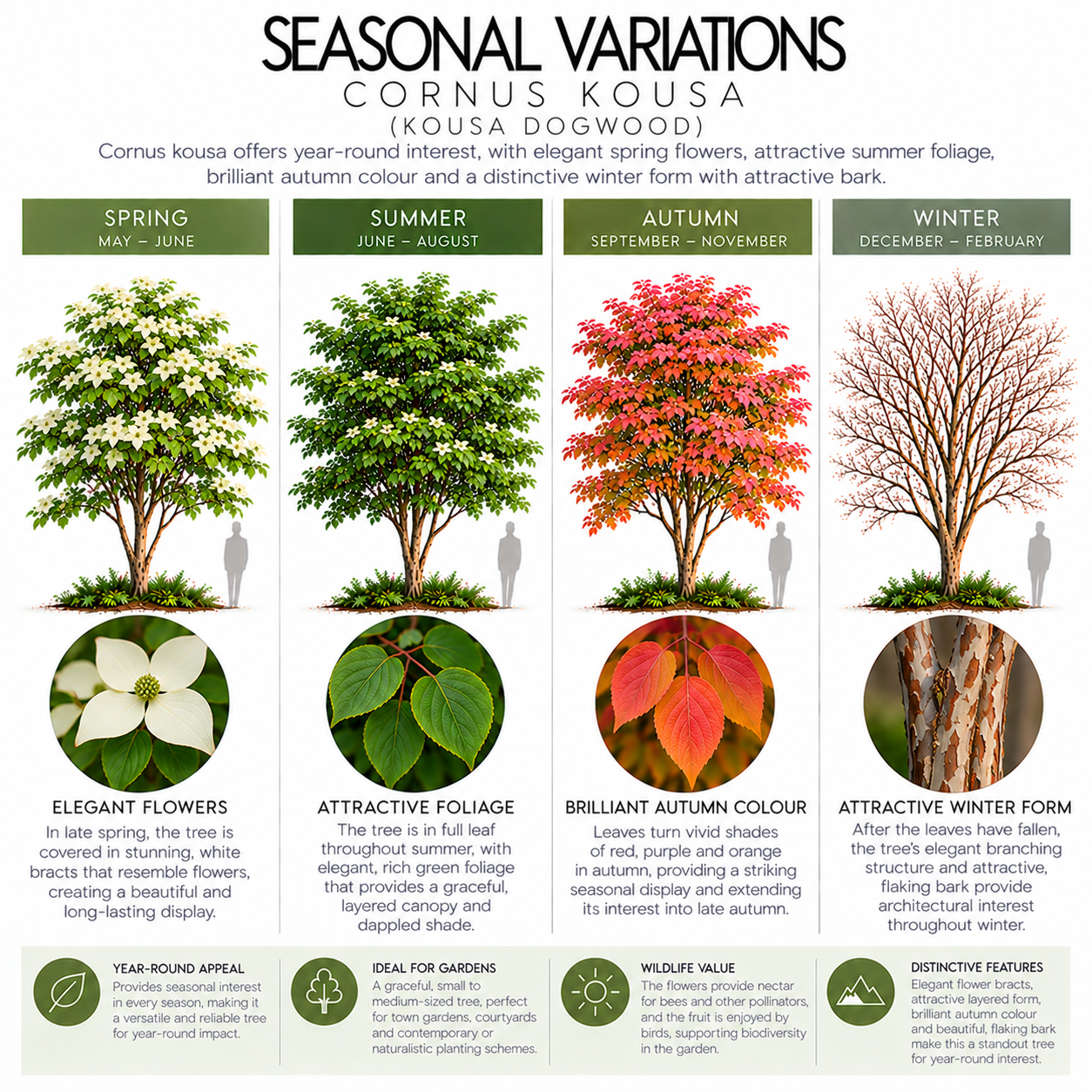
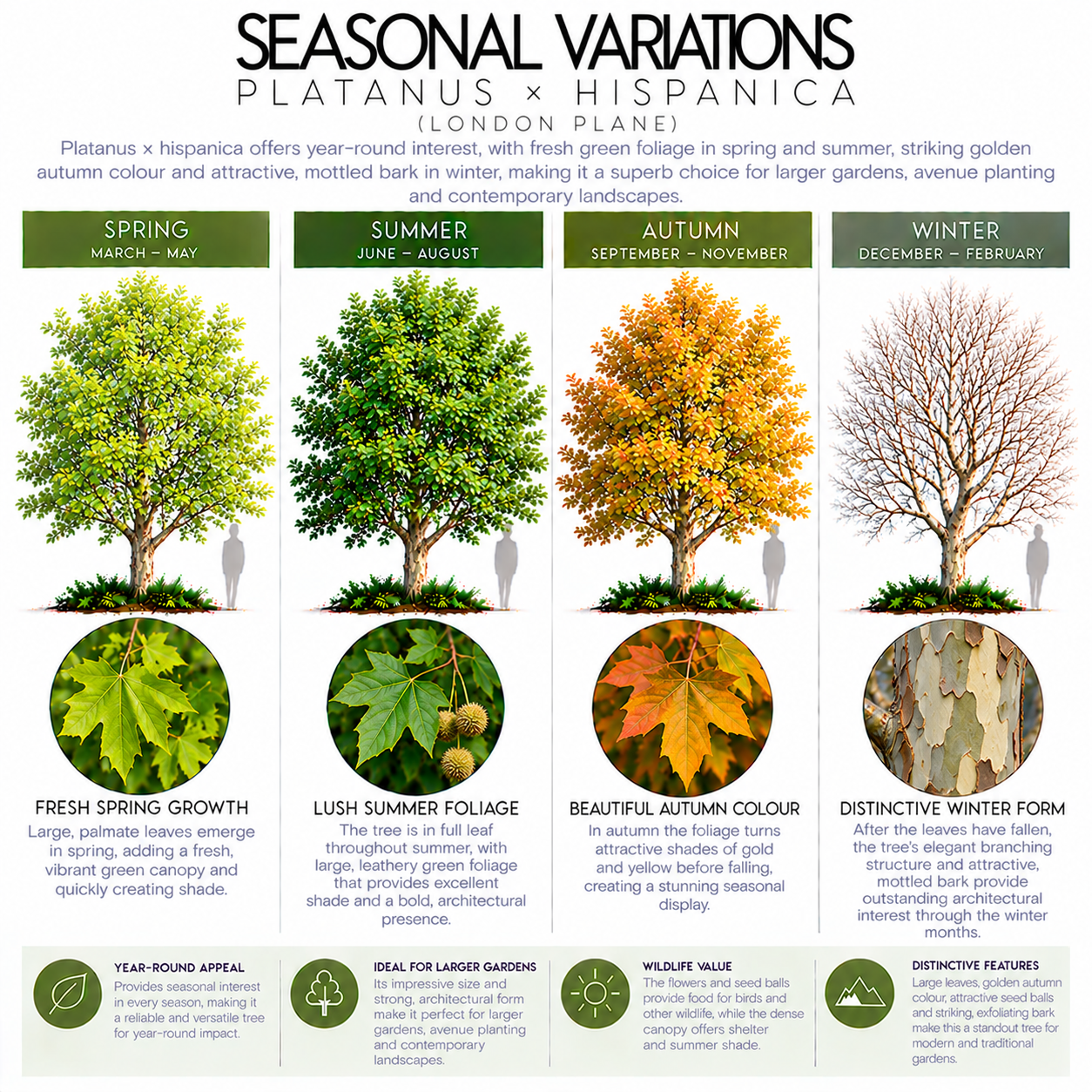
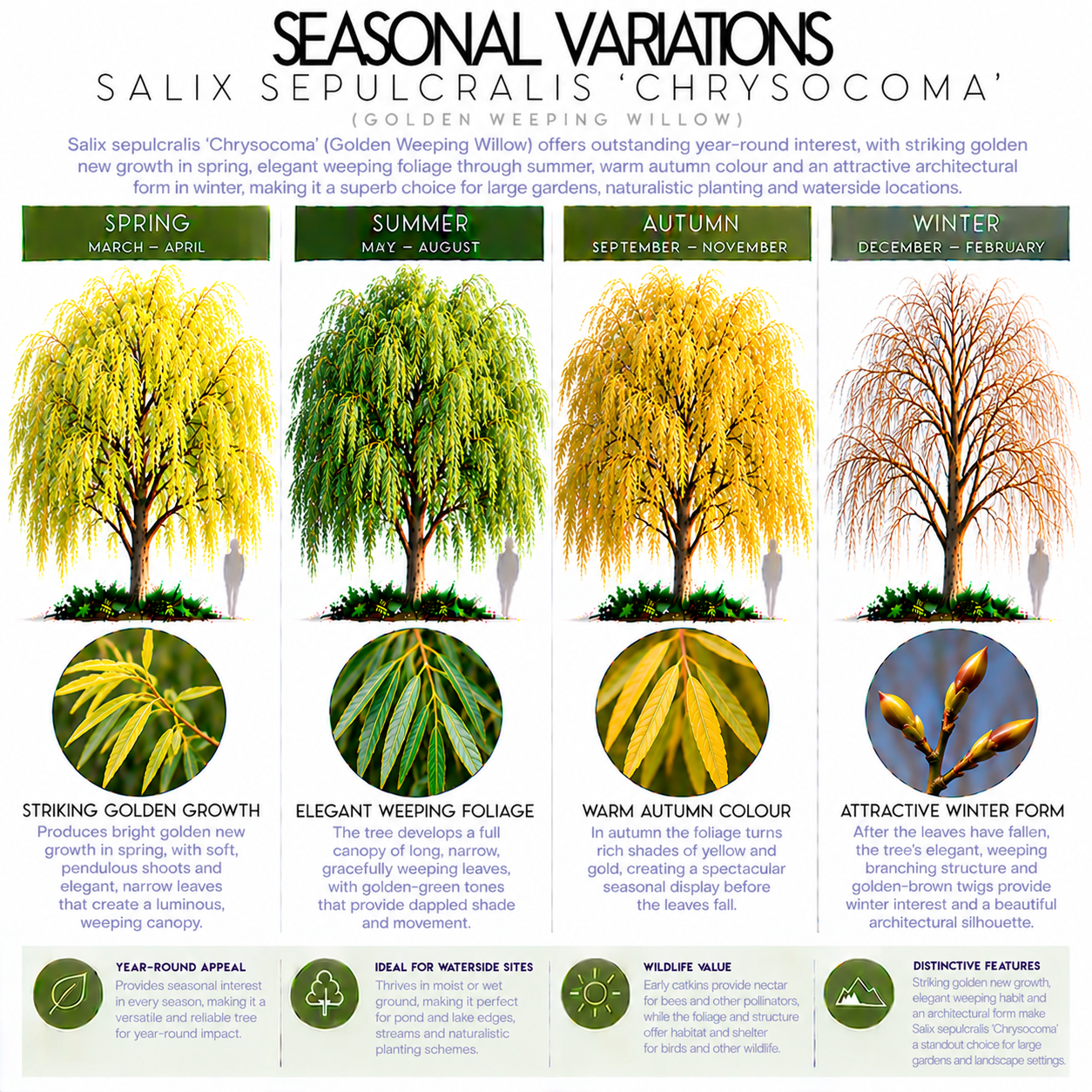
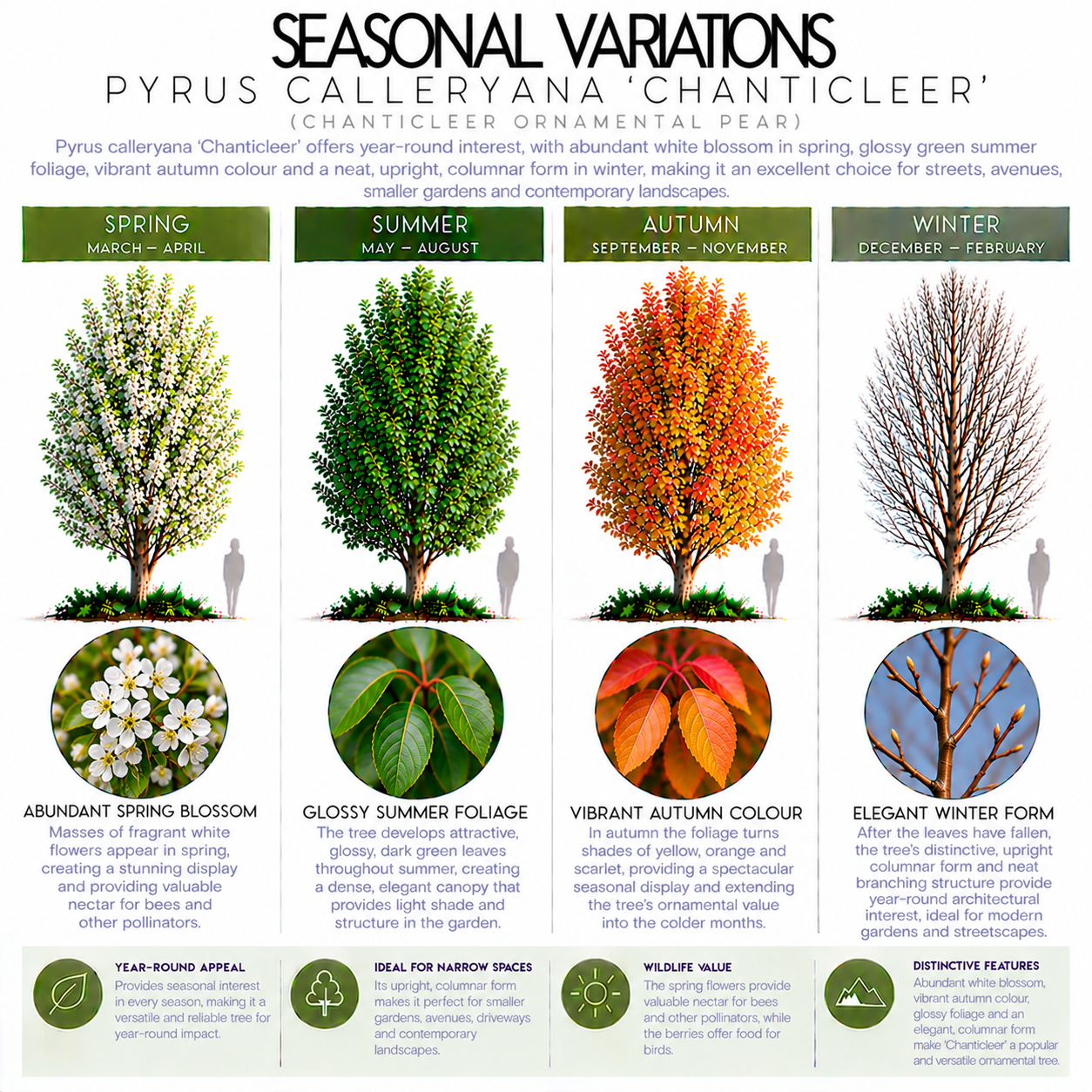
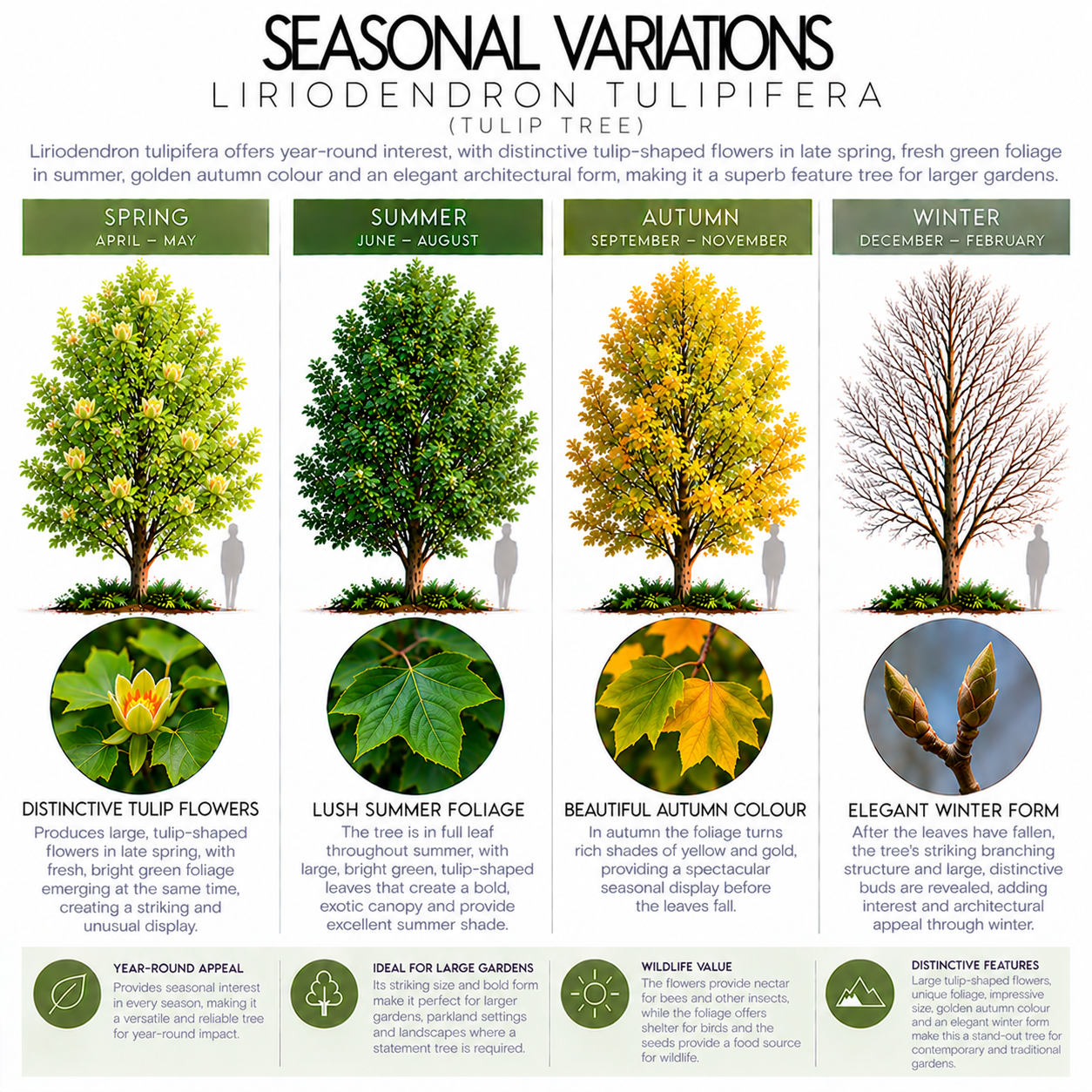
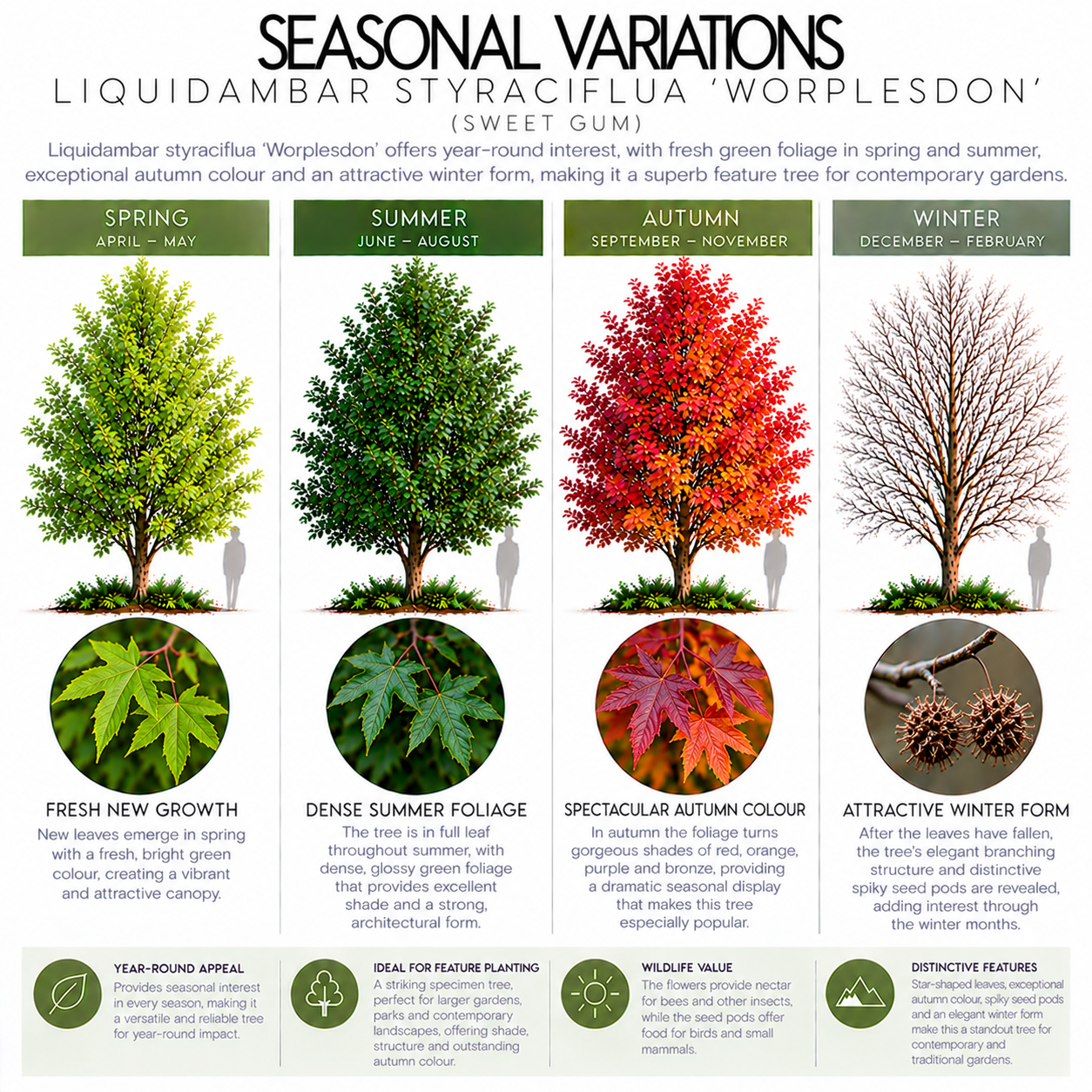
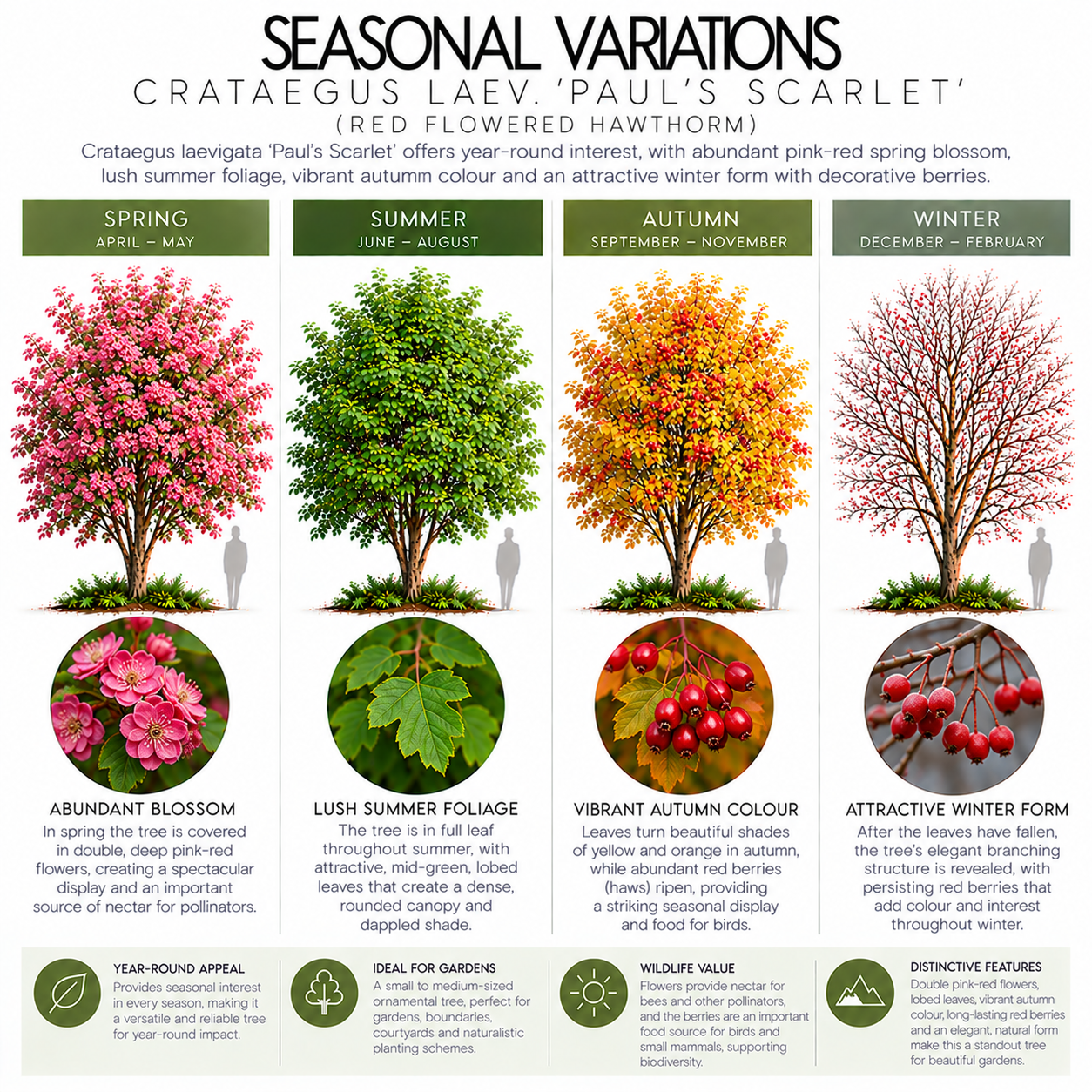
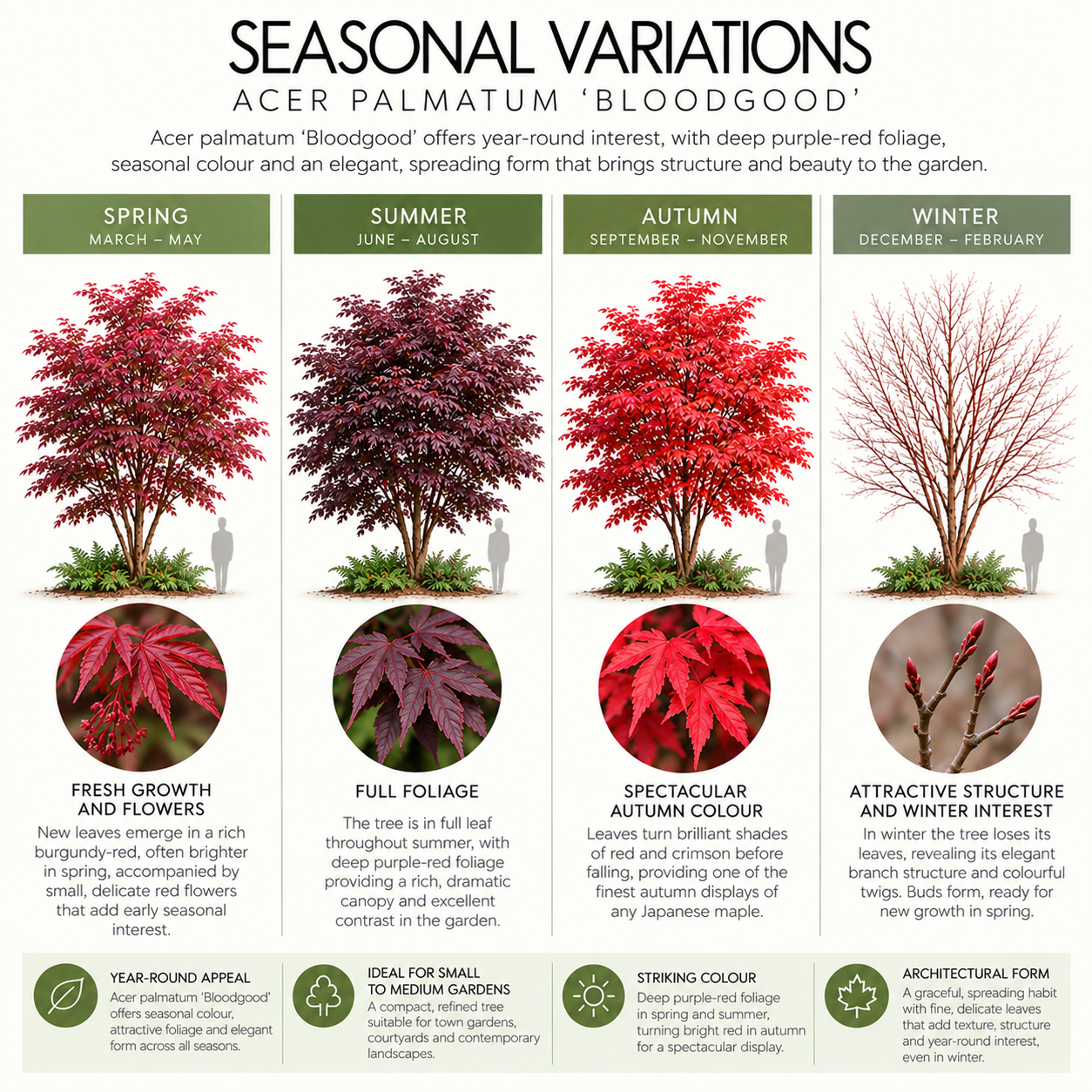
Deciduous trees provide something evergreens cannot: a constantly changing relationship with the seasons.
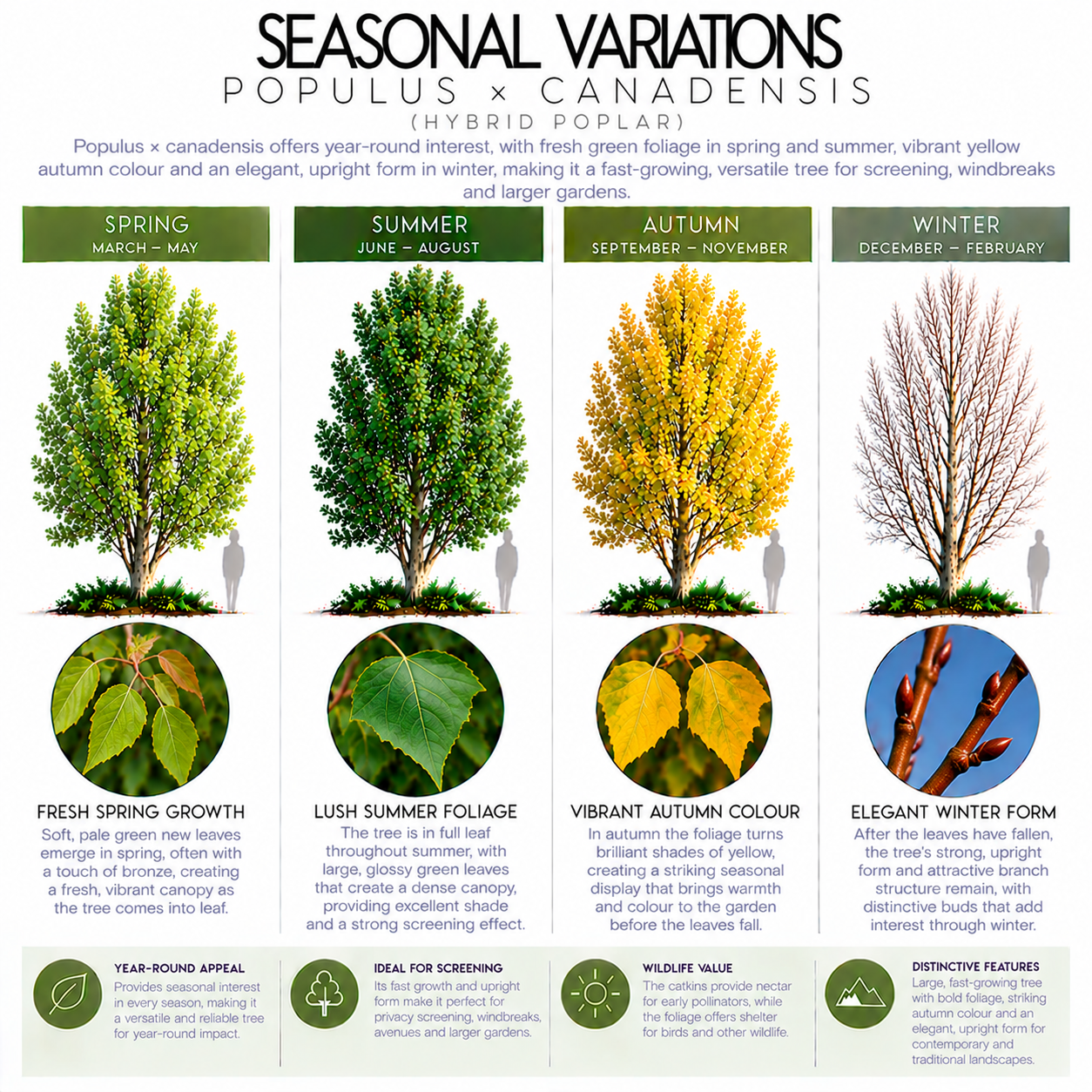
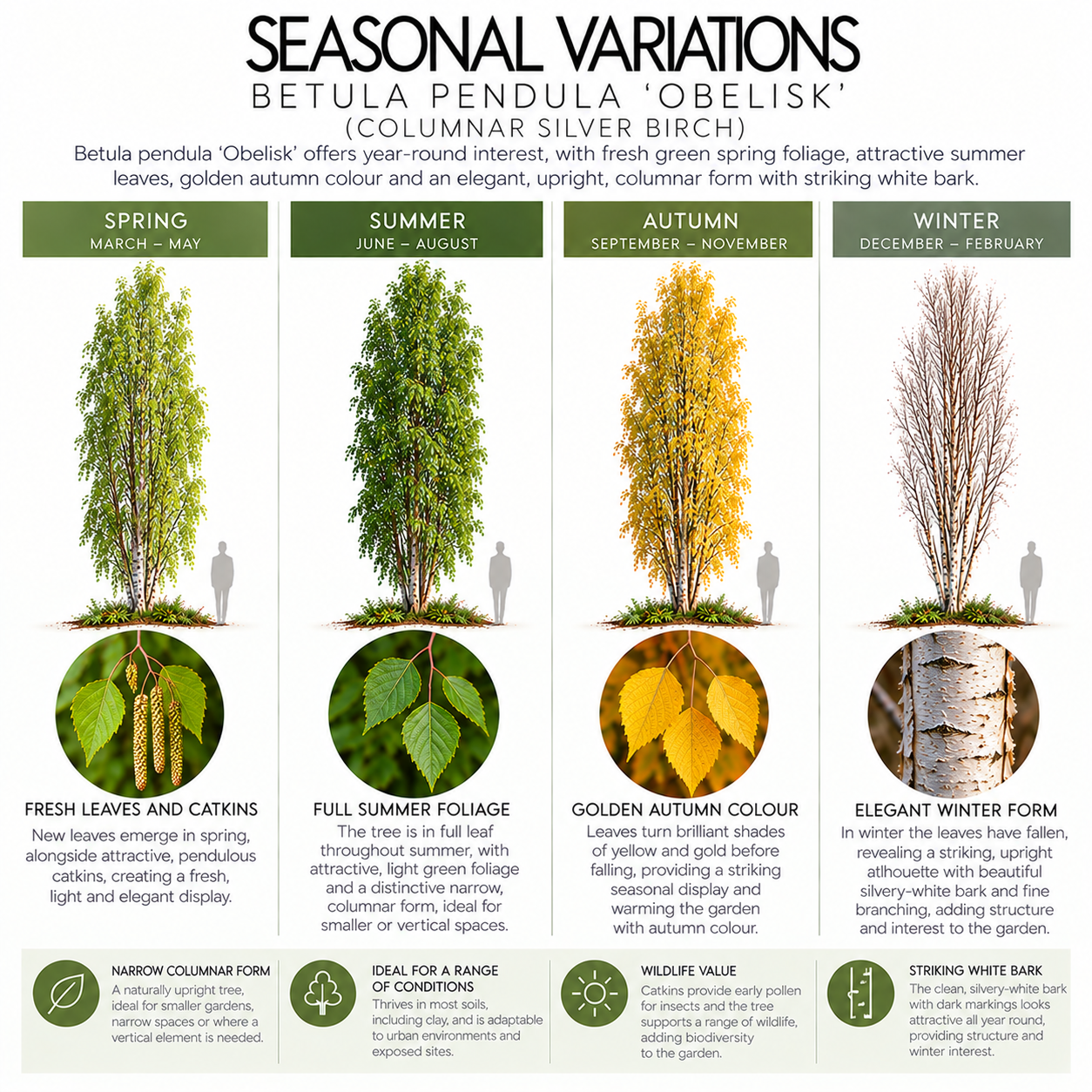
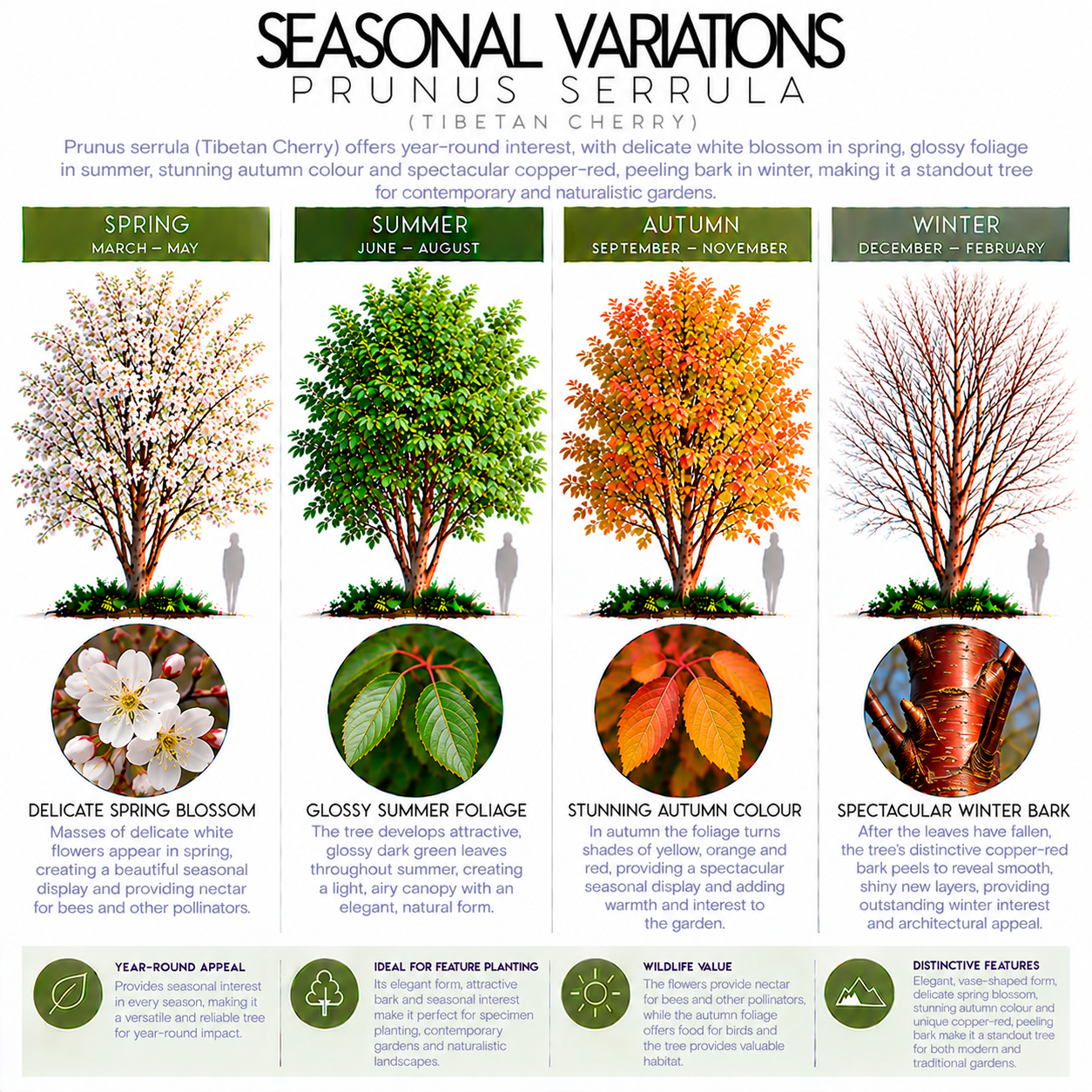
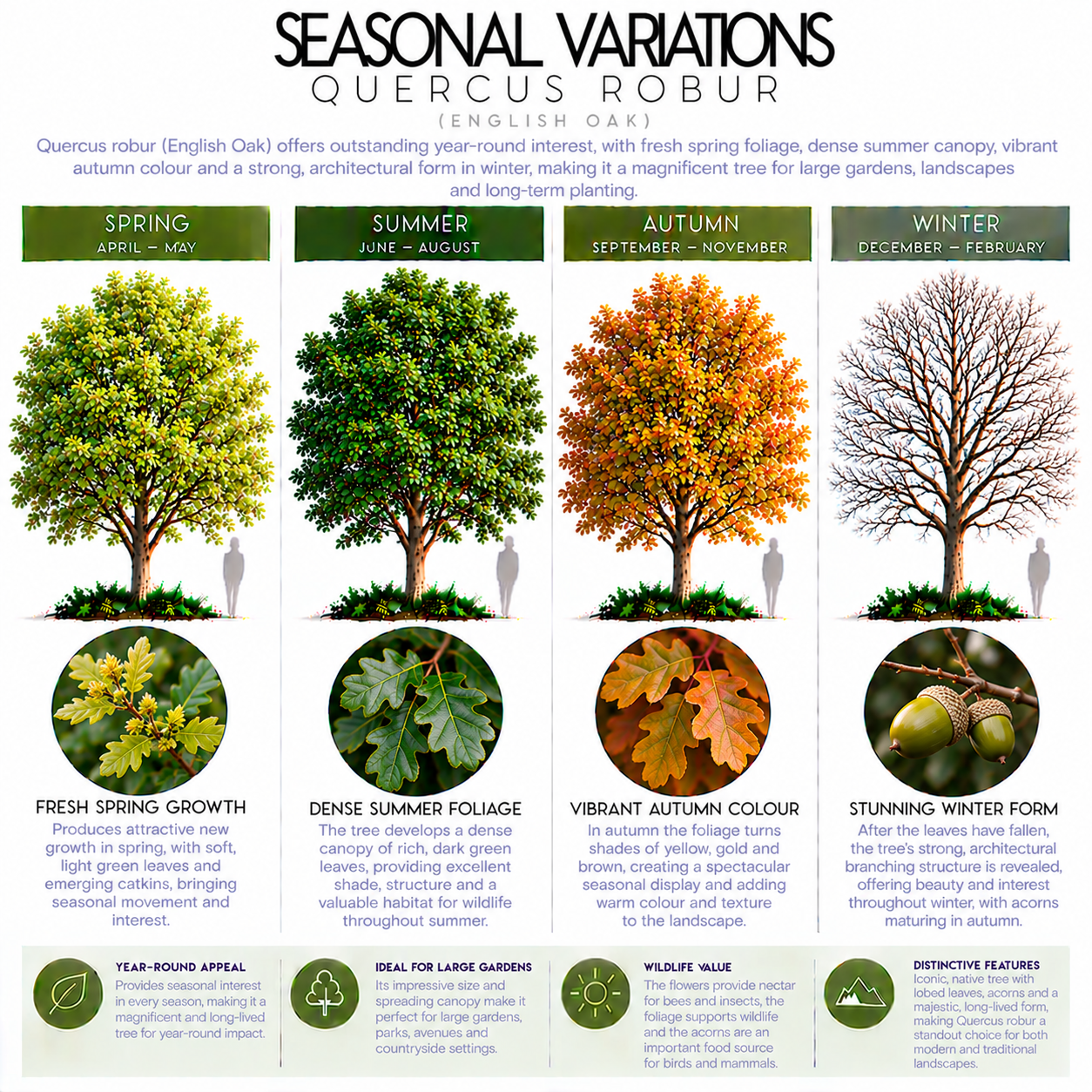
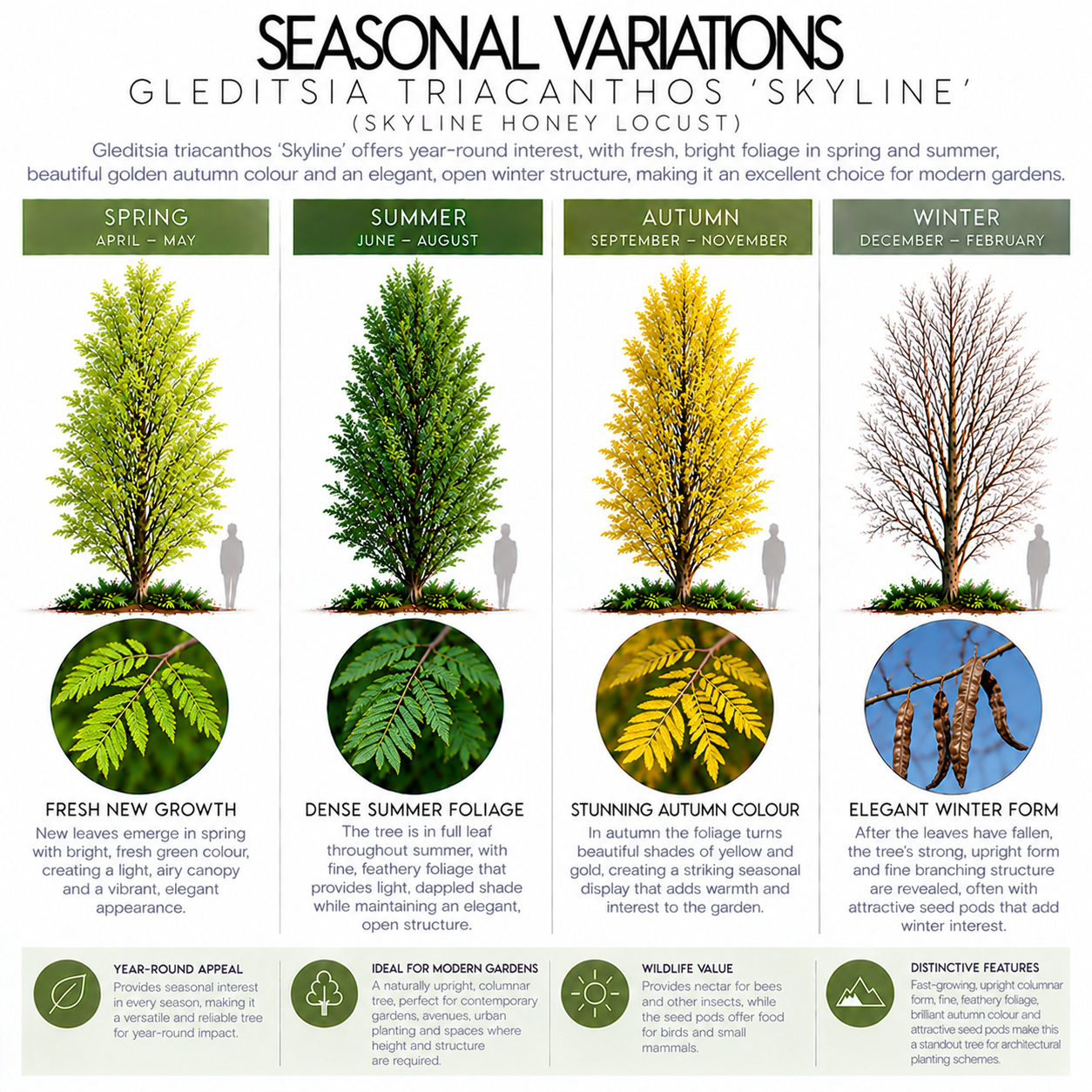
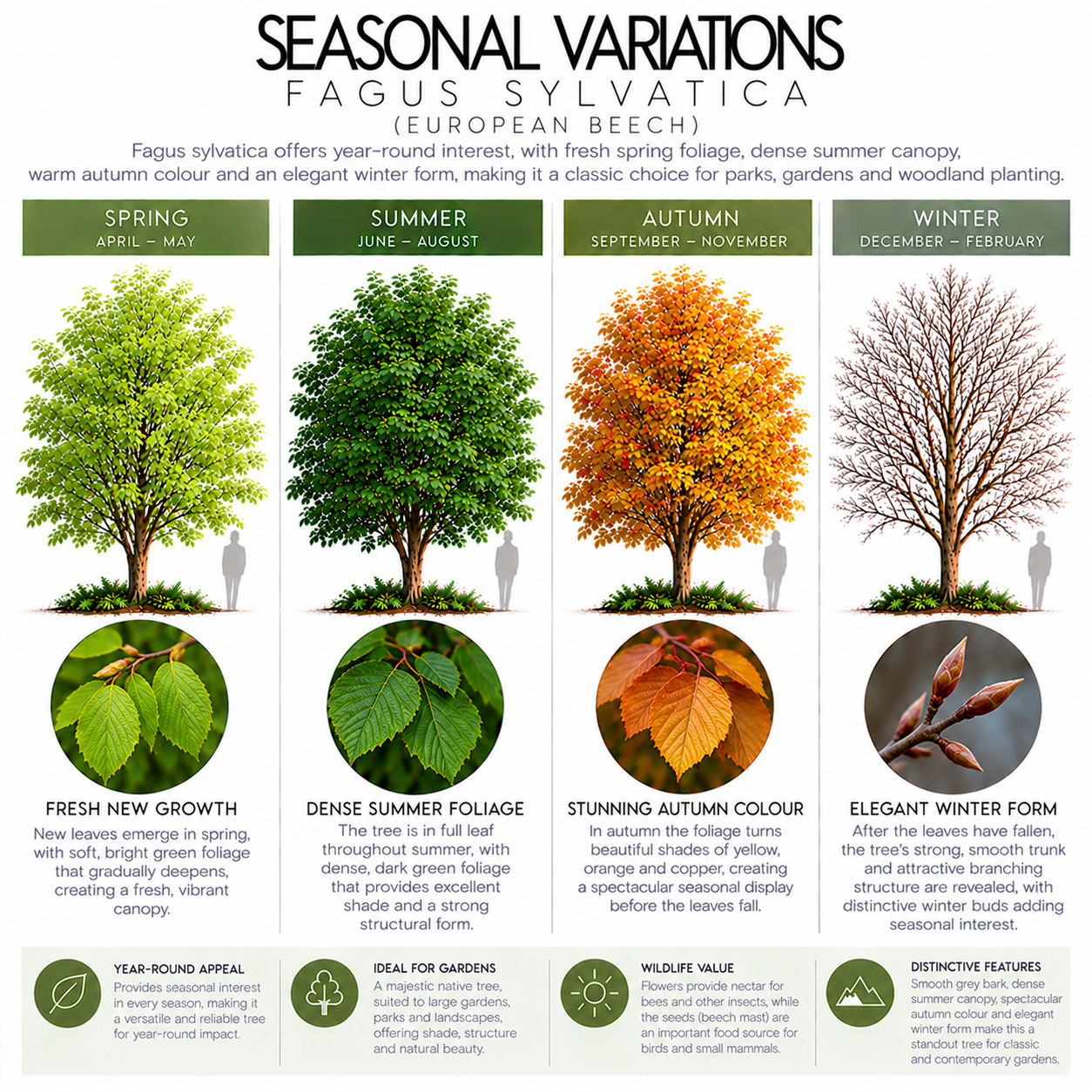
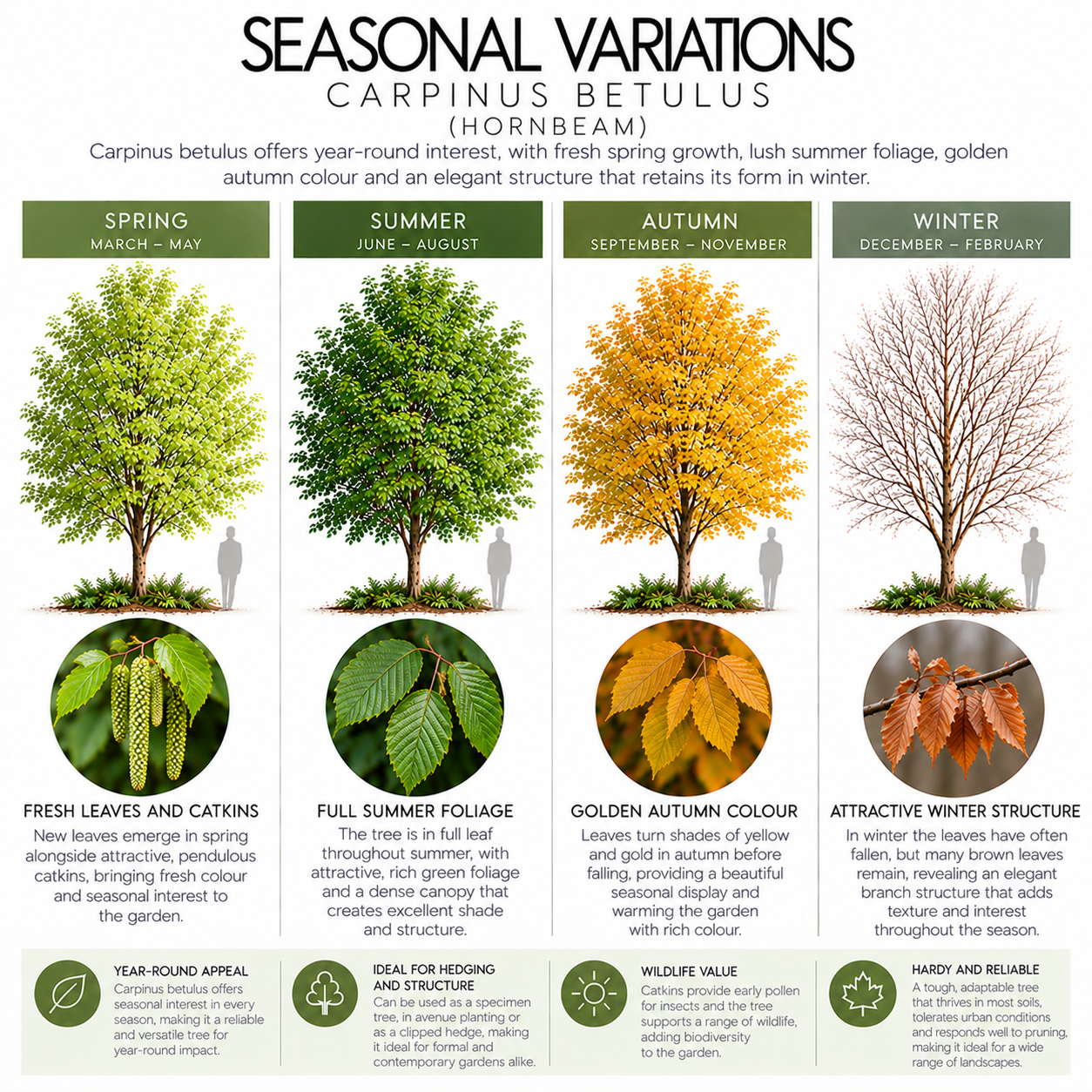
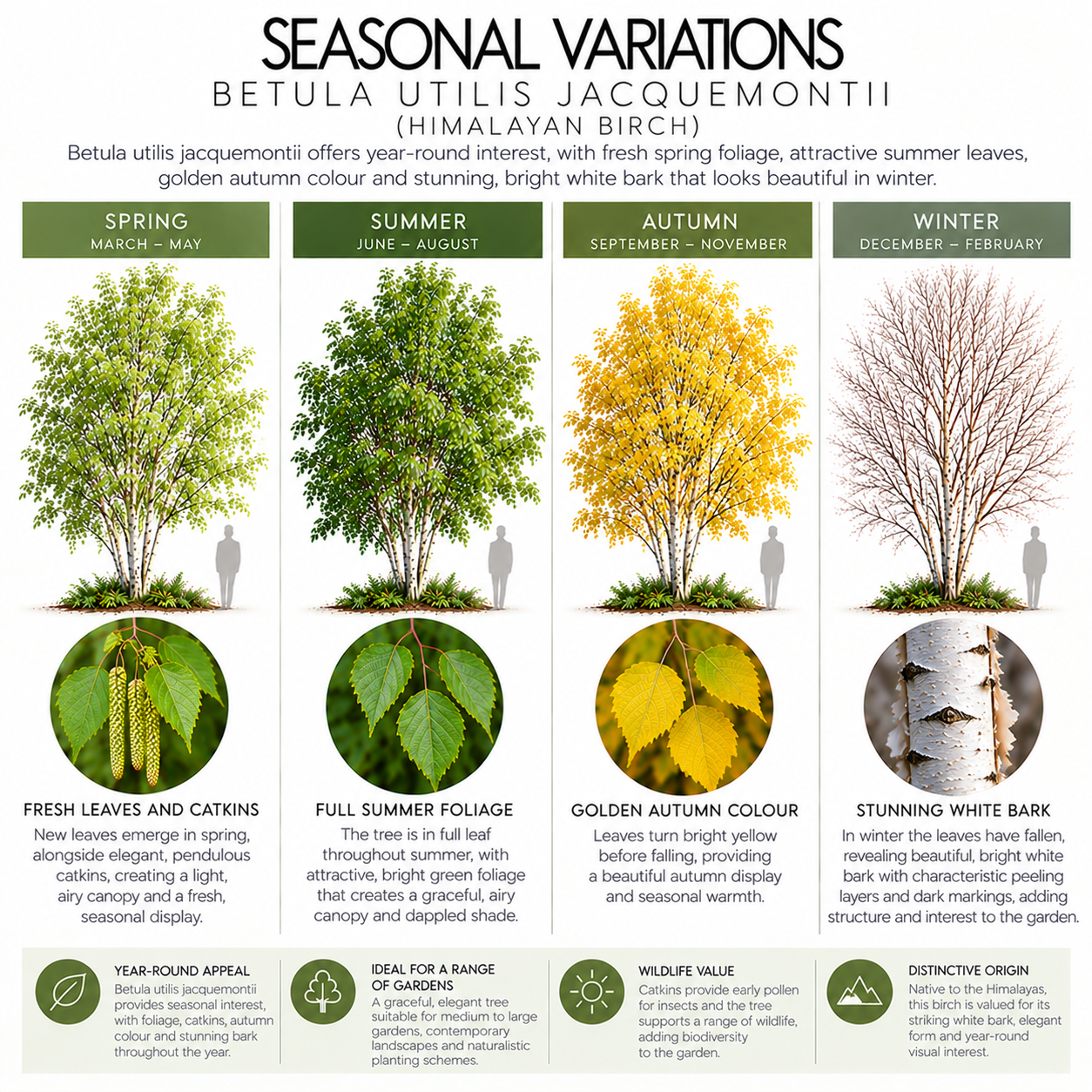
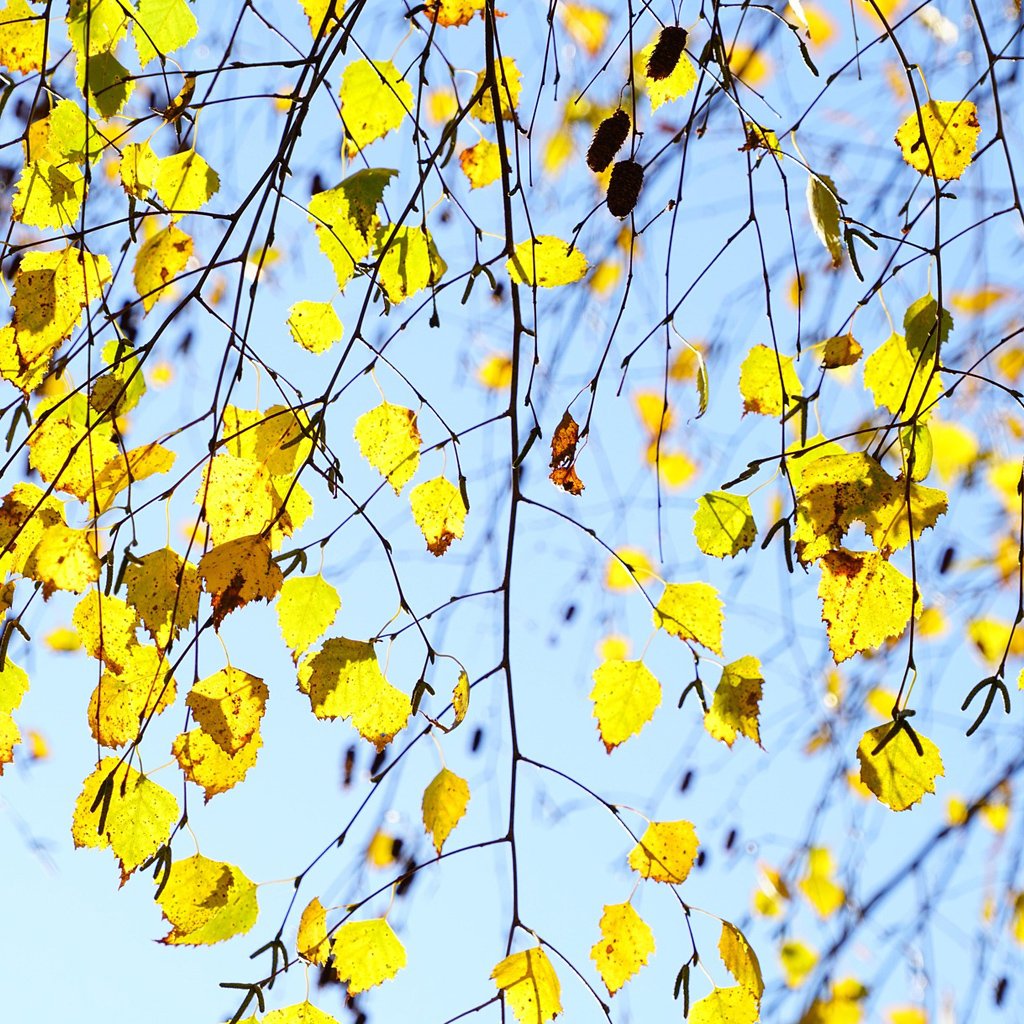
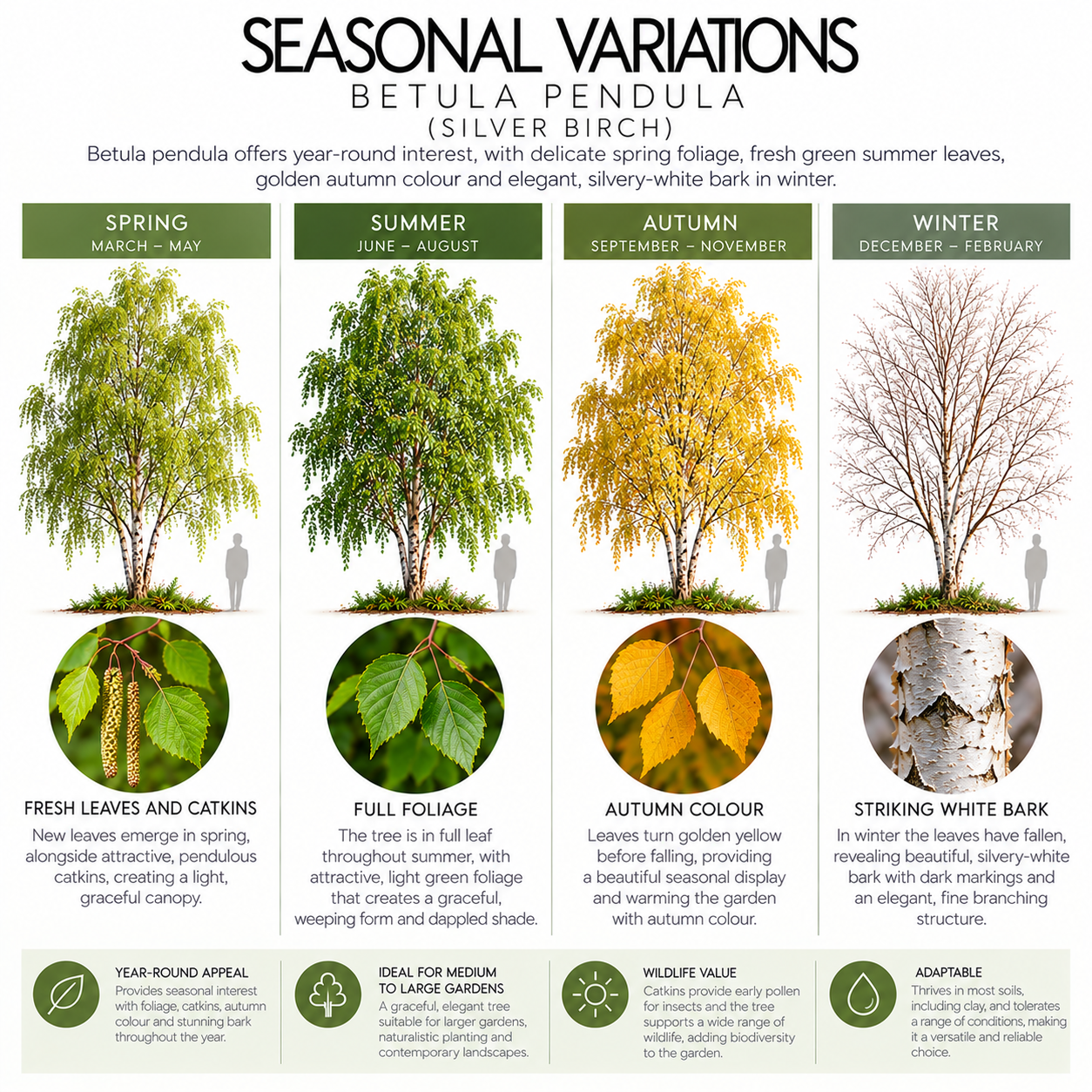
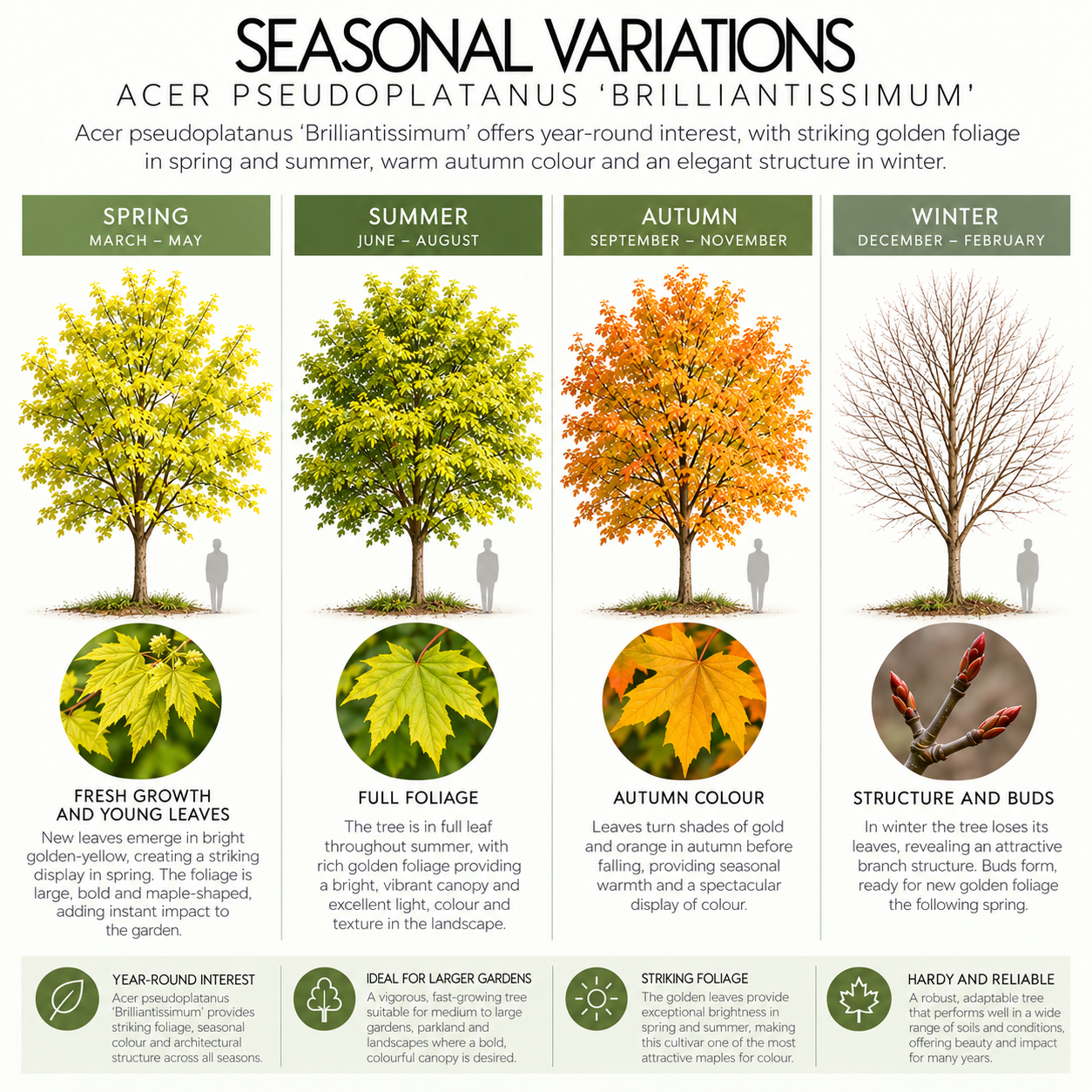
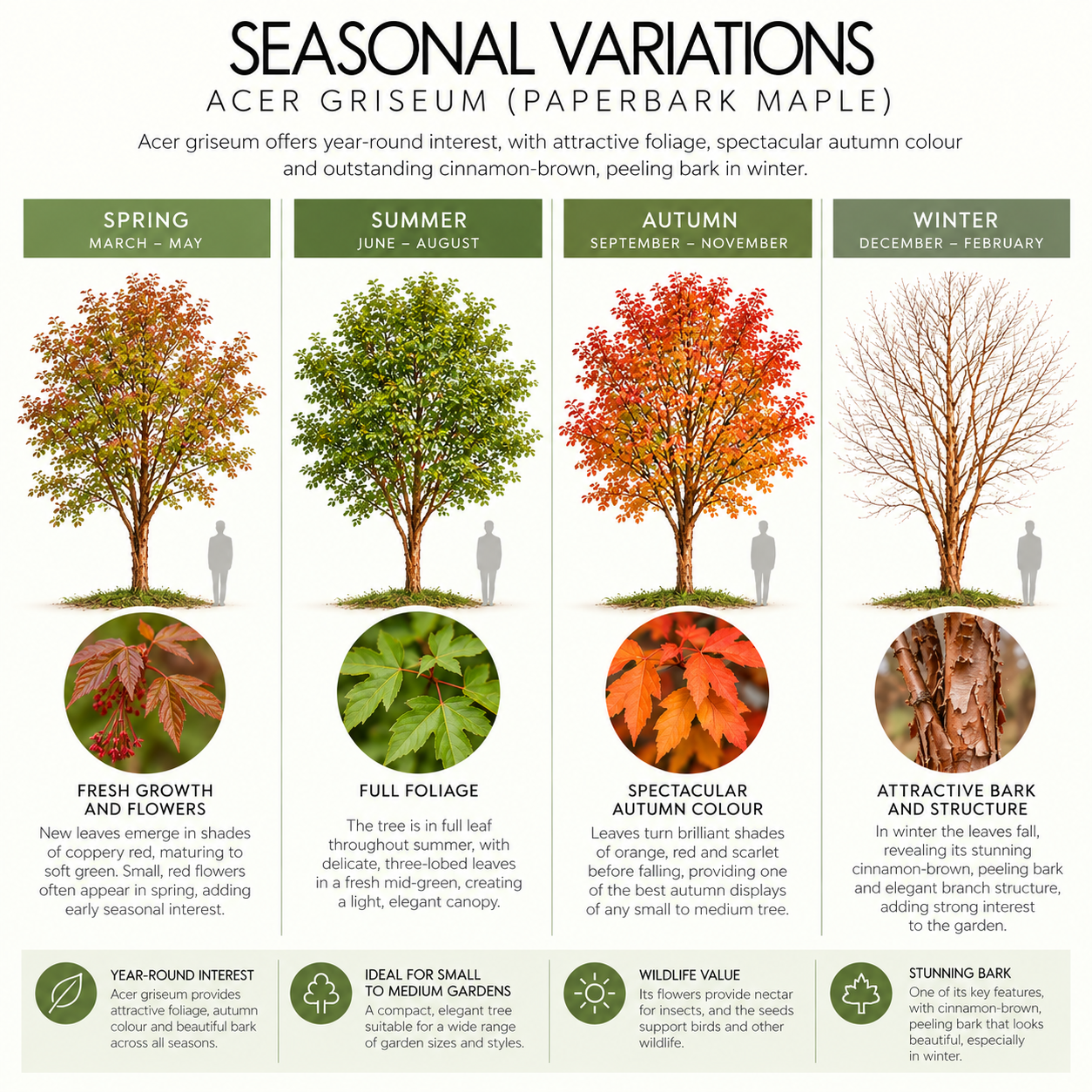
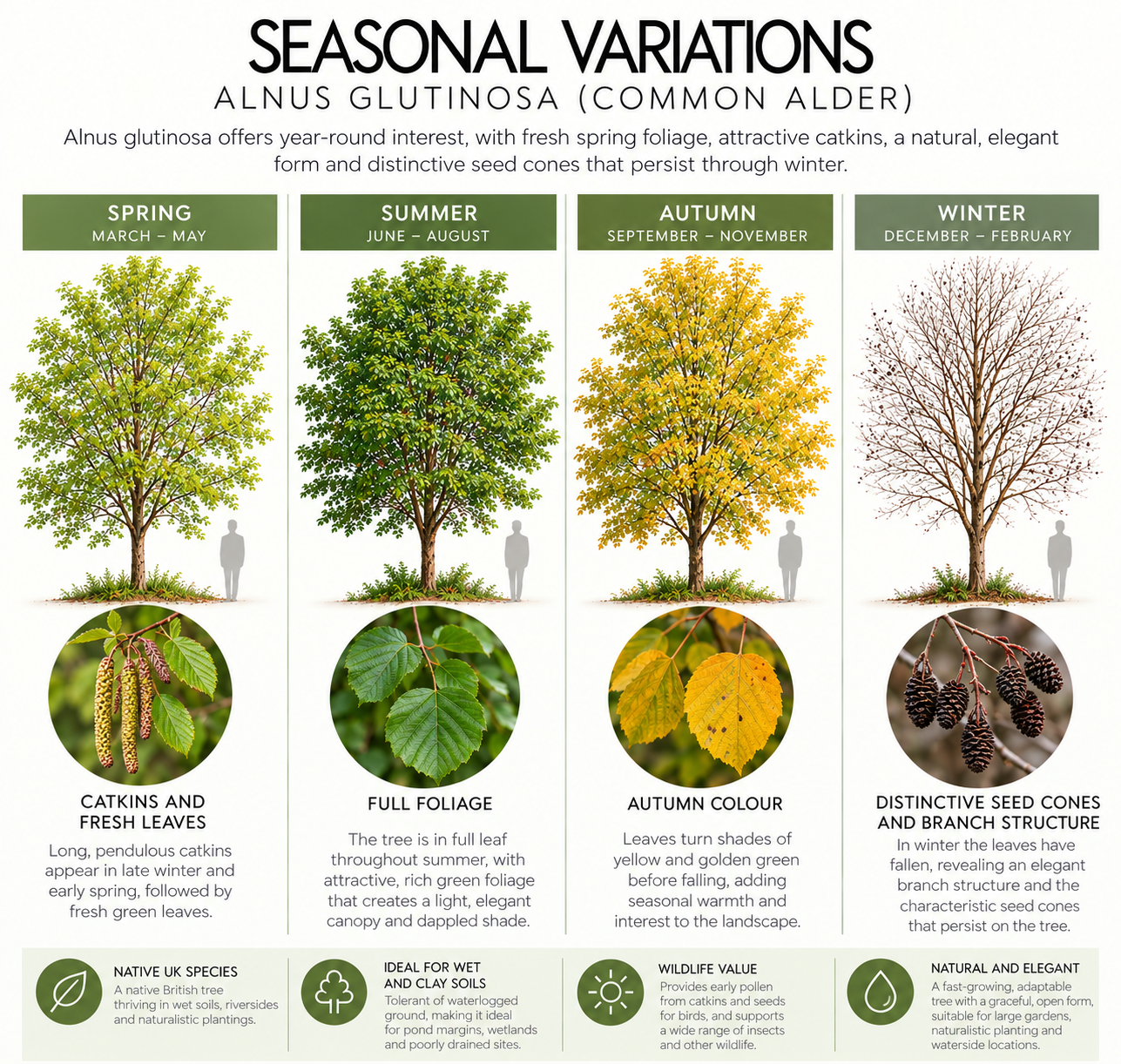
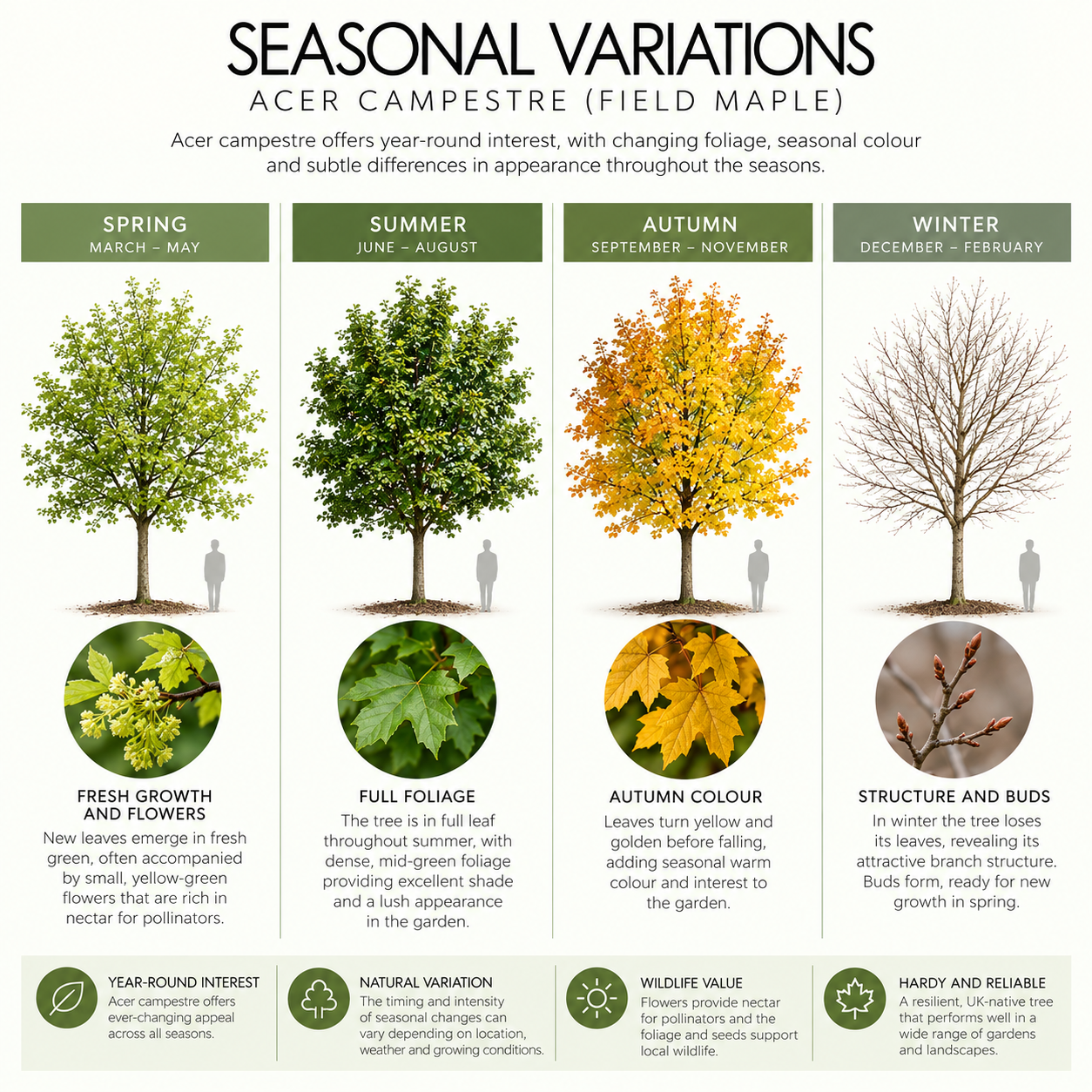
Fresh foliage appears in spring, the canopy develops through summer, many species produce spectacular autumn colour and the branch structure becomes visible during winter.
Some also provide spring blossom, fruit, berries or decorative bark.
For many garden designs, this seasonal transformation is one of the main reasons for planting trees.
A deciduous tree can also allow more winter light into the garden once its leaves have fallen.
Flowering Trees
Flowering trees can create one of the most memorable seasonal moments in a garden.
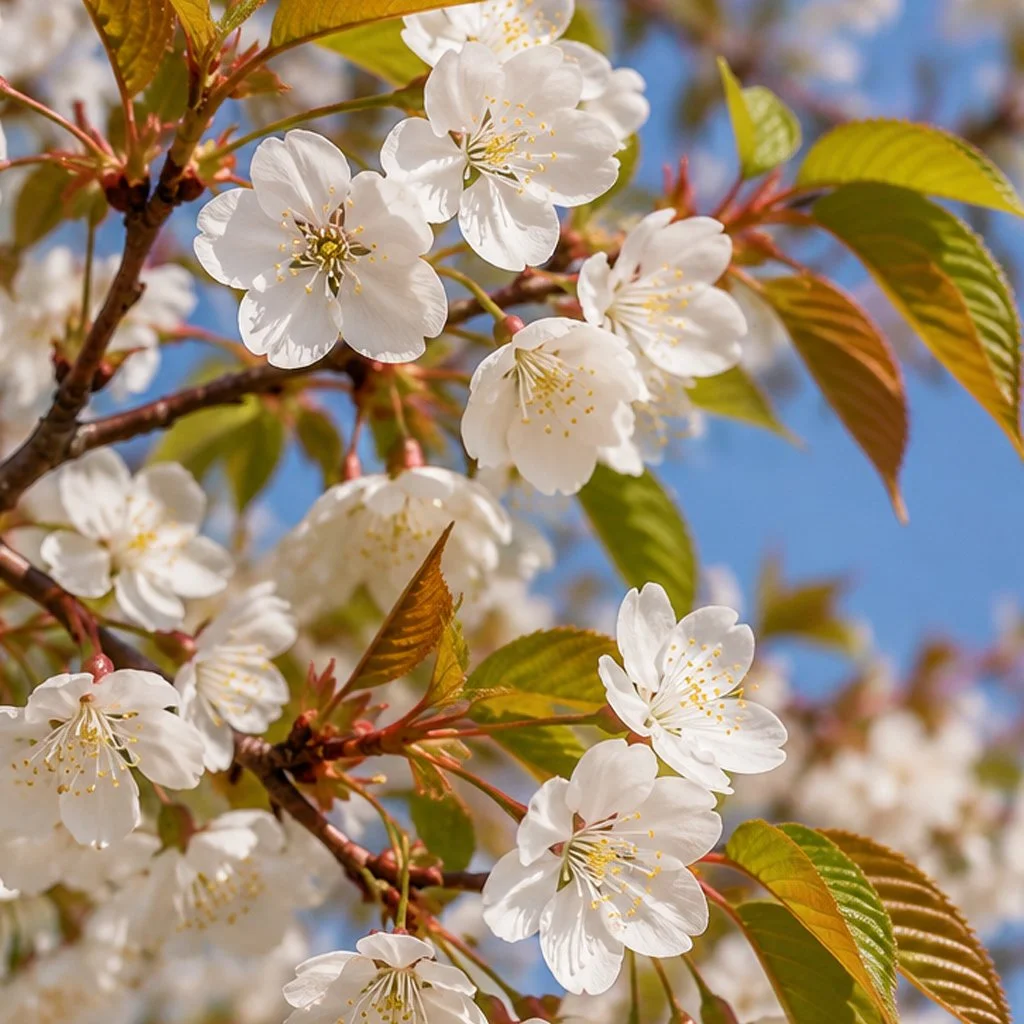
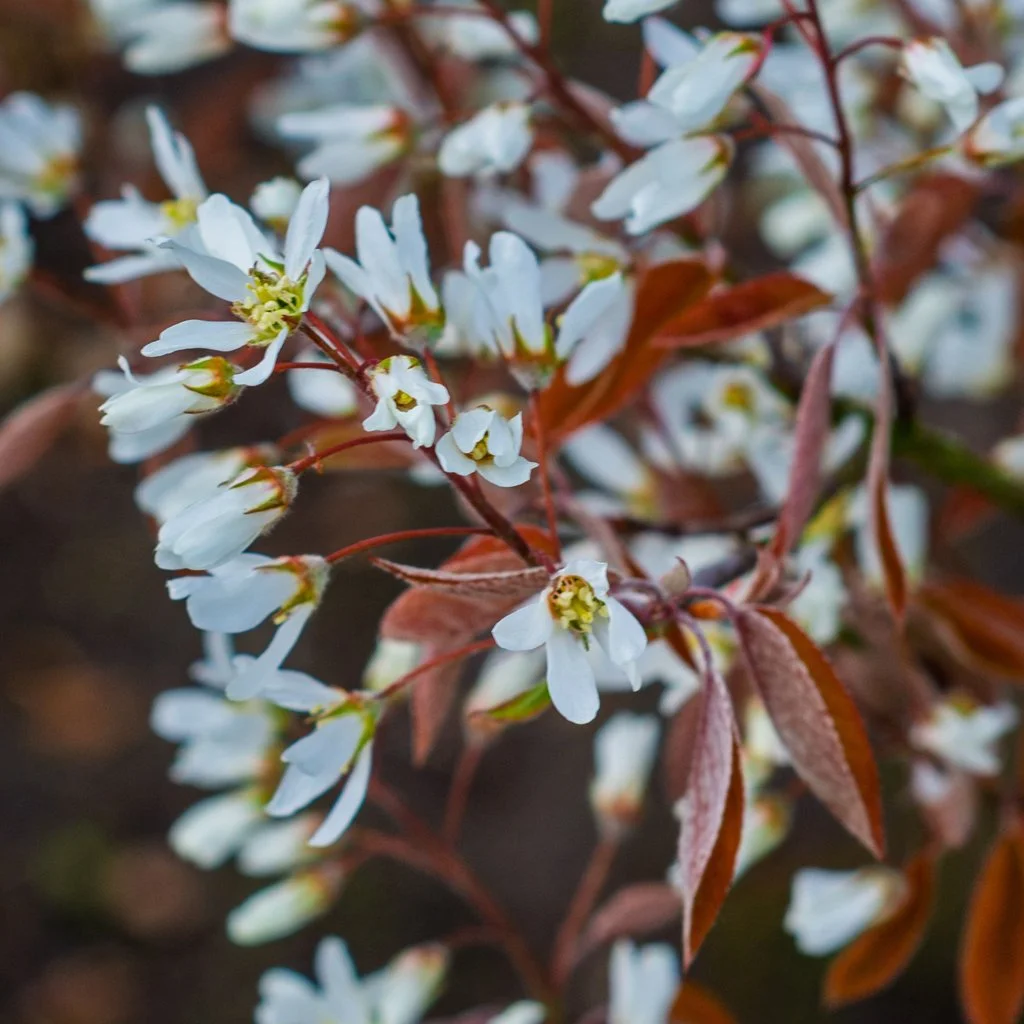
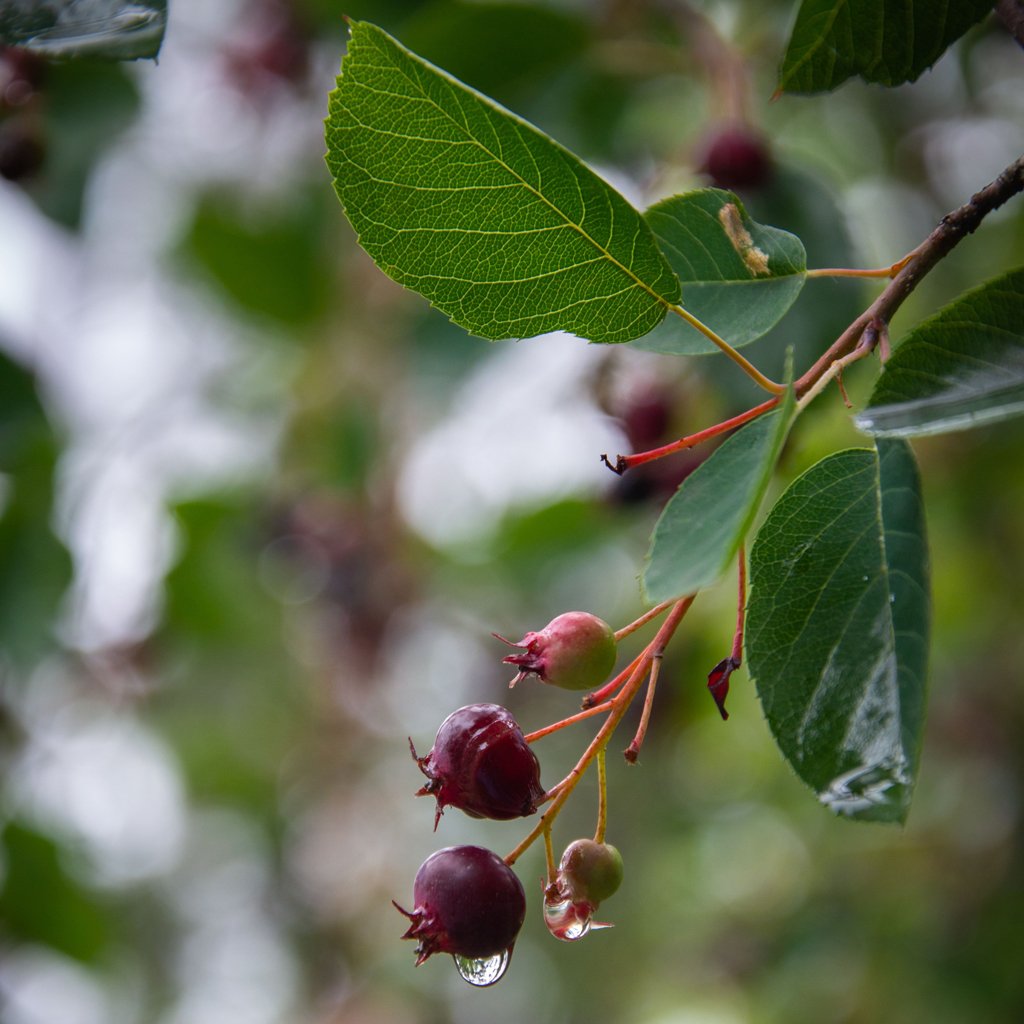
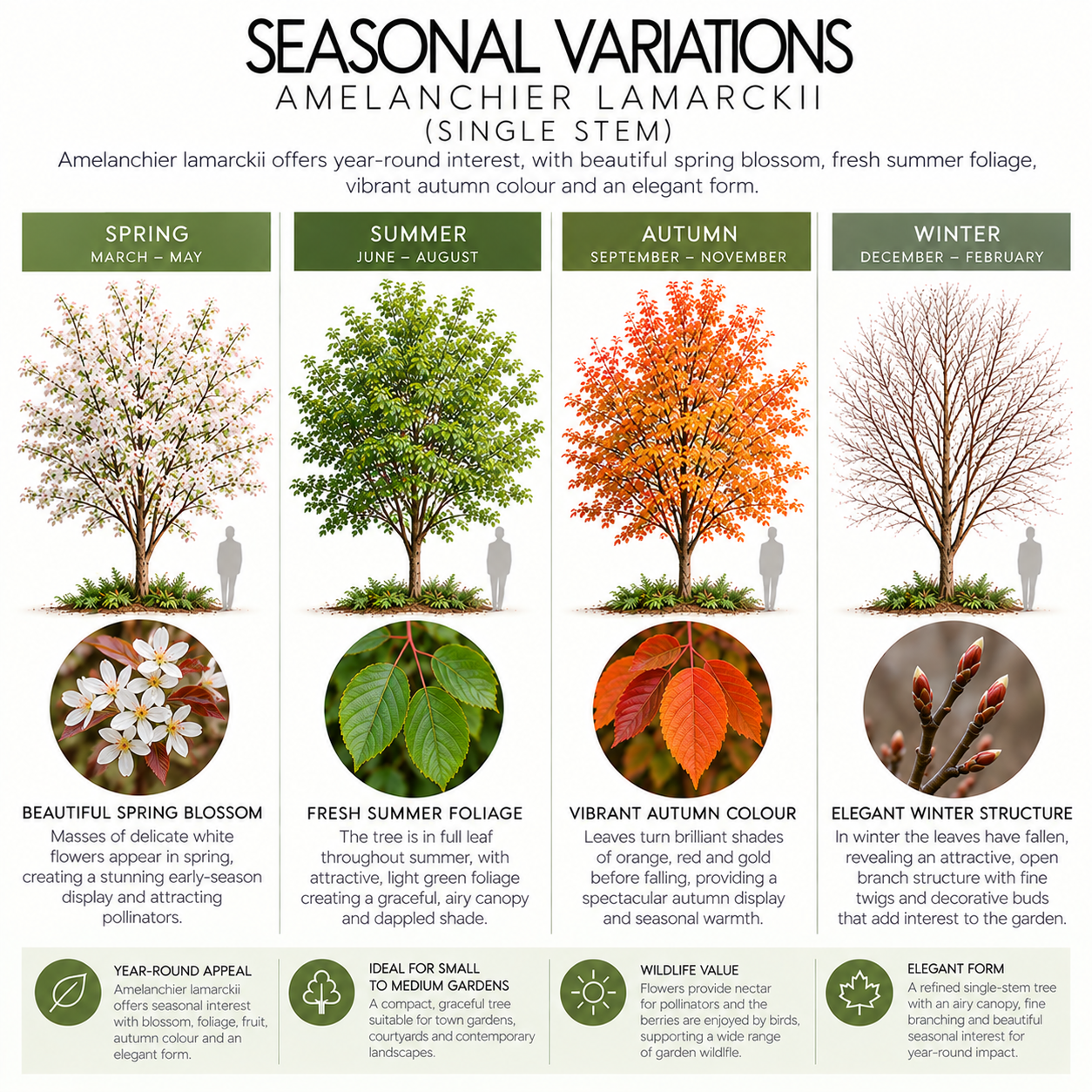
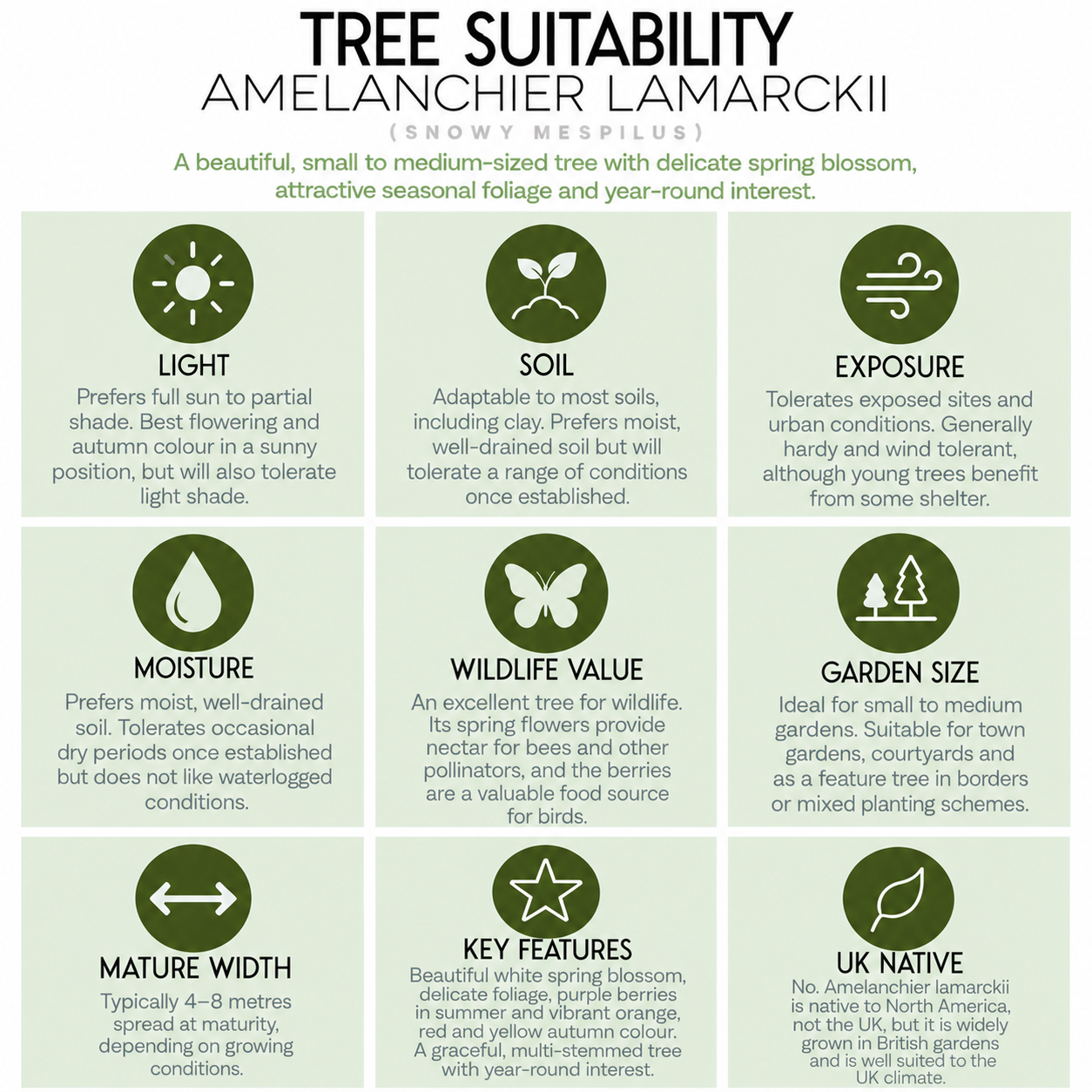
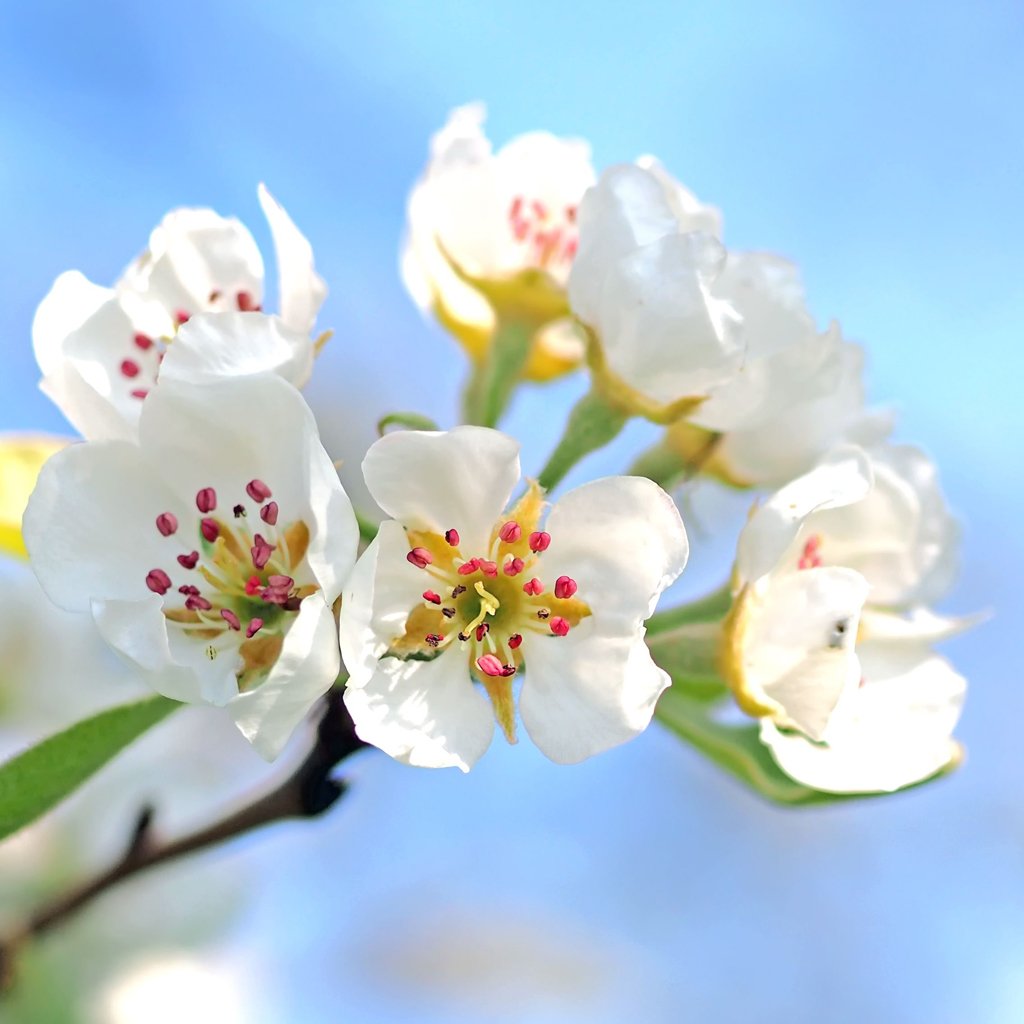
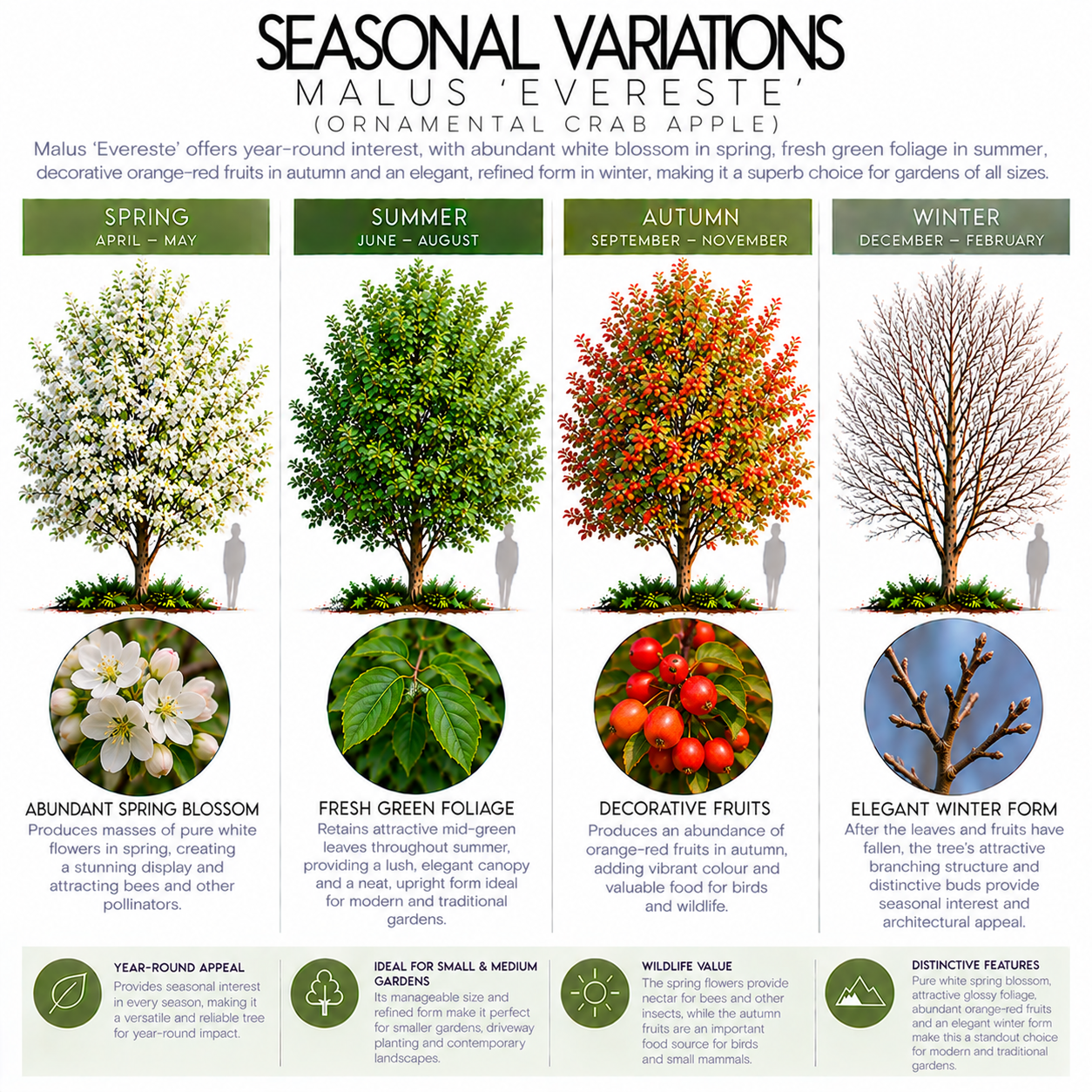
Ornamental cherries, crab apples, Magnolia, Amelanchier and other flowering trees can produce spectacular displays while still providing valuable structure during the rest of the year.
The best flowering tree is not simply the one with the biggest flowers.
Flowering period, eventual size, shape, autumn colour, fruit and site conditions should all be considered.
If blossom is your priority, explore our Spring Blossom Trees guide.
Trees for Spring Interest
After winter, trees can be some of the first major plants to transform the appearance of the garden.
Magnolia flowers can create dramatic displays before the surrounding garden has fully emerged, while cherries and crab apples bring masses of spring blossom.
Fresh foliage can be equally important.
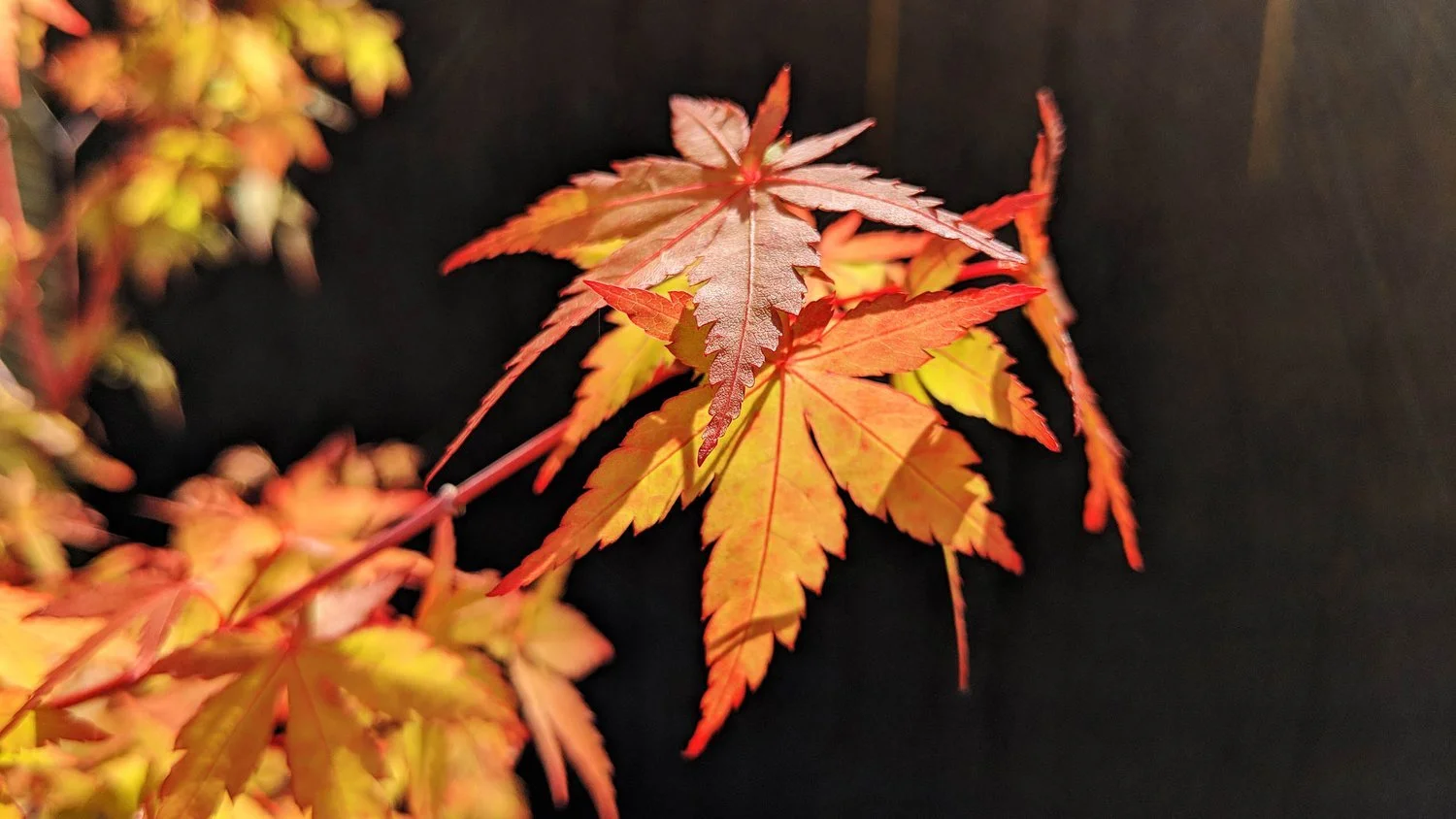
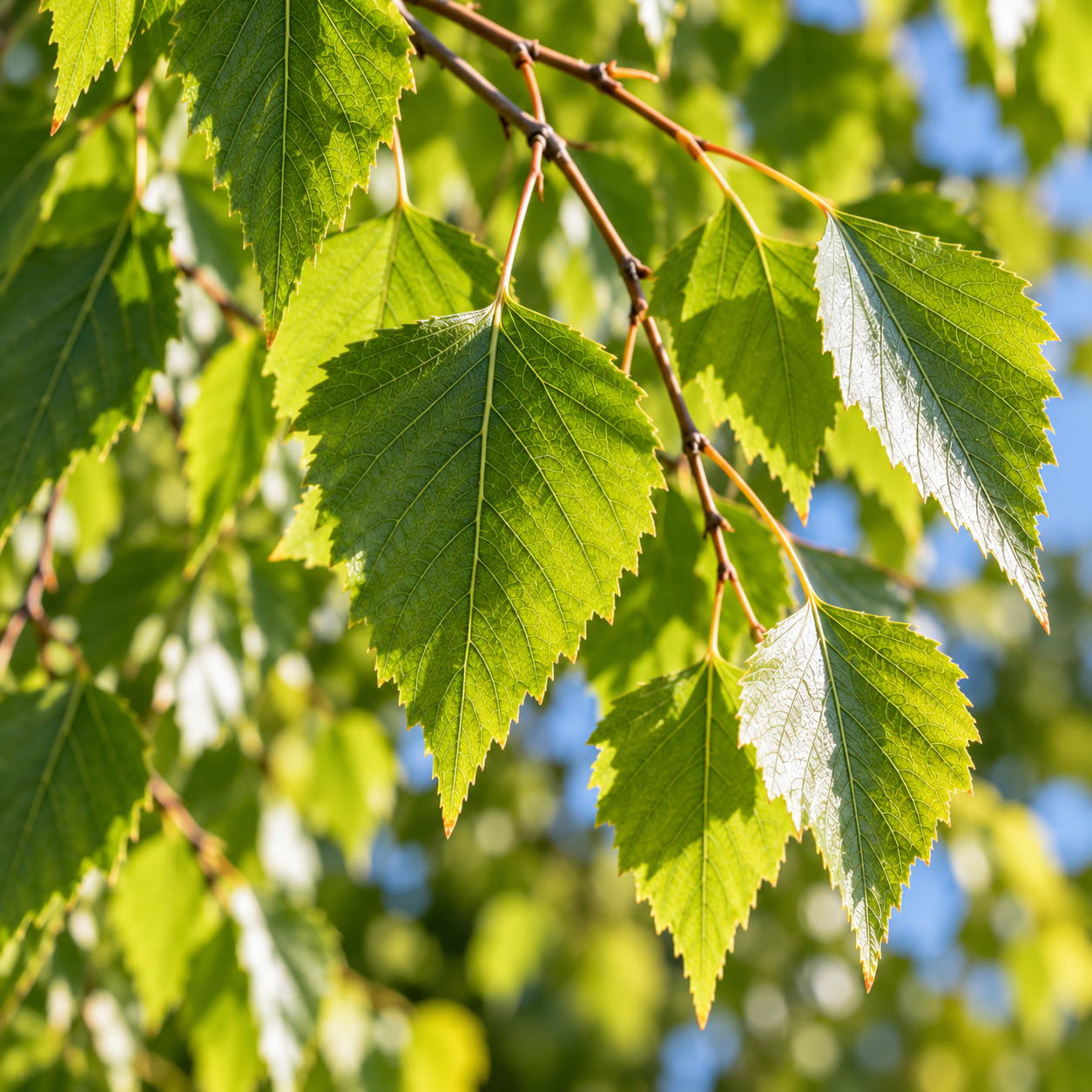
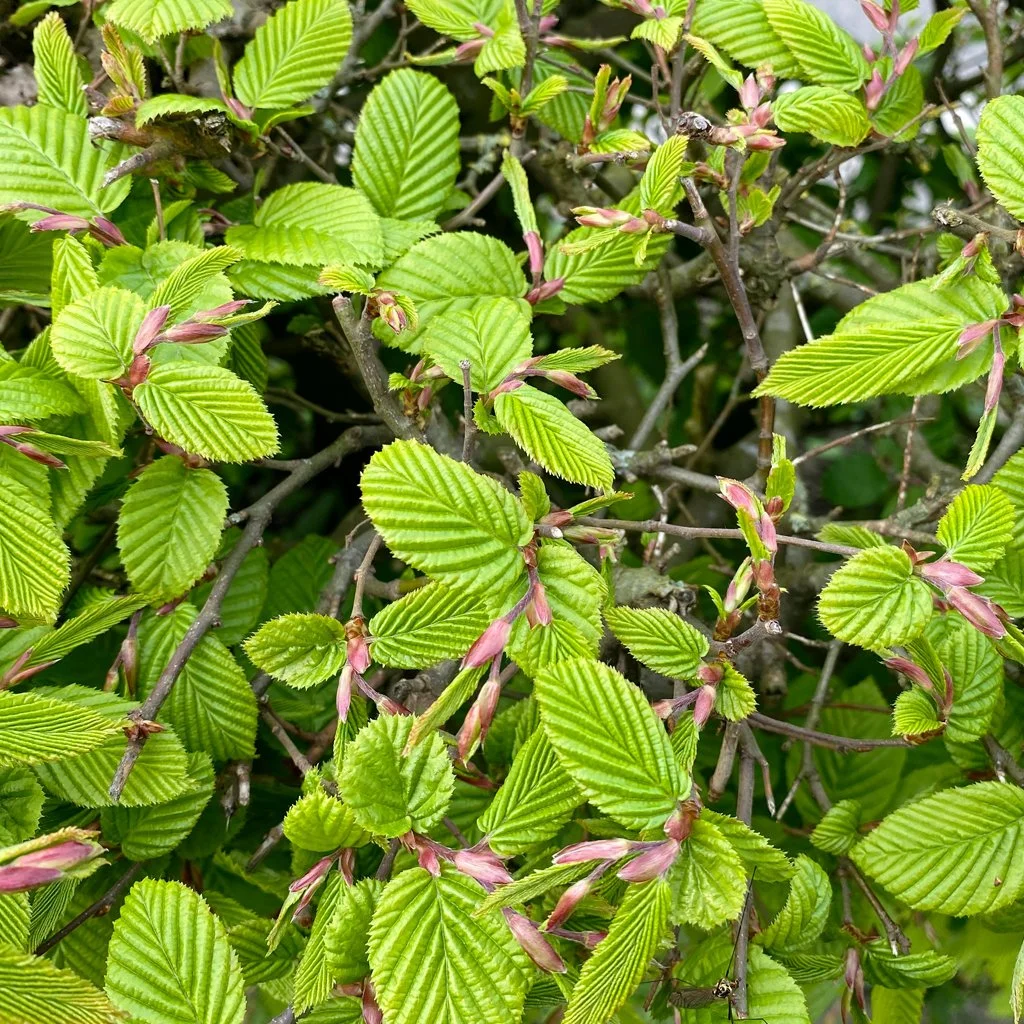
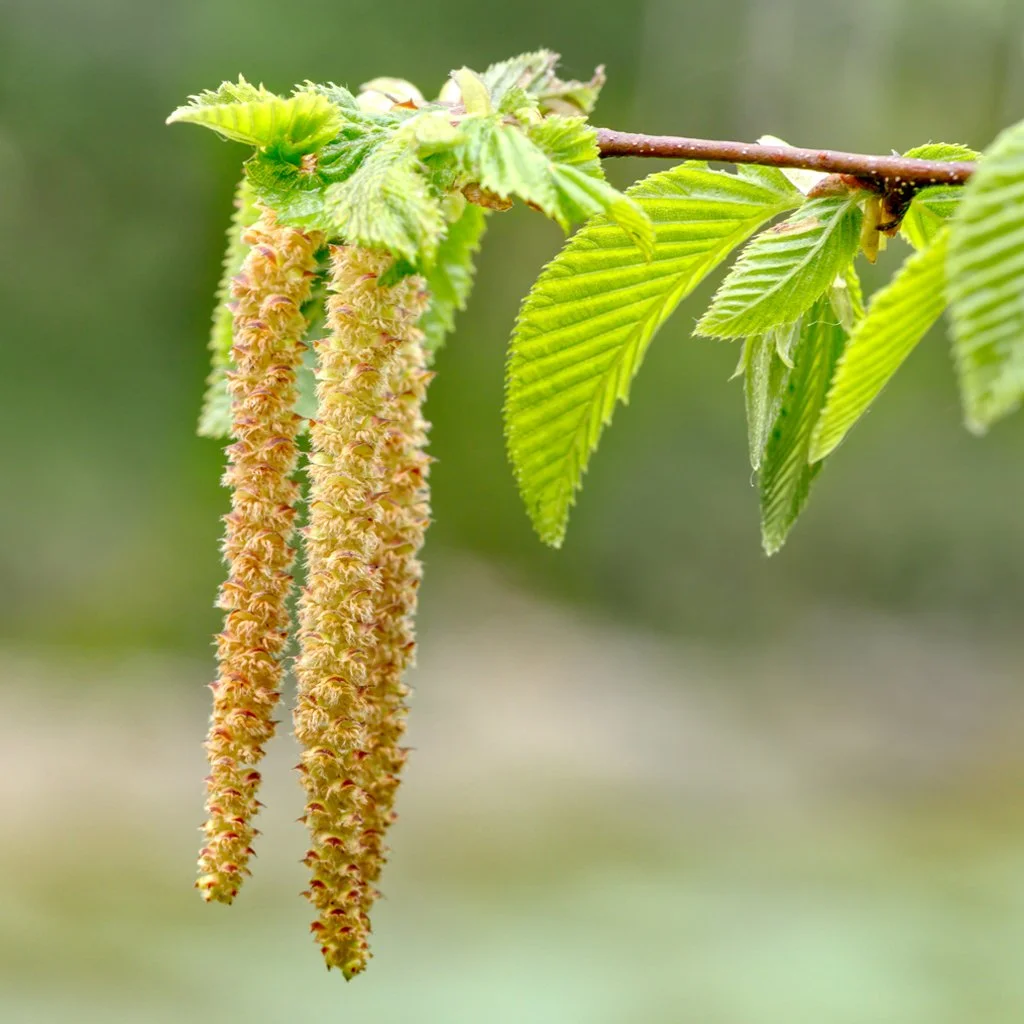
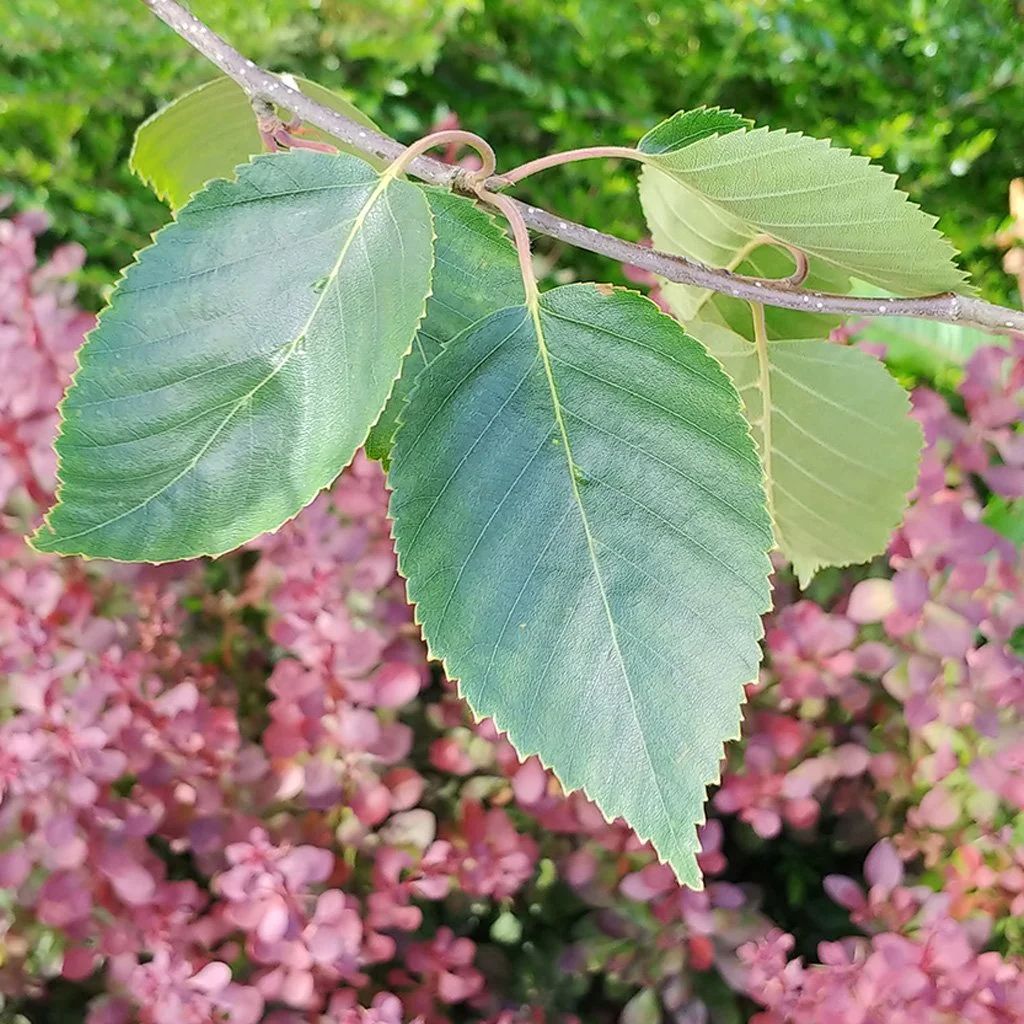
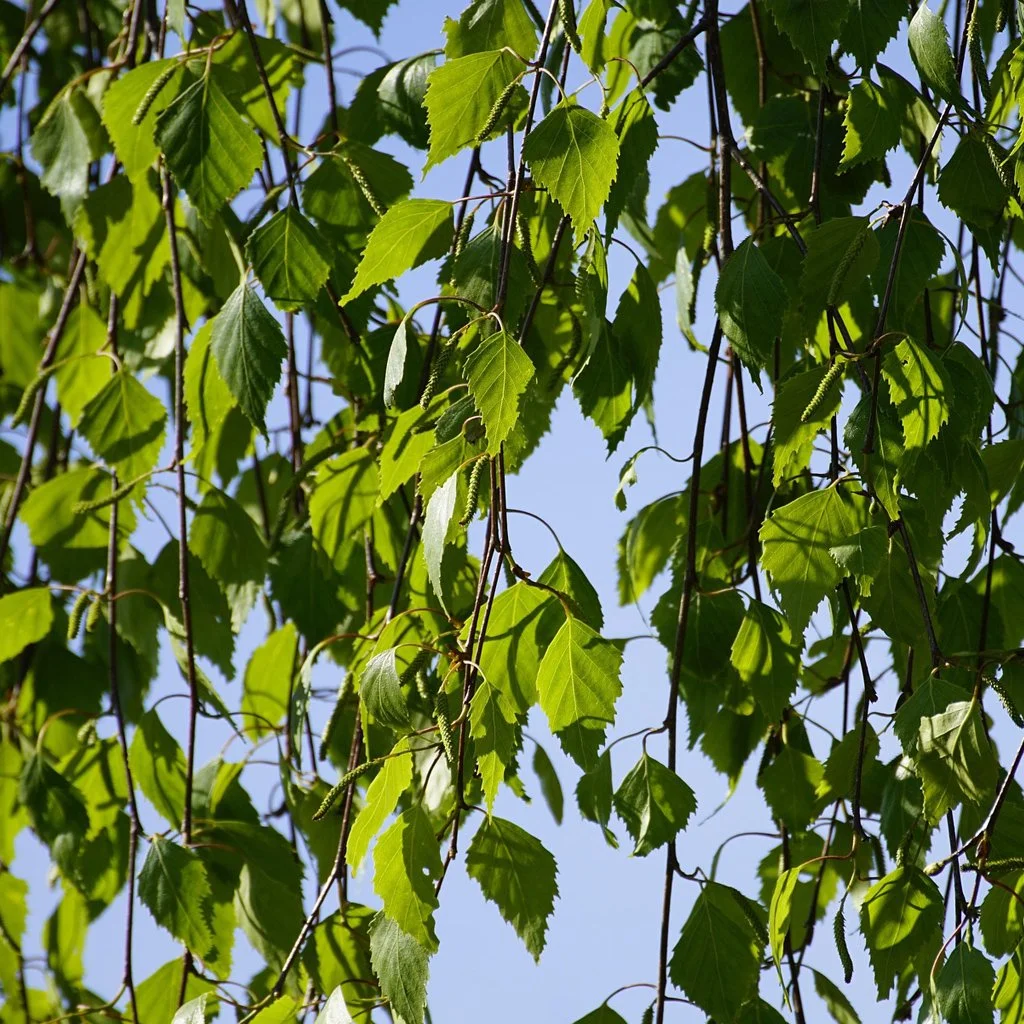
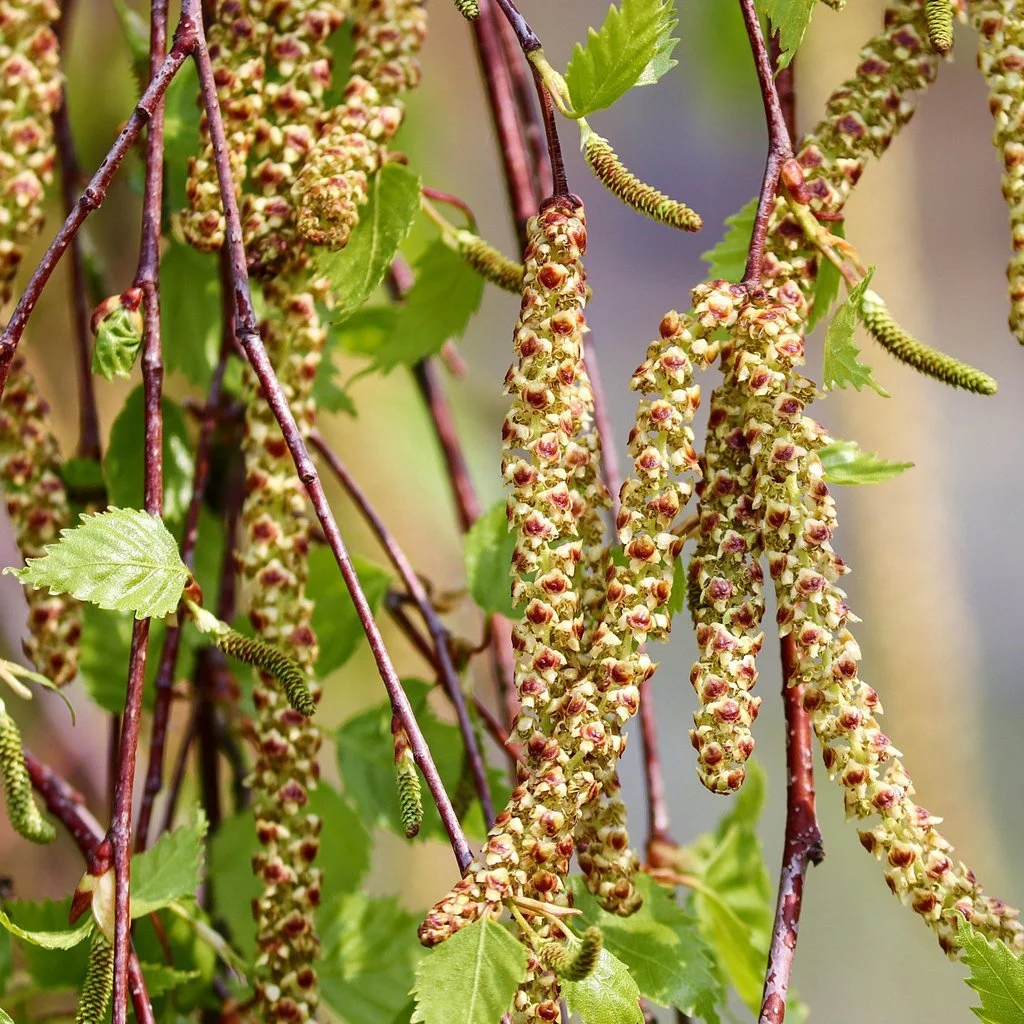
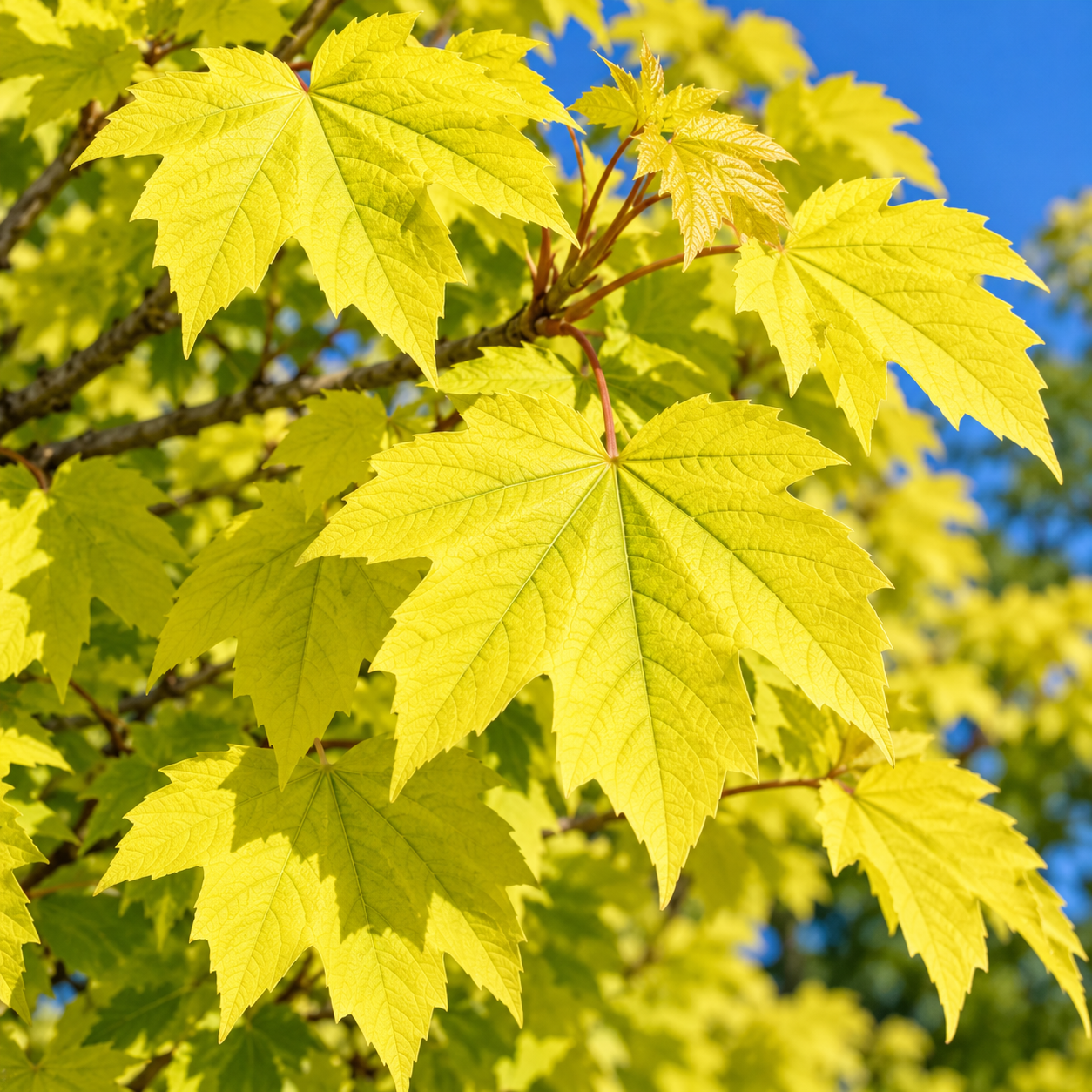
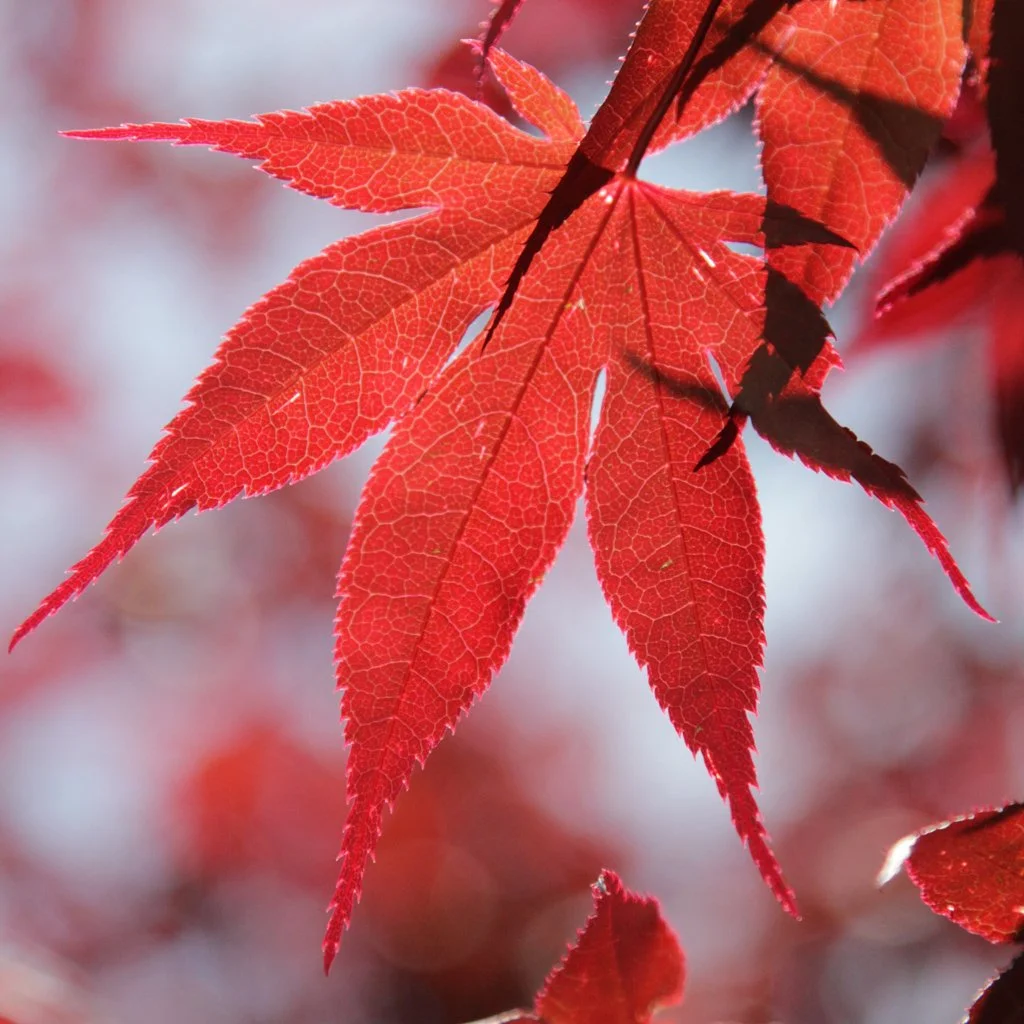
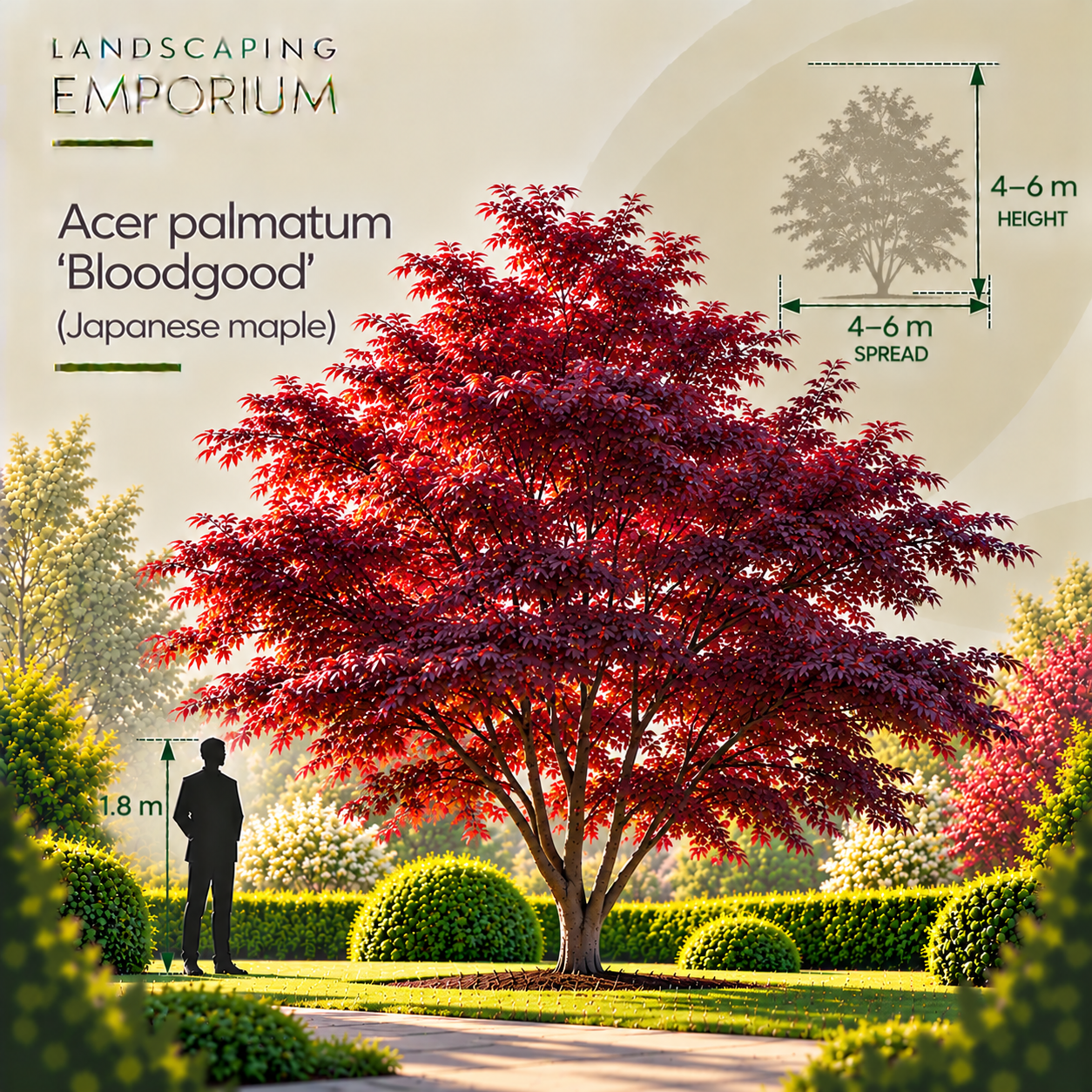
The brilliant new growth of some Acers or the fresh green leaves of Birch and Hornbeam can provide a very different type of spring interest.
Combining trees with spring bulbs and early-flowering perennials can make this one of the strongest seasons in the garden.
Trees for Autumn Colour
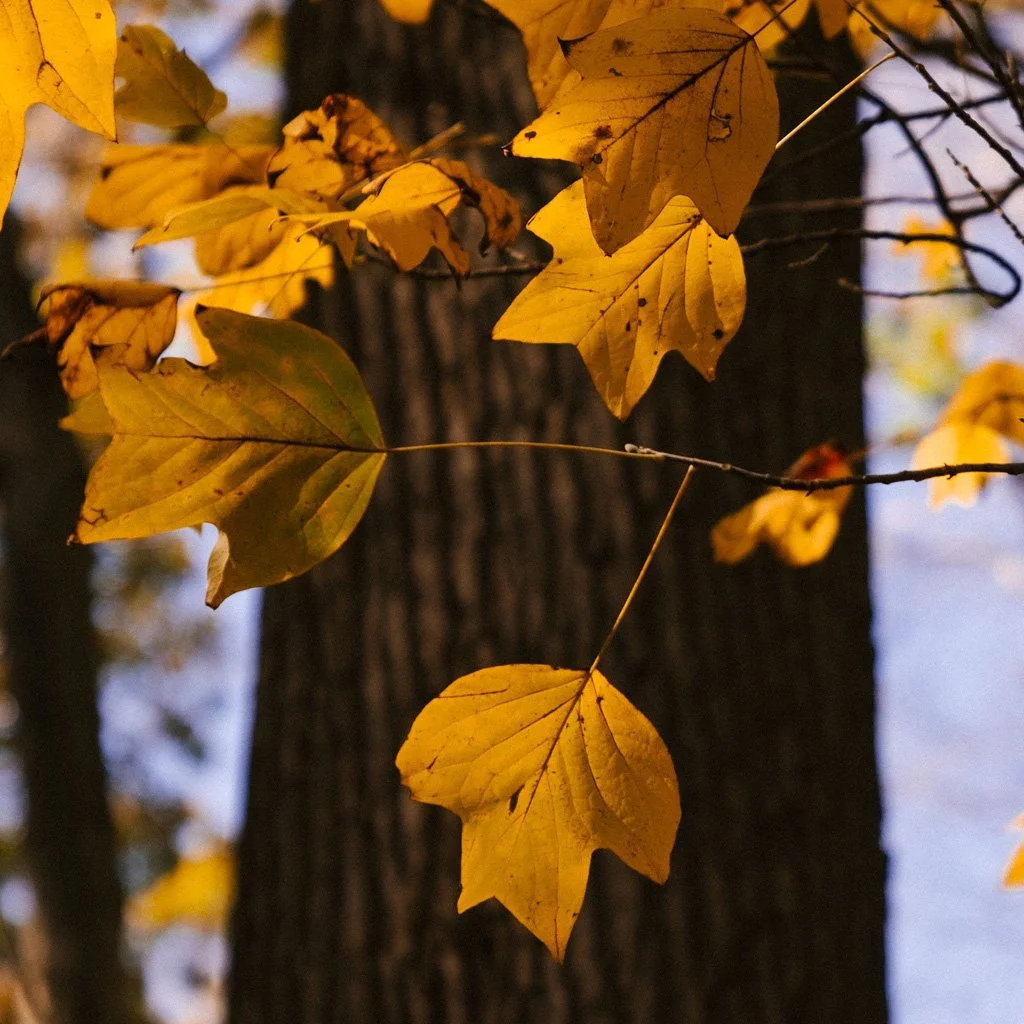
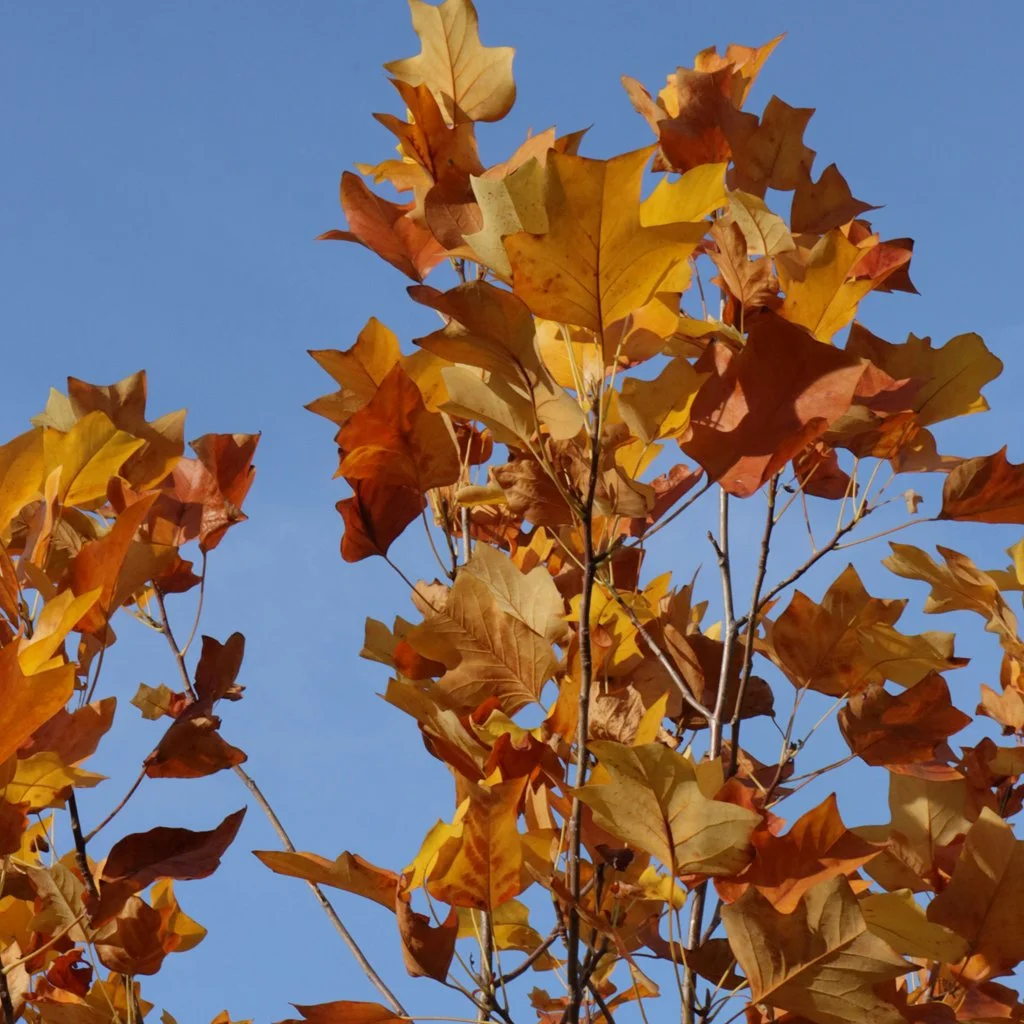
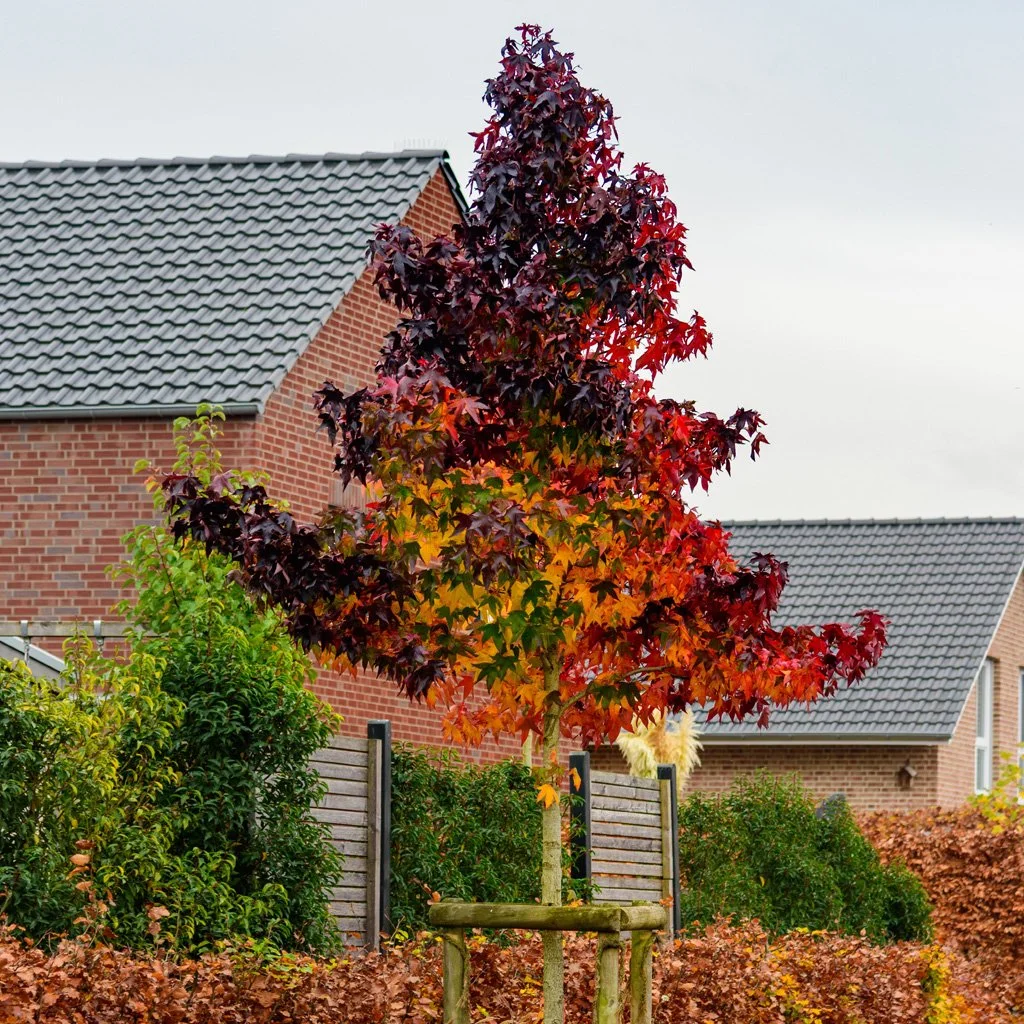
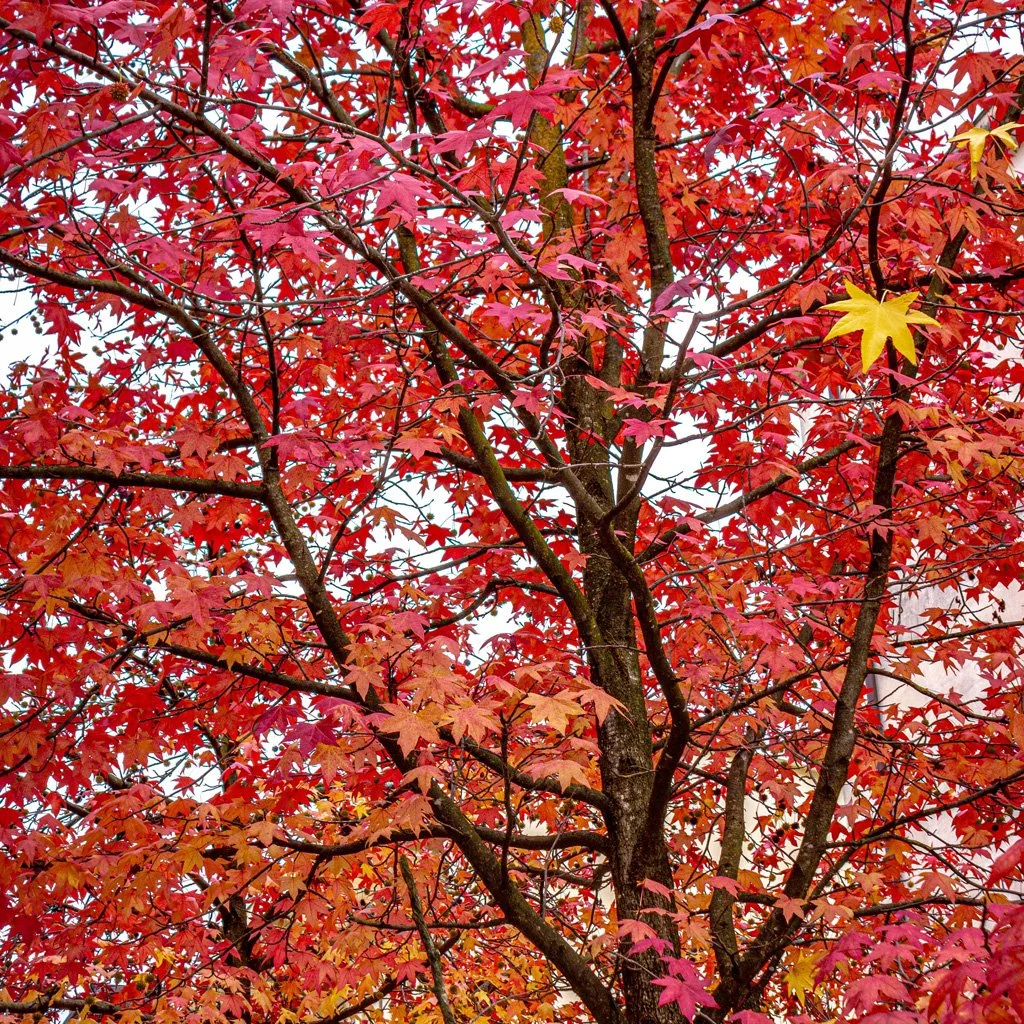
Autumn colour can be just as dramatic as spring blossom.
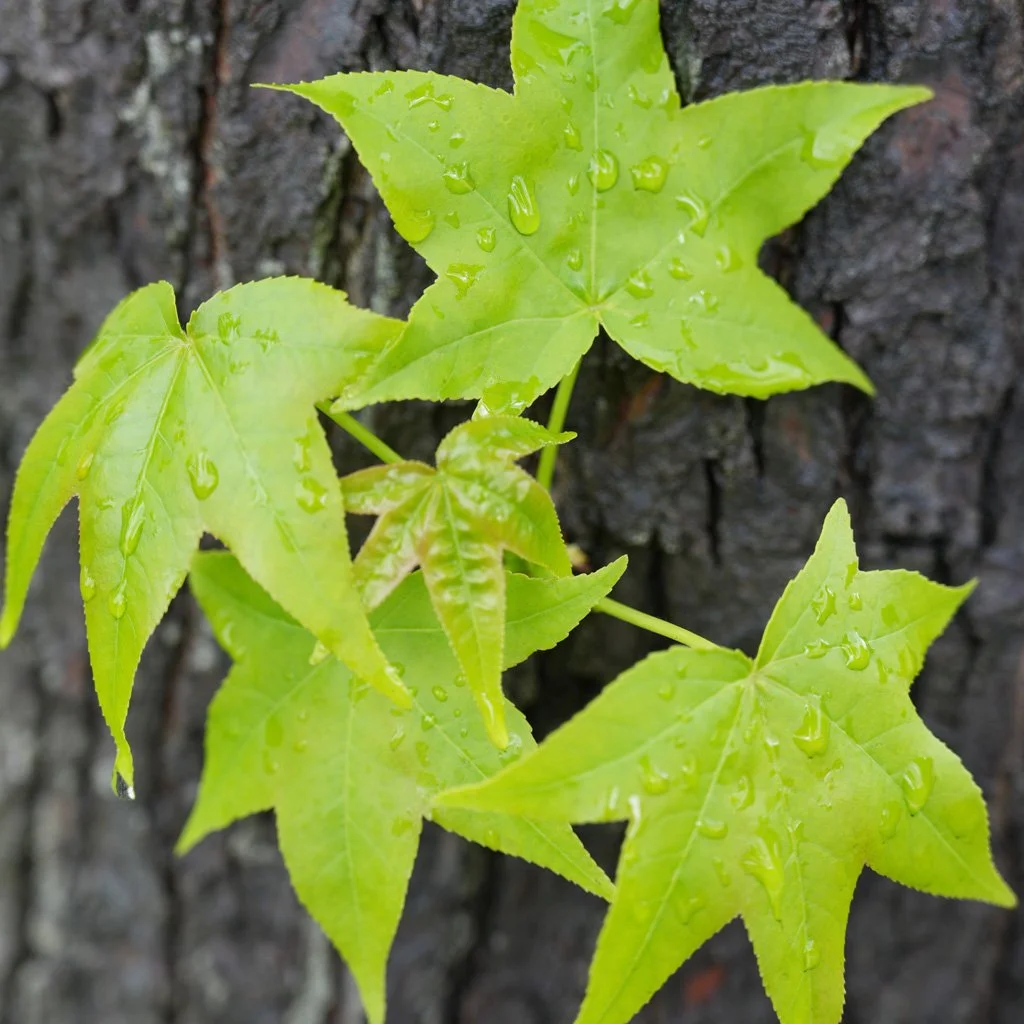
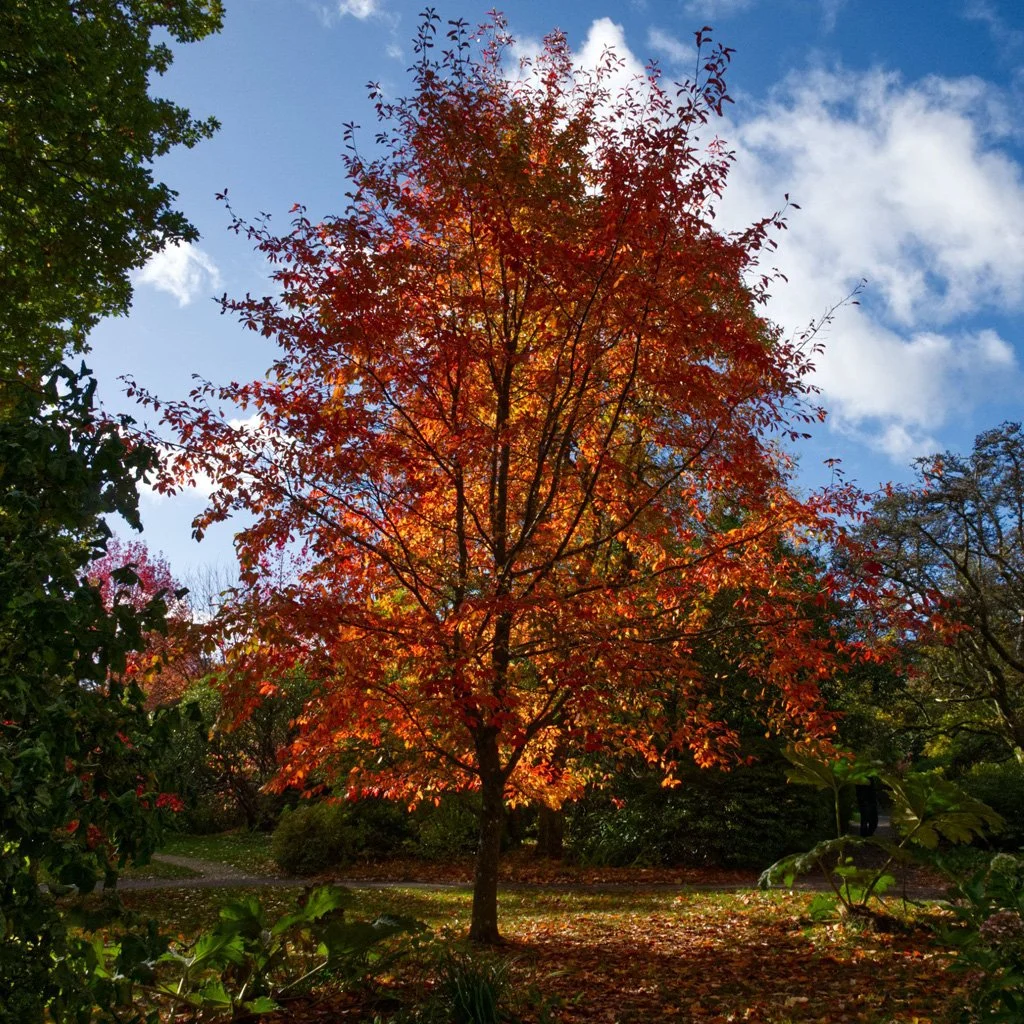
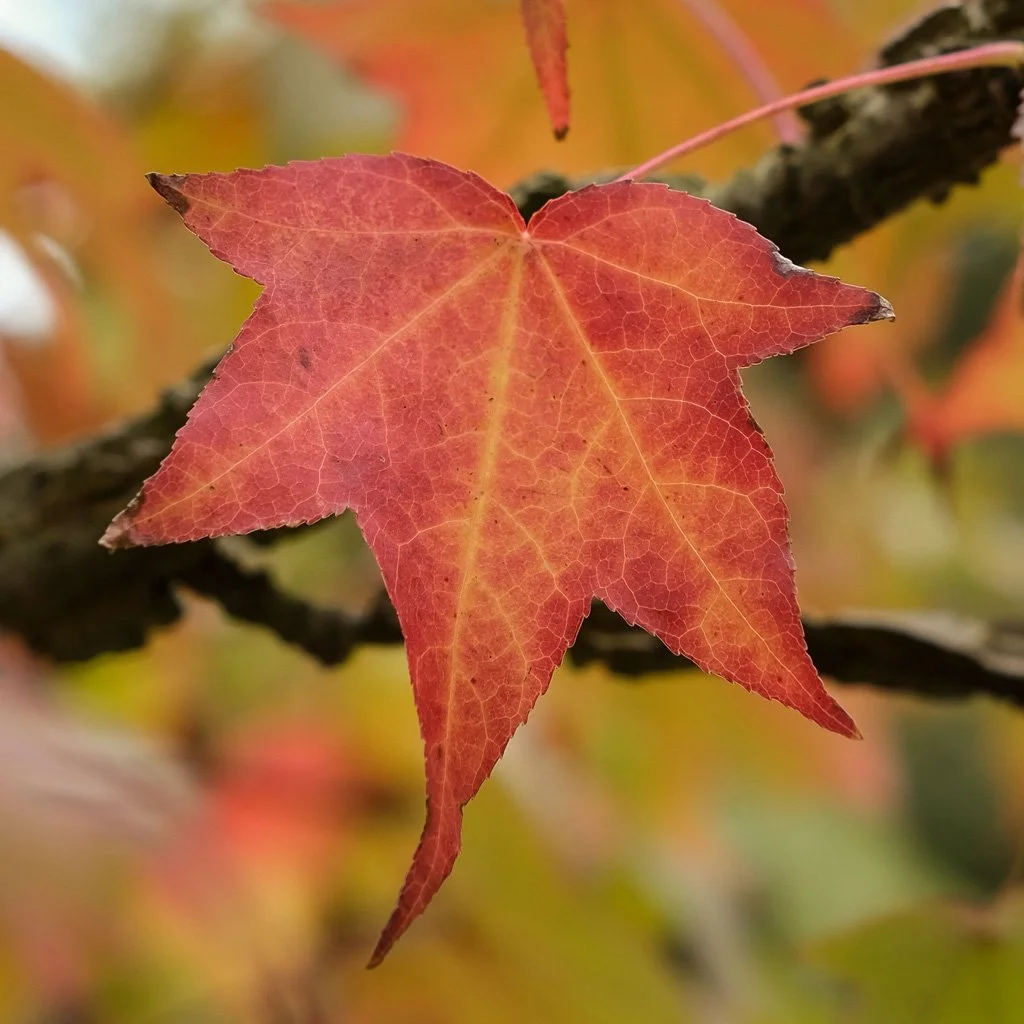
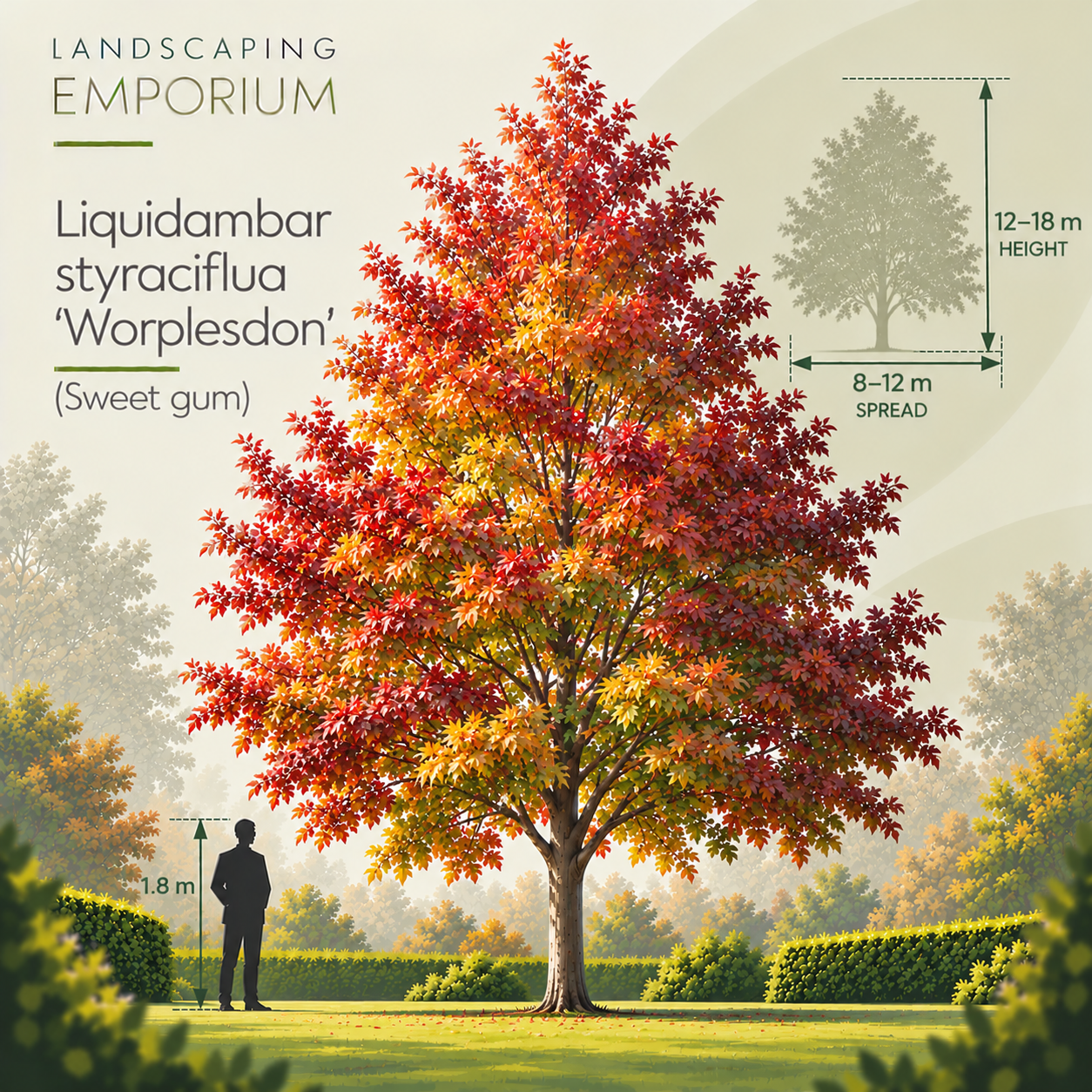
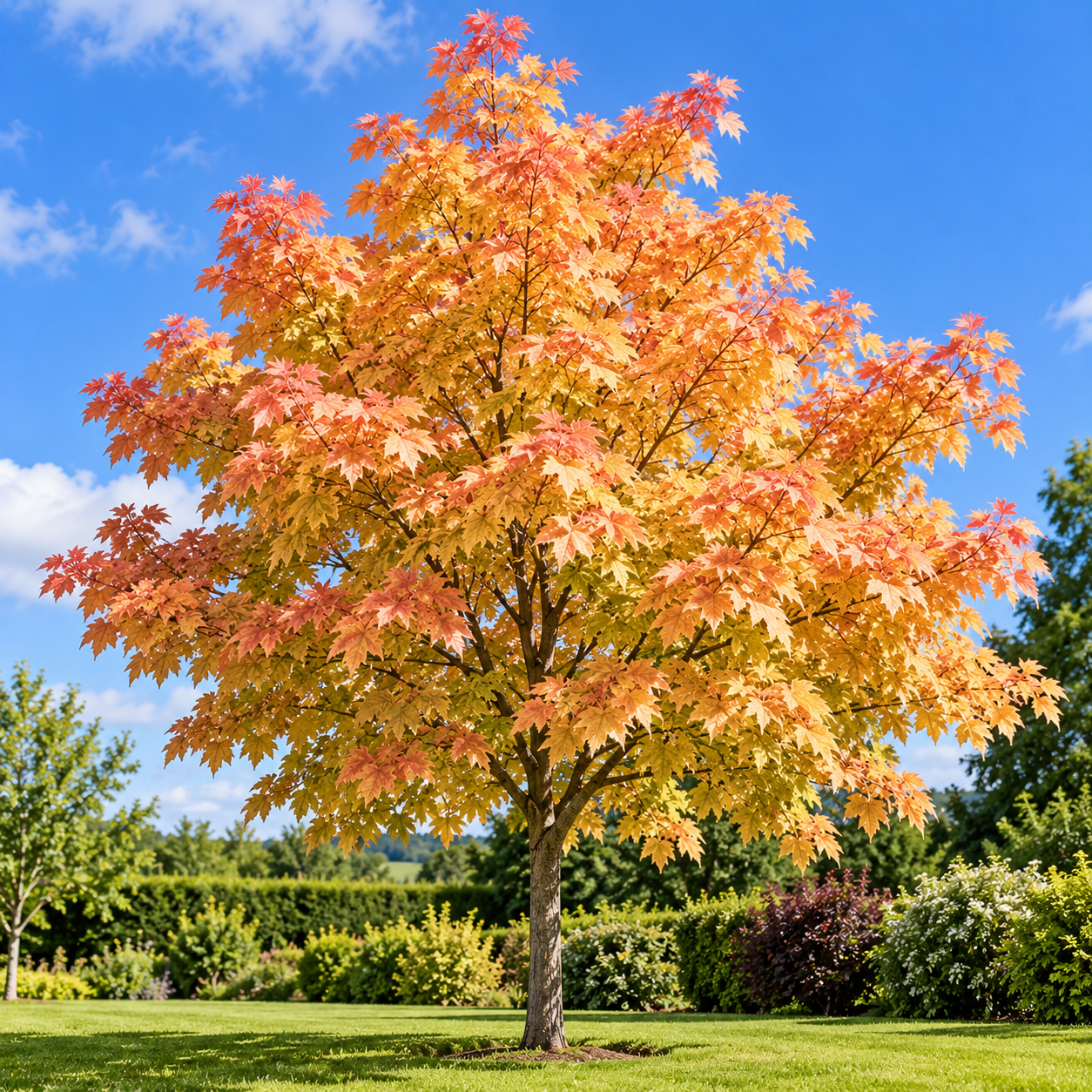
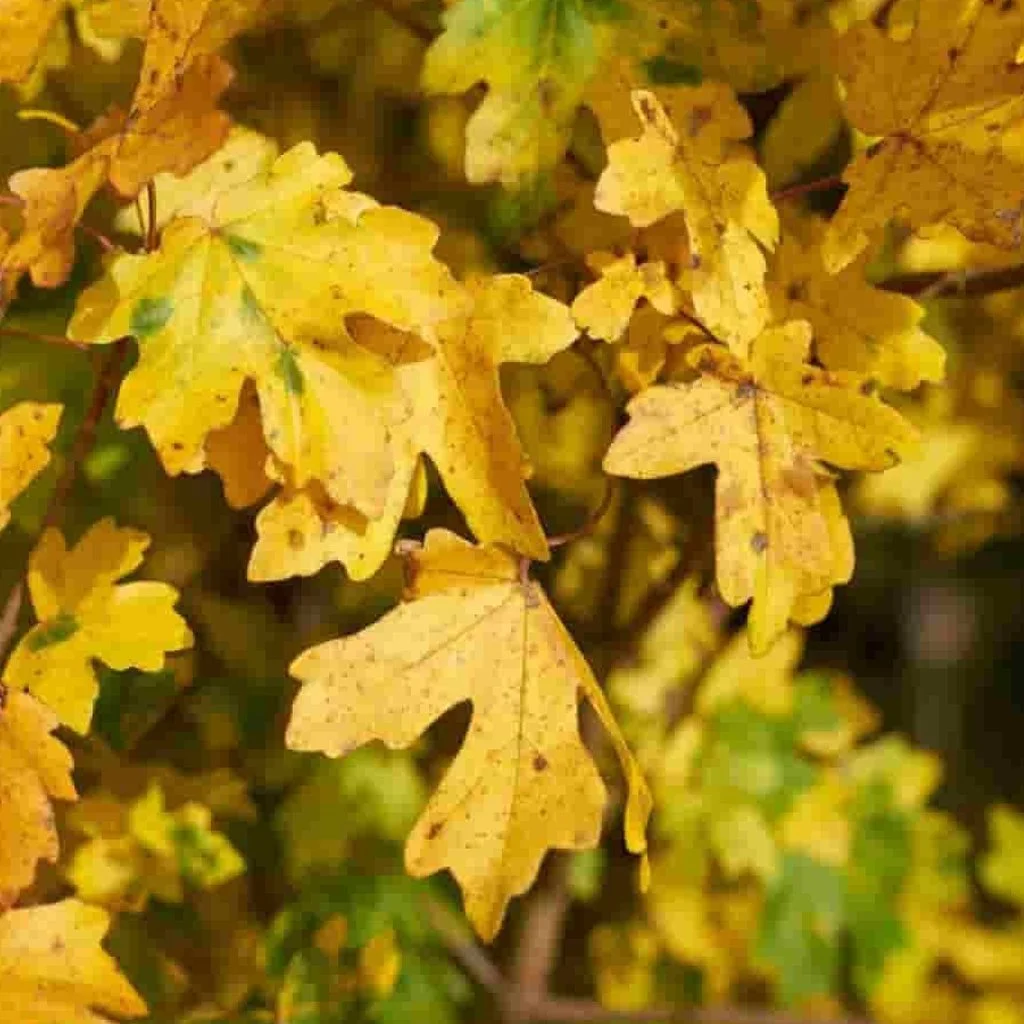
Liquidambar, Acer, Cercidiphyllum, Amelanchier and many other trees can produce striking seasonal foliage.
Some turn yellow and gold, others orange, scarlet or deep red.
Autumn colour varies according to species, cultivar, soil and weather conditions, so the display will naturally differ from year to year.
For a garden designed to evolve through the seasons, autumn foliage is well worth considering when choosing a specimen tree.
Trees With Attractive Bark
Trees do not need leaves or flowers to be interesting.
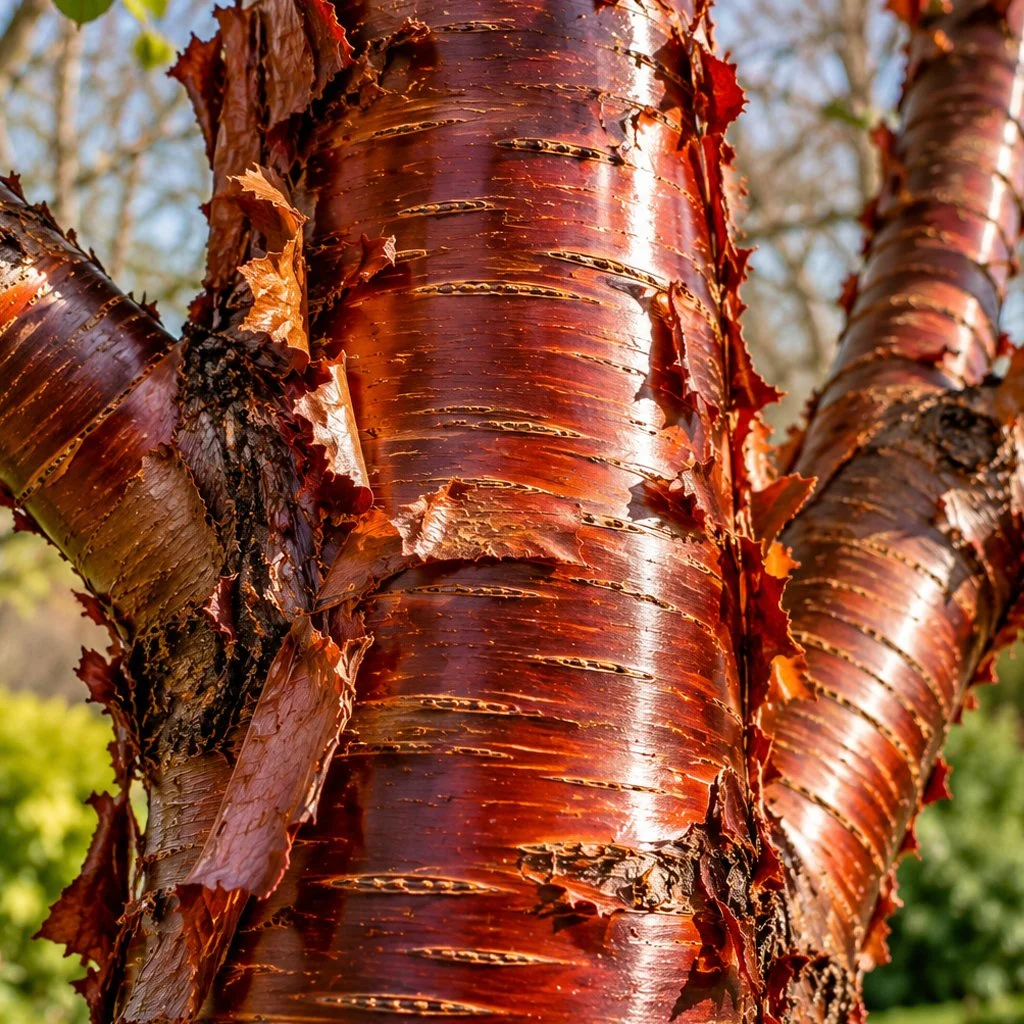
Decorative bark can become particularly valuable during winter when much of the surrounding planting has died back.
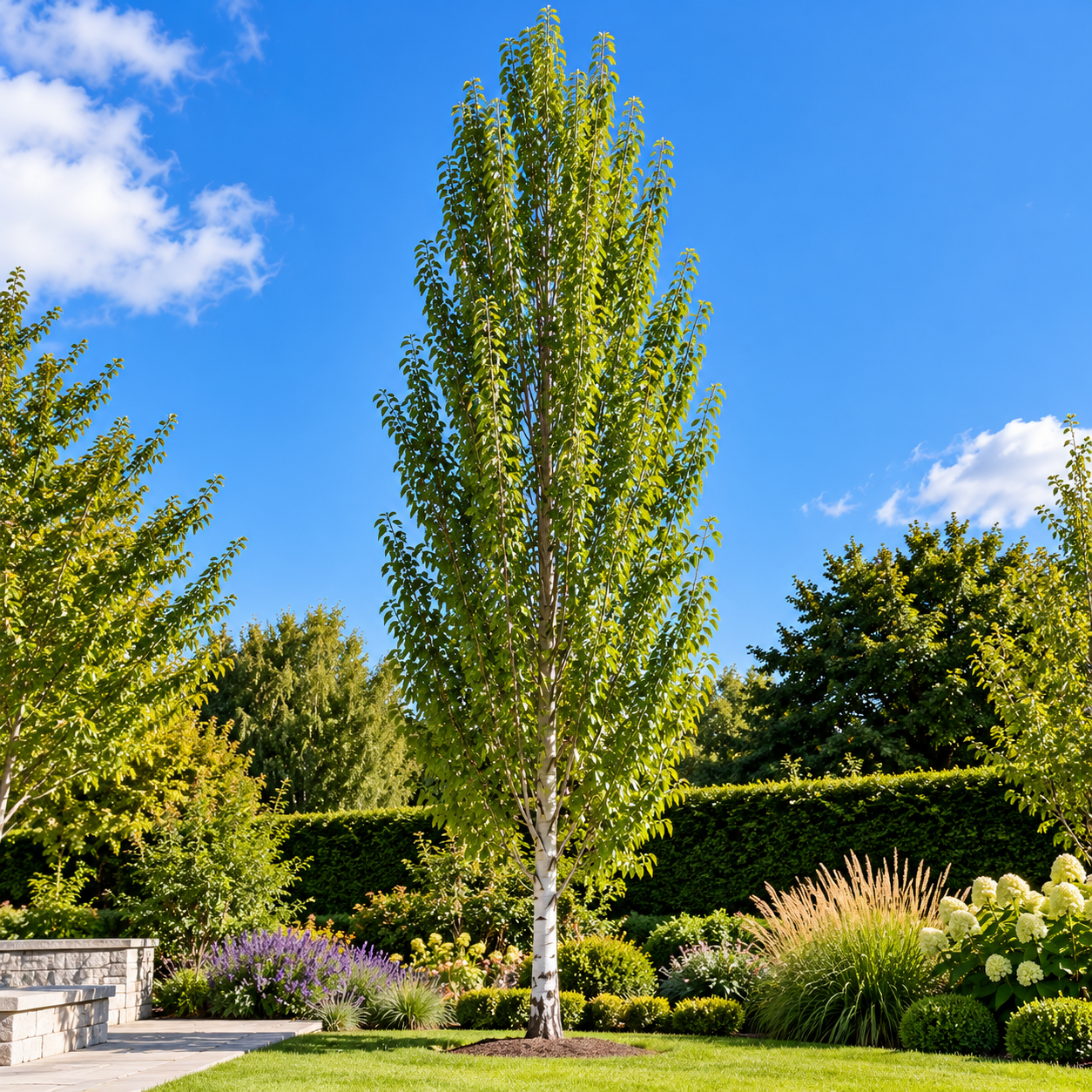
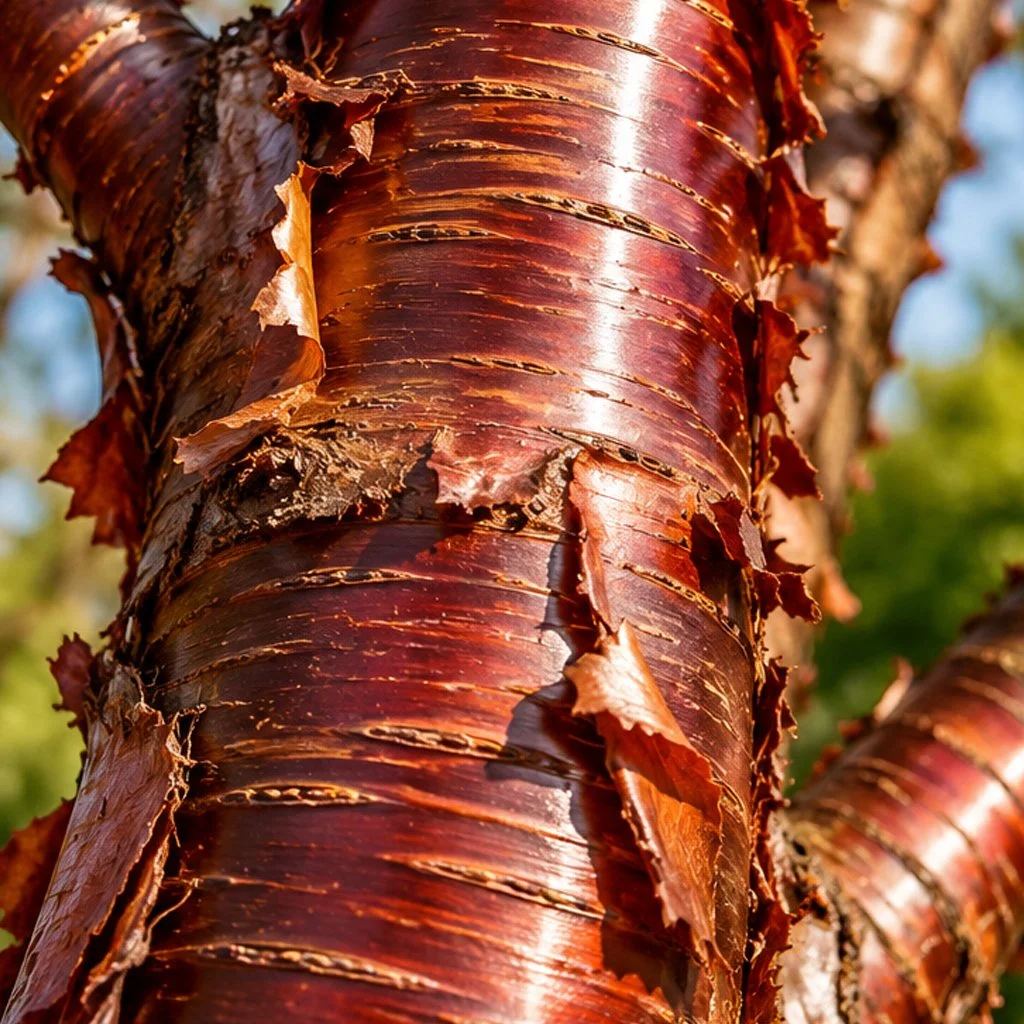
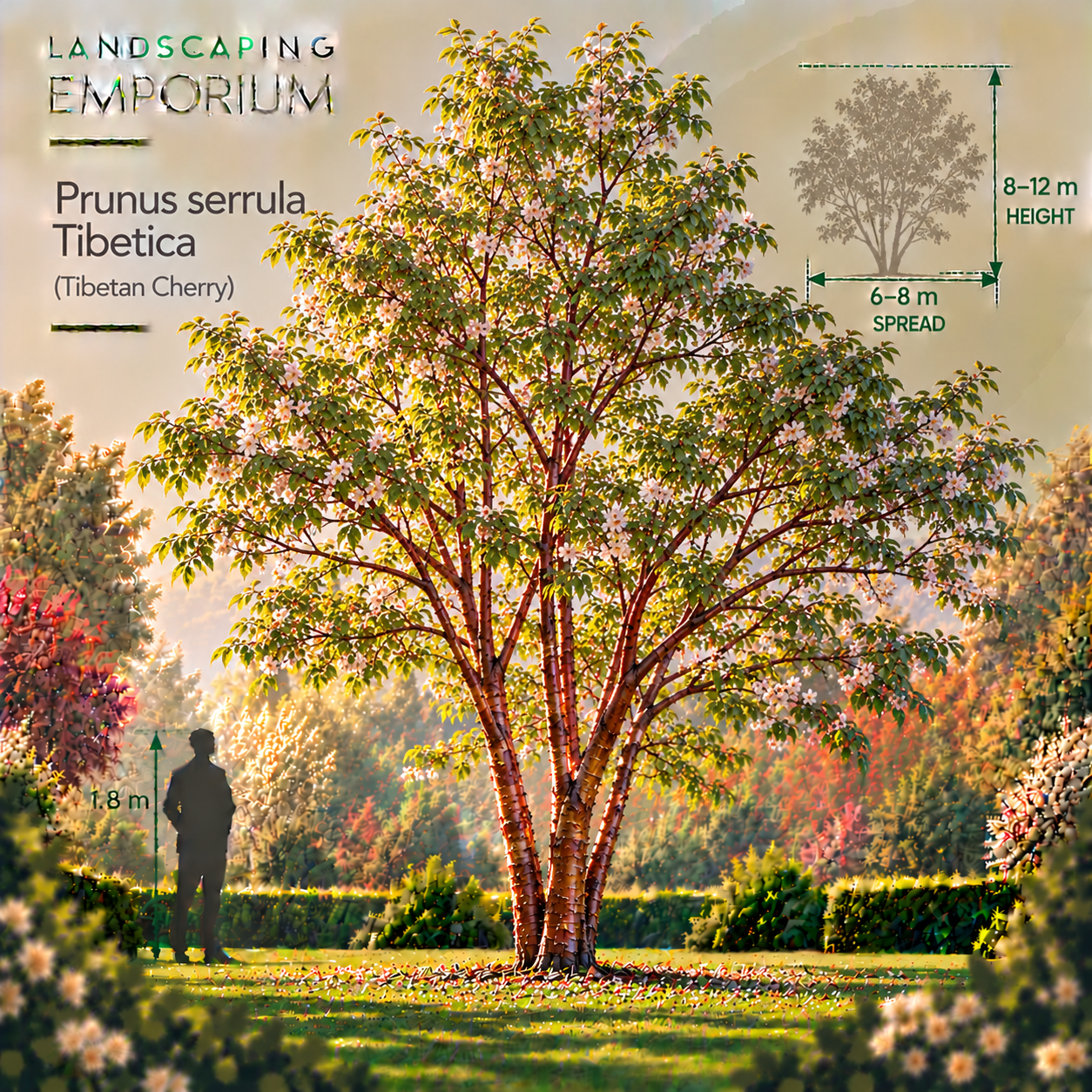
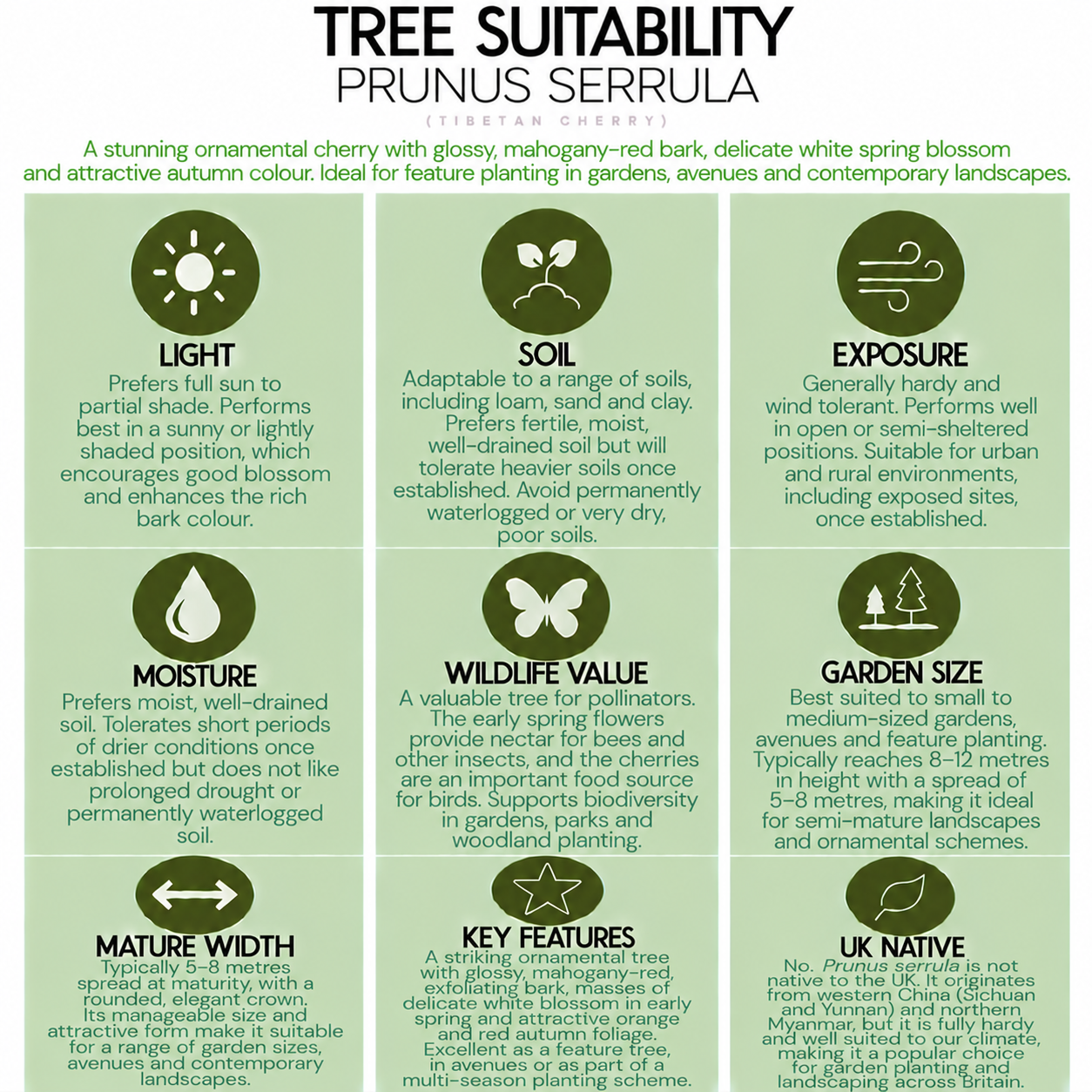
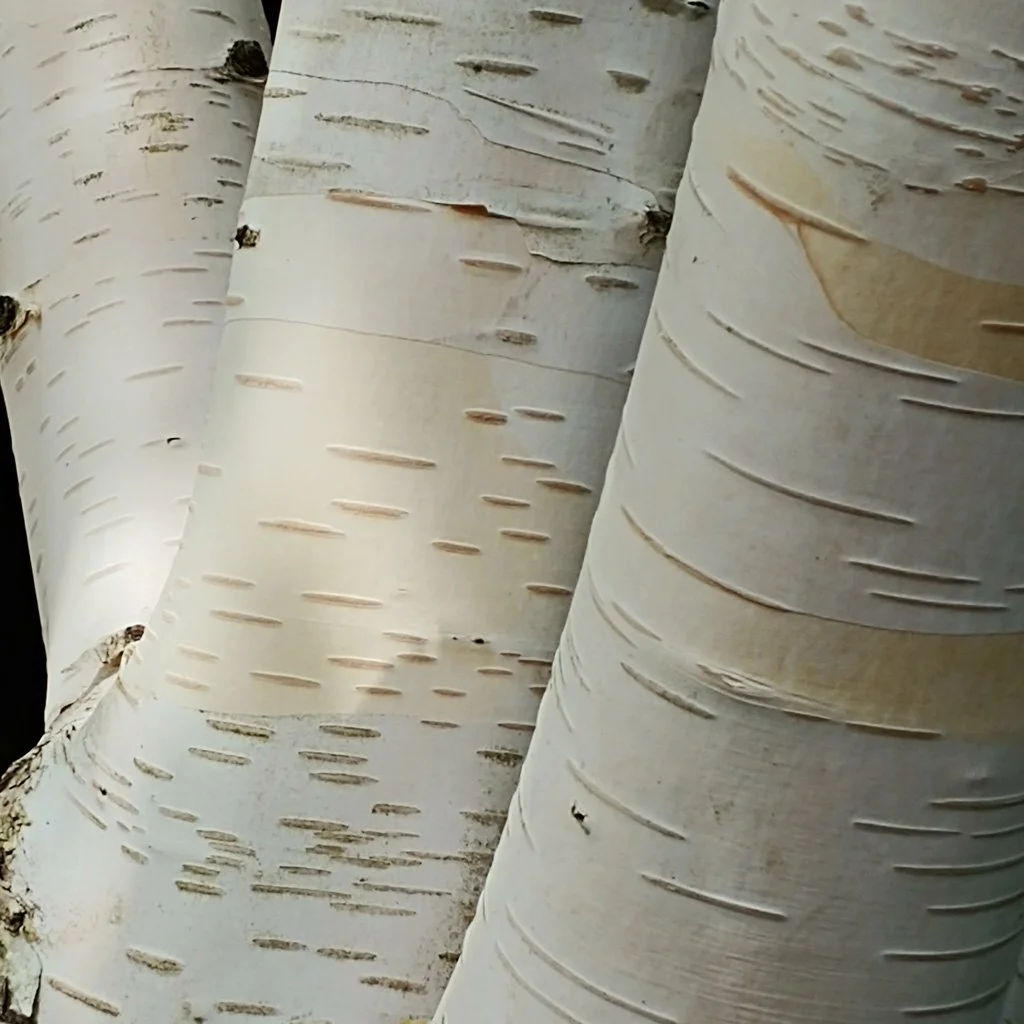
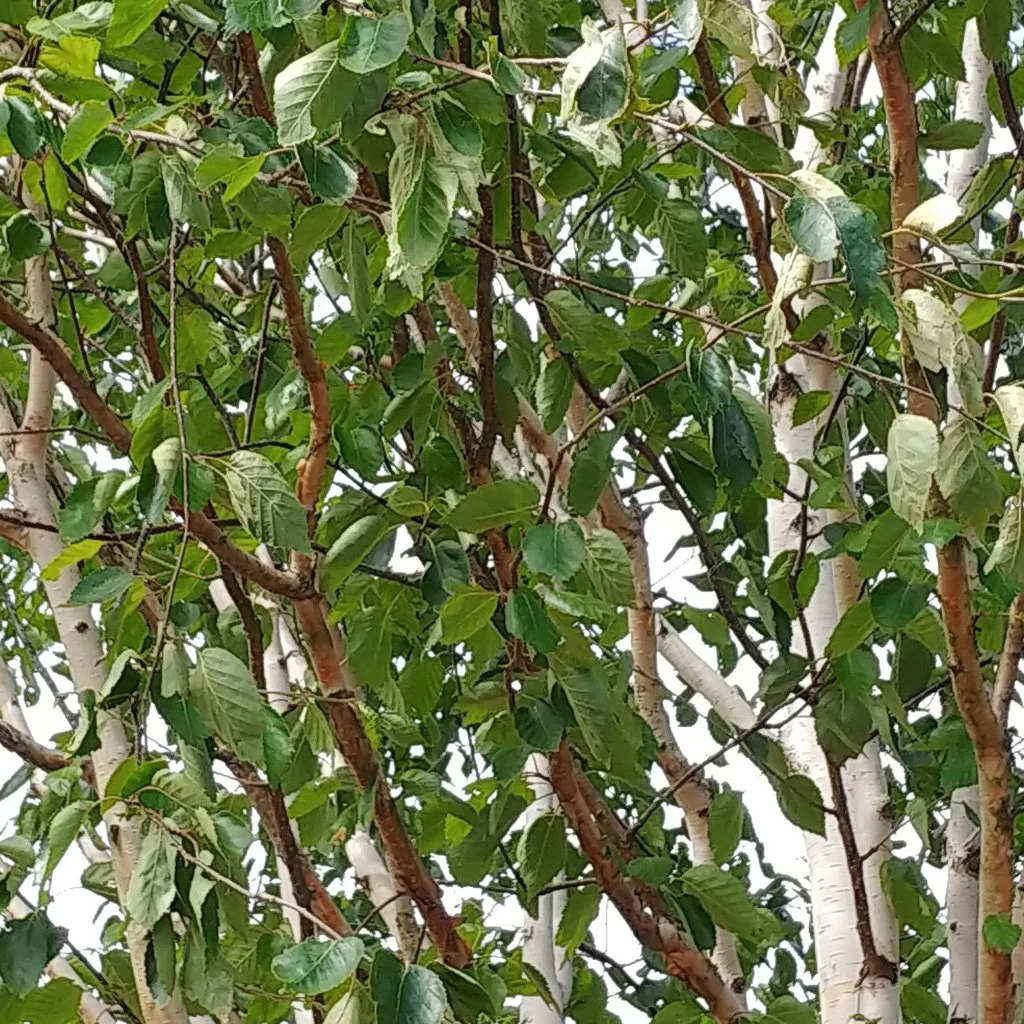
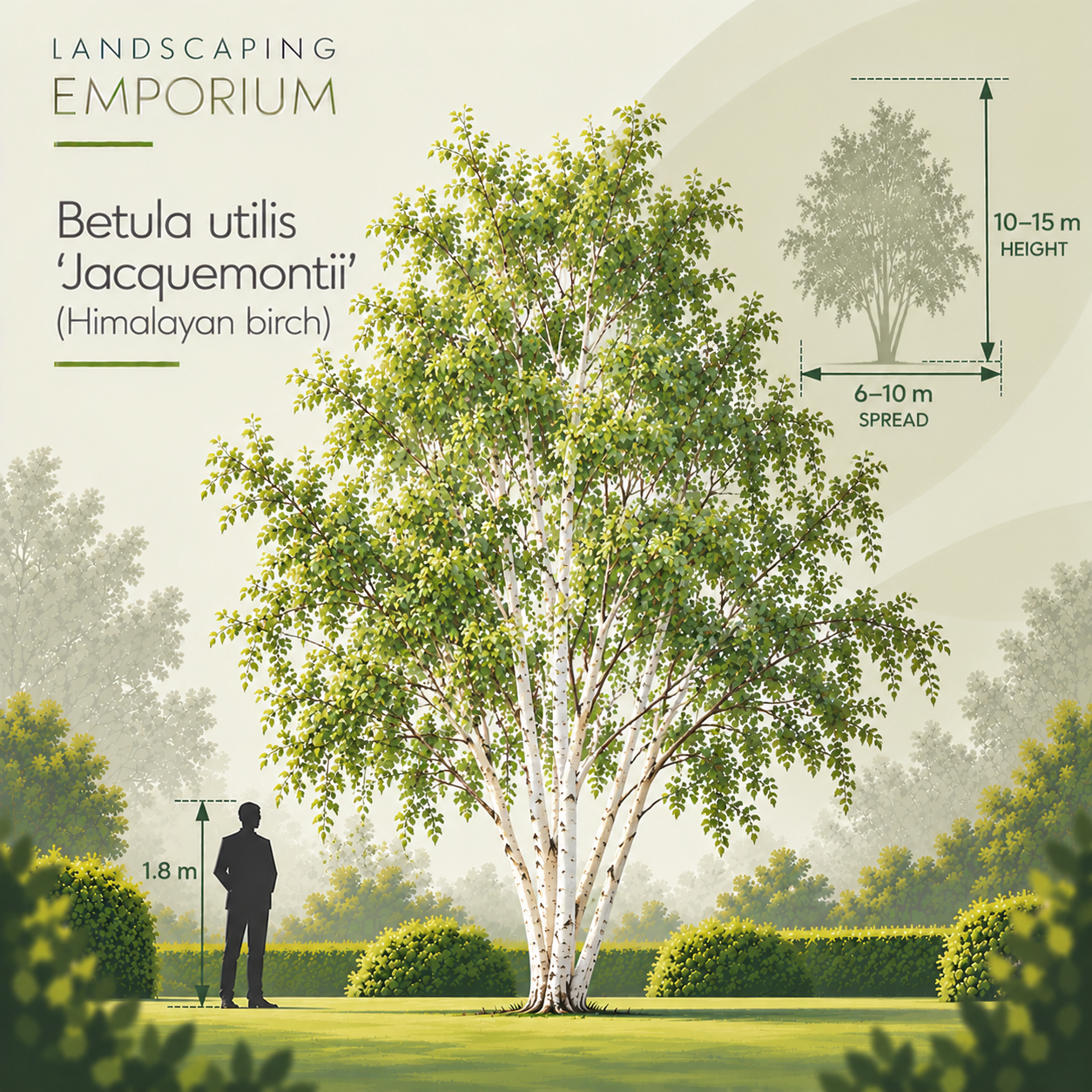
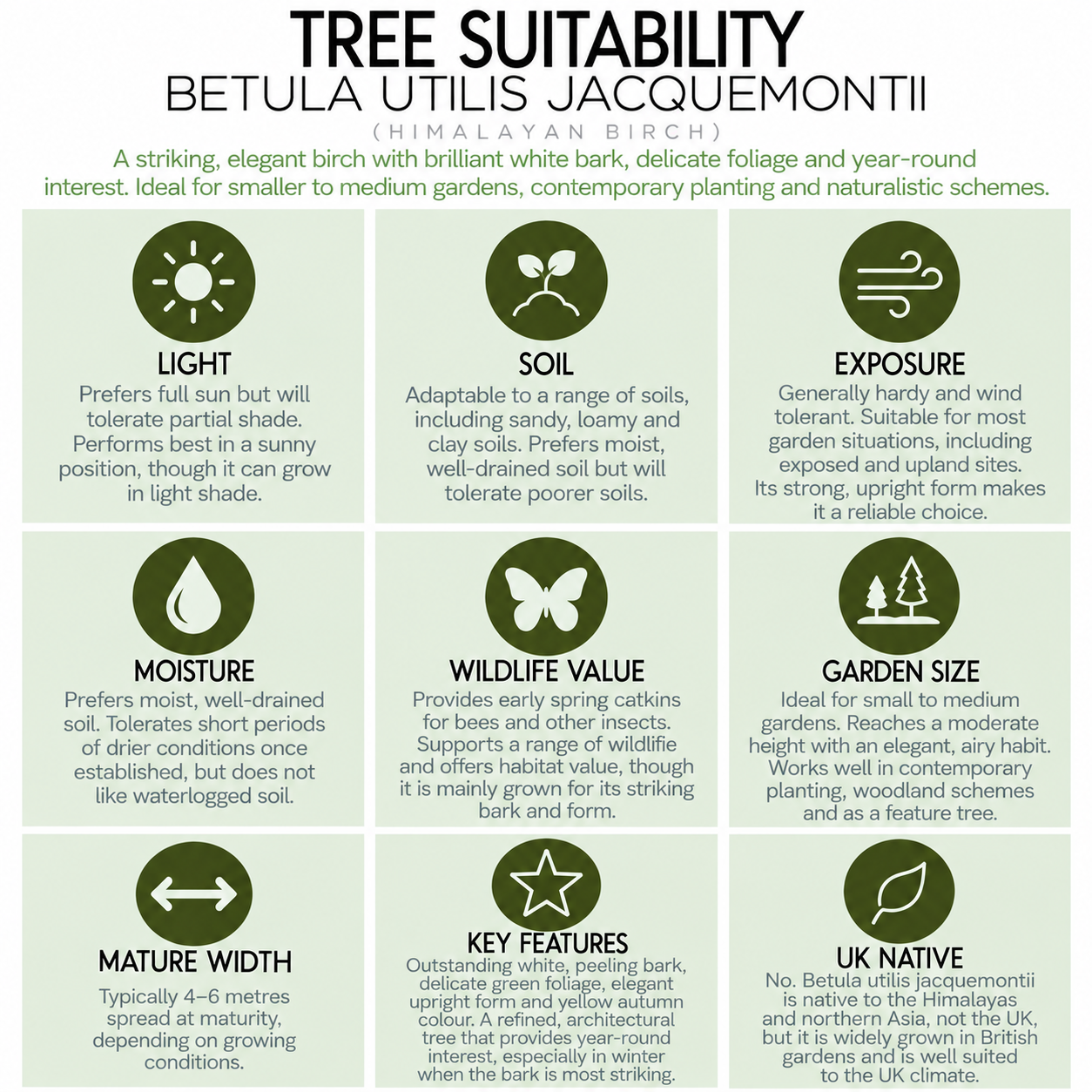
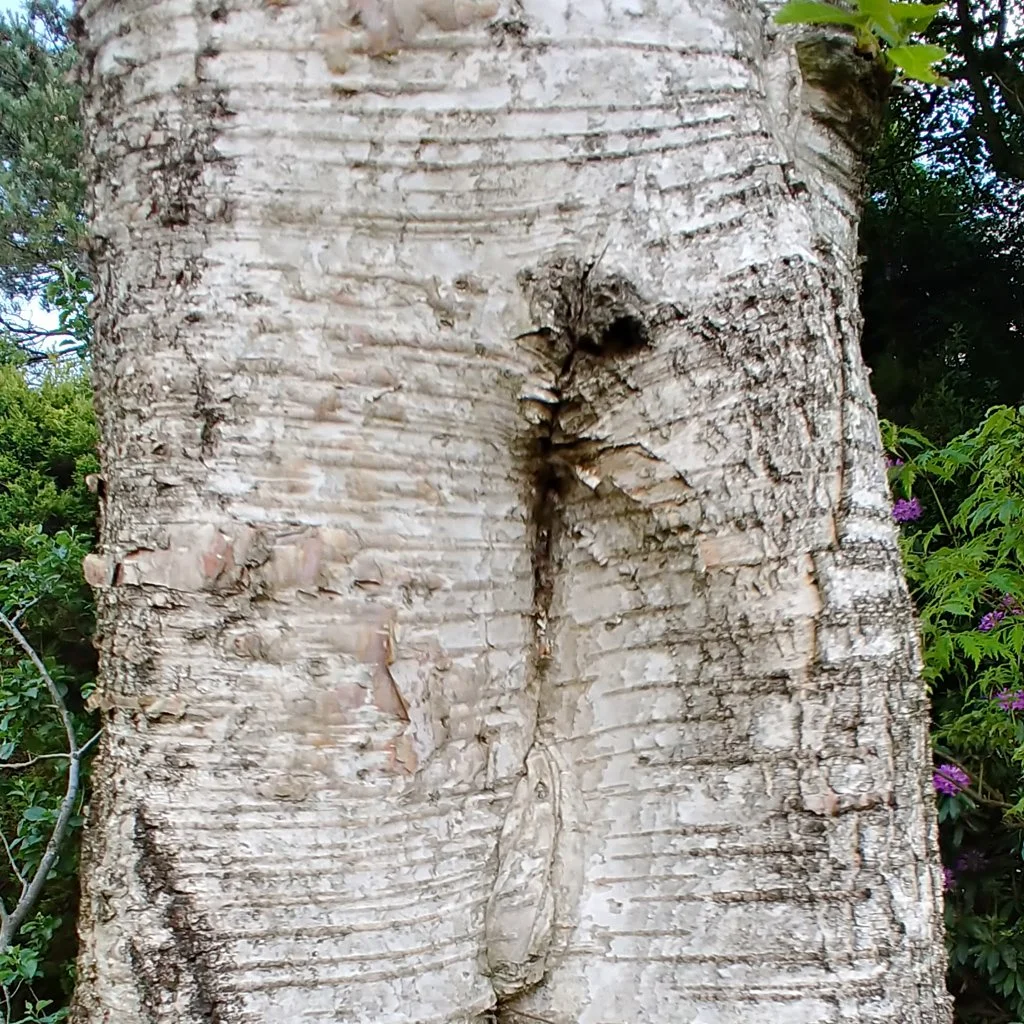
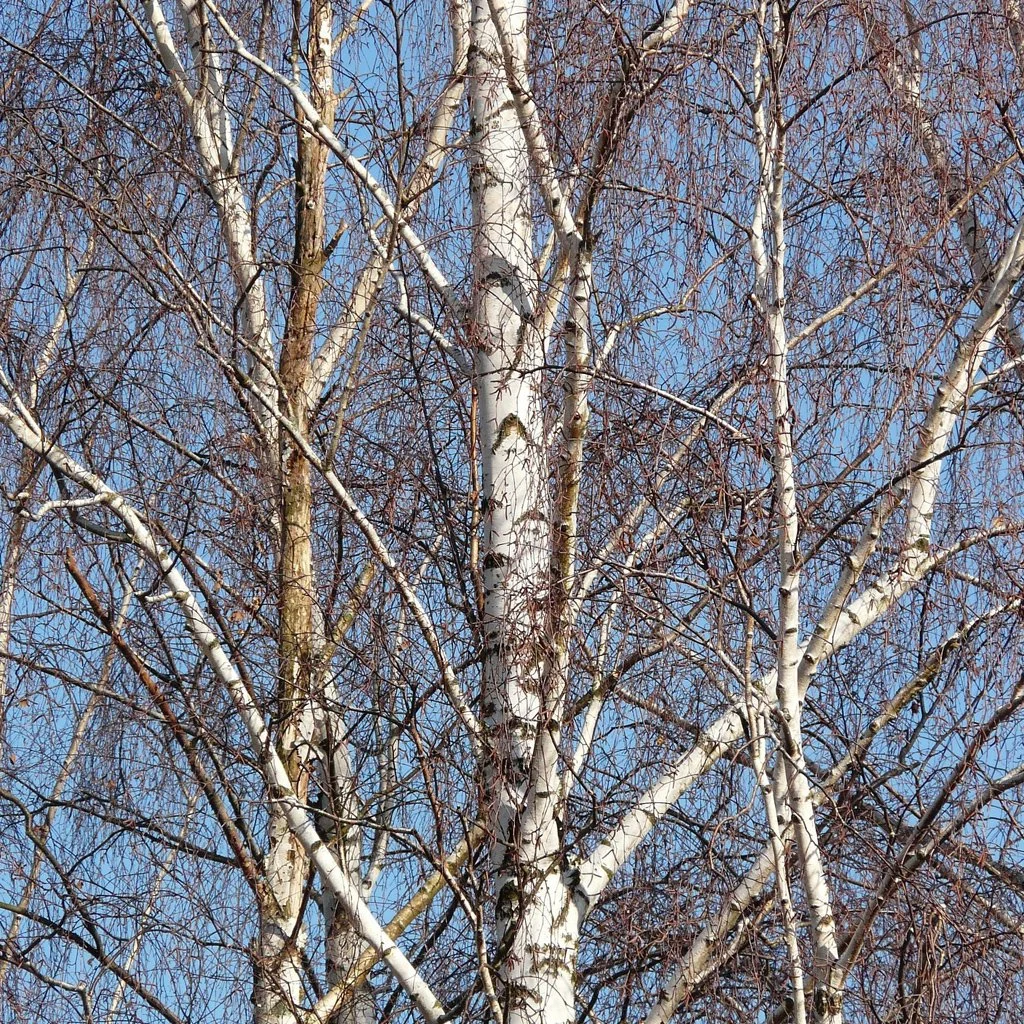
Betula utilis var. jacquemontii, for example, is valued for its pale bark, while Prunus serrula develops distinctive polished reddish-brown bark.
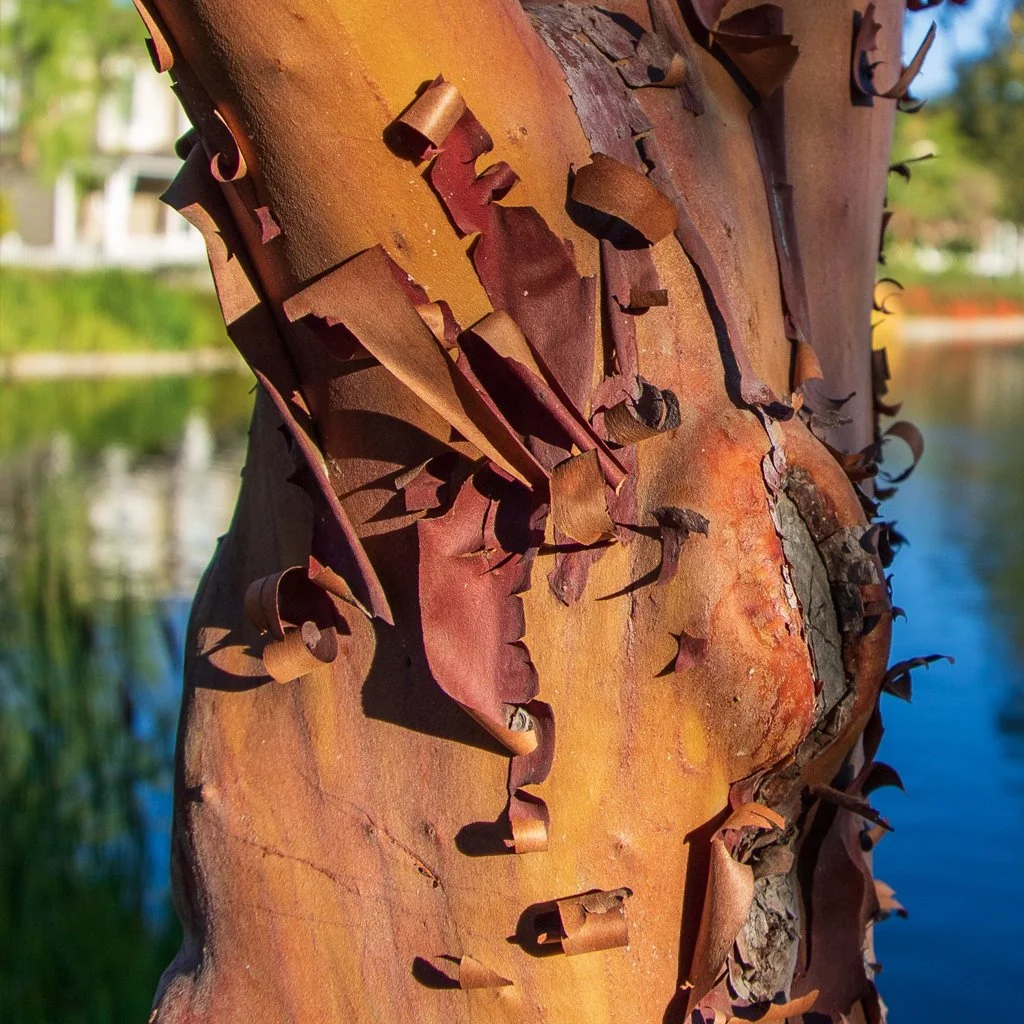
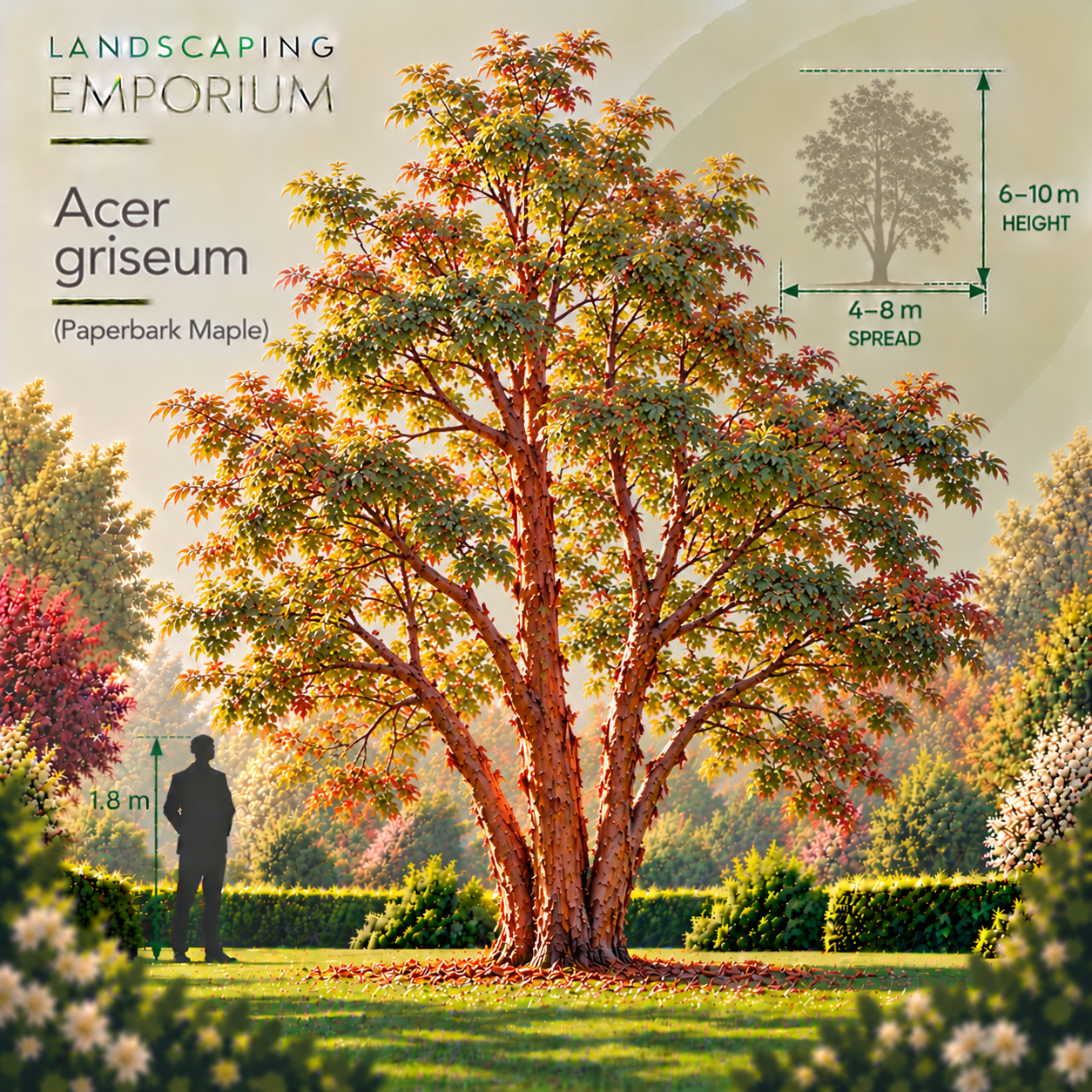
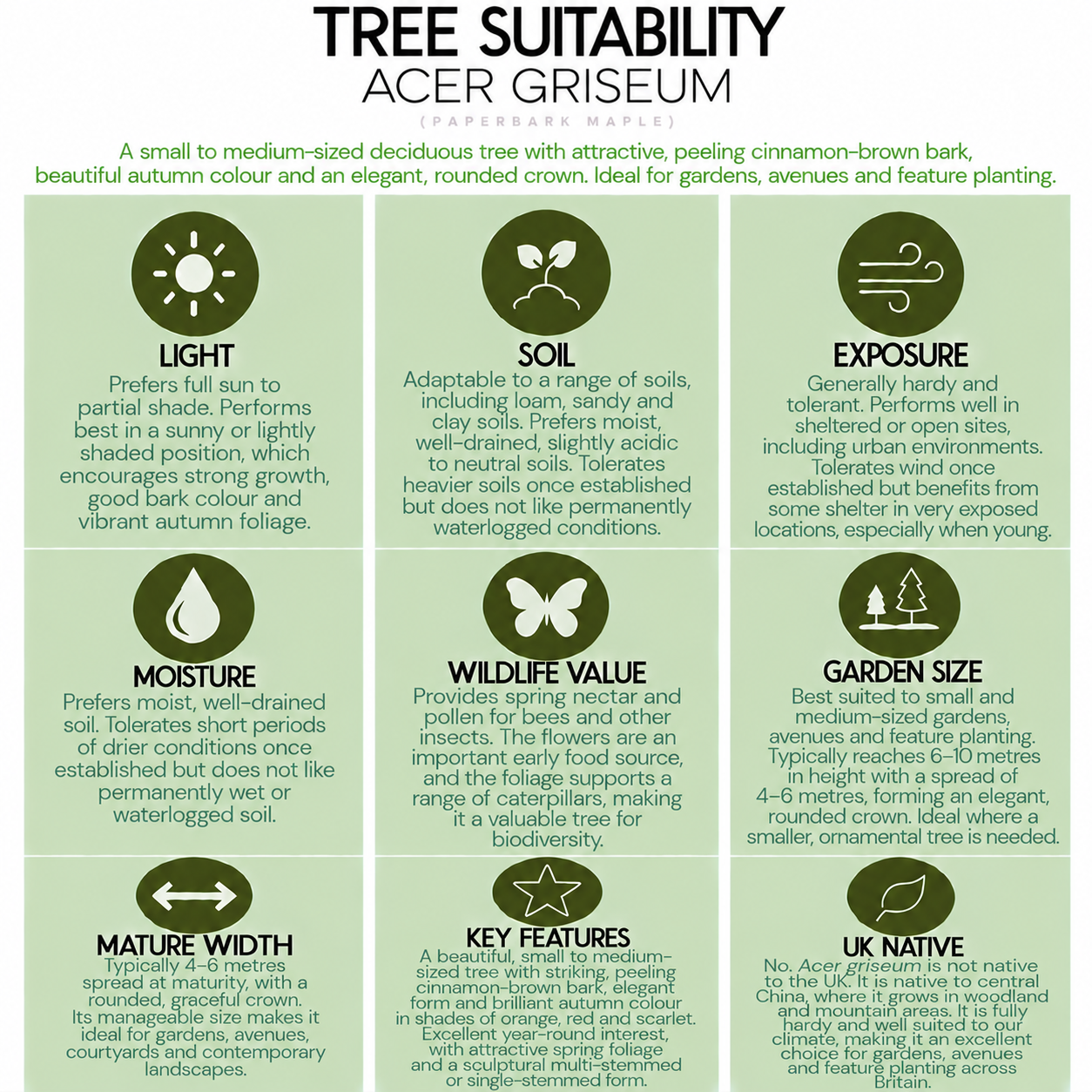
Acer griseum, the paperbark maple, develops peeling cinnamon-coloured bark that can become a major winter feature.
Positioning these trees where they can be seen from the house can extend the visual interest of the garden well beyond the main growing season.
Trees for Wildlife
Trees are enormously valuable to garden wildlife.
Depending on species, they can provide flowers for pollinating insects, leaves for caterpillars, fruit and berries for birds, nesting opportunities and shelter.
Native trees can be particularly important because they have longstanding ecological relationships with British wildlife.
However, useful wildlife planting does not have to be exclusively native. Many ornamental trees also provide nectar, pollen, fruit and habitat.
If biodiversity is one of your main priorities, see our Trees for Wildlife guide.
Native Trees
Native trees can connect a garden with the wider landscape and provide significant ecological value.
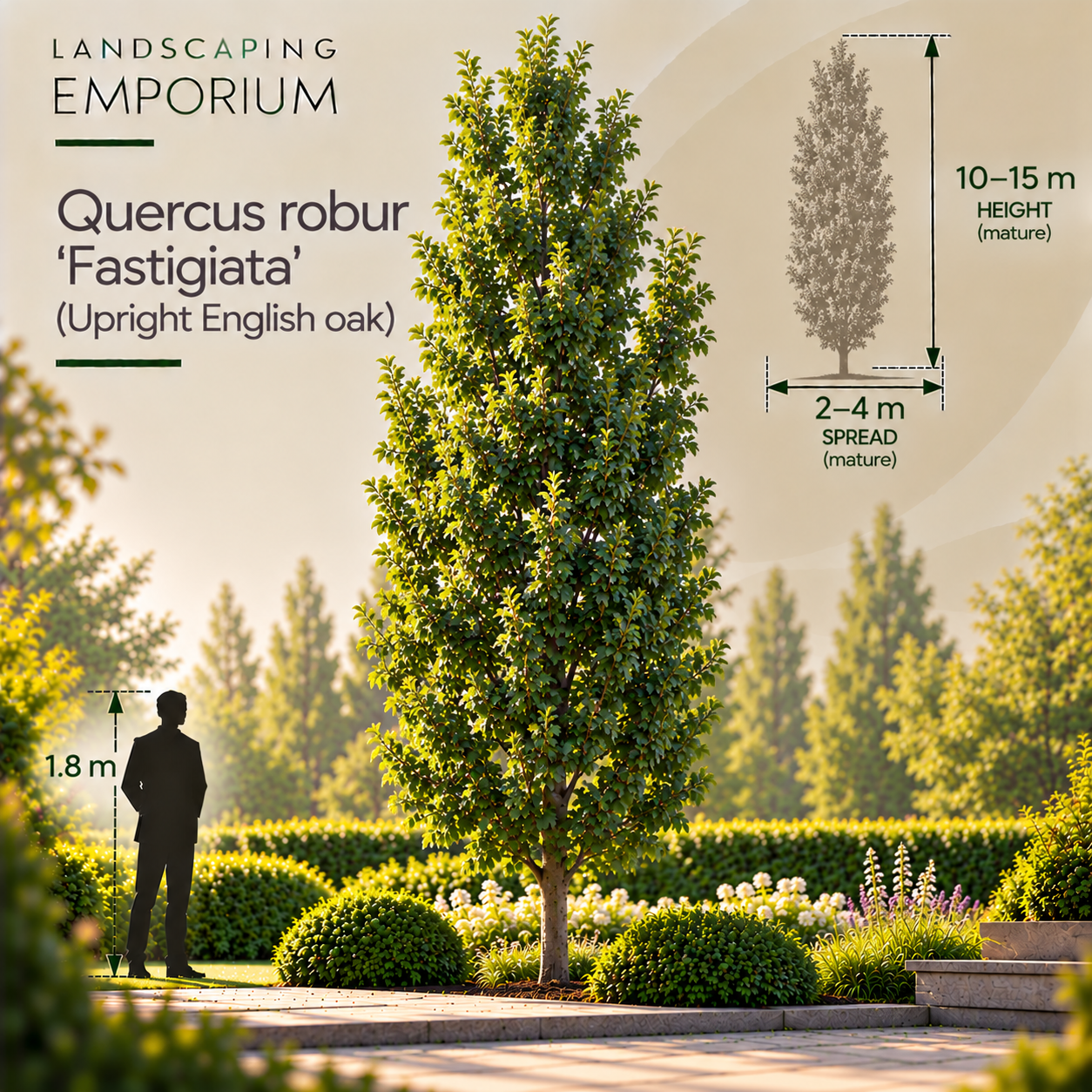
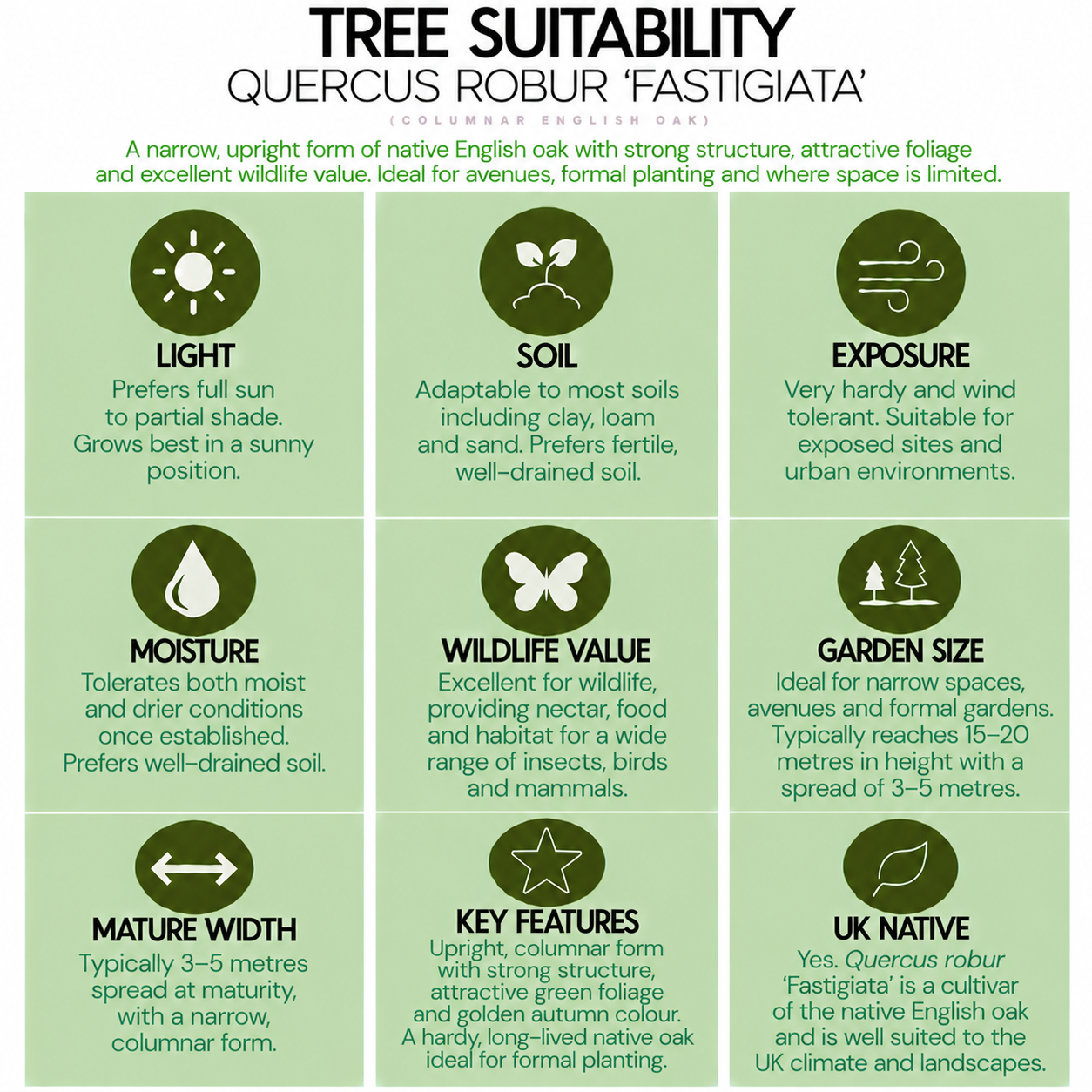
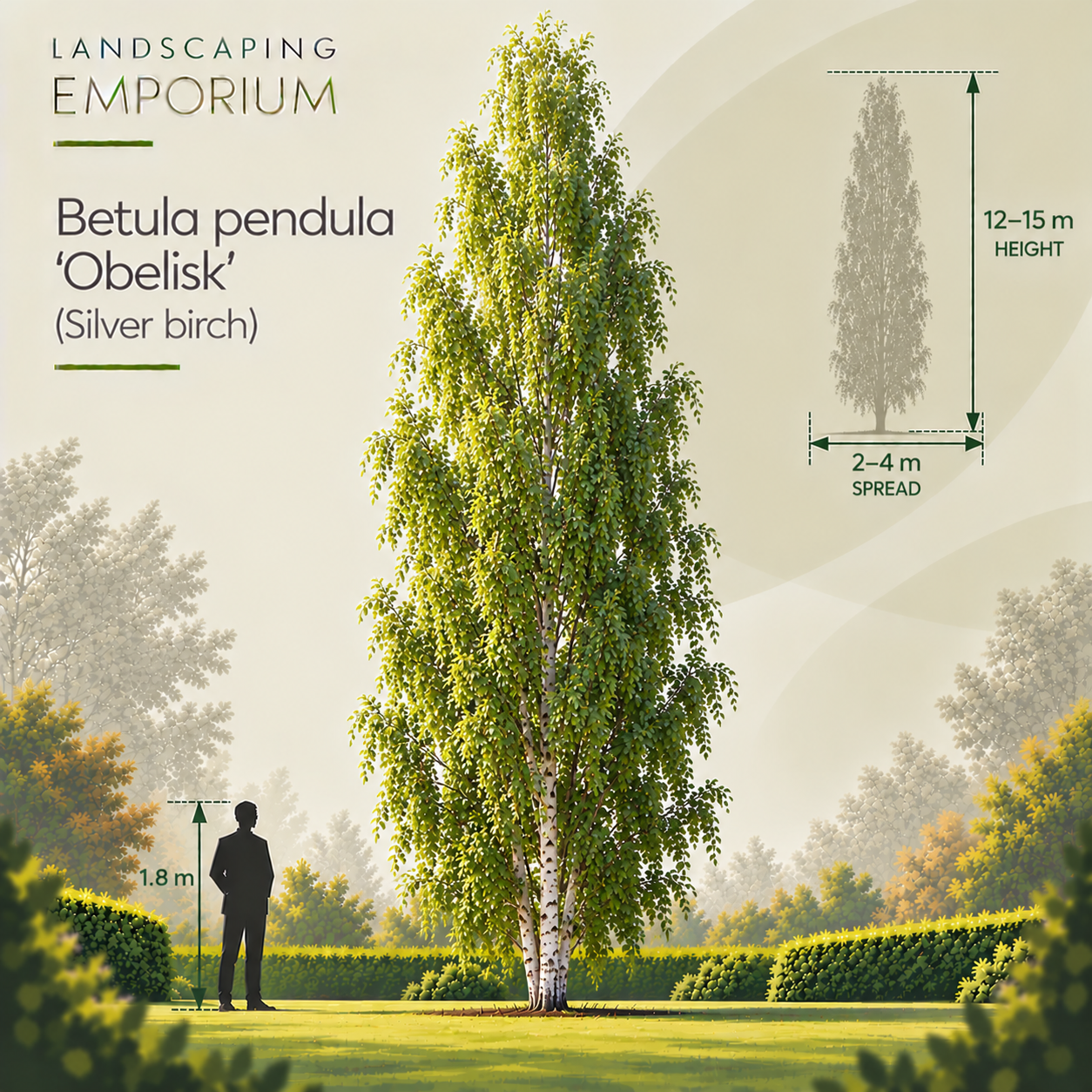
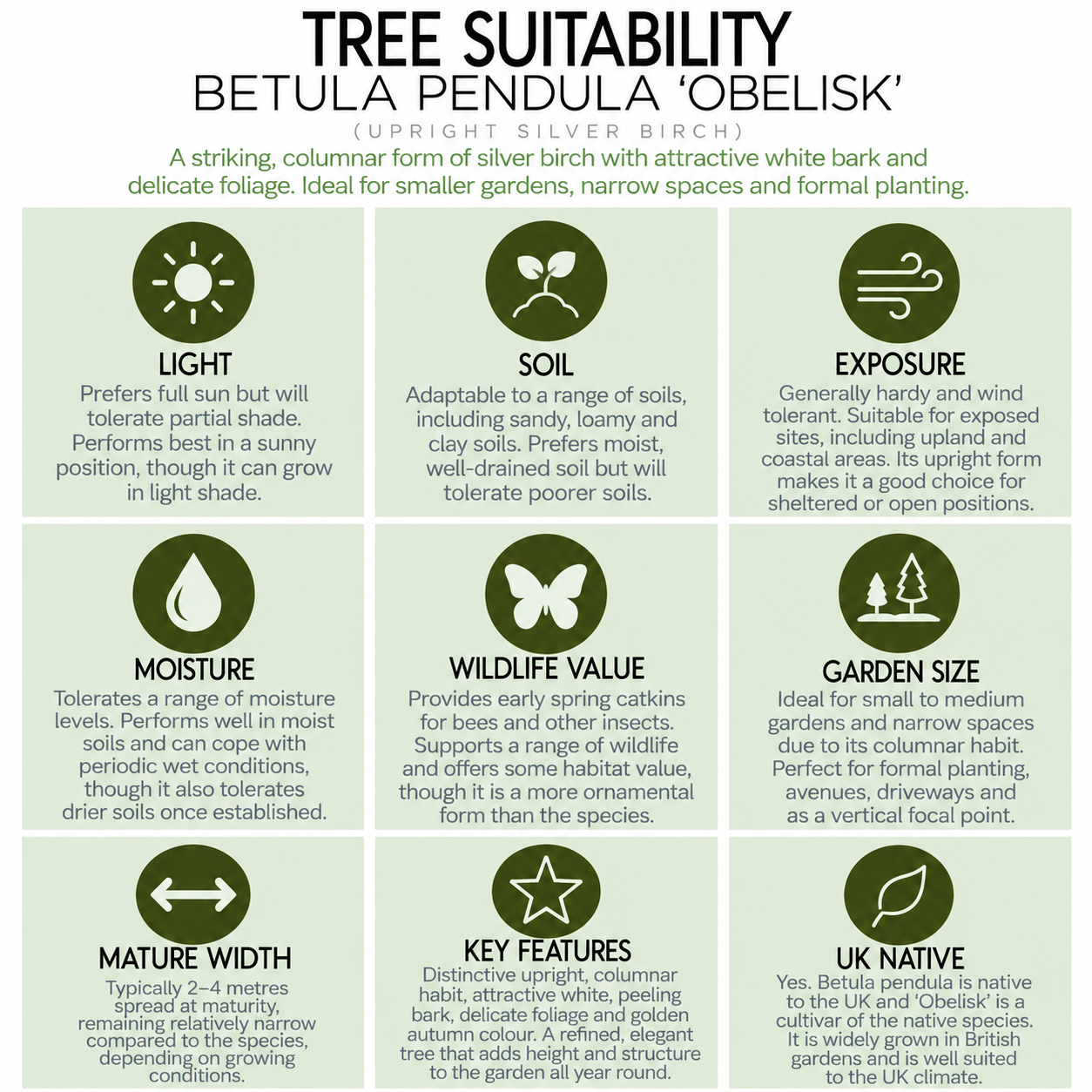
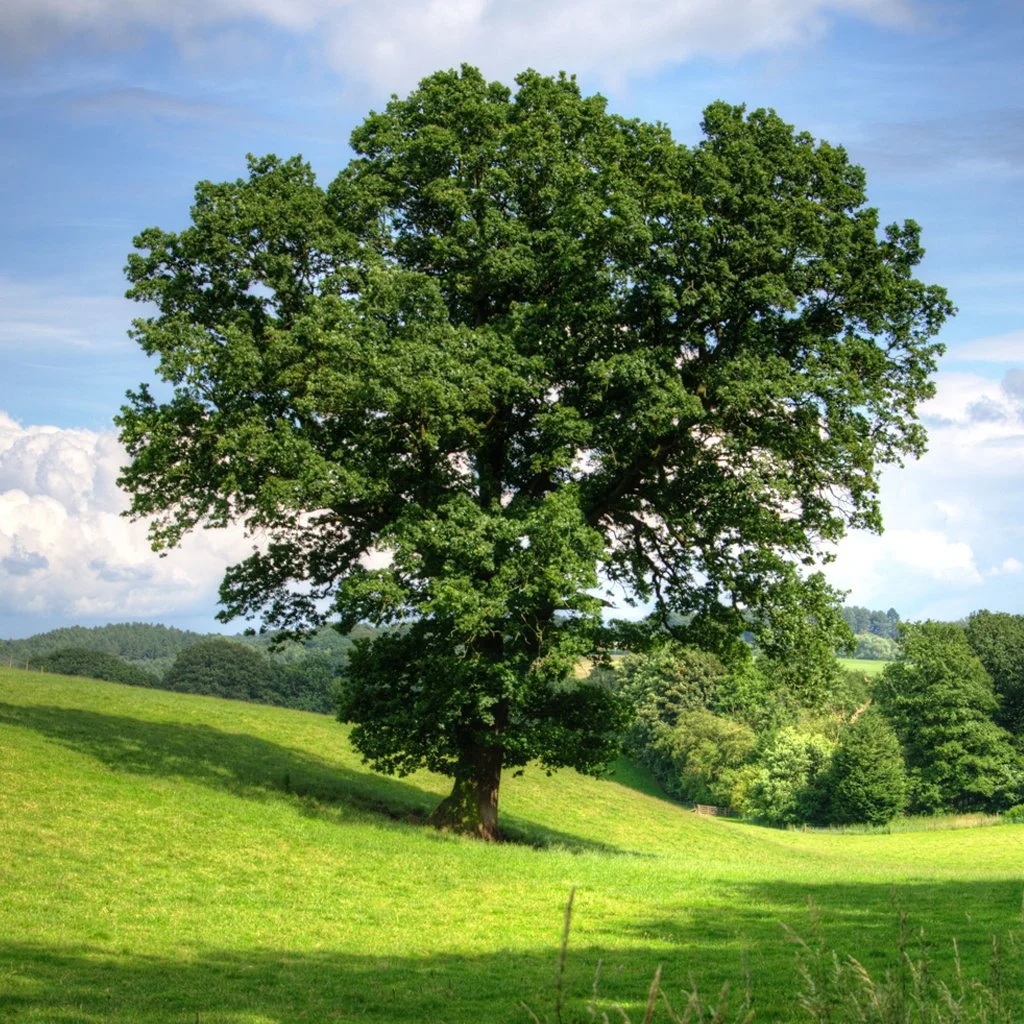
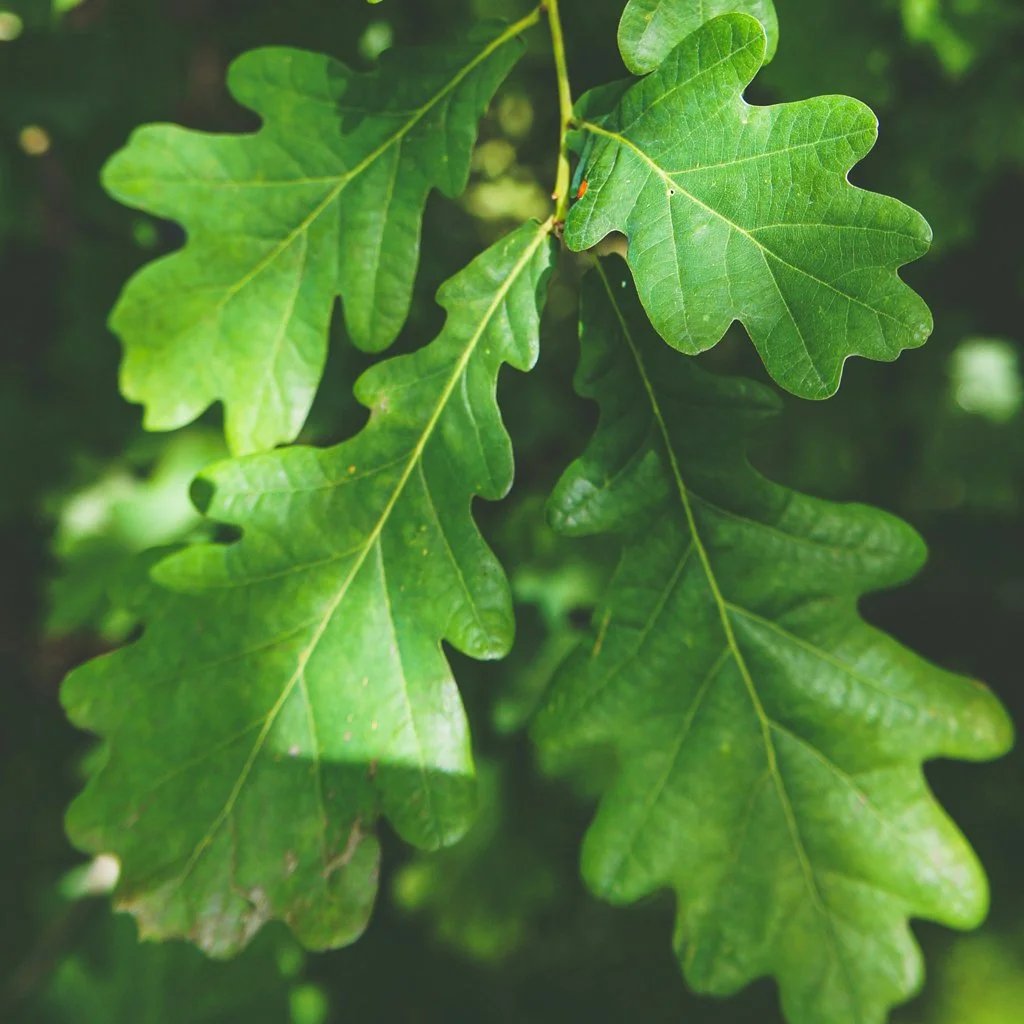
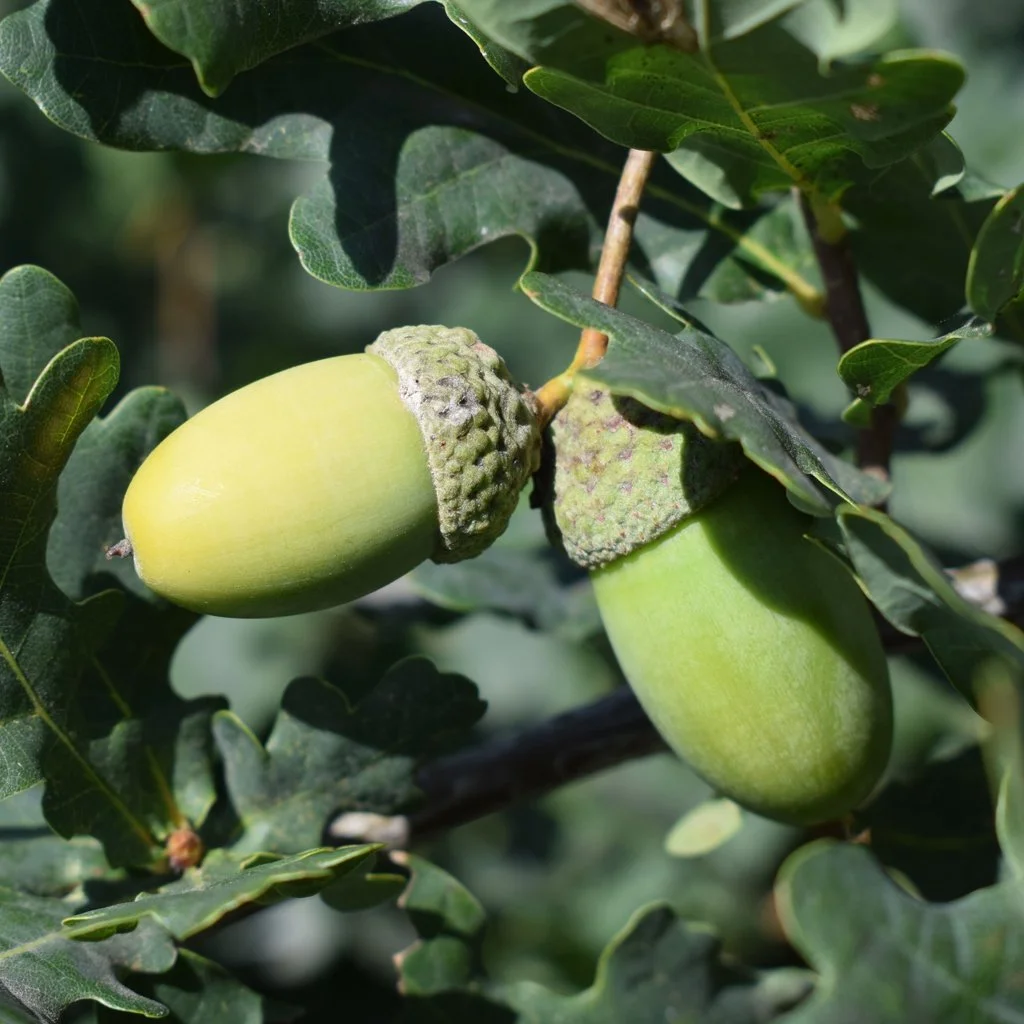
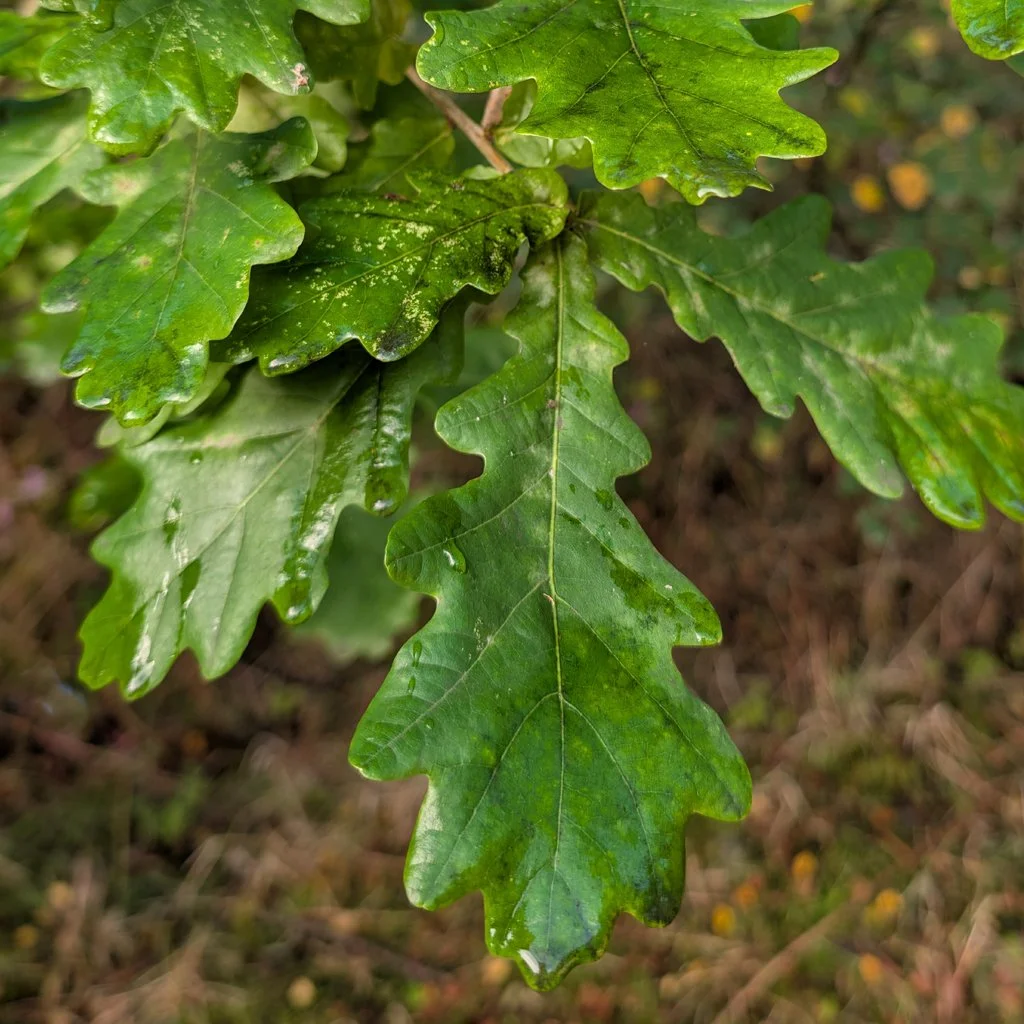
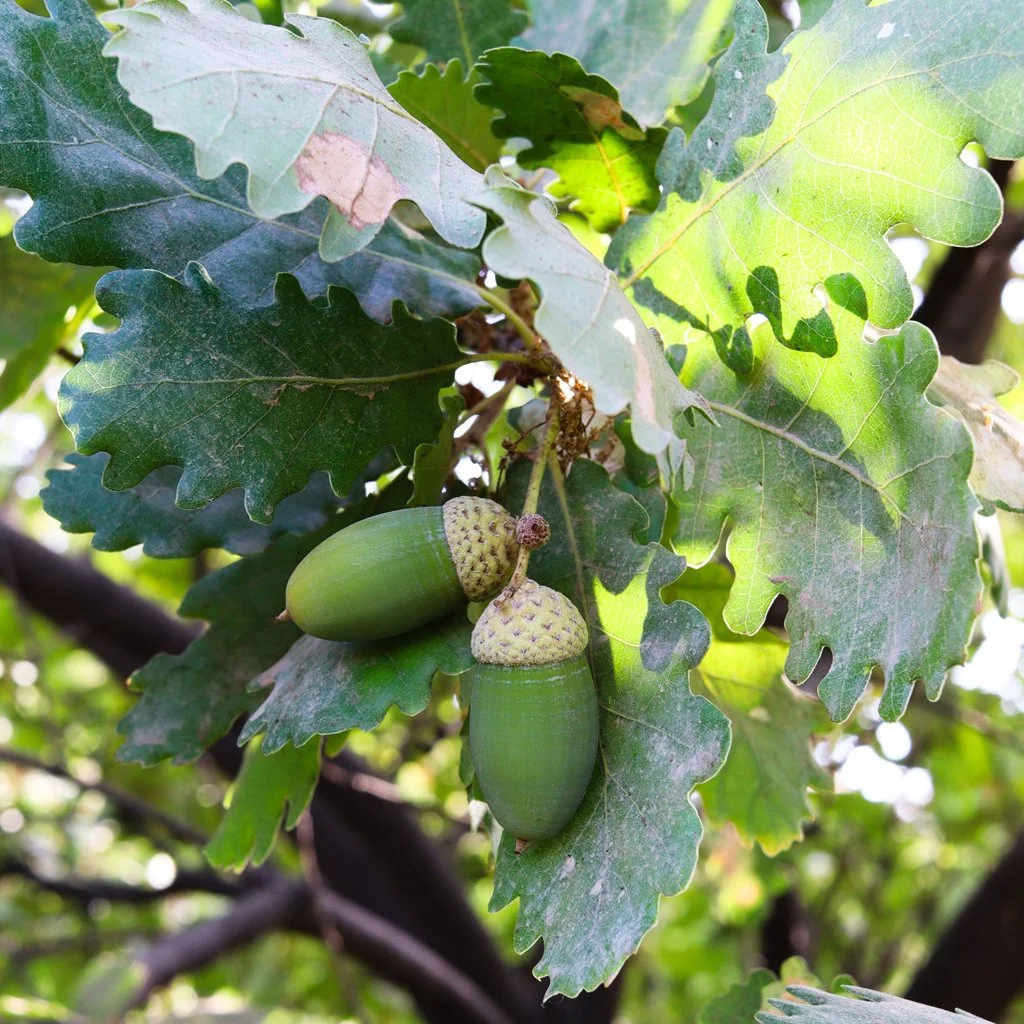
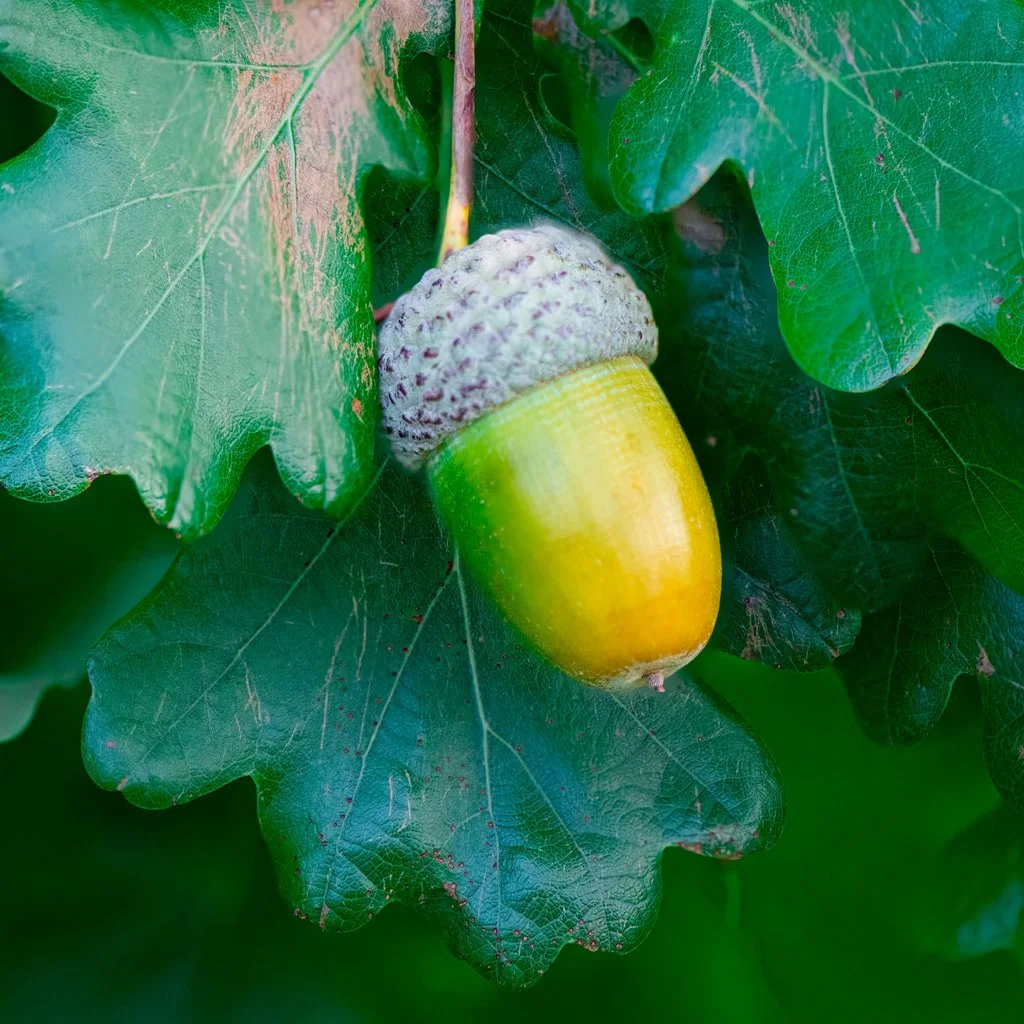
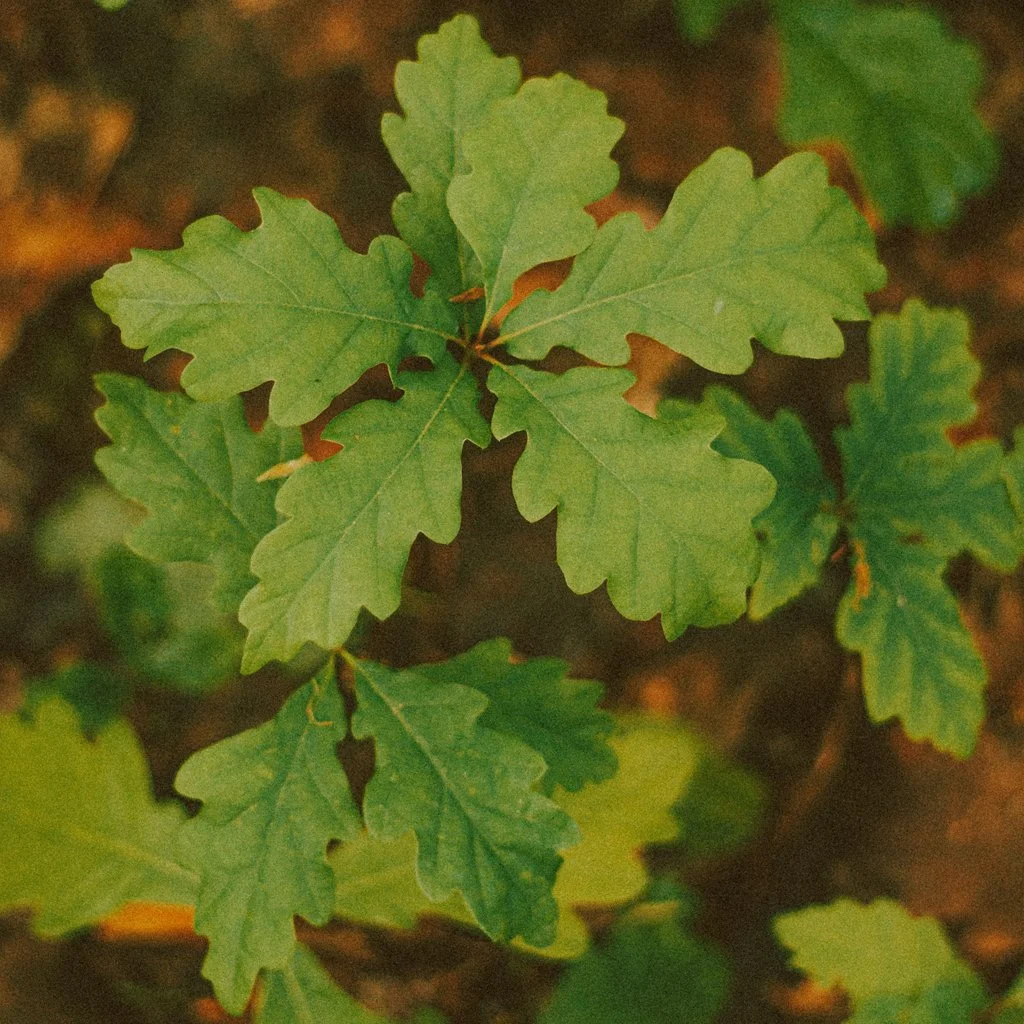
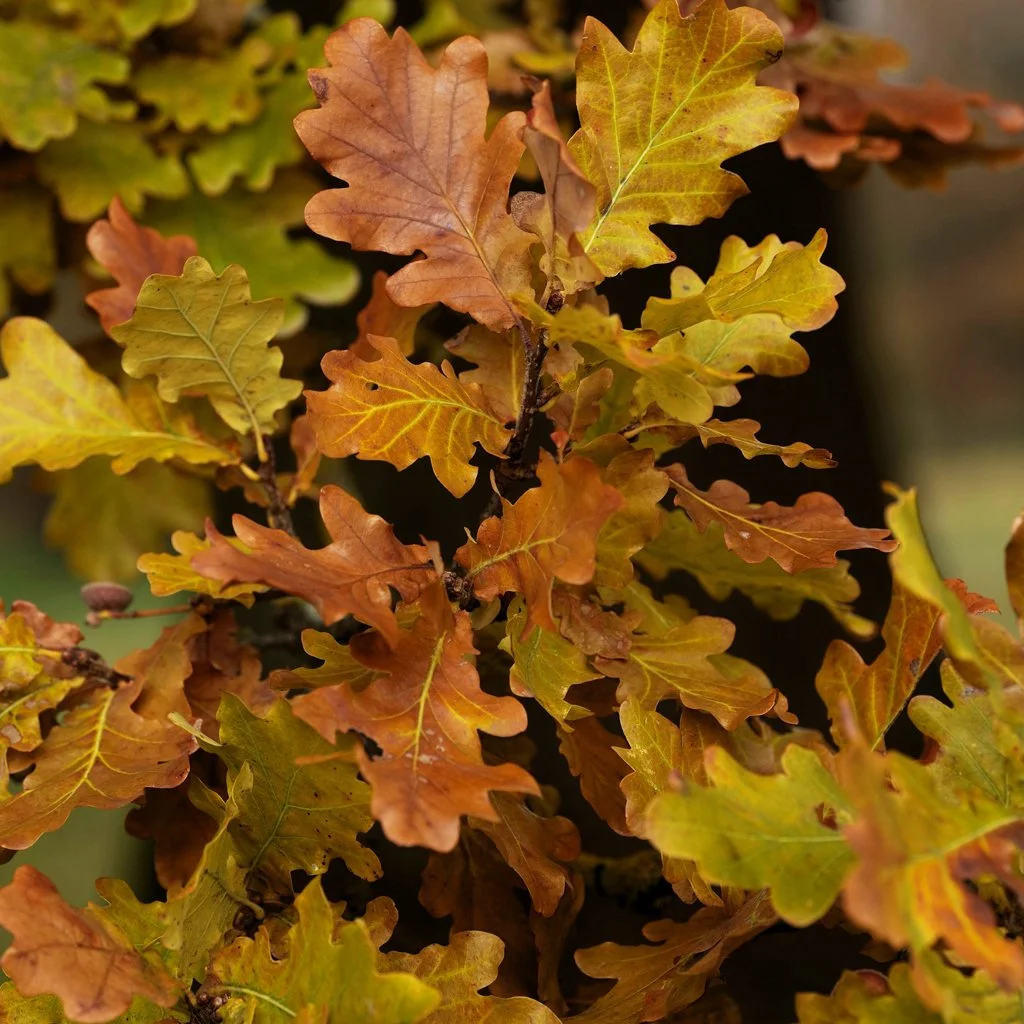
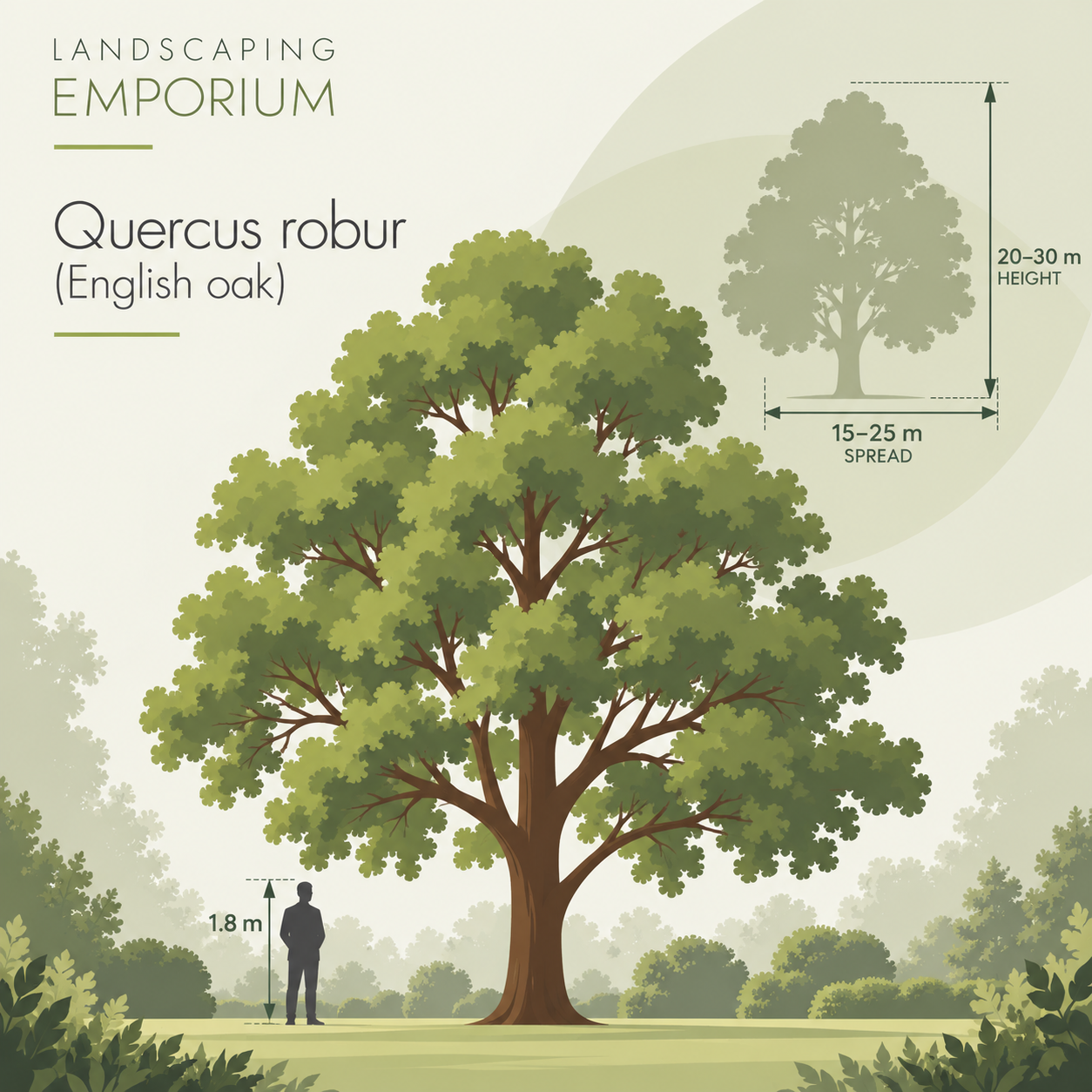
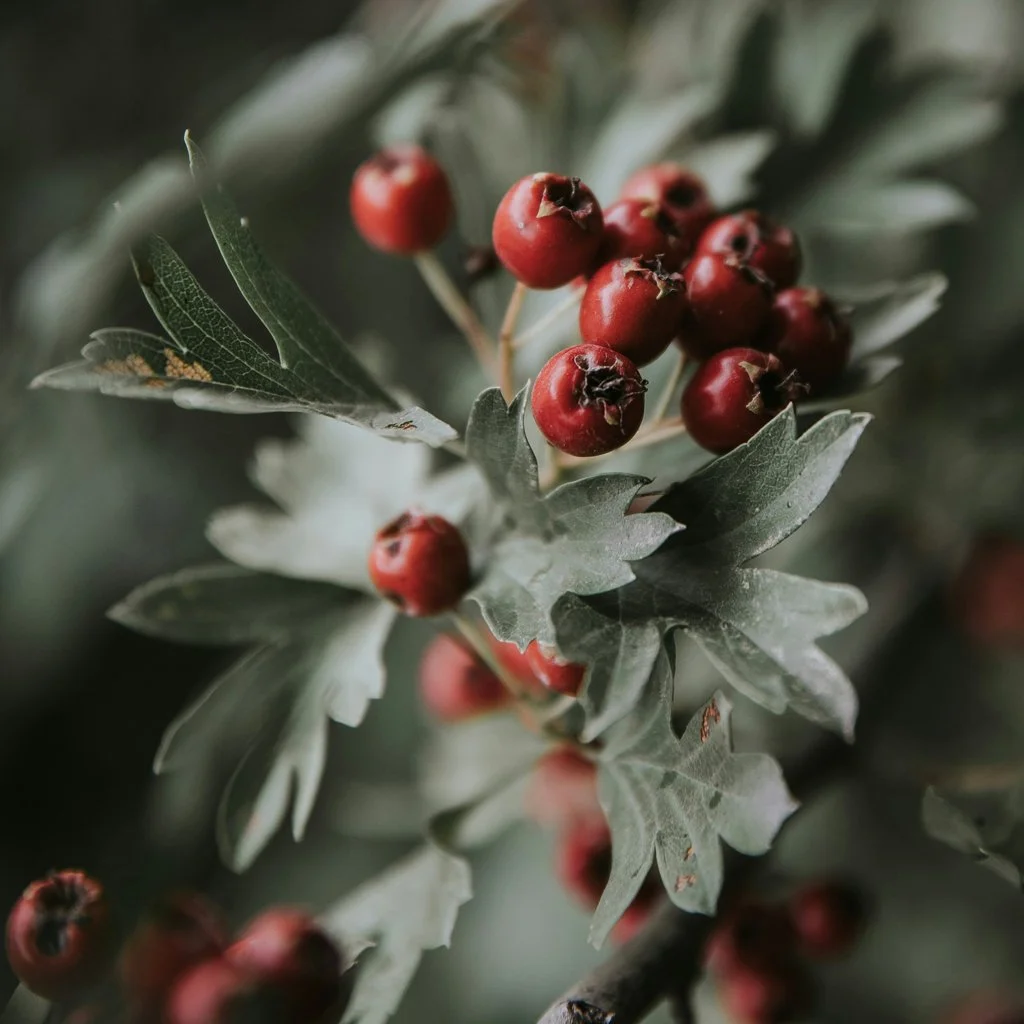
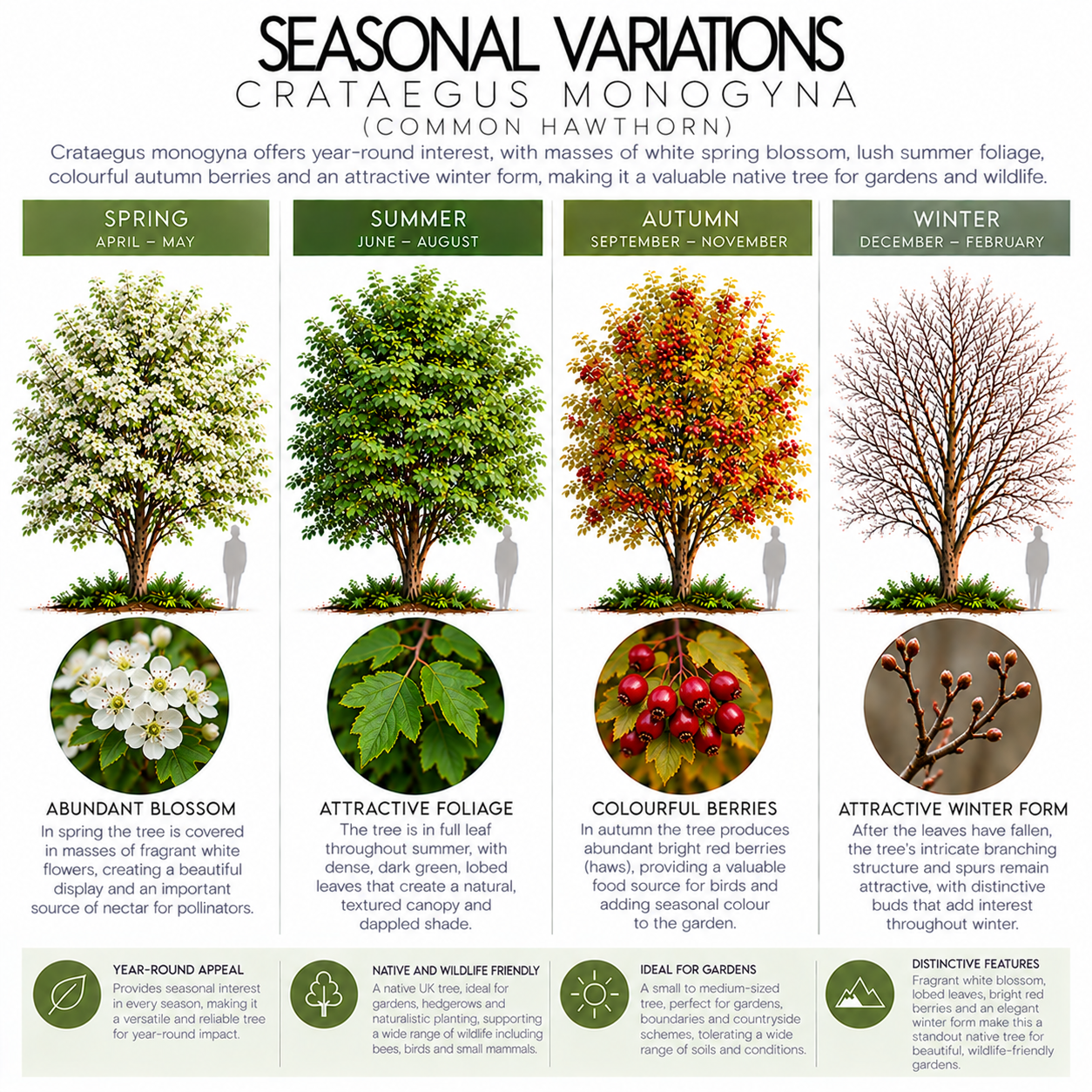
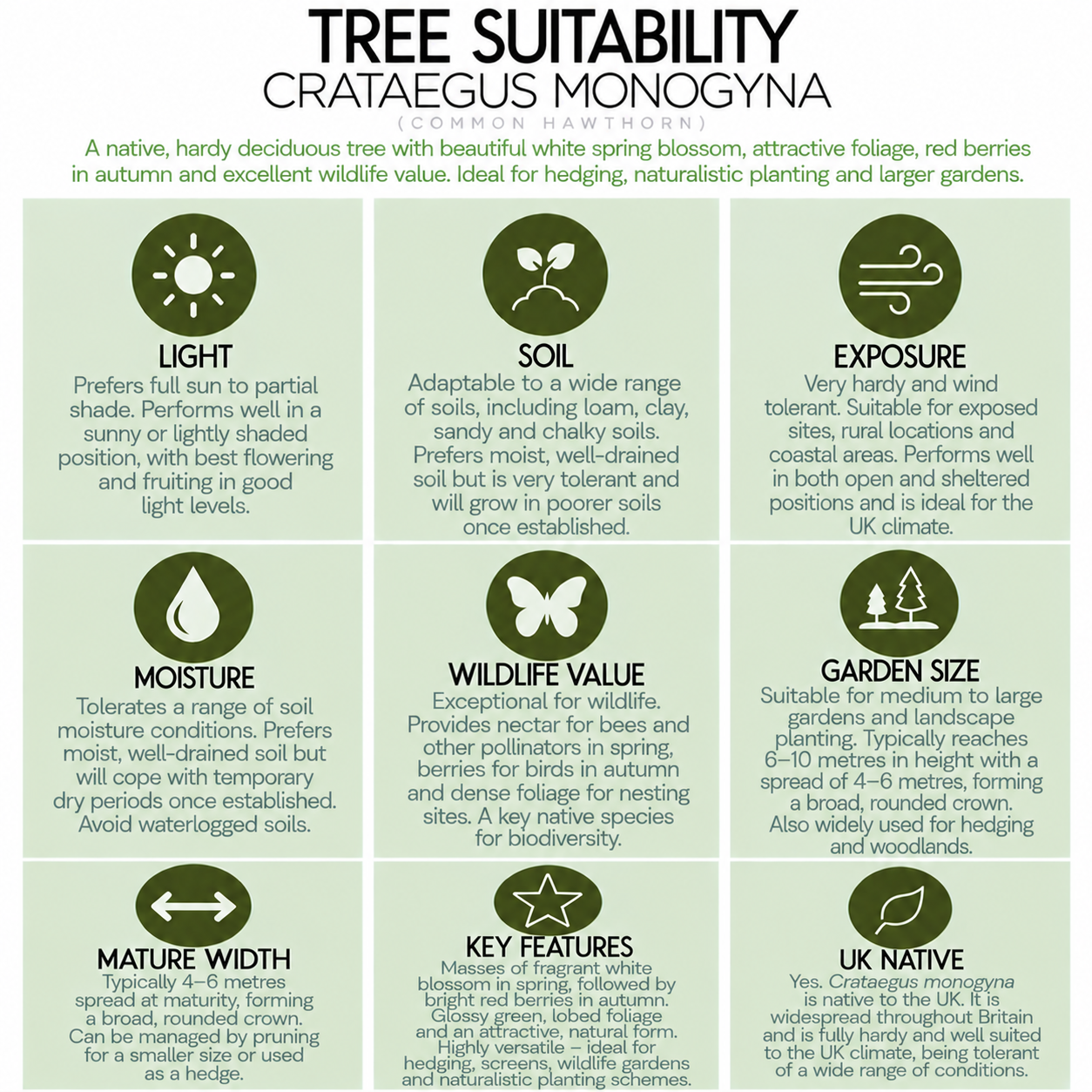
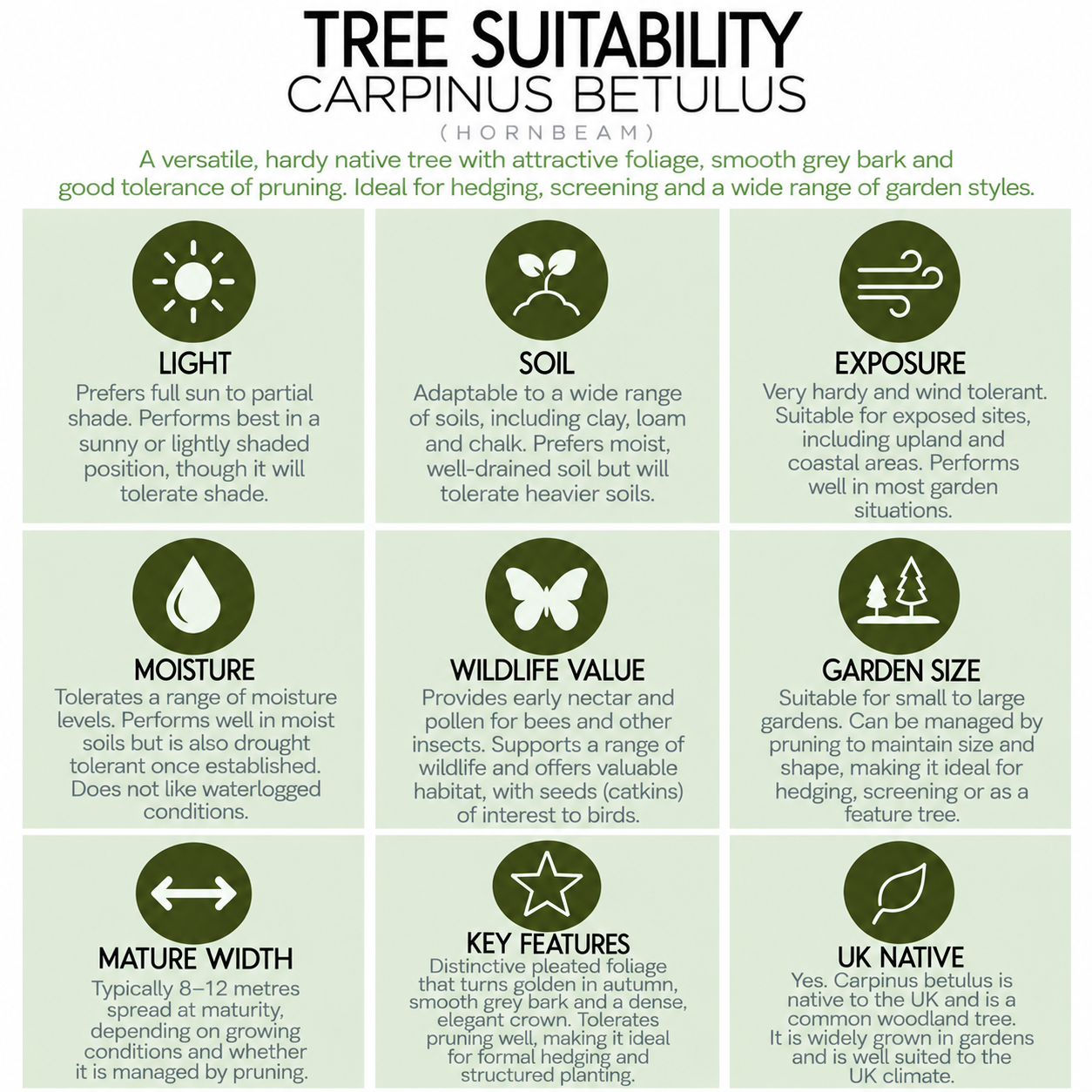
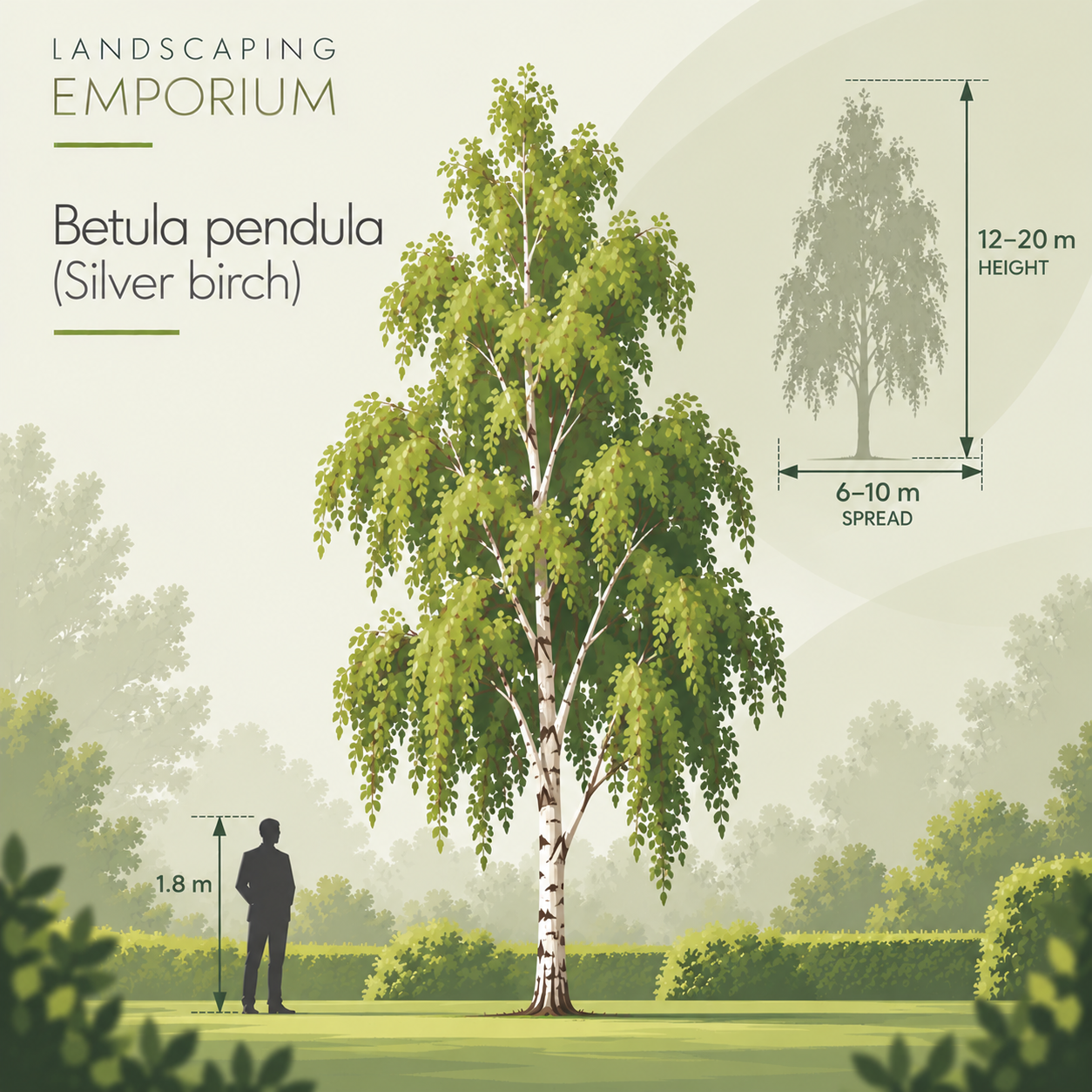
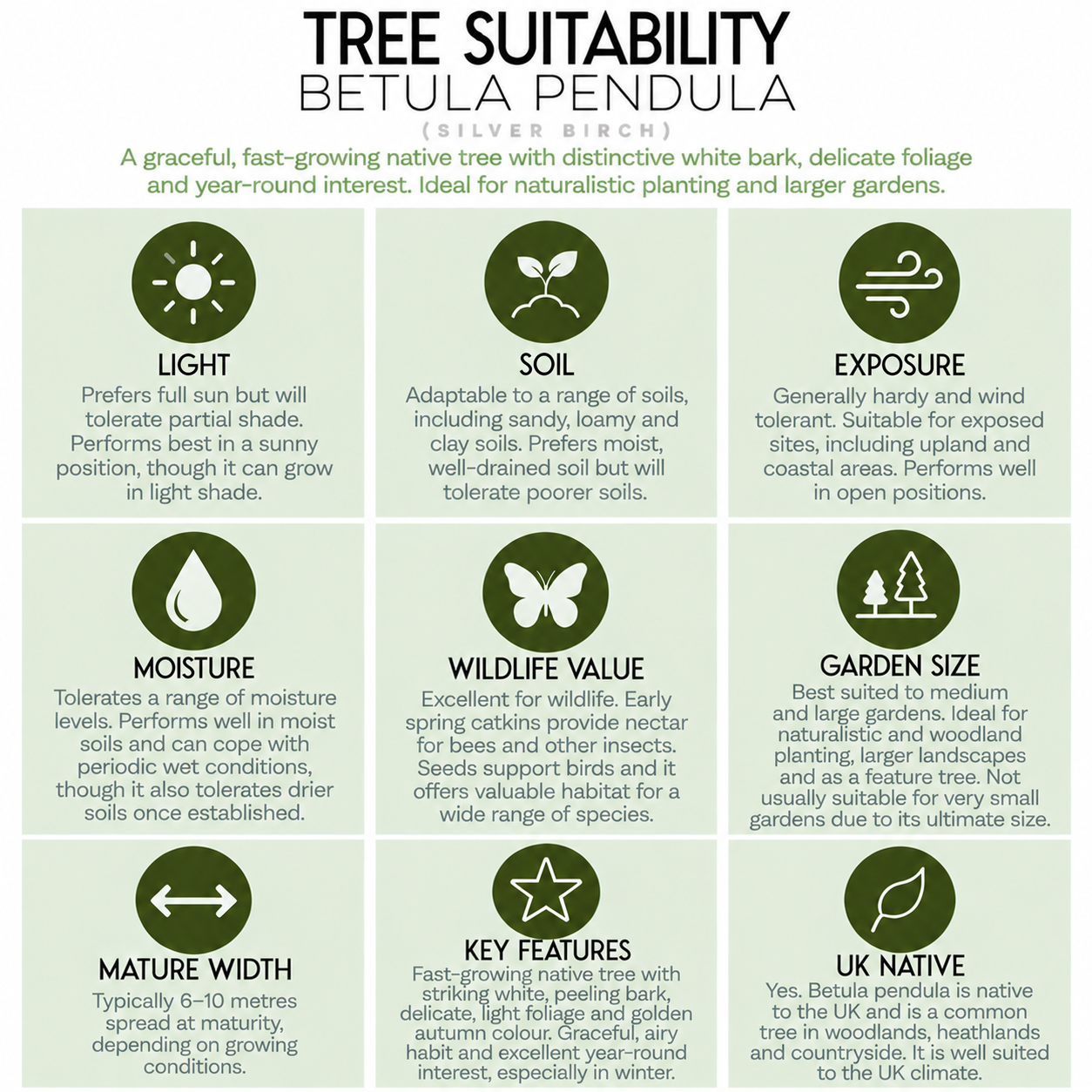
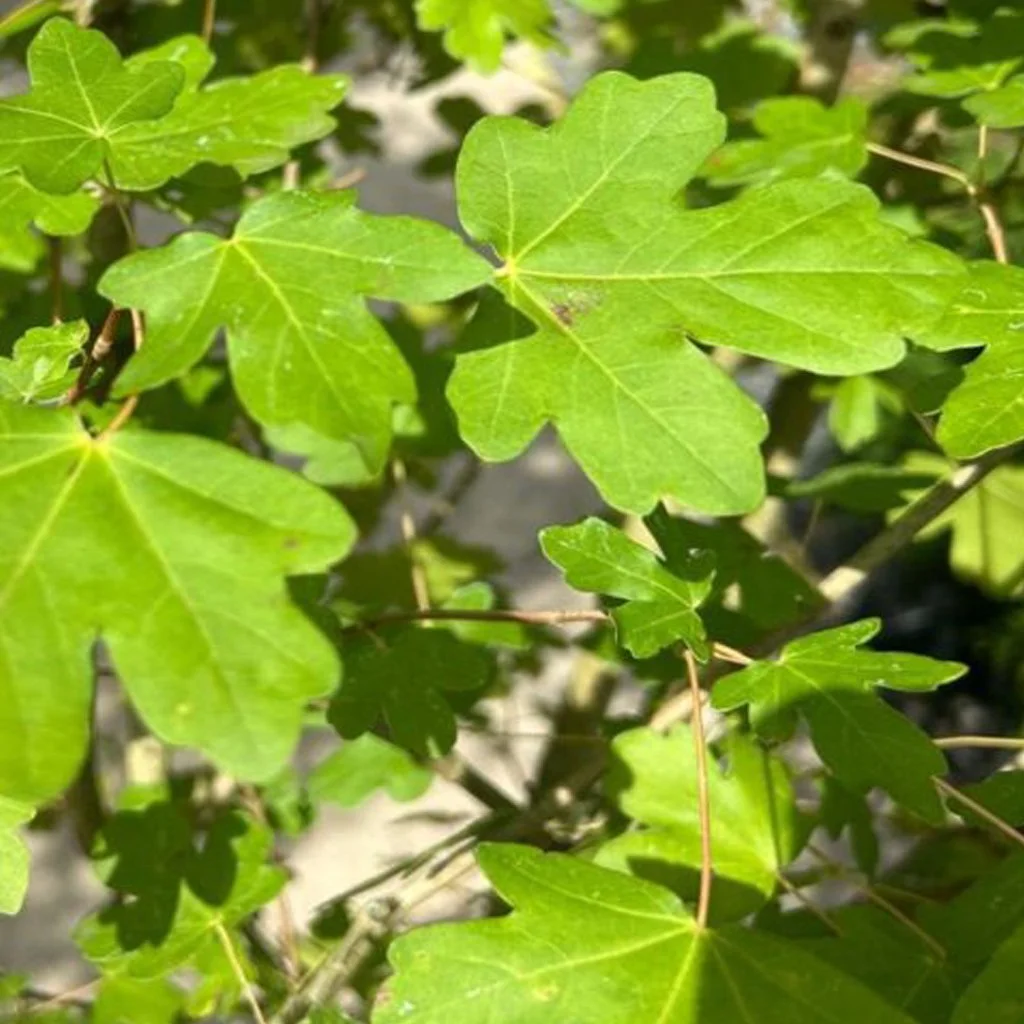
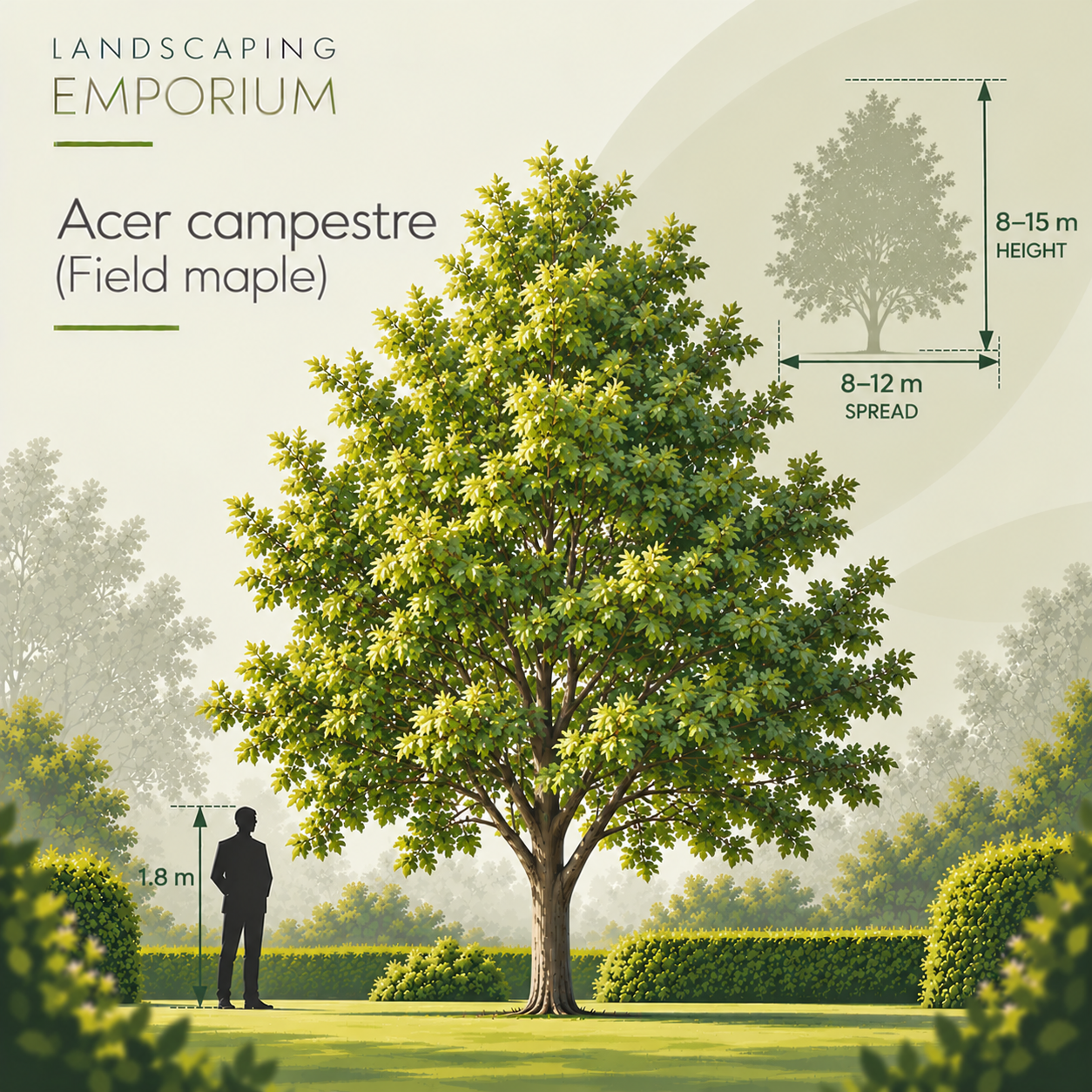
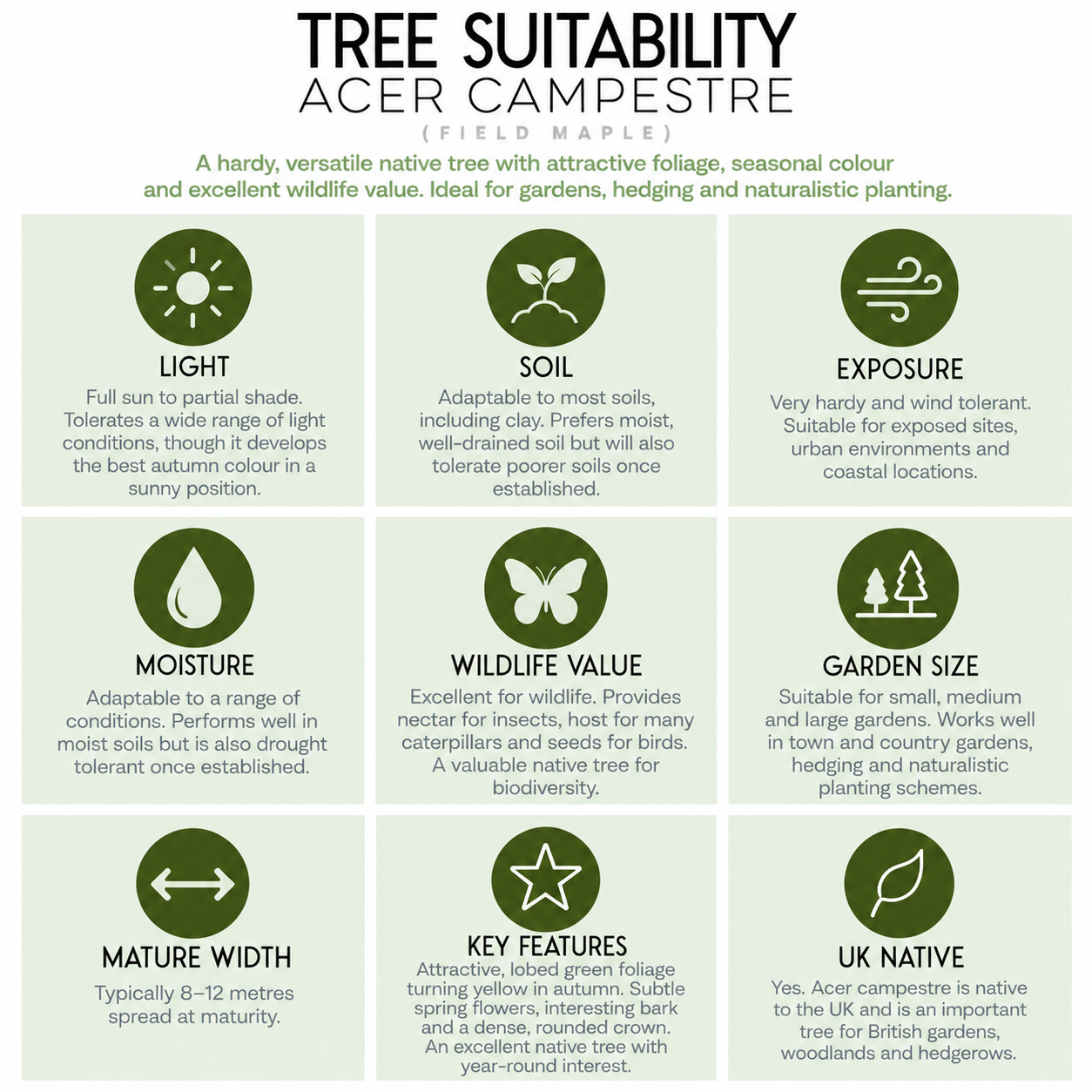
Species including Field Maple (Acer campestre), Hornbeam (Carpinus betulus), Hawthorn (Crataegus monogyna), English Oak (Quercus robur), Rowan (Sorbus aucuparia) and Silver Birch (Betula pendula) can all have roles within designed gardens.
Native does not necessarily mean informal.
A native tree can be used within a highly contemporary landscape just as successfully as within a country garden.
The key is selecting a species whose eventual size and growing requirements suit the site.
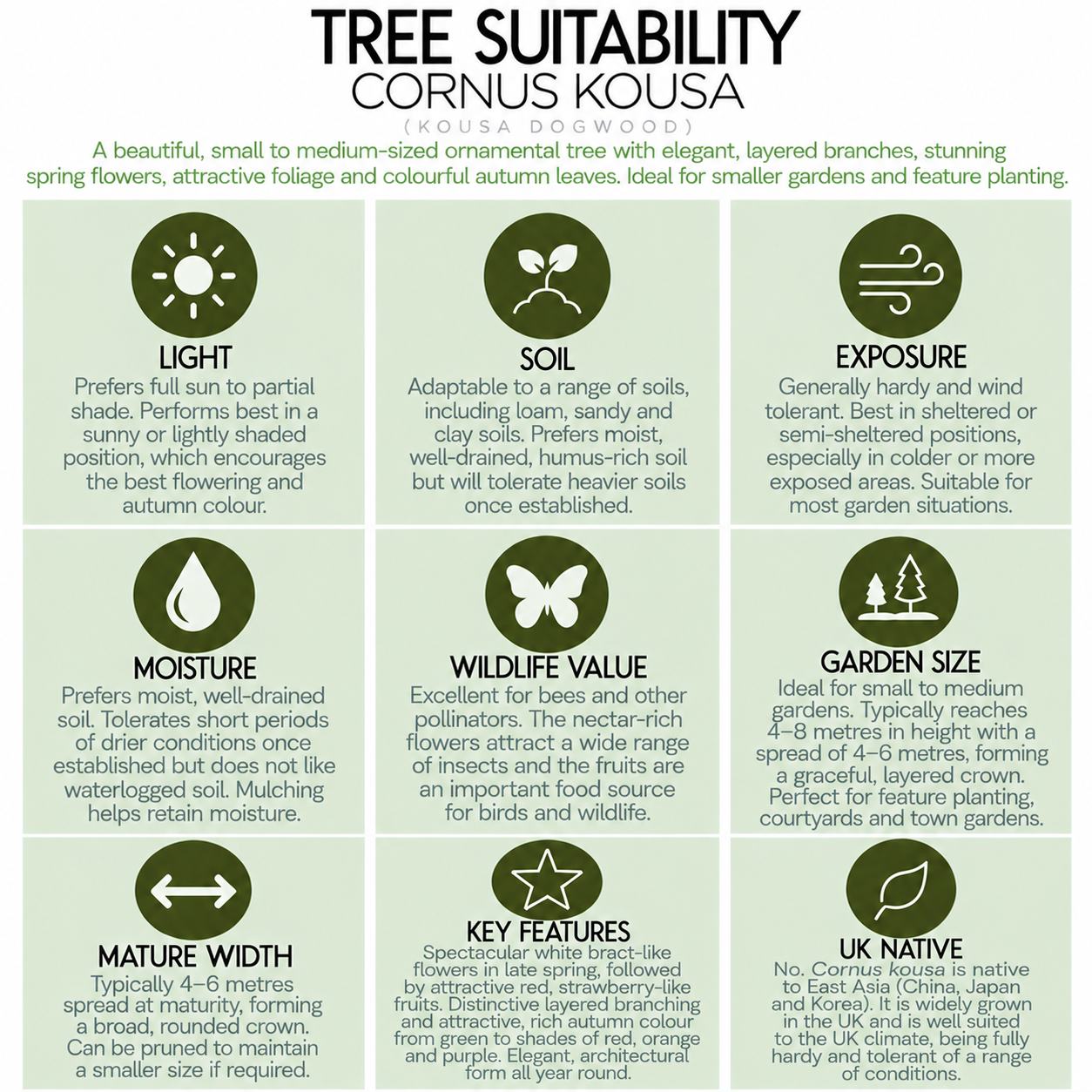
Trees for Small Gardens
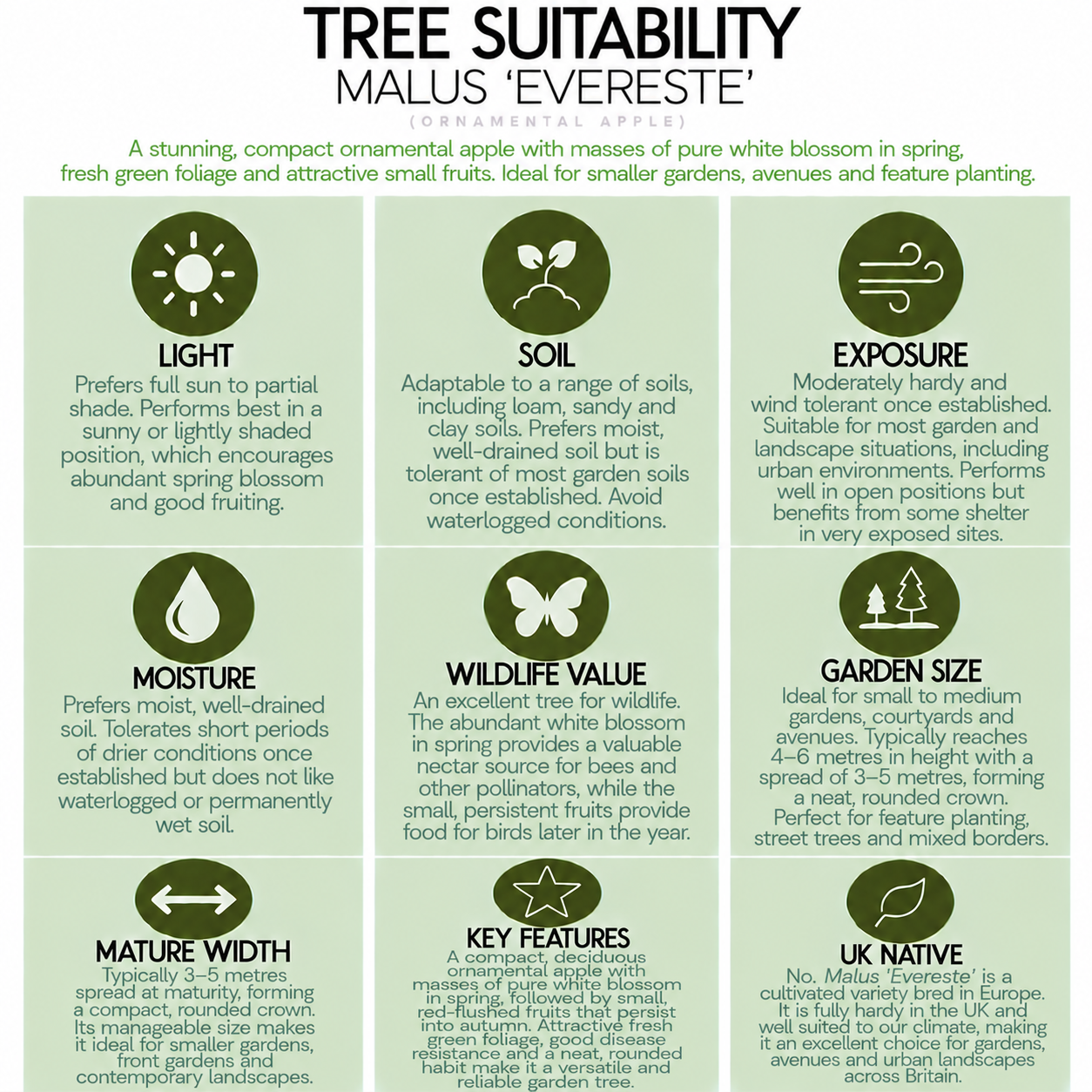
A small garden can still have a tree.
In fact, removing trees completely because the garden is small can leave the space feeling flat and exposed.
The solution is to select a tree whose eventual scale is appropriate.
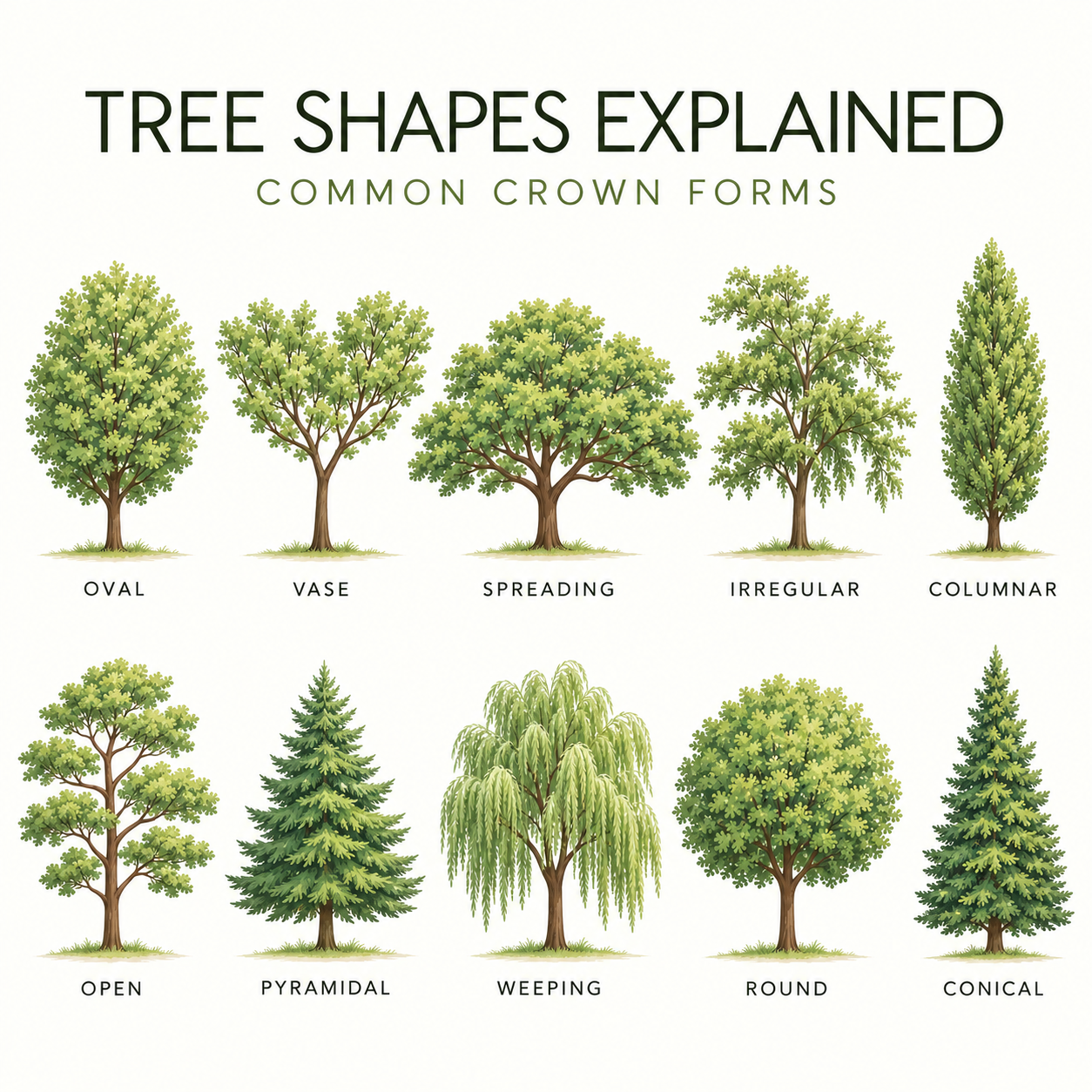
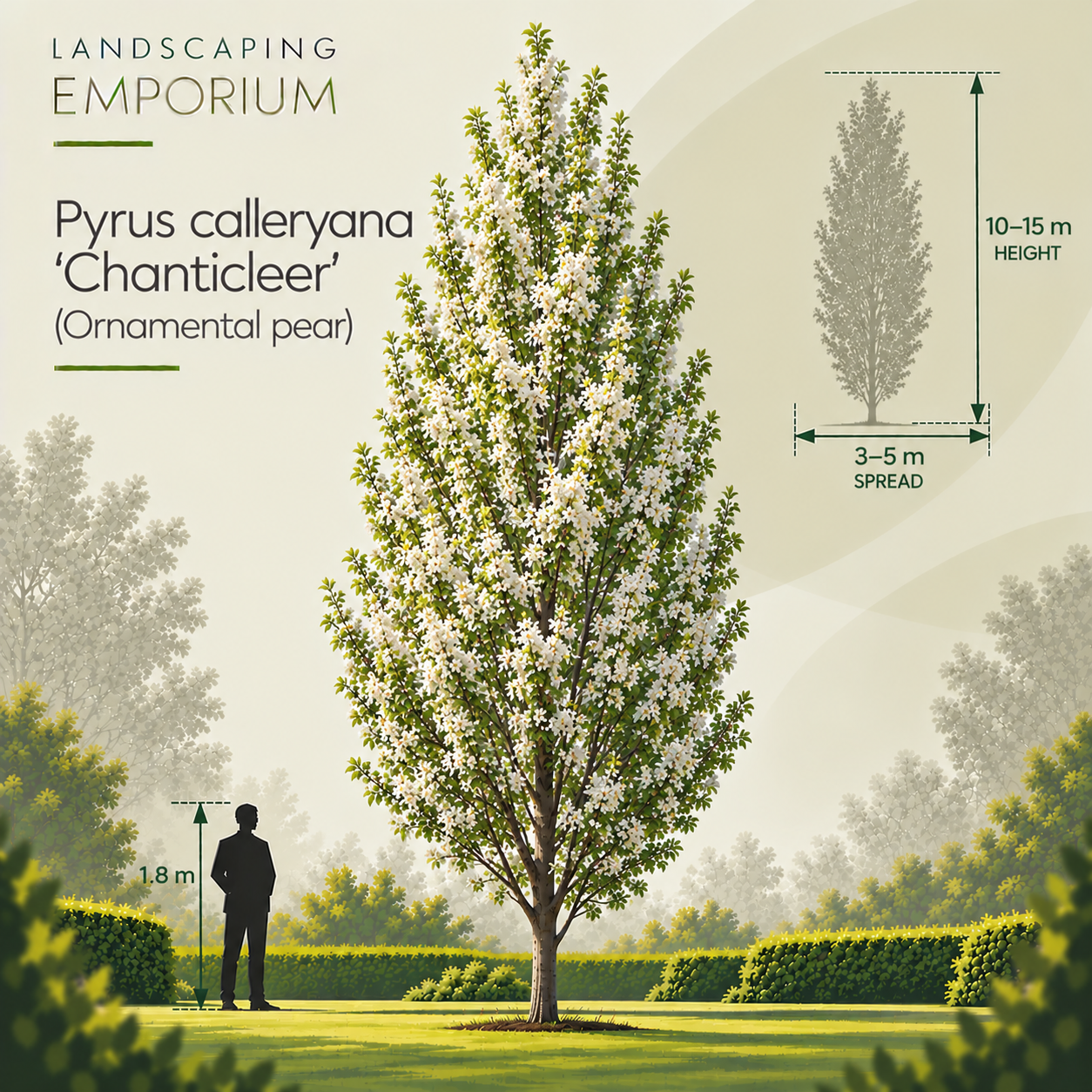
Smaller ornamental trees, compact cultivars, multi-stem specimens and trees with controlled habits can provide height without overwhelming the garden.
Trees can also make a small garden feel larger by partially obscuring boundaries and creating layers of depth.
See our Trees for Small Gardens guide for more detailed recommendations.
Trees for Large Gardens
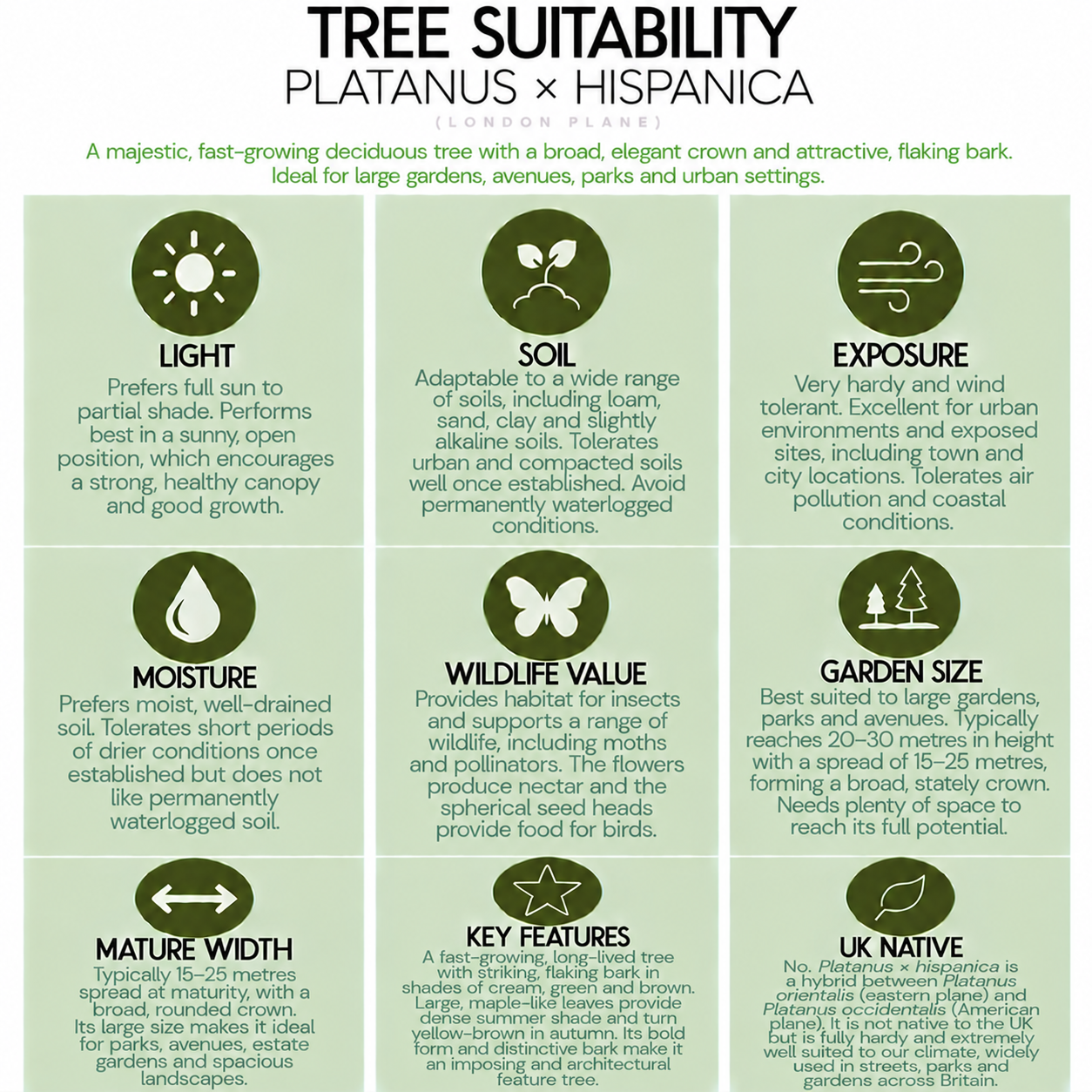
Large gardens create a different challenge.
A tree that looks substantial in a nursery can appear surprisingly insignificant once positioned within a large landscape.
Scale matters.
Larger gardens can accommodate trees with broader canopies, groups of trees and substantial specimens that would be inappropriate in smaller spaces.
Trees can be used to frame views, create avenues, establish woodland edges, provide shade and divide extensive gardens into more intimate areas.
Where the house itself is substantial, larger trees can also help connect the building to its landscape.
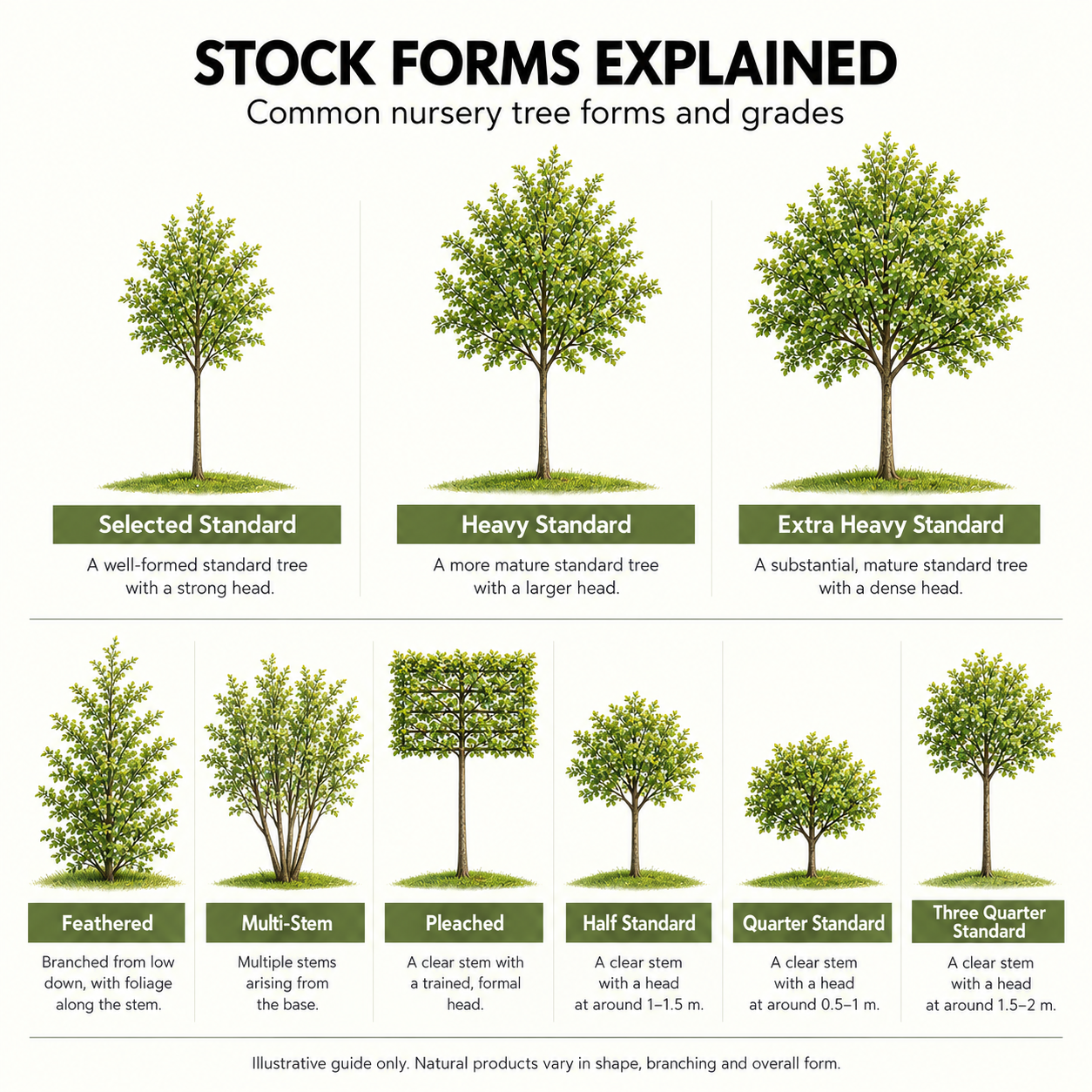
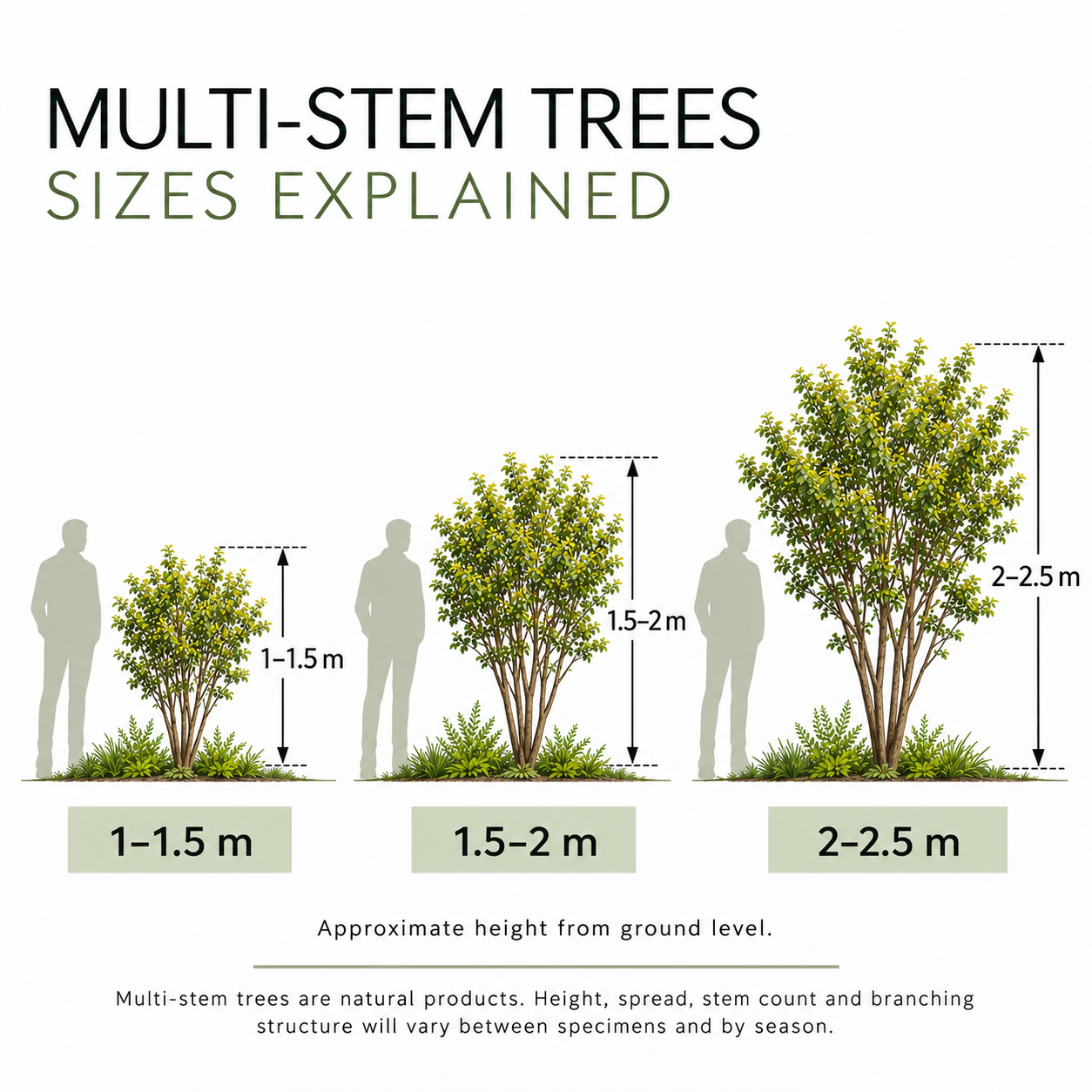
Multi-Stem Trees
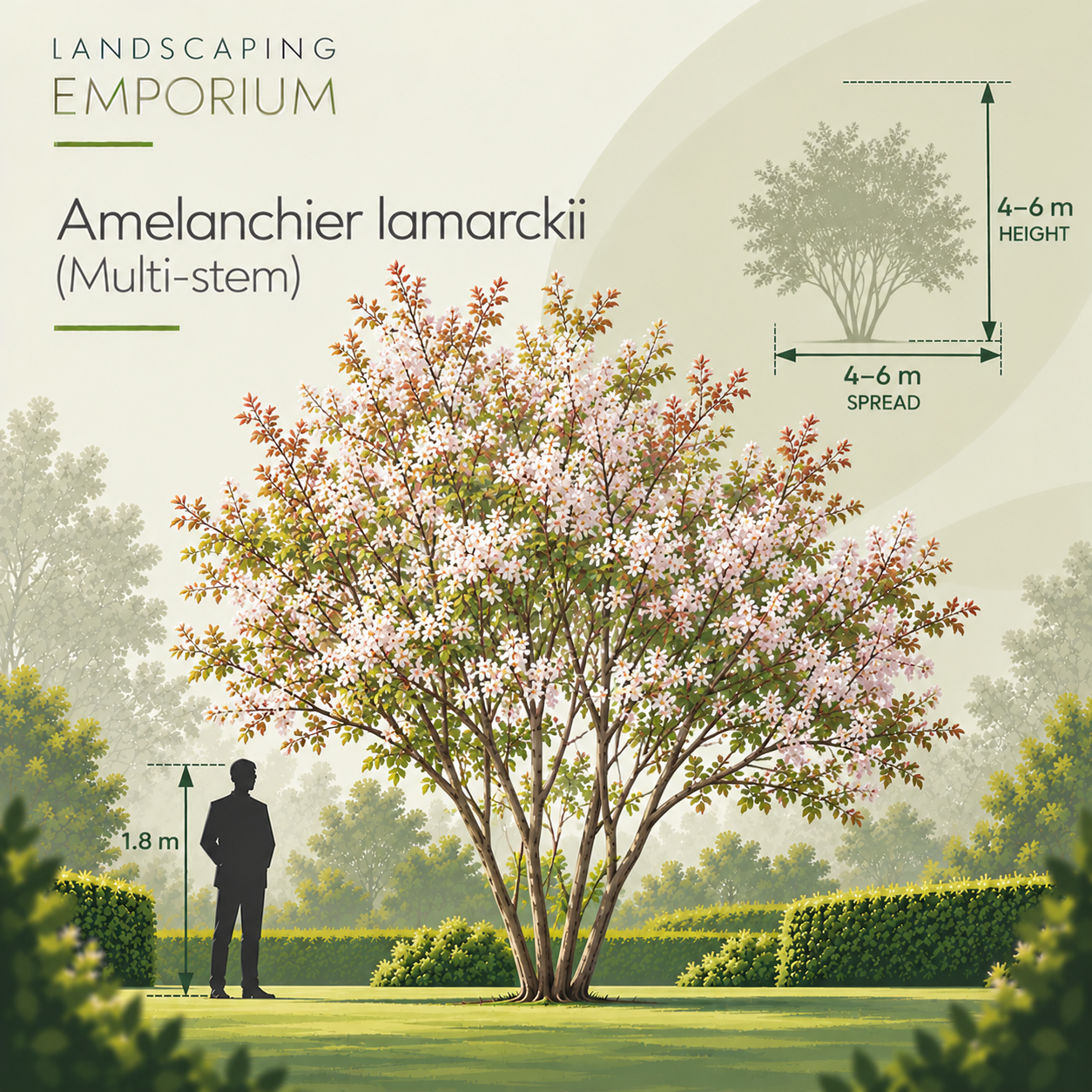
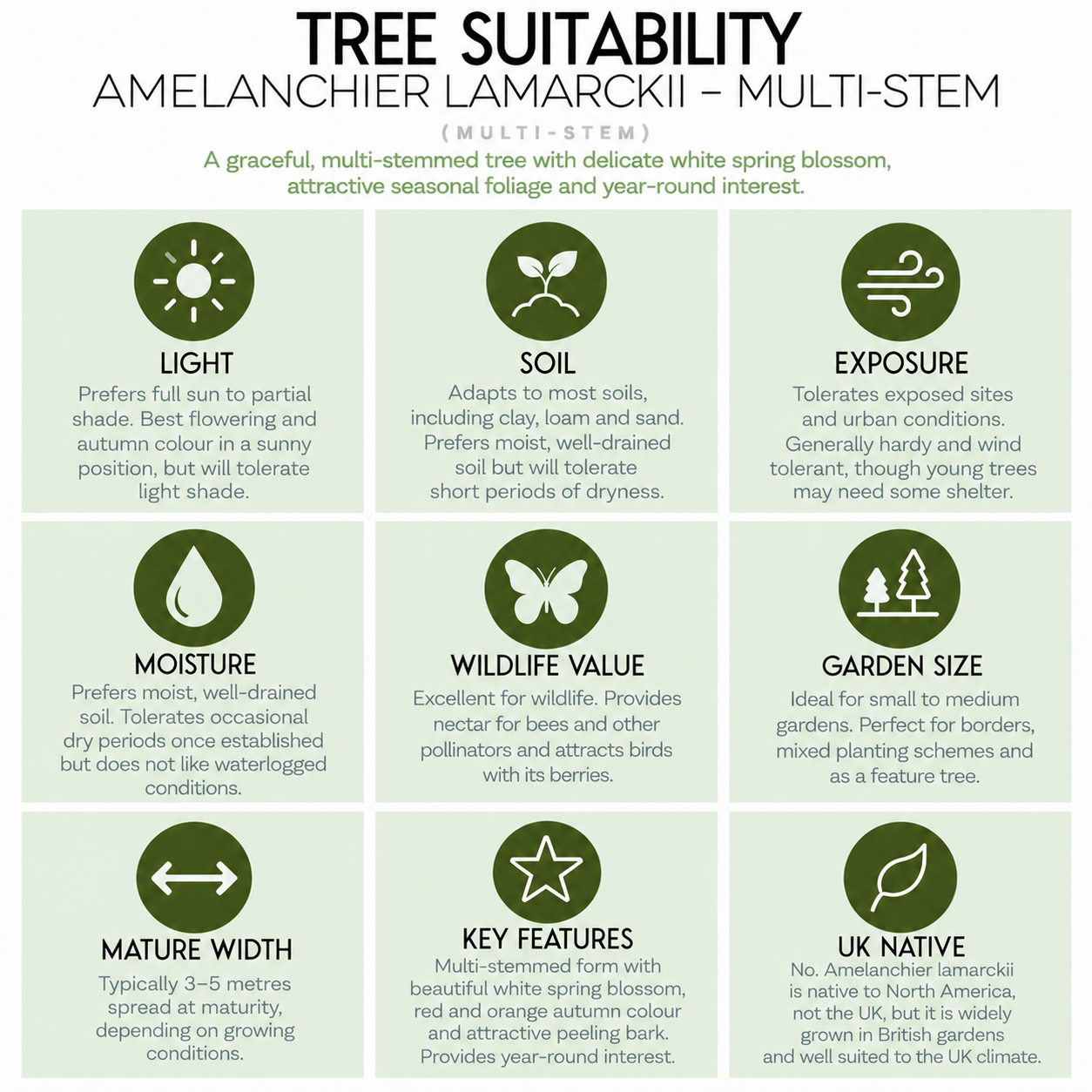
Multi-stem trees have several principal stems rising from or close to ground level rather than a single clear trunk.
This creates a very different character from a conventional standard tree.
Multi-stems can provide a broader sculptural presence and are particularly effective when positioned where their branch structure can be appreciated.
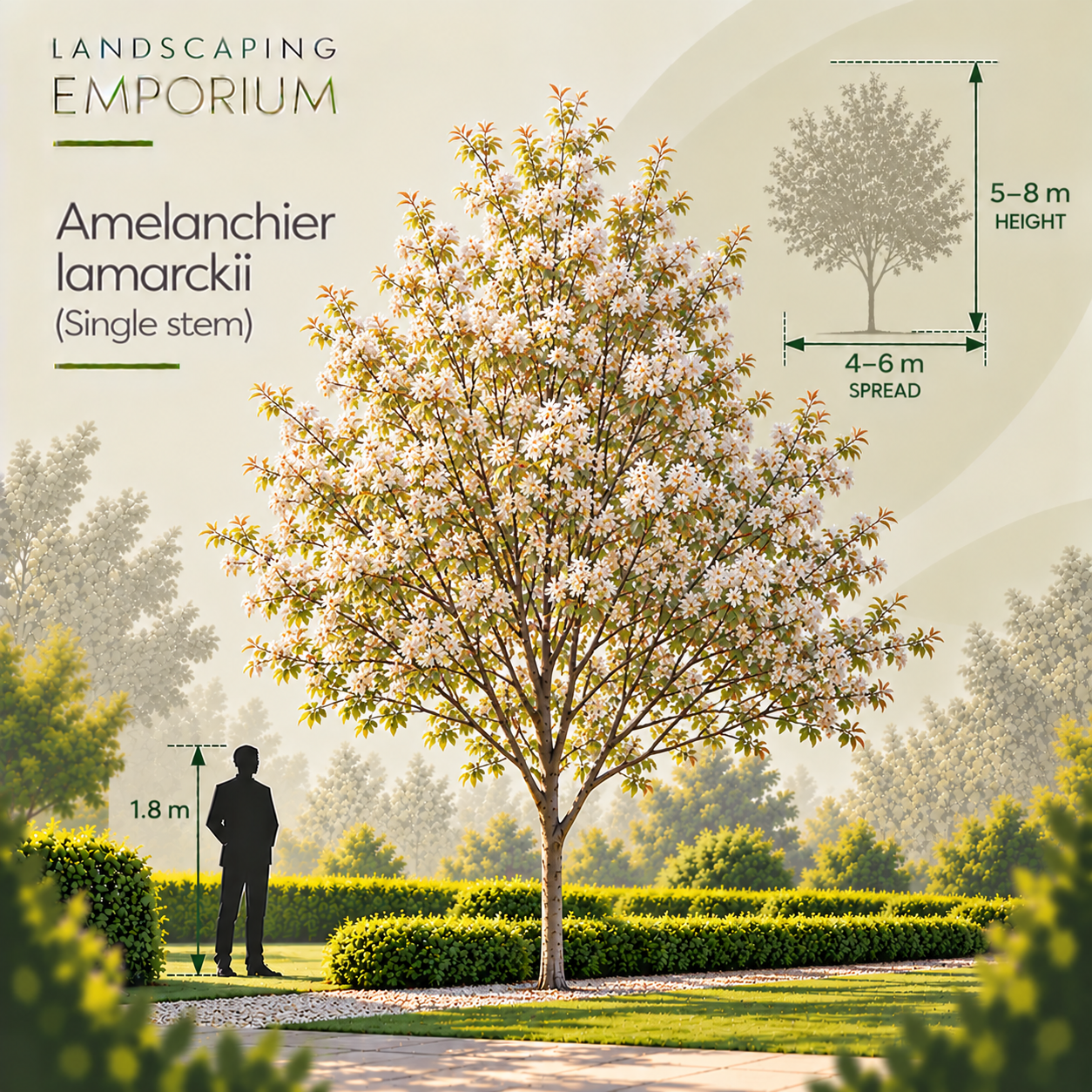
Species such as Amelanchier lamarckii and Betula utilis var. jacquemontii can work beautifully in multi-stem form.
They are particularly useful in contemporary and naturalistic gardens where a softer architectural structure is required.
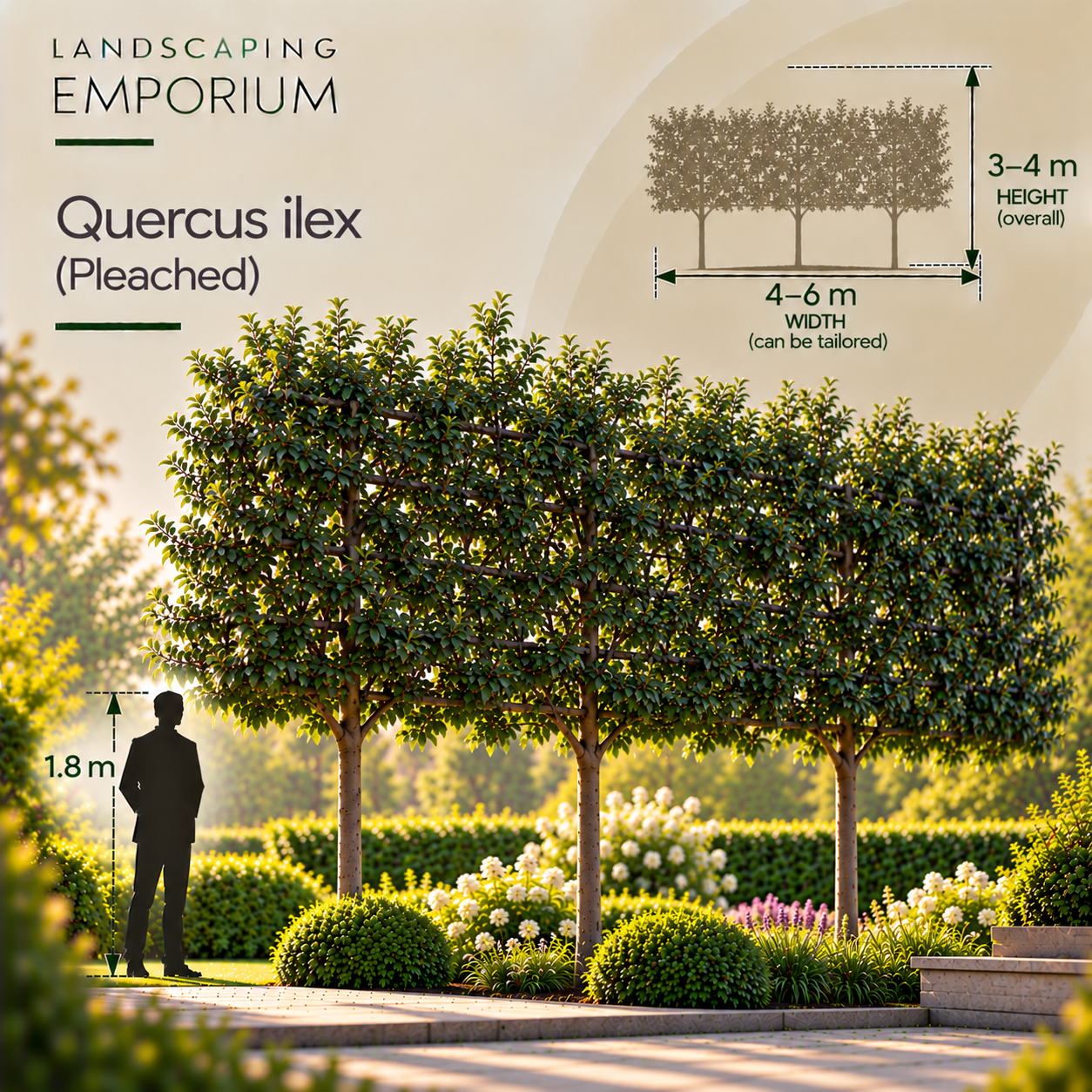
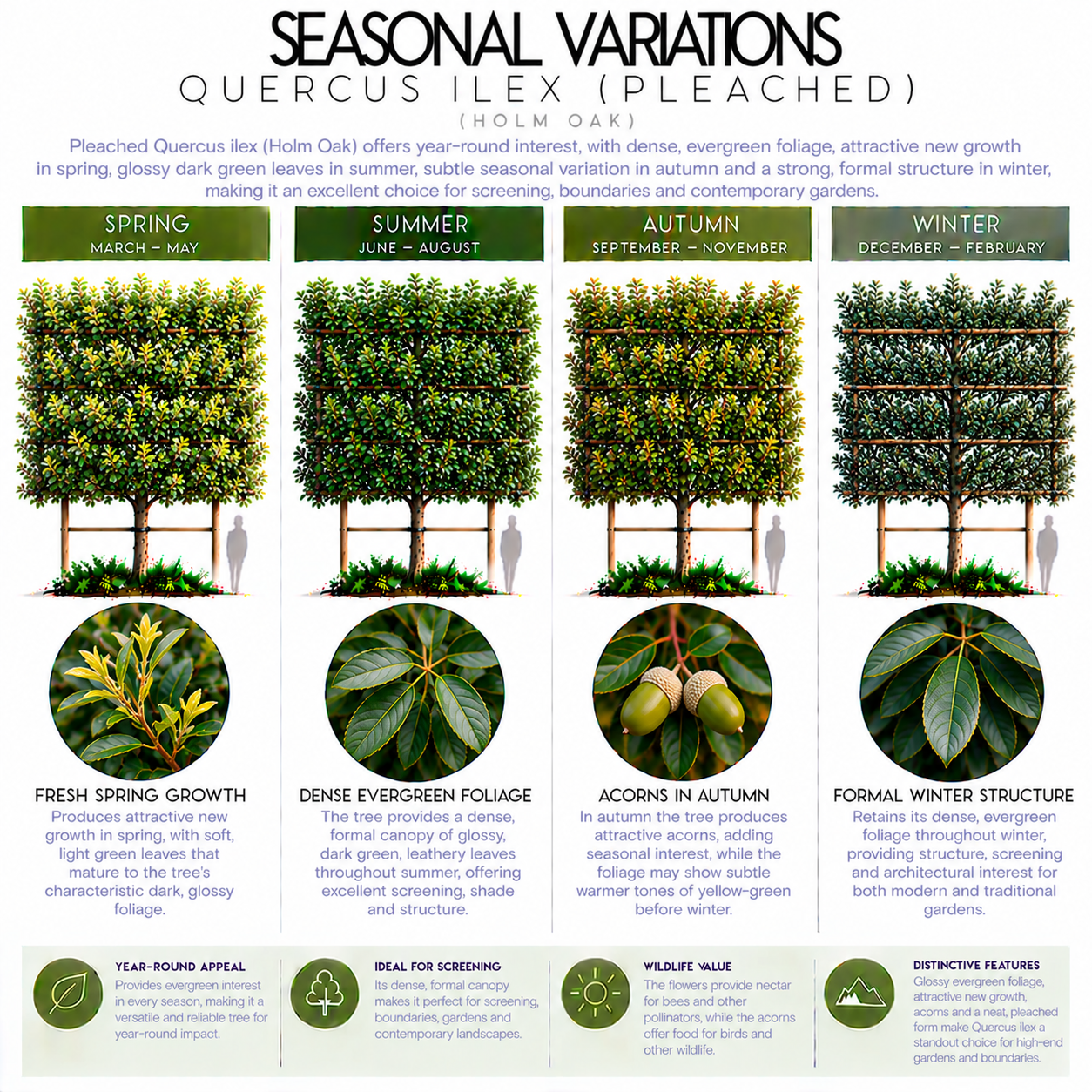
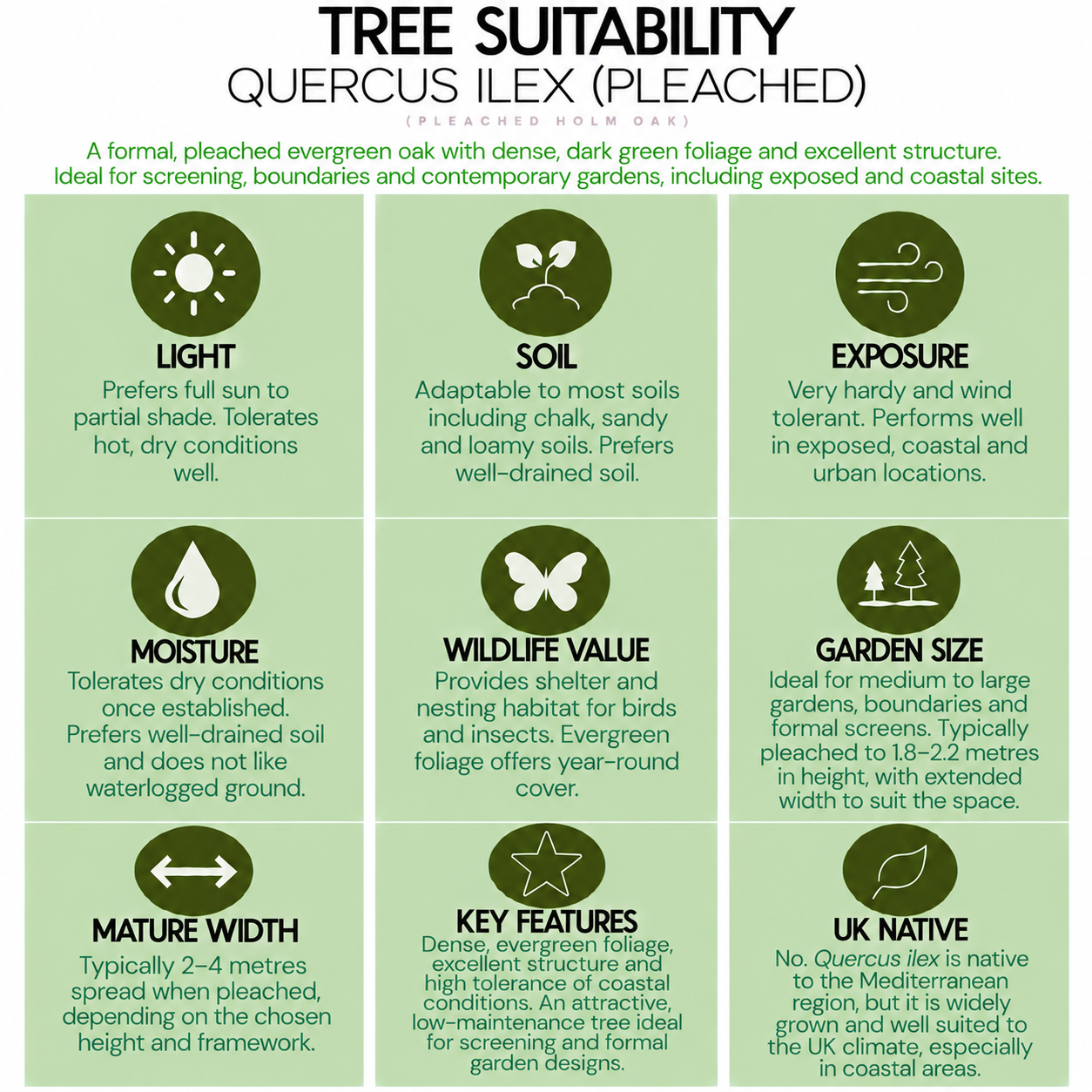
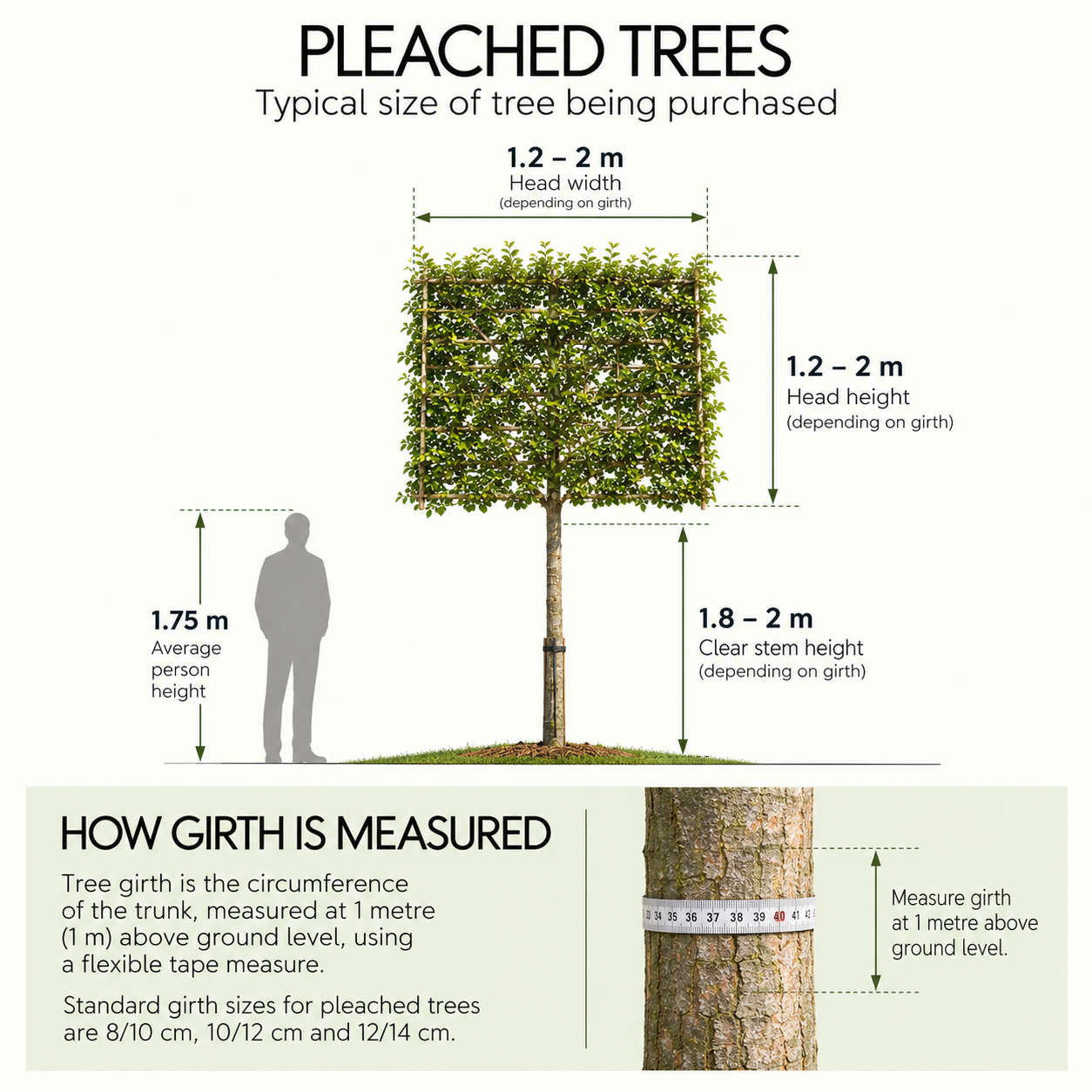
Pleached Trees
Pleached trees provide a much more formal type of screening.
Their branches are trained horizontally to create a narrow elevated canopy, effectively producing a hedge on clear stems.
This makes them extremely useful where an existing fence or wall already provides privacy at ground level but overlooking occurs above it.
They can also create strong architectural rhythm alongside patios, boundaries and formal garden spaces.
For detailed information, see our Pleached Trees & Pleached Hedging page.
Trees for Wet Ground
Not every tree enjoys moisture-retentive soil, but some species are much better adapted to these conditions than others.
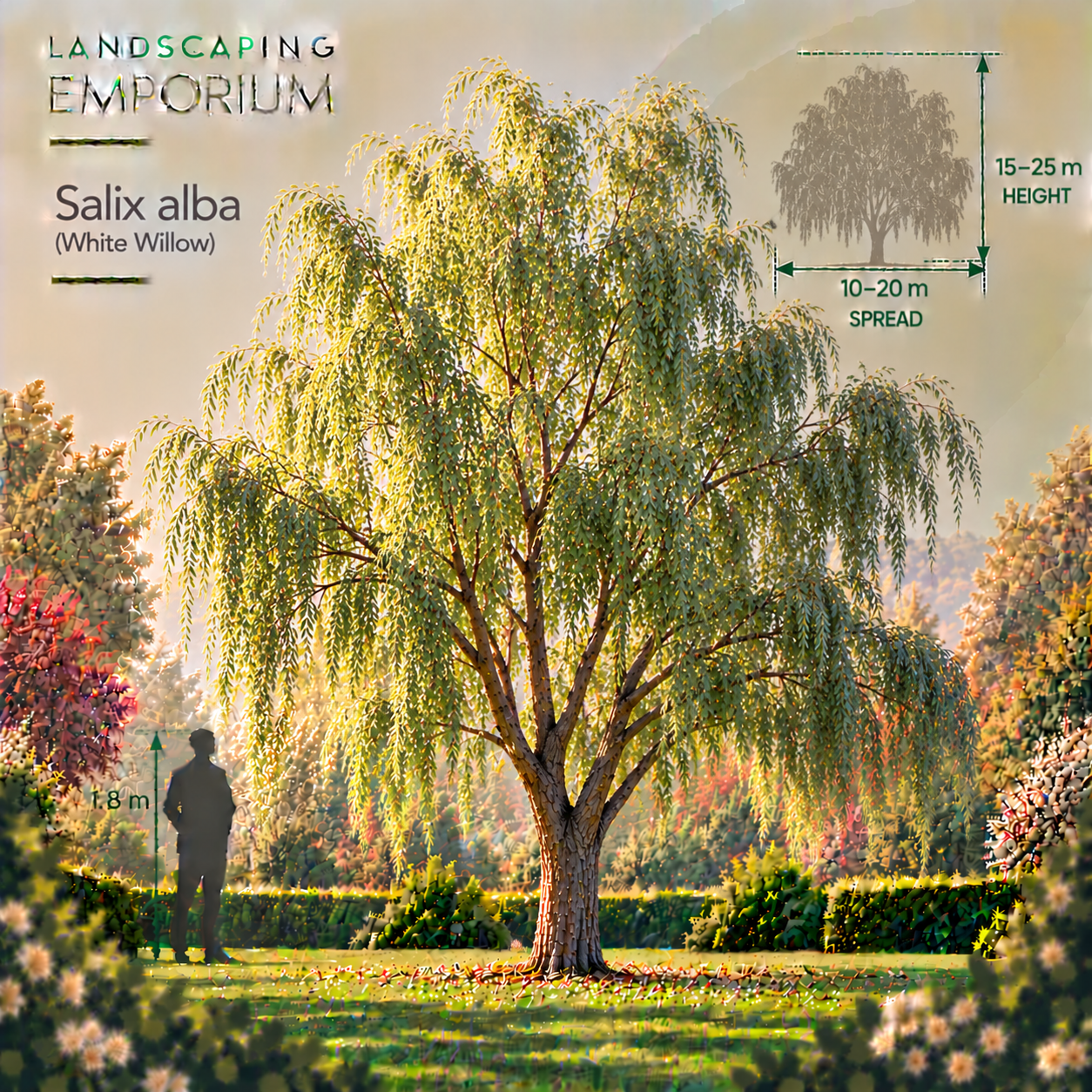
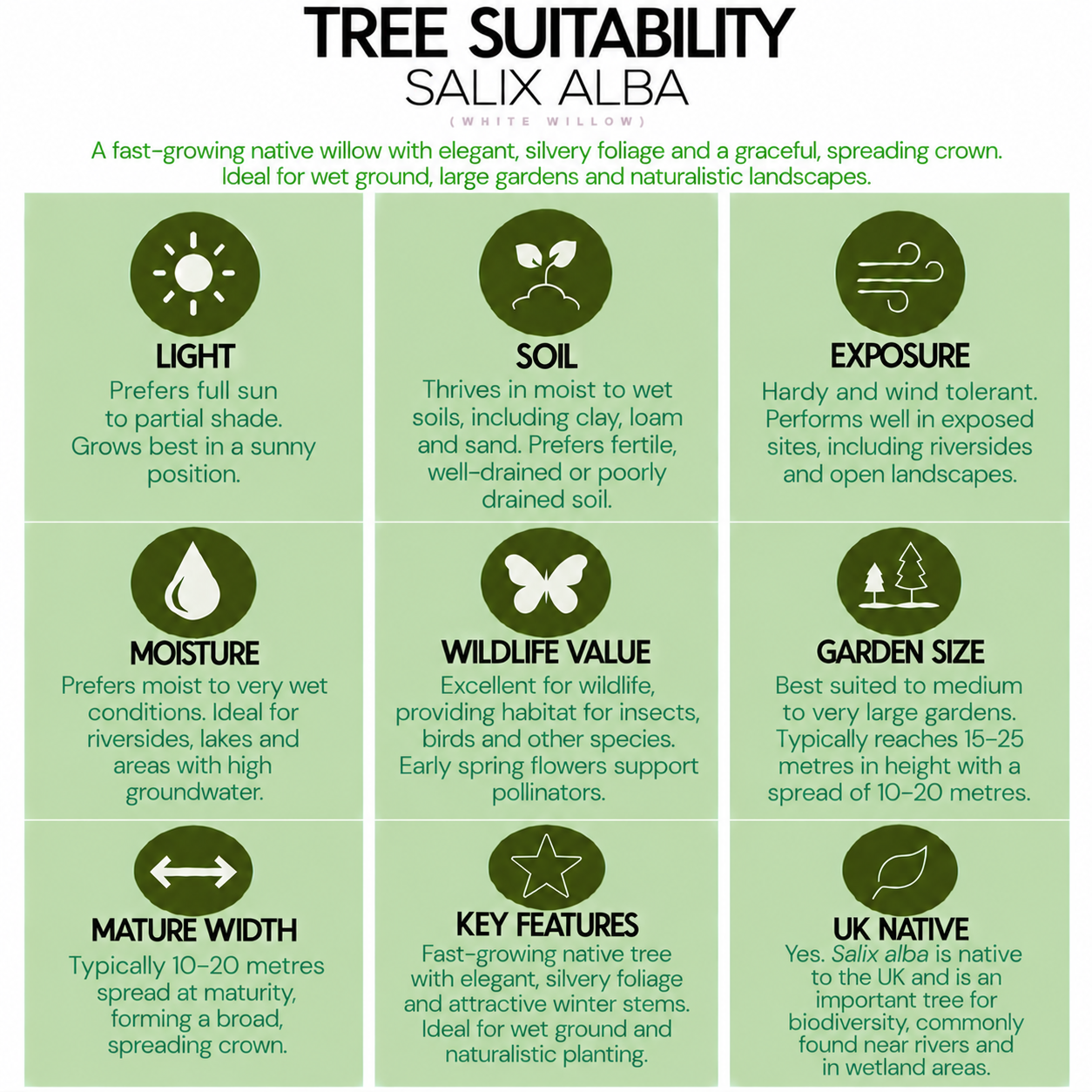
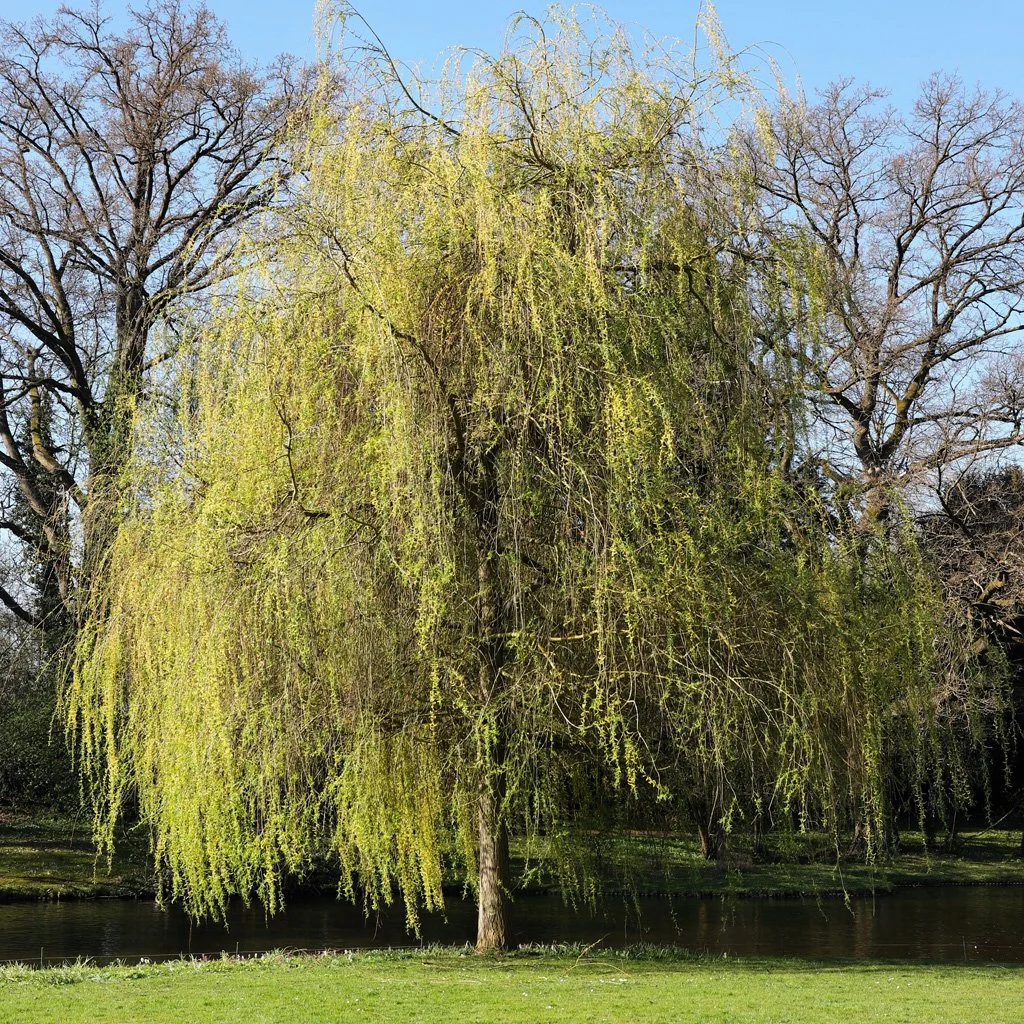
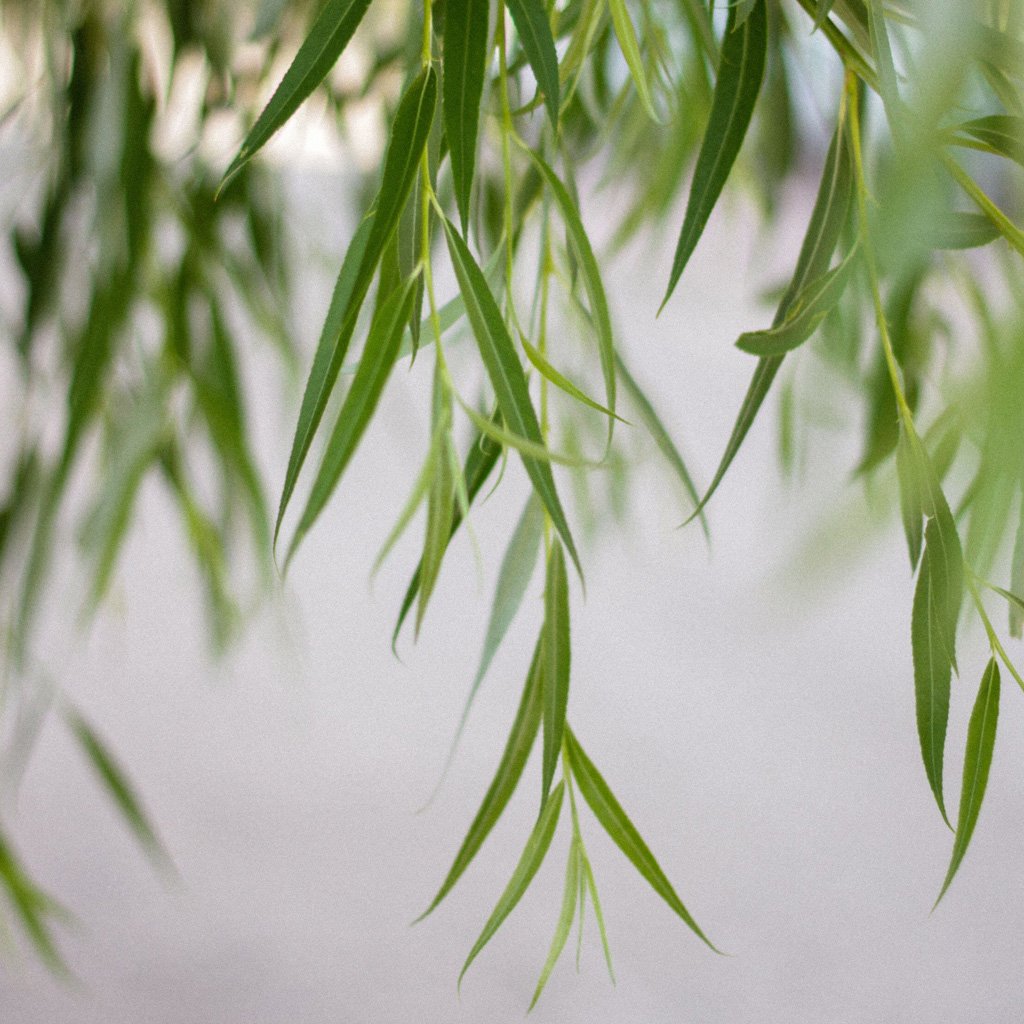
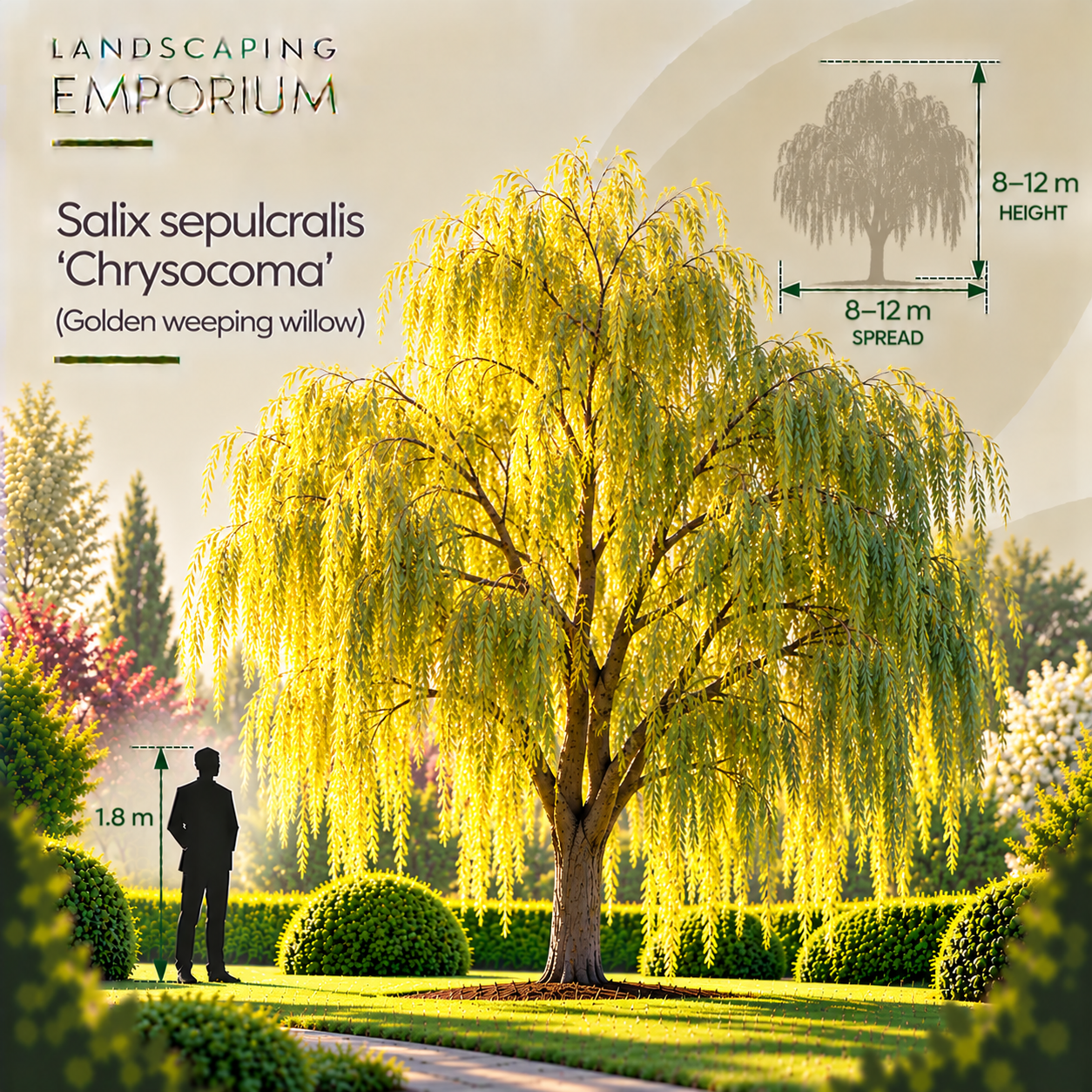
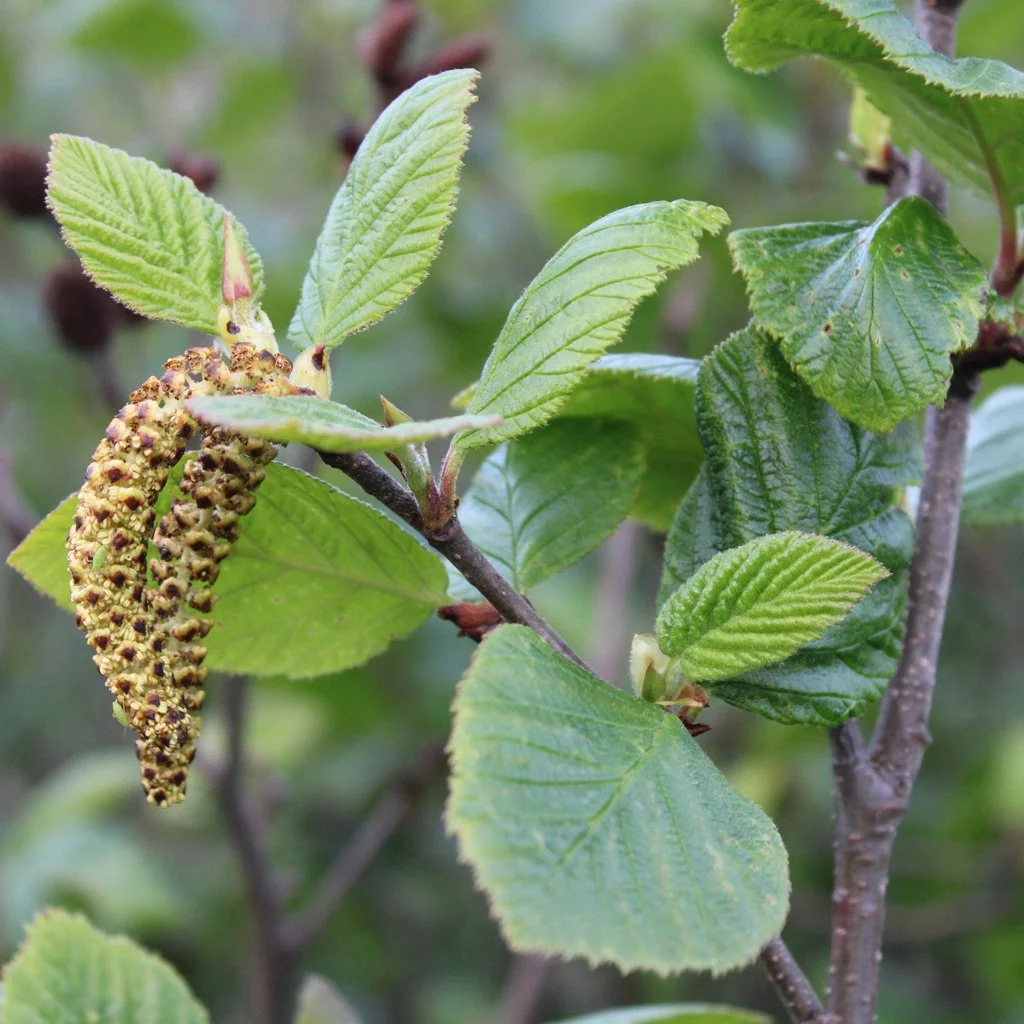
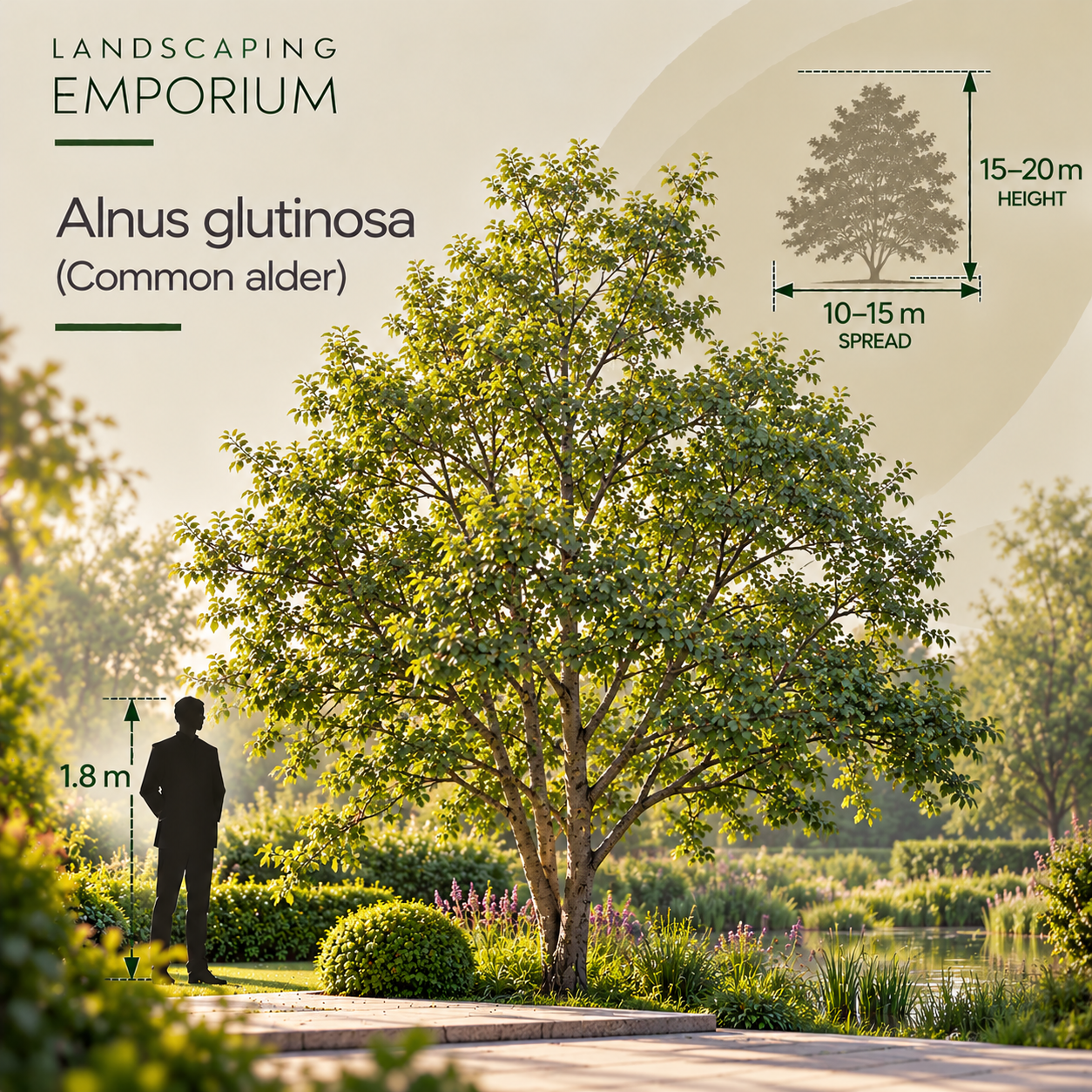
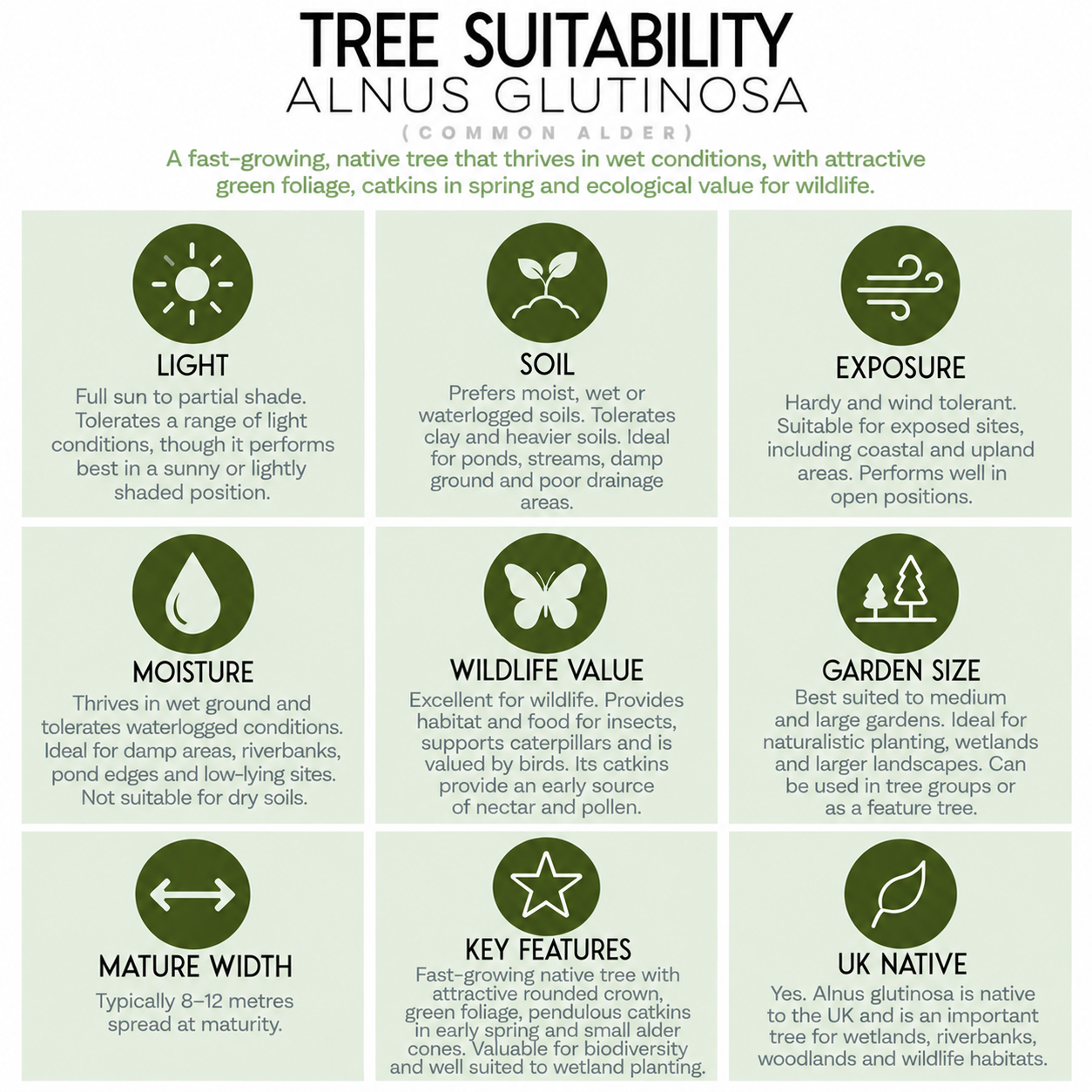
Where soil remains naturally damp, species such as Alder and Willow may be worth considering, depending on the available space and exact site conditions.
However, there is an important distinction between moist soil and permanently waterlogged soil.
Even trees that tolerate moisture may struggle where roots remain deprived of oxygen for prolonged periods.
If your garden has heavier or wetter ground, see our Trees for Wet Ground guide before choosing.
Trees for Clay Soil
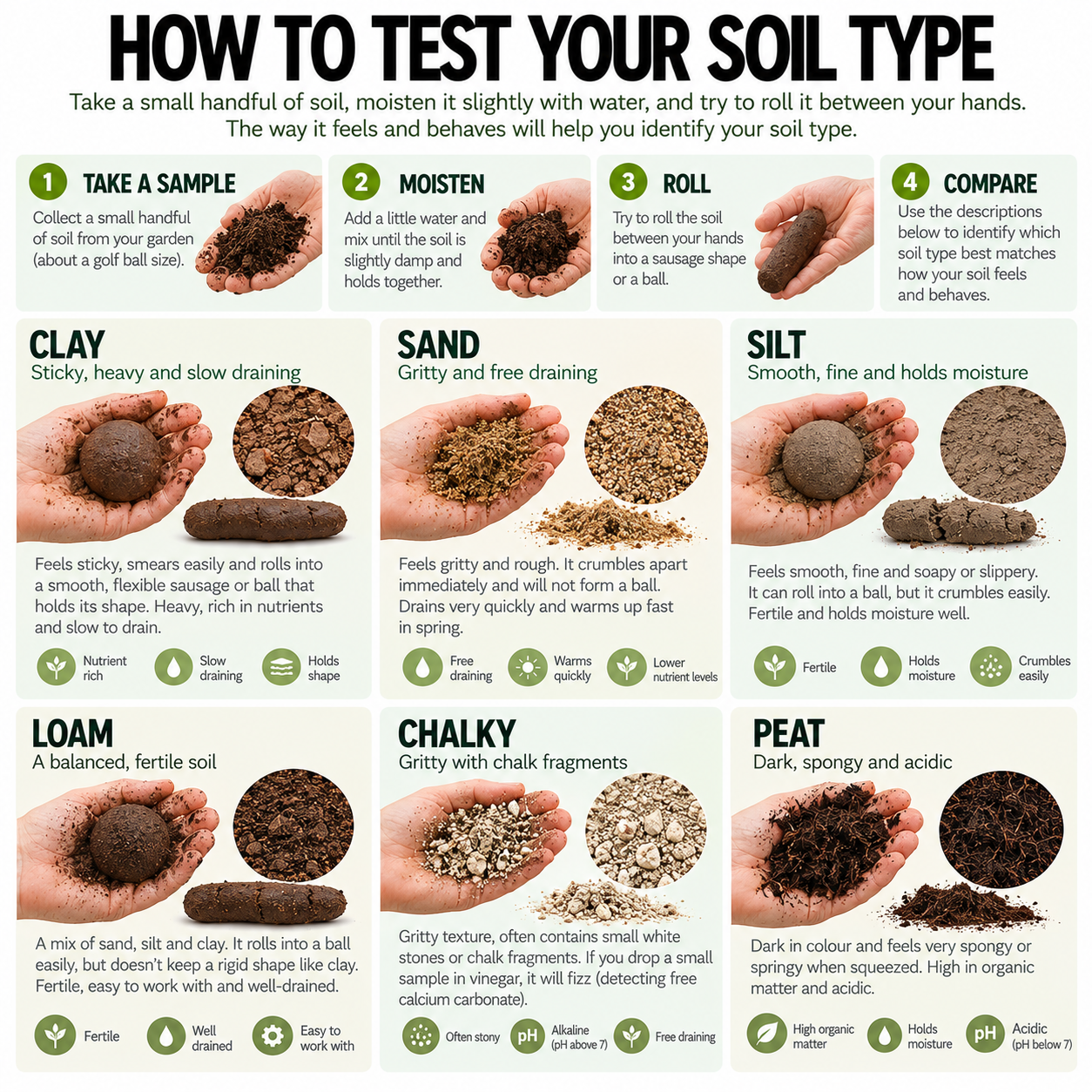
Clay soil is extremely common across parts of North West England.
It can be highly fertile, but its structure creates challenges.
Clay can become sticky and waterlogged during wet periods while becoming extremely hard when dry.
Fortunately, many trees can perform very well in clay when the species and planting position are appropriate.
Hornbeam, Field Maple, Hawthorn and several other trees can cope with heavier soil conditions.
The most important consideration is often whether the site is simply clay or whether it also suffers from significant drainage problems.
Trees for Exposed Gardens
Wind exposure can significantly influence tree selection.
This is especially important when planting larger specimen trees because a substantial canopy can create considerable wind loading before the new root system has established.
Species selection, tree size, staking and establishment care all need to respond to the exposure.
In some situations, planting a slightly smaller tree that establishes quickly can be more successful than choosing the largest specimen available.
Trees for New-Build Gardens
Trees can be particularly valuable in new-build gardens.
New developments often have little mature vegetation, relatively exposed boundaries and neighbouring houses positioned close together.
A carefully selected tree can immediately introduce height, privacy and maturity.
Larger specimens can make a newly landscaped garden feel established much sooner, while smaller carefully chosen trees provide a more economical option if you are prepared to allow them time to develop.
The important consideration is eventual size.
A tree should not be selected simply because it fits the garden on planting day.
Trees Around Patios
Trees and patios work extremely well together when properly planned.
A canopy can provide shade and enclosure while helping the patio feel integrated into the wider garden.
The species and position need consideration, however.
Eventual canopy spread, root development, leaf fall, fruit and the relationship with the paving should all influence the choice.
A carefully positioned specimen tree beside a patio can create a far more comfortable and attractive outdoor living space than paving alone.
Trees for Outdoor Living Areas
Outdoor kitchens, dining terraces, fire pits and seating areas can all benefit from the structure created by trees.
They can provide a green backdrop, screen neighbouring properties and help create the sense of an outdoor room.
Rather than placing trees randomly around the perimeter, consider how they will be seen from the seating area.
A single well-positioned tree can sometimes provide more visual impact than several trees distributed without a clear purpose.
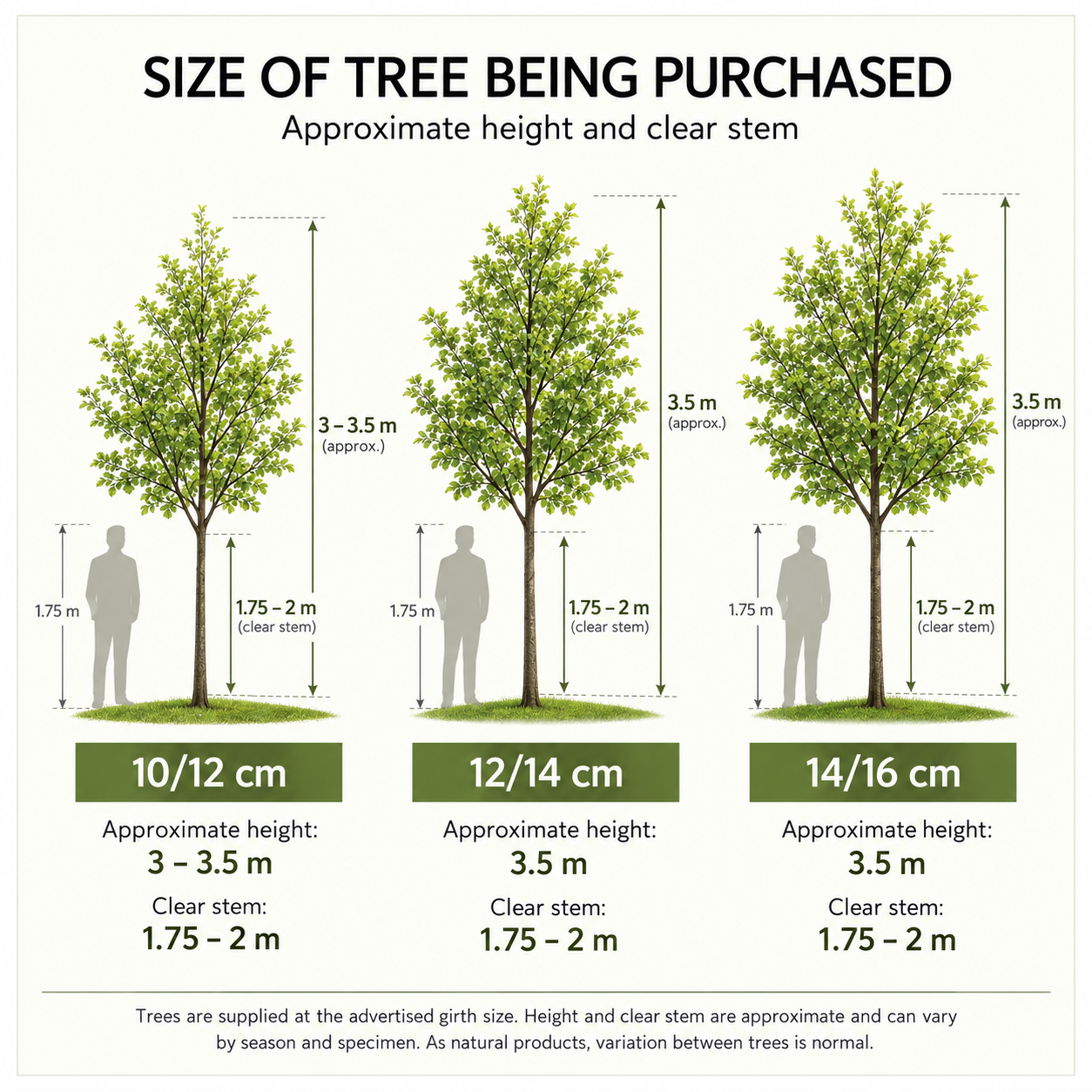
How Large a Tree Should I Buy?
The answer depends on your objectives, budget, access and willingness to wait.
A younger tree costs less, is easier to transport and often establishes quickly.
A larger specimen creates greater immediate impact but costs more and requires more substantial handling, support and aftercare.
The largest available tree is therefore not automatically the best purchase.
The right tree is the size that balances immediate impact with successful long-term establishment.
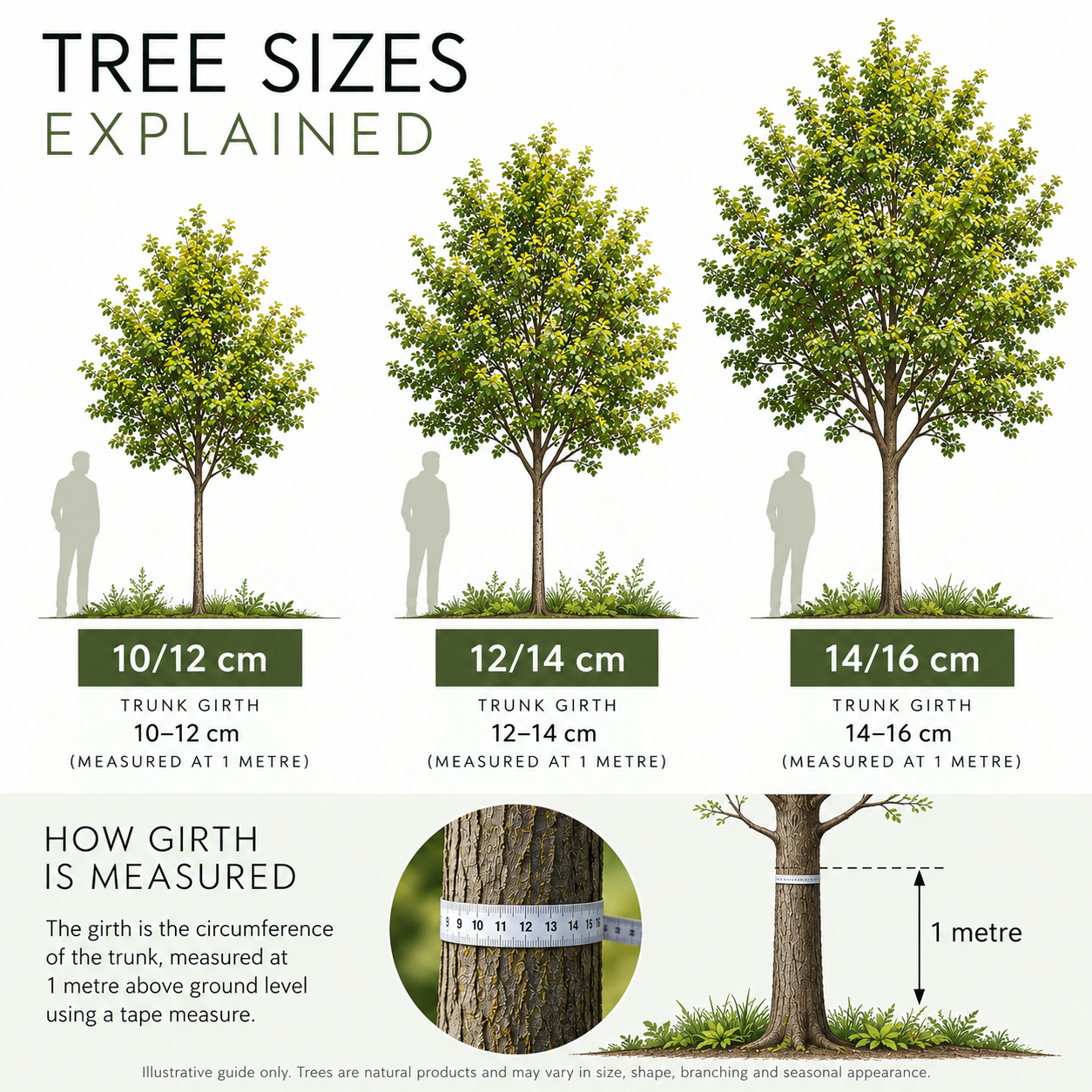
If nursery sizing terminology is confusing, our Specimen Tree Sizes Explained guide explains how tree sizes and specifications are described.
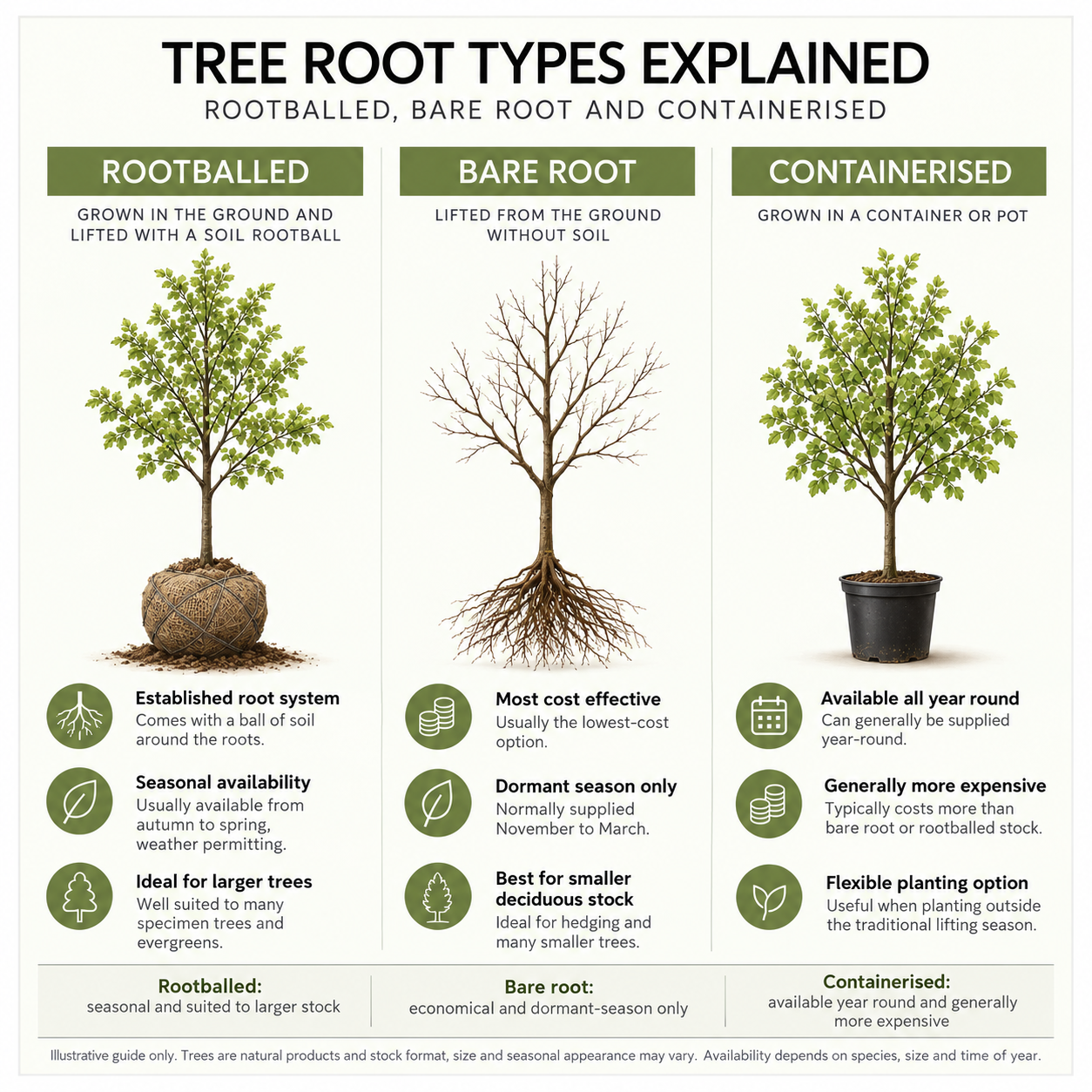
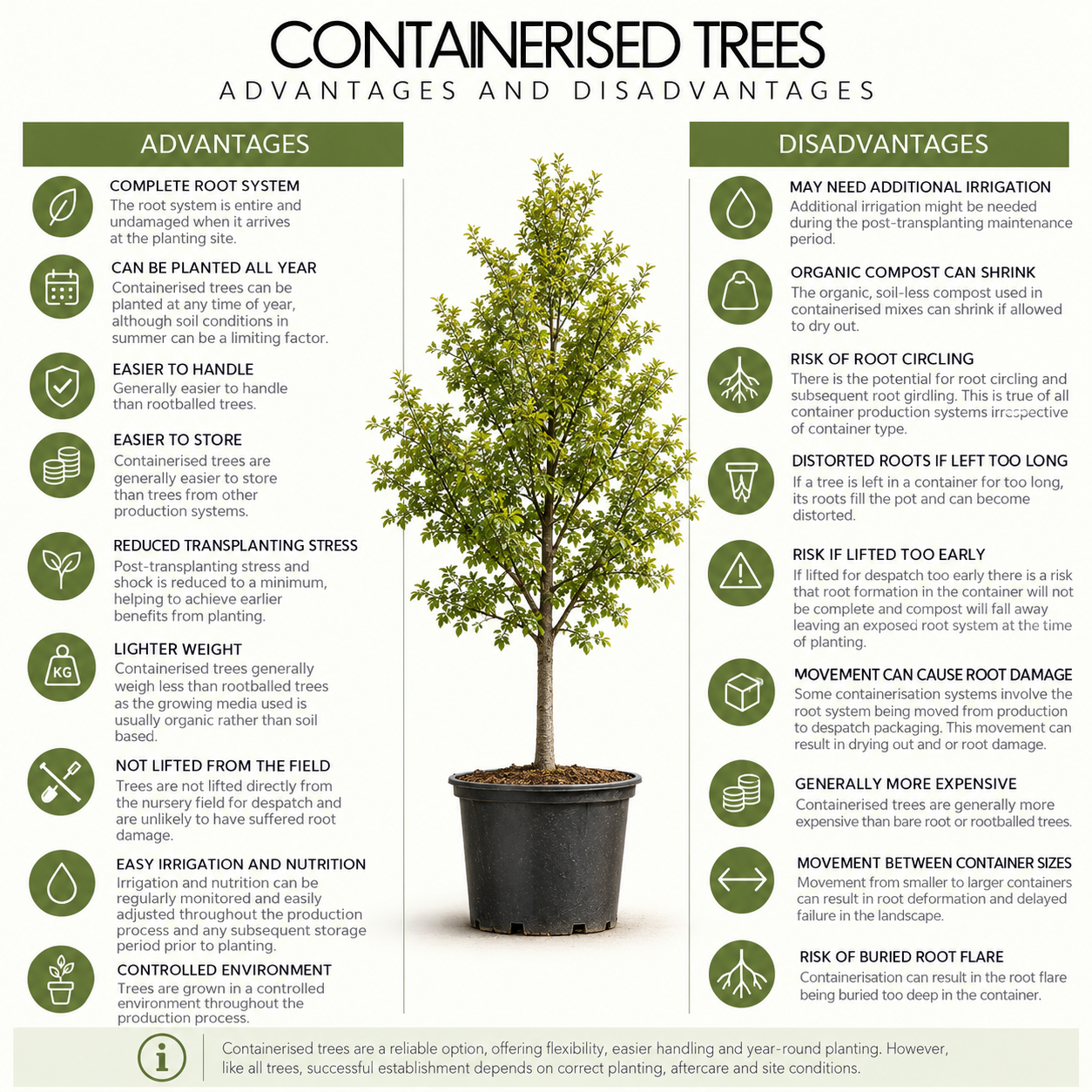
Bare-Root, Rootballed or Container-Grown Trees?
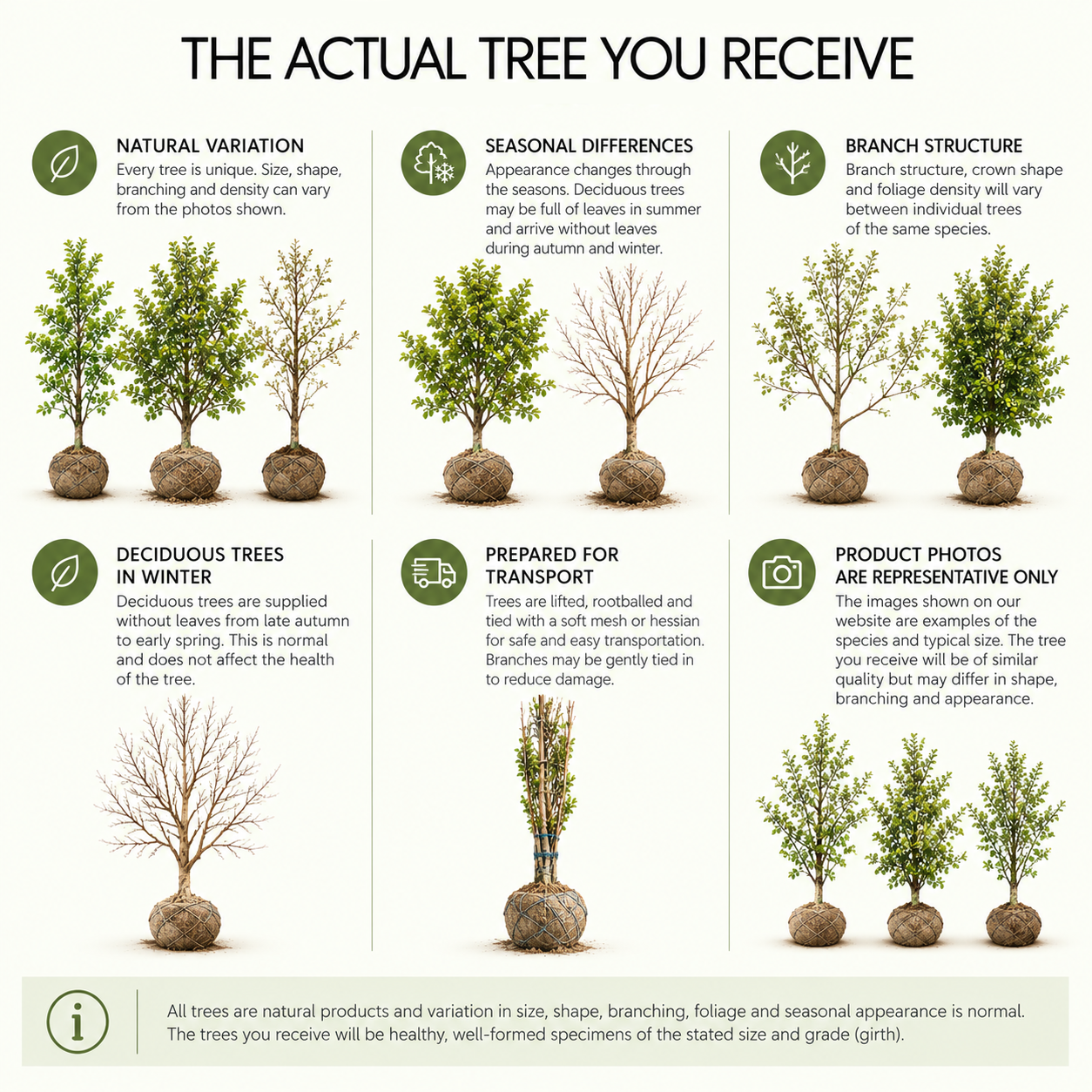
Trees can be supplied in different forms depending on species, size and season.
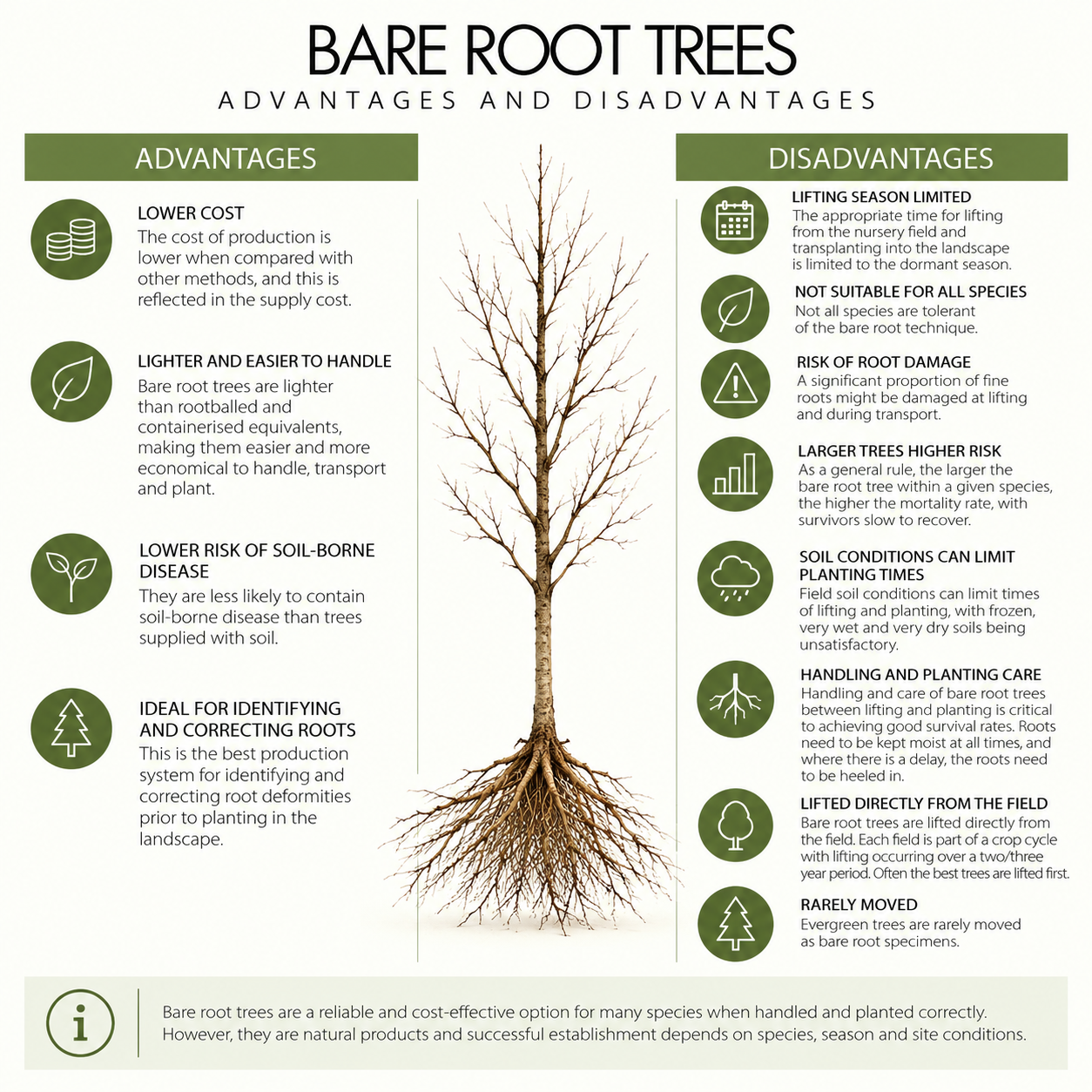
Bare-root trees are supplied without soil around the roots and are generally associated with the dormant planting season.
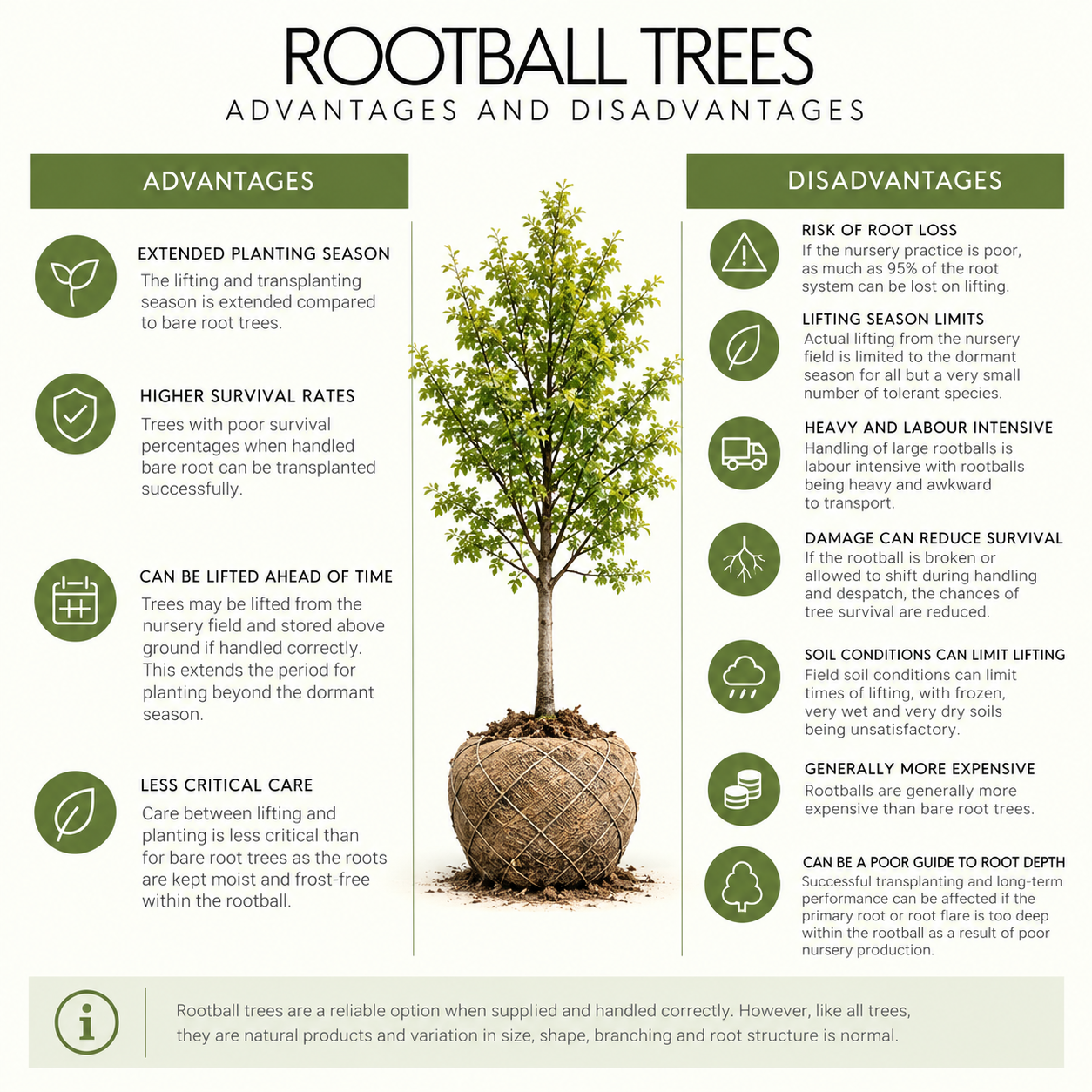
Rootballed trees are field-grown and lifted with soil retained around the root system, usually secured within hessian and sometimes additional support material.
Container-grown trees have been grown in containers and can generally be supplied over a broader part of the year.
Each method has advantages.
The appropriate choice depends on the species, tree size, season and project.
When Is the Best Time to Plant a Tree?
Autumn and winter are traditionally excellent times for planting many trees because deciduous plants are dormant and cooler conditions reduce water stress.
Field-grown rootballed and bare-root trees are normally associated with this period.
Container-grown trees can generally be planted over a much broader part of the year, provided the ground and weather conditions are suitable.
Summer planting is possible, but watering becomes particularly important.
Regardless of planting season, the first growing periods after planting are critical to successful establishment.
How Should a Specimen Tree Be Planted?
Good planting starts before the tree reaches the garden.
The position, soil, drainage and access should be considered first.
The planting hole needs to accommodate the root system appropriately without planting the tree too deeply.
The root flare should remain correctly positioned relative to the finished soil level.
Larger trees may require an appropriate staking or underground anchoring system depending on their size and exposure.
After planting, the surrounding ground should be settled appropriately and the tree watered thoroughly.
Professional planting is particularly valuable for larger specimens where the cost of the tree itself makes poor establishment an expensive mistake.
Do Newly Planted Trees Need Staking?
Many larger trees require support while their new roots establish into the surrounding soil.
The appropriate system depends on tree size, rootball, soil and exposure.
The objective is not to make the entire tree completely rigid.
The root system needs stability while the stem and canopy retain appropriate natural movement.
Supports and ties should also be checked periodically as the tree grows.
Watering Newly Planted Trees
Water is one of the most important factors in successful tree establishment.
A newly planted tree may have a substantial canopy but a root system that is still confined largely to its original rootball.
This means it cannot immediately access water from the same volume of soil as an established tree.
Water needs to reach the root zone rather than simply wetting the soil surface.
The amount and frequency required will vary according to tree size, soil, rainfall, wind, temperature and season.
Do not assume that regular North West rainfall automatically means a newly planted tree is receiving sufficient water.
Our Looking After Your Newly Planted Trees and Hedging guide provides detailed establishment advice.
Tree Irrigation
For larger specimen trees or groups of new trees, an appropriate irrigation arrangement can make establishment easier to manage.
The aim is to deliver water to the root zone consistently rather than relying on frequent light surface watering.
Irrigation still needs monitoring.
Clay soil may retain moisture for much longer than sandy or free-draining ground, while exposed trees can lose moisture quickly through their canopies.
Watering should therefore respond to the actual soil conditions rather than operating blindly according to a fixed calendar.
Mulching Around New Trees
Mulch can help retain soil moisture, suppress weeds and moderate conditions around the root zone.
Organic mulch can be particularly useful during establishment.
It should be spread around the root area rather than piled directly against the trunk.
Creating a mound of mulch around the stem can retain unwanted moisture against the bark.
How Quickly Will a Newly Planted Tree Grow?
Growth rate varies enormously between species and cultivars.
It is also affected by tree age, soil, water, light, exposure and establishment.
A species described as fast growing will not necessarily grow quickly if it is planted in unsuitable conditions.
Equally, a moderate-growing tree in ideal conditions can perform extremely well.
When choosing a tree, eventual size and suitability are usually more important than simply looking for the fastest growth rate.
How Close Can I Plant a Tree to the House?
There is no single distance that is appropriate for every tree and every property.
The answer depends on the species, eventual size, soil, foundations, drainage and surrounding structures.
A compact ornamental tree and a large forest-scale tree clearly present very different considerations.
This is another reason to select trees according to their mature characteristics rather than their size at the time of purchase.
If you are uncertain, seek appropriate professional advice before planting a substantial tree close to a building.
How Many Trees Does a Garden Need?
There is no formula.
Some small gardens may need only one carefully chosen specimen.
A larger garden may benefit from groups, repeated trees or several different species performing separate roles.
The objective should not be to fill every available space.
Trees are powerful design elements, and giving them sufficient room to develop often produces a stronger result than overcrowding the garden.
Specimen Trees Supplied and Planted
Buying a large tree is only the beginning of the process.
The tree needs to reach the property, move safely through or around the site, be positioned correctly, planted at the correct depth, supported where necessary and watered thoroughly.
Large rootballs can be extremely heavy.
Access should therefore be considered before ordering.
For substantial specimens, mechanical handling may be required.
Landscaping Emporium can provide specimen trees supplied and professionally planted, allowing the tree selection, delivery and installation to be considered as one process.
Specimen Tree Planting Across North West England
Professional planting is available for suitable projects across Lancashire, the Ribble Valley, Greater Manchester, Cheshire, Merseyside and surrounding areas of North West England.
Our connection with Kirman Design means trees can be considered from a garden-design and landscaping perspective rather than simply as individual products. Landscaping Emporium is brought to you by Kirman Design and offers professional installation alongside selected garden products.
That is particularly useful where trees need to provide screening, work around existing patios, form part of a new garden or relate to other structural planting.
Frequently Asked Questions About Specimen Trees
What is the best specimen tree for a garden?
There is no single best tree. The correct choice depends on garden size, soil, light, exposure, purpose and the appearance you want to create.
What is the best tree for privacy?
Evergreen trees can provide year-round screening, while deciduous trees can be effective where privacy is primarily needed during the growing season. The position of the canopy in relation to the unwanted sightline is often more important than simply choosing the tallest tree.
Can I buy a mature tree?
Yes. Larger mature and semi-mature specimens are available for customers who want greater immediate impact. See our Mature Trees for Sale page.
Can you plant the tree for me?
Yes. Professional tree planting is available for suitable projects across North West England.
What tree should I choose for a small garden?
Choose according to eventual height and spread rather than the size of the tree when you buy it. Our Trees for Small Gardens guide provides more detailed options.
Which trees are best for wildlife?
Native trees can be particularly valuable, while many ornamental flowering and fruiting trees also support insects and birds. See our Trees for Wildlife guide.
Which trees tolerate wet soil?
Some species tolerate moisture-retentive ground much better than others. Alder and some Willows are examples, but the difference between damp soil and prolonged waterlogging needs to be understood. See Trees for Wet Ground.
What trees have good spring blossom?
Flowering cherries, ornamental crab apples, Magnolias, Amelanchier and other flowering trees can all provide excellent spring displays. Explore our Spring Blossom Trees guide.
Are large trees difficult to establish?
They can require more careful establishment than smaller trees because a substantial existing canopy is being supported by a recently transplanted root system. Correct planting, support and watering are therefore particularly important.
When should I water a newly planted tree?
Watering should respond to soil moisture, rainfall, tree size and weather rather than relying on a rigid schedule. Newly planted trees need particular attention during their establishment period.
Do specimen trees come with a guarantee?
Your statutory consumer rights apply to trees purchased from us. Any additional commercial or establishment guarantee offered with a particular product or service will be stated separately.
Find the Right Tree for Your Garden
The best specimen tree is not necessarily the biggest, fastest growing or most expensive.
It is the tree that performs the job you need it to perform while remaining appropriate for the garden as it matures.
If privacy is your priority, start with Trees for Screening Neighbours.
For limited space, explore Trees for Small Gardens.
For seasonal colour, look at Spring Blossom Trees.
For biodiversity, visit Trees for Wildlife.
For difficult damp conditions, see Trees for Wet Ground.
And if you want an established garden without waiting years for a young tree to mature, explore our Mature Trees for Sale.
Alternatively, browse the specimen trees below or contact Landscaping Emporium with your postcode, photographs of the garden, approximate planting location and what you would like the tree to achieve.
We can help you choose a suitable tree and arrange professional delivery and planting across North West England.