
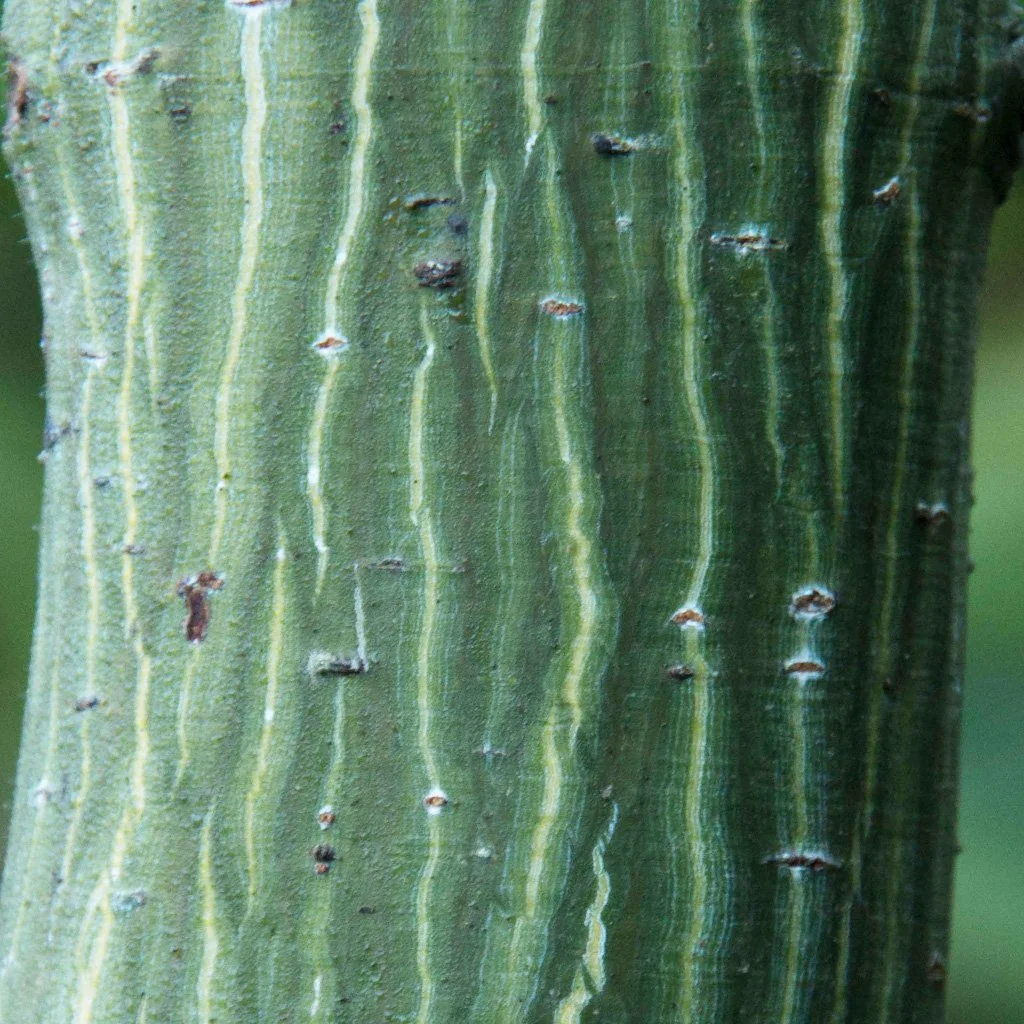
Acer davidii, commonly known as Père David’s Maple or Snake-Bark Maple, is a deciduous tree valued for its striking green and white-streaked bark. Its arching branches, attractive foliage and orange-to-yellow autumn colour give it interest throughout the year.
Native to China, this maple is best planted in a sheltered position in moist but well-drained soil. It makes an elegant specimen for a larger garden, where its bark can be appreciated in winter and its changing foliage enjoyed through the growing season.
Acer davidii can grow beyond 12 metres tall and spread more than 8 metres, so allow room for it to mature.
Key Features of Acer davidii
Decorative green and white-streaked bark
Bark interest is especially noticeable in winter
Elegant arching branches
Mid-green leaves, sometimes shallowly lobed
Orange to yellow autumn foliage
Small flowers appear in spring
Pinkish-brown winged fruits may follow
Suitable for full sun or partial shade
Prefers moist but well-drained soil
Best planted in a sheltered position
RHS hardiness rating H5
Acer davidii – Tree Specification
Botanical name: Acer davidii
Common name: Père David’s Maple / Snake-Bark Maple
Family: Sapindaceae
Tree type: Deciduous broadleaf tree
Mature height: Approximately 10–15m, potentially taller in suitable conditions.
Mature spread: More than 8m; allow approximately 8–10m or more for the mature crown.
Time to maturity: Approximately 20–50 years.
Growth rate: Moderate, depending on growing conditions.
Crown shape: Upright when young, developing arching branches and a broader crown with age.
Bark: Green and white-streaked, with a snake-like pattern on the stems.
Foliage: Mid-green, ovate leaves that may be unlobed or shallowly lobed.
Autumn colour: Orange to yellow.
Flowers: Small, yellowish flowers are produced in spring, often in hanging clusters.
Fruit: Pinkish-brown, winged fruits may develop after flowering.
Position: Full sun or partial shade.
Soil: Adaptable to chalk, clay, loam and sandy soils.
Soil moisture: Moist but well-drained or well-drained soil.
Exposure: Sheltered.
Hardiness: RHS hardiness rating H5.
Native status: Not native to the UK; native to China.
Wildlife value: Spring flowers and the tree’s structure can contribute to a mixed garden planting scheme.
Maintenance: Low maintenance. Pruning is generally limited to removing dead or damaged branches.
Suitable uses: Specimen planting, architectural planting, larger gardens, sheltered gardens and gardens designed to feature ornamental bark.
Why Choose Acer davidii?
Striking Snake-Bark Stems
Acer davidii is one of the snake-bark maples, named for the distinctive striped appearance of its stems. The green and white streaks become particularly noticeable when the tree has lost its leaves.
This makes it a useful choice for winter interest, when the bark and branching structure are more exposed.
Elegant, Arching Branches
The tree develops a graceful shape, with branches that arch as it matures. Its open form makes it an attractive specimen in a larger garden or mixed landscape planting.
Allow enough room for the crown to develop naturally and avoid crowding it between buildings or other trees.
Colourful Autumn Foliage
The mid-green leaves turn orange to yellow in autumn before falling. This seasonal colour complements the striped bark and gives the tree interest beyond its winter appearance.
The exact intensity of autumn colour can vary with the tree’s position and seasonal conditions.
Interest Across the Seasons
Père David’s Maple offers different features through the year: fresh foliage in spring, a leafy canopy in summer, autumn colour, and distinctive bark through winter.
Small flowers appear in spring, and pinkish-brown winged fruits may follow. The flowers are modest, while the bark and overall shape are the tree’s main ornamental features.
A Specimen Tree for a Sheltered Site
Acer davidii is best planted in a sheltered position with moist, well-drained soil. It suits a larger garden where the tree can mature and its bark can be seen clearly.
It is not the best choice for a very exposed, dry site or a small space that cannot accommodate its eventual height and spread.
Planting and Establishment
Acer davidii grows well in full sun or partial shade. Choose a sheltered position with moist but well-drained soil.
Prepare the planting area and set the tree so the root flare sits at the correct finished soil level. Water thoroughly after planting and continue to water during dry spells while the tree establishes.
A mulch layer can help retain soil moisture and reduce competition from grass and weeds. Keep mulch clear of the trunk.
Allow sufficient space for the mature crown and root system. For larger nursery specimens, professional planting is recommended. Staking or another suitable support may be needed depending on the size of the tree and the planting conditions.
Maintaining Acer davidii
Acer davidii is generally low maintenance once established. Pruning is usually limited to removing dead, damaged or poorly placed branches.
Make any necessary cuts carefully and retain the tree’s natural shape. Avoid unnecessary heavy pruning.
Water during prolonged dry spells, particularly while the tree is establishing or if it is planted in a warm, dry position.
Important Planting Considerations
Acer davidii can grow beyond 12 metres tall and spread more than 8 metres. Check that the planting position has room for its mature size, including space from buildings, boundaries, paths, overhead structures and underground services.
The tree prefers a sheltered position and moist, well-drained soil. Avoid exposed sites where it may be subject to drying conditions.
If you are choosing this tree primarily for its bark, plant it where the stems will be visible in winter and avoid crowding it with dense evergreen planting.
Specimen Tree Delivery and Professional Planting
Landscaping Emporium, brought to you by Kirman Design, offers professional specimen tree supply and planting throughout selected areas of North West England.
We provide professional tree planting in the following postcode areas:
BB, BL, CH1–CH5, CW8, CW9, FY, L, LA1–LA6, M, OL, PR, SK1–SK12, WA and WN.
Please do not select professional planting at checkout if your property is outside these postcode areas without contacting us first.
If your property is outside our normal installation area, please contact us. We may still be able to arrange planting depending on your location, tree size and site access.
Before ordering, please consider delivery access, gate and passage widths, steps, slopes, overhead restrictions and the available planting space.
Acer davidii trees may be supplied in different nursery sizes and root formats depending on current stock and seasonal availability.
Overall height, trunk girth, crown dimensions and natural branching structure will vary between individual specimens.
Contact Landscaping Emporium
Landscaping Emporium – brought to you by Kirman Design
Unit 9, Bridgewater Business Park
Gladstone Street
Blackburn
BB1 3DL
Telephone: 01942 604976
Email: hello@landscapingemporium.co.uk
Website: www.landscapingemporium.co.uk
Professional tree supply and planting across North West England.
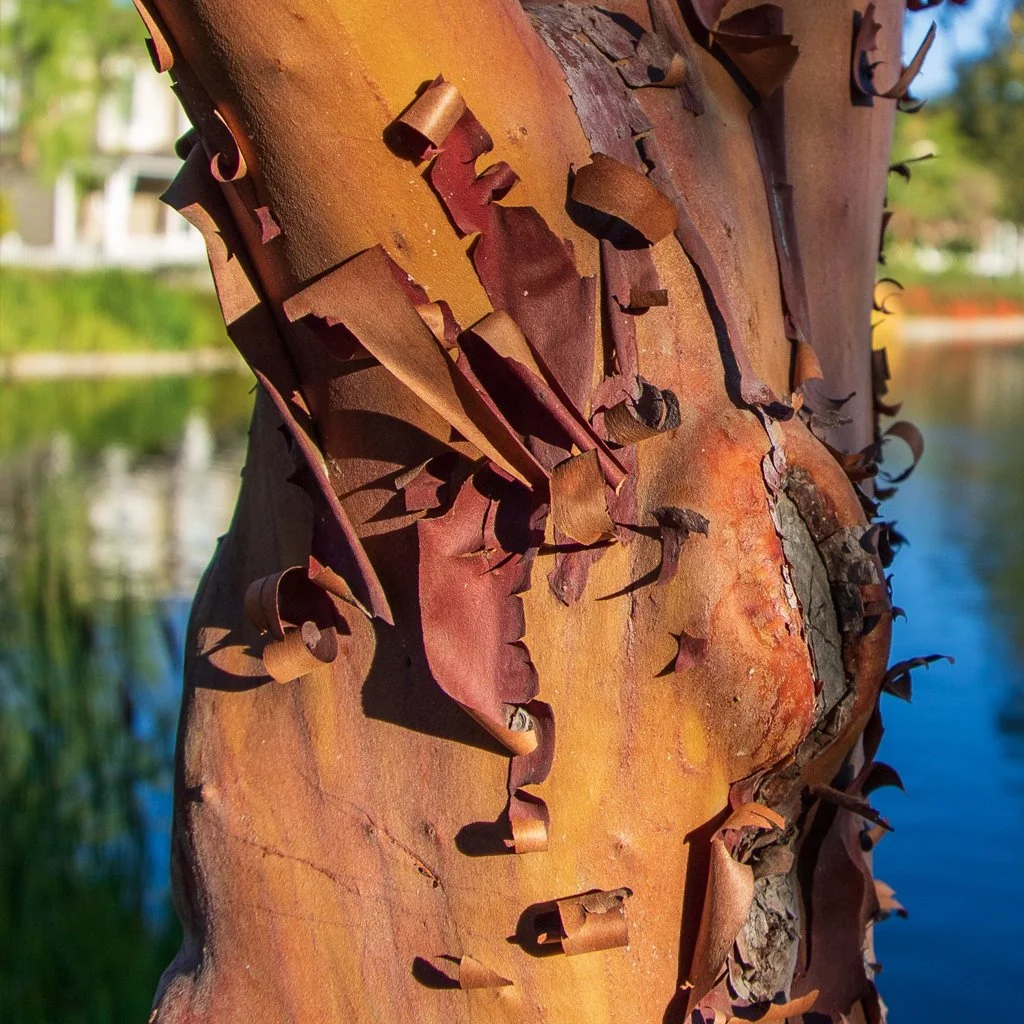
Acer griseum is a refined ornamental tree with peeling cinnamon bark, delicate green foliage and brilliant scarlet autumn colour.
Its compact size makes it ideal for courtyards, patios, Japanese gardens, contemporary schemes and smaller landscapes where the tree can be appreciated at close range.
Product highlights
Peeling cinnamon and copper bark
Exceptional winter interest
Brilliant scarlet autumn colour
Compact mature scale
Fine divided foliage
Standard and multi-stem forms
Suitable for sheltered gardens
Low routine pruning requirement
Excellent architectural focal point
Tree information
Feature / Details
Botanical name: Acer griseum
Common name: Paperbark maple
Plant type: Small deciduous ornamental tree
Mature height: Approximately 6–10m
Mature spread: Approximately 4–7m
Growth rate: Slow to moderate
Annual growth: Approximately 20–40cm
Position: Full sun or partial shade
Soil: Moist, fertile and well-drained
Hardiness: Good when established
Autumn colour: Exceptional
Winter interest: Exceptional bark
Wildlife value: Moderate
Maintenance: Low
Suitable for
Small and medium gardens
Courtyards
Patios
Japanese gardens
Contemporary planting
Sheltered urban sites
Entrance planting
Ornamental borders
Seating areas
Not recommended for
Severely exposed positions
Permanently wet ground
Compacted construction soil
Sites without establishment irrigation
Schemes requiring rapid height
Evergreen screening
Planting and aftercare
Plant at the original nursery depth in moist, well-drained soil. Water consistently during establishment and apply mulch over the root zone.
Follow our tree planting and establishment guide.
See rootball versus container-grown trees.
Pruning
Use light formative pruning only. Preserve the natural rounded crown and fine branching.
See RHS Pruning Group 1.
Our recommendation
Acer griseum is recommended for customers seeking a compact ornamental tree with rare year-round interest, beautiful peeling bark and exceptional autumn colour.
Delivery and professional planting
We can install specimen trees at any of the in following postcodes;
BB, BL, CH1 - CH5, CW8, CW9, FY, L, LA1 - LA6, M, OL, PR, SK1 - SK12, WA, & WN.
Please do not purchase if you want the hedging installed outside this area. If you do live outside the area, then please give us a call on 01942 604976 and we can see if it’s possible to do this.
For more information on the tree see the tree specification below. For more information about delivery, access and planting, see the guide below or click here.
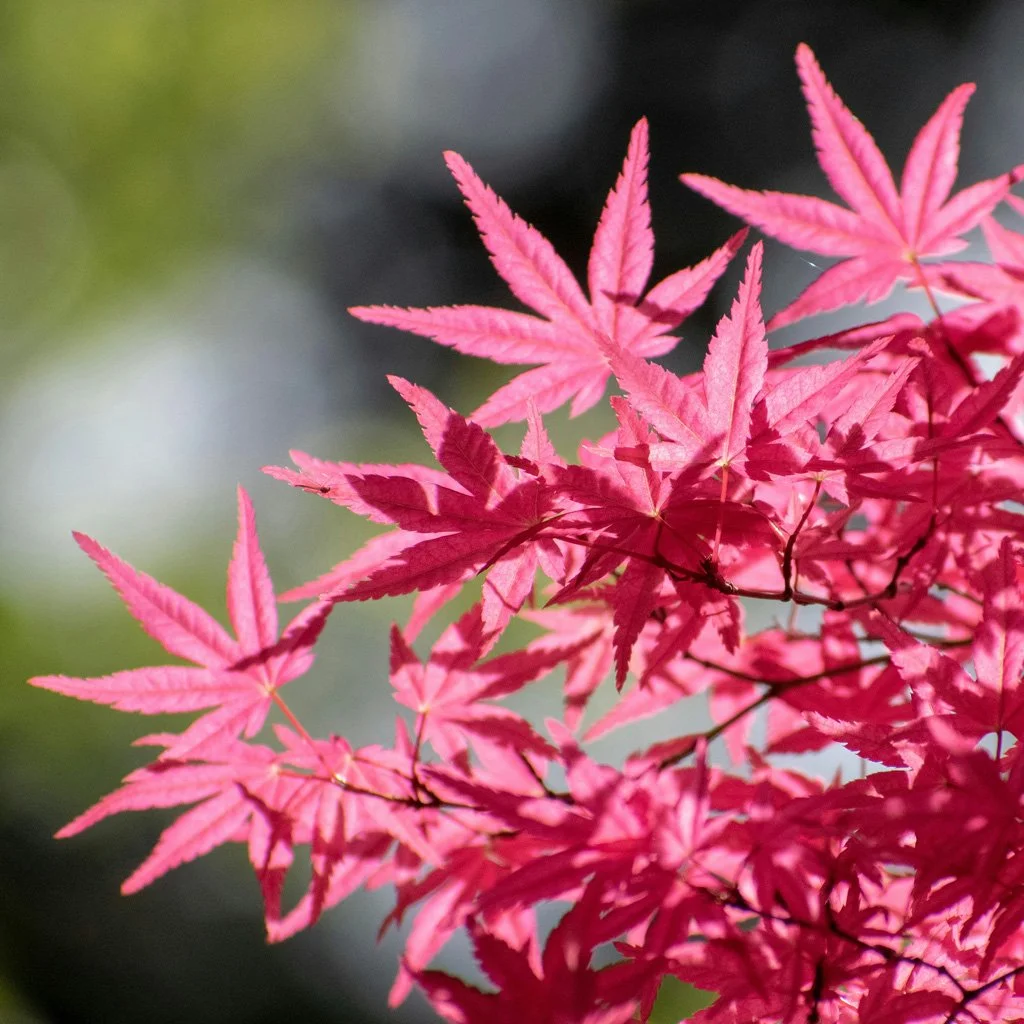
Acer palmatum, commonly known as Japanese Maple, is an exceptionally attractive deciduous ornamental tree admired for its delicate foliage, graceful branching structure and outstanding seasonal colour.
Native to Japan, Korea and parts of eastern Asia, Japanese Maple has become one of the most popular trees for ornamental garden planting in the UK.
Its naturally elegant form, finely textured foliage and relatively compact proportions make it particularly suitable for contemporary gardens, Japanese-inspired landscapes, courtyards and carefully designed ornamental planting schemes.
During spring, Japanese Maple produces fresh, delicate leaves with distinctive palmate lobes. These develop into an attractive green canopy throughout summer, creating a soft and refined appearance.
As autumn approaches, the foliage can transform into spectacular shades of yellow, orange, red and crimson, depending on the individual tree, growing conditions and seasonal weather.
After the leaves have fallen, the elegant branching structure continues to provide architectural interest throughout winter.
Acer palmatum is particularly effective when planted as a standalone specimen, where its natural shape and seasonal changes can be appreciated.
It also works beautifully alongside ornamental grasses, ferns, woodland planting and other carefully selected garden plants.
Key Features of Acer palmatum
Elegant deciduous ornamental tree
Beautiful deeply lobed foliage
Graceful branching structure
Spectacular autumn colour
Attractive fresh spring growth
Refined green summer foliage
Excellent for Japanese-inspired gardens
Suitable for contemporary and traditional gardens
Particularly attractive in courtyards and ornamental borders
Suitable for many small and medium-sized gardens
Excellent architectural specimen tree
Generally slow to moderate growth
Attractive natural rounded to spreading crown
Provides seasonal interest throughout the year
Suitable for sheltered gardens with partial shade
Can be supplied in different nursery sizes and forms, subject to availability
Acer palmatum – Tree Specification
Botanical name: Acer palmatum
Common name: Japanese Maple
Family: Sapindaceae
Tree type: Deciduous ornamental broadleaf tree
Mature height: Typically approximately 4–8m for the species, potentially larger in favourable conditions over many years.
Mature spread: Approximately 4–8m, depending on age, growing conditions and individual form.
Growth rate: Slow to moderate.
Crown shape: Rounded, broadly spreading or irregularly layered, often developing an elegant, multi-branched structure.
Foliage: Deciduous, with distinctive palmate leaves divided into pointed lobes.
Spring foliage: Fresh green, sometimes with reddish tones during emergence.
Summer foliage: Predominantly green on the typical species.
Autumn colour: Yellow, orange, red and crimson, varying with growing conditions.
Flowers: Small reddish or purplish flowers during spring, generally inconspicuous.
Fruit: Paired winged seeds known as samaras.
Bark: Smooth grey-brown bark on younger stems, becoming more textured with maturity.
Position: Partial shade or sheltered full sun.
Soil: Prefers fertile, humus-rich, moisture-retentive but well-drained soil.
Soil pH: Generally performs best in slightly acidic to neutral conditions, although it can tolerate some variation where soil structure and moisture are suitable.
Soil moisture: Prefers consistently moist but well-drained ground. Avoid prolonged waterlogging and excessively dry conditions.
Exposure: Best in sheltered positions protected from strong winds and harsh afternoon sun.
Hardiness: Generally hardy across much of the UK, although young foliage can be damaged by late spring frosts and exposed conditions.
Native status: Non-UK Native.
Wildlife value: Small spring flowers may provide resources for visiting insects, while the branching structure can offer shelter for garden wildlife.
Maintenance: Generally low maintenance once established. Minimal pruning is normally required.
Root system: Relatively shallow and spreading, benefiting from well-prepared soil and a protective mulch layer.
Suitable uses: Specimen planting, Japanese gardens, contemporary gardens, courtyards, small and medium-sized gardens, ornamental borders and sheltered landscape planting.
Why Choose Acer palmatum?
Exceptional Autumn Colour
One of the greatest attractions of Japanese Maple is its spectacular autumn foliage.
As temperatures begin to fall, the leaves can develop beautiful shades of yellow, orange, scarlet and crimson.
The intensity and combination of colours vary between individual trees and growing conditions.
When positioned against evergreen planting, natural stone, timber or contemporary garden structures, the autumn display can be particularly impressive.
For customers looking for a specimen tree with strong seasonal interest, Japanese Maple is an excellent choice.
Elegant Architectural Form
Japanese Maple is valued not only for its foliage but also for its naturally graceful branching structure.
As the tree matures, the branches often develop an attractive layered or spreading appearance.
This creates a refined architectural feature that works particularly well within contemporary gardens and Japanese-inspired landscapes.
The natural shape is often best appreciated when the tree is given sufficient space and allowed to develop without excessive pruning.
Ideal for Japanese-Inspired Gardens
Acer palmatum is strongly associated with traditional Japanese garden design.
Its delicate foliage and graceful form complement stone, gravel, water features, mosses, ferns and carefully arranged ornamental planting.
It can be used as a focal point beside a pathway, within a courtyard or overlooking a pond.
The tree is equally effective in contemporary British gardens where simplicity, structure and seasonal interest are important design considerations.
Suitable for Smaller Gardens
Compared with many large ornamental trees, Japanese Maple offers a relatively compact and manageable form.
This makes it suitable for many small and medium-sized gardens, particularly where an attractive specimen tree is required without introducing an excessively large canopy.
However, the species can eventually develop a broad crown, and sufficient space should be allowed for its mature dimensions.
For very restricted spaces, a specifically selected compact Japanese Maple cultivar may be more appropriate.
Beautiful Spring and Summer Foliage
During spring, Japanese Maple produces fresh, delicate foliage that creates an attractive contrast against surrounding evergreen planting.
The deeply lobed leaves provide a fine texture that complements ornamental grasses, ferns and woodland plants.
Throughout summer, the green canopy offers a soft and elegant appearance.
In sheltered positions, the foliage generally remains in good condition throughout the growing season.
An Excellent Tree for Courtyards
Japanese Maple is particularly effective in sheltered courtyards and enclosed gardens.
These environments can provide protection from strong winds, which may otherwise damage the delicate leaves.
Its elegant form makes it suitable for planting beside seating areas, terraces and architectural garden features.
Care should be taken where courtyards receive intense reflected heat or prolonged direct afternoon sunlight, as foliage scorching may occur.
Outstanding Seasonal Interest
Japanese Maple offers attractive changes throughout the year.
Spring: Delicate new foliage emerges, accompanied by small flowers.
Summer: The canopy develops into an elegant display of finely textured green leaves.
Autumn: The foliage produces outstanding seasonal colour in shades of yellow, orange and red.
Winter: The leaves fall, revealing the attractive branching structure and natural architectural form.
This changing appearance makes Japanese Maple a particularly rewarding specimen tree.
Planting and Establishment
Acer palmatum performs best in a sheltered position with partial shade and fertile, moisture-retentive but well-drained soil.
Protection from strong winds is particularly important, as exposed conditions can cause damage to the delicate foliage.
Although Japanese Maple can tolerate full sun in suitable locations, intense afternoon sunlight combined with dry soil can lead to leaf scorch.
The planting area should be prepared carefully, incorporating appropriate organic matter where necessary to improve soil structure.
The root flare should remain at the correct finished soil level, and the tree should not be planted excessively deeply.
Newly planted specimens require regular watering during establishment, particularly during dry periods.
A suitable organic mulch can help conserve soil moisture, regulate soil temperature and reduce competition from surrounding vegetation.
Avoid allowing mulch to accumulate directly against the trunk.
For larger nursery specimens, professional planting is recommended.
Maintaining Acer palmatum
Japanese Maple is generally a low-maintenance tree once established.
Its natural branching structure is one of its principal ornamental features, so heavy pruning should normally be avoided.
Where pruning is necessary, it should be limited to removing damaged, dead or poorly positioned branches.
Structural pruning is generally best undertaken during the dormant season, avoiding periods when sap flow is particularly active.
Regular watering may be beneficial during prolonged dry periods, especially while the tree is establishing.
Maintaining a suitable mulch layer can help protect the relatively shallow root system and retain moisture.
Japanese Maple should not normally require frequent feeding where soil conditions are suitable.
Important Planting Considerations
Japanese Maple is not generally suitable for highly exposed, windswept positions.
Strong winds can damage the delicate leaves, while prolonged dry conditions may cause leaf scorch.
The tree is also unsuitable for permanently waterlogged ground.
Although many Japanese Maples tolerate some shade, the best foliage colour and overall appearance depend on the individual tree and growing conditions.
For customers seeking purple or burgundy summer foliage, a specifically named red-leaved cultivar should be selected rather than assuming the typical green-leaved species will provide this colour.
Specimen Tree Delivery and Professional Planting
Landscaping Emporium, brought to you by Kirman Design, offers professional specimen tree supply and planting throughout selected areas of North West England.
We provide professional tree planting in the following postcode areas:
BB, BL, CH1–CH5, CW8, CW9, FY, L, LA1–LA6, M, OL, PR, SK1–SK12, WA and WN.
Please do not select professional planting at checkout if your property is outside these postcode areas without contacting us first.
If your property is outside our normal installation area, please contact us. We may still be able to arrange planting depending on your location, tree size and site access.
Before ordering, please consider delivery access, gate and passage widths, steps, slopes, overhead restrictions and the available planting space.
Japanese Maple trees may be supplied in different nursery sizes, single-stem or multi-stem forms, and root formats depending on current stock and seasonal availability.
Overall height, trunk girth, crown dimensions and natural branching structure will vary between individual specimens.
Contact Landscaping Emporium
Landscaping Emporium – brought to you by Kirman Design
Unit 9, Bridgewater Business Park
Gladstone Street
Blackburn
BB1 3DL
Telephone: 01942 604976
Email: hello@landscapingemporium.co.uk
Website: www.landscapingemporium.co.uk
Professional tree supply and planting across North West England.
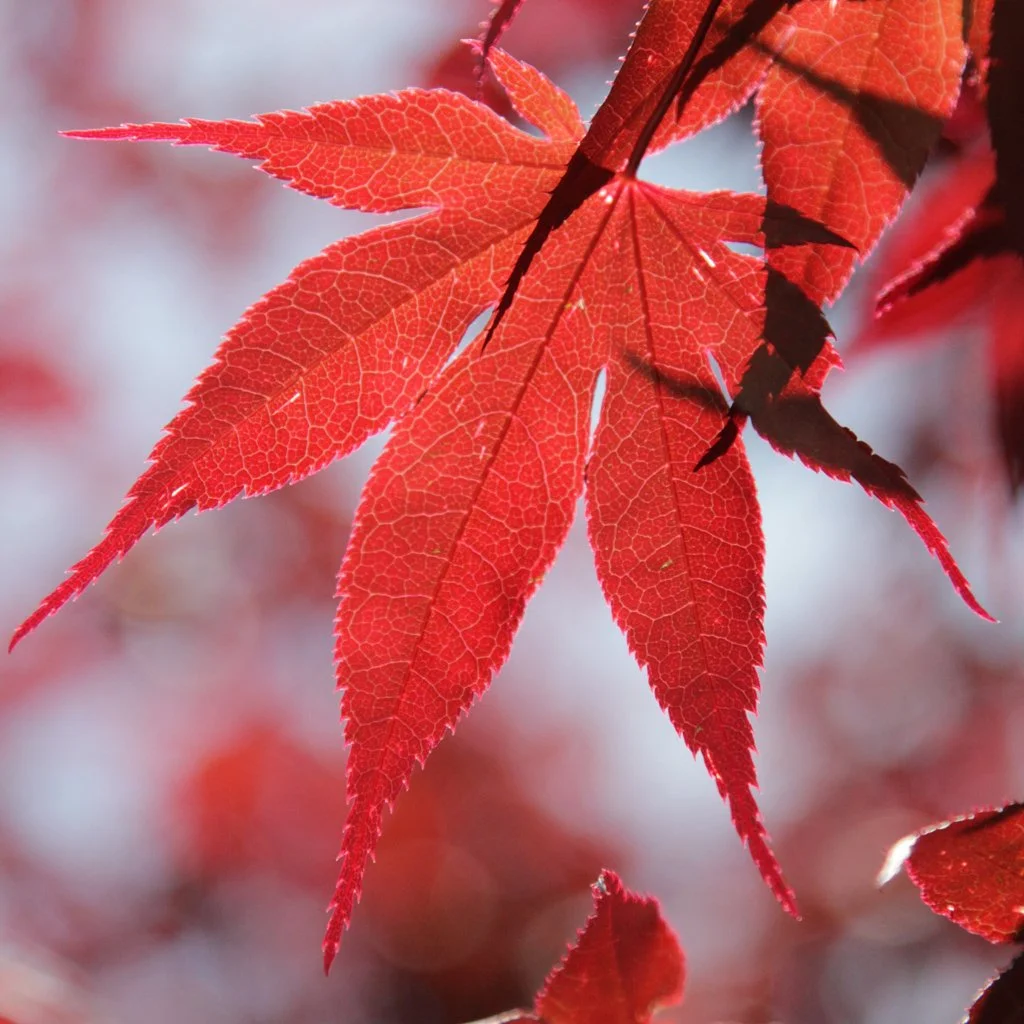
Acer palmatum ‘Bloodgood’ is a compact ornamental Japanese maple with deep burgundy foliage, elegant branching and outstanding scarlet autumn colour.
It is ideal for courtyards, patios, entrances, Japanese gardens, contemporary schemes and smaller landscapes where a large tree would be unsuitable.
Product highlights
Burgundy-purple summer foliage
Brilliant scarlet autumn colour
Compact mature size
Excellent ornamental focal point
Standard and multi-stem forms
Suitable for full sun or partial shade
Good hardiness when established
Low routine pruning requirement
Ideal for sheltered North West gardens
Product information
Feature / Details
Botanical name: Acer palmatum ‘Bloodgood’
Common name: Bloodgood Japanese maple
Plant type: Small deciduous ornamental tree
Mature height: Approximately 4–6m
Mature spread: Approximately 3–5m
Growth rate: Slow to moderate
Annual growth: Approximately 20–40cm
Position: Full sun or partial shade
Soil: Moist, fertile and well-drained
Hardiness: Good when established
Autumn colour: Exceptional
Wildlife value: Moderate
Maintenance: Low
Suitable for
Small and medium gardens
Courtyards
Patios
Japanese gardens
Contemporary planting
Sheltered urban sites
Entrance planting
Ornamental borders
Seating areas
Not recommended for
Severely exposed positions
Permanently wet soil
Compacted construction ground
Sites without irrigation during establishment
Harsh reflected heat
Schemes requiring rapid height
Planting and aftercare
Plant at the original nursery depth in moist, well-drained soil. Water carefully during establishment and mulch the root zone without covering the trunk.
Follow our tree planting and establishment guide.
See rootball versus container-grown trees.
Pruning
Use light formative pruning only. Preserve the natural rounded crown and fine branching.
See RHS Pruning Group 1.
Our recommendation
Bloodgood is recommended for customers seeking a compact ornamental tree with rich summer foliage and exceptional autumn colour.
We can install specimen trees at any of the in following postcodes;
BB, BL, CH1 - CH5, CW8, CW9, FY, L, LA1 - LA6, M, OL, PR, SK1 - SK12, WA, & WN.
Please do not purchase if you want the hedging installed outside this area. If you do live outside the area, then please give us a call on 01942 604976 and we can see if it’s possible to do this.
For more information on the tree see the tree specification below. For more information about delivery, access and planting, see the guide below or click here.
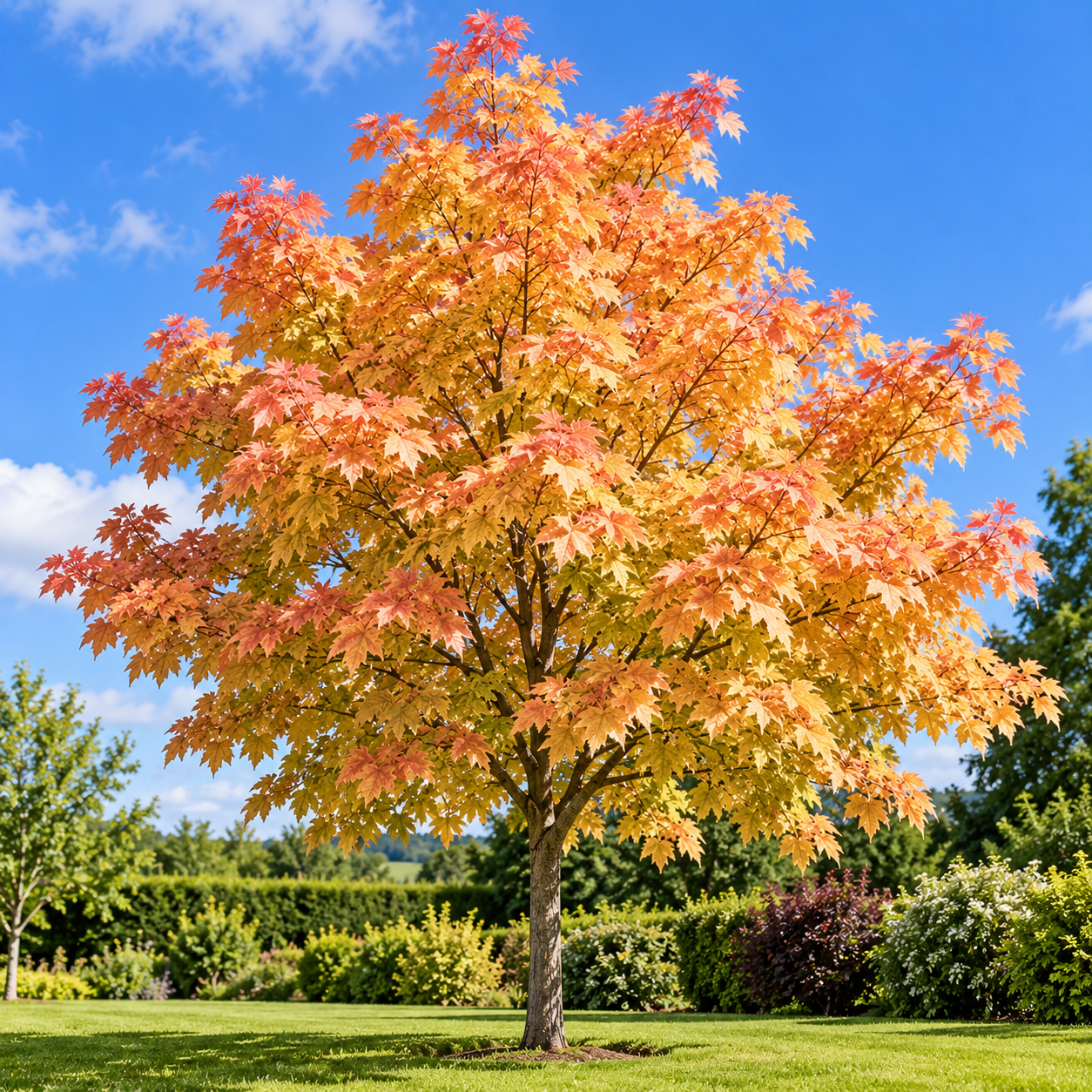
Acer pseudoplatanus, the sycamore, is a large, hardy deciduous tree with broad green foliage, yellow autumn colour and a dense rounded crown.
It is an excellent choice for estates, parkland, avenues, large gardens and exposed North West landscapes, particularly where heavy clay, urban conditions or wind make tree selection difficult.
Product highlights
Robust large specimen tree
Excellent wind and cold tolerance
Strong clay and urban-soil tolerance
Dense summer foliage
Yellow autumn colour
Spring flowers and winged samaras
Moderate-to-fast establishment
Suitable for full sun or partial shade
Available in multiple forms
Good wildlife value
Plant information
Feature / Details
Botanical name: Acer pseudoplatanus
Common name: Sycamore
Plant type: Large deciduous tree
Mature height: Approximately 20–30m
Mature spread: Approximately 12–20m
Growth rate: Moderate to fast
Annual growth: Approximately 40–80cm when established
Position: Full sun or partial shade
Soil: Clay, loam, chalk and suitable urban soils
Moisture: Moist but not permanently flooded
Hardiness: Fully hardy
Wildlife value: Good
Maintenance: Low
Suitable for
Large gardens
Estates
Parkland
Avenues and drives
Commercial landscapes
Large lawns
Clay soils
Urban sites
Exposed inland locations
Shelter planting
Not recommended for
Small gardens
Narrow boundaries
Permanently flooded ground
Positions beneath overhead services
Evergreen privacy schemes
Sites without adequate rooting volume
Choosing the right size
Younger trees establish efficiently and are easier to handle. Larger specimens provide immediate scale but require more involved delivery, lifting, anchoring and aftercare.
Read our guides to specimen tree sizes and mature trees versus younger trees.
Rootballed or container-grown?
Rootballed trees are commonly supplied during the dormant season. Container-grown trees offer a wider planting window where regular irrigation is available.
See rootball versus container-grown trees.
Planting and aftercare
Plant at the original nursery depth and provide a broad area of uncompacted soil. Large trees need secure staking or underground anchoring.
Water deeply after planting and maintain reliable irrigation during establishment. Apply mulch over the root zone while keeping it clear of the trunk.
Follow our tree planting and establishment guide.
Pruning
Free-growing sycamore needs limited pruning once a strong framework has formed. Remove dead, damaged, crossing or unsafe branches and avoid unnecessary hard reduction.
Use a qualified arborist for large established trees. See RHS Pruning Group 1.
Our recommendation
Acer pseudoplatanus is recommended for substantial landscapes requiring a highly resilient deciduous tree that can cope with clay, wind, cold and urban conditions.
We can install specimen trees at any of the in following postcodes;
BB, BL, CH1 - CH5, CW8, CW9, FY, L, LA1 - LA6, M, OL, PR, SK1 - SK12, WA, & WN.
Please do not purchase if you want the hedging installed outside this area. If you do live outside the area, then please give us a call on 01942 604976 and we can see if it’s possible to do this.
For more information on the tree see the tree specification below. For more information about delivery, access and planting, see the guide below or click here.
Alnus incana, commonly known as Grey Alder, is a hardy, fast-growing deciduous tree with an upright, conical form. Its dark green leaves have a distinctive grey-white, downy underside, while yellow-brown male catkins appear in late winter or early spring.
Grey Alder is adaptable to a wide range of soil conditions, including moist, poorly drained and challenging ground. It can also tolerate drier soils once established. Its resilience makes it useful for larger gardens and landscape schemes where a tough, relatively fast-growing tree is needed.
Grey Alder can reach around 20 metres tall and spread more than 8 metres, so allow plenty of room for it to mature.
Key Features of Alnus incana
Hardy, fast-growing deciduous tree
Upright, conical form
Dark green leaves with grey-white, downy undersides
Yellow-brown male catkins appear before or around the time the leaves emerge
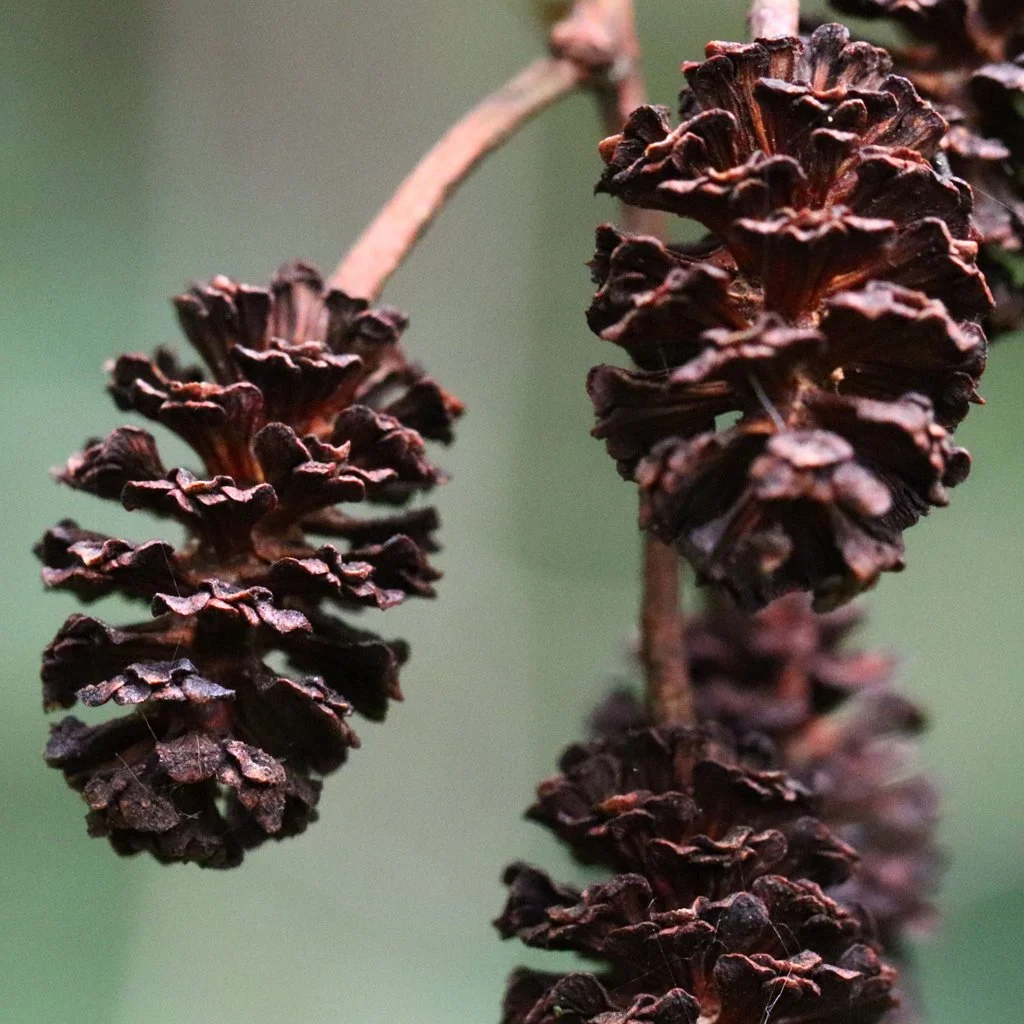
Small cone-like fruits develop after flowering
Tolerates moist and poorly drained soils
Adaptable to a range of soil types
Can tolerate exposed positions
RHS hardiness rating H7
Useful for larger gardens and challenging planting sites
Alder roots form nitrogen-fixing nodules
Alnus incana – Tree Specification
Botanical name: Alnus incana
Common name: Grey Alder / Speckled Alder / Hoary-leaved Alder
Family: Betulaceae
Tree type: Deciduous broadleaf tree
Mature height: Approximately 20m in suitable conditions.
Mature spread: More than 8m; allow approximately 8–10m or more for the mature crown.
Time to maturity: Approximately 20–50 years.
Growth rate: Fast under favourable conditions.
Crown shape: Upright and conical, becoming broader with age.
Foliage: Dark green, oval leaves with a grey-white, hairy underside.
Flowers: Yellow-brown male catkins hang in clusters and appear in late winter or early spring. Smaller female flowers are also produced.
Fruit: Small, cone-like woody structures develop after flowering and may persist into winter.
Position: Full sun.
Soil: Adaptable to chalk, clay, loam and sandy soils.
Soil moisture: Moist but well-drained, poorly drained or well-drained soils.
Exposure: Suitable for exposed or sheltered positions.
Hardiness: RHS hardiness rating H7.
Native status: Not native to the UK; native across parts of Europe and the Caucasus.
Wildlife value: Catkins and seeds provide seasonal resources, while the tree’s structure offers cover in larger planting schemes.
Maintenance: Generally low maintenance once established. Pruning can be carried out between leaf fall and midwinter if required.
Root characteristics: Alder roots form nodules associated with nitrogen-fixing bacteria. Allow adequate space around the tree and nearby services.
Suitable uses: Challenging soils, moist ground, exposed sites, larger gardens, parkland, landscape schemes and screening.
Why Choose Alnus incana?
A Hardy Tree for Challenging Sites
Grey Alder is a tough, adaptable tree that can grow in a range of soil conditions. It is particularly useful for sites where the soil is moist or poorly drained, and it can also tolerate drier ground once established.
It is a practical option for larger landscapes and gardens where a resilient tree is needed. As with any tree, the specific site should be assessed before planting.
Distinctive Foliage
The dark green leaves have a grey-white, downy underside, giving the tree a softer appearance than many other alders. The leaves are oval and pointed, with toothed edges.
This foliage, together with the tree’s upright shape, helps distinguish Grey Alder from Common Alder (Alnus glutinosa).
Catkins and Cone-like Fruits
Yellow-brown male catkins appear in late winter or early spring, often before the leaves have fully emerged. Female flowers develop into small woody structures resembling miniature cones.
These persistent structures can add interest to the tree during autumn and winter.
Fast Growth and Upright Form
Grey Alder is a fast-growing tree under favourable conditions. Its conical form makes it useful where height and structure are wanted, although the tree still needs space for its mature crown.
It may be used within larger planting schemes or as a specimen where the upright form suits the design.
Adaptable to Moist and Poor Soils
Grey Alder is noted for its ability to grow in poor and wet conditions. It can also tolerate a range of soil types, including clay and chalk, and may cope with drier soil once established.
Its adaptability does not mean it will thrive in every site. Waterlogged ground, compaction and periods of drought should all be considered when choosing a planting position.
Nitrogen-fixing Roots
Like other alders, Grey Alder forms a relationship with nitrogen-fixing bacteria in nodules on its roots. This characteristic can help it establish on some poor soils and makes it useful in certain restoration and landscape schemes.
It does not replace the need to assess soil quality or prepare the planting area properly.
Planting and Establishment
Alnus incana grows best in full sun and can tolerate a range of soil conditions, including moist and poorly drained ground.
Choose a position with enough space for the tree’s eventual height and spread. Consider nearby buildings, boundaries, paths, overhead restrictions and underground services before planting.
Prepare the planting area and set the tree so the root flare sits at the correct finished soil level. Water thoroughly after planting and continue to water during prolonged dry spells while the tree establishes.
A mulch layer can help retain soil moisture and reduce competition from weeds and grass. Keep mulch clear of the trunk.
For larger nursery specimens, professional planting is recommended. Staking or another suitable support may be needed depending on the tree’s size and the planting conditions.
Maintaining Alnus incana
Grey Alder is generally low maintenance once established.
If pruning is required, it can be carried out between leaf fall and midwinter. Remove dead or damaged branches and retain the tree’s natural form. Avoid unnecessary heavy pruning, particularly once the tree is established.
Water during prolonged dry spells while the tree is establishing, even though it can tolerate a range of soil conditions.
Important Planting Considerations
Alnus incana can become a large tree, reaching around 20 metres in suitable conditions. It is not generally suitable for small gardens or restricted planting positions.
Allow room for the mature crown and roots, particularly near buildings, paths, drains, underground services and hard landscaping.
Although Grey Alder tolerates moist and poorly drained soil, assess the site if it is permanently waterlogged or subject to extreme changes in water level. Newly planted trees also need watering during prolonged dry spells.
Grey Alder is not a UK native species. If native planting is a priority, consider Common Alder (Alnus glutinosa) or Downy Birch (Betula pubescens) where the site conditions are suitable.
Specimen Tree Delivery and Professional Planting
Landscaping Emporium, brought to you by Kirman Design, offers professional specimen tree supply and planting throughout selected areas of North West England.
We provide professional tree planting in the following postcode areas:
BB, BL, CH1–CH5, CW8, CW9, FY, L, LA1–LA6, M, OL, PR, SK1–SK12, WA and WN.
Please do not select professional planting at checkout if your property is outside these postcode areas without contacting us first.
If your property is outside our normal installation area, please contact us. We may still be able to arrange planting depending on your location, tree size and site access.
Before ordering, please consider delivery access, gate and passage widths, steps, slopes, overhead restrictions and the available planting space.
Alnus incana trees may be supplied in different nursery sizes and root formats depending on current stock and seasonal availability.
Overall height, trunk girth, crown dimensions and natural branching structure will vary between individual specimens.
Contact Landscaping Emporium
Landscaping Emporium – brought to you by Kirman Design
Unit 9, Bridgewater Business Park
Gladstone Street
Blackburn
BB1 3DL
Telephone: 01942 604976
Email: hello@landscapingemporium.co.uk
Website: www.landscapingemporium.co.uk
Professional tree supply and planting across North West England.
Alnus glutinosa, commonly known as Common Alder or Black Alder, is a fast-growing native British deciduous tree particularly well suited to moist ground, riverbanks, lakesides, wetlands and naturalistic landscape planting.
Its adaptability to wet soils, attractive rounded crown and considerable wildlife value make it an excellent choice for larger gardens, estates, parkland and ecological planting schemes.
Common Alder is one of Britain's most characteristic waterside trees. It is frequently found growing alongside rivers, streams, lakes and other areas where the soil remains consistently moist.
Unlike many ornamental trees that require freely draining ground, Alnus glutinosa can tolerate periodically waterlogged conditions and is particularly useful where drainage is naturally poor.
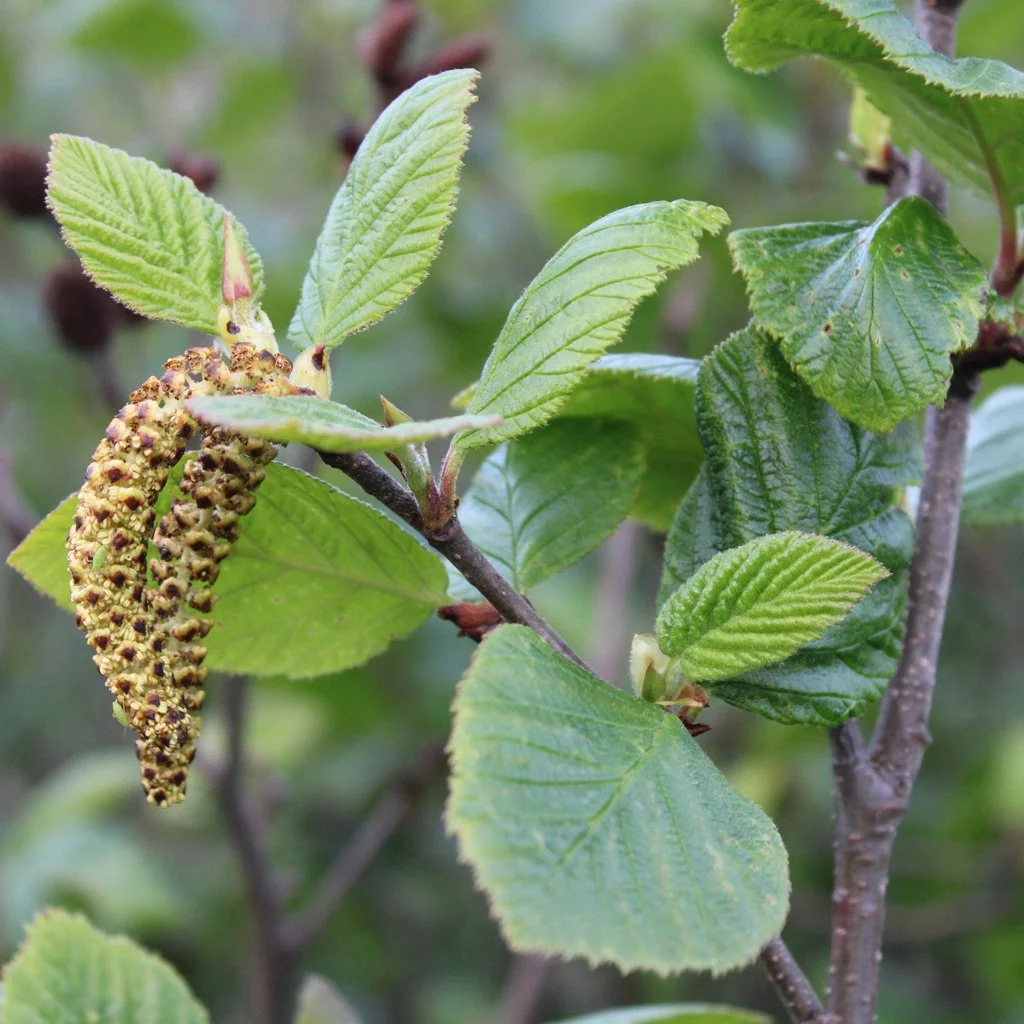
During spring, the tree produces distinctive hanging male catkins, which develop before the leaves fully emerge.
Fresh green foliage follows, creating an attractive summer canopy.
In autumn, the leaves generally turn muted yellow-green or brown before falling, rather than producing the dramatic autumn colours associated with some ornamental species.
The small woody structures that develop from the female catkins resemble miniature cones and may remain attached to the branches throughout winter.
These provide distinctive seasonal interest and are one of the most recognisable characteristics of Alder trees.
Common Alder is particularly effective when planted as a standalone specimen, within woodland planting schemes or alongside ponds, streams and suitable water features.
It is also valuable for wildlife habitat creation, ecological landscaping and the establishment of native tree planting schemes.
Key Features of Alnus glutinosa
Native British deciduous tree
Excellent tolerance of wet and moisture-retentive soils
Particularly suitable for riverbanks and lakesides
Fast-growing under favourable conditions
Attractive broadly conical to rounded crown
Fresh green spring and summer foliage
Distinctive hanging spring catkins
Small woody cone-like structures during autumn and winter
Valuable for wildlife and habitat creation
Suitable for larger gardens, estates and parkland
Excellent for naturalistic and woodland planting
Adaptable to clay and other moisture-retentive soils
Can contribute to soil improvement through nitrogen fixation
Hardy and reliable in the British climate
Particularly useful for ecological and wetland planting schemes
Alnus glutinosa – Tree Specification
Botanical name: Alnus glutinosa
Common name: Common Alder / Black Alder / European Alder
Family: Betulaceae
Tree type: Deciduous broadleaf tree
Mature height: Approximately 15–25m, occasionally taller in favourable conditions.
Mature spread: Approximately 6–12m or more, depending on age and growing conditions.
Growth rate: Fast under favourable conditions.
Crown shape: Broadly conical or pyramidal when young, gradually developing a more rounded or irregular crown with maturity.
Foliage: Deciduous, with rounded to broadly oval green leaves, often featuring a distinctive notched tip.
Spring foliage: Fresh green.
Summer foliage: Medium to dark green.
Autumn colour: Usually muted yellow-green or brown, rather than strong ornamental autumn colour.
Flowers: Male and female catkins produced on the same tree. The hanging male catkins are particularly noticeable during late winter and early spring.
Fruit: Small winged nutlets develop within woody female catkin structures resembling miniature cones.
Winter interest: Persistent woody cone-like structures and the natural branching structure.
Bark: Smooth grey-brown when young, becoming darker and more fissured with maturity.
Position: Full sun or partial shade.
Soil: Adaptable to a range of soils, including clay, loam and sandy soils, particularly where moisture is readily available.
Soil moisture: Prefers moist to wet ground and tolerates periodically waterlogged conditions.
Exposure: Suitable for moderately exposed and exposed positions once established, subject to appropriate planting and support.
Hardiness: Fully hardy throughout the UK.
Native status: UK Native.
Wildlife value: Provides food, shelter and habitat for birds, insects and other wildlife. Alder seeds are particularly valuable to certain seed-eating birds.
Maintenance: Generally low maintenance once established. Formative pruning may be undertaken when young.
Root system: Develops an extensive root system suited to moist soils. Allow sufficient space from buildings, drainage systems, underground services and hard landscaping.
Suitable uses: Wet ground, lakesides, riverbanks, woodland planting, ecological landscaping, habitat creation, naturalistic gardens, larger gardens, estates and parkland.
Why Choose Alnus glutinosa?
One of the Best Native Trees for Wet Ground
One of the principal advantages of Common Alder is its exceptional tolerance of moist and wet soil conditions.
In its natural habitat, Alder frequently grows alongside rivers, streams, lakes and wetlands.
Its root system is adapted to conditions that would be unsuitable for many other tree species.
This makes it particularly valuable for gardens where the ground remains consistently moist or where seasonal waterlogging occurs.
Common Alder can be an excellent choice for suitable areas of poorly drained land, although the precise soil conditions and duration of waterlogging should always be assessed before planting.
It should not be assumed that every permanently flooded site will support successful tree establishment.
Ideal for Lakesides and Riverbanks
Common Alder is particularly effective when planted alongside ponds, lakes, rivers and streams.
Its natural appearance complements water features and informal landscape planting.
As the tree develops, its canopy can provide attractive reflections on the water and create a more established, naturalistic appearance.
Alder is also frequently used in appropriate riparian restoration and ecological planting schemes.
Where planting takes place close to a watercourse, consideration should be given to bank stability, flood conditions, access requirements and any applicable environmental restrictions.
Valuable for Wildlife
Common Alder is an important native tree for wildlife.
Its catkins and foliage support a range of insects, while the branching structure provides shelter and potential nesting opportunities for birds.
The small seeds are particularly attractive to seed-eating birds, including Siskins and Redpolls.
Alder also supports a range of associated insects and other organisms, contributing to the ecological value of native woodland and waterside habitats.
For customers wishing to establish wildlife-friendly planting schemes, Common Alder is an excellent choice.
Attractive Spring Catkins
During late winter and early spring, Common Alder produces distinctive hanging male catkins.
These often become noticeable before the leaves emerge, adding seasonal interest at a time when many deciduous trees remain relatively bare.
The female catkins are smaller and develop into the woody cone-like structures associated with mature Alder trees.
These characteristics make Common Alder particularly recognisable throughout the year.
Distinctive Woody Cones
One of the most interesting features of Common Alder is its small woody cone-like structures.
These develop from the female catkins and contain the tree's small winged seeds.
As they mature, the structures become dark brown or almost black.
They may remain attached to the branches during autumn and winter, providing attractive texture and additional seasonal interest.
Although they resemble miniature cones, Alder is a broadleaf flowering tree rather than a conifer.
Fast Growth and Landscape Establishment
Common Alder is a relatively fast-growing native tree when planted in suitable conditions.
This makes it useful for establishing woodland planting, naturalistic landscapes and ecological planting schemes.
Its relatively rapid growth can help create structure and habitat within larger planting projects.
However, sufficient space must be allowed for the mature tree.
Common Alder can eventually become substantial and is generally unsuitable for confined gardens or planting positions close to buildings.
Nitrogen Fixation and Soil Improvement
Common Alder has a particularly interesting relationship with nitrogen-fixing microorganisms associated with its roots.
These microorganisms enable the tree to obtain nitrogen through a biological process that can contribute to soil fertility.
This characteristic makes Alder useful within certain woodland establishment and ecological restoration schemes.
However, it does not eliminate the need for appropriate soil preparation or suitable growing conditions.
A Naturalistic Specimen Tree
Although commonly associated with woodland and waterside planting, Common Alder can also make an attractive specimen tree in a larger garden.
Its rounded crown, fresh green foliage and distinctive seasonal features create an informal, natural appearance.
It works particularly well within gardens designed to complement the surrounding landscape.
Common Alder is especially suitable for larger rural properties, estates and gardens with ponds or natural water features.
Planting and Establishment
Alnus glutinosa performs best in a sunny or partially shaded position with moist to wet soil.
It is particularly adaptable to clay and loam soils, although it can also grow in sandy soils where adequate moisture is available.
The planting area should be prepared appropriately, ensuring that the root flare remains at the correct finished soil level.
Newly planted trees require regular watering during establishment, even when the species is naturally associated with wet ground.
Suitable staking or underground anchoring may be necessary depending on the size of the specimen and site conditions.
A suitable mulch layer can help conserve moisture and reduce competition from surrounding vegetation.
Allow sufficient space for the mature canopy and root system, particularly when planting near buildings, underground services, drainage infrastructure and hard landscaping.
For larger nursery specimens, professional planting is recommended.
Maintaining Alnus glutinosa
Common Alder is generally a low-maintenance tree once established.
Young specimens may benefit from limited formative pruning to develop a balanced structure.
Established trees should normally be allowed to retain their natural crown shape.
Where pruning is required, it should be undertaken at an appropriate time and with consideration for wildlife and nesting birds.
Avoid unnecessary heavy pruning, which can spoil the natural form of the tree.
Regular watering during prolonged dry periods can be beneficial, particularly while the tree is establishing.
Important Planting Considerations
Common Alder is best suited to larger gardens and landscapes where sufficient space is available for its mature size.
Its roots naturally exploit moist ground, and care should be taken when planting near drains, underground services, foundations and other infrastructure.
Although Alder tolerates wet soil, prolonged flooding and extremely compacted ground should still be assessed before planting.
Common Alder is not generally the best choice for very dry, freely draining sites.
Customers seeking a smaller ornamental tree for a confined garden should consider a species with more compact mature dimensions.
Specimen Tree Delivery and Professional Planting
Landscaping Emporium, brought to you by Kirman Design, offers professional specimen tree supply and planting throughout selected areas of North West England.
We provide professional tree planting in the following postcode areas:
BB, BL, CH1–CH5, CW8, CW9, FY, L, LA1–LA6, M, OL, PR, SK1–SK12, WA and WN.
Please do not select professional planting at checkout if your property is outside these postcode areas without contacting us first.
If your property is outside our normal installation area, please contact us. We may still be able to arrange planting depending on your location, tree size and site access.
Before ordering, please consider delivery access, gate and passage widths, steps, slopes, overhead restrictions and the available planting space.
Common Alder trees may be supplied in different nursery sizes and root formats depending on current stock and seasonal availability.
Overall height, trunk girth, crown dimensions and natural branching structure will vary between individual specimens.
Contact Landscaping Emporium
Landscaping Emporium – brought to you by Kirman Design
Unit 9, Bridgewater Business Park
Gladstone Street
Blackburn
BB1 3DL
Telephone: 01942 604976
Email: hello@landscapingemporium.co.uk
Website: www.landscapingemporium.co.uk
Professional tree supply and planting across North West England.
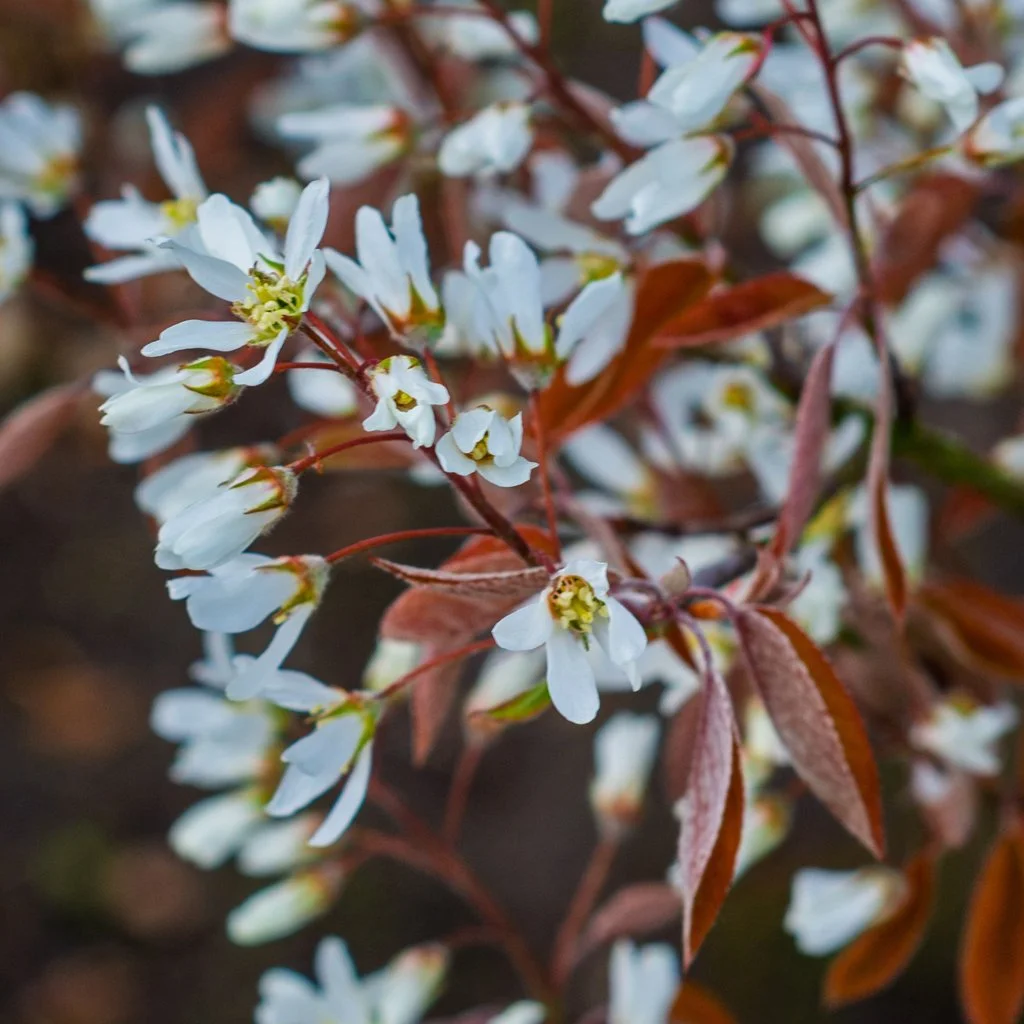
An elegant single-stem specimen tree with delicate spring blossom, beautiful seasonal foliage and a naturally graceful canopy.
Amelanchier lamarckii, commonly known as Juneberry or Snowy Mespilus, is a highly ornamental deciduous tree valued for its beautiful spring flowers, attractive foliage and outstanding autumn colour.
Grown in single-stem form, this specimen has one principal trunk supporting a branching crown. Depending on the nursery specification, it may be supplied as a standard tree with a clear stem beneath the canopy, making it particularly attractive for formal and contemporary garden designs.
In spring, clusters of delicate white, star-shaped flowers appear alongside emerging copper-bronze foliage. The leaves gradually develop a fresh green colour during summer, when small berries ripen from red to purple-black.
In autumn, the foliage transforms into vibrant shades of orange, copper and red, providing a spectacular seasonal display.
The single-stem form is particularly useful where a defined trunk, elevated canopy and attractive ornamental structure are required.
Why Choose a Single-Stem Amelanchier?
Single-stem Amelanchier offers the seasonal beauty of the species in a more defined tree form.
Elegant single trunk: A clear, upright main stem supports an attractive branching canopy.
Beautiful spring blossom: Delicate white flowers create a striking seasonal display.
Bronze spring foliage: Emerging leaves provide attractive coppery tones.
Outstanding autumn colour: Foliage develops orange, red and copper shades.
Ornamental summer berries: Small purple-black fruits provide seasonal interest and food for birds.
Wildlife-friendly: Flowers attract pollinating insects, while berries may benefit garden birds.
Defined canopy: Standard forms allow views and planting beneath the crown.
Fully hardy: Suitable for a wide range of UK gardens when planted in appropriate conditions.
Single-Stem Amelanchier for Garden Design
Amelanchier lamarckii is a versatile ornamental tree that can be used in both traditional and contemporary gardens.
Its single-stem structure creates a more conventional tree silhouette than the naturally branching multi-stem form.
The crown provides seasonal interest while allowing the trunk to remain visible, particularly when supplied as a clear-stem standard.
Contemporary Gardens
Single-stem Amelanchier works beautifully alongside porcelain paving, natural stone, ornamental grasses and evergreen planting.
Its elegant branching structure softens modern hard landscaping without creating an excessively dense canopy.
Lawns and Garden Borders
A single-stem specimen can provide a focal point within a lawn or mixed planting border.
The raised crown of a standard tree allows low-growing plants to be positioned beneath it, subject to available light and soil moisture.
Small and Medium Gardens
Amelanchier lamarckii is frequently selected for smaller and medium-sized gardens because of its attractive form and relatively light canopy.
However, it is not a dwarf tree. Its mature crown can become broad, so sufficient space must be allowed for future growth.
Patios and Seating Areas
A suitably positioned single-stem specimen can introduce height and seasonal interest beside an outdoor seating area.
Allow adequate distance for the mature canopy, rooting space and any seasonal fruit or leaf fall.
Formal and Naturalistic Gardens
The single-stem form is well suited to structured garden layouts, while its natural branching and seasonal foliage also complement softer, naturalistic planting schemes.
Exceptional Seasonal Interest
Spring – White Blossom and Bronze Foliage
Amelanchier lamarckii produces clusters of delicate white flowers in spring, usually during April and May.
The flowers appear alongside emerging bronze-tinted leaves, creating a beautiful contrast.
Summer – Green Foliage and Ornamental Berries
The foliage matures to fresh green during summer.
Small berries develop from red to purple-black as they ripen. These may attract birds and provide additional ornamental interest.
Autumn – Spectacular Colour
One of the species' greatest qualities is its autumn foliage.
The leaves develop striking shades of orange, red and copper before falling, creating a beautiful seasonal display.
Winter – Graceful Branching Structure
Once the leaves have fallen, the tree's single trunk and branching crown remain visible, providing structure and interest throughout winter.
Single-Stem Amelanchier for Small Gardens
Amelanchier lamarckii is an attractive choice for gardens where a flowering ornamental tree is required without an excessively heavy canopy.
The single-stem form is particularly useful where the garden design benefits from a defined trunk and a raised crown.
However, the mature size of the tree must be considered carefully.
An established specimen can develop a broad canopy, and regular severe pruning should not be relied upon to keep an unsuitable tree permanently small.
For additional ideas, explore our Trees for Small Gardens guide.
Growing Conditions
Amelanchier lamarckii performs best in fertile, moisture-retentive but well-drained soil.
Position: Full sun or partial shade.
Soil: Loam, sandy soils and suitable clay soils with adequate drainage.
Soil pH: Acidic to neutral soil preferred. Avoid highly alkaline or shallow chalky conditions.
Moisture: Moist but well-drained.
Exposure: Sheltered or moderately exposed positions.
Growth rate: Moderate, depending on growing conditions.
Hardiness: Fully hardy in the UK.
Pruning: Generally minimal. Remove dead, damaged or crossing branches where necessary.
The most vibrant autumn colour is usually achieved in a sunny position.
Planting Your Single-Stem Amelanchier
Correct planting is essential for healthy establishment and long-term growth.
Select a position with sufficient room for the mature crown and root system.
Check the soil for adequate drainage and remove competing weeds.
Prepare a planting hole wider than the rootball, but no deeper than necessary.
Position the tree so the root flare remains at the appropriate finished soil level.
Backfill using suitable excavated soil, avoiding excessive compaction.
Water thoroughly after planting.
Apply organic mulch around the rooting area, keeping it clear of the trunk.
Install appropriate staking or support where required by the specimen size and site conditions.
Larger standard trees may require specialist delivery, lifting equipment and professional planting.
Watering and Aftercare
Newly planted Amelanchier trees require regular monitoring during their establishment period.
Water thoroughly when necessary, particularly during dry weather.
Maintain a suitable mulch layer to help conserve moisture and reduce weed competition.
Avoid waterlogging and do not allow the rootball to dry out.
Once established, Amelanchier generally requires little pruning. Retain the tree's natural branching habit wherever possible.
For standard trees, avoid removing excessive lower branches in one operation, as this can affect crown balance and tree development.
Wildlife Benefits
Amelanchier lamarckii provides useful seasonal resources for garden wildlife.
Its spring flowers attract visiting pollinators, while summer berries may be eaten by birds.
The branching canopy also provides perching and shelter opportunities.
Explore our Trees for Wildlife guide for other beneficial specimen trees.
Single-Stem or Multi-Stem Amelanchier?
Both forms offer the same beautiful blossom, foliage and autumn colour, but their appearance and garden applications differ.
Single-Stem Amelanchier
One main trunk supporting the crown.
More conventional tree silhouette.
Suitable for lawns, borders and structured garden layouts.
Standard specimens may provide clearance beneath the canopy.
Ideal where a defined trunk is an important design feature.
Multi-Stem Amelanchier
Several principal stems rising from near ground level.
More sculptural, naturalistic appearance.
Particularly effective as an architectural focal point.
Attractive in contemporary and informal planting schemes.
Branching structure is visible from several directions.
Both forms require sufficient space for their eventual crown spread.
Looking for a more architectural tree? Explore our Amelanchier lamarckii Multi-Stem product in the Specimen Tree Collection.
Single-Stem Amelanchier Supplied by Landscaping Emporium
Landscaping Emporium supplies selected specimen trees for residential gardens, contemporary landscapes and professional garden design projects.
Single-stem Amelanchier may be available in different heights, stem girths and rootball or container sizes, subject to nursery availability.
Please check the individual product options carefully, as stem clearance, crown shape and overall dimensions may vary between specimens.
Professional planting and landscaping services may also be available through Kirman Design across suitable areas of Lancashire, the Ribble Valley, Greater Manchester, Cheshire, Merseyside and Cumbria.
Browse our Specimen Tree Collection or use our Tree Finder to explore suitable trees for your garden.
An elegant multi-stem specimen tree offering exceptional seasonal colour, delicate spring blossom and beautiful natural branching.
Amelanchier lamarckii, commonly known as Juneberry or Snowy Mespilus, is a highly ornamental deciduous tree prized for its graceful form and outstanding seasonal interest.
Grown in multi-stem form, this attractive specimen develops several main stems from near ground level, creating an open, sculptural branching structure. Its naturally layered appearance makes it particularly effective as a focal point in contemporary gardens, courtyard settings, naturalistic planting schemes and mixed borders.
In early spring, masses of delicate, star-shaped white flowers appear alongside emerging bronze-tinted leaves. As the season progresses, the foliage becomes fresh green, followed by small purple-black berries in summer. In autumn, the leaves develop striking shades of orange, red and copper.
At Landscaping Emporium, our multi-stem Amelanchier trees are selected for their ornamental character and suitability for high-quality garden and landscape planting.
Why Choose a Multi-Stem Amelanchier?
The multi-stem form offers several advantages over a conventional single-stem specimen tree.
Architectural branching: Several main stems create an attractive, sculptural framework.
Beautiful spring blossom: Delicate white flowers provide a striking seasonal display.
Bronze spring foliage: Emerging leaves introduce warm coppery tones.
Excellent autumn colour: Foliage turns orange, red and copper before falling.
Wildlife-friendly: Flowers attract pollinating insects, while summer berries provide food for birds.
Naturalistic character: Particularly effective in contemporary and informal garden designs.
Seasonal transparency: The open branching structure allows filtered views and light through the canopy.
Fully hardy: Suitable for a wide range of UK gardens when planted in appropriate conditions.
Multi-Stem Amelanchier for Garden Design
Amelanchier lamarckii is particularly attractive when planted as a standalone specimen, allowing its multiple stems and branching structure to be appreciated from different viewpoints.
Unlike a conventional standard tree, which has a single clear trunk beneath the crown, a multi-stem specimen develops several stems that rise and branch naturally from the base.
This creates a softer, more informal appearance while retaining a strong architectural presence.
Contemporary Gardens
Multi-stem Amelanchier works beautifully alongside porcelain paving, natural stone, ornamental grasses and structured evergreen planting. Its light canopy contrasts with hard landscaping without appearing excessively heavy.
Courtyard Gardens
The elegant branching form can introduce height and seasonal interest to courtyards. However, sufficient soil volume and space must be provided for the tree's mature spread.
Naturalistic Gardens
The species combines particularly well with ferns, shade-tolerant perennials, grasses and woodland-style planting.
Garden Focal Points
A carefully positioned multi-stem specimen can become a central feature within a lawn, planting bed or landscaped seating area.
Exceptional Interest Throughout the Seasons
Spring – White Blossom and Bronze Foliage
Amelanchier lamarckii produces clusters of delicate white, star-shaped flowers in spring, creating a beautiful display against the emerging copper-bronze foliage.
Summer – Green Foliage and Berries
The leaves mature to a fresh green, creating a light, attractive canopy. Small berries develop from red to purple-black and may attract garden birds.
Autumn – Outstanding Leaf Colour
One of the species' greatest ornamental qualities is its autumn foliage, which develops warm shades of orange, scarlet and copper-red.
Winter – Sculptural Multi-Stem Structure
Once the leaves have fallen, the naturally branching framework remains visible, providing architectural interest through winter.
Multi-Stem Amelanchier for Small Gardens
Amelanchier lamarckii is frequently selected for smaller and medium-sized gardens because of its attractive ornamental qualities and relatively light canopy.
However, multi-stem does not mean dwarf. An established specimen can develop a substantial spreading crown, so its mature dimensions must be considered carefully.
Where space is limited, choose the planting position to accommodate the eventual spread rather than relying on frequent heavy pruning.
For more ideas, visit our Trees for Small Gardens guide.
Growing Conditions
Amelanchier lamarckii performs best in fertile, moisture-retentive but well-drained soil.
Position: Full sun or partial shade.
Soil: Loam, sandy soils and suitable clay soils with adequate drainage.
Soil pH: Prefers acidic to neutral soil. Avoid highly alkaline or shallow chalky conditions.
Moisture: Moist but well-drained.
Exposure: Sheltered or moderately exposed positions.
Growth rate: Moderate, depending on conditions.
Hardiness: Fully hardy in the UK.
Pruning: Generally minimal. Remove dead, damaged or crossing branches and preserve the natural multi-stem form.
The most vibrant autumn colour is usually achieved in a sunny position.
Planting Your Multi-Stem Amelanchier
Careful planting is essential to ensure healthy establishment and maintain the tree's attractive natural form.
Select a location with sufficient room for the mature canopy and multiple stems.
Check the soil for adequate drainage and remove competing weeds.
Prepare a planting hole wider than the root system, without planting deeper than the existing rootball.
Position the tree so the root flare and original soil level are correctly aligned with the surrounding ground.
Backfill carefully using suitable excavated soil, avoiding excessive compaction.
Water thoroughly after planting.
Apply organic mulch around the rooting area, keeping it clear of the stems.
Install appropriate support where required for the specimen size and site conditions.
Larger multi-stem specimens may require specialist handling and professional planting.
Watering and Aftercare
During the first growing seasons, regularly monitor soil moisture, particularly during dry weather.
Maintain a mulched planting area to reduce weed competition and help retain soil moisture.
Avoid prolonged waterlogging and do not allow newly planted rootballs to dry out.
Amelanchier generally requires little pruning once established. Its naturally graceful shape is best maintained through selective rather than severe pruning.
Wildlife Benefits
Amelanchier lamarckii provides useful seasonal resources for garden wildlife.
Its spring flowers attract visiting pollinators, while its summer berries may be eaten by birds.
The branching canopy also contributes shelter and perching opportunities.
Discover other suitable species in our Trees for Wildlife guide.
Multi-Stem Amelanchier Supplied by Landscaping Emporium
Landscaping Emporium supplies selected specimen trees for residential gardens, contemporary landscapes and professional garden design projects.
Multi-stem Amelanchier specimens may be available in different heights, stem configurations and rootball or container sizes, subject to nursery stock.
As multi-stem trees naturally vary in structure, individual specimens may differ in the number, spacing and arrangement of their stems.
Professional planting and landscaping services may also be available through Kirman Design across suitable areas of Lancashire, the Ribble Valley, Greater Manchester, Cheshire, Merseyside and Cumbria.
Browse our Specimen Tree Collection or use our Tree Finder to explore suitable trees for your garden.
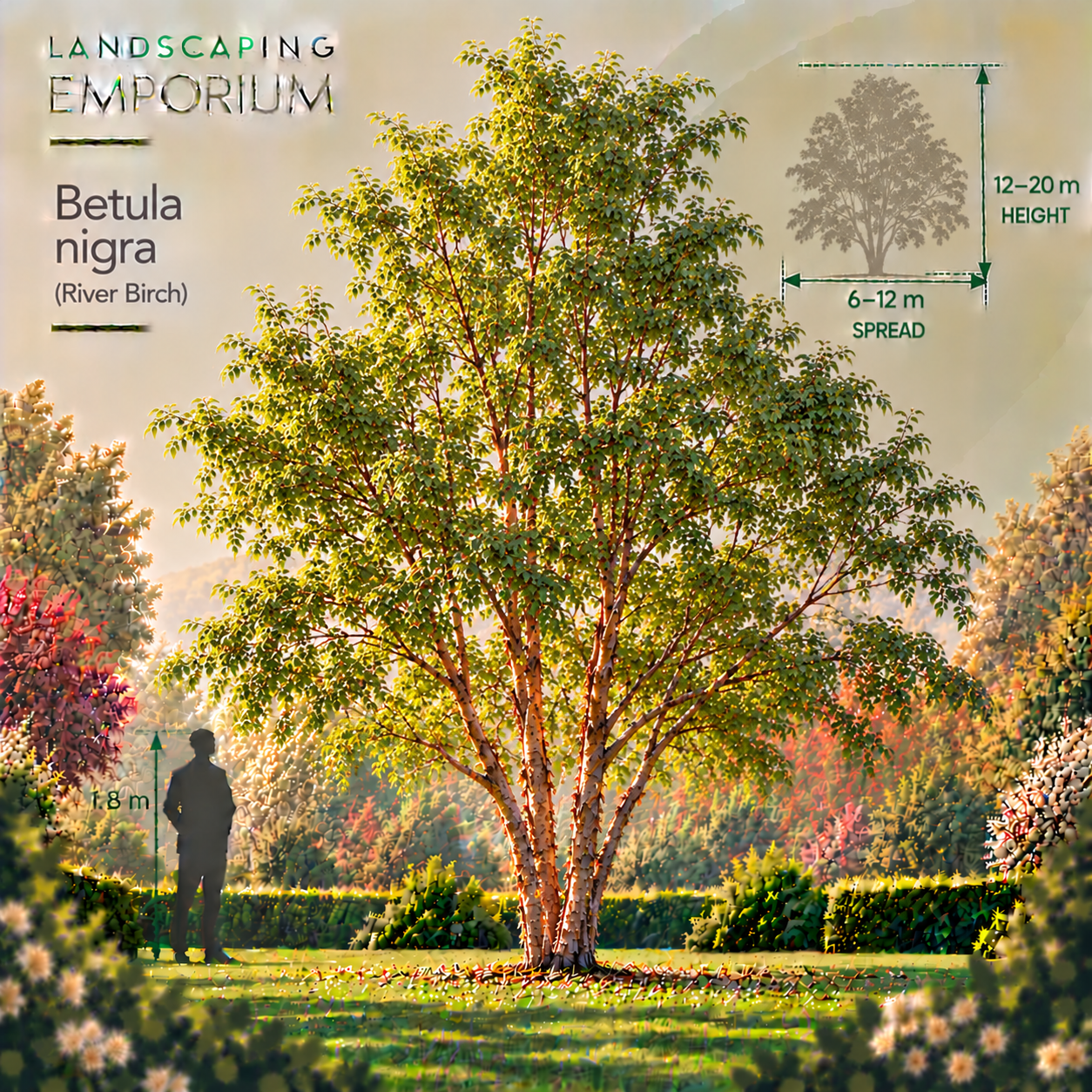
Betula nigra, commonly known as River Birch, is an attractive deciduous tree renowned for its remarkable peeling bark, elegant branching structure and ability to thrive in moisture-retentive soils.
Native to eastern North America, River Birch is particularly valued as an ornamental specimen tree for larger gardens, estates, parkland and substantial landscape planting schemes.
Its most distinctive feature is the beautifully textured bark, which develops shades of cinnamon, salmon, reddish-brown and cream. As the tree matures, the outer bark peels away in irregular curls and sheets, creating a striking ornamental effect.
During spring, fresh green leaves emerge alongside attractive hanging catkins. Throughout summer, the foliage develops into a lush green canopy, providing an elegant contrast against the colourful bark.
In autumn, the leaves turn shades of yellow before falling, revealing the tree's graceful branching structure and distinctive trunk.
River Birch is particularly effective when planted as a standalone specimen where its attractive bark and natural shape can be fully appreciated.
It is also well suited to planting near ponds, streams and other water features, provided that the site offers adequate space for its mature canopy and root system.
Key Features of Betula nigra
Beautiful cinnamon and reddish-brown peeling bark
Exceptional winter bark interest
Elegant deciduous specimen tree
Attractive fresh green spring foliage
Soft green summer canopy
Yellow autumn foliage
Fast to moderate growth under favourable conditions
Particularly suited to moisture-retentive soils
Tolerates periodically wet ground
Excellent for larger gardens and parkland
Attractive when planted near water features
Suitable for naturalistic landscape planting
Can be grown as a single-stem or multi-stem specimen
Provides shelter and habitat opportunities for wildlife
Hardy and suitable for much of the UK
Betula nigra – Tree Specification
Botanical name: Betula nigra
Common name: River Birch / Red Birch
Family: Betulaceae
Tree type: Deciduous broadleaf tree
Mature height: Approximately 15–20m in favourable conditions, occasionally taller with age.
Mature spread: Approximately 8–12m or more, depending on growing conditions and maturity.
Growth rate: Fast under favourable conditions.
Crown shape: Broadly pyramidal when young, developing into a more rounded, spreading and irregular canopy with maturity.
Foliage: Deciduous, medium to dark green, with serrated leaf margins.
Autumn colour: Yellow to golden yellow.
Flowers: Small spring flowers arranged in catkins.
Fruit: Small winged nutlets produced within the female catkins.
Bark: Highly ornamental, peeling in shades of cinnamon, salmon, reddish-brown, cream and grey.
Position: Full sun or partial shade.
Soil: Prefers fertile, moisture-retentive loam, clay or sandy soils. Performs particularly well in neutral to acidic conditions.
Soil moisture: Prefers moist ground and tolerates periodically wet conditions. Particularly suitable for sites with a reliable moisture supply.
Exposure: Best in sheltered or moderately exposed positions, although established trees can tolerate a range of conditions.
Hardiness: Fully hardy across most of the UK.
Native status: Non-UK native.
Wildlife value: Provides shelter and habitat for birds and insects. Catkins and seeds can also offer resources for wildlife.
Maintenance: Generally low maintenance once established. Formative pruning may be undertaken when young, but mature trees should normally retain their natural form.
Root system: Develops a substantial, often relatively shallow and spreading root system. Allow sufficient space from buildings, underground services and hard landscaping.
Suitable uses: Specimen planting, large gardens, estates, parkland, naturalistic planting, moist ground, lakeside planting and architectural landscapes.
Why Choose Betula nigra?
Exceptional Peeling Bark
The principal ornamental feature of River Birch is its beautiful peeling bark.
Unlike the smooth white bark associated with Silver Birch, Betula nigra develops a rich mixture of cinnamon, salmon, reddish-brown and cream tones.
The outer bark gradually curls and peels away, revealing contrasting layers beneath.
This creates a distinctive textured appearance that becomes increasingly attractive as the tree develops.
When positioned where the trunk can be appreciated, River Birch provides exceptional year-round interest.
Outstanding Winter Interest
River Birch is particularly effective during winter.
Once the leaves have fallen, the peeling bark and elegant branching structure become the main features of the tree.
The warm bark colours provide an attractive contrast against winter skies, evergreen planting and surrounding garden structures.
For gardens where winter appearance is important, River Birch is an excellent alternative to more conventional ornamental trees.
An Excellent Tree for Moist Ground
One of the most useful characteristics of Betula nigra is its tolerance of moisture-retentive soils.
In its native habitat, River Birch is commonly associated with riverbanks, floodplains and other naturally moist locations.
This makes it particularly suitable for larger gardens where the soil remains consistently moist or experiences occasional periods of wetness.
It can be especially effective near ponds, lakes, streams and suitable water features.
Although River Birch tolerates periodically wet ground, planting conditions should still be assessed carefully where soil remains permanently waterlogged or where standing water persists for extended periods.
Attractive Summer Foliage
During spring, River Birch produces fresh green foliage that gradually develops into an attractive summer canopy.
The leaves have a slightly triangular to diamond-shaped appearance with serrated margins.
Their rich green colour contrasts beautifully with the warm tones of the peeling bark.
The natural branching structure creates an elegant canopy that can provide useful seasonal shade within larger gardens.
Golden Autumn Colour
As temperatures fall, the foliage gradually changes from green to yellow and golden yellow.
Although River Birch is generally grown primarily for its bark rather than dramatic autumn foliage, its seasonal colour provides an attractive additional feature.
Once the leaves have fallen, the tree's bark and branching structure continue to provide visual interest throughout winter.
Single-Stem and Multi-Stem Specimens
River Birch can be particularly attractive in both single-stem and multi-stem forms.
Single-stem trees develop a more traditional tree structure, with a clear trunk supporting a spreading canopy.
Multi-stem specimens produce several trunks from near ground level, allowing the ornamental peeling bark to become a prominent feature.
Multi-stem River Birch can be especially effective within contemporary gardens, naturalistic planting schemes and large ornamental borders.
The exact form supplied will depend on the product specification selected.
A Tree for Large Gardens and Estates
River Birch is best suited to gardens where sufficient space is available for its mature crown and root system.
It can develop into a substantial tree and should not normally be selected for confined planting positions.
When given appropriate space, it can become a magnificent specimen that provides structure, shade and ornamental interest for many years.
Planting and Establishment
Betula nigra performs best in a sunny or partially shaded position with fertile, moisture-retentive soil.
It generally prefers neutral to acidic conditions and may develop leaf yellowing where soils are excessively alkaline.
Although tolerant of moist ground, good planting preparation remains important.
The planting hole should be prepared appropriately, ensuring that the root flare remains at the correct finished soil level.
Newly planted trees require consistent watering during establishment, particularly during dry periods.
Appropriate staking or underground anchoring may be necessary depending on the size of the specimen and site conditions.
A suitable mulch layer can help retain soil moisture and reduce competition from surrounding vegetation.
Allow sufficient space for the mature canopy and root system, particularly when planting near buildings, underground services, drainage infrastructure and hard landscaping.
For larger nursery specimens, professional planting is strongly recommended.
Maintaining Betula nigra
River Birch is generally a low-maintenance tree once established.
Young specimens may benefit from limited formative pruning to develop a balanced structure.
Established trees should normally be allowed to retain their natural crown shape.
Where pruning is necessary, it is best planned for late summer or early autumn, as birches can bleed sap when pruned during late winter or early spring.
Avoid unnecessary heavy pruning, which can spoil the natural form of the tree.
Regular watering during prolonged dry periods can be beneficial, particularly while the tree is establishing.
Specimen Tree Delivery and Professional Planting
Landscaping Emporium, brought to you by Kirman Design, offers professional specimen tree supply and planting throughout selected areas of North West England.
We provide professional tree planting in the following postcode areas:
BB, BL, CH1–CH5, CW8, CW9, FY, L, LA1–LA6, M, OL, PR, SK1–SK12, WA and WN.
Please do not select professional planting at checkout if your property is outside these postcode areas without contacting us first.
If your property is outside our normal installation area, please contact us. We may still be able to arrange planting depending on your location, tree size and site access.
Before ordering, please consider delivery access, gate and passage widths, steps, slopes, overhead restrictions and the available planting space.
River Birch trees may be supplied in different nursery sizes, single-stem or multi-stem forms, and root formats depending on current stock and seasonal availability.
Overall height, trunk girth, crown dimensions and natural branching structure will vary between individual specimens.
Contact Landscaping Emporium
Landscaping Emporium – brought to you by Kirman Design
Unit 9, Bridgewater Business Park
Gladstone Street
Blackburn
BB1 3DL
Telephone: 01942 604976
Email: hello@landscapingemporium.co.uk
Website: www.landscapingemporium.co.uk
Professional tree supply and planting across North West England.
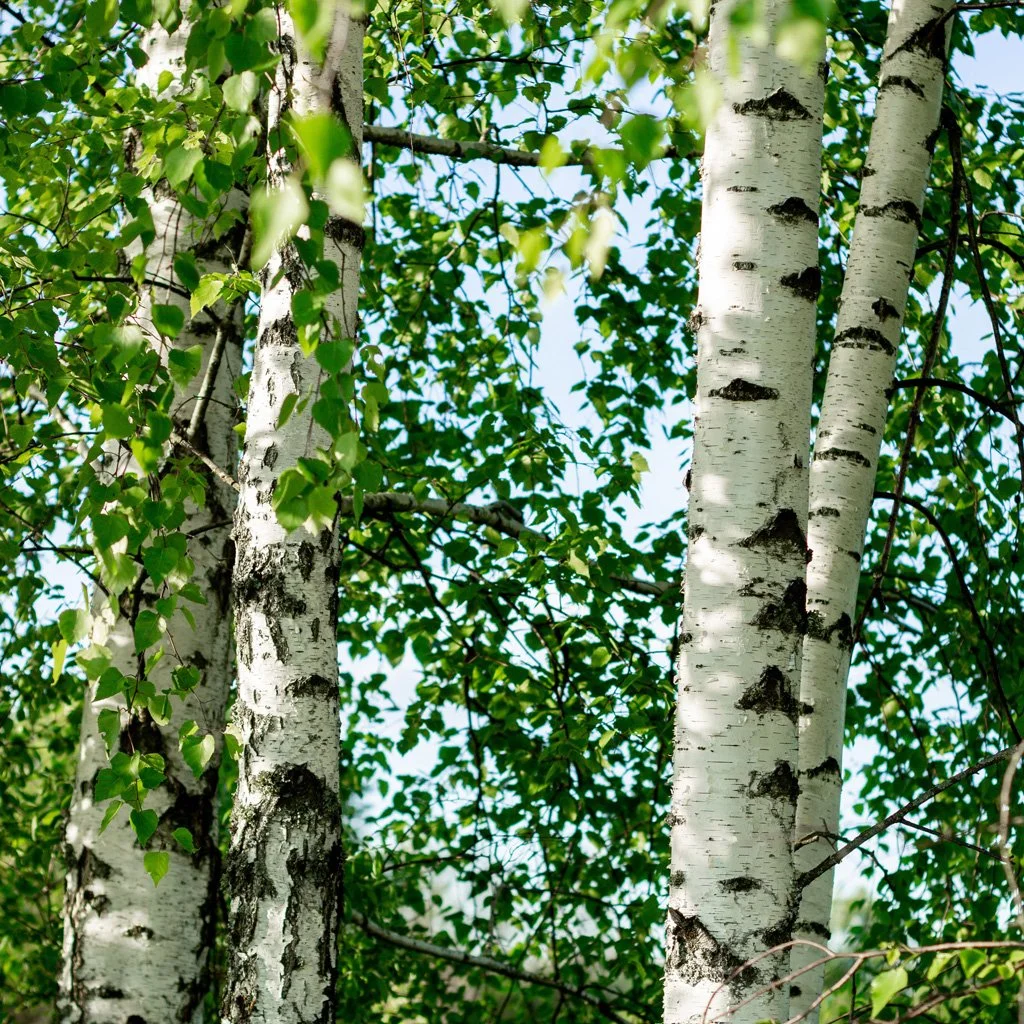
Betula nigra, commonly known as River Birch, is a fast-growing deciduous tree valued for its shaggy, peeling bark. The bark is pinkish-orange on younger growth, darkening to brown as it matures, while older trunks can develop ridged, grey-white or almost black bark.
Its glossy green, diamond-shaped leaves turn yellow in autumn. River Birch is naturally associated with riverbanks and other moist habitats, and is well suited to a sunny or lightly shaded position in moist, well-drained soil.
Betula nigra can reach around 18 metres tall, with a mature spread of approximately 4–8 metres. Allow plenty of room for its crown and distinctive trunk to develop.
Key Features of Betula nigra
Fast-growing deciduous birch
Shaggy, peeling bark in pinkish-orange, brown and grey tones
Glossy green, diamond-shaped leaves
Yellow autumn foliage
Yellow-brown male catkins appear in early spring
Suited to moist, well-drained soil
Can adapt to a range of soil conditions
Suitable for full sun or partial shade
Very hardy, with an RHS hardiness rating of H7
Attractive as a specimen tree or waterside planting
Native to central and eastern parts of the United States
Betula nigra – Tree Specification
Botanical name: Betula nigra
Common name: River Birch / Black Birch / Red Birch
Family: Betulaceae
Tree type: Deciduous broadleaf tree
Mature height: Up to approximately 18m.
Mature spread: Approximately 4–8m.
Time to maturity: Approximately 20–50 years.
Growth rate: Fast-growing in suitable conditions.
Crown shape: Conical when young, becoming broader with age.
Bark: Shaggy and peeling in layers; initially pinkish-orange, later becoming brown, grey-white or almost blackish and ridged on older trees.
Foliage: Glossy green, diamond-shaped leaves.
Autumn colour: Yellow.
Flowers: Yellow-brown male catkins, up to approximately 8cm long, appear in early spring. Female catkins are smaller.
Fruit: Small, cone-like structures develop after flowering.
Position: Full sun or partial shade.
Soil: Clay, loam or sandy soil; adaptable to a range of conditions.
Soil moisture: Moist but well-drained soil.
Exposure: Suitable for exposed or sheltered positions.
Hardiness: RHS hardiness rating H7.
Native status: Not native to the UK; native to central and eastern parts of the United States.
Wildlife value: Catkins, foliage and the tree’s structure can contribute to a mixed garden habitat.
Maintenance: Generally low maintenance. Pruning is not usually required beyond removing dead or damaged branches.
Suitable uses: Specimen planting, gardens with moist soil, waterside planting, larger gardens, parkland and informal landscapes.
Why Choose Betula nigra?
Distinctive Peeling Bark
The standout feature of River Birch is its textured, peeling bark. Younger bark often shows warm pinkish-orange and brown tones, while older trunks become darker and more ridged.
The bark is especially noticeable in winter, when the leaves have fallen. This makes the tree a strong choice for gardens where the trunk will remain visible throughout the year.
Yellow Autumn Colour
The glossy green leaves turn yellow in autumn before falling. Together, the autumn foliage and textured bark give Betula nigra seasonal interest from spring through to winter.
Naturally Suited to Moist Conditions
In its native range, River Birch is commonly associated with riverbanks and other moist habitats. In gardens, it grows best in soil that remains moist but drains well.
It can adapt to a range of soil conditions, but it should not automatically be treated as suitable for permanently waterlogged ground. Check the site’s drainage and water levels before planting.
Fast Growth and a Graceful Shape
Betula nigra is a fast-growing tree in favourable conditions. It has a conical shape when young and develops a broader crown as it matures.
It works well as a specimen tree or as part of an informal landscape planting. Give it enough space to develop without crowding buildings, paths or other trees.
A Strong Specimen for Larger Gardens
River Birch combines textured bark, fresh green foliage and yellow autumn colour. It suits larger gardens where its mature height and spread can be accommodated.
A sunny position helps show off the bark and foliage, although the tree can also grow in partial shade.
Planting and Establishment
Betula nigra grows best in full sun or partial shade in moist, well-drained soil. Choose a position with enough room for its mature crown and trunk.
Prepare the planting area and set the tree so the root flare sits at the correct finished soil level. Water thoroughly after planting and water regularly during dry spells while the tree establishes.
A mulch layer can help retain soil moisture and reduce competition from grass and weeds. Keep mulch clear of the trunk.
Before planting beside a pond or stream, consider changes in water levels and the drainage conditions at the site. For larger nursery specimens, professional planting is recommended. Staking or another suitable support may be needed depending on the tree’s size and the planting conditions.
Maintaining Betula nigra
River Birch is generally low maintenance once established. Pruning is usually limited to removing dead, damaged or poorly placed branches.
Avoid hard pruning. Retain the tree’s natural form and allow the bark to develop across the trunk and branches.
Water during prolonged dry spells, particularly while the tree is establishing or if it is planted in a free-draining position.
Important Planting Considerations
Betula nigra is a fast-growing tree that can reach around 18 metres tall. Check that the site can accommodate its mature height and spread, with suitable clearance from buildings, boundaries, paths, overhead structures and underground services.
The tree prefers moist but well-drained soil. It is associated with wet habitats, but site drainage should still be assessed before planting in ground that remains saturated.
River Birch is not native to the UK. If native status is important to your planting scheme, consider a native birch such as Downy Birch (Betula pubescens) where its growing requirements suit the site.
Specimen Tree Delivery and Professional Planting
Landscaping Emporium, brought to you by Kirman Design, offers professional specimen tree supply and planting throughout selected areas of North West England.
We provide professional tree planting in the following postcode areas:
BB, BL, CH1–CH5, CW8, CW9, FY, L, LA1–LA6, M, OL, PR, SK1–SK12, WA and WN.
Please do not select professional planting at checkout if your property is outside these postcode areas without contacting us first.
If your property is outside our normal installation area, please contact us. We may still be able to arrange planting depending on your location, tree size and site access.
Before ordering, please consider delivery access, gate and passage widths, steps, slopes, overhead restrictions and the available planting space.
Betula nigra trees may be supplied in different nursery sizes and root formats depending on current stock and seasonal availability.
Overall height, trunk girth, crown dimensions and natural branching structure will vary between individual specimens.
Contact Landscaping Emporium
Landscaping Emporium – brought to you by Kirman Design
Unit 9, Bridgewater Business Park
Gladstone Street
Blackburn
BB1 3DL
Telephone: 01942 604976
Email: hello@landscapingemporium.co.uk
Website: www.landscapingemporium.co.uk
Professional tree supply and planting across North West England.
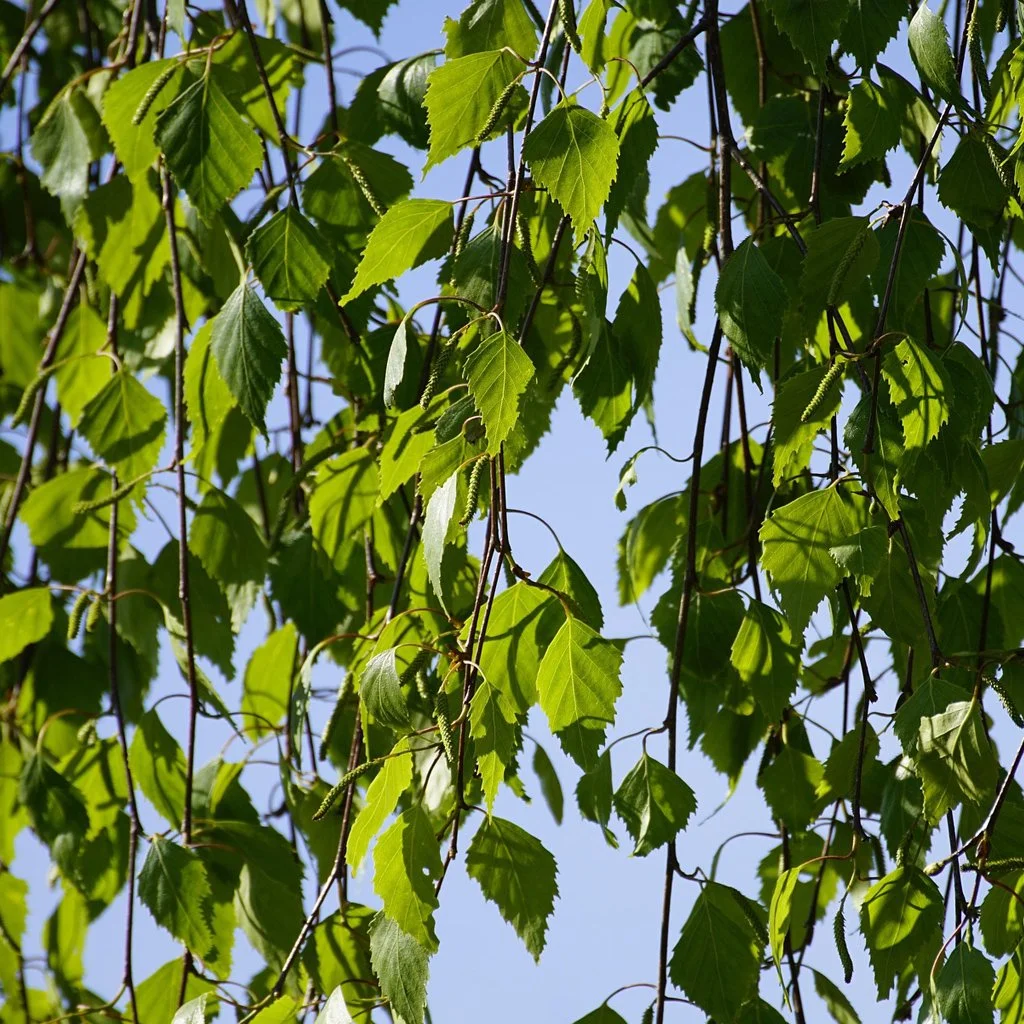
Betula pendula – Silver Birch
About Betula pendula – Silver Birch
Betula pendula, commonly known as Silver Birch, is an elegant UK-native tree valued for its light canopy, graceful branching and silver-white bark. It has small, triangular leaves with toothed edges, with fresh to mid green summer foliage and clear yellow autumn colour. Its open canopy allows filtered light, making it easier to underplant than many large trees.
This tree is well suited to large gardens, wildlife planting, woodland-style schemes, avenues and multi-stem features. It performs best in full sun or light partial shade and moist but well-drained acidic to neutral soil; tolerates poorer ground. For North West England gardens, allow enough space for the mature crown and assess drainage, exposure and access before selecting the final tree size.
Key Features of Silver Birch
Fast growth rate • Upright when young, becoming airy and gently weeping habit • Fresh to mid green summer foliage • Clear yellow autumn colour • UK native • Supports insects, birds and other native wildlife
Betula pendula Plant Specification
Mature size: 15–20m high × 6–10m wide
Growth rate: Fast
Foliage: Deciduous
Position: Full sun or light partial shade
Soil: Moist but well-drained acidic to neutral soil; tolerates poorer ground
UK native: Yes
Wildlife value: Very high: supports insects, birds and other native wildlife
We can install specimen trees at any of the in following postcodes;
BB, BL, CH1 - CH5, CW8, CW9, FY, L, LA1 - LA6, M, OL, PR, SK1 - SK12, WA, & WN.
Please do not purchase if you want the hedging installed outside this area. If you do live outside the area, then please give us a call on 01942 604976 and we can see if it’s possible to do this.
For more information on the tree see the tree specification below. For more information about delivery, access and planting, see the guide below.
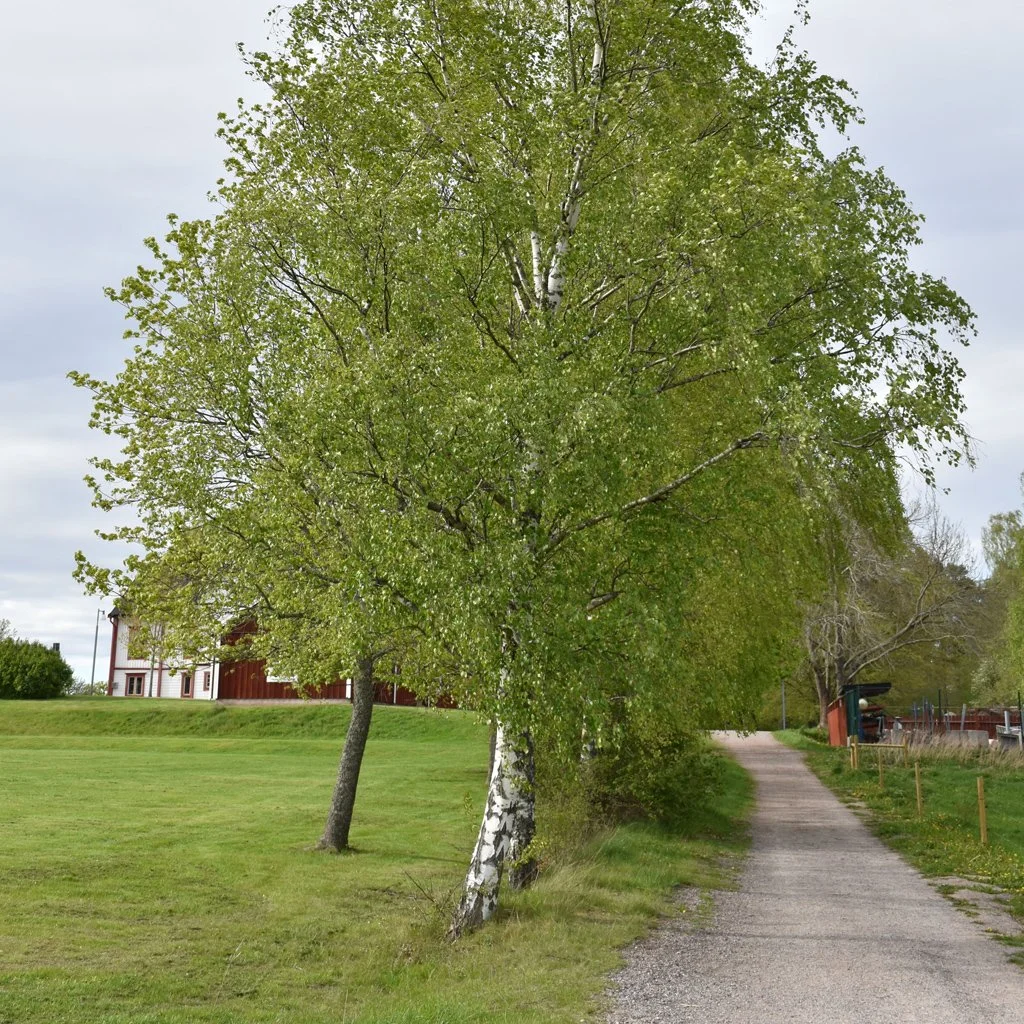
Betula pubescens, commonly known as Downy Birch, is a graceful UK native tree with a light canopy, softly hairy young shoots and elegant branches. Its fresh green leaves turn yellow in autumn, while male and female catkins provide interest in spring.
Downy Birch is particularly suited to moist ground and is often found growing in wetter parts of Britain than Silver Birch. It can tolerate damp, acidic and peaty soils, making it a useful native tree for larger gardens and naturalistic landscapes where conditions suit.
It can reach around 20–30 metres tall, so allow plenty of room for the tree to mature.
Key Features of Betula pubescens
UK native deciduous tree
Graceful, upright growth with an open, light canopy
Softly hairy young shoots and leaf stalks
Grey-white bark, less papery than Silver Birch
Male and female catkins appear on the same tree in spring
Fresh green leaves turn yellow in autumn
Suited to moist soils, including damp and peaty ground
Provides food and habitat for a wide range of wildlife
Very hardy and tolerant of cool conditions
A good choice for larger gardens and naturalistic planting
Betula pubescens – Tree Specification
Botanical name: Betula pubescens
Common name: Downy Birch / Hairy Birch / Moor Birch / White Birch
Family: Betulaceae
Tree type: Deciduous broadleaf tree
Mature height: Approximately 20–30m, depending on growing conditions.
Mature spread: Allow approximately 8–12m or more for the mature crown.
Growth rate: Moderate to fast in suitable conditions.
Crown shape: Upright and relatively open, with elegant, drooping branches.
Bark: Grey-white, generally less bright and papery than Silver Birch.
Foliage: Triangular leaves with downy leaf stalks; fresh green in spring and summer.
Autumn colour: Yellow before the leaves fall.
Flowers: Male and female catkins appear on the same tree, usually in spring.
Fruit and seed: Female catkins develop into seed-bearing structures. Small seeds are dispersed by wind in autumn.
Position: Full sun or partial shade.
Soil: Suits a range of soils, particularly moist, acidic and peaty soils.
Soil moisture: Prefers moist ground and can tolerate some waterlogging.
Exposure: Hardy and tolerant of wind in suitable conditions.
Hardiness: Very hardy, including in cold and upland conditions.
Native status: UK native.
Wildlife value: Supports insects and moth caterpillars; its seeds are eaten by birds including siskins, greenfinches and redpolls.
Maintenance: Generally low maintenance. Pruning is not normally required once established.
Suitable uses: Native planting, damp ground, woodland schemes, wildlife gardens, larger gardens, estates, parkland and naturalistic landscapes.
Why Choose Betula pubescens?
A Graceful Native Birch
Downy Birch has an upright, elegant form, with a light canopy and branches that droop naturally. It brings structure to a garden without creating the dense shade of some larger trees.
It is a good choice for naturalistic planting, woodland edges and larger gardens where a native tree can grow freely.
Suited to Damp Ground
Downy Birch is often found on wetter soils than Silver Birch. It can grow in moist, acidic and peaty ground, making it useful for sites where soil stays damp for much of the year.
It is not a guarantee of success on every waterlogged site. Assess the soil and drainage before planting, especially where the ground is permanently flooded or compacted.
Spring Catkins and Yellow Autumn Leaves
Both male and female catkins grow on the same tree. They appear in spring, before or around the time the leaves emerge.
In autumn, the green leaves turn yellow before falling. The open canopy allows light to reach the ground beneath the tree, where suitable woodland plants can be grown.
Valuable for Wildlife
Downy Birch supports a range of insects, including moth caterpillars, and its seeds are eaten by birds such as siskins, greenfinches and redpolls.
Its open canopy can also suit naturalistic planting beneath and around the tree. The tree’s wildlife value makes it a strong choice for native planting schemes.
How Downy Birch Differs from Silver Birch
Downy Birch (Betula pubescens) is often confused with Silver Birch (Betula pendula). Downy Birch generally prefers damper soils, and its young shoots and leaf stalks are softly hairy.
Its bark is grey-white but usually less bright and papery than the bark of Silver Birch. The two species can hybridise, so identification of some trees may be less clear-cut.
A Hardy Tree for Larger Landscapes
Downy Birch is well suited to cool conditions and is a useful option for larger landscapes, including upland and wetter sites.
It can become a substantial tree, so it is best planted where there is room for both the crown and roots to develop.
Planting and Establishment
Betula pubescens grows well in full sun or partial shade. It prefers moist soil and is particularly useful in damp, acidic or peaty ground.
Prepare the planting area and set the tree so the root flare sits at the correct finished soil level. Water thoroughly after planting and continue to water during dry spells while the tree establishes.
A mulch layer can help retain moisture and reduce competition from grass and weeds. Keep mulch clear of the trunk.
Allow sufficient room for the mature tree, taking account of nearby buildings, paths, boundaries, underground services and other trees. For larger nursery specimens, professional planting is recommended.
Maintaining Betula pubescens
Downy Birch is generally low maintenance once established. It usually needs little pruning.
If pruning is required, remove dead or damaged branches and preserve the tree’s natural shape. Avoid unnecessary heavy pruning.
Water during prolonged dry periods while the tree is establishing, particularly if it has been planted away from its preferred moist conditions.
Important Planting Considerations
Betula pubescens is a medium to large tree and needs space to mature. It is not generally suitable for small gardens or narrow planting positions.
Although it tolerates damp soils, site conditions should be checked before planting in permanently flooded ground. It is also sensitive to prolonged drought, so dry, exposed sites may not be suitable.
If you are choosing between Downy Birch and Silver Birch, consider the soil: Downy Birch is generally the better fit for damper conditions, while Silver Birch is more associated with drier, freely draining sites.
Specimen Tree Delivery and Professional Planting
Landscaping Emporium, brought to you by Kirman Design, offers professional specimen tree supply and planting throughout selected areas of North West England.
We provide professional tree planting in the following postcode areas:
BB, BL, CH1–CH5, CW8, CW9, FY, L, LA1–LA6, M, OL, PR, SK1–SK12, WA and WN.
Please do not select professional planting at checkout if your property is outside these postcode areas without contacting us first.
If your property is outside our normal installation area, please contact us. We may still be able to arrange planting depending on your location, tree size and site access.
Before ordering, please consider delivery access, gate and passage widths, steps, slopes, overhead restrictions and the available planting space.
Betula pubescens trees may be supplied in different nursery sizes and root formats depending on current stock and seasonal availability.
Overall height, trunk girth, crown dimensions and natural branching structure will vary between individual specimens.
Contact Landscaping Emporium
Landscaping Emporium – brought to you by Kirman Design
Unit 9, Bridgewater Business Park
Gladstone Street
Blackburn
BB1 3DL
Telephone: 01942 604976
Email: hello@landscapingemporium.co.uk
Website: www.landscapingemporium.co.uk
Professional tree supply and planting across North West England.
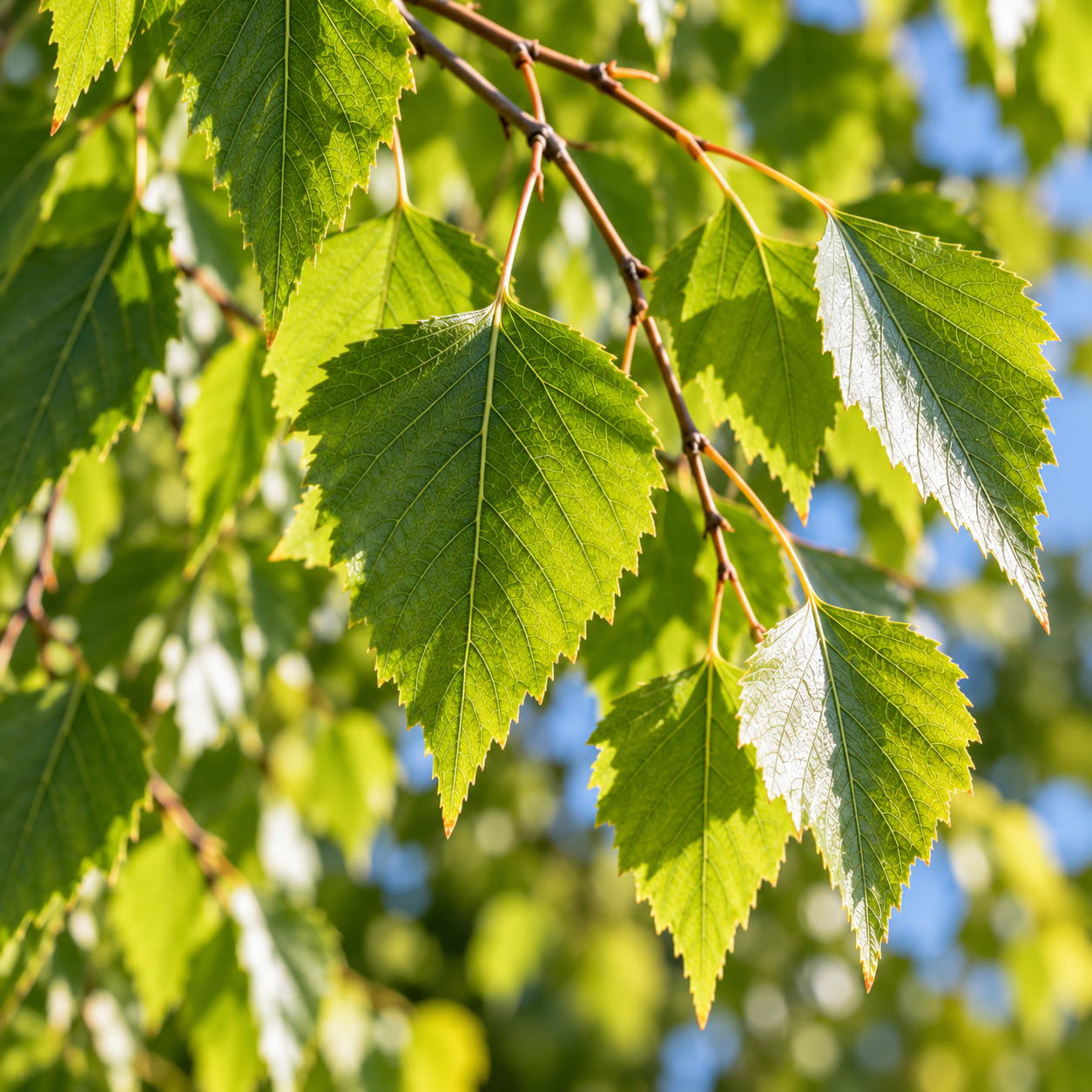
About Betula pendula 'Obelisk'
Betula pendula 'Obelisk', commonly known as Upright Silver Birch, is a distinctive deciduous tree valued for its narrow, upright crown, attractive bark and delicate foliage.
Unlike the naturally spreading form of the common Silver Birch, 'Obelisk' develops a more compact, vertical outline, making it an attractive choice for contemporary gardens, avenues, formal landscapes and planting schemes where horizontal space is limited.
Its fresh green leaves create a light, elegant canopy during spring and summer, turning yellow in autumn before falling to reveal the tree's attractive branch structure and pale bark.
Although narrower than the typical Silver Birch, it still requires sufficient space for its mature crown and root system.
Key Features of Upright Silver Birch
Growth habit: Narrow, upright to columnar crown.
Foliage: Fresh green, triangular leaves with serrated edges.
Autumn colour: Yellow foliage before leaf fall.
Bark: Pale bark developing characteristic Silver Birch markings with age.
Seasonal interest: Spring foliage, summer structure, autumn colour and winter bark.
Growth rate: Moderate to fast under suitable conditions.
Position: Full sun or partial shade.
Soil: Moist but well-drained soil, including suitable clay, loam and sandy soils.
Wildlife: Catkins and foliage provide resources for insects and associated wildlife.
Garden suitability: Contemporary gardens, avenues, architectural planting and gardens requiring a relatively narrow tree.
Specimen Tree Delivery and Professional Planting
Landscaping Emporium supplies selected specimen trees for gardens and landscape projects, with professional planting available through Kirman Design in parts of North West England.
We can professionally plant specimen trees in the following postcode areas:
BB, BL, CH1–CH5, CW8, CW9, FY, L, LA1–LA6, M, OL, PR, SK1–SK12, WA and WN.
Please do not select professional planting at checkout if your property is outside these postcode areas without contacting us first.
If you live outside our normal installation area, please call 01942 604976 or email hello@landscapingemporium.co.uk. We may still be able to arrange planting, depending on your location, the tree size and site access.
Before ordering a large specimen tree, please consider delivery access, gate and passage widths, steps, slopes, overhead restrictions and the available planting space.
For more information, please refer to our tree specification and delivery, access and planting guidance.
Landscaping Emporium – brought to you by Kirman Design
Unit 9, Bridgewater Business Park
Gladstone Street
Blackburn
BB1 3DL
Telephone: 01942 604976
Email: hello@landscapingemporium.co.uk

Betula utilis subsp. jacquemontii – Himalayan Birch
About Betula utilis subsp. jacquemontii – Himalayan Birch
Betula utilis subsp. jacquemontii, commonly known as Himalayan Birch, is a striking ornamental birch grown for brilliant white bark and an elegant, light crown. It has ovate leaves with finely toothed margins, with rich green summer foliage and warm yellow autumn colour. Plant where the pale bark can be seen against evergreen foliage or a dark boundary.
This tree is well suited to modern gardens, winter-interest planting, avenues, groups and multi-stem statements. It performs best in full sun or partial shade and moist but well-drained loam, sand or clay; avoid prolonged waterlogging. For North West England gardens, allow enough space for the mature crown and assess drainage, exposure and access before selecting the final tree size.
Key Features of Himalayan Birch
Moderate to fast growth rate • Graceful and broadly conical, becoming more open with age habit • Rich green summer foliage • Warm yellow autumn colour • Distinctive ornamental specimen • Catkins and canopy support insects and birds
Betula utilis subsp. jacquemontii
Plant Specification
Mature size: 12–18m high × 6–10m wide
Growth rate: Moderate to fast
Foliage: Deciduous
Position: Full sun or partial shade
Soil: Moist but well-drained loam, sand or clay; avoid prolonged waterlogging
UK native: No
Wildlife value: Good: catkins and canopy support insects and birds
We can install specimen trees at any of the in following postcodes;
BB, BL, CH1 - CH5, CW8, CW9, FY, L, LA1 - LA6, M, OL, PR, SK1 - SK12, WA, & WN.
Please do not purchase if you want the hedging installed outside this area. If you do live outside the area, then please give us a call on 01942 604976 and we can see if it’s possible to do this.
For more information on the tree see the tree specification below. For more information about delivery, access and planting, see the guide below or click here.
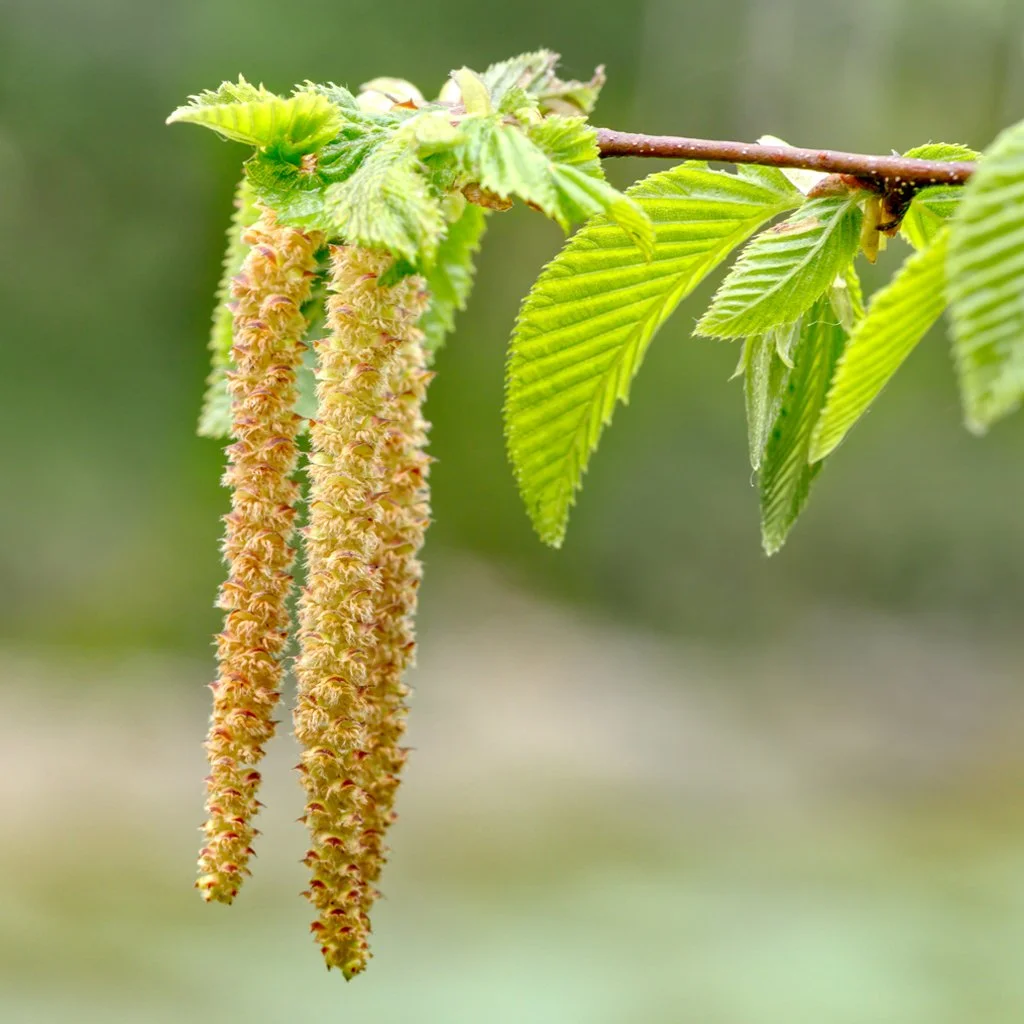
Carpinus betulus – Common Hornbeam
Carpinus betulus, the native hornbeam, is a strong and handsome deciduous tree with dense green foliage, golden-brown autumn colour and a beautifully fluted grey trunk.
Exceptionally tolerant of heavy clay, seasonally wet soil, cold and wind, it is one of the most reliable large trees for landscapes across North West England.
Hornbeam is ideal for avenues, parkland, estate entrances, large gardens, commercial landscapes and native planting schemes.
Product highlights
Native British tree
Excellent for heavy clay
Tolerates seasonally wet ground
Moderate growth rate
Fully hardy
Wind and urban tolerant
Attractive ribbed foliage
Yellow to golden-brown autumn colour
Characterful fluted grey trunk
High wildlife value
Excellent avenue or specimen tree
Plant information
Feature / Details
Botanical name: Carpinus betulus
Common name: Hornbeam or common hornbeam
Plant type: Large deciduous tree
Mature height: Approximately 15–25m
Mature spread: Approximately 10–15m
Growth rate: Moderate
Position: Full sun or partial shade
Soil: Clay, loam, chalk and suitable sandy soils
Moisture: Moist, well-drained or seasonally wet
Hardiness: Fully hardy
UK native: Yes
Wildlife value: High
Autumn colour: Yellow to golden brown
Pruning: Formative and minimal maintenance pruning
Suitable for
Large gardens
Parkland and estates
Driveways and avenues
Commercial landscapes
Native planting schemes
Wildlife-friendly landscapes
Woodland edges
Heavy clay sites
Seasonally wet soils
Wind-exposed inland locations
Not recommended for
Most small gardens
Permanently flooded ground
Sites with insufficient crown space
Locations immediately beside buildings without professional assessment
Severely exposed coastal sites receiving salt-laden winds
Planting Carpinus betulus
Plant hornbeam at its original nursery depth into well-prepared ground. Larger trees require secure staking or underground anchoring and consistent watering while their roots establish.
Do not allow newly planted rootballs to dry out. Apply mulch over the root zone while keeping it away from the trunk.
Follow our tree planting and establishment guide for detailed advice.
For seasonal stock options, see rootball versus container-grown trees.
Pruning and maintenance
Free-growing hornbeam trees need relatively little pruning once a sound framework has formed. Remove dead, damaged or crossing growth and carry out formative work while the tree is young.
Our RHS Pruning Group 1 guide provides general guidance for specimen trees. Hornbeam hedges require a separate clipping programme.
Wildlife benefits
The native foliage supports insects, while the dense canopy offers shelter and potential nesting sites for birds. Its nutlets provide additional seasonal food for birds and small mammals.
Choosing your tree size
Younger trees are easier to handle and normally establish more rapidly. Larger specimens deliver greater immediate scale and visual impact but require more involved transport, planting and aftercare.
Read our guide to mature trees versus younger trees before ordering.
Our recommendation
Carpinus betulus is strongly recommended where a substantial native tree is needed for clay, moisture-retentive or exposed inland ground.
It is an especially dependable choice for the North West and combines landscape presence, ecological value and long-term architectural character.
Delivery and professional planting
We can install specimen trees at any of the in following postcodes;
BB, BL, CH1 - CH5, CW8, CW9, FY, L, LA1 - LA6, M, OL, PR, SK1 - SK12, WA, & WN.
Please do not purchase if you want the hedging installed outside this area. If you do live outside the area, then please give us a call on 01942 604976 and we can see if it’s possible to do this.
For more information on the tree see the tree specification below. For more information about delivery, access and planting, see the guide below or click here.
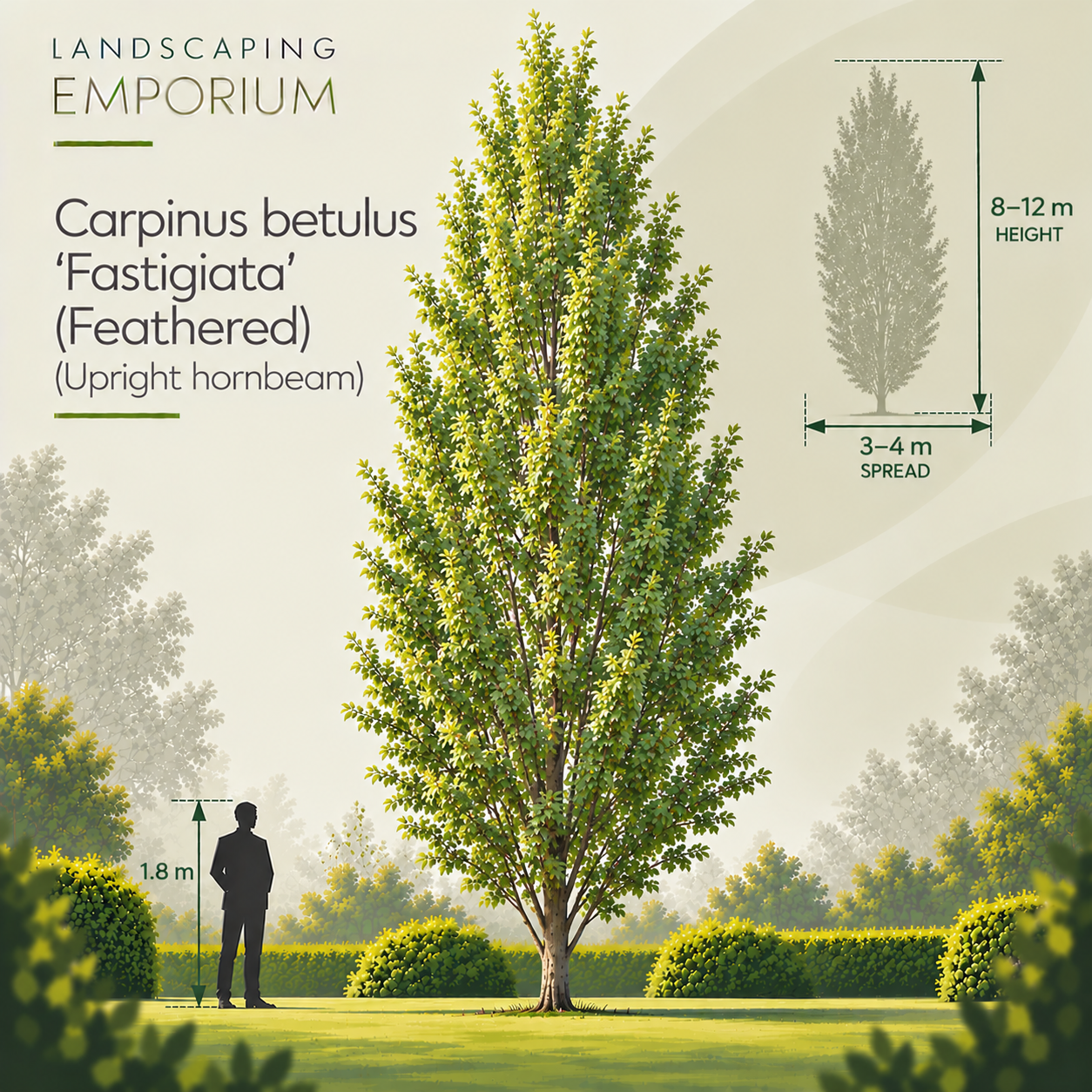
Carpinus betulus ‘Fastigiata’, commonly known as Upright Hornbeam or Fastigiate Hornbeam, is an attractive deciduous tree particularly well suited to formal pleached screening.
Its dense branching, fresh green foliage and excellent response to pruning make it a popular choice for contemporary gardens, boundary screening and architectural landscapes.
Pleached Hornbeam trees are specially trained to develop a rectangular canopy above a clear stem. When planted in a row, these elevated crowns can gradually form a continuous screen, helping to reduce overlooking from neighbouring properties while retaining valuable space beneath the foliage.
During spring, Pleached Upright Hornbeam produces fresh, bright green leaves that gradually develop into a dense summer canopy.
In autumn, the foliage turns attractive shades of golden yellow before becoming brown and falling.
Hornbeam can retain some of its dry brown leaves during winter, particularly on regularly clipped younger growth. This characteristic, known as marcescence, can provide a degree of additional seasonal screening, although winter leaf retention varies and should not be relied upon for complete privacy.
Pleached Carpinus betulus ‘Fastigiata’ is particularly effective above fences and walls, alongside terraces, around outdoor living spaces and within formal garden designs.
Key Features of Pleached Carpinus betulus ‘Fastigiata’
Formal rectangular pleached canopy
Excellent elevated screening during the growing season
Dense green summer foliage
Attractive golden yellow autumn colour
Some winter leaf retention may occur
Particularly effective above fences and boundary walls
Useful for reducing overlooking from neighbouring windows
Strong architectural appearance
Suitable for contemporary and traditional gardens
Responds well to regular pruning
Tolerant of heavier clay soils
Hardy and reliable in the British climate
Valuable for wildlife
Suitable for planting in continuous rows
Available in different clear-stem heights and frame dimensions, subject to nursery stock
Carpinus betulus ‘Fastigiata’ – Pleached Tree Specification
Botanical name: Carpinus betulus ‘Fastigiata’
Common name: Pleached Upright Hornbeam / Pleached Fastigiate Hornbeam
Family: Betulaceae
Tree type: Deciduous broadleaf tree trained into a pleached form
Supplied form: Clear-stem specimen with a rectangular trained crown supported by a nursery framework.
Typical clear-stem height: Approximately 1.8–2.2m, depending on the nursery specification.
Typical pleached frame width: Approximately 1.2–1.8m, depending on the selected product option.
Typical pleached frame height: Approximately 1.0–1.5m, depending on the selected product option.
Typical overall height when supplied: Approximately 2.8–3.7m, depending on clear-stem height and frame dimensions.
Natural mature height: Untrained ‘Fastigiata’ specimens can eventually reach approximately 15–20m, sometimes more in favourable conditions.
Natural mature spread: Although initially upright, untrained specimens broaden considerably with maturity, often reaching approximately 8–12m or more.
Maintained pleached dimensions: Determined by the original framework, available space and ongoing pruning.
Growth rate: Moderate.
Foliage: Deciduous, with fresh green, prominently veined leaves.
Autumn colour: Golden yellow, developing into brown tones.
Winter foliage: Some dry leaves may remain attached, particularly on regularly clipped growth, but retention varies.
Crown shape: Formal rectangular pleached canopy with trained branching.
Flowers: Small spring catkins.
Fruit: Small nutlets carried within distinctive leafy bracts may develop, although regular clipping can reduce flowering and fruiting.
Position: Full sun or partial shade.
Soil: Adaptable to a wide range of soils, including clay, loam, chalky and sandy soils.
Soil moisture: Prefers moist but well-drained ground. Established specimens tolerate some dry periods.
Exposure: Suitable for sheltered and moderately exposed positions. Established Hornbeam is robust, but elevated pleached crowns require appropriate support in windy locations.
Hardiness: Fully hardy across most of the UK.
Native status: Cultivar of the UK-native Hornbeam species.
Wildlife value: Provides shelter and potential nesting opportunities for birds. Its flowers and seeds can also support wildlife where allowed to develop.
Maintenance: Regular pruning and inspection of the trained framework are required to retain the formal rectangular shape.
Root system: Develops an extensive root system with maturity. Allow appropriate space from buildings, underground services and hard landscaping.
Suitable uses: Elevated privacy screening, boundary planting, formal gardens, contemporary gardens, terraces, architectural planting and structured outdoor spaces.
Why Choose Pleached Upright Hornbeam?
Effective Elevated Privacy Screening
One of the principal advantages of Pleached Upright Hornbeam is its ability to provide attractive screening above an existing boundary.
The clear stem allows the rectangular canopy to sit above a fence or wall, creating a raised green screen that can help reduce overlooking from neighbouring windows.
During spring and summer, the developing foliage creates a dense leafy canopy.
As Hornbeam is deciduous, screening is reduced during winter, although some dry foliage may remain attached.
The effectiveness of the screen depends on the density of the supplied canopy, frame dimensions and spacing between individual trees.
Ideal for Screening Above Fences and Walls
Pleached trees are particularly useful where additional privacy is required without installing an excessively tall fence or solid boundary structure.
Their clear stems allow the trained crown to provide screening at a higher level while leaving the space beneath relatively open.
This makes them particularly attractive for gardens overlooked by neighbouring houses or upper-floor windows.
Careful consideration should be given to the position of the screen, the height of neighbouring windows and the maintained dimensions of the canopy.
Beautiful Seasonal Foliage
Pleached Hornbeam offers attractive seasonal changes throughout the year.
During spring, fresh green leaves emerge along the trained branches.
In summer, the foliage develops into a dense, rich green screen.
During autumn, the leaves turn golden yellow before gradually becoming brown.
Some dry foliage may remain attached during winter, creating additional texture and visual interest.
A Strong Architectural Feature
The rectangular trained canopy creates a strong geometric feature within the garden.
Its formal appearance makes Pleached Upright Hornbeam particularly effective in contemporary garden design, where repetition, structure and carefully defined boundaries are important.
Rows of pleached trees can be used to frame terraces, define garden rooms, create formal boundaries or provide an attractive backdrop to outdoor living spaces.
Particularly Suitable for Clay Soils
Hornbeam is well known for its adaptability to a wide range of growing conditions, including heavier clay soils.
This makes it particularly useful in many gardens across Lancashire, Greater Manchester and Cheshire, where clay-rich soils are common.
Although tolerant of heavier ground, newly planted trees still require appropriate soil preparation and drainage assessment.
Prolonged standing water and severely compacted soils can affect establishment.
A Wildlife-Friendly Screening Tree
Hornbeam is a valuable native woodland species, and its cultivars can provide useful habitat within gardens.
The dense branching structure offers shelter and potential nesting opportunities for birds.
Where flowers and seeds are allowed to develop, they can also provide resources for wildlife.
Regular clipping may reduce the number of flowers and seeds produced.
Planting and Establishment
Carpinus betulus ‘Fastigiata’ performs best in a sunny or partially shaded position with reasonably fertile soil.
It is particularly adaptable to clay and loam soils, provided that prolonged waterlogging is avoided.
Pleached specimens should be positioned carefully to ensure consistent alignment, spacing and finished height.
The planting area should be prepared appropriately, ensuring that the root flare remains at the correct finished soil level.
Newly planted trees require regular watering during establishment, particularly during dry or windy periods.
Because the elevated pleached canopy creates additional wind resistance, suitable staking, underground anchoring or a professionally designed support system may be necessary.
A suitable mulch layer can help conserve moisture and reduce competition from surrounding vegetation.
For larger pleached specimens, professional planting is strongly recommended.
Maintaining Pleached Upright Hornbeam Trees
Regular maintenance is essential to preserve the formal rectangular appearance of pleached trees.
New growth should be managed through appropriate pruning, generally during late summer or the dormant season, depending on the condition and development of the trees.
Pruning should be planned to maintain the desired framework and encourage a dense, even canopy.
Frameworks, ties and supports should be inspected regularly to prevent damage as the tree develops.
The original nursery framework may eventually be removed once the trained branch structure is sufficiently established, although this should be assessed individually.
With appropriate care, Pleached Upright Hornbeam can develop into an attractive, established screen that becomes increasingly effective over time.
Specimen Tree Delivery and Professional Planting
Landscaping Emporium, brought to you by Kirman Design, offers professional pleached tree supply and planting throughout selected areas of North West England.
We provide professional tree planting in the following postcode areas:
BB, BL, CH1–CH5, CW8, CW9, FY, L, LA1–LA6, M, OL, PR, SK1–SK12, WA and WN.
Please do not select professional planting at checkout if your property is outside these postcode areas without contacting us first.
If your property is outside our normal installation area, please contact us. We may still be able to arrange planting depending on your location, tree size and site access.
Before ordering, please consider delivery access, gate and passage widths, steps, slopes, overhead restrictions and the available planting space.
Pleached Upright Hornbeam trees may be available in different clear-stem heights, frame dimensions, overall sizes and root formats depending on nursery stock.
The precise dimensions, crown density and branching structure will vary between individual trees.
Contact Landscaping Emporium
Landscaping Emporium – brought to you by Kirman Design
Unit 9, Bridgewater Business Park
Gladstone Street
Blackburn
BB1 3DL
Telephone: 01942 604976
Email: hello@landscapingemporium.co.uk
Website: www.landscapingemporium.co.uk
Professional tree supply and planting across North West England.
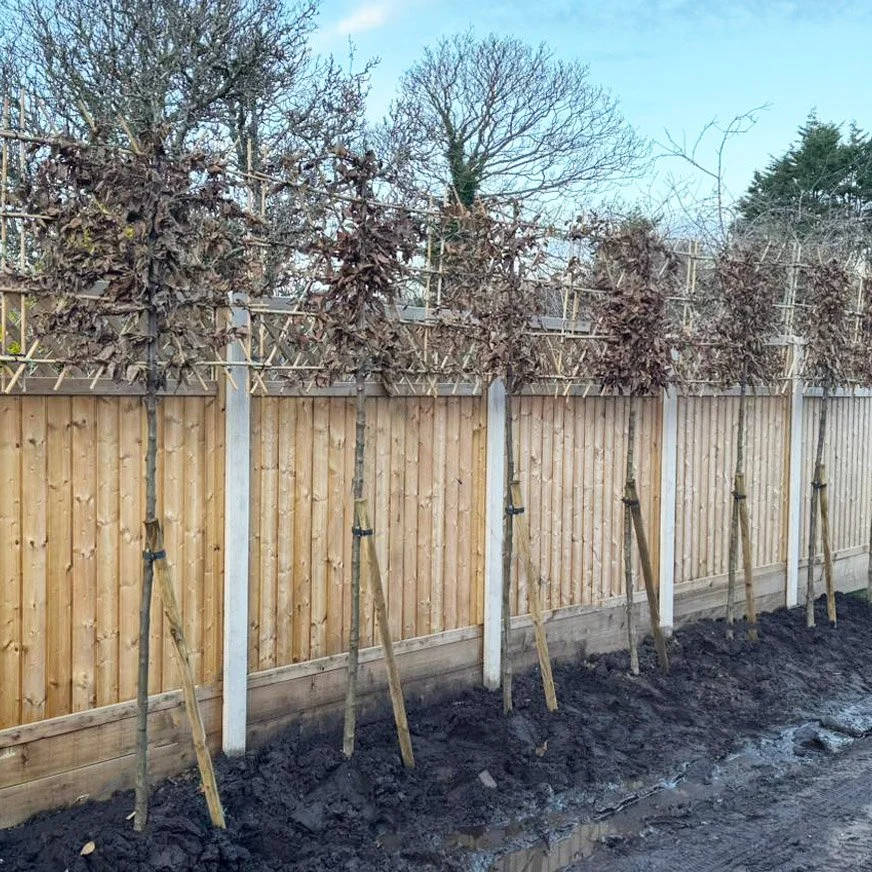
utdoor living spaces and introducing strong architectural structure into contemporary gardens.
Its dense branching, attractive green foliage and excellent response to pruning make it one of the most popular species for pleached screening in the UK.
During spring, fresh green leaves emerge along the trained branches, gradually developing into a dense summer canopy.
In autumn, the foliage turns golden yellow before becoming copper-brown.
Although Hornbeam is deciduous, some dry leaves may remain attached during winter, particularly on regularly clipped younger growth. This characteristic is known as marcescence.
Winter leaf retention varies between individual trees and growing conditions and should not be relied upon for complete year-round privacy.
Pleached Hornbeam is particularly suitable for gardens across Lancashire, Greater Manchester, Cheshire and the wider North West of England, where its adaptability to heavier soils and reliable hardiness are valuable advantages.
Key Features of Pleached Carpinus betulus
Attractive rectangular pleached canopy
Excellent elevated privacy screening
Dense green foliage during spring and summer
Beautiful golden yellow autumn colour
Some copper-brown foliage may remain during winter
Particularly effective above fences and boundary walls
Ideal for screening neighbouring windows
Excellent response to regular pruning
Strong architectural appearance
Suitable for contemporary and traditional gardens
Particularly tolerant of heavier clay soils
Hardy and reliable in the British climate
Native British tree species
Provides useful habitat and shelter for wildlife
Suitable for planting in continuous rows
Available in different clear-stem heights and frame dimensions, subject to nursery stock
Carpinus betulus – Pleached Tree Specification
Botanical name: Carpinus betulus
Common name: Pleached Hornbeam / Pleached Common Hornbeam
Family: Betulaceae
Tree type: Deciduous broadleaf tree trained into a formal pleached canopy
Supplied form: Clear-stem specimen with a rectangular trained crown, commonly supported by a nursery framework.
Typical clear-stem height: Approximately 1.8–2.2m, depending on the nursery specification.
Typical pleached frame width: Approximately 1.2–1.8m, depending on the selected product option.
Typical pleached frame height: Approximately 1.0–1.5m, depending on the selected product option.
Typical overall height when supplied: Approximately 2.8–3.7m, depending on clear-stem height and frame dimensions.
Natural mature height: Untrained Hornbeam can eventually reach approximately 20–25m or more in favourable conditions.
Natural mature spread: Approximately 10–15m or more when grown as an unrestricted mature tree.
Maintained pleached dimensions: Determined by the original framework, available space and ongoing pruning.
Growth rate: Moderate.
Foliage: Deciduous, with attractive oval green leaves, prominent veins and finely serrated margins.
Spring foliage: Fresh, bright green.
Summer foliage: Dense, medium to dark green.
Autumn colour: Golden yellow, developing into copper-brown tones.
Winter foliage: Some dry leaves may remain attached, particularly on regularly clipped younger growth.
Crown shape: Formal rectangular pleached canopy with horizontally trained branching.
Flowers: Inconspicuous spring catkins.
Fruit: Small nutlets carried within distinctive three-lobed leafy bracts, although regular clipping can reduce flowering and seed production.
Position: Full sun or partial shade.
Soil: Adaptable to a wide range of soils, including clay, loam, chalky and sandy soils.
Soil moisture: Prefers m
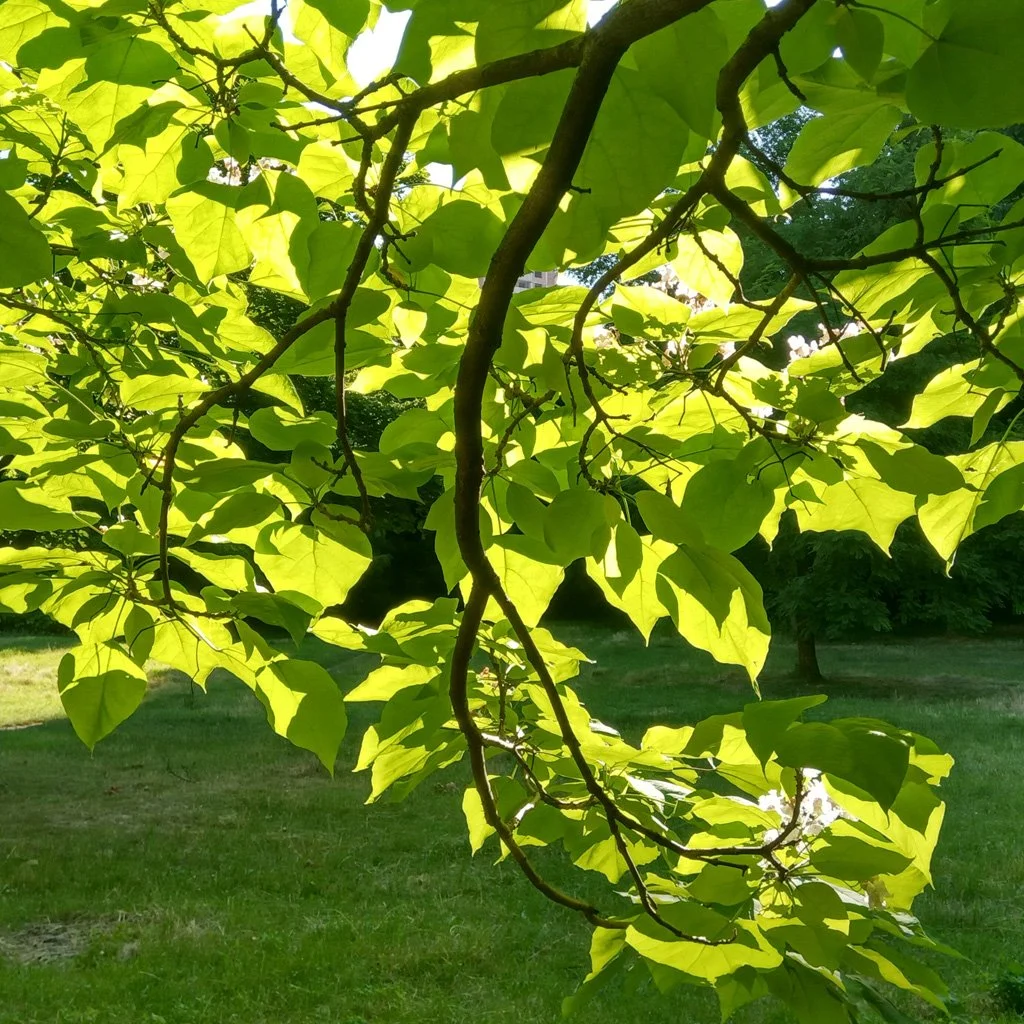
Catalpa bignonioides ‘Nana’ is a compact grafted standard tree with a naturally rounded crown and large, heart-shaped green leaves.
Its distinctive lollipop or umbrella-like form makes it particularly suitable for courtyards, contemporary gardens, formal planting and matched pairs beside entrances.
Unlike common Catalpa, ‘Nana’ rarely flowers and normally produces no long seed pods. It should be selected for its architectural shape and bold summer foliage.
Product Highlights
Compact clear-stemmed tree
Dense rounded or flattened-globe crown
Large heart-shaped leaves
Strong architectural form
Suitable for small and medium gardens
Excellent for matched pairs
Effective in formal repetition
Dense summer canopy
Slow to moderate growth
Low to moderate maintenance
Usually free from seed-pod litter
Product Information
Feature / Details
Botanical name: Catalpa bignonioides ‘Nana’
Common names: Globe Catalpa and dwarf Indian bean tree
Family: Bignoniaceae
Plant type: Deciduous
Overall height: Approximately 2.5–5 metres
Crown spread: Approximately 3–5 metres
Growth rate: Slow to moderate
Position: Full sun or light partial shade
Exposure: Sheltered
Soil: Fertile and moisture-retentive
Drainage: Well-drained
Foliage: Large, heart-shaped and fresh green
Flowers: Rare or absent
Seed pods: Normally absent
Autumn colour: Yellow to yellow-green
Maintenance: Low to moderate
Suitable For
Small and medium gardens
Courtyards
Contemporary landscapes
Formal gardens
Matched entrance pairs
Repeated planting
Lawn specimens
Terraces and seating areas
Bold foliage schemes
Sheltered urban gardens
When We Would Not Recommend It
Globe Catalpa is unsuitable for:
Severely exposed gardens
Open upland sites
Harsh coastal positions
Permanently waterlogged ground
Locations unable to accommodate a 3–5 metre crown
Gardens where flowers are essential
Positions requiring evergreen screening
Understanding the Supplied Size
This is a grafted tree. The crown begins at the graft point, and most future height develops above this point.
The trunk below the graft will thicken but will not substantially extend in length. Always compare graft height, stem girth, overall height and crown width when choosing a tree.
Our specimen tree sizes explained guide provides further information.
For help choosing between a younger tree and a fuller specimen, read mature trees versus younger trees.
Rootballed or Container-Grown?
Container-grown trees provide a wider planting window where reliable irrigation is available.
Larger rootballed standards are generally supplied during the cooler planting season and require appropriate lifting and handling.
Compare the options in our rootball versus container-grown guide.
Planting Requirements
Plant in full sun or light partial shade in a sheltered position.
Provide fertile, moisture-retentive but freely draining soil. Keep the root flare visible and do not bury or damage the graft union.
Young trees require secure staking and dependable establishment watering.
Follow our tree planting and establishment guide for detailed advice.
Professional specimen-tree delivery and planting is available for larger trees and matched specimens.
Pruning and Graft Care
Retain an even, naturally rounded crown and remove damaged, crossing or badly balanced growth.
Remove shoots arising from the rootstock or beneath the graft promptly. Never cut below or through the graft union.
Relevant minimal-pruning principles are available in our RHS Pruning Group 1 guide.
Our Recommendation
We recommend Catalpa bignonioides ‘Nana’ for sheltered small and medium gardens requiring a bold, rounded architectural tree.
For formal pairs or repeated planting, choose trees with matching graft heights, stem girths and crown dimensions.
Delivery and professional planting
We can install specimen trees at any of the in following postcodes;
BB, BL, CH1 - CH5, CW8, CW9, FY, L, LA1 - LA6, M, OL, PR, SK1 - SK12, WA, & WN.
Please do not purchase if you want the hedging installed outside this area. If you do live outside the area, then please give us a call on 01942 604976 and we can see if it’s possible to do this.
For more information on the tree see the tree specification below. For more information about delivery, access and planting, see the guide below or click here.
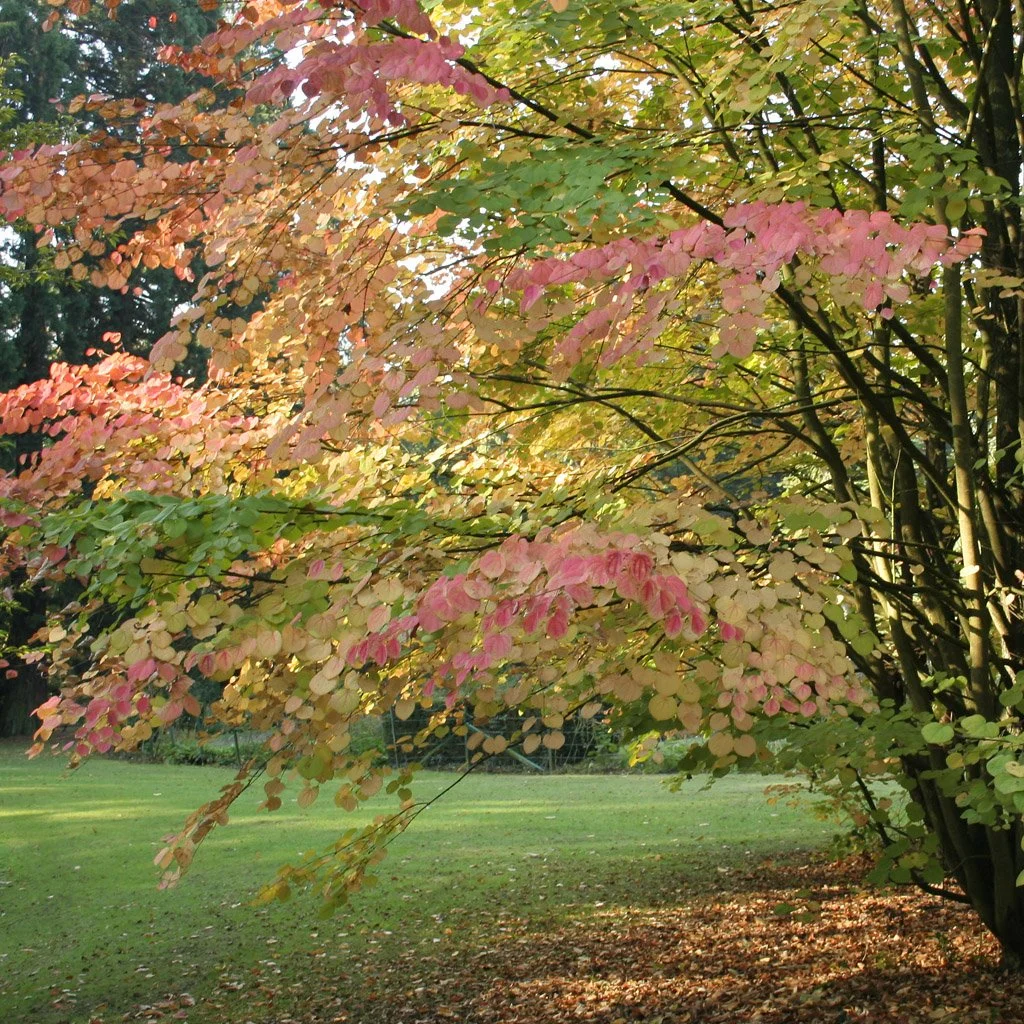
Cercidiphyllum japonicum is an elegant deciduous specimen tree offering beautiful heart-shaped leaves, layered branching and exceptional autumn interest.
The foliage emerges bronze or pink-tinted, becomes blue-green during summer and develops shades of yellow, apricot, pink and red in autumn. As the leaves fall, they may release a distinctive fragrance reminiscent of burnt sugar, caramel or candyfloss.
Available in standard and multi-stem forms, Katsura makes an outstanding focal point for generous lawns, sheltered gardens and planting beside water.
Product Highlights
Attractive heart-shaped foliage
Bronze or pink-tinted spring growth
Blue-green summer leaves
Exceptional autumn colour
Sweetly scented falling leaves
Elegant layered crown
Standard and multi-stem forms
Fully hardy
Moderate growth rate
Low routine pruning requirement
Excellent specimen-tree character
Product Information
Feature / Details
Botanical name: Cercidiphyllum japonicum
Common name: Katsura tree
Family: Cercidiphyllaceae
Plant type: Deciduous specimen tree
Mature height: Approximately 10–15 metres
Mature spread: Approximately 6–10 metres
Growth rate: Moderate
Position: Full sun or partial shade
Soil: Deep, fertile and moisture-retentive
Drainage: Freely draining
Hardiness: Fully hardy
Autumn colour: Yellow, apricot, pink and red
Autumn scent: Burnt sugar or caramel
Maintenance: Low
Suitable For
Large lawns
Generous gardens
Sheltered specimen positions
Multi-stem feature planting
Woodland-style landscapes
Planting beside ponds and water features
Fertile moisture-retentive ground
Autumn-interest planting schemes
Architectural planting viewed from the house
When We Would Not Recommend It
Katsura is not normally suitable for:
Small or narrowly confined gardens
Hot, dry or shallow soil
Severely compacted ground
Permanently waterlogged planting areas
Exposed upland positions
Severe coastal exposure
Sites without reliable watering
Locations requiring evergreen screening
Size and Supply Form
Depending on availability, Cercidiphyllum japonicum may be offered as:
Container-grown trees
Rootballed trees
Standards
Heavy standards
Multi-stem specimens
Semi-mature trees
A standard provides greater clearance beneath the crown. A multi-stem specimen creates lower layered branching and a stronger sculptural feature.
Use our specimen tree sizes explained guide when comparing nursery measurements.
Our guide to mature trees versus younger trees explains the differences in immediate impact, cost and establishment.
Rootballed or Container-Grown?
Container-grown Katsura trees offer a wider planting window where irrigation is available.
Rootballed specimens are normally supplied during the cooler planting season and require careful handling to protect the root system from drying.
Read our rootball versus container-grown guide before ordering.
Planting Requirements
Plant in deep, fertile soil that retains moisture while allowing surplus water to drain away.
Full sun is suitable where moisture remains dependable. Partial shade may be preferable where the tree would otherwise experience hot sun, dry soil or drying wind.
Keep the root flare visible at finished soil level and apply mulch without covering the trunk or stems.
Water thoroughly after planting and maintain regular irrigation throughout dry periods.
Follow our tree planting and establishment guide for detailed instructions.
Professional specimen-tree delivery and planting is available for larger standards and multi-stem specimens.
Pruning and Maintenance
Katsura requires little routine pruning.
Remove damaged, crossing or poorly attached branches while cuts remain small. Avoid hard pruning and retain the tree’s naturally elegant, layered crown.
Relevant minimal-pruning advice is available in our RHS Pruning Group 1 guide.
Our Recommendation
We recommend Cercidiphyllum japonicum for generous, sheltered gardens where deep soil and dependable moisture are available.
Choose a standard where clearance is important or a multi-stem specimen where low architectural branching and immediate visual impact are preferred.
Delivery and professional planting
Professional planting for Cercidiphyllum japonicum is available in the following postcode areas:
BB, BL, CH1–CH5, CW8–CW9, FY, L, LA1–LA6, M, OL, PR, SK1–SK12, WA and WN.
Choose Delivery Only or Delivery and Installation from the Service options above. If you’re outside these areas and would like the tree professionally planted, please contact us before ordering. We may still be able to help.
For advice about access, delivery and planting, see the practical guide below or call us on 01942 604976.
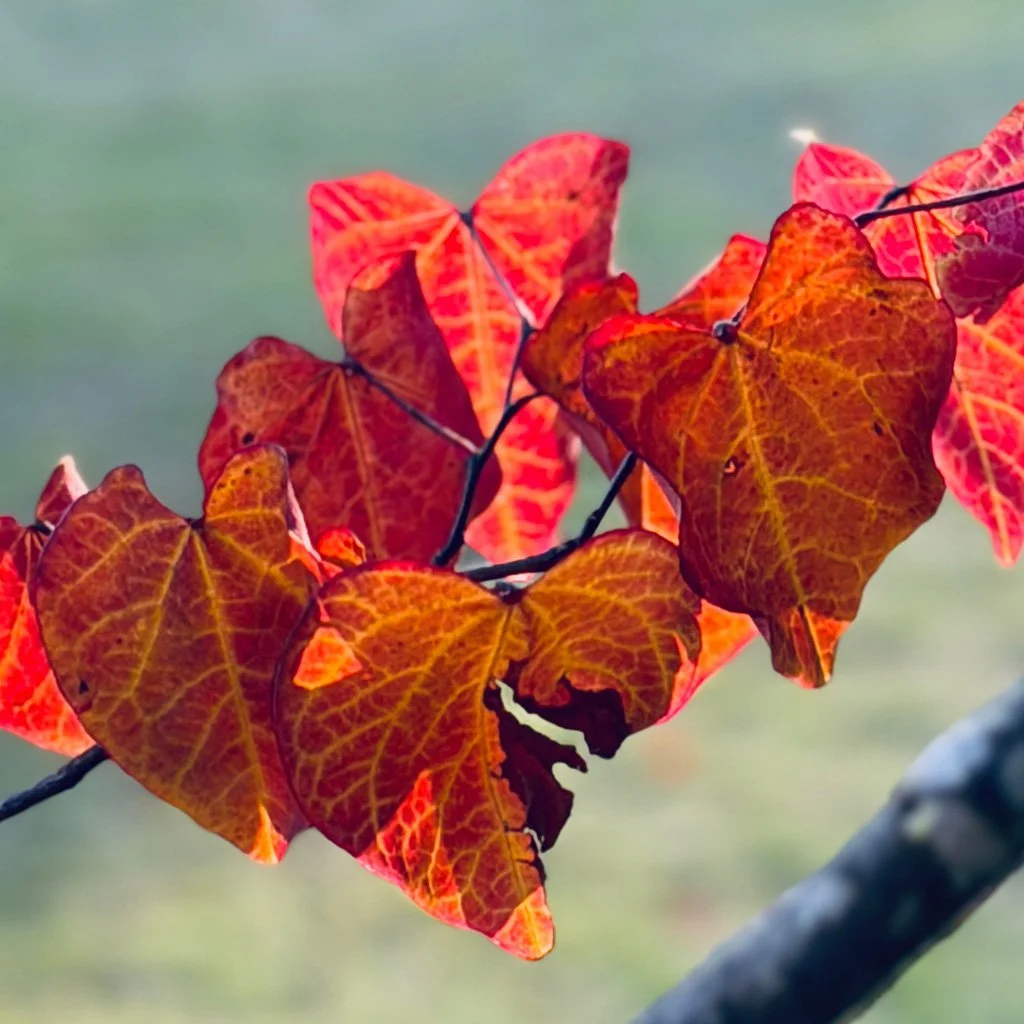
Cercis canadensis is a beautiful small to medium-sized deciduous tree renowned for its spectacular pink-purple spring blossom.
The flowers emerge directly from bare branches and established stems before the heart-shaped leaves open. This produces a vivid early-season display and makes Eastern redbud an outstanding focal-point tree.
Available in standard and multi-stem forms, it is ideal for sheltered lawns, courtyards, ornamental borders and warm contemporary gardens.
Product Highlights
Exceptional pink-purple spring flowers
Blossom carried directly on bare branches
Attractive heart-shaped foliage
Yellow autumn colour
Rounded to spreading crown
Available as a standard or multi-stem tree
Excellent specimen and focal-point plant
Useful early flowers for pollinators
Moderate growth rate
Low routine maintenance
Product Information
Feature / Details
Botanical name: Cercis canadensis
Common names: Eastern redbud and Canadian redbud
Family: Fabaceae
Plant type: Deciduous flowering tree
Mature height: Approximately 6–10 metres
Mature spread: Approximately 5–8 metres
Growth rate: Moderate
Position: Full sun or light partial shade
Exposure: Warm and sheltered
Soil: Fertile and well-drained
Flower colour: Pink-purple
Flowering season: Spring
Autumn colour: Yellow
Maintenance: Low
Suitable For
Sheltered gardens
Courtyard focal points
Medium and large gardens
Contemporary planting schemes
Spring-flowering borders
Multi-stem feature planting
South- and west-facing positions
Protected urban landscapes
When We Would Not Recommend It
Eastern redbud is not normally recommended for:
Exposed upland gardens
Severe coastal exposure
Regular frost pockets
Permanently waterlogged soil
Deep shade
Narrow sites unable to accommodate its crown
Positions requiring evergreen screening
Planting Requirements
Plant in a warm, sheltered position in full sun or light partial shade.
The soil should retain adequate moisture without becoming waterlogged. Good drainage is especially important during wet North West winters.
Keep the root flare at finished soil level, water thoroughly after planting and maintain irrigation during dry periods.
For complete instructions, read our tree planting and establishment guide.
Larger standards and multi-stem trees may require specialist handling and anchoring. See our specimen-tree delivery and planting service.
Rootballed or Container-Grown?
Container-grown stock provides a wider planting window where irrigation is dependable. Rootballed specimens are supplied seasonally and must be protected from drying during handling and planting.
Compare the options in our rootball versus container-grown guide.
Pruning and Maintenance
Cercis canadensis requires little routine pruning.
Remove dead, damaged, crossing or structurally unsuitable branches and preserve the tree’s natural spreading form. Avoid unnecessary reduction because flowers develop on older wood.
Our RHS Pruning Group 1 guide provides relevant minimal-pruning principles.
Our Recommendation
We recommend Cercis canadensis for warm, sheltered gardens where its extraordinary spring flowers can be viewed at close range.
Choose a standard where clearance is important or a multi-stem specimen where low branching and architectural impact are preferred.
Delivery and Professional Planting
Professional planting for Cercis canadensis is available in the following postcode areas:
BB, BL, CH1–CH5, CW8–CW9, FY, L, LA1–LA6, M, OL, PR, SK1–SK12, WA and WN.
Choose Delivery Only or Delivery and Installation from the Service options above. If your postcode is outside these areas and you would like the tree professionally planted, please contact us before ordering. We may still be able to help.
For advice about access, delivery and planting, see the practical guide below or call us on 01942 604976.
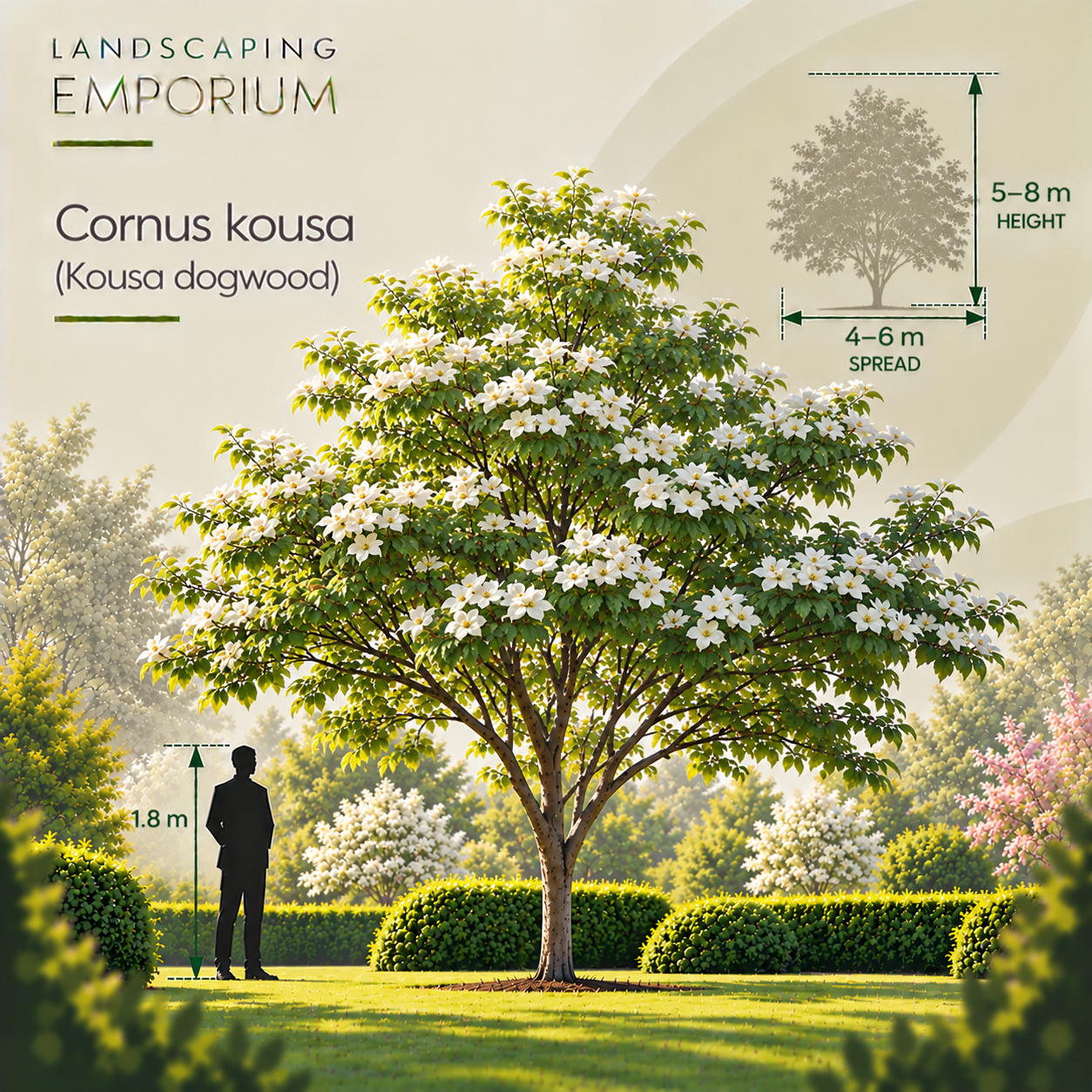
About Cornus kousa – Japanese Flowering Dogwood
Cornus kousa, commonly known as Japanese Flowering Dogwood or Kousa Dogwood, is an exceptionally attractive deciduous specimen tree valued for its spectacular early summer display, elegant branching structure, ornamental fruits and rich autumn foliage.
Originating from East Asia, this ornamental tree develops a graceful, broadly spreading crown with distinctive layered branches. During late spring and early summer, the tree produces an abundance of small greenish flowers surrounded by four prominent, pointed white bracts, creating the appearance of large, star-shaped flowers.
As the season progresses, rounded, strawberry-like fruits develop, providing further ornamental interest. In autumn, the green foliage changes to attractive shades of red, orange and purple before falling to reveal the tree's elegant winter structure.
Cornus kousa is particularly suitable for small to medium-sized gardens, contemporary landscapes, courtyard gardens and ornamental planting schemes where seasonal interest is a priority.
It performs best in a sheltered position with fertile, humus-rich, moisture-retentive but well-drained soil. Full sun or partial shade is suitable, although protection from intense drying conditions is beneficial.
Key Features of Cornus kousa
Growth habit: Small to medium-sized deciduous tree with an elegant, broadly spreading, often tiered crown.
Foliage: Attractive, oval green leaves with prominent curved veins.
Flowers: Small greenish flowers surrounded by four conspicuous white bracts in late spring and early summer.
Ornamental fruit: Rounded, pink to reddish, strawberry-like fruits developing later in the season.
Autumn colour: Rich shades of red, orange, purple and burgundy.
Winter interest: Attractive branching structure and developing bark character.
Growth rate: Slow to moderate, depending on growing conditions.
Position: Full sun or partial shade, ideally sheltered from cold and drying winds.
Soil: Fertile, humus-rich, moisture-retentive but well-drained soil.
Wildlife: Flowers can attract pollinating insects, while fruits may provide food for wildlife.
Garden suitability: Small and medium gardens, ornamental borders, courtyards and feature planting.
Where to Plant Cornus kousa
Cornus kousa makes an excellent focal point in a lawn, within a generous ornamental border or as part of a carefully designed planting scheme.
Its relatively modest mature dimensions make it suitable for many domestic gardens, although sufficient space should be allowed for the naturally spreading crown.
For the best flowering display, choose a position with good light and protection from strong, drying winds. In warmer or more exposed gardens, some afternoon shade can help reduce moisture stress.
The tree is particularly effective when planted alongside evergreen shrubs, ornamental grasses and woodland-edge perennials, allowing its white summer bracts and colourful autumn foliage to stand out.
Avoid permanently waterlogged soil, very dry planting positions and highly alkaline conditions.
Specimen Tree Delivery and Professional Planting
Landscaping Emporium supplies selected specimen trees for garden and landscape projects, with professional planting available through Kirman Design in selected areas of North West England.
We can professionally plant specimen trees in the following postcode areas:
BB, BL, CH1–CH5, CW8, CW9, FY, L, LA1–LA6, M, OL, PR, SK1–SK12, WA and WN.
Please do not select professional planting at checkout if your property is outside these postcode areas without contacting us first.
If you live outside our normal installation area, please call 01942 604976 or email hello@landscapingemporium.co.uk. We may still be able to arrange planting, depending on your location, the tree size and site access.
Before ordering a large Cornus kousa specimen tree, please consider delivery access, gate and passage widths, steps, slopes, overhead restrictions and the available planting space.
Larger rootballed or container-grown specimens may require specialist handling and appropriate planting preparation.
For more information, please refer to our tree specification and delivery, access and planting guidance.
Landscaping Emporium – brought to you by Kirman Design
Unit 9, Bridgewater Business Park
Gladstone Street
Blackburn
BB1 3DL
Telephone: 01942 604976
Email: hello@landscapingemporium.co.uk
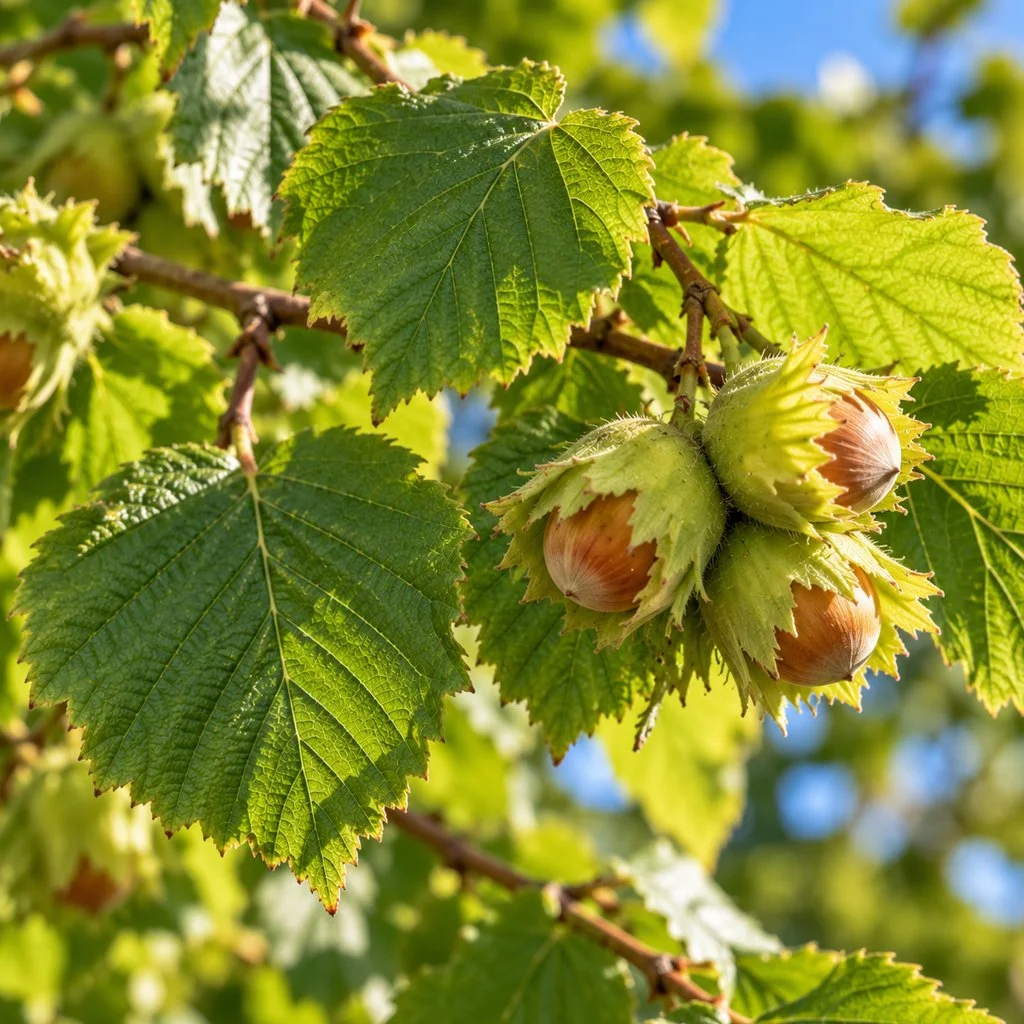
About Corylus avellana – Common Hazel
Corylus avellana, commonly known as Common Hazel, is a versatile UK native deciduous tree or large shrub, valued for its attractive rounded foliage, distinctive golden-yellow catkins, edible hazelnuts and outstanding wildlife benefits.
Naturally developing a broad, multi-stemmed habit, Common Hazel is particularly well suited to naturalistic gardens, woodland planting, wildlife-friendly landscapes and mixed native hedgerows.
During late winter and early spring, the bare branches are decorated with long, pendulous yellow catkins. These are followed by fresh green, rounded leaves with softly toothed edges, creating an attractive, informal canopy throughout the growing season.
By late summer and early autumn, mature plants may produce clusters of edible hazelnuts enclosed within leafy green husks. These provide a valuable food source for birds and small mammals, including squirrels.
In autumn, the foliage develops attractive yellow tones before falling, revealing the plant's natural branching structure.
Common Hazel is particularly useful where a robust, adaptable native tree is required. It can be grown as a multi-stemmed specimen, incorporated into woodland-edge planting or managed through traditional coppicing.
Key Features of Corylus avellana
UK native species: Naturally occurring throughout much of Britain.
Growth habit: Broad, rounded, typically multi-stemmed tree or large shrub.
Foliage: Rounded to heart-shaped green leaves with toothed margins.
Catkins: Attractive yellow male catkins appearing in late winter and early spring.
Hazelnuts: Edible nuts produced in late summer and autumn on mature plants, where pollination and growing conditions are suitable.
Autumn colour: Yellow foliage before leaf fall.
Growth rate: Moderate to fast in favourable conditions.
Wildlife value: Supports numerous insects and provides food and shelter for birds and mammals.
Adaptability: Suitable for a wide range of reasonably well-drained soils.
Management: Can be maintained through coppicing or grown naturally as a specimen.
Garden suitability: Larger gardens, woodland gardens, rural landscapes, native hedgerows and naturalistic planting schemes.
Where to Plant Corylus avellana
Common Hazel is an excellent choice for naturalistic planting schemes and gardens where biodiversity and seasonal interest are important.
It performs particularly well in woodland gardens, rural landscapes, field boundaries and mixed native hedgerows.
For use as a specimen tree, allow sufficient room for its naturally broad and multi-stemmed form to develop. Its mature size makes it more appropriate for medium to large gardens unless regularly managed.
Hazel is adaptable to a variety of soil types, including clay and chalk, provided the ground is not persistently waterlogged.
Although it tolerates partial and even considerable shade, flowering and nut production are generally better in brighter positions.
Common Hazel is also traditionally managed through coppicing, where stems are periodically cut close to ground level to encourage vigorous new growth. This makes it useful for sustainable woodland management and wildlife habitats.
For customers looking for native trees, explore our specimen tree collection or use our Find the Right Specimen Tree tool.
Wildlife Benefits of Common Hazel
Common Hazel is one of Britain's most valuable native woody plants for wildlife.
Its early catkins provide pollen for insects when few other sources are available. The leaves support a range of moth caterpillars and other invertebrates, while mature hazelnuts are eaten by wildlife including squirrels, wood mice and several bird species.
The dense branching structure also offers valuable nesting and shelter opportunities.
When included in a mixed native hedge or woodland-edge planting scheme, Hazel can contribute significantly to local biodiversity.
Specimen Tree Delivery and Professional Planting
Landscaping Emporium supplies selected specimen trees for residential gardens, commercial landscapes and professional planting projects.
Professional planting is available through our associated garden design and landscaping business, Kirman Design, across selected areas of North West England.
Our professional planting service covers the following postcode areas:
BB, BL, CH1–CH5, CW8, CW9, FY, L, LA1–LA6, M, OL, PR, SK1–SK12, WA and WN.
If your property is outside these postcode areas, please contact us before selecting professional planting at checkout.
Larger Common Hazel specimens may be supplied as multi-stemmed, rootballed or container-grown plants, depending on availability and the season.
Please consider access restrictions, planting space, ground conditions and delivery requirements before ordering.
For planting preparation and aftercare, please consult our Planting Guide.
Contact Landscaping Emporium
For assistance choosing the correct size of Common Hazel or arranging professional planting, please contact us.
Landscaping Emporium – brought to you by Kirman Design
Unit 9, Bridgewater Business Park
Gladstone Street
Blackburn
BB1 3DL
Telephone: 01942 604976
Email: hello@landscapingemporium.co.uk
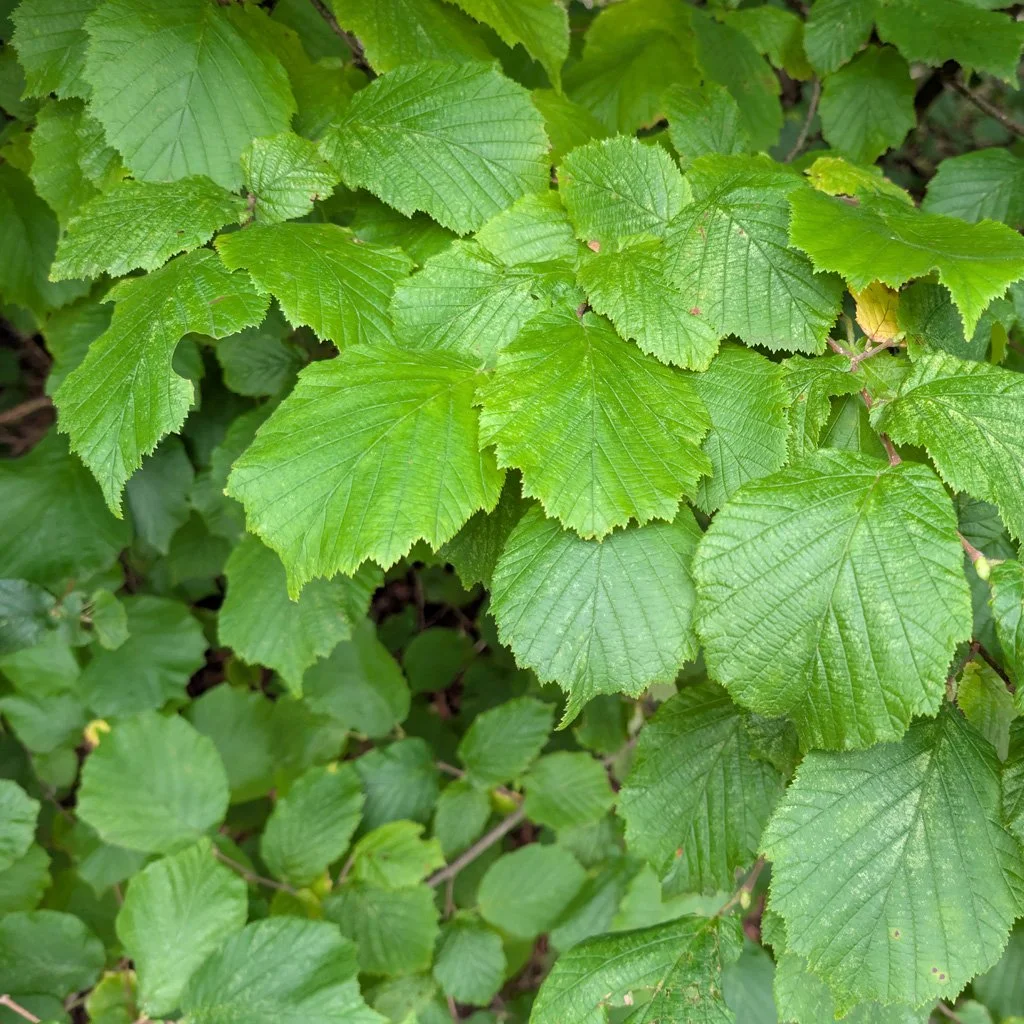
A handsome, naturally pyramidal deciduous tree for avenues, estates, broad lawns and substantial urban landscapes.
Corylus colurna combines a straight trunk and dependable architectural crown with textured corky bark, spring catkins, heart-shaped foliage and yellow autumn colour.
Product Highlights
Strong pyramidal crown when young
Broadens attractively with maturity
Excellent specimen and avenue tree
Straight trunk and formal landscape character
Decorative corky mature bark
Long spring catkins
Fringed autumn nut clusters
Yellow to golden-yellow autumn foliage
Fully hardy
Good urban tolerance
Drought tolerant once established
Low routine maintenance
Product Information
Feature / Details
Botanical name: Corylus colurna
Common name: Turkish hazel
Family: Betulaceae
Plant type: Large deciduous tree
Mature height: Approximately 15–25 metres
Mature spread: Approximately 8–15 metres
Growth rate: Moderate
Position: Full sun or partial shade
Soil types: Chalk, clay, loam and suitable sand
Drainage: Well-drained
Hardiness: Fully hardy
Foliage: Large, heart-shaped green leaves
Autumn colour: Yellow to golden yellow
Flowers: Yellow-brown catkins
Fruit: Nuts enclosed within fringed husks
Maintenance: Low once established
Wildlife value: Good
Suitable For
Large gardens
Estates and parkland
Formal avenues
Broad driveways
Urban and commercial landscapes
Large residential developments
Architectural planting schemes
Substantial lawn specimens
Roadside planting with adequate soil volume
When We Would Not Recommend It
Corylus colurna is unlikely to be appropriate for:
Small or narrow gardens
Confined courtyards
Positions beneath overhead cables
Permanently waterlogged ground
Sites without adequate rooting volume
Locations requiring evergreen screening
Paved areas where nut and husk fall would be unacceptable
Public spaces where nut-allergy risk cannot be managed
Size and Supply Form
Available sizes vary seasonally and may include feathered, standard, heavy-standard, rootballed, container-grown and semi-mature trees.
Please refer to our specimen tree sizes explained guide before ordering.
For help choosing between younger and more established stock, see mature trees versus younger trees.
Rootballed trees are generally supplied during the cooler planting season, while container-grown trees provide a wider planting window where irrigation is available. Learn more in our rootball versus container-grown guide.
Planting Requirements
Plant in full sun or partial shade, allowing substantial space for the crown and roots to develop.
The root flare must remain visible at finished soil level. Secure the tree appropriately and water thoroughly after planting.
Regular watering is essential during establishment. Drought tolerance applies to established trees and should not be taken to mean that newly planted stock can be left without irrigation.
Read our tree planting and establishment guide for detailed aftercare information.
Larger trees may require specialist transport, lifting and anchoring. Our specimen-tree delivery and planting service is available throughout North West England.
Pruning and Maintenance
Protect the central leader and carry out limited formative pruning while the tree is young. Once established, pruning should normally be restricted to damaged, crossing or structurally unsuitable branches.
Avoid unnecessary hard pruning, which can spoil the natural crown and create large wounds.
See our RHS Pruning Group 1 guide for relevant minimal-pruning principles.
Wildlife and Practical Considerations
Spring catkins provide pollen, while nuts may supply food for birds and mammals. The canopy also provides shelter and potential nesting habitat.
Nut production varies and is not guaranteed. Fallen nuts, fringed husks, catkins and leaves create seasonal litter.
Hazelnuts can cause severe allergic reactions. Consider this carefully when specifying the tree beside schools, communal facilities, busy pedestrian areas or other sensitive public spaces.
For native wildlife planting, hedgerows or coppice-style growth, consider Corylus avellana – common hazel.
Our Recommendation
We recommend Corylus colurna for substantial gardens, avenues and urban landscapes where its mature dimensions have been properly accommodated.
It is especially valuable when a project requires strong pyramidal form, a reliable central trunk and greater tolerance of urban conditions and summer dryness than many traditional large deciduous trees.
Contact us with your postcode, preferred size, site photographs and access information for current availability, delivery pricing and planting recommendations.
Delivery and Professional Planting
We can install specimen trees at any of the in following postcodes;
BB, BL, CH1 - CH5, CW8, CW9, FY, L, LA1 - LA6, M, OL, PR, SK1 - SK12, WA, & WN.
Please do not purchase if you want the hedging installed outside this area. If you do live outside the area, then please give us a call on 01942 604976 and we can see if it’s possible to do this.
For more information on the tree see the tree specification below. For more information about delivery, access and planting, see the guide below or click here.
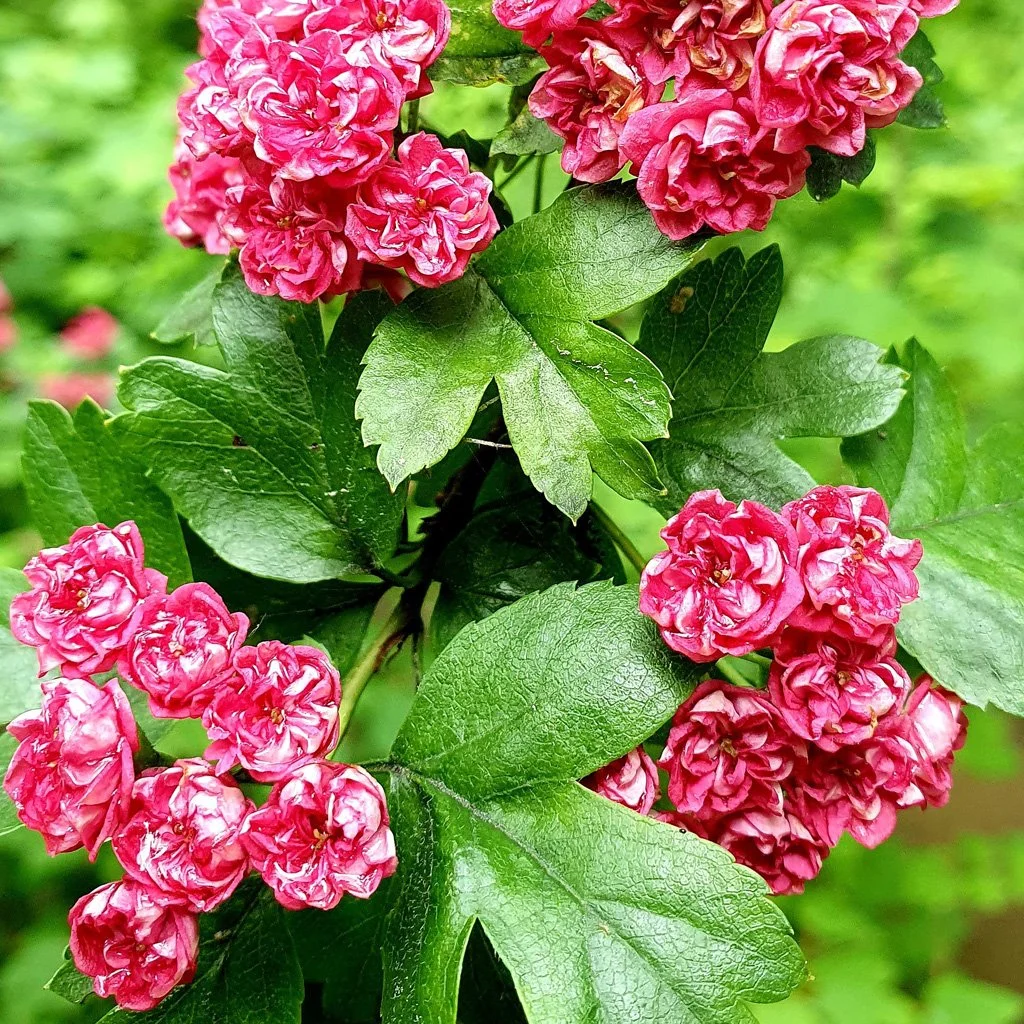
Crataegus laevigata ‘Paul’s Scarlet’ is a hardy ornamental tree renowned for its vivid deep pink-red double flowers.
Its moderate mature size makes it suitable for many gardens where a full-sized parkland tree would be too large. It works particularly well as a lawn specimen, within a large border or repeated along a driveway.
Product Highlights
Deep pink-red double flowers
Spectacular late-spring display
Compact rounded crown
Fully hardy
Good tolerance of clay
Suitable for many medium-sized gardens
Excellent lawn or border specimen
Useful for driveways and avenues
Available in several tree sizes
Delivery and planting available
Product Information
Feature / Details
Botanical name: Crataegus laevigata ‘Paul’s Scarlet’
Common name: Paul’s Scarlet hawthorn
Mature height: Approximately 5–8m
Mature spread: Approximately 4–6m
Growth rate: Slow to moderate
Annual growth: Approximately 20–40cm
Foliage: Deciduous
Flowers: Double, deep pink-red
Flowering period: Usually May
Fruit: Sparse or absent
Position: Full sun or partial shade
Soil: Chalk, clay, loam or sand
Hardiness: Fully hardy
Maintenance: Low to moderate
Choose This Tree If You Want
A compact flowering specimen
Strong red-pink spring colour
A traditional ornamental tree
A lawn or large-border focal point
A repeated driveway or avenue tree
A tree that tolerates suitable clay
A manageable alternative to a large canopy tree
It May Not Be the Best Choice If
Thorns would create a hazard
Maximum pollinator value is required
Abundant berries are wanted
Evergreen screening is essential
The planting position is deeply shaded
The ground is permanently waterlogged
A very fast-growing tree is required
Choosing Your Tree Size
Feathered trees provide an economical starting point and can be trained into the required form.
Standards and selected standards offer a defined stem and established crown, making them the most versatile choice for lawns and driveways.
Multi-stem trees create a broader naturalistic effect. Larger specimens provide stronger immediate impact but require appropriate lifting, anchoring and irrigation.
Read specimen tree sizes explained and mature trees versus younger trees before ordering.
Supply Form
Depending on size, season and nursery availability, trees may be supplied as:
Container-grown
Rootballed
Feathered
Standard
Selected standard
Multi-stem
Larger specimen tree
Our rootball versus container-grown guide explains the available supply options.
Actual height, girth, crown form and rootball or container dimensions vary between nurseries. Confirm the individual tree specification before ordering.
Planting Requirements
Plant with the root flare level with the surrounding ground and prepare a broad rooting area.
New trees require:
Suitable anchoring
Regular establishment watering
Mulching and weed control
Adequate crown and rooting space
Inspection of stakes and ties
Protection from damage
Confirmed access for larger stock
Follow our tree planting and establishment guide.
Specialist specimen-tree delivery and planting is available across North West England.
Pruning and Maintenance
Once a balanced framework has formed, ‘Paul’s Scarlet’ needs relatively little pruning.
Remove dead, damaged, crossing or unsafe growth while cuts remain small. Avoid unnecessary hard pruning because this can reduce flowering and stimulate dense thorny regrowth.
Our RHS Pruning Group 1 guide provides general maintenance guidance.
Wildlife and Practical Considerations
The crown offers nesting and shelter, while the foliage can support invertebrates.
The double flowers are less accessible to insects than single hawthorn blossom, and fruiting is usually sparse. Common hawthorn is therefore the stronger choice for a wildlife-led scheme.
Keep thorny branches away from pedestrian routes, entrances and play areas.
When We Wouldn’t Recommend It
We would not normally recommend ‘Paul’s Scarlet’ where accessible flowers, abundant fruit or maximum native wildlife value are the main objectives.
It is also unsuitable immediately beside children’s play areas or narrow paths where thorny branches cannot be kept safely clear.
Our Recommendation
A selected standard normally provides the best balance between immediate flower impact, manageable handling and successful establishment.
Use a group of matching standards for an avenue or a single well-formed specimen as a lawn or border focal point.
Delivery and Professional Planting
We can install specimen trees at any of the in following postcodes;
BB, BL, CH1 - CH5, CW8, CW9, FY, L, LA1 - LA6, M, OL, PR, SK1 - SK12, WA, & WN.
Please do not purchase if you want the hedging installed outside this area. If you do live outside the area, then please give us a call on 01942 604976 and we can see if it’s possible to do this.
For more information on the tree see the tree specification below. For more information about delivery, access and planting, see the guide below or click here.
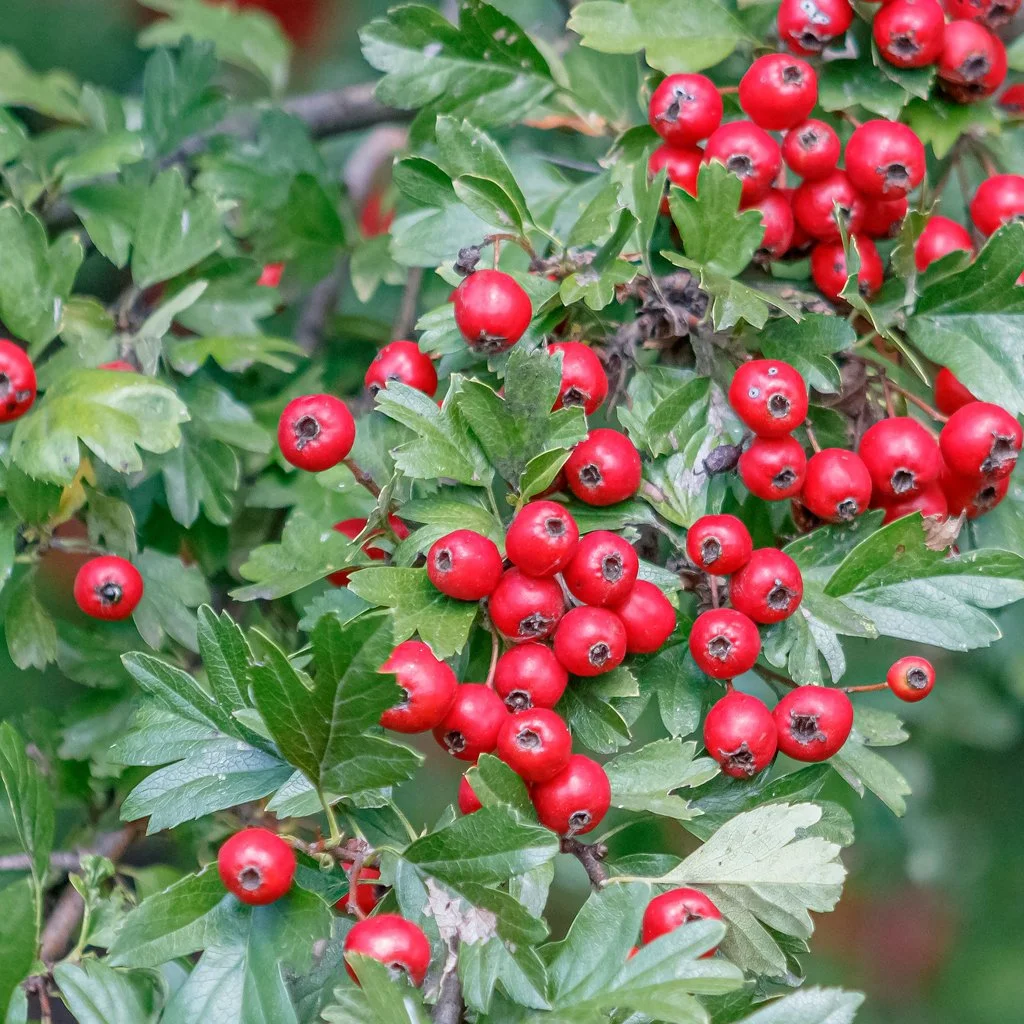
Crataegus monogyna is a hardy and adaptable native tree offering white spring blossom, deeply lobed foliage, red autumn haws and outstanding habitat value.
It is an excellent choice for customers seeking a smaller native tree for an informal garden, rural landscape, meadow, orchard or ecological planting scheme.
Tree Highlights
UK-native deciduous tree
White blossom during late spring
Red autumn haws
Exceptional wildlife value
Fully hardy
Excellent tolerance of exposure
Suitable for clay and chalk
Moderate to fast growth when young
More compact than many native canopy trees
Available in different forms and sizes
Tree Information
Feature / Details
Botanical name: Crataegus monogyna
Common names: Common hawthorn, quickthorn
Mature height: Approximately 6–10m
Mature spread: Approximately 4–8m
Growth rate: Moderate to fast
Foliage: Deciduous
Flowers: White clusters, usually May
Fruit: Red autumn haws
Position: Full sun or partial shade
Soil: Chalk, clay, loam or sand
Hardiness: Fully hardy
Wildlife value: Exceptional
Maintenance: Low to moderate
Choose This Tree If You Want
A tough native specimen
Spring blossom and autumn fruit
A wildlife-friendly tree
A tree for an exposed garden
An informal, naturalistic crown
Rural or traditional character
A manageable alternative to oak or beech
A tree suited to several soil types
It May Not Be the Best Choice If
Thorns would be hazardous
The tree would be immediately beside a play area
Fallen fruit would affect pale paving or vehicles
An evergreen tree is required
The planting position is deeply shaded
The ground remains permanently waterlogged
A perfectly uniform formal crown is essential
Selecting Your Tree
Young bare-root or feathered hawthorn trees are economical and establish readily when planted during the dormant season.
Standards provide a defined stem and immediate tree shape. Multi-stem specimens create a broader, more naturalistic effect but require additional room for low thorny branches.
Larger trees provide greater immediate impact but need confirmed delivery access, anchoring and establishment irrigation.
See specimen tree sizes explained and mature trees versus younger trees before ordering.
Planting Requirements
Plant with the root flare level with the surrounding ground. Prepare a broad rooting area and avoid placing additional soil or mulch against the trunk.
Newly planted trees require:
Suitable support or anchoring
Regular watering
A mulch-covered rooting area
Grass and weed control
Protection from rabbits, deer or livestock where necessary
Periodic checks of stakes, ties and guards
Follow our tree planting and establishment guide.
For standards and larger trees, specialist specimen-tree delivery and planting is available across North West England.
Pruning and Maintenance
Once the required crown structure has formed, hawthorn needs relatively little routine pruning.
Remove dead, damaged, crossing or unsafe branches and avoid unnecessary hard cutting. Wear suitable gloves and eye protection because the branches are thorny.
Our RHS Pruning Group 1 guide provides general maintenance guidance.
Wildlife and Practical Considerations
The spring flowers support pollinating insects, while the autumn haws provide food for birds. The dense thorny crown also offers valuable nesting and shelter.
Avoid positioning low branches beside busy paths and collect thorny prunings carefully.
Fruit production varies naturally and should not be treated as guaranteed. Fallen haws may stain or become slippery on hard surfaces.
When We Wouldn’t Recommend It
We would not normally recommend common hawthorn immediately beside children’s play areas, narrow entrances or heavily used pedestrian routes.
It is also unsuitable where evergreen screening, a completely formal crown or consistently thorn-free growth is required.
Our Recommendation
Crataegus monogyna is one of the most useful native trees for wildlife-focused and rural planting.
A selected standard works well as a garden or lawn specimen. Feathered and multi-stem trees are particularly effective in meadows, woodland edges and naturalistic schemes.
Delivery and Professional Planting
We can install specimen trees at any of the in following postcodes;
BB, BL, CH1 - CH5, CW8, CW9, FY, L, LA1 - LA6, M, OL, PR, SK1 - SK12, WA, & WN.
Please do not purchase if you want the hedging installed outside this area. If you do live outside the area, then please give us a call on 01942 604976 and we can see if it’s possible to do this.
For more information on the tree see the tree specification below. For more information about delivery, access and planting, see the guide below or click here.
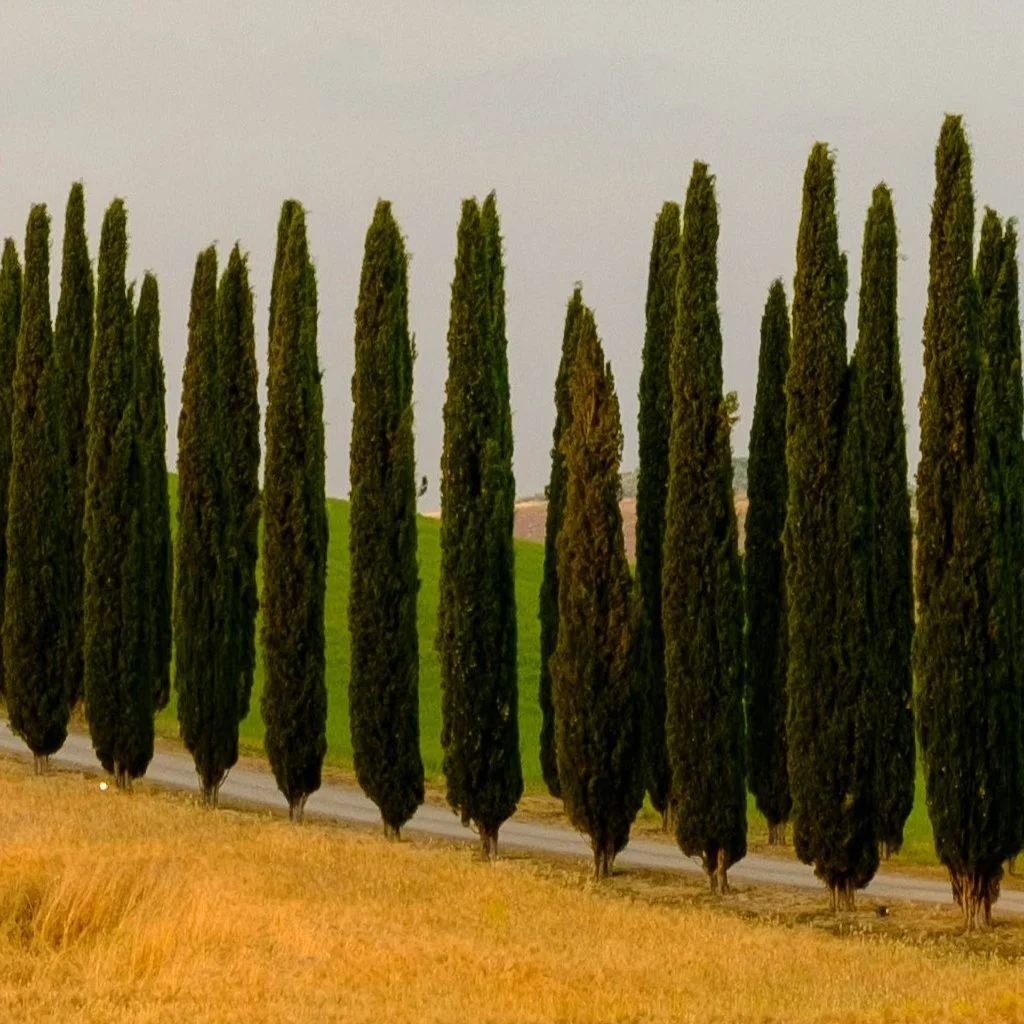
Cupressus sempervirens, commonly known as Italian Cypress or Mediterranean Cypress, is a long-lived evergreen conifer with a tall, upright form. Its dense, dark green foliage creates a strong vertical feature in the garden throughout the year.
Italian Cypress is associated with the landscapes of the Mediterranean. In the UK, it grows best in full sun, in well-drained soil and in a sheltered position. It is particularly suited to gardens with a warm microclimate and enough space for its eventual height.
The species can reach around 15 metres tall, with a spread of approximately 2.5–4 metres. Its precise shape and mature dimensions vary, so check the details for the tree you are buying.
Key Features of Cupressus sempervirens
Evergreen conifer with dense, dark green foliage
Tall, upright form creates strong vertical interest
Long-lived tree
Suited to a sunny, sheltered position
Needs well-drained soil
Tolerates dry conditions once established
RHS hardiness rating H5
Mature size and shape vary between trees
Architectural specimen for larger gardens and landscapes
Cupressus sempervirens – Tree Specification
Botanical name: Cupressus sempervirens
Common name: Italian Cypress / Mediterranean Cypress
Family: Cupressaceae
Tree type: Evergreen conifer
Mature height: Up to approximately 15m, depending on form and growing conditions.
Mature spread: Approximately 2.5–4m; allow space for the tree’s mature shape.
Time to maturity: Approximately 20–50 years.
Growth rate: Moderate to fast in suitable conditions.
Crown shape: Usually narrow and columnar in cultivation, though the species can vary in form.
Foliage: Small, scale-like leaves held in dense sprays; usually dark green.
Cones: Rounded to oval cones, approximately 2–3cm across, develop on the tree.
Position: Full sun.
Soil: Adaptable to chalk, clay, loam and sandy soils, provided drainage is good.
Soil moisture: Well-drained. Tolerates dry conditions once established but dislikes waterlogged soil.
Exposure: Sheltered.
Hardiness: RHS hardiness rating H5.
Native status: Not native to the UK; native to the Mediterranean region and western Asia.
Wildlife value: Evergreen foliage provides year-round structure and potential cover.
Maintenance: Low maintenance. Pruning is generally unnecessary.
Suitable uses: Architectural planting, vertical accents, specimen planting and larger gardens with a warm, sheltered position.
Why Choose Cupressus sempervirens?
Tall, Narrow Form
Italian Cypress is valued for its upright shape. It can create a strong vertical accent beside an entrance, along a garden boundary or within a larger landscape scheme.
The exact outline varies between trees and forms. Check the supplied tree’s dimensions and habit when choosing a position.
Evergreen Structure
The dense, dark green foliage remains on the tree throughout the year. This provides a consistent feature in the garden and can bring structure to a planting scheme in every season.
A Distinctive Architectural Tree
The columnar outline gives Italian Cypress a strong architectural character. It can be used as a focal point or planted in a group where the design has enough room for the trees to develop.
Best in a Sunny, Sheltered Site
Cupressus sempervirens grows best in full sun and well-drained soil. A sheltered position is important in the UK, especially where cold or drying winds could affect the tree’s shape and growth.
A warm, sunny microclimate will give it the best chance to establish well.
Tolerant of Dry Conditions
Once established, Italian Cypress can tolerate dry conditions. Good drainage is still important, and the tree should not be planted where water remains around the roots.
Watering is important during establishment and during prolonged dry weather, particularly in the first growing seasons.
Planting and Establishment
Choose a sunny, sheltered position with well-drained soil. Check the available space against the expected mature height and spread, and consider buildings, boundaries, paths and overhead restrictions.
Prepare the planting area and set the tree so the root flare sits at the correct finished soil level. Water thoroughly after planting and water regularly while the tree establishes.
A mulch layer can help retain soil moisture and reduce competition from grass and weeds. Keep mulch clear of the trunk.
For larger nursery specimens, professional planting is recommended. Staking or another suitable support may be needed depending on the size of the tree and site conditions.
Maintaining Cupressus sempervirens
Italian Cypress is generally low maintenance and usually does not need routine pruning.
Remove dead or damaged growth if necessary. If light trimming is required to maintain the shape, avoid cutting into old wood.
Water during prolonged dry periods while the tree is establishing. Once established, it is more tolerant of dry conditions.
Important Planting Considerations
Cupressus sempervirens is best suited to sunny, sheltered sites with well-drained soil. It is not a suitable choice for waterlogged ground or a cold, exposed position.
The mature size and shape can vary between individual trees and forms. Check the product measurements before ordering and allow enough space for the tree to develop.
Although it is tolerant of dry conditions once established, newly planted trees still need regular watering while their roots establish.
Specimen Tree Delivery and Professional Planting
Landscaping Emporium, brought to you by Kirman Design, offers professional specimen tree supply and planting throughout selected areas of North West England.
We provide professional tree planting in the following postcode areas:
BB, BL, CH1–CH5, CW8, CW9, FY, L, LA1–LA6, M, OL, PR, SK1–SK12, WA and WN.
Please do not select professional planting at checkout if your property is outside these postcode areas without contacting us first.
If your property is outside our normal installation area, please contact us. We may still be able to arrange planting depending on your location, tree size and site access.
Before ordering, please consider delivery access, gate and passage widths, steps, slopes, overhead restrictions and the available planting space.
Cupressus sempervirens trees may be supplied in different nursery sizes and root formats depending on current stock and seasonal availability.
Overall height, trunk girth, crown dimensions and natural branching structure will vary between individual specimens.
Contact Landscaping Emporium
Landscaping Emporium – brought to you by Kirman Design
Unit 9, Bridgewater Business Park
Gladstone Street
Blackburn
BB1 3DL
Telephone: 01942 604976
Email: hello@landscapingemporium.co.uk
Website: www.landscapingemporium.co.uk
Professional tree supply and planting across North West England.
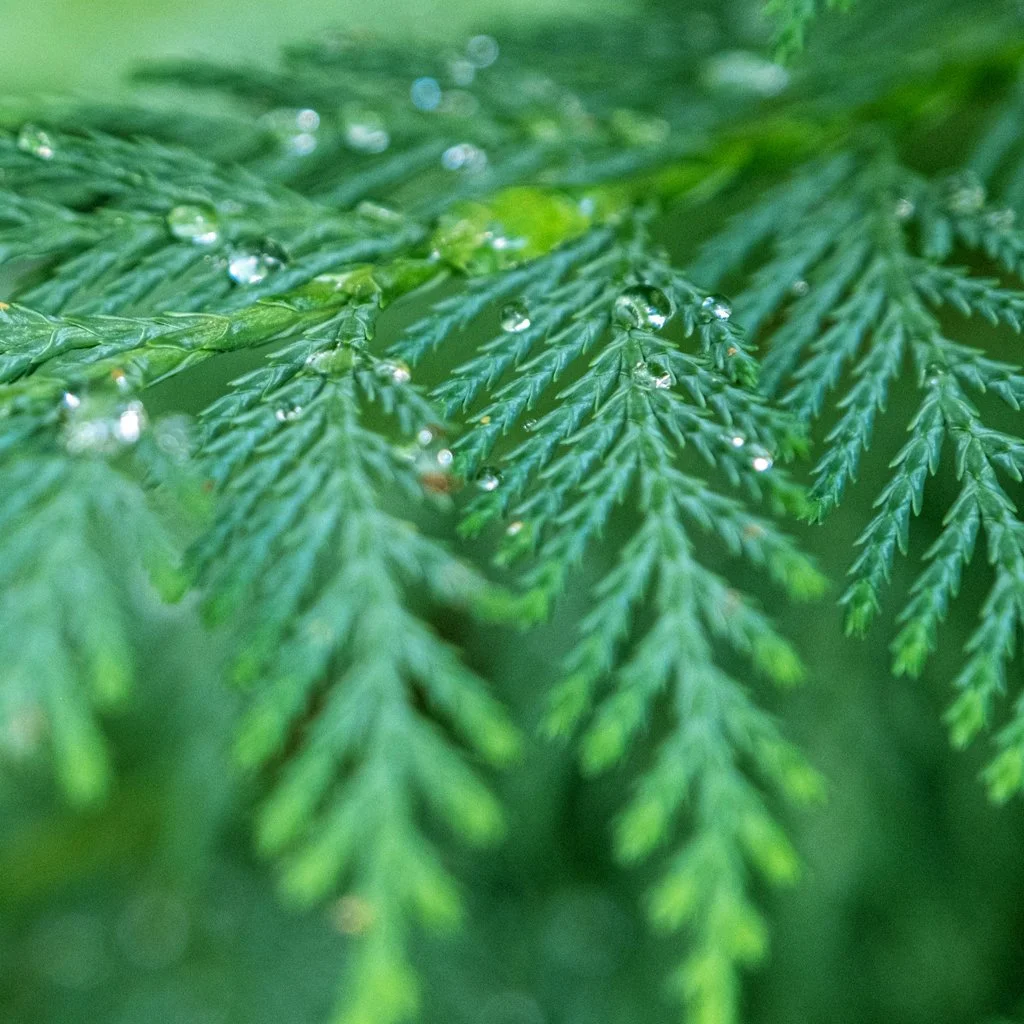
Cupressus x leylandii, commonly known as Leyland Cypress or Leylandii, is a vigorous evergreen conifer valued for its exceptionally fast growth, dense green foliage and naturally upright, conical habit. Its flattened sprays of scale-like leaves provide year-round colour and substantial screening, making it particularly useful for large gardens, rural properties and landscape planting.
Although frequently used for hedging, Leyland Cypress can also be grown as an individual specimen tree, developing into an impressive evergreen feature with considerable height and spread. It performs best in full sun or partial shade and moist but well-drained soil, tolerating a range of soil types. For North West England gardens, allow generous space for its mature size and consider the potential impact on neighbouring properties, buildings and long-term maintenance requirements.
Key Features of Leyland Cypress
Very fast growth rate • Tall, upright conical habit • Dense green evergreen foliage • Excellent year-round screening • Suitable for large gardens and substantial landscapes • Provides shelter and cover for birds
Cupressus x leylandii Plant Specification
Mature size: 20–30m+ high × 4–8m+ wide when unpruned
Growth rate: Very fast
Foliage: Evergreen
Position: Full sun or partial shade
Soil: Moist but well-drained clay, loam, sand or chalk; avoid prolonged waterlogging
UK native: No
Wildlife value: Moderate – provides evergreen shelter, nesting cover and protection for birds
Specimen Tree Delivery and Professional Planting
We can professionally plant specimen trees in the following postcode areas:
BB, BL, CH1–CH5, CW8, CW9, FY, L, LA1–LA6, M, OL, PR, SK1–SK12, WA and WN.
Please do not select professional planting at checkout if your property is outside these postcode areas without contacting us first.
If you live outside our normal installation area, please call 01942 604976 or email hello@landscapingemporium.co.uk. We may still be able to arrange planting, depending on your location, the tree size and site access.
Before ordering a large specimen tree, please consider delivery access, gate and passage widths, steps, slopes, overhead restrictions and the available planting space.
For more information, please refer to our tree specification and delivery, access and planting guidance.
Landscaping Emporium – brought to you by Kirman Design
Unit 9, Bridgewater Business Park
Gladstone Street
Blackburn
BB1 3DL
Telephone: 01942 604976
Email: hello@landscapingemporium.co.uk
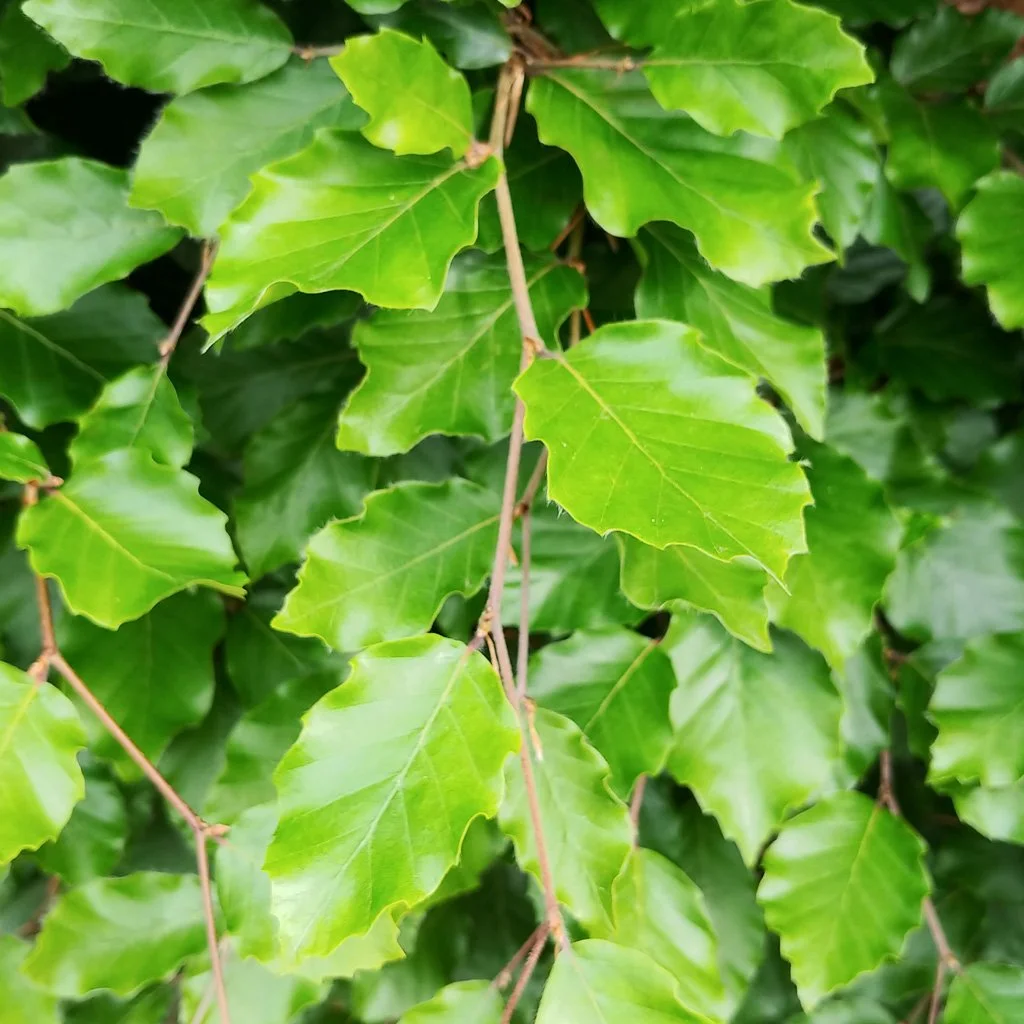
Fagus sylvatica, commonly known as green beech or common beech, is an imposing native tree with a broad canopy, smooth grey bark and excellent seasonal character.
It is a premium choice for substantial gardens, estates, parkland and formal avenues where its eventual size can be treated as an asset.
Tree Highlights
Magnificent large native tree
Fresh green spring foliage
Dense summer canopy
Yellow, copper and bronze autumn colour
Smooth silver-grey bark
Strong winter structure
Fully hardy
Excellent wildlife value
Suitable for parkland and estates
Available in several forms and specimen sizes
Tree Information
Feature / Details
Botanical name: Fagus sylvatica
Common names: Green beech, common beech
Mature height: Approximately 20–30m
Mature spread: Approximately 15–25m
Growth rate: Moderate
Foliage: Deciduous; fresh to dark green
Autumn colour: Yellow, copper, bronze and brown
Position: Full sun or partial shade
Soil: Fertile, moisture-retentive and well-drained
Hardiness: Fully hardy
Maintenance: Low once established
Wildlife value: Excellent
Suitable for small gardens: No
Choose This Tree If You Want
A substantial native specimen tree
An imposing mature crown
Traditional parkland character
Dense summer shade
Smooth architectural bark
Strong autumn colour
A formal avenue with generous spacing
A tree with long-term landscape and habitat value
It May Not Be the Best Choice If
Your garden is small or narrow
The site cannot accommodate a 15–25m crown
Evergreen screening is essential
The soil is permanently waterlogged
The ground is extremely dry or shallow
Dense shade would cause problems
Establishment watering cannot be provided
Buildings or utilities are too close
Choosing Your Tree Size
Young feathered trees are economical and establish readily while developing a natural crown.
Standards and heavy standards provide a recognisable tree form and useful immediate scale. Semi-mature and multi-stem specimens create greater impact but require specialist lifting, anchoring and irrigation.
Read specimen tree sizes explained and our comparison of mature trees and younger trees before ordering.
Supply Form
Depending on size, season and nursery availability, green beech may be supplied as:
Container-grown tree
Rootballed tree
Feathered tree
Standard
Heavy standard
Multi-stem specimen
Semi-mature tree
Our rootball versus container-grown guide explains the advantages and practical requirements of each option.
Confirm the actual height, stem girth, crown form and rootball or container dimensions before finalising an order.
Planting Requirements
Green beech should be planted into a broad area of prepared soil with its root flare level with the surrounding ground.
Larger trees require:
Confirmed vehicle and machinery access
Safe lifting by the rootball
Suitable anchoring
Dependable irrigation
Mulching and weed control
Regular aftercare inspections
Adequate crown and rooting space
Follow our tree planting and establishment guide.
Specialist specimen-tree delivery and planting is available for suitable projects across North West England.
Pruning and Maintenance
Green beech requires little routine pruning after a sound framework has developed.
Remove damaged, crossing or structurally weak growth while cuts remain small. Avoid unnecessary heavy pruning or large wounds.
Our RHS Pruning Group 1 guide provides general maintenance guidance. Mature trees should be inspected and worked on by a qualified arborist.
Wildlife and Practical Considerations
Fagus sylvatica is an important native tree. Its foliage, bark, roots, leaf litter and mature crown support invertebrates, fungi, birds and other wildlife.
Beech mast and leaves will fall beneath the crown. Dense shade may also restrict the range of plants or grass that can grow below a mature specimen.
Beech nuts and foliage should not be treated as food. Significant ingestion may be harmful to people, pets or livestock.
When We Wouldn’t Recommend It
We would not normally recommend Fagus sylvatica for small domestic gardens or sites without sufficient long-term crown and rooting space.
We would also advise against it on permanently saturated ground, immediately beneath overhead services or where dense summer shade would create a foreseeable problem.
Our Recommendation
Green beech is an outstanding choice where there is sufficient space for a large native tree to mature naturally.
For many projects, a well-formed standard or heavy standard provides the best balance between immediate presence, establishment potential and handling requirements.
Semi-mature trees are best reserved for projects with confirmed machinery access, professional installation and dependable long-term aftercare.
Delivery and Professional Planting
We can install specimen trees at any of the in following postcodes;
BB, BL, CH1 - CH5, CW8, CW9, FY, L, LA1 - LA6, M, OL, PR, SK1 - SK12, WA, & WN.
Please do not purchase if you want the hedging installed outside this area. If you do live outside the area, then please give us a call on 01942 604976 and we can see if it’s possible to do this.
For more information on the tree see the tree specification below. For more information about delivery, access and planting, see the guide below or click here.
Acer campestre, commonly known as Field Maple, is a dependable UK-native tree with a naturally rounded crown and excellent golden autumn colour. It has small, five-lobed leaves with softly rounded lobes, with mid to dark green summer foliage and butter yellow to gold autumn colour. It is the UK’s only native maple and is especially useful where resilience and wildlife value matter.
This tree is well suited to medium and large gardens, native schemes, estates, woodland edges and informal avenues. It performs best in full sun or partial shade and most well-drained soils, including clay, loam, chalk and sand. For North West England gardens, allow enough space for the mature crown and assess drainage, exposure and access before selecting the final tree size.
Key Features of Field Maple
Moderate growth rate • Dense and rounded, broadening with age habit • Mid to dark green summer foliage • Butter yellow to gold autumn colour • UK native • Flowers support insects and the crown offers food, shelter and nesting habitat
Acer campestre Plant Specification
Mature size: 10–15m high × 8–12m wide
Growth rate: Moderate
Foliage: Deciduous
Position: Full sun or partial shade
Soil: Most well-drained soils, including clay, loam, chalk and sand
UK native: Yes
Wildlife value: High: flowers support insects and the crown offers food, shelter and nesting habitat
We can install specimen trees at any of the in following postcodes;
BB, BL, CH1 - CH5, CW8, CW9, FY, L, LA1 - LA6, M, OL, PR, SK1 - SK12, WA, & WN.
Please do not purchase if you want the hedging installed outside this area. If you do live outside the area, then please give us a call on 01942 604976 and we can see if it’s possible to do this.
For more information on the tree see the tree specification below. For more information about delivery, access and planting, see the guide below.