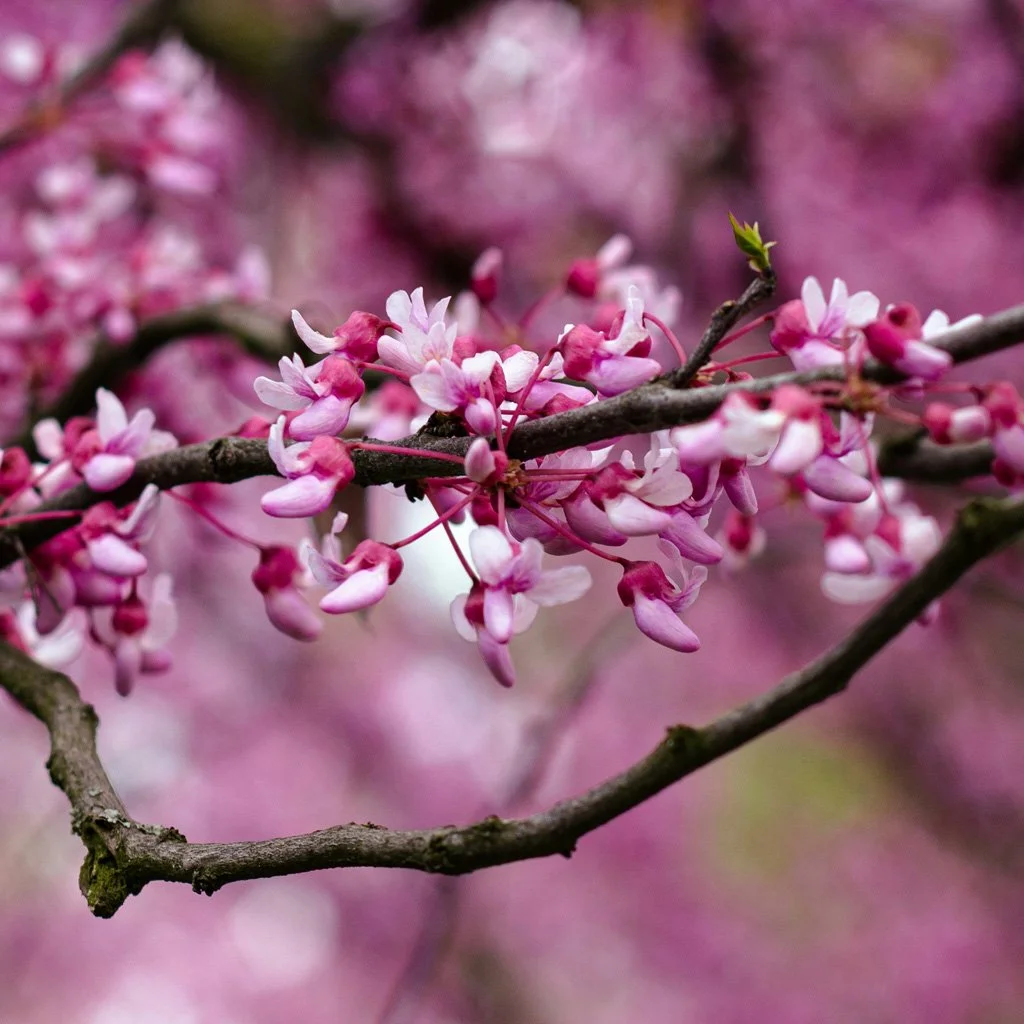
About Cornus kousa – Japanese Flowering Dogwood
Cornus kousa, commonly known as Japanese Flowering Dogwood or Kousa Dogwood, is an exceptionally attractive deciduous specimen tree valued for its spectacular early summer display, elegant branching structure, ornamental fruits and rich autumn foliage.
Originating from East Asia, this ornamental tree develops a graceful, broadly spreading crown with distinctive layered branches. During late spring and early summer, the tree produces an abundance of small greenish flowers surrounded by four prominent, pointed white bracts, creating the appearance of large, star-shaped flowers.
As the season progresses, rounded, strawberry-like fruits develop, providing further ornamental interest. In autumn, the green foliage changes to attractive shades of red, orange and purple before falling to reveal the tree's elegant winter structure.
Cornus kousa is particularly suitable for small to medium-sized gardens, contemporary landscapes, courtyard gardens and ornamental planting schemes where seasonal interest is a priority.
It performs best in a sheltered position with fertile, humus-rich, moisture-retentive but well-drained soil. Full sun or partial shade is suitable, although protection from intense drying conditions is beneficial.
Key Features of Cornus kousa
Growth habit: Small to medium-sized deciduous tree with an elegant, broadly spreading, often tiered crown.
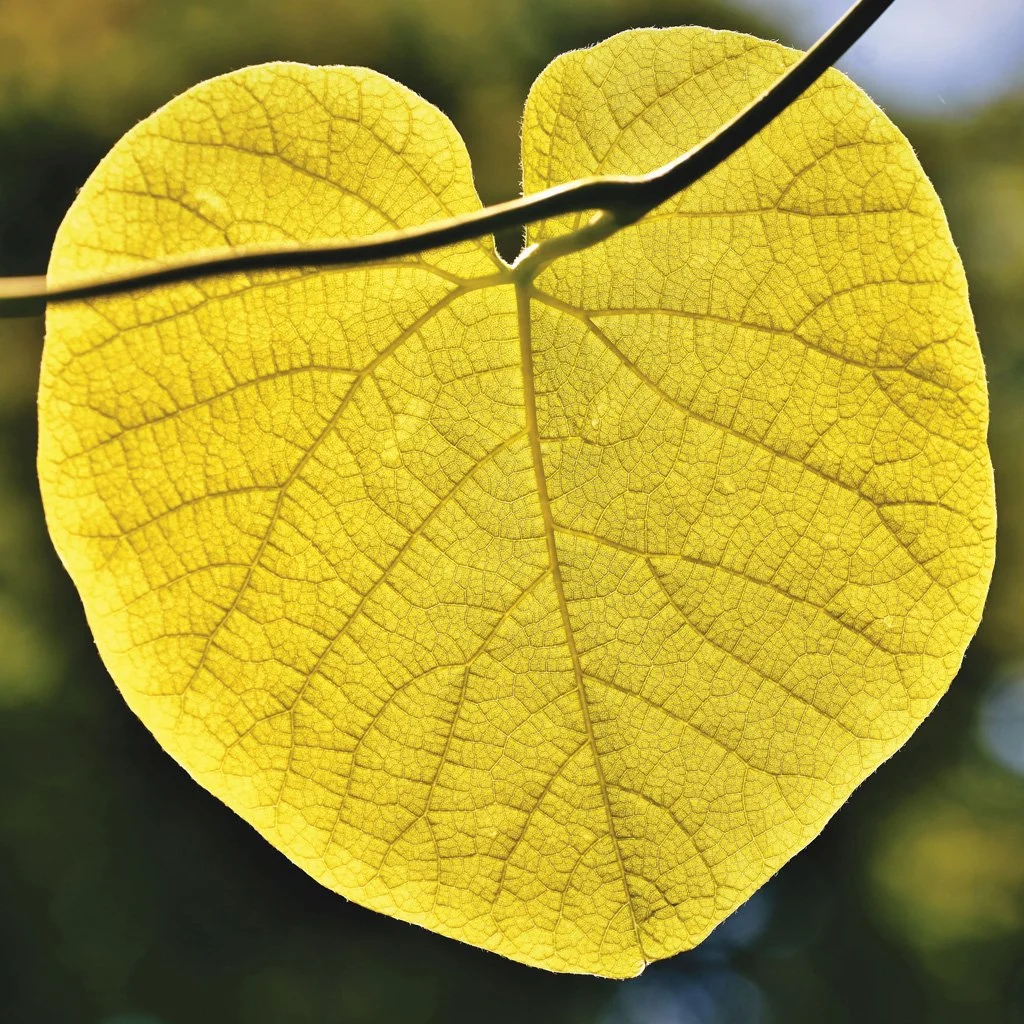
Foliage: Attractive, oval green leaves with prominent curved veins.
Flowers: Small greenish flowers surrounded by four conspicuous white bracts in late spring and early summer.
Ornamental fruit: Rounded, pink to reddish, strawberry-like fruits developing later in the season.
Autumn colour: Rich shades of red, orange, purple and burgundy.
Winter interest: Attractive branching structure and developing bark character.
Growth rate: Slow to moderate, depending on growing conditions.
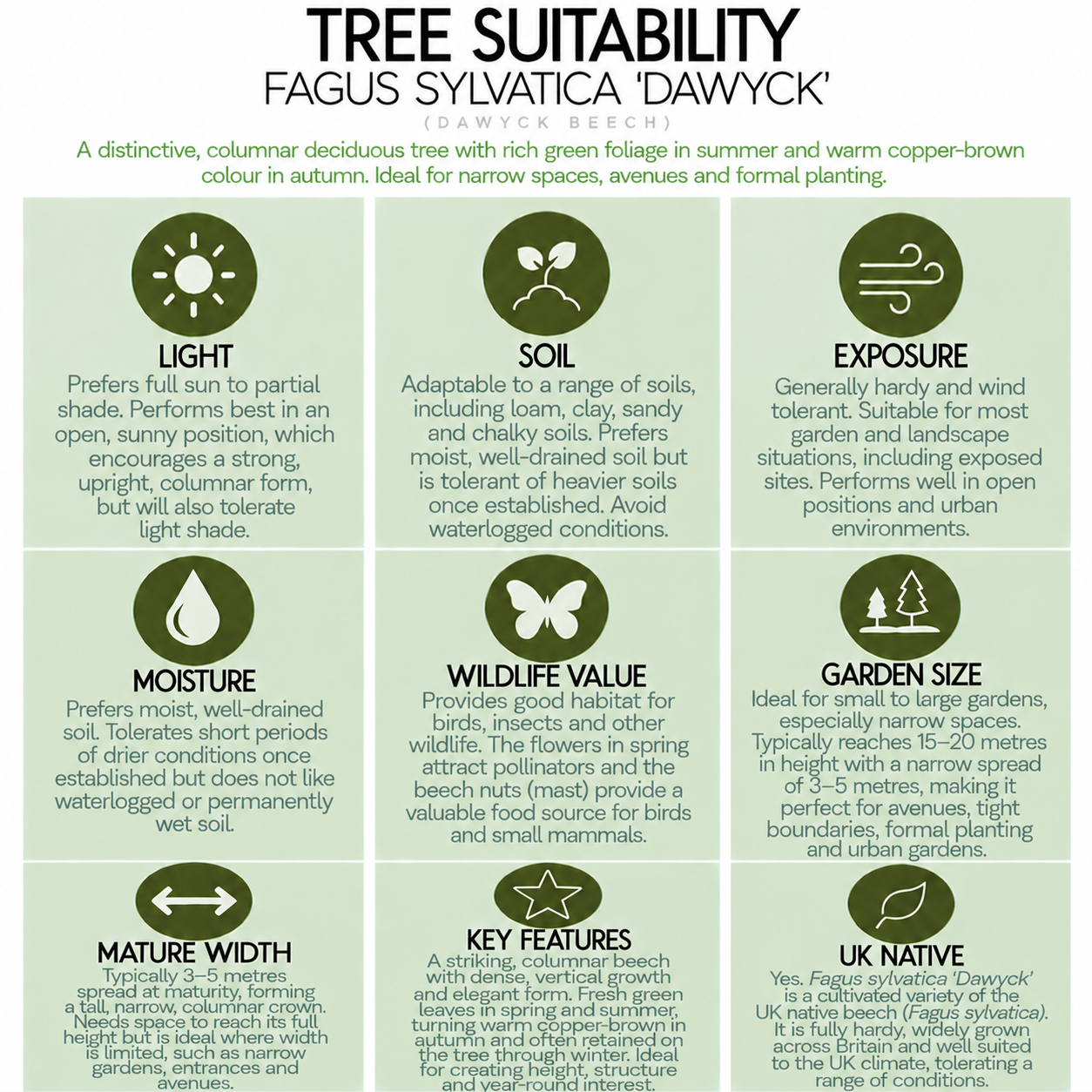
Position: Full sun or partial shade, ideally sheltered from cold and drying winds.
Soil: Fertile, humus-rich, moisture-retentive but well-drained soil.
Wildlife: Flowers can attract pollinating insects, while fruits may provide food for wildlife.
Garden suitability: Small and medium gardens, ornamental borders, courtyards and feature planting.
Where to Plant Cornus kousa
Cornus kousa makes an excellent focal point in a lawn, within a generous ornamental border or as part of a carefully designed planting scheme.
Its relatively modest mature dimensions make it suitable for many domestic gardens, although sufficient space should be allowed for the naturally spreading crown.
For the best flowering display, choose a position with good light and protection from strong, drying winds. In warmer or more exposed gardens, some afternoon shade can help reduce moisture stress.
The tree is particularly effective when planted alongside evergreen shrubs, ornamental grasses and woodland-edge perennials, allowing its white summer bracts and colourful autumn foliage to stand out.
Avoid permanently waterlogged soil, very dry planting positions and highly alkaline conditions.
Specimen Tree Delivery and Professional Planting
Landscaping Emporium supplies selected specimen trees for garden and landscape projects, with professional planting available through Kirman Design in selected areas of North West England.
We can professionally plant specimen trees in the following postcode areas:
BB, BL, CH1–CH5, CW8, CW9, FY, L, LA1–LA6, M, OL, PR, SK1–SK12, WA and WN.
Please do not select professional planting at checkout if your property is outside these postcode areas without contacting us first.
If you live outside our normal installation area, please call 01942 604976 or email hello@landscapingemporium.co.uk. We may still be able to arrange planting, depending on your location, the tree size and site access.
Before ordering a large Cornus kousa specimen tree, please consider delivery access, gate and passage widths, steps, slopes, overhead restrictions and the available planting space.
Larger rootballed or container-grown specimens may require specialist handling and appropriate planting preparation.
For more information, please refer to our tree specification and delivery, access and planting guidance.
Landscaping Emporium – brought to you by Kirman Design
Unit 9, Bridgewater Business Park
Gladstone Street
Blackburn
BB1 3DL
Telephone: 01942 604976
Email: hello@landscapingemporium.co.uk

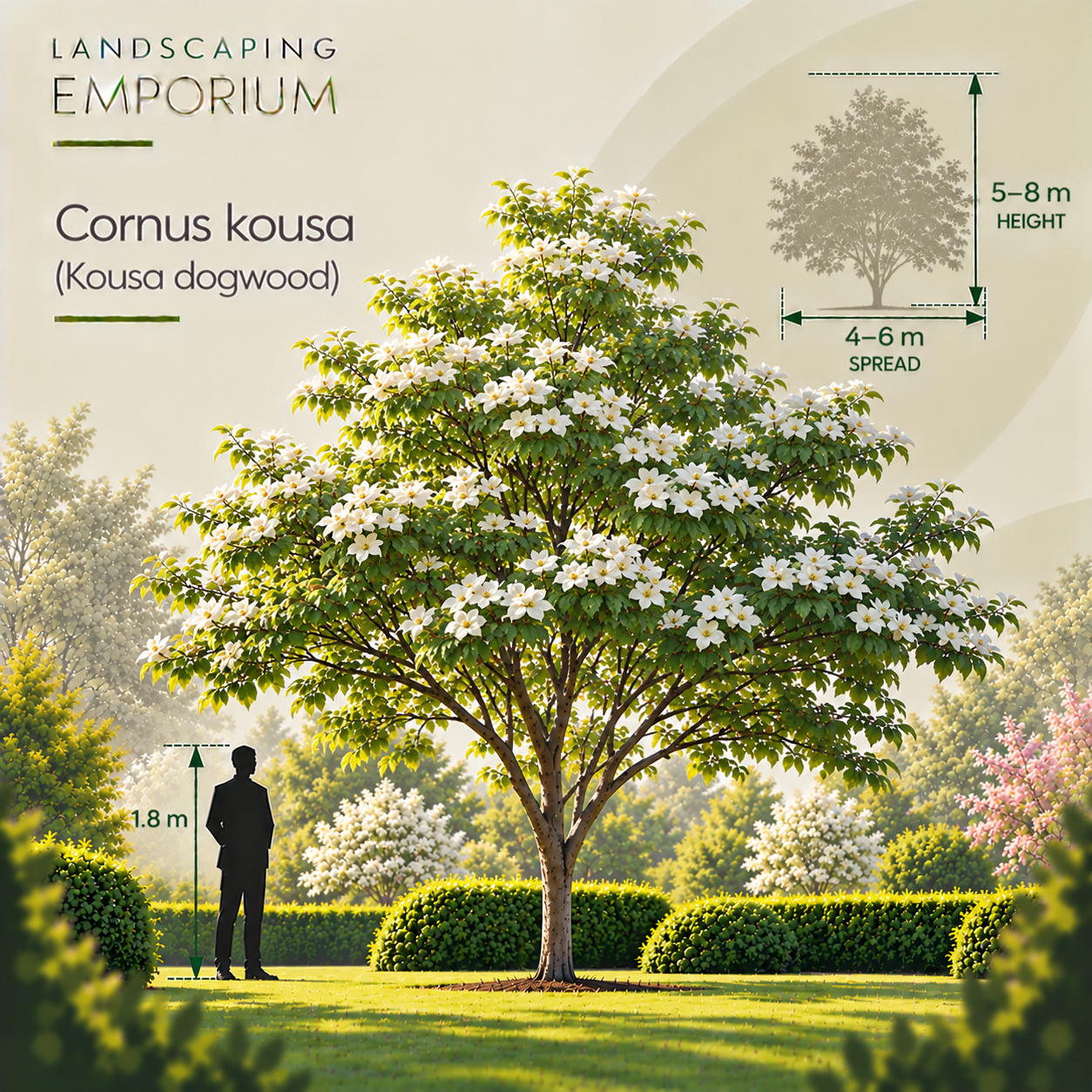 Image 1 of 12
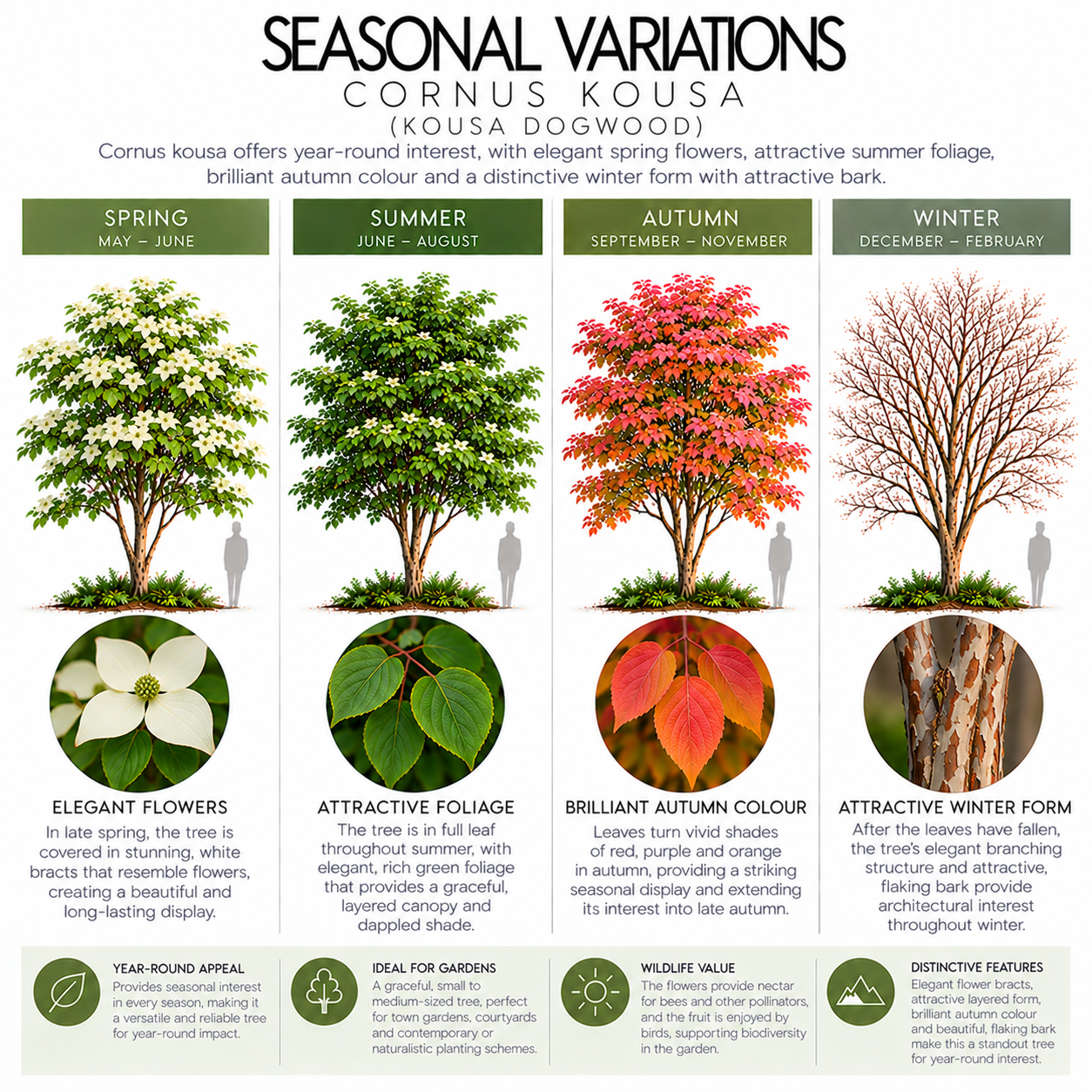 Image 2 of 12
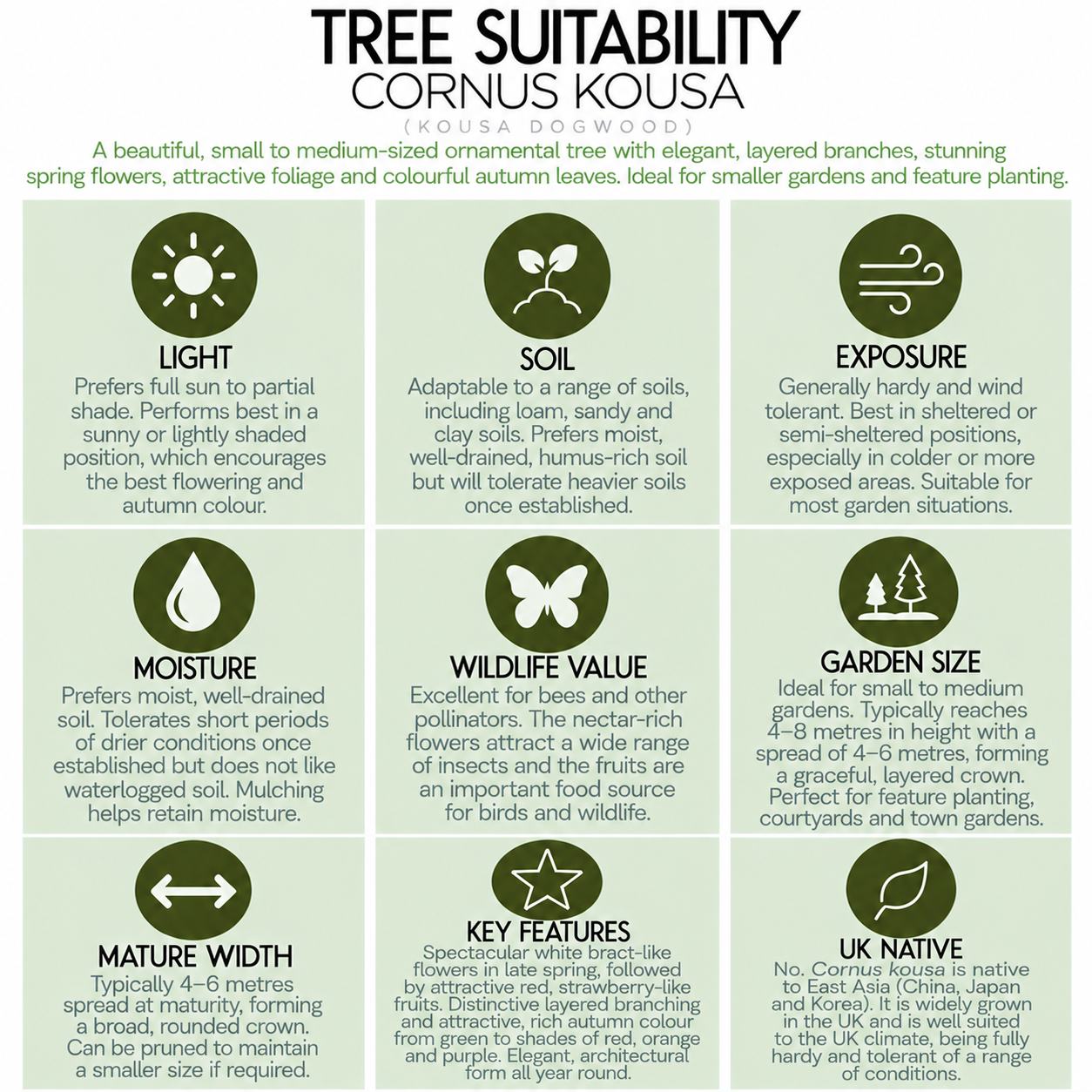 Image 3 of 12
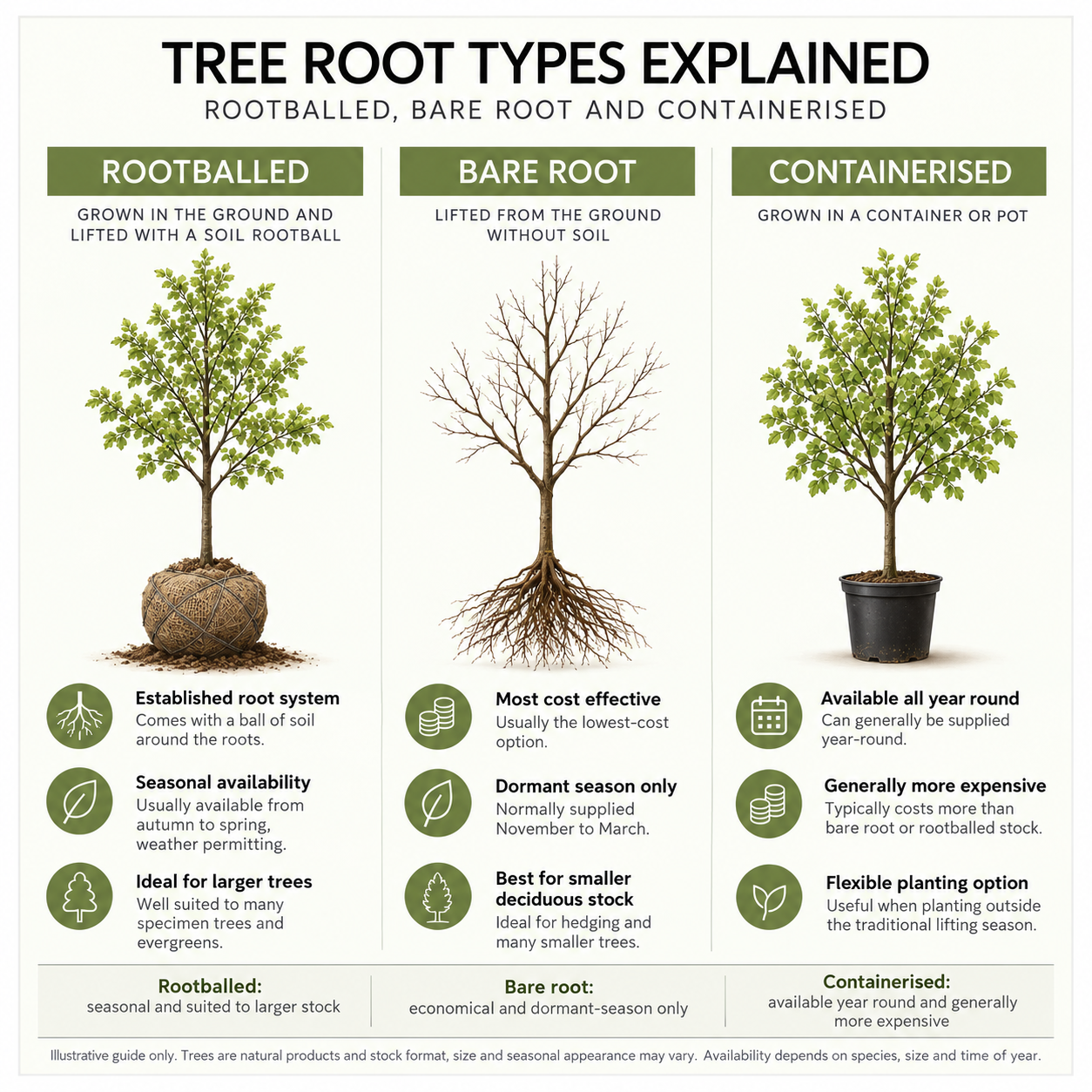 Image 4 of 12
 Image 5 of 12
 Image 6 of 12
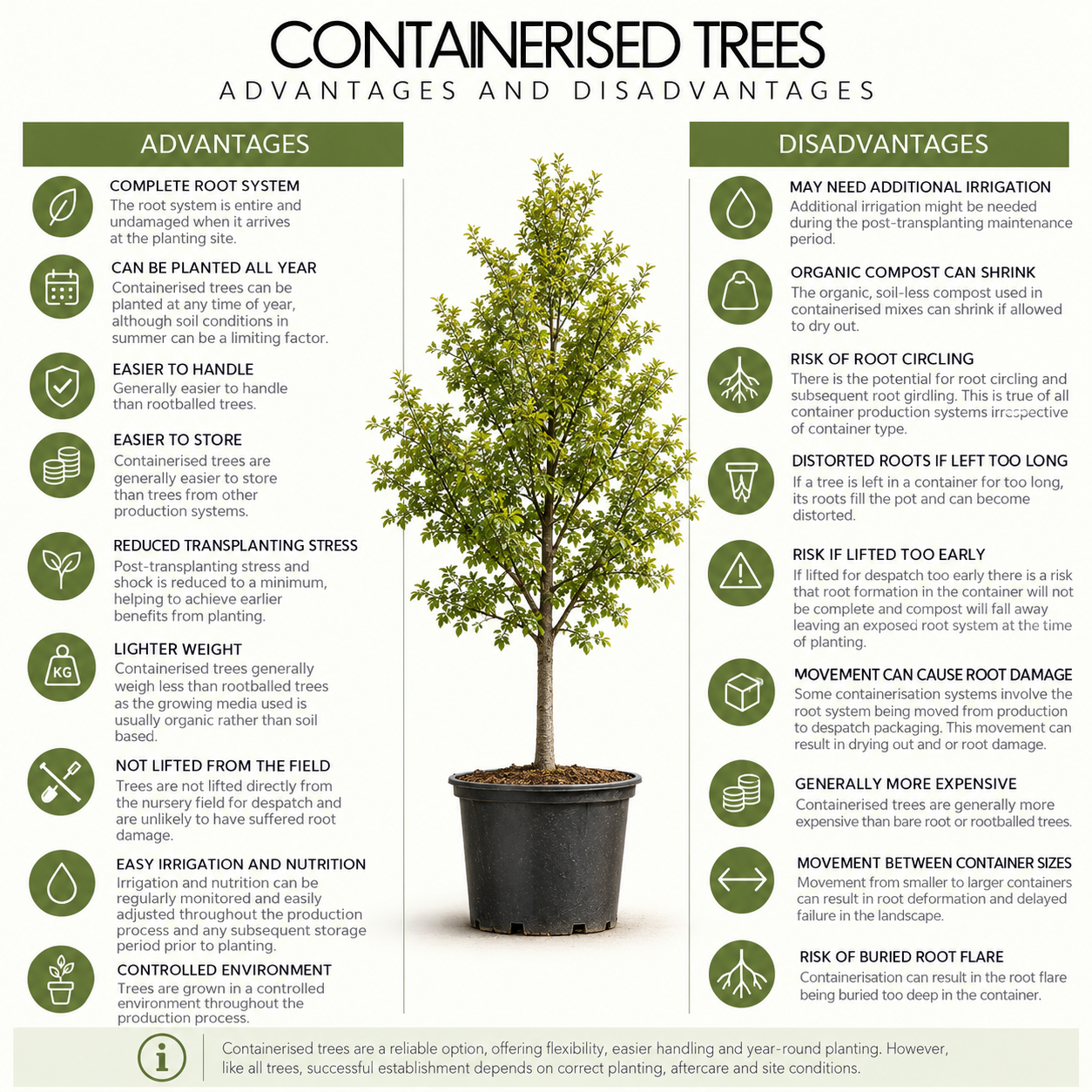 Image 7 of 12
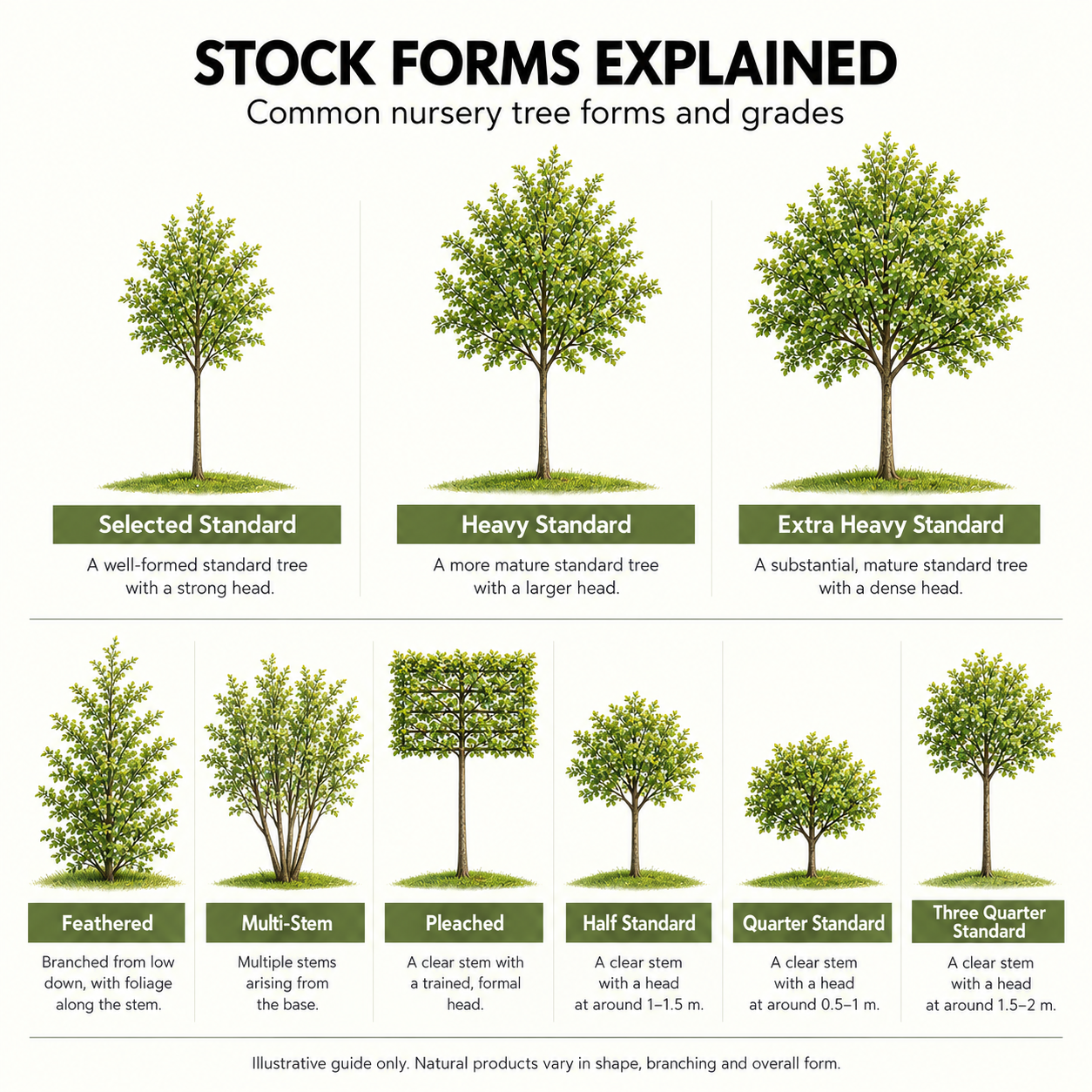 Image 8 of 12
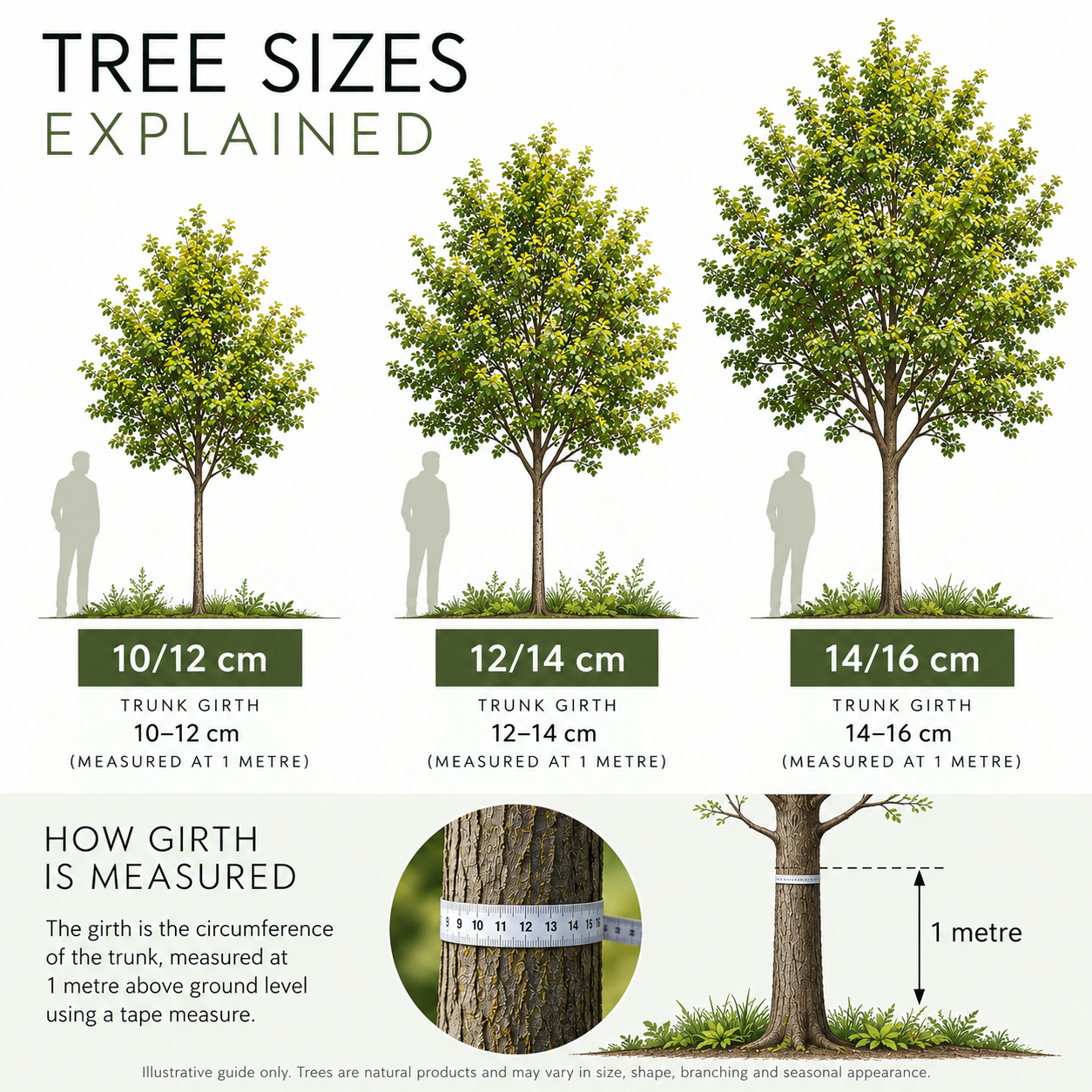 Image 9 of 12
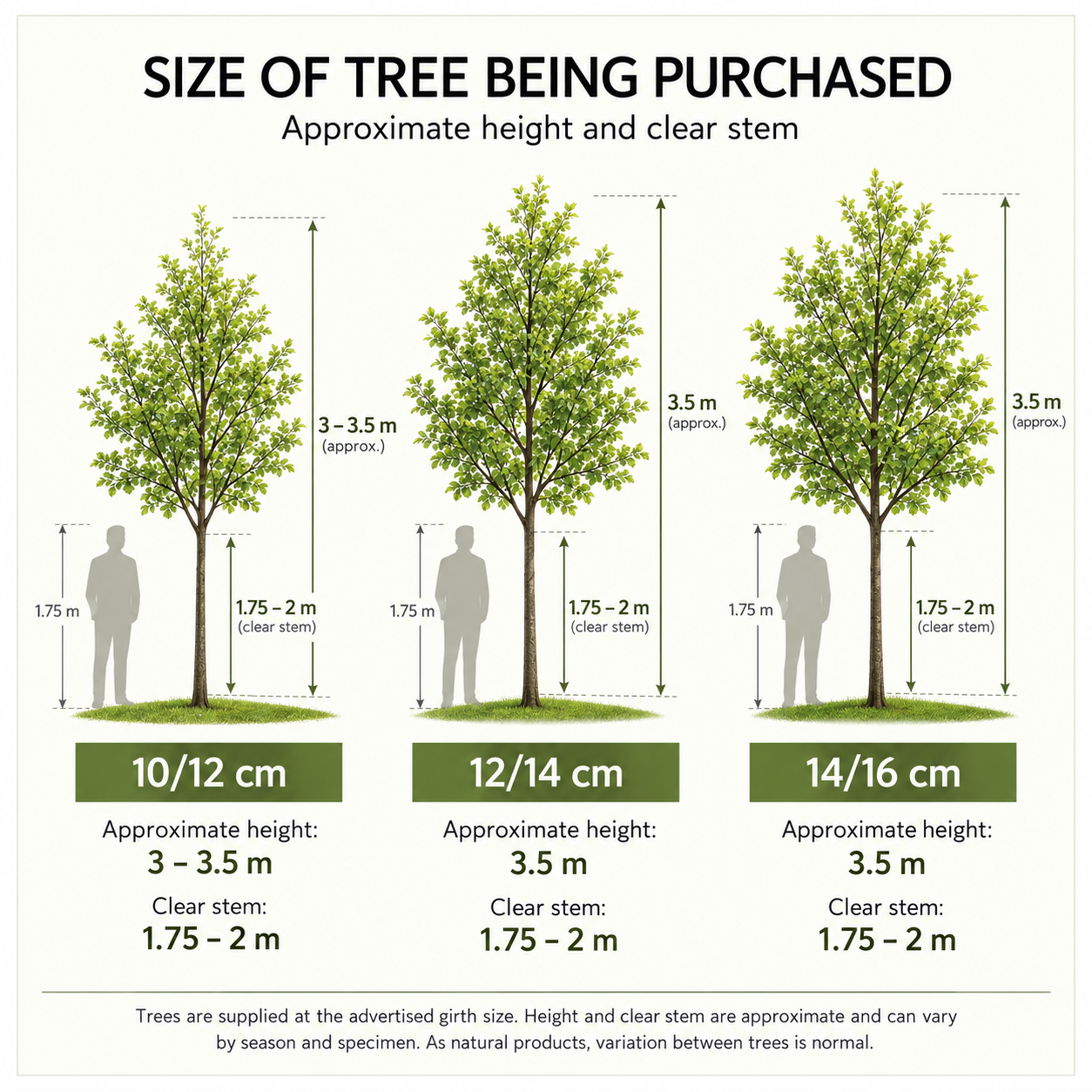 Image 10 of 12
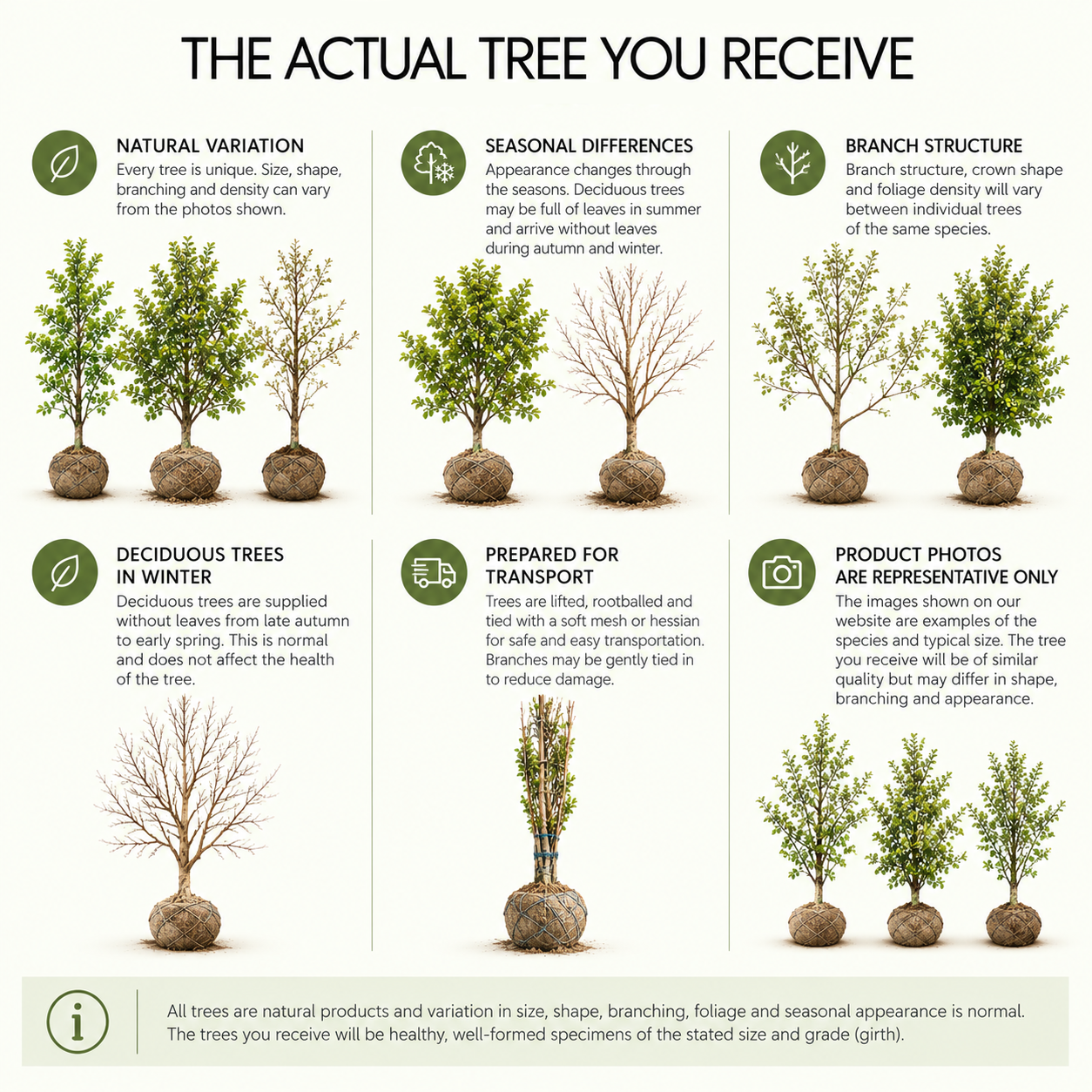 Image 11 of 12
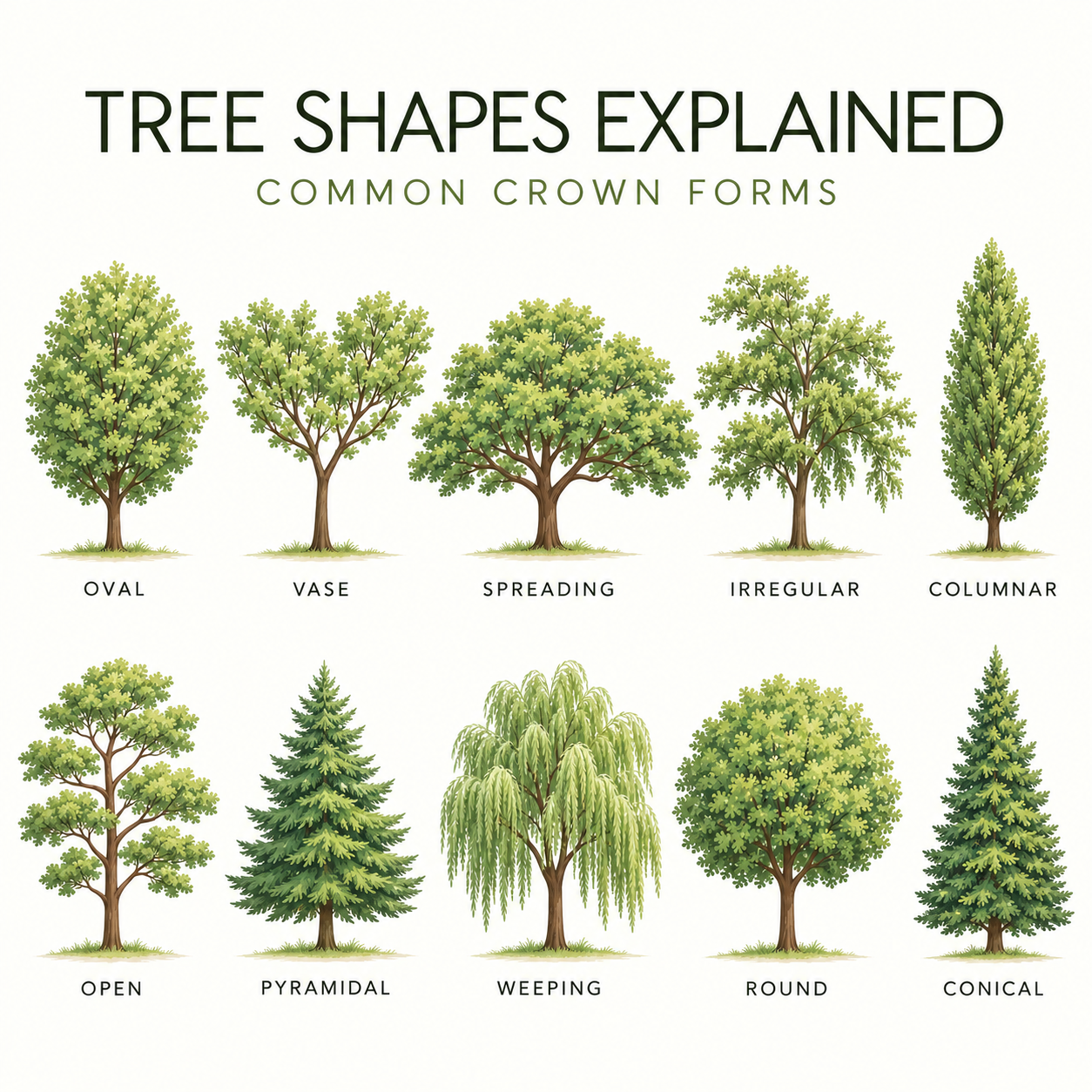 Image 12 of 12