utdoor living spaces and introducing strong architectural structure into contemporary gardens.
Its dense branching, attractive green foliage and excellent response to pruning make it one of the most popular species for pleached screening in the UK.
During spring, fresh green leaves emerge along the trained branches, gradually developing into a dense summer canopy.
In autumn, the foliage turns golden yellow before becoming copper-brown.
Although Hornbeam is deciduous, some dry leaves may remain attached during winter, particularly on regularly clipped younger growth. This characteristic is known as marcescence.
Winter leaf retention varies between individual trees and growing conditions and should not be relied upon for complete year-round privacy.
Pleached Hornbeam is particularly suitable for gardens across Lancashire, Greater Manchester, Cheshire and the wider North West of England, where its adaptability to heavier soils and reliable hardiness are valuable advantages.
Key Features of Pleached Carpinus betulus
Attractive rectangular pleached canopy
Excellent elevated privacy screening
Dense green foliage during spring and summer
Beautiful golden yellow autumn colour
Some copper-brown foliage may remain during winter
Particularly effective above fences and boundary walls
Ideal for screening neighbouring windows
Excellent response to regular pruning
Strong architectural appearance
Suitable for contemporary and traditional gardens
Particularly tolerant of heavier clay soils
Hardy and reliable in the British climate
Native British tree species
Provides useful habitat and shelter for wildlife
Suitable for planting in continuous rows
Available in different clear-stem heights and frame dimensions, subject to nursery stock
Carpinus betulus – Pleached Tree Specification
Botanical name: Carpinus betulus
Common name: Pleached Hornbeam / Pleached Common Hornbeam
Family: Betulaceae
Tree type: Deciduous broadleaf tree trained into a formal pleached canopy
Supplied form: Clear-stem specimen with a rectangular trained crown, commonly supported by a nursery framework.
Typical clear-stem height: Approximately 1.8–2.2m, depending on the nursery specification.
Typical pleached frame width: Approximately 1.2–1.8m, depending on the selected product option.
Typical pleached frame height: Approximately 1.0–1.5m, depending on the selected product option.
Typical overall height when supplied: Approximately 2.8–3.7m, depending on clear-stem height and frame dimensions.
Natural mature height: Untrained Hornbeam can eventually reach approximately 20–25m or more in favourable conditions.
Natural mature spread: Approximately 10–15m or more when grown as an unrestricted mature tree.
Maintained pleached dimensions: Determined by the original framework, available space and ongoing pruning.
Growth rate: Moderate.
Foliage: Deciduous, with attractive oval green leaves, prominent veins and finely serrated margins.
Spring foliage: Fresh, bright green.
Summer foliage: Dense, medium to dark green.
Autumn colour: Golden yellow, developing into copper-brown tones.
Winter foliage: Some dry leaves may remain attached, particularly on regularly clipped younger growth.
Crown shape: Formal rectangular pleached canopy with horizontally trained branching.
Flowers: Inconspicuous spring catkins.
Fruit: Small nutlets carried within distinctive three-lobed leafy bracts, although regular clipping can reduce flowering and seed production.
Position: Full sun or partial shade.
Soil: Adaptable to a wide range of soils, including clay, loam, chalky and sandy soils.
Soil moisture: Prefers m

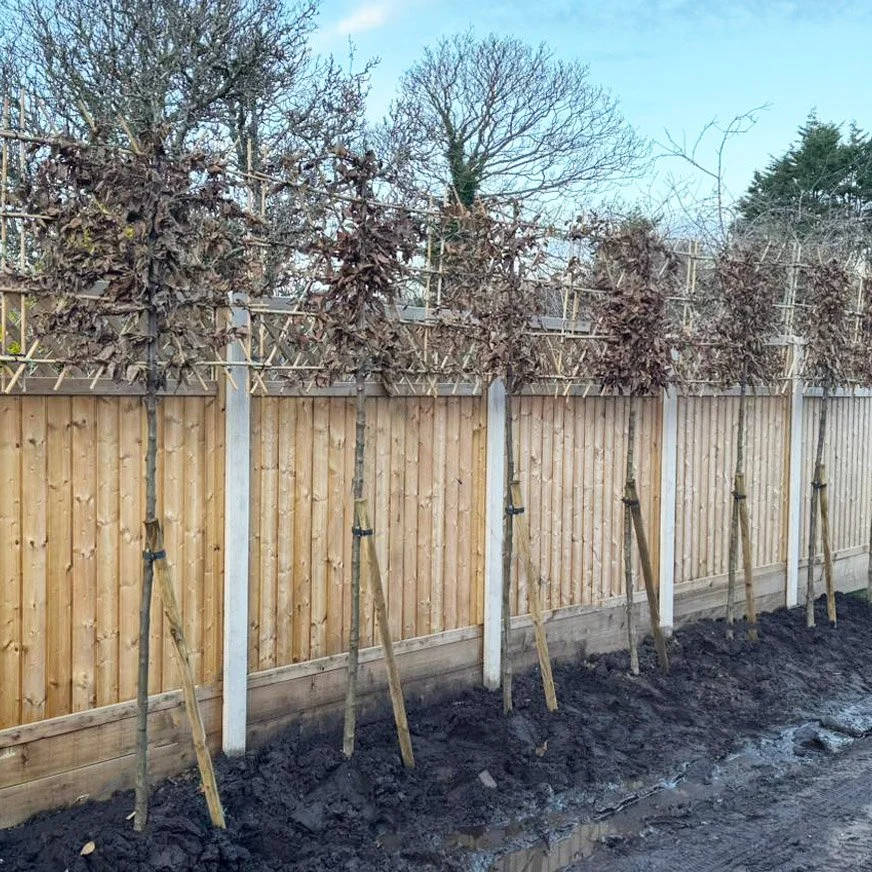 Image 1 of 14
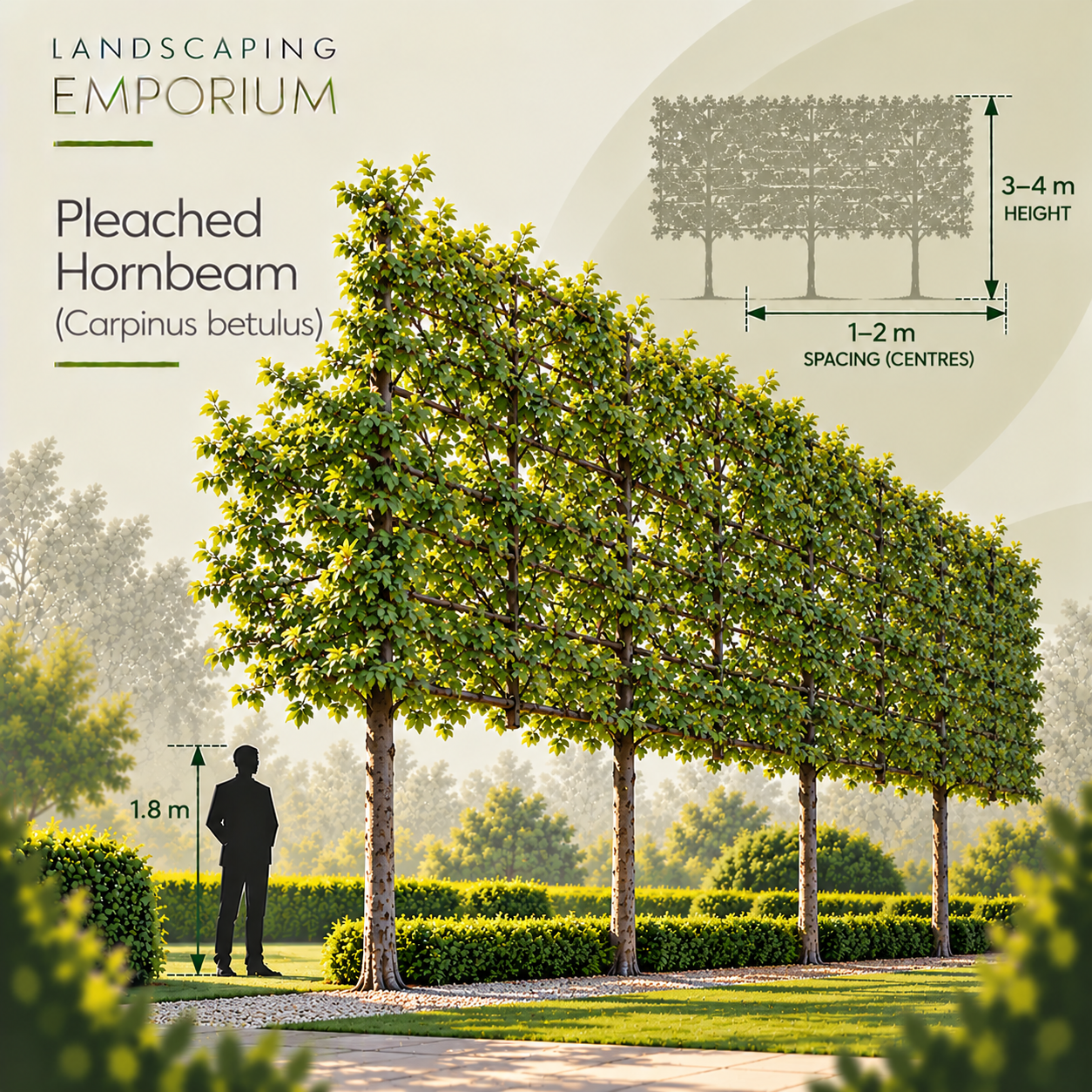 Image 2 of 14
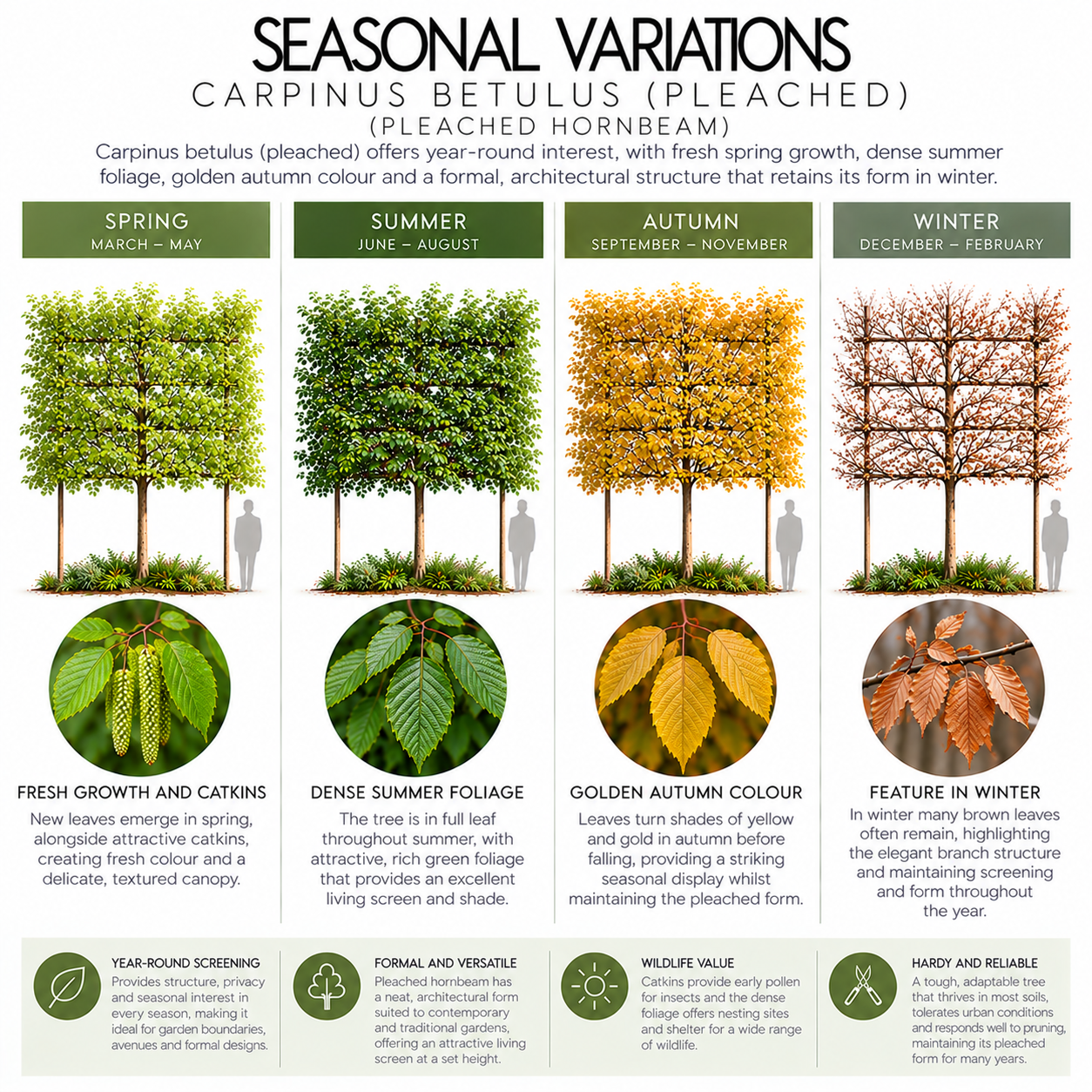 Image 3 of 14
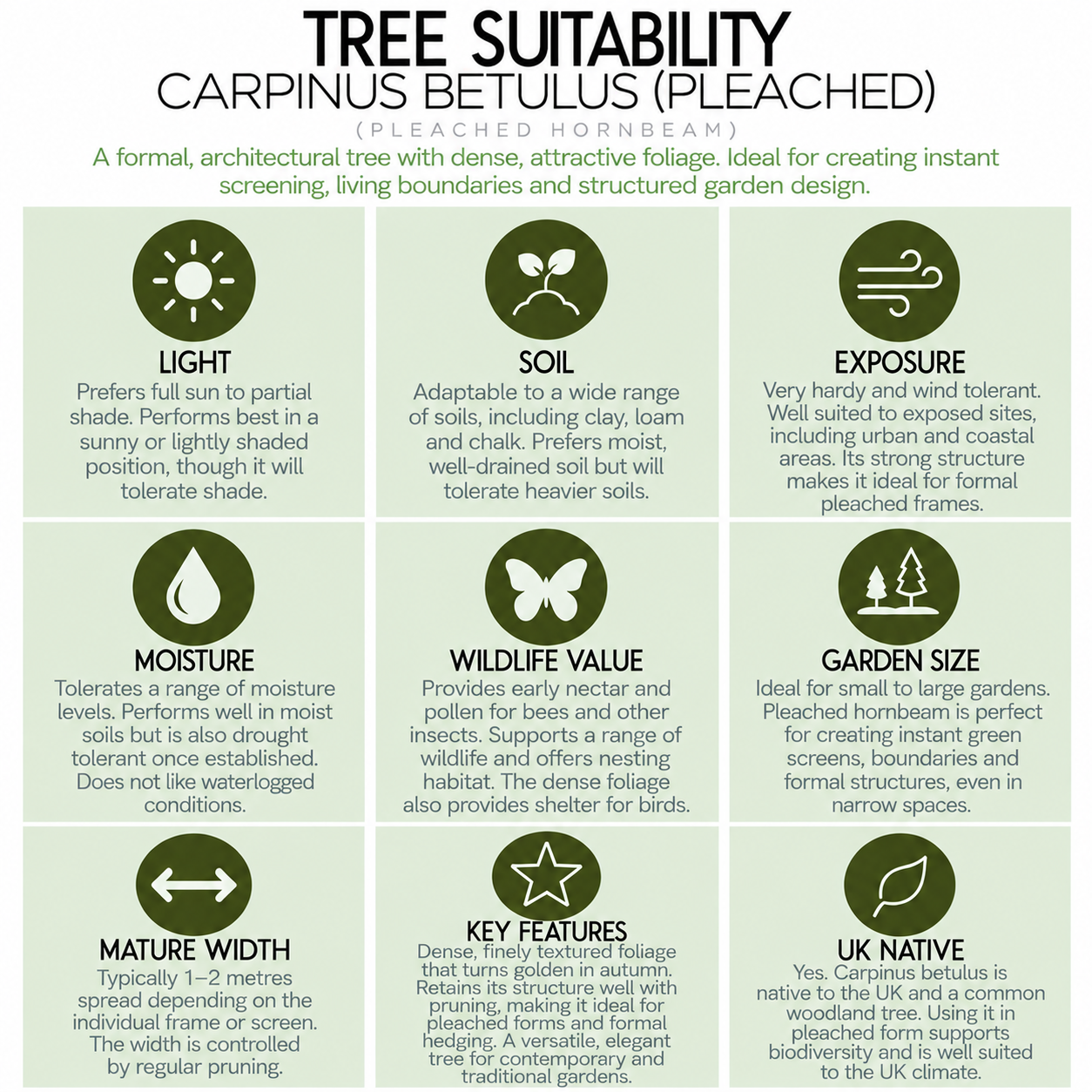 Image 4 of 14
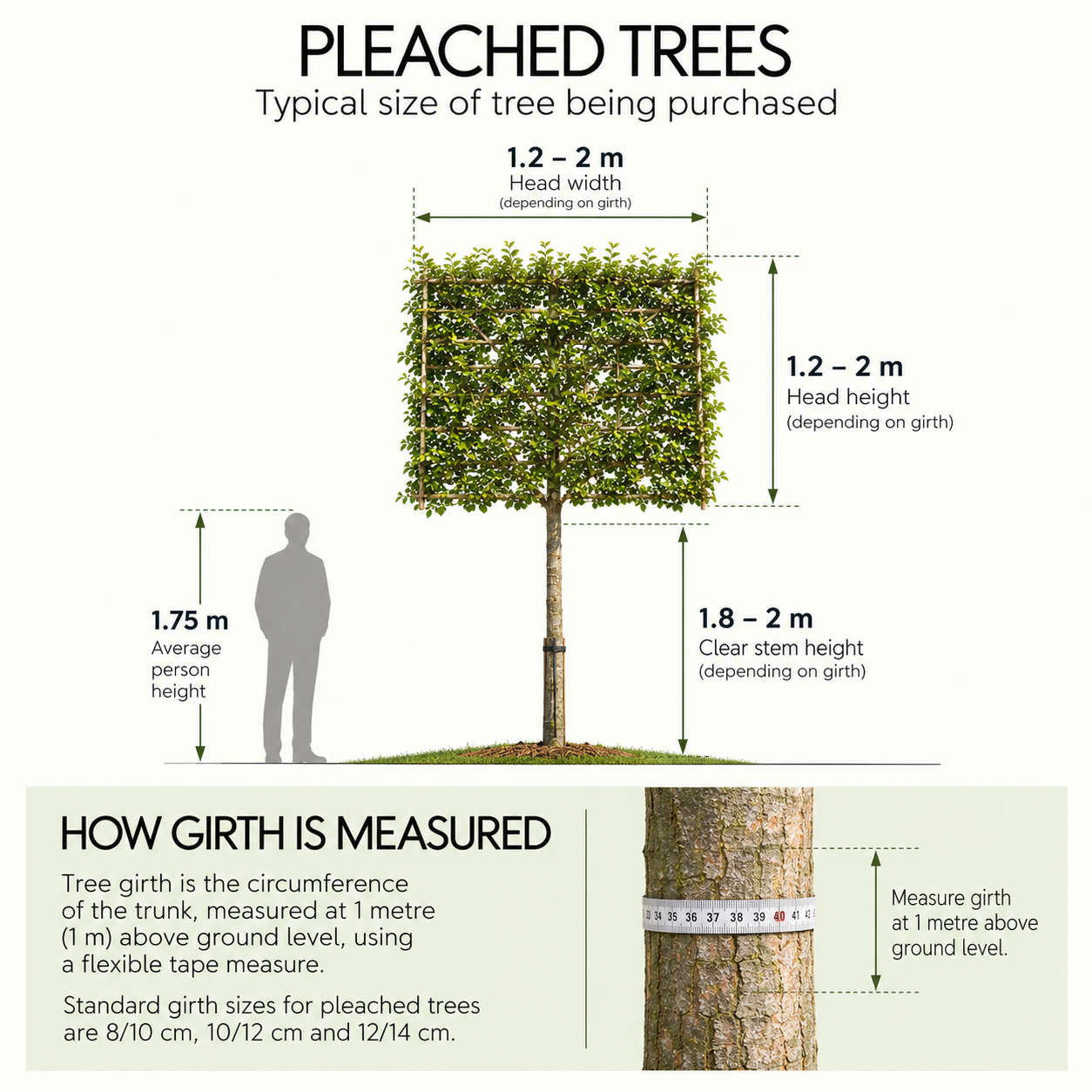 Image 5 of 14
 Image 6 of 14
 Image 7 of 14
 Image 8 of 14
 Image 9 of 14
 Image 10 of 14
 Image 11 of 14
 Image 12 of 14
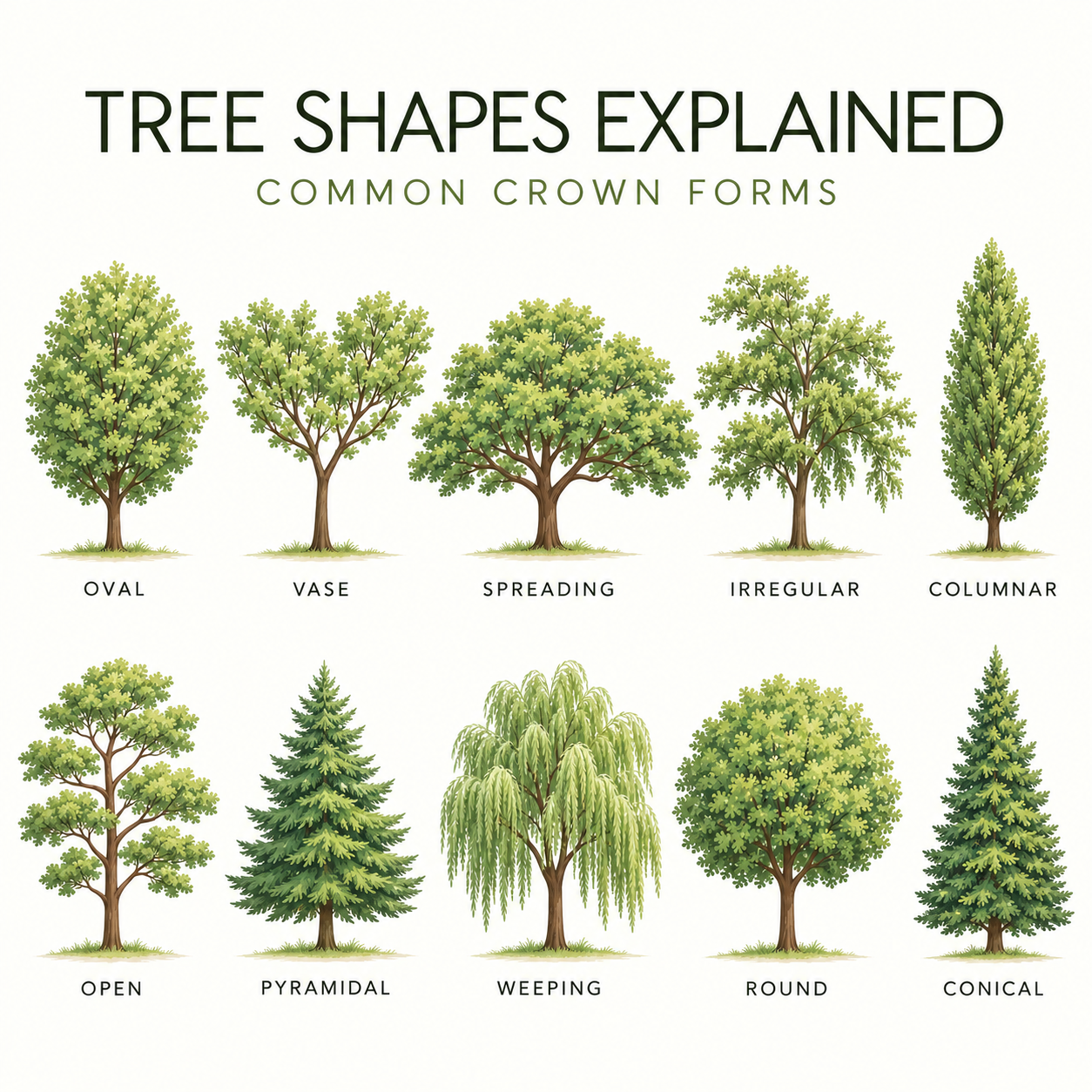 Image 13 of 14
 Image 14 of 14