
 Image 1 of 12
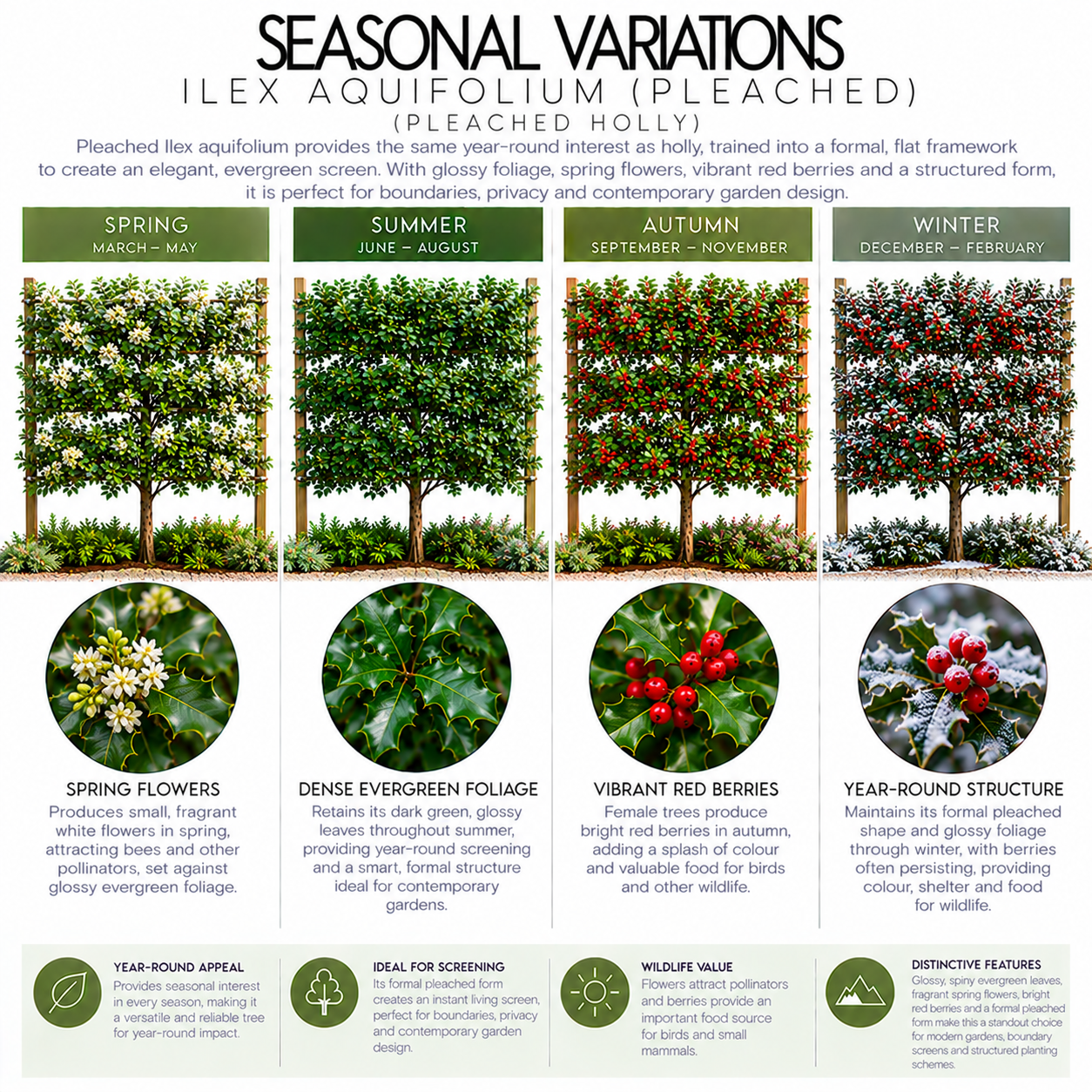 Image 2 of 12
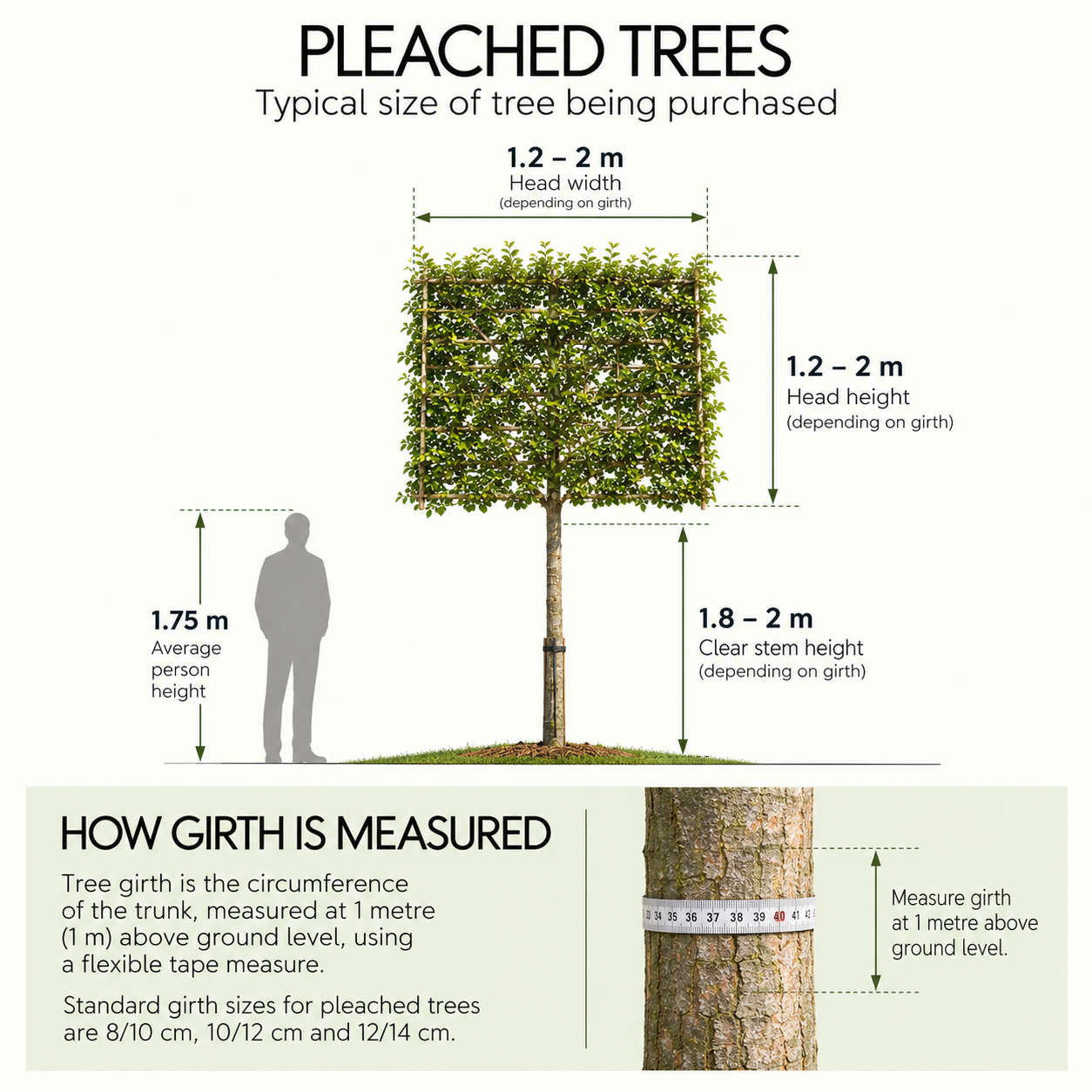 Image 3 of 12
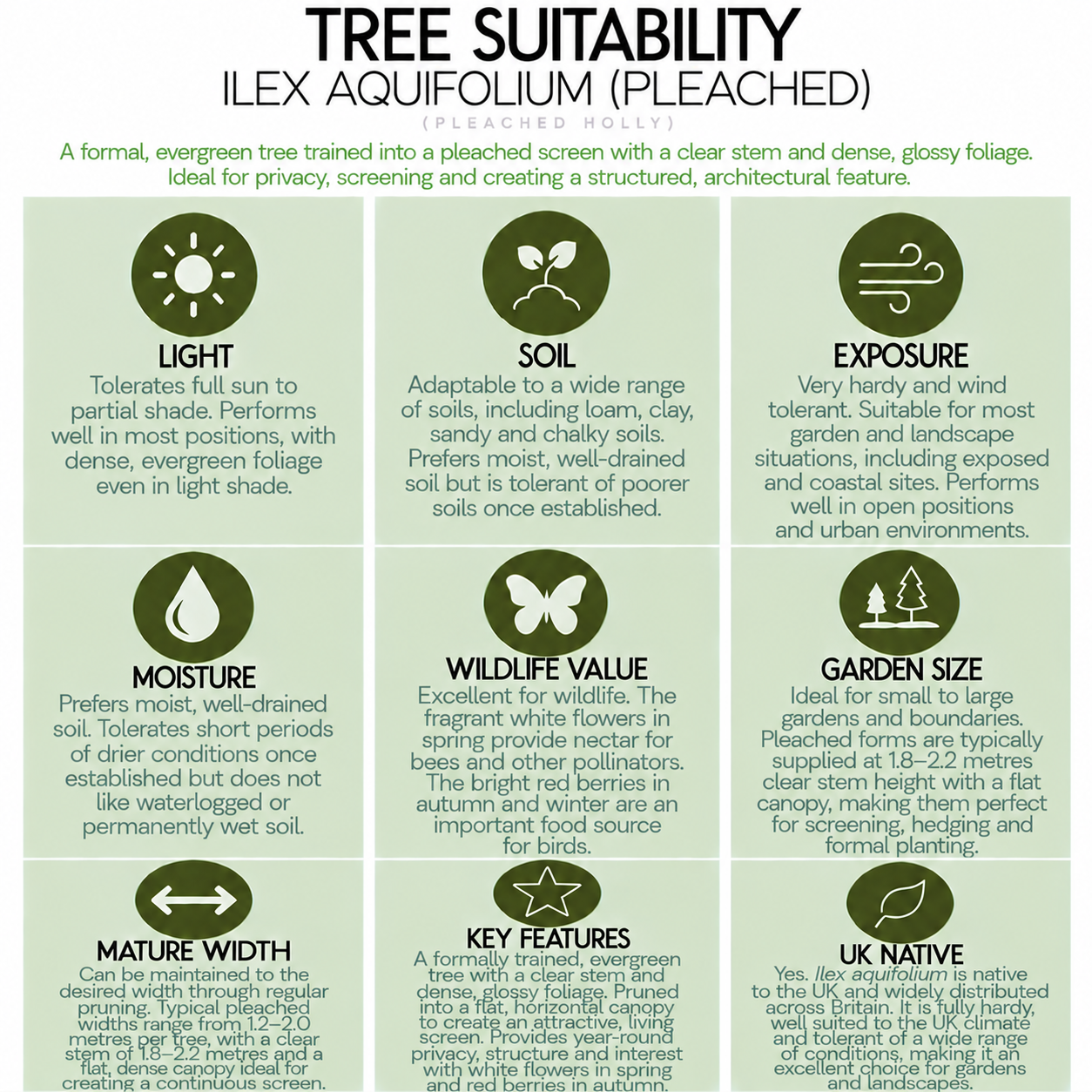 Image 4 of 12
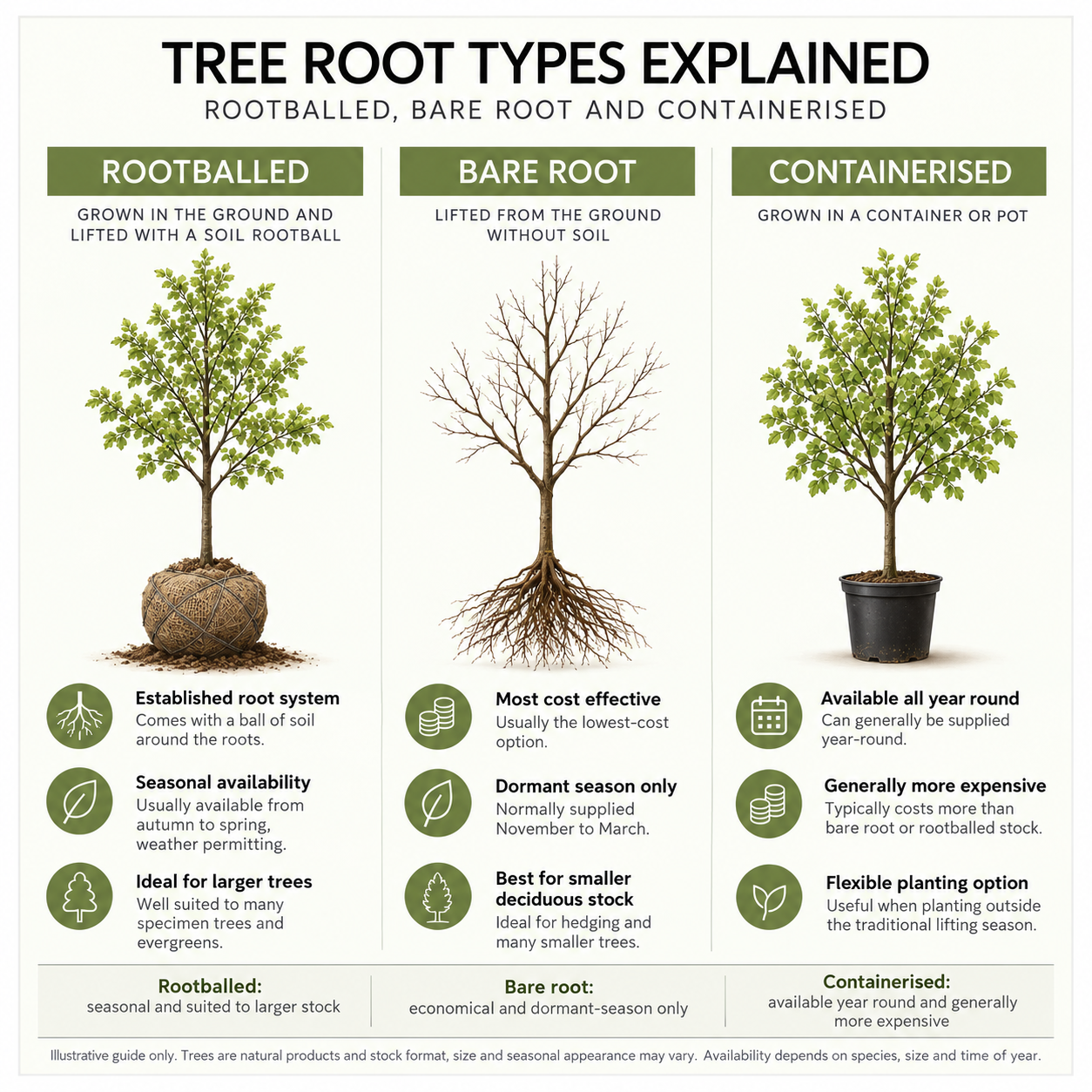 Image 5 of 12
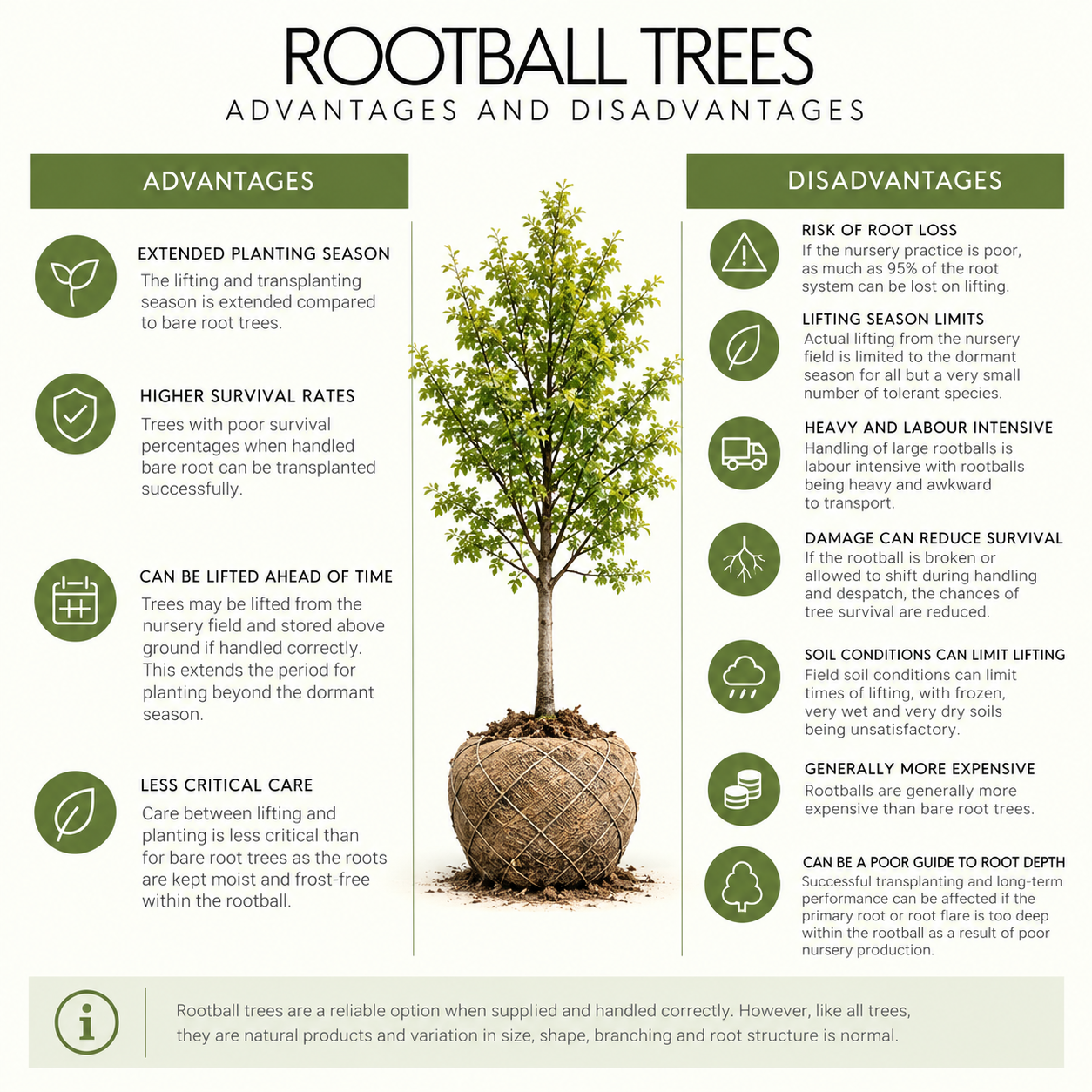 Image 6 of 12
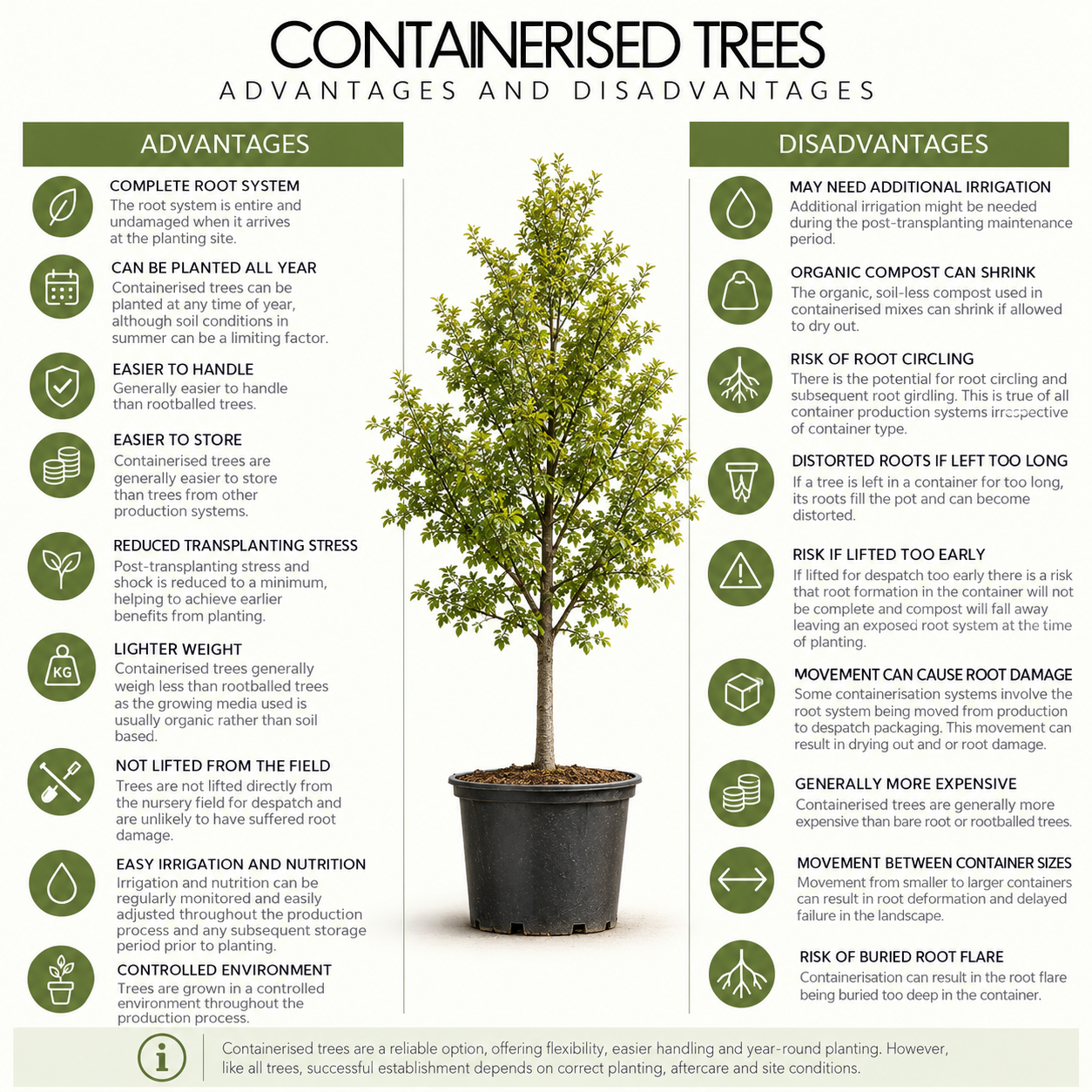 Image 7 of 12
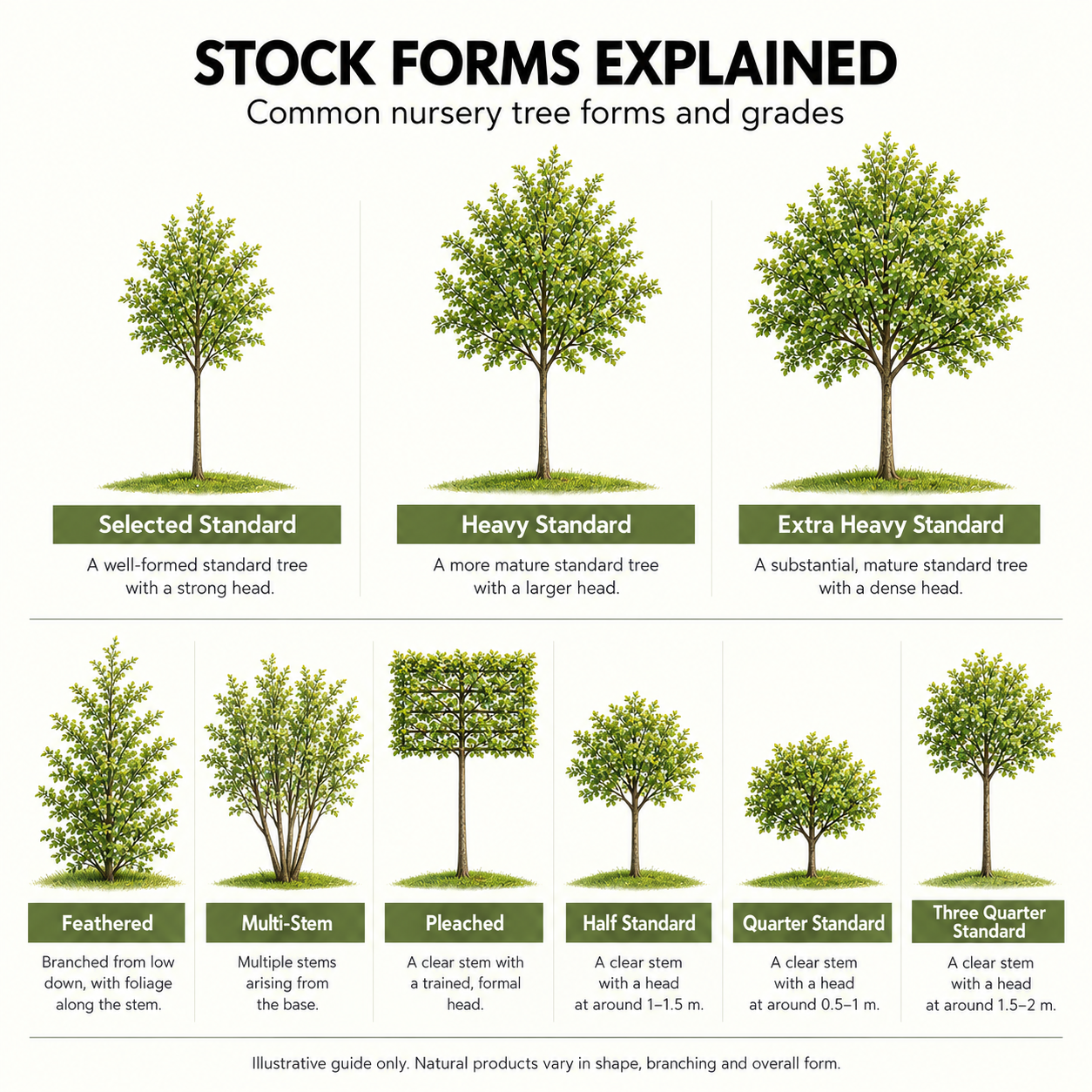 Image 8 of 12
 Image 9 of 12
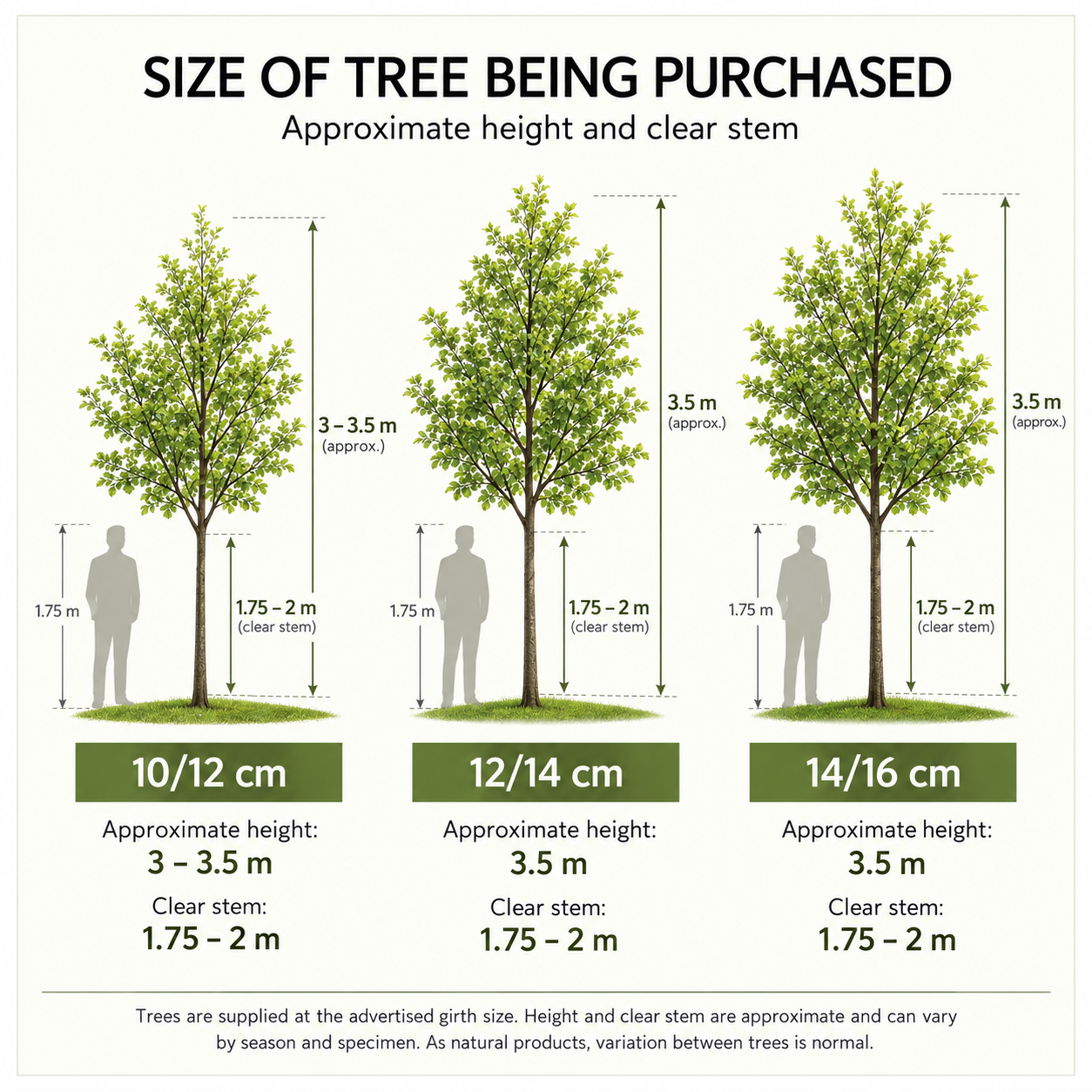 Image 10 of 12
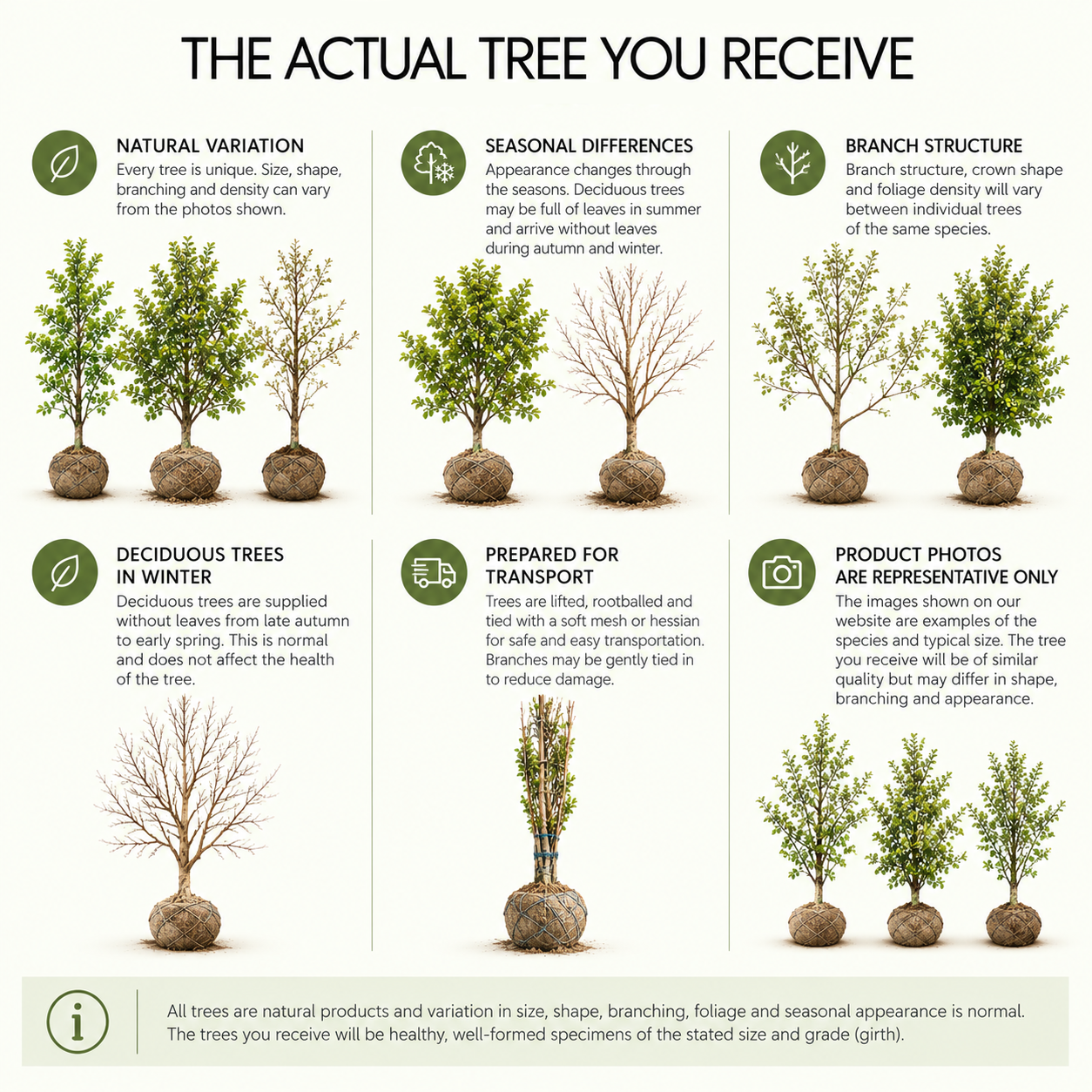 Image 11 of 12
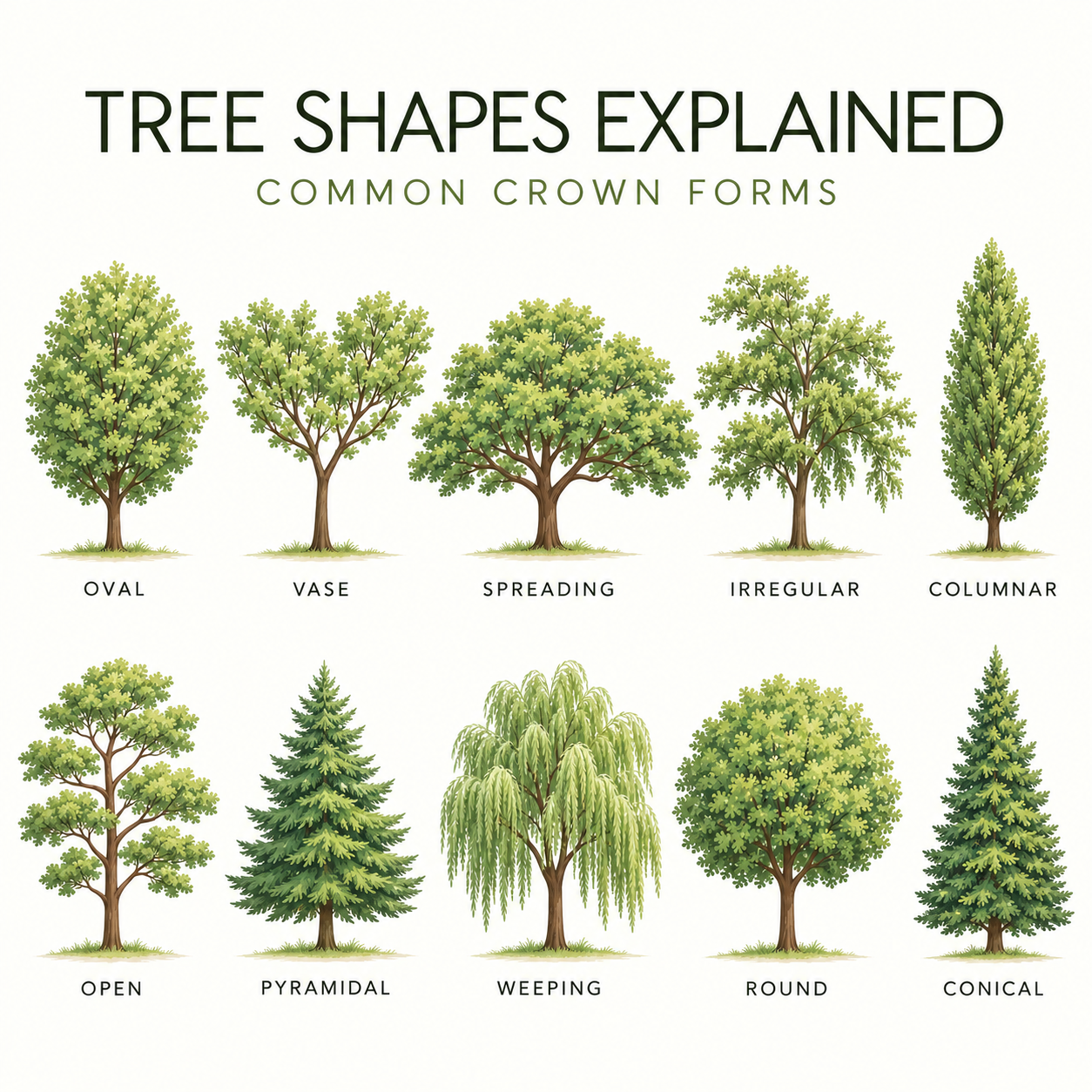 Image 12 of 12
Ilex aquifolium (Pleached) - Pleached English Holly
Ilex aquifolium, commonly known as English Holly or Common Holly, is one of Britain's most recognisable native evergreen trees. Its dense, glossy green foliage, distinctive spiny leaves and attractive seasonal berries make it an excellent choice for formal screening, wildlife-friendly planting and architectural garden design.
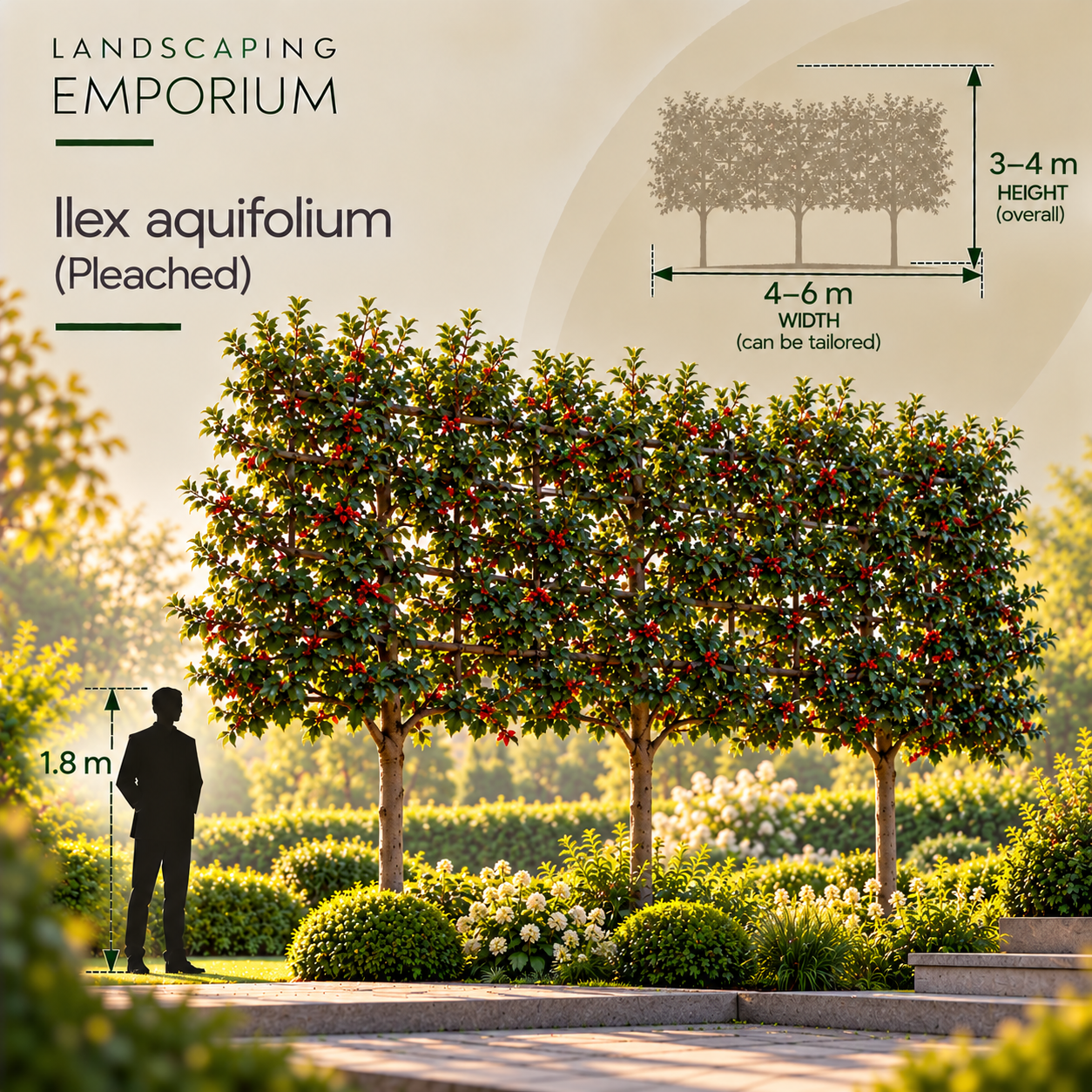
Pleached English Holly trees are specially trained to develop a rectangular evergreen canopy above a clear stem. When planted in a row, these raised crowns can gradually form a continuous screen, helping to reduce overlooking from neighbouring properties while retaining valuable space beneath the foliage.
Unlike deciduous pleached trees, which lose their leaves during winter, Ilex aquifolium retains its foliage throughout the year, providing lasting privacy, structure and visual interest.
The deep green leaves create an attractive, dense canopy, while the distinctive branching and spiny foliage provide a strong architectural character.
Female Holly trees may also produce bright red berries during autumn and winter when suitable pollination has occurred. These berries are particularly attractive to birds and provide additional seasonal interest.
Pleached English Holly is particularly effective above fences and walls, alongside terraces, around outdoor living spaces and within formal garden designs.
Key Features of Pleached Ilex aquifolium
Dense evergreen foliage providing year-round screening
Formal rectangular pleached canopy
Excellent for reducing overlooking from neighbouring windows
Ideal for elevated screening above fences and boundary walls
Attractive glossy dark green leaves
Distinctive spiny foliage
Native British evergreen tree
Strong architectural appearance
Suitable for contemporary and traditional gardens
Effective when planted in continuous rows
Responds well to careful pruning
Valuable shelter for garden birds
Female specimens may produce attractive red winter berries
Suitable for sunny and partially shaded positions
Long-lived tree with excellent ornamental value
Ilex aquifolium – Pleached Tree Specification
Botanical name: Ilex aquifolium
Common name: Pleached English Holly / Pleached Common Holly
Family: Aquifoliaceae
Tree type: Evergreen broadleaf tree trained into a pleached form
Supplied form: Clear-stem specimen with a rectangular trained crown supported by a nursery framework.
Typical clear-stem height: Approximately 1.8–2.2m, depending on the nursery specification.
Typical pleached frame width: Approximately 1.2–1.8m, depending on the selected product option.
Typical pleached frame height: Approximately 1.0–1.5m, depending on the selected product option.
Typical overall height when supplied: Approximately 2.8–3.7m, depending on clear-stem height and frame dimensions.
Natural mature height: Untrained English Holly commonly reaches approximately 10–15m in favourable conditions, occasionally more with age.
Maintained pleached dimensions: Determined by the original framework, available space and ongoing pruning.
Growth rate: Slow to moderate, typically slower than Portuguese Laurel or many other evergreen screening species.
Foliage: Evergreen, glossy dark green, with leathery leaves that are often spiny.
Crown shape: Formal rectangular pleached canopy with dense branching.
Flowers: Small, usually white flowers during late spring and early summer.
Fruit: Bright red berries may develop on female specimens where suitable pollination occurs.
Position: Full sun or partial shade. Holly can tolerate deeper shade, although growth and crown density may be reduced.
Soil: Adaptable to a range of reasonably fertile soils, including clay, loam, sandy and some chalky soils where conditions are suitable.
Soil moisture: Prefers moist but well-drained ground. Established specimens tolerate some dry periods.
Exposure: Suitable for sheltered and moderately exposed positions. Established Holly tolerates a range of conditions, but tall pleached crowns require careful consideration of wind loading.
Hardiness: Fully hardy across most of the UK.
Native status: UK Native.
Wildlife value: Flowers provide resources for pollinating insects, evergreen foliage offers nesting and shelter opportunities, and berries on female trees provide food for birds.
Maintenance: Regular pruning and inspection of the trained framework are required to retain the formal rectangular shape.
Root system: Develops a substantial root system with maturity. Allow appropriate space from buildings, underground services and hard landscaping.
Suitable uses: Evergreen privacy screening, elevated boundary screening, overlooking windows, contemporary gardens, formal gardens, wildlife-friendly planting and architectural landscapes.
Why Choose Pleached English Holly?
Year-Round Evergreen Privacy
The principal advantage of Pleached English Holly is its ability to provide elevated screening throughout the year.
Unlike deciduous pleached trees, which lose their foliage during winter, Holly retains its dense evergreen leaves.
This makes it particularly useful for reducing overlooking from neighbouring windows, screening upper-floor views and providing privacy around terraces, seating areas and outdoor living spaces.
The effectiveness of the screen will depend on the density of the supplied crown, frame dimensions and spacing between individual trees.
Ideal for Screening Above Fences and Walls
Pleached trees offer an attractive solution where additional privacy is required above an existing boundary.
Their clear stems allow the trained canopy to sit above a fence or wall, creating a raised green screen without occupying the entire height of the boundary.
This is particularly useful for gardens overlooked by neighbouring houses or upper-floor windows.
Careful consideration should be given to the position of the screen, the height of neighbouring windows and the required maintained canopy dimensions.
A Native Evergreen Screening Tree
One of the principal advantages of English Holly is that it is native to Britain.
It provides a valuable alternative to non-native evergreen screening species, particularly for customers who want to incorporate native plants into their garden design.
Its dense evergreen foliage offers shelter for birds throughout the year, while female specimens can produce berries that provide an important seasonal food source.
Attractive Winter Berries
Female Holly trees may produce bright red berries during autumn and winter.
These create a striking contrast against the dark green foliage and add valuable seasonal interest.
Holly is generally dioecious, meaning male and female flowers occur on separate plants.
Female trees require compatible pollen for reliable berry production.
Customers wishing to purchase berry-bearing specimens should confirm the sex of the supplied trees and whether suitable pollination is available.
Regular pruning can also reduce flowering and berry production.
An Elegant Architectural Feature
The rectangular trained crown of Pleached English Holly creates a strong geometric feature within the garden.
Its dense foliage and distinctive leaves give it an attractive, structured appearance, making it particularly effective in contemporary garden design.
Rows of pleached trees can be used to frame terraces, define garden rooms, create formal boundaries or provide an attractive backdrop to outdoor living spaces.
A Wildlife-Friendly Evergreen Tree
English Holly provides valuable habitat within British gardens.
Its dense foliage offers shelter and potential nesting opportunities for birds.
The small flowers attract visiting insects, while berries produced by female specimens provide food for birds during autumn and winter.
This makes Pleached Holly an attractive choice for customers who want to combine formal garden design with wildlife value.
Planting and Establishment
Ilex aquifolium performs best in a sunny or partially shaded position with reasonably fertile, moisture-retentive but well-drained soil.
Pleached specimens should be positioned carefully to ensure consistent alignment, spacing and finished height.
The planting area should be prepared appropriately, ensuring that the root flare remains at the correct finished soil level.
Newly planted trees require regular watering during establishment, particularly during dry or windy periods.
Because the elevated pleached canopy creates additional wind resistance, suitable staking, underground anchoring or a professionally designed support system may be necessary.
A suitable mulch layer can help conserve moisture and reduce competition from surrounding vegetation.
Holly can be relatively slow to establish following transplantation, making appropriate planting and aftercare particularly important.
For larger pleached specimens, professional planting is strongly recommended.
Maintaining Pleached English Holly Trees
Regular maintenance is essential to preserve the formal rectangular appearance of pleached trees.
New growth should be managed through careful pruning, generally during the growing season when conditions are suitable.
Holly responds well to pruning, although its slower growth rate means that severe cutting should be avoided where possible.
Frameworks, ties and supports should be inspected regularly to prevent damage as the tree develops.
The original nursery framework may eventually be removed once the trained branch structure is sufficiently established, although this should be assessed individually.
With appropriate care, Pleached English Holly can develop into an attractive, established evergreen screen that becomes increasingly effective over time.
Important Plant Safety Information
Holly berries and foliage should not be eaten by people or domestic animals.
The berries can cause gastrointestinal upset if consumed, and the spiny foliage may cause physical injury.
Particular care should be taken where children, pets or grazing animals may have access to fallen berries, leaves or pruning waste.
Holly should not be used in grazing areas without appropriate veterinary or agricultural advice.
Specimen Tree Delivery and Professional Planting
Landscaping Emporium, brought to you by Kirman Design, offers professional pleached tree supply and planting throughout selected areas of North West England.
We provide professional tree planting in the following postcode areas:
BB, BL, CH1–CH5, CW8, CW9, FY, L, LA1–LA6, M, OL, PR, SK1–SK12, WA and WN.
Please do not select professional planting at checkout if your property is outside these postcode areas without contacting us first.
If your property is outside our normal installation area, please contact us. We may still be able to arrange planting depending on your location, tree size and site access.
Before ordering, please consider delivery access, gate and passage widths, steps, slopes, overhead restrictions and the available planting space.
Pleached English Holly trees may be available in different clear-stem heights, frame dimensions, overall sizes and root formats depending on nursery stock.
The precise dimensions, crown density, branching structure and berry production will vary between individual trees.
Contact Landscaping Emporium
Landscaping Emporium – brought to you by Kirman Design
Unit 9, Bridgewater Business Park
Gladstone Street
Blackburn
BB1 3DL
Telephone: 01942 604976
Email: hello@landscapingemporium.co.uk
Website: www.landscapingemporium.co.uk
Professional tree supply and planting across North West England.