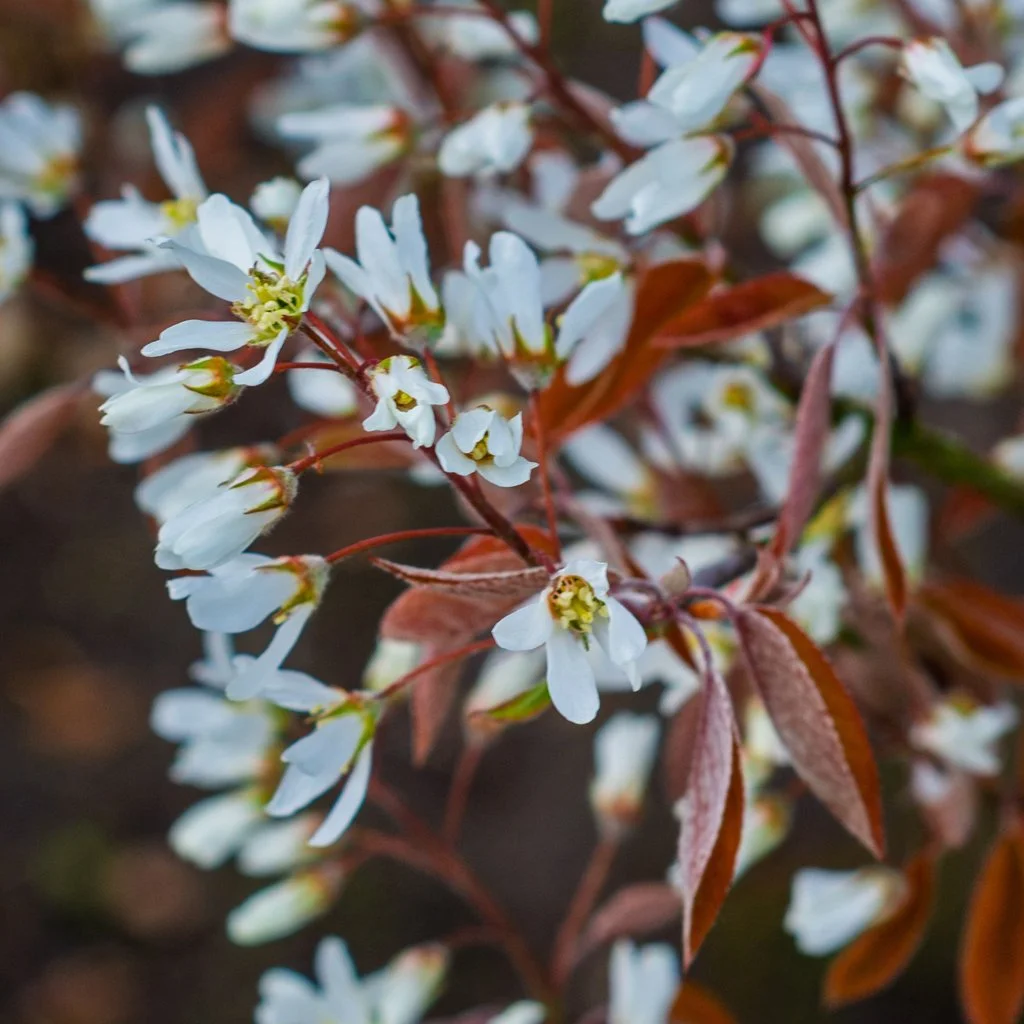
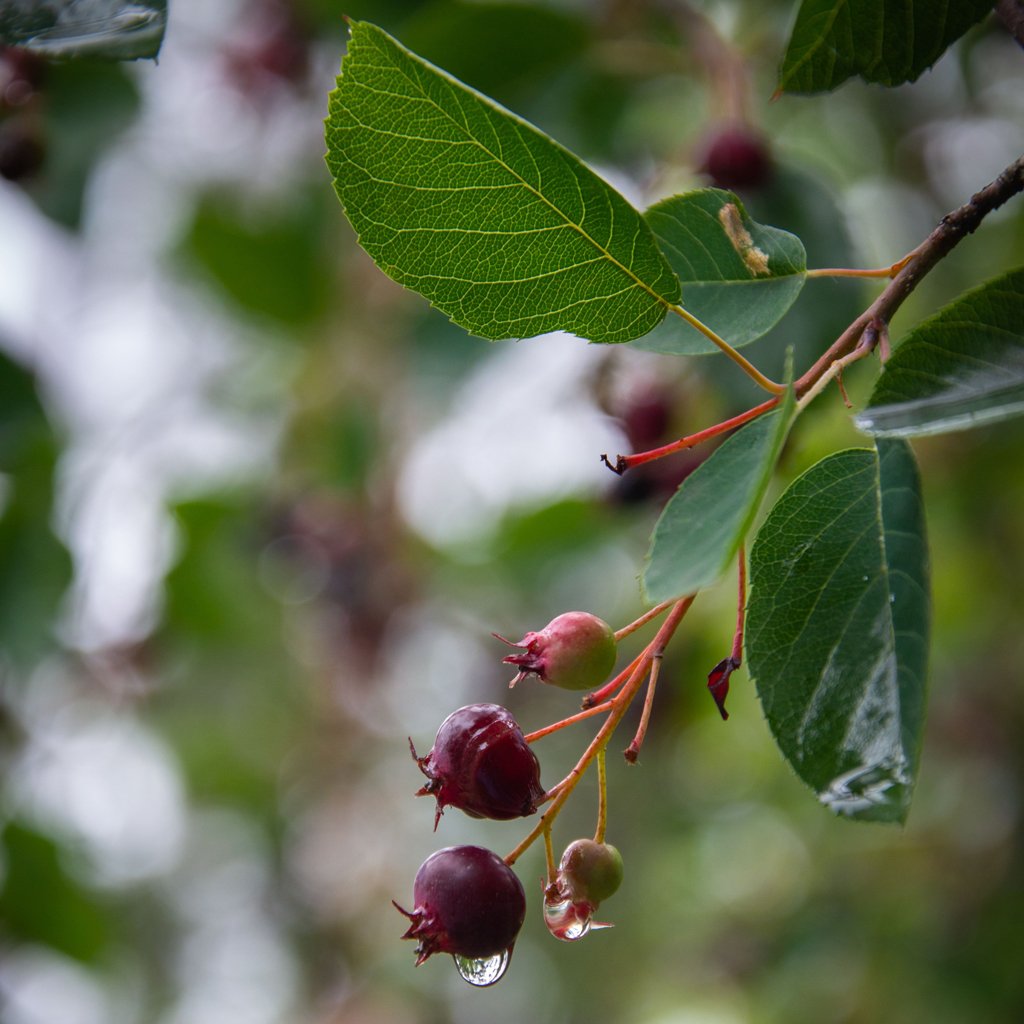
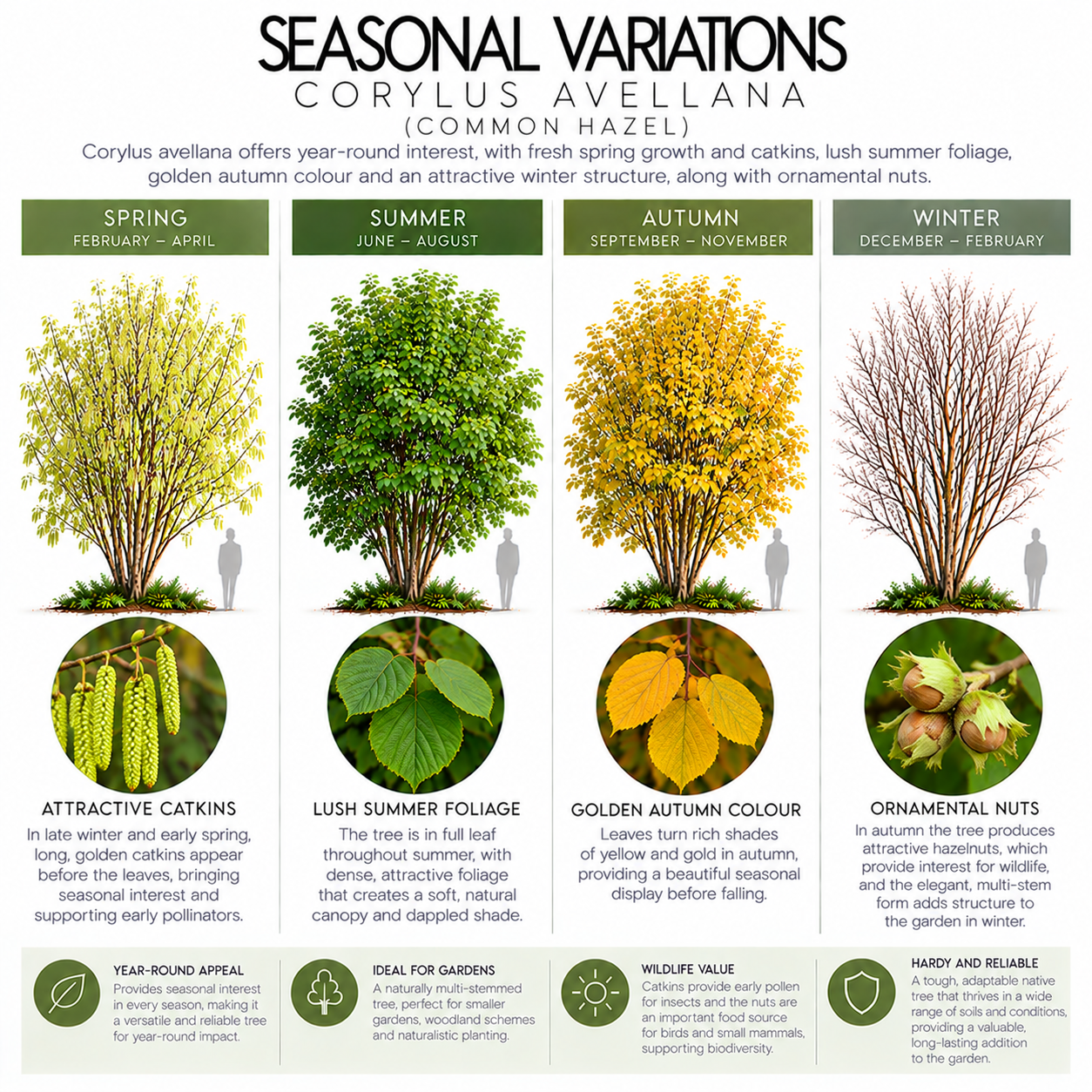
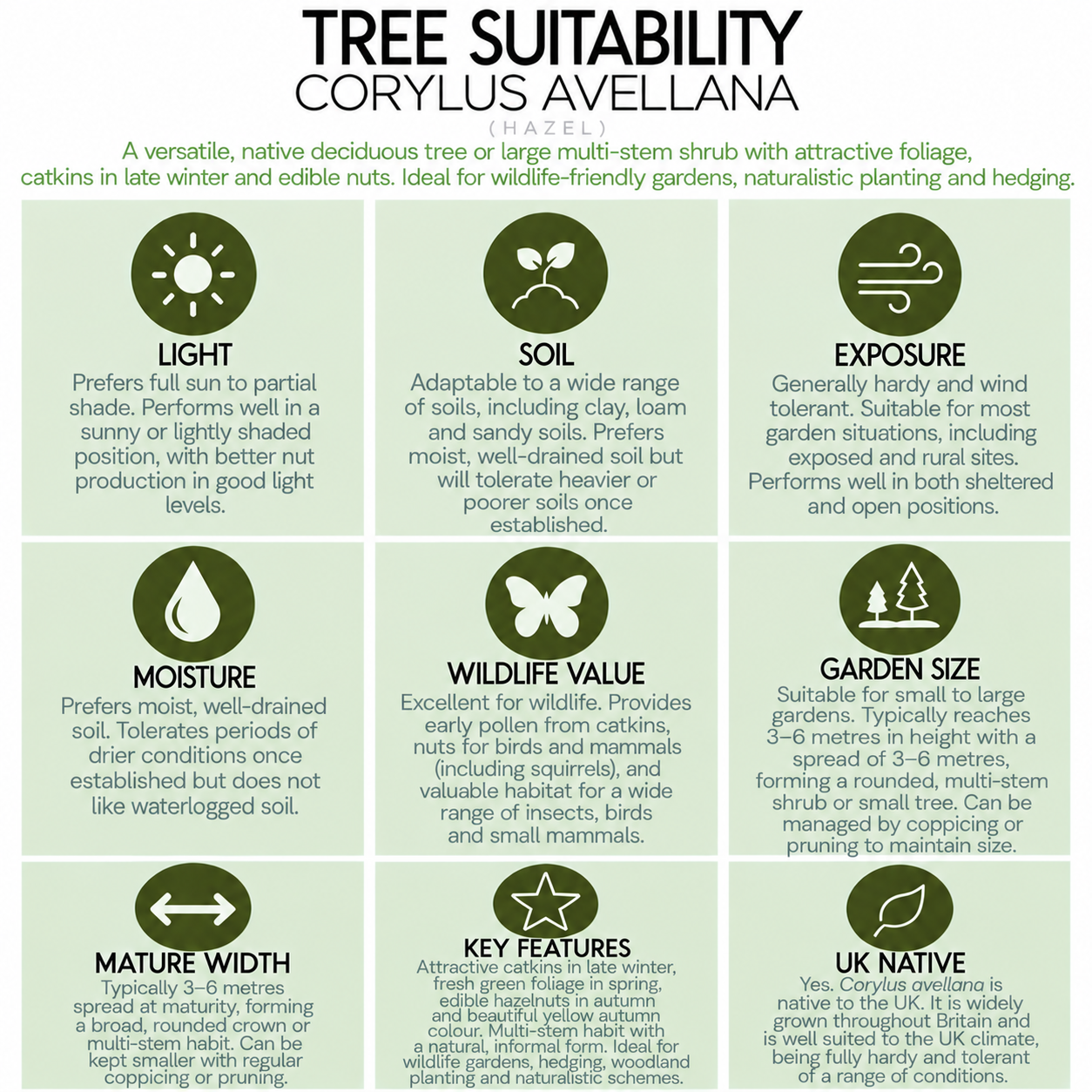
Malus ‘Evereste’ is a compact ornamental crab apple with interest across several seasons. Red-pink buds open into white spring blossom, followed by orange-red fruit that may remain on the tree into winter. Its foliage turns yellow and orange in autumn.
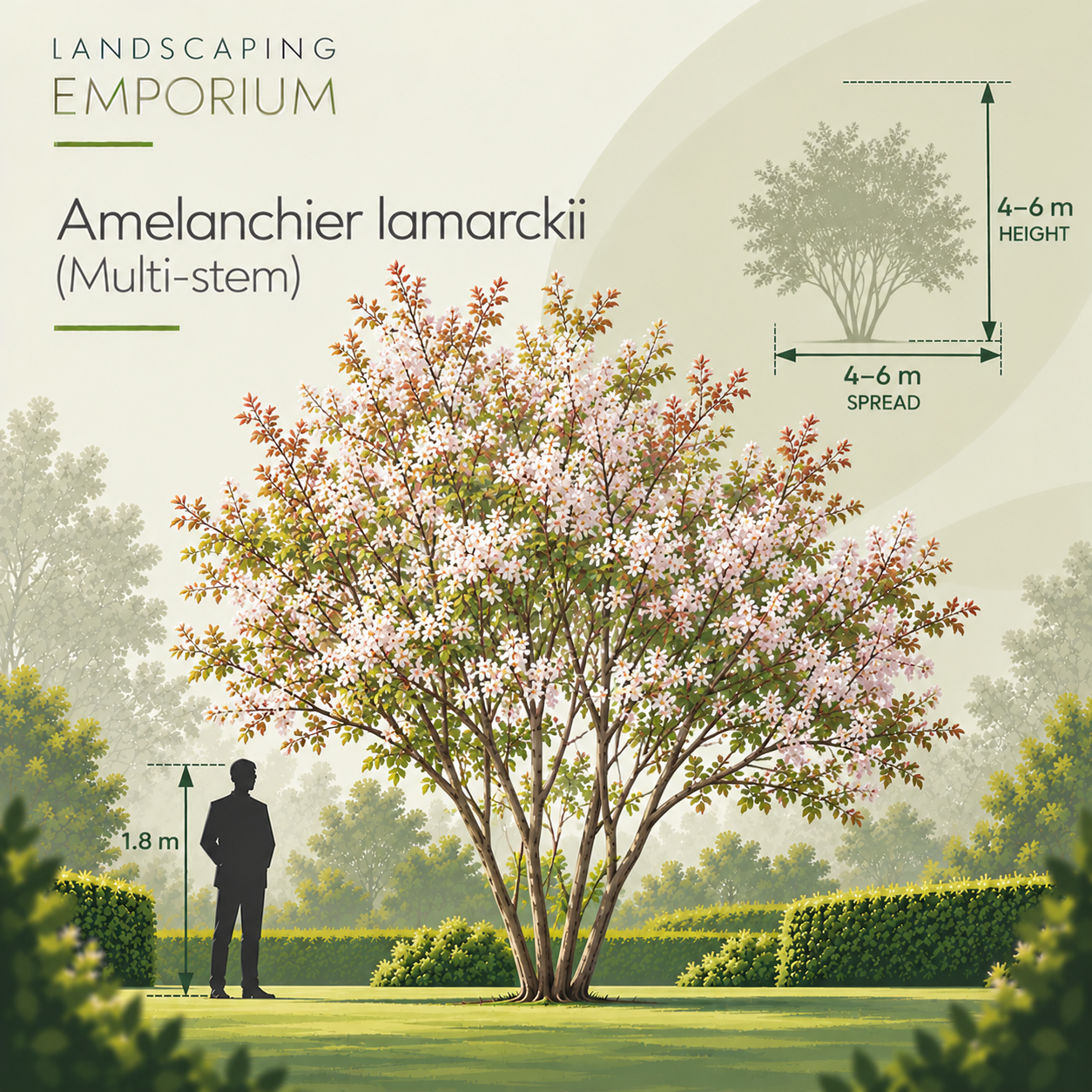
With an approximate mature height of 4–7 metres and spread of 4–6 metres, ‘Evereste’ is a good option for many small and medium-sized gardens. It can be planted as a specimen on a lawn, in a front garden or as part of a wildlife-friendly planting scheme.
Tree highlights
Red-pink buds opening to white flowers in spring
Orange-red crab apples that can remain into winter
Yellow and orange autumn foliage
Flowers that provide forage for pollinating insects
Fruit that can provide food for birds
Compact, rounded to broadly conical crown
Suitable for many small and medium-sized gardens
Fully hardy
Moderate growth rate
Tree information
Botanical name: Malus ‘Evereste’
Common name: ‘Evereste’ Crab Apple
Plant type: Deciduous ornamental tree
Mature height: Approximately 4–7 metres
Mature spread: Approximately 4–6 metres
Growth rate: Moderate; approximately 30–50cm per year
Flower colour: White, opening from red-pink buds
Flowering season: Mid to late spring
Fruit colour: Orange-red
Autumn foliage: Yellow to orange
Position: Full sun or light partial shade
Soil: Moisture-retentive but well drained
Hardiness: Fully hardy
Is Malus ‘Evereste’ right for your garden?
Choose ‘Evereste’ if you want:
A flowering tree for a lawn or front garden
White spring blossom and colourful fruit
Seasonal interest from spring into winter
An ornamental tree that can support pollinators and garden birds
A crab apple suited to a traditional or contemporary garden
A tree smaller than many large flowering specimens
Consider another tree if the ground stays waterlogged, the planting space cannot accommodate a crown around 4–6 metres wide, or fruit falling onto paving would be a problem. ‘Evereste’ is grown primarily for ornamental value rather than as an apple for eating.
Choosing your tree size
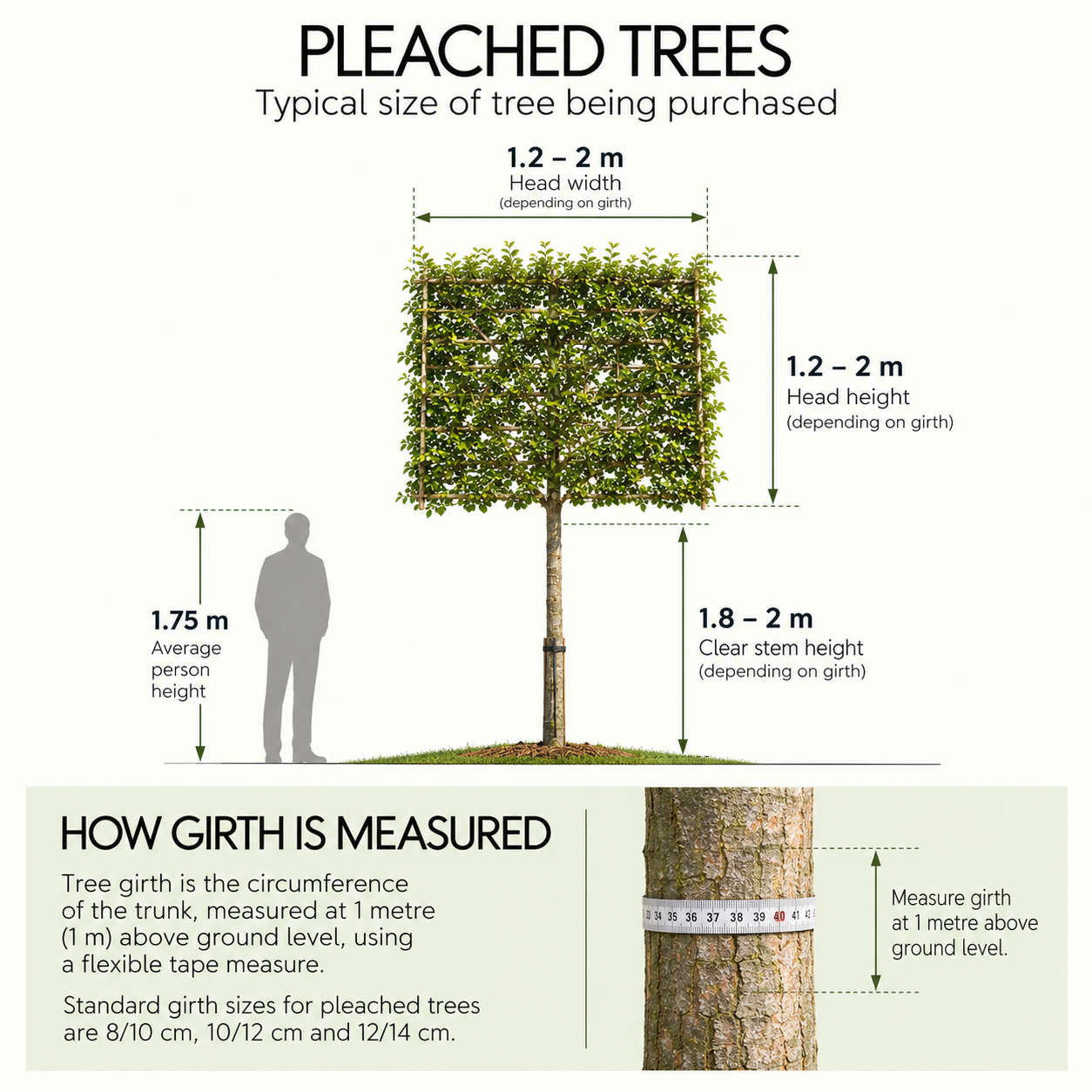
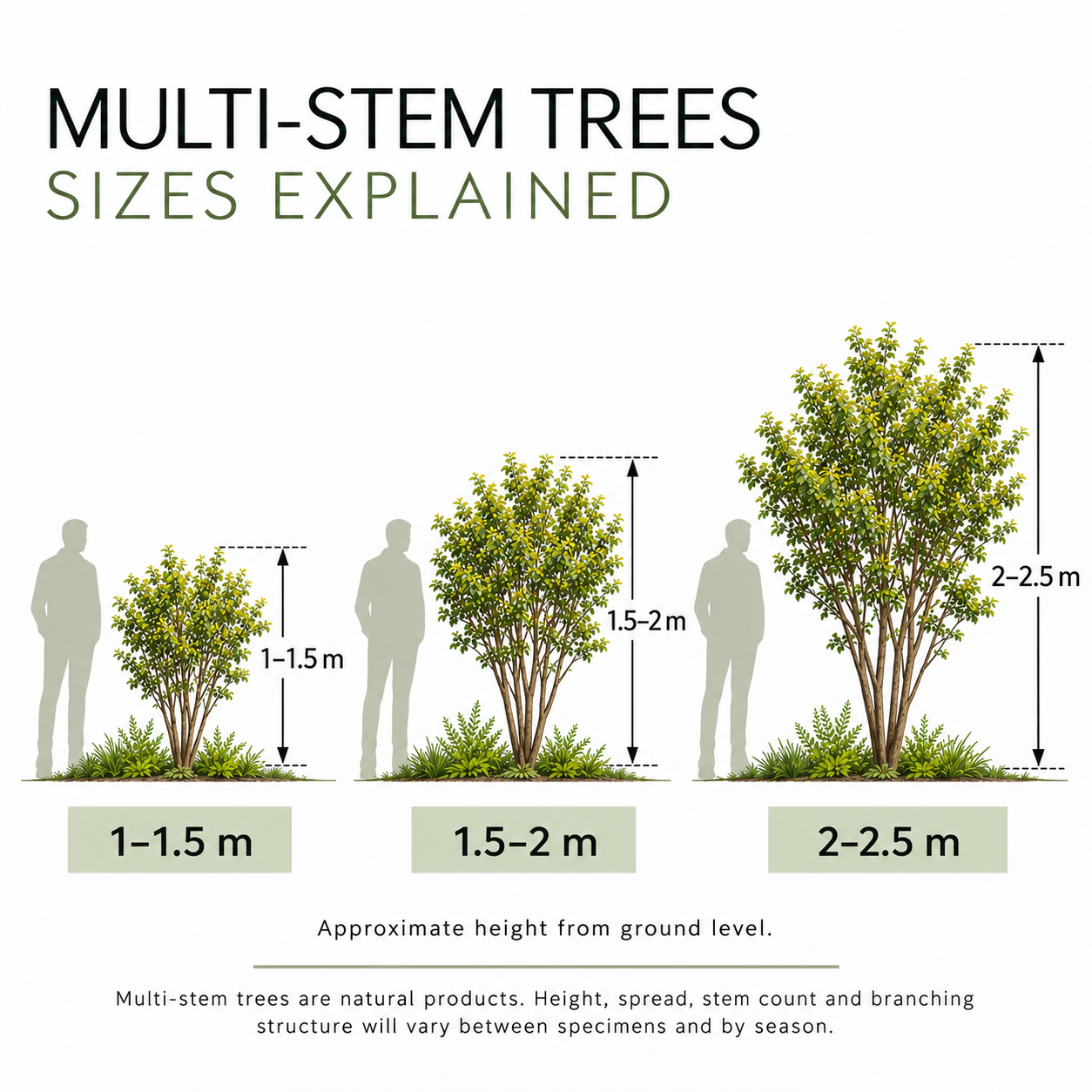
Young standard trees are often a practical choice if you are happy for the tree to establish and grow over time. Half-standard and heavy-standard trees provide more immediate height and presence. Multi-stem and larger specimen forms can create a broader, more established feature, but need suitable access and careful planting.
Available forms and sizes can vary. Check the options on this product page before ordering, and allow for the tree’s mature height and spread when choosing where to plant it.
For help comparing nursery sizes, see our Specimen Tree Sizes Explained guide.
Planting position
Plant ‘Evereste’ in full sun for the best flowering and fruit display. Light partial shade is also suitable, although it may reduce the blossom and fruit display.
Allow for a mature spread of approximately 4–6 metres. Keep the tree clear of buildings, boundaries, overhead services and restricted rooting areas. For repeated planting, choose spacing according to the design and the room you want each crown to occupy.
Soil requirements
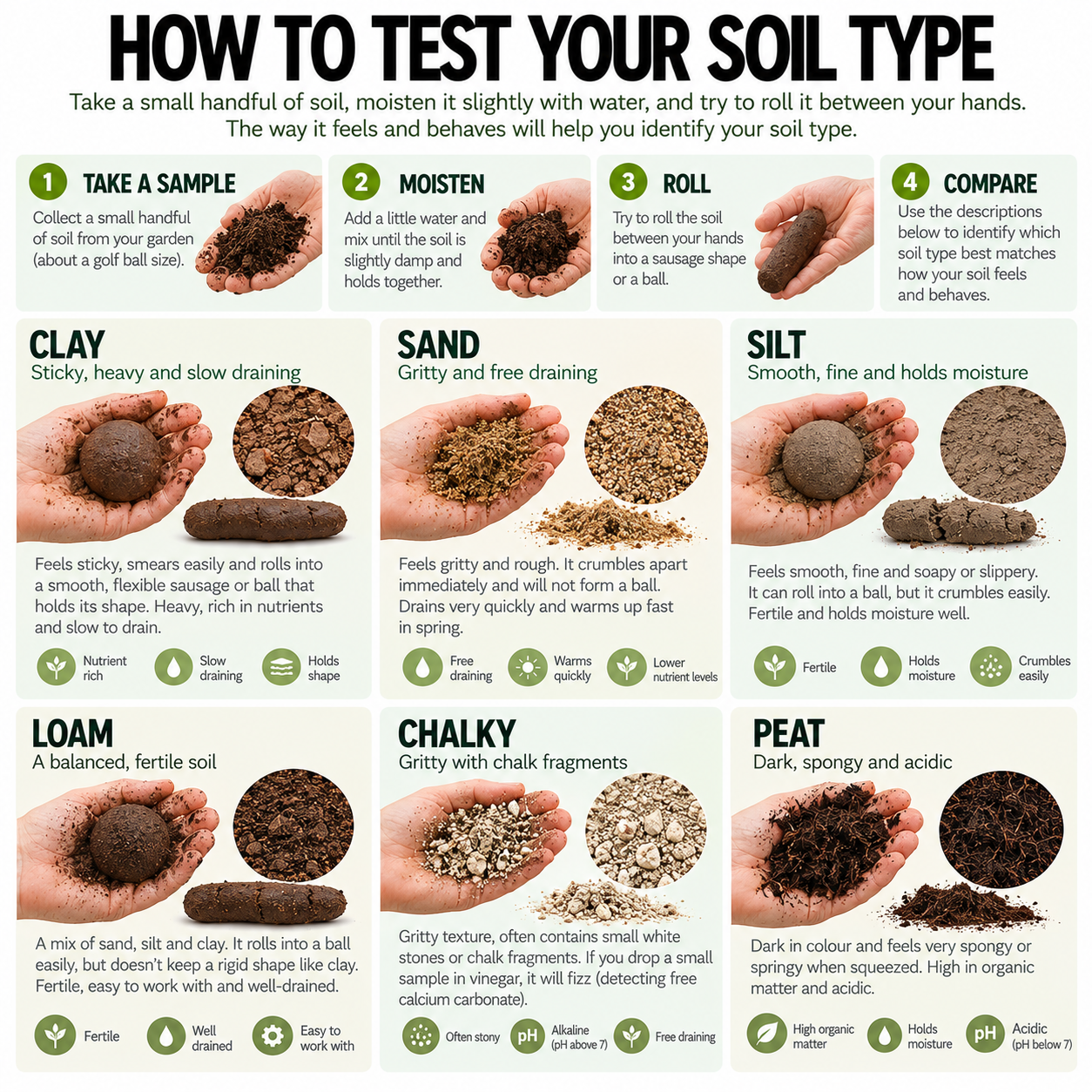
‘Evereste’ grows best in soil that retains some moisture but drains freely. Improve compacted ground before planting, and avoid sites that remain waterlogged for long periods.
Water the tree regularly while it establishes, especially during dry weather. Check the soil around the rootball rather than relying on rainfall alone.
Planting and aftercare
For successful establishment:
Prepare the surrounding soil and relieve compaction where needed.
Plant at the correct depth, keeping the root flare at soil level.
Stake or anchor the tree appropriately for its size and position.
Water thoroughly after planting and regularly during dry weather.
Apply mulch around the root area, keeping it clear of the trunk.
Check the tree, its supports and soil moisture during establishment.
Read our Planting Guide for Trees and Hedges for planting advice, and our Tree and Hedge Aftercare Guide for watering, mulch and ongoing checks.
Pruning
‘Evereste’ generally needs only light pruning once it has developed a balanced framework. Remove dead, damaged, crossing or congested branches when necessary. Avoid severe or repeated pruning, which can encourage excessive new growth and reduce flowering.
For general light-pruning advice, see our RHS Pruning Group 1 Guide. Check species-specific advice before carrying out substantial pruning.
Wildlife value
The spring flowers provide forage for bees and other pollinating insects. The crab apples can provide food for birds, particularly later in the year. How much fruit remains will depend on the conditions and how quickly birds feed on it.
‘Evereste’ can be a useful choice for wildlife-friendly gardens, mixed borders and orchard-style planting.
When we wouldn’t recommend it
We wouldn’t normally recommend ‘Evereste’ for persistently waterlogged or severely compacted ground, or for a position too exposed for the tree. Consider another species if your planting area is too narrow for its mature spread, you need evergreen screening, or you want a tree mainly for fruit to eat.
Our recommendation
Malus ‘Evereste’ is a versatile ornamental tree for small and medium-sized gardens. Its spring blossom, autumn foliage and orange-red crab apples provide a long season of interest without the scale of a large parkland tree.
Choose it as a specimen for a lawn or front garden, or include it in a mixed planting scheme where its flowers and fruit can be enjoyed. Contact Landscaping Emporium for current sizes, availability, delivery and help choosing a suitable form.
Delivery and Professional Planting
Choose Delivery Only if you will arrange planting yourself, or Delivery and Installation if that service is available for your postcode and the size of tree selected.
Professional tree installation is available in these postcode areas:
BB, BL, CH1–CH5, CW8–CW9, FY, L, LA1–LA6, M, OL, PR, SK1–SK12, WA and WN.
If you are outside these areas and would like installation, contact us before ordering. We can check whether your location and project can be accommodated.
Large tree deliveries depend on access, tree size, ground conditions and any lifting equipment required. For more on delivery and installation, see our Delivery and Installation FAQs.
Telephone: [01942 604976 (line 1942604976)](tel:01942604976)

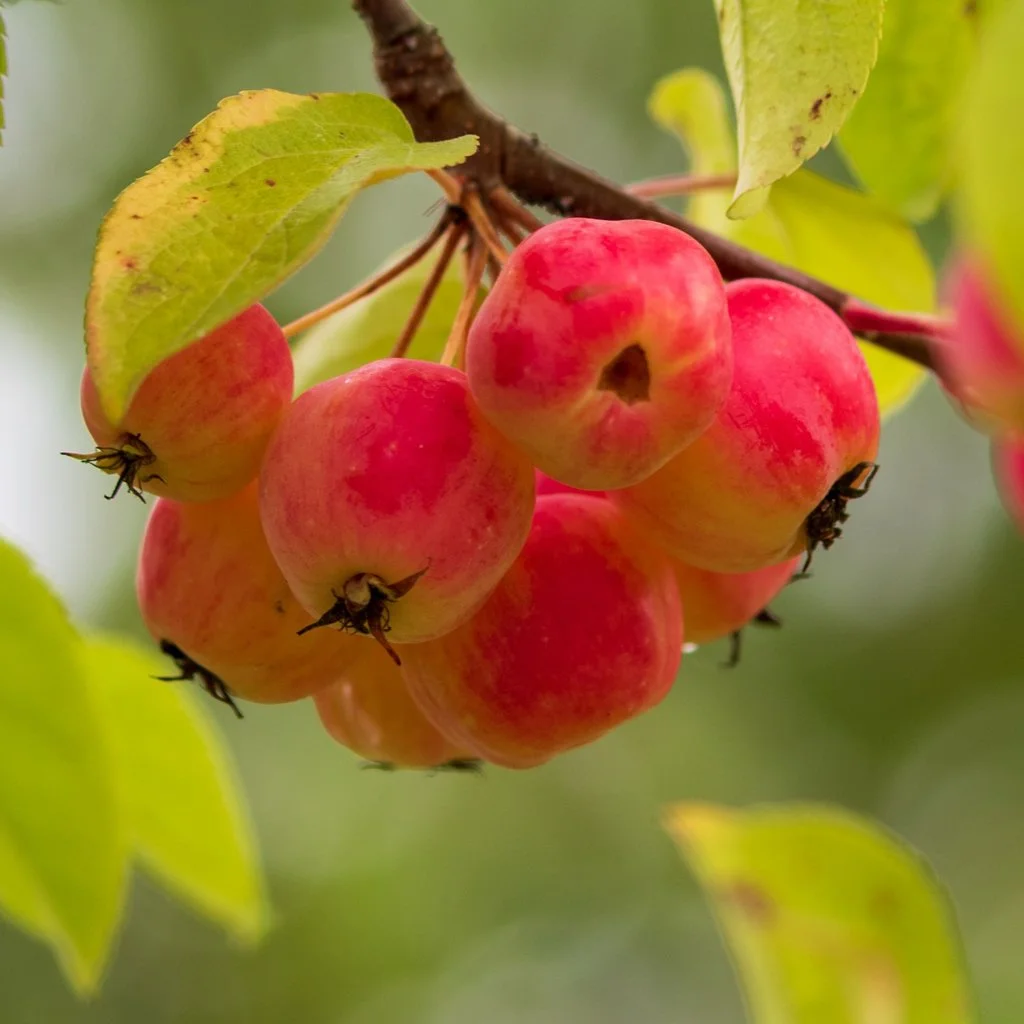 Image 1 of 14
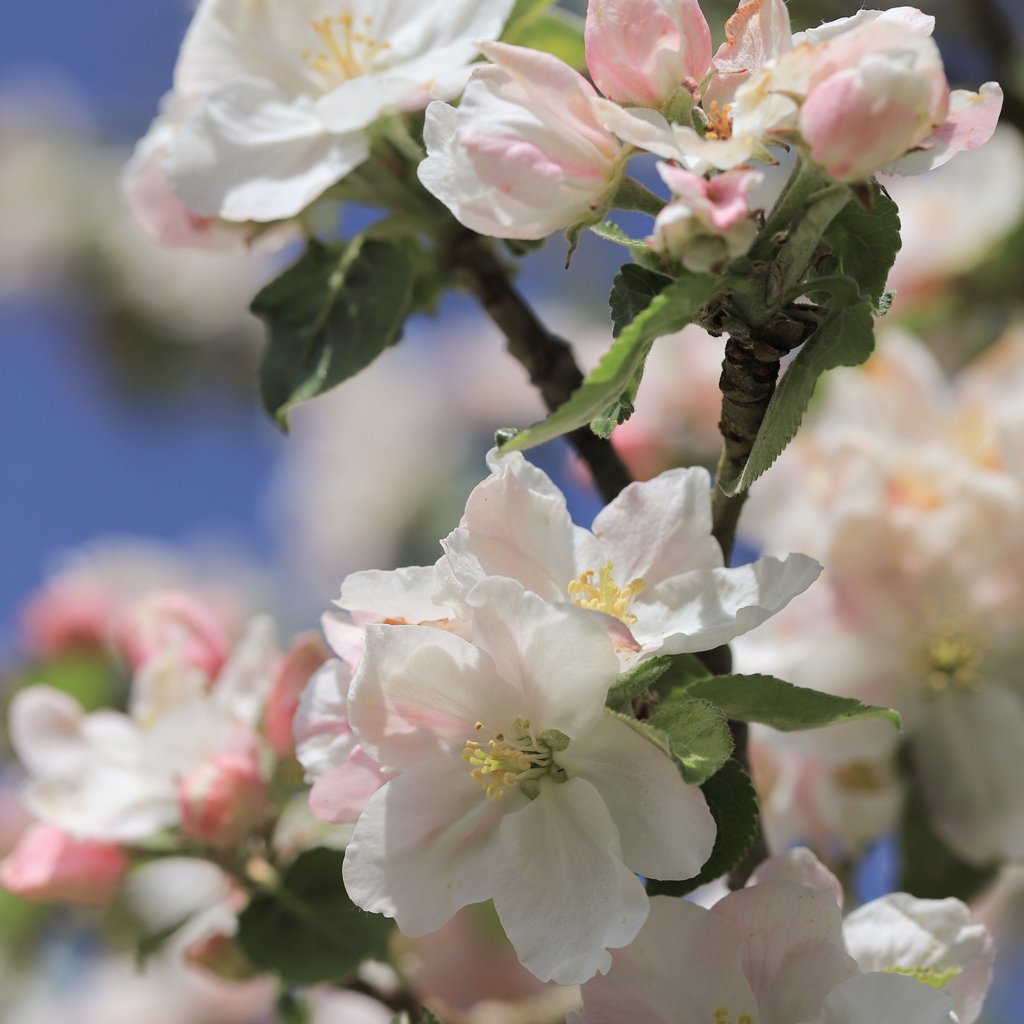 Image 2 of 14
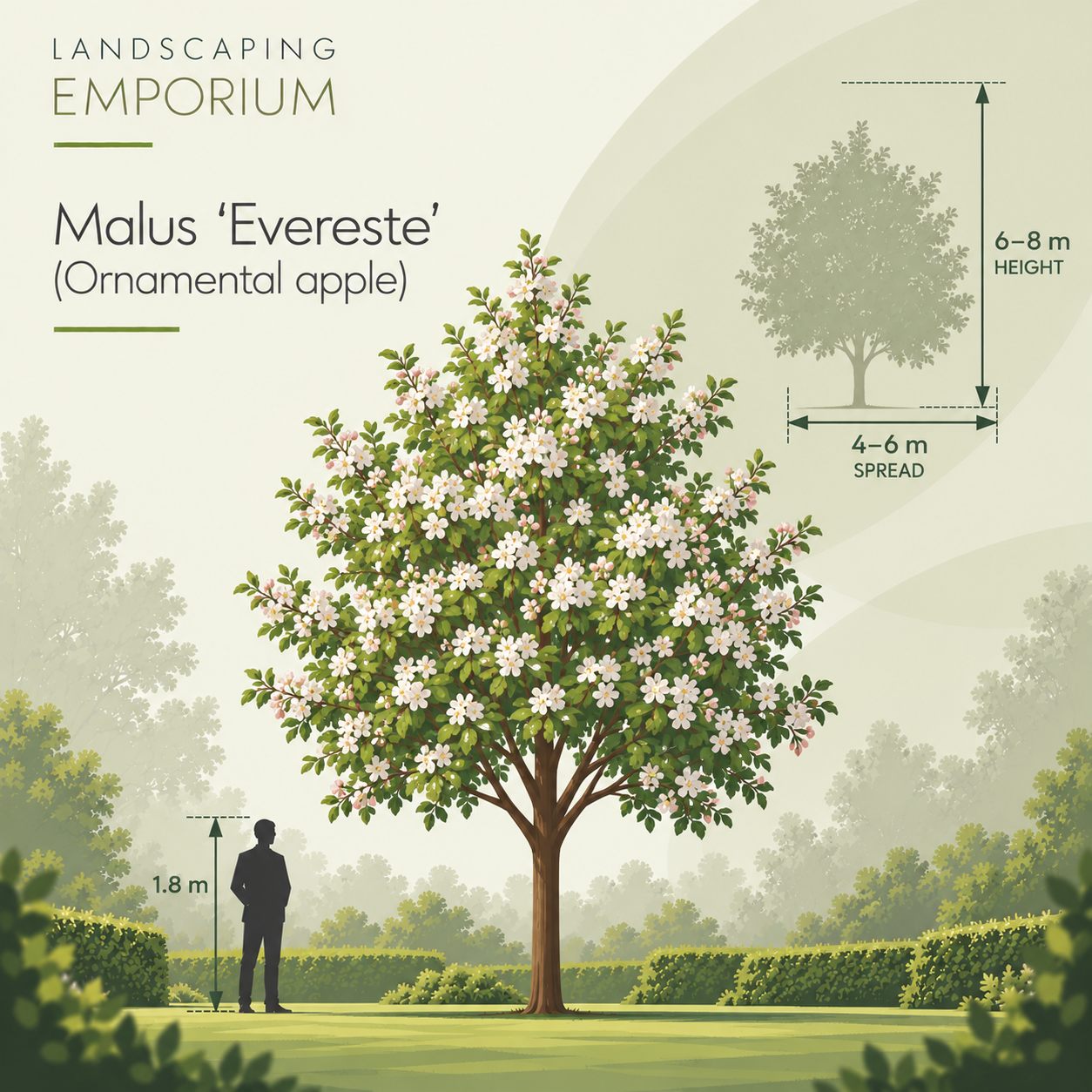 Image 3 of 14
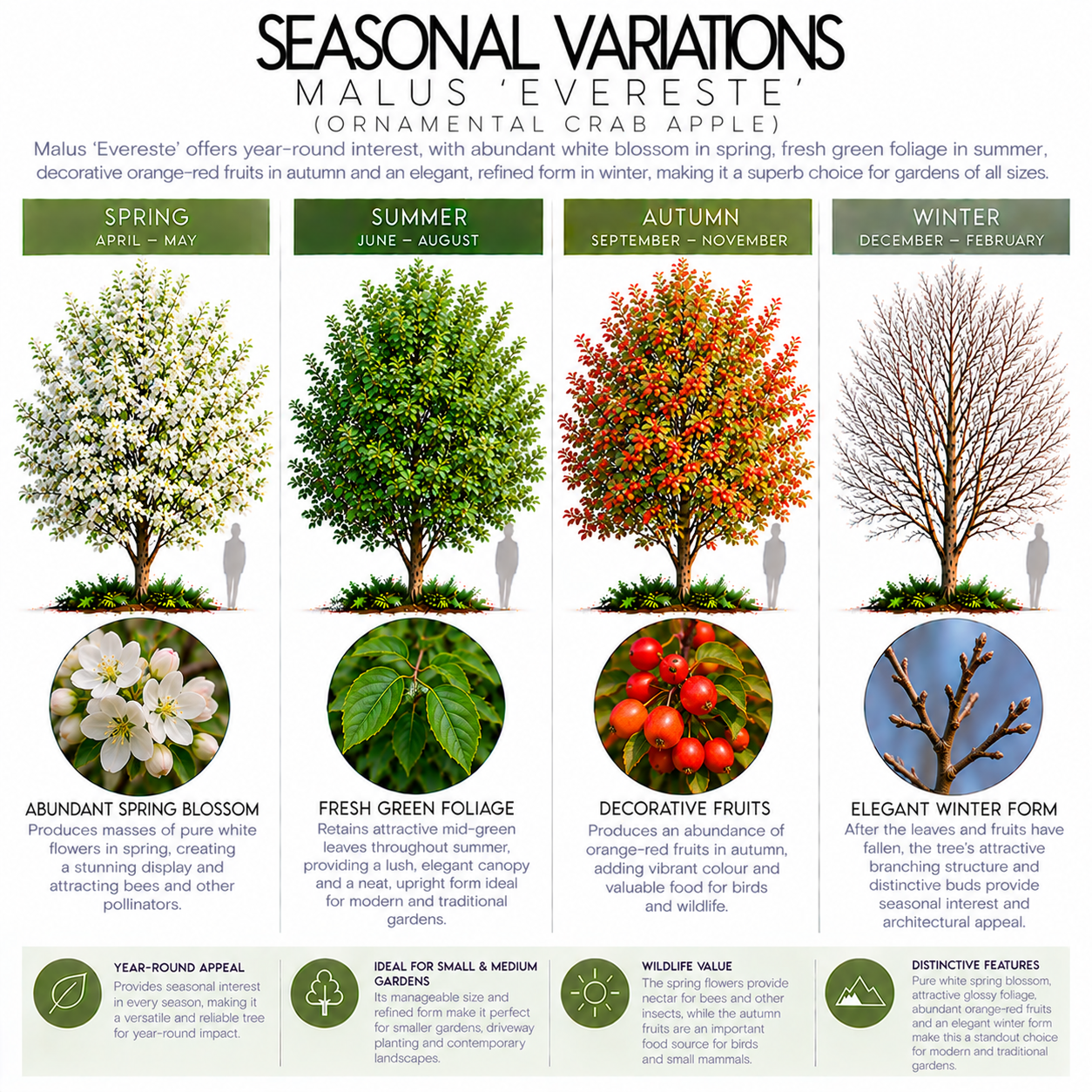 Image 4 of 14
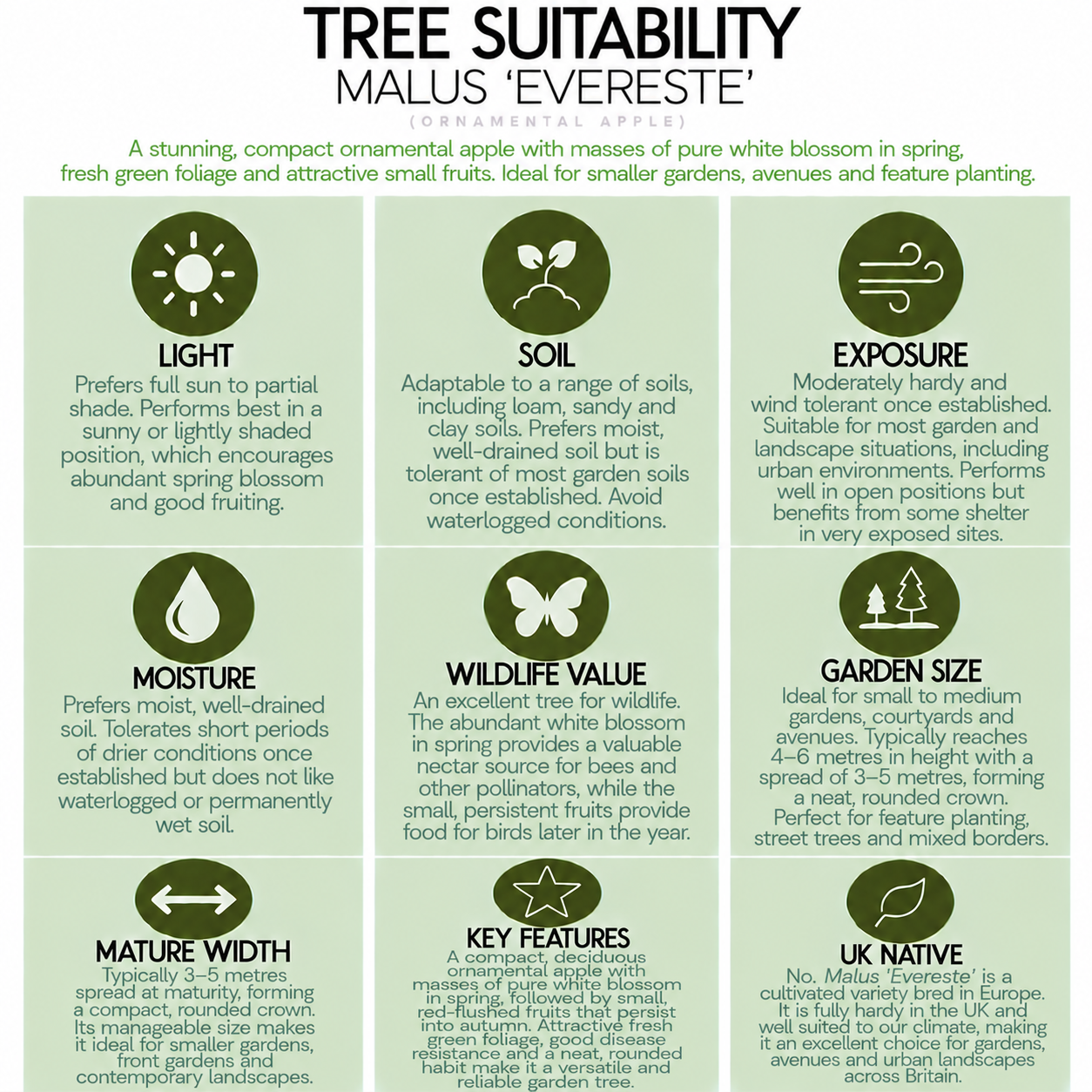 Image 5 of 14
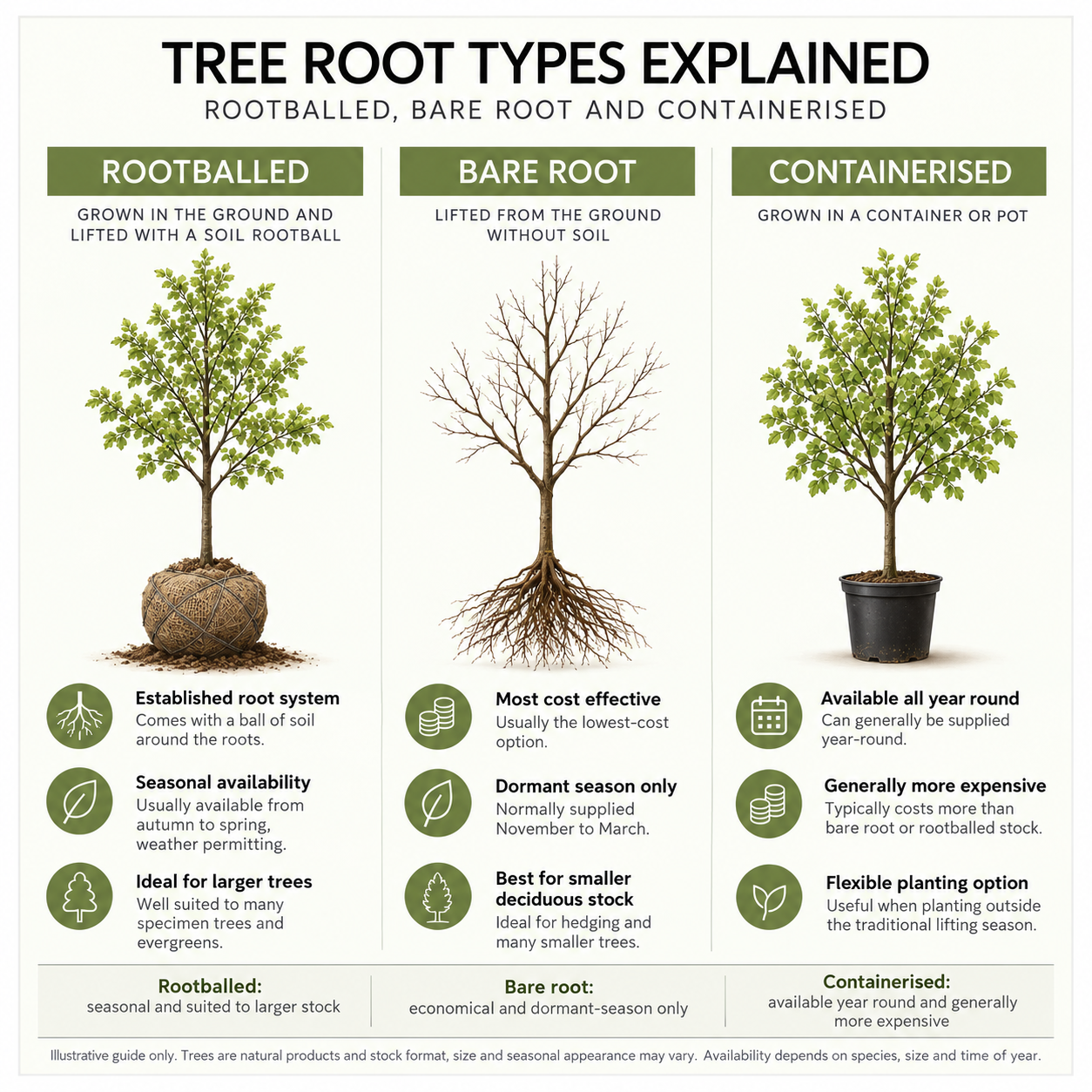 Image 6 of 14
 Image 7 of 14
 Image 8 of 14
 Image 9 of 14
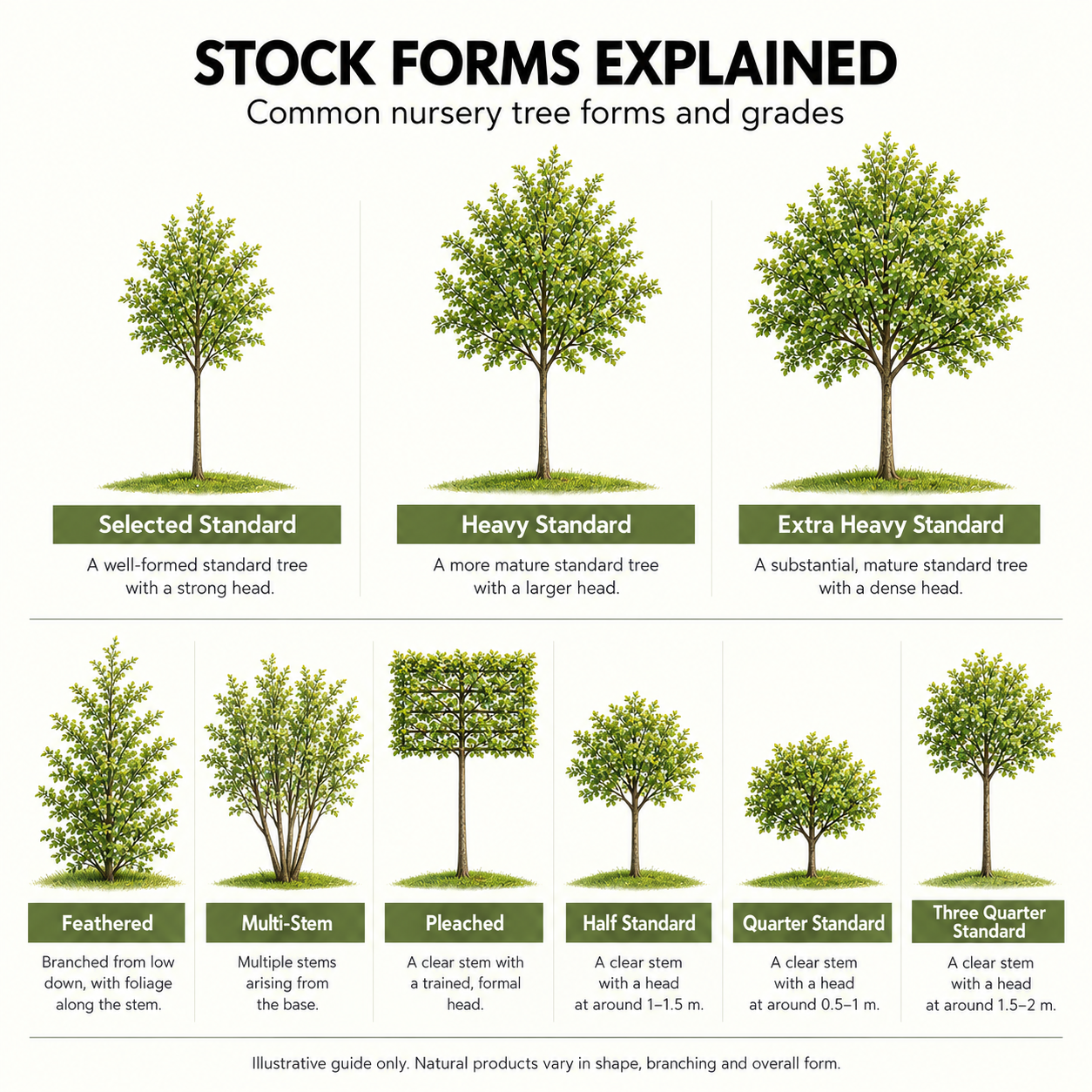 Image 10 of 14
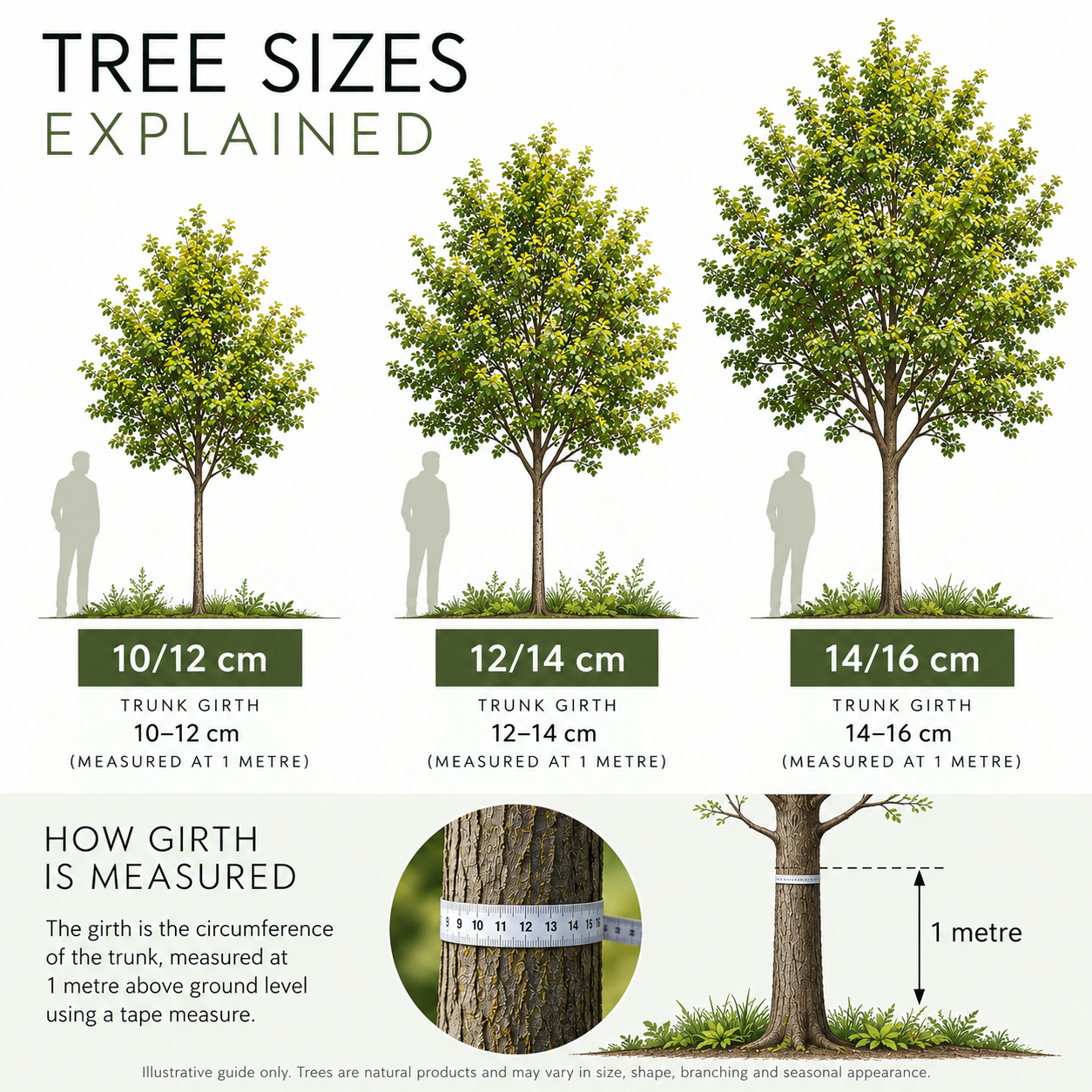 Image 11 of 14
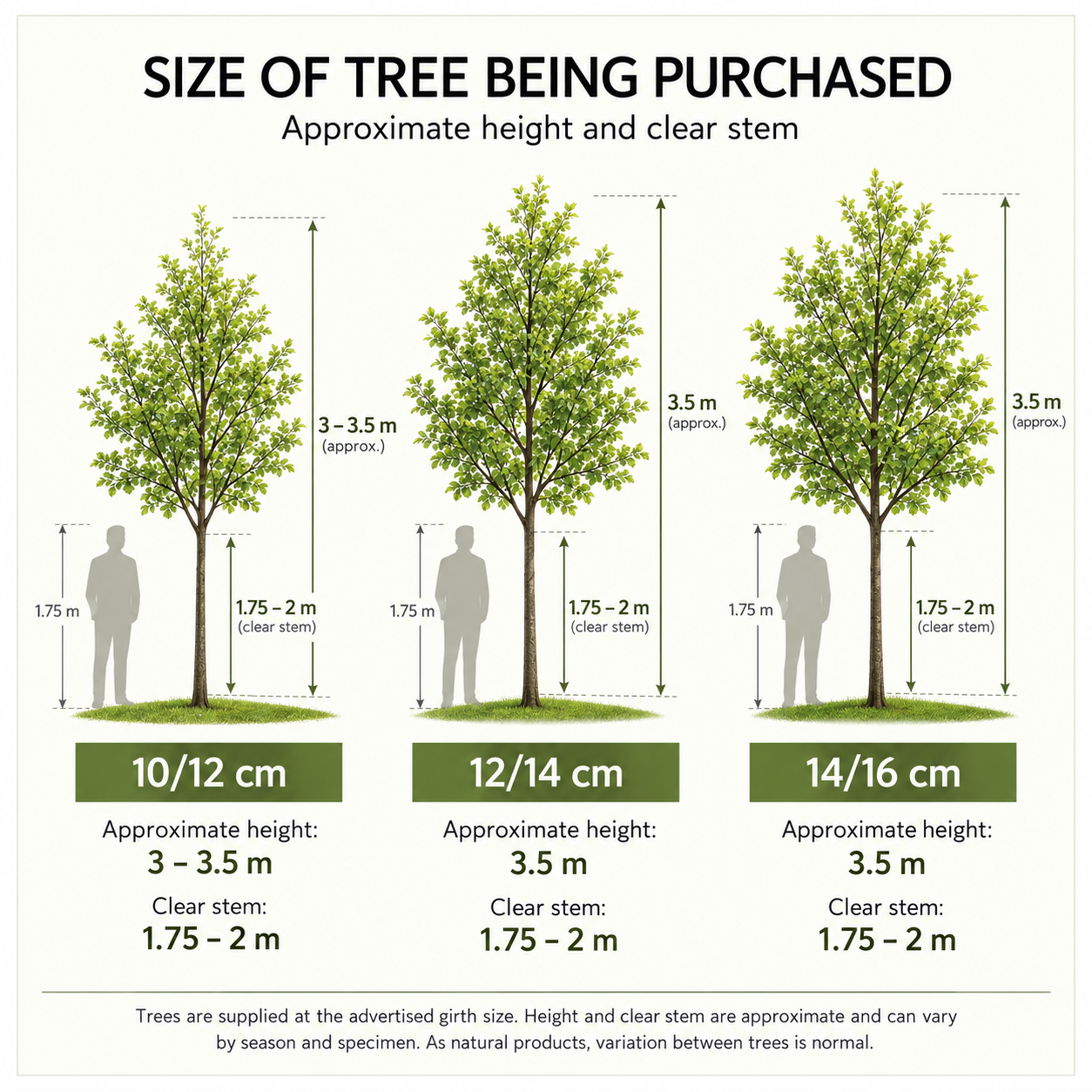 Image 12 of 14
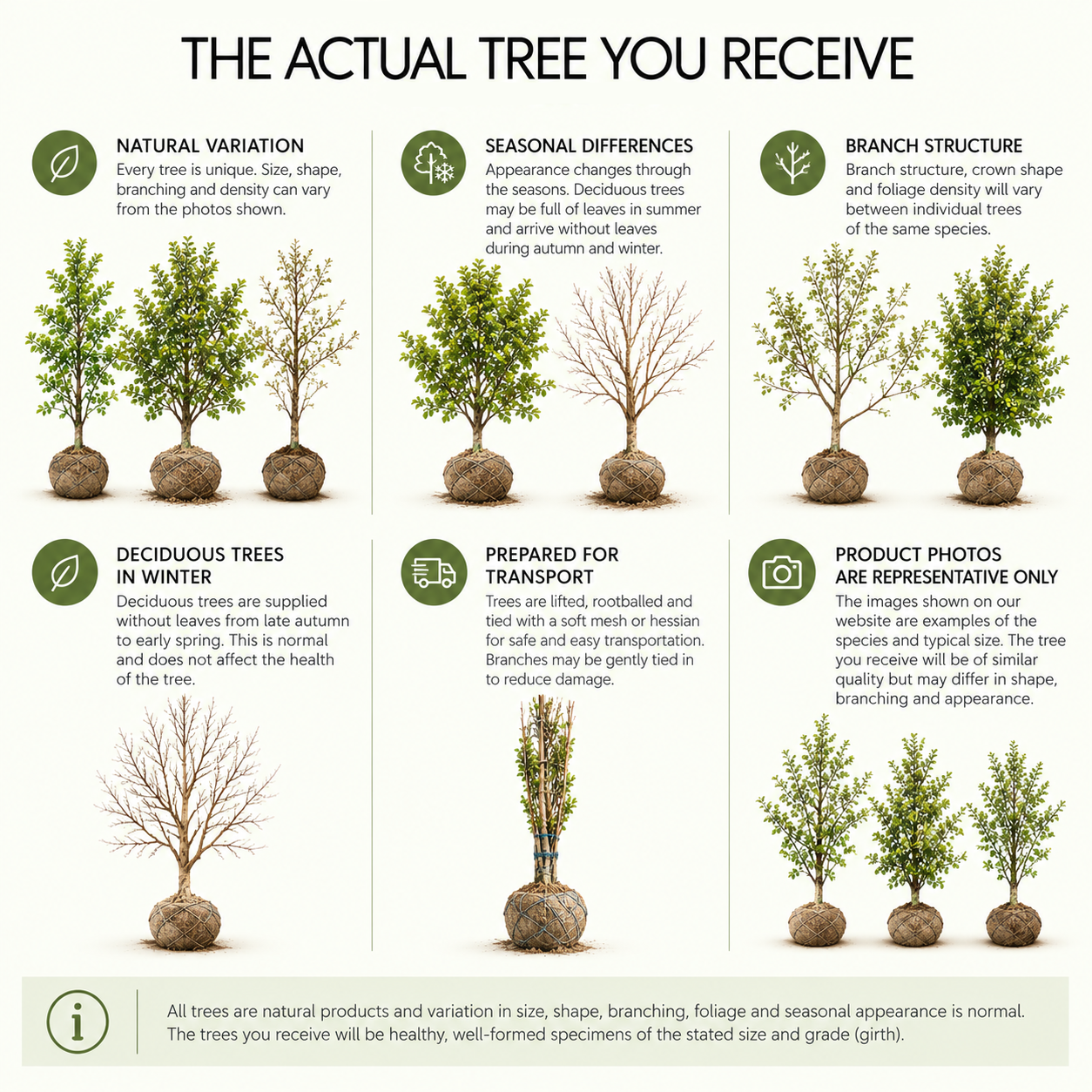 Image 13 of 14
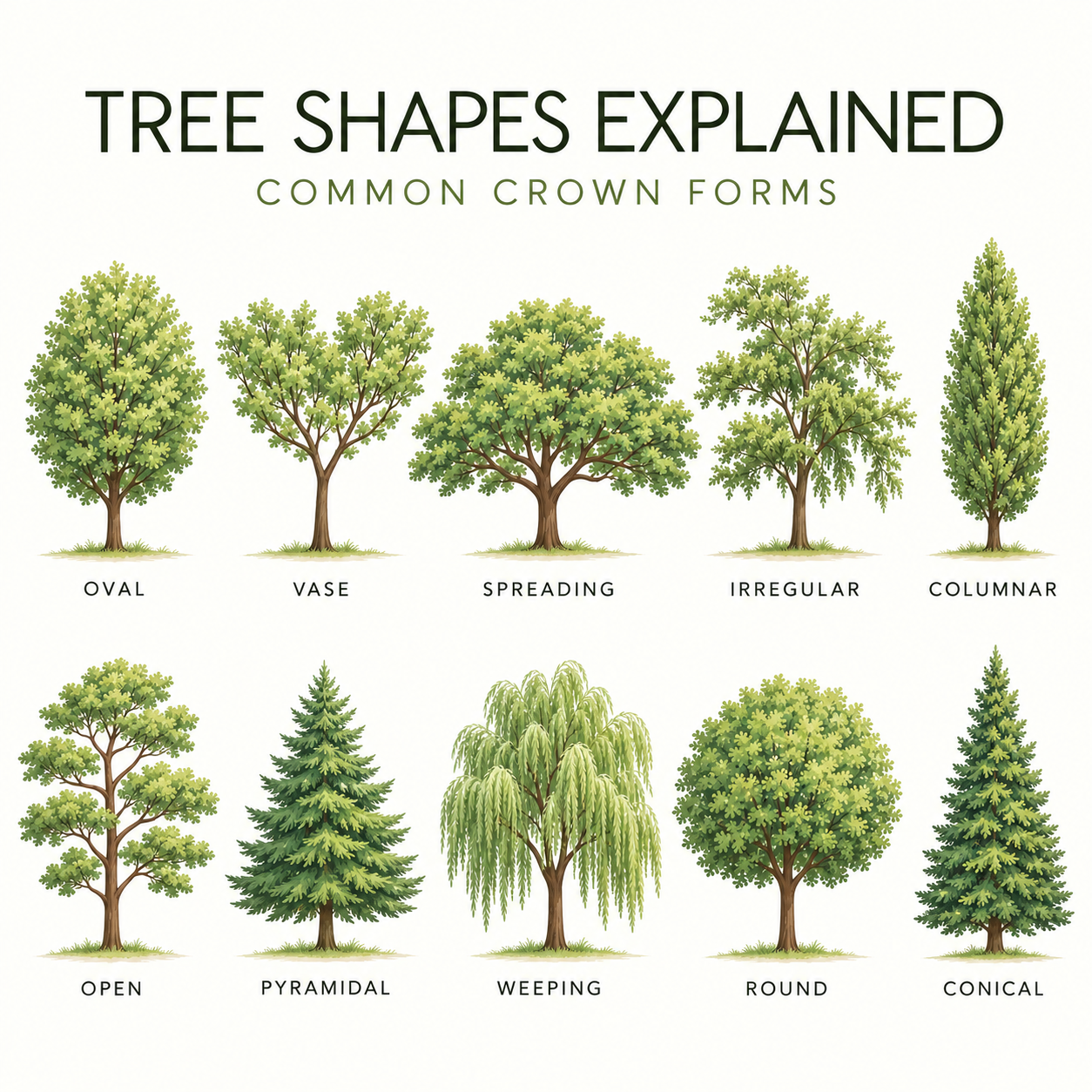 Image 14 of 14