Platanus x hispanica, commonly known as the London Plane, is a magnificent, large-growing deciduous specimen tree renowned for its impressive stature, broad spreading crown and distinctive mottled bark. One of the most recognisable trees in Britain's historic parks, avenues and urban landscapes, the London Plane is an outstanding choice for large gardens, country estates and substantial landscape projects.
The tree develops a strong trunk and an expansive canopy of large, maple-like leaves, providing generous summer shade and an impressive architectural presence. As the tree matures, its bark naturally exfoliates in irregular patches, revealing a distinctive mosaic of cream, olive-green, grey and pale brown. This attractive bark provides year-round interest and becomes particularly noticeable during winter.
In spring, fresh green foliage emerges alongside inconspicuous flowers. The large, palmately lobed leaves create a dense summer canopy before developing yellow-brown autumn tones. Distinctive spherical, burr-like seed heads often remain suspended from the branches after leaf fall, adding further seasonal character.
London Plane is a vigorous and adaptable tree, widely valued for its tolerance of urban conditions, atmospheric pollution and challenging environments. It also performs beautifully in open country gardens and parkland settings where its natural proportions can be appreciated.
For large properties across Lancashire, the Ribble Valley, Greater Manchester, Cheshire and the wider North West of England, Platanus x hispanica provides an exceptional opportunity to establish a long-lived landscape feature with impressive scale and architectural character.
This is a very large tree and should only be planted where sufficient space is available for its substantial mature crown and root system. It is not recommended for small or medium-sized domestic gardens or planting close to buildings.
Key Features of London Plane
Vigorous growth rate • Magnificent large specimen tree • Broad spreading crown • Distinctive mottled and peeling bark • Large maple-like green leaves • Attractive architectural branching • Yellow-brown autumn foliage • Decorative spherical seed heads • Excellent summer shade • Tolerant of atmospheric pollution • Suitable for parkland and large gardens • Impressive long-term landscape presence
Platanus x hispanica – Plant Specification
Botanical name: Platanus x hispanica
Synonym: Platanus x acerifolia
Common name: London Plane
Family: Platanaceae
Mature size: Commonly 20–30m or more in height, with a substantial spreading crown potentially exceeding 20m across in favourable conditions
Growth rate: Fast to vigorous when established in suitable conditions
Foliage: Deciduous
Habit: Large, broadly spreading crown with strong structural branches
Bark: Distinctive exfoliating bark in cream, grey, olive-green and brown tones
Leaf colour: Fresh green in spring and summer, turning yellow-brown in autumn
Flowers: Small, inconspicuous flowers in spring
Fruit: Rounded, burr-like seed heads, sometimes remaining on the tree through winter
Position: Full sun
Soil: Fertile, preferably moist but well-drained clay, loam, sand or chalk
Soil pH: Acidic, neutral or alkaline
Moisture: Well-drained; benefits from adequate moisture during establishment
Exposure: Sheltered or exposed
Hardiness: H6 – hardy throughout the UK
UK native: No – cultivated hybrid
Wildlife value: Provides canopy habitat and shelter, although it is not a native woodland species
Best uses: Large gardens, country estates, parkland planting, avenues, landmark specimens, large lawns and substantial landscape schemes
Pruning: Minimal formative pruning is generally preferable for an open-grown specimen. Any substantial pruning should be assessed and undertaken by a suitably qualified arborist.
Why Choose a London Plane Tree?
An Impressive Tree for Large Gardens
London Plane is particularly well suited to gardens where space allows the tree to develop its natural size and form. Its substantial canopy and strong trunk make it an excellent focal point within expansive lawns, country-house gardens and parkland landscapes.
A single specimen can create a sense of maturity and permanence within a newly landscaped property, while a carefully spaced avenue can establish a strong visual connection along a driveway or through a large garden.
Distinctive Architectural Bark
One of the London Plane's most attractive characteristics is its unusual peeling bark.
As the outer bark naturally sheds, it reveals irregular patches of contrasting colour, producing an attractive camouflage-like appearance.
This feature provides visual interest throughout the year, particularly during winter when the tree's substantial branching structure is fully visible.
Excellent Summer Shade
The broad crown and large leaves of Platanus x hispanica create generous shade beneath the tree.
For substantial gardens, this can provide a comfortable setting for seating areas, informal recreation and open lawns, although the eventual canopy spread and seasonal leaf fall should be considered carefully when planning the surrounding landscape.
A Strong Choice for Parkland and Avenues
London Plane is particularly effective in large-scale planting schemes where the mature proportions of the tree can be appreciated.
Its upright trunk, expansive canopy and imposing character make it suitable for estate landscapes, long avenues and substantial open spaces.
Where trees are planted in rows or groups, spacing should be based on the intended mature canopy dimensions and long-term management requirements.
Adaptable to a Range of Growing Conditions
London Plane is well known for its tolerance of atmospheric pollution and urban environments.
It can establish in a variety of soil types, although adequate soil volume, drainage and access to moisture remain important.
For the best long-term performance, choose an open planting position with sufficient rooting space and avoid placing the tree close to buildings, retaining structures or underground services.
Professional Tree Planting and Installation
Landscaping Emporium can arrange professional specimen tree planting through Kirman Design across selected areas of North West England.
We can install specimen trees within the following postcode areas, subject to access and project requirements:
BB, BL, CH1–CH5, CW8, CW9, FY, L, LA1–LA6, M, OL, PR, SK1–SK12, WA and WN.
If you require professional planting outside these areas, please contact us before purchasing to discuss whether installation can be arranged.
Telephone: 01942 604976
Before ordering a London Plane specimen, please consider the available planting space, mature tree dimensions, soil conditions, delivery access and any specialist lifting equipment that may be required.
Larger rootballed specimens can be extremely heavy and may require mechanical handling and professional installation.
For further information, please refer to our planting guide and the individual tree specification supplied with your order.

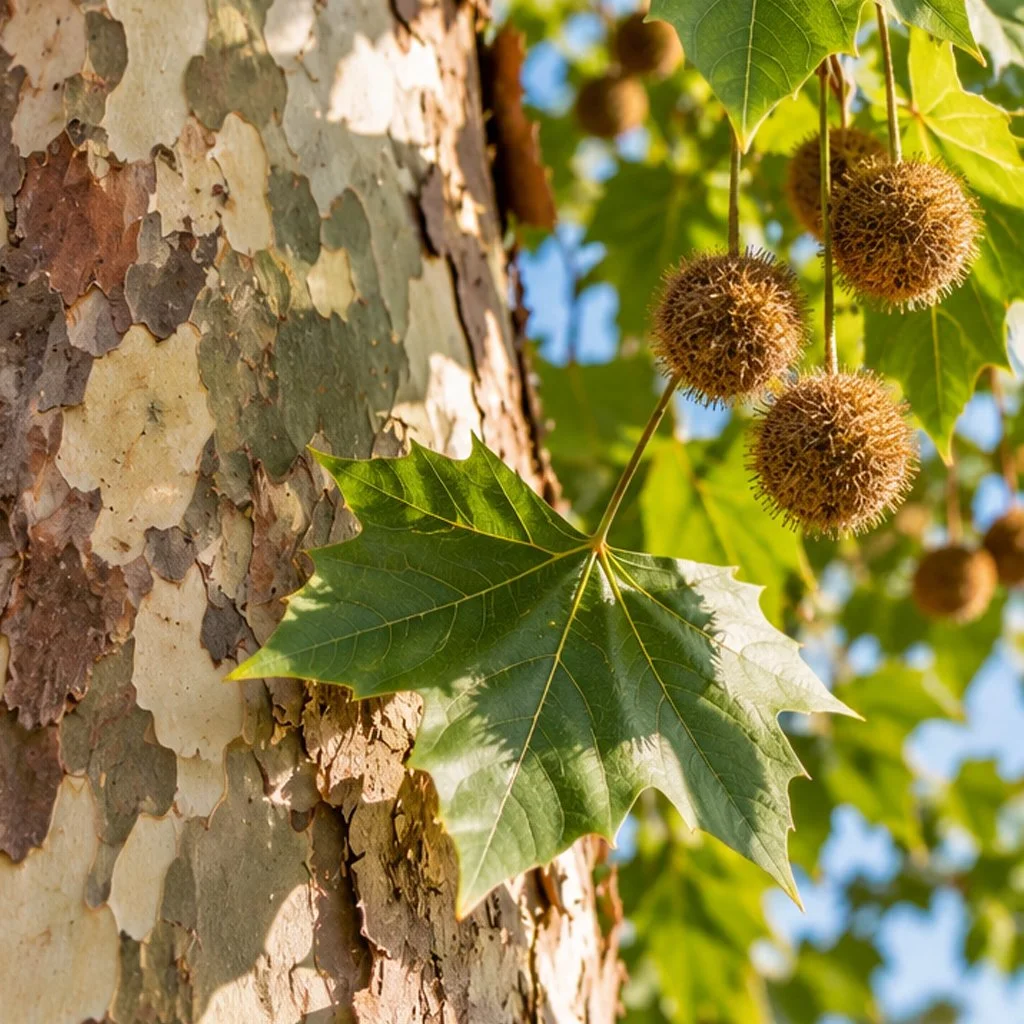 Image 1 of 13
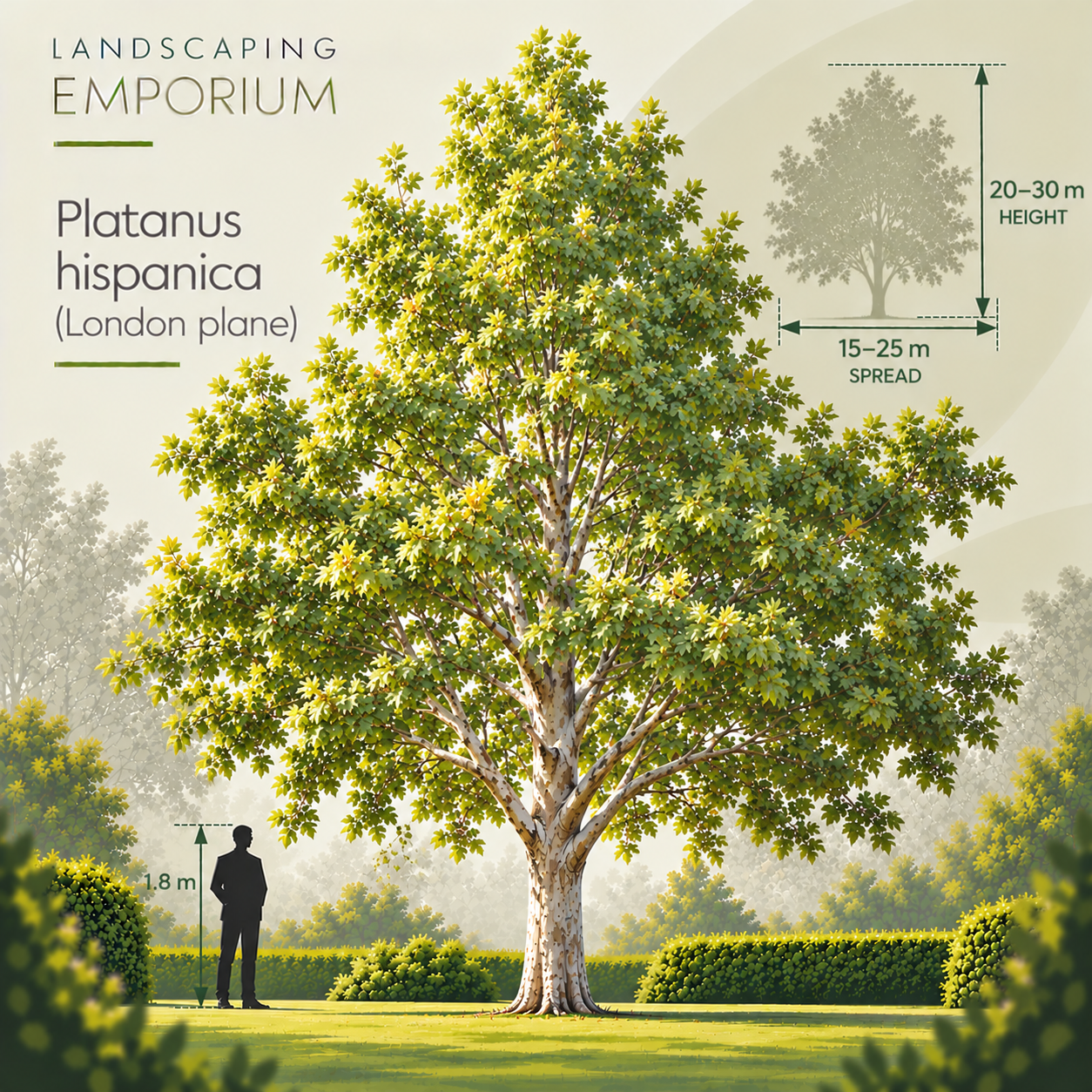 Image 2 of 13
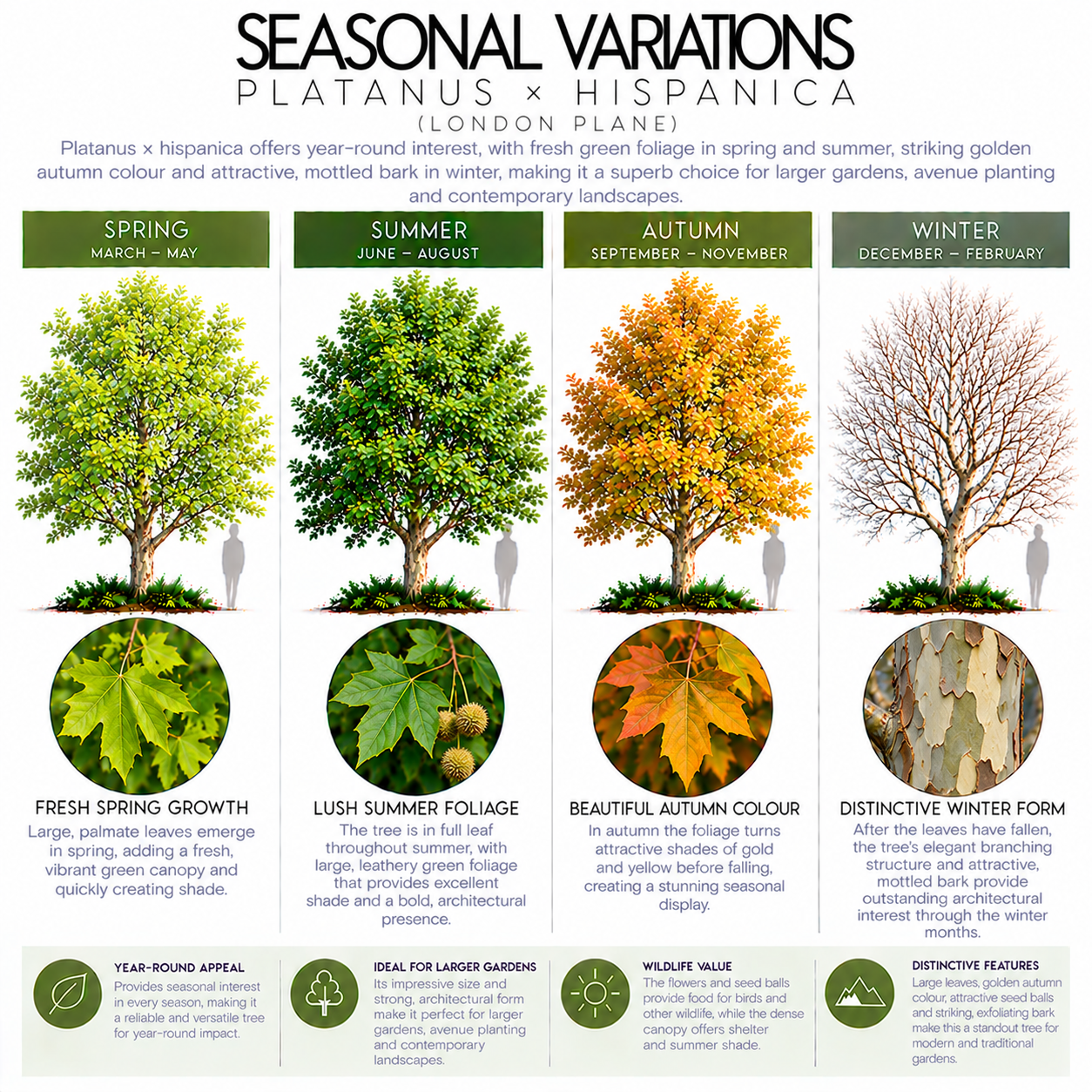 Image 3 of 13
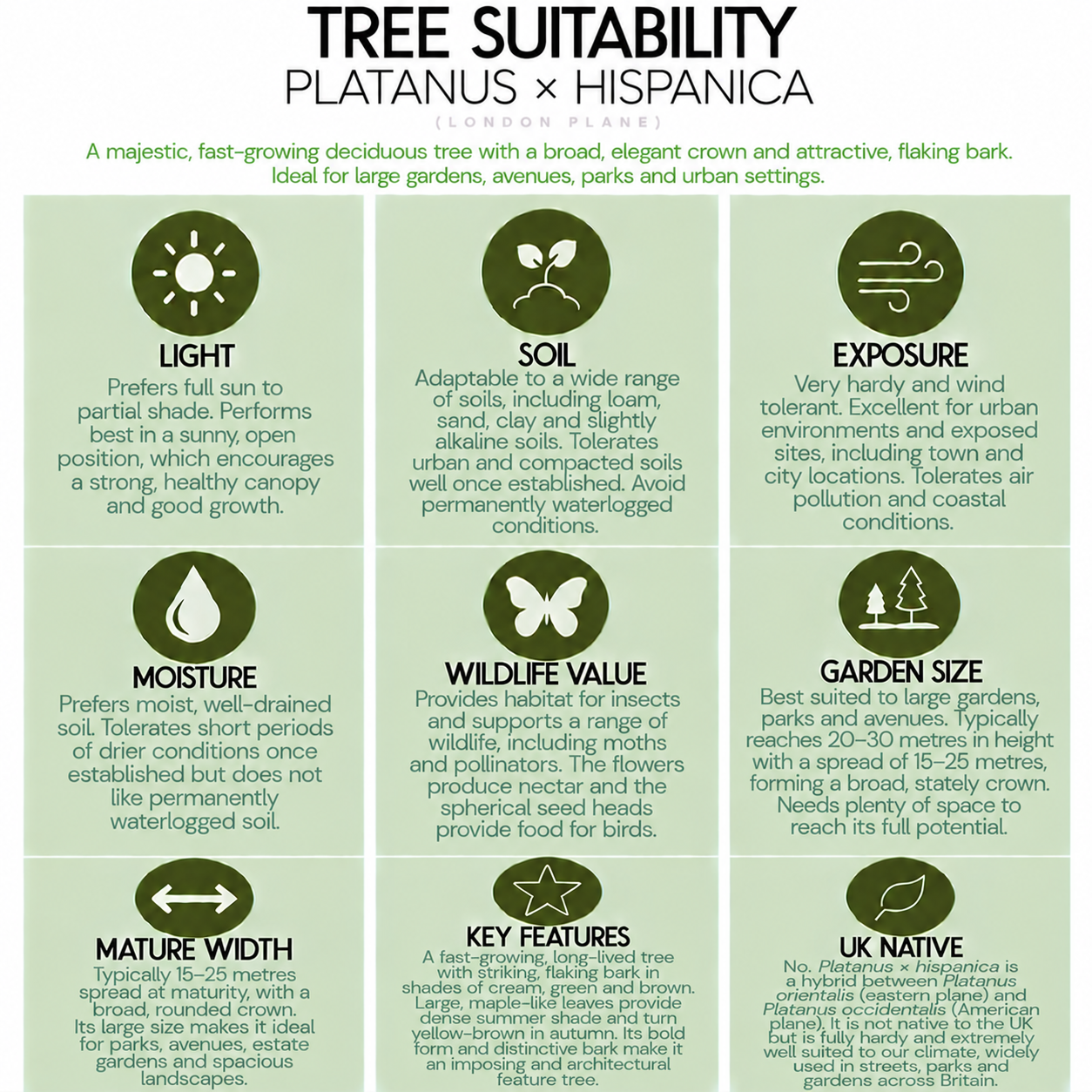 Image 4 of 13
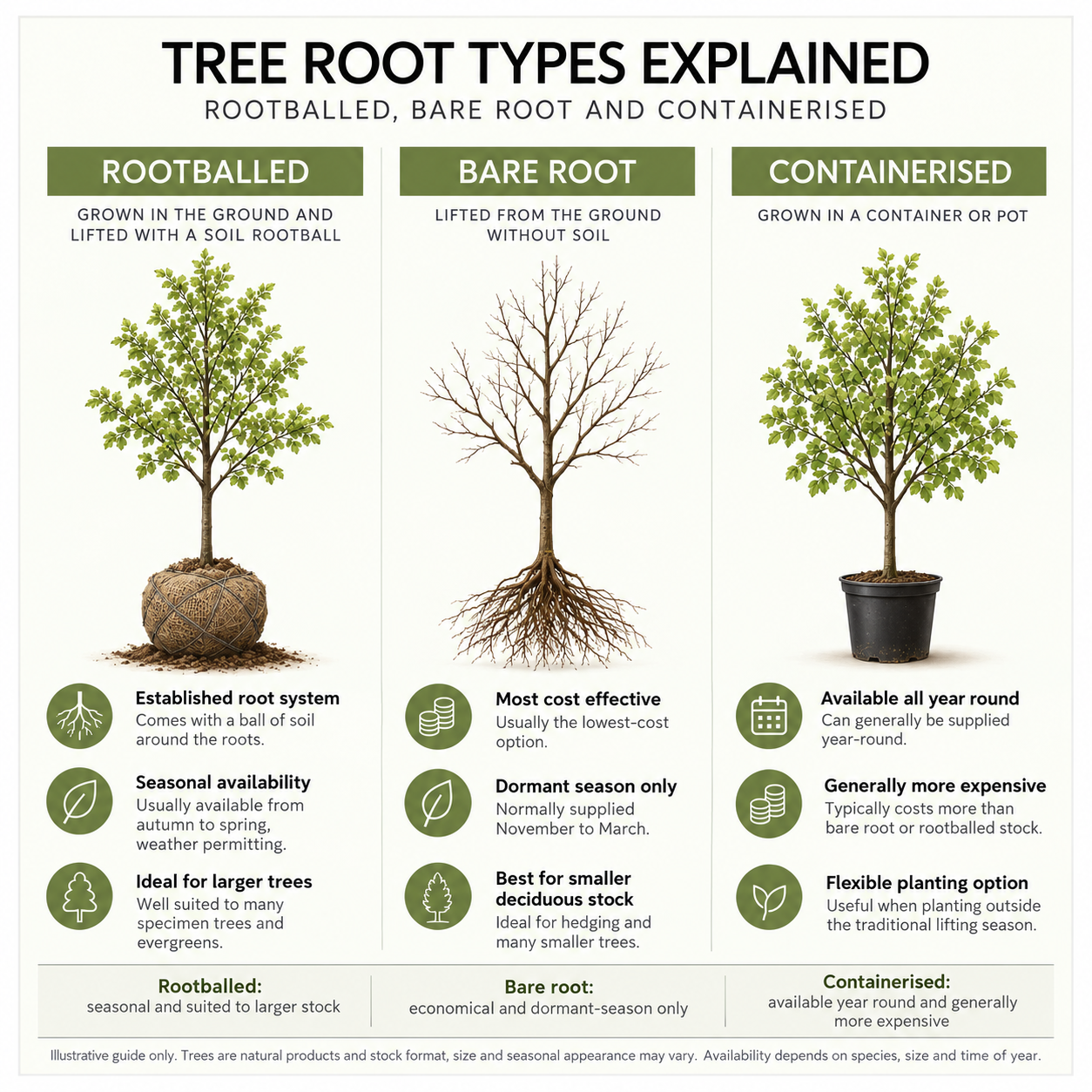 Image 5 of 13
 Image 6 of 13
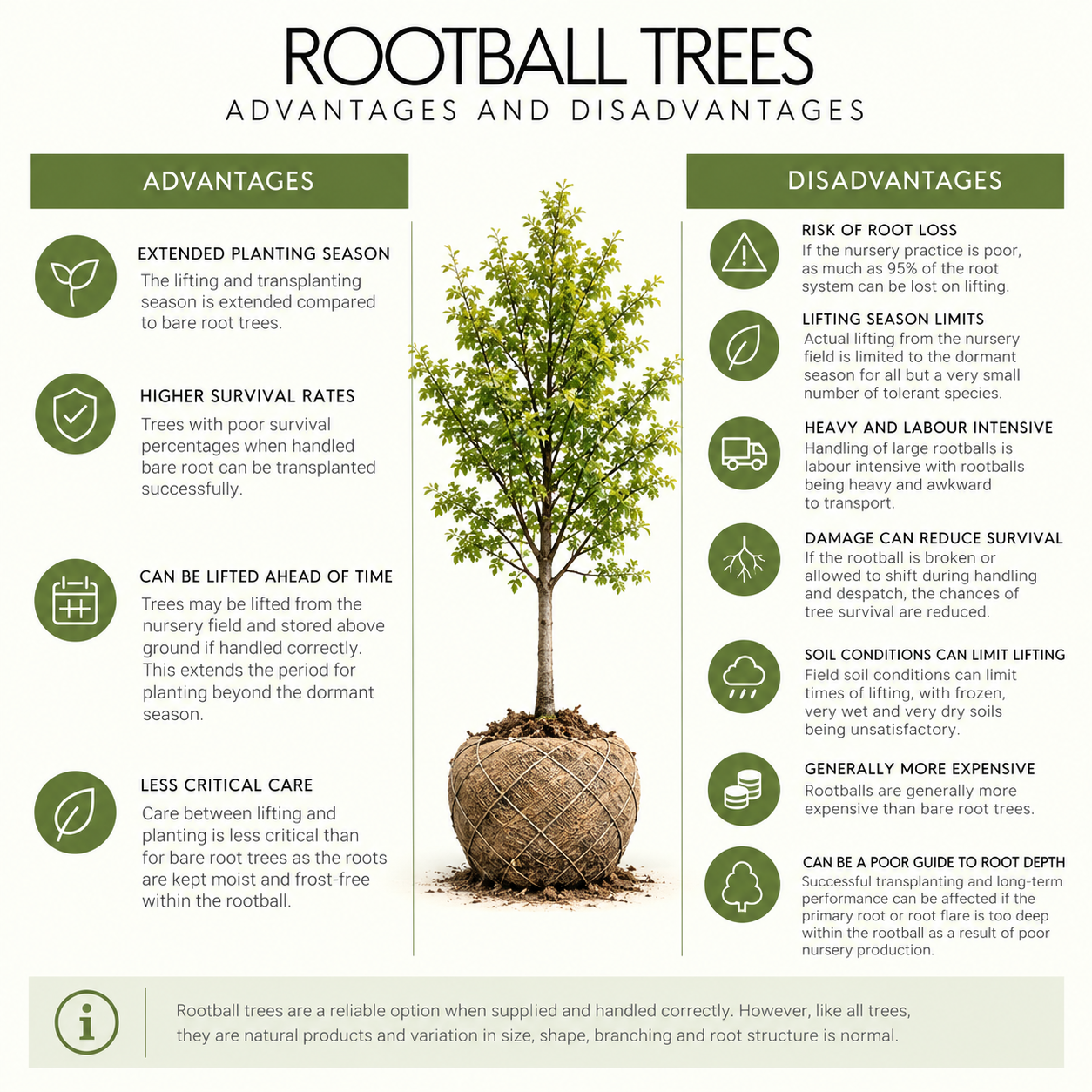 Image 7 of 13
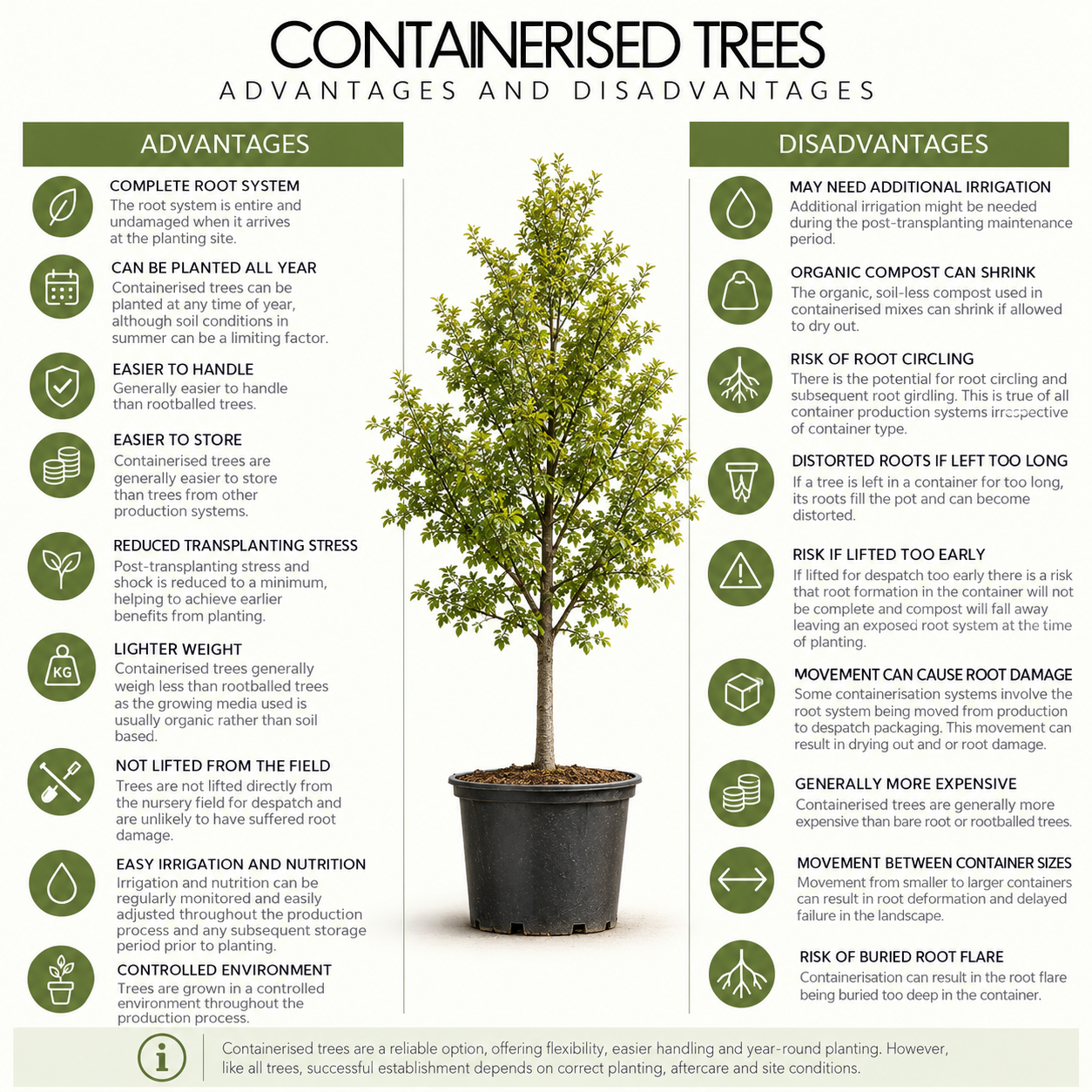 Image 8 of 13
 Image 9 of 13
 Image 10 of 13
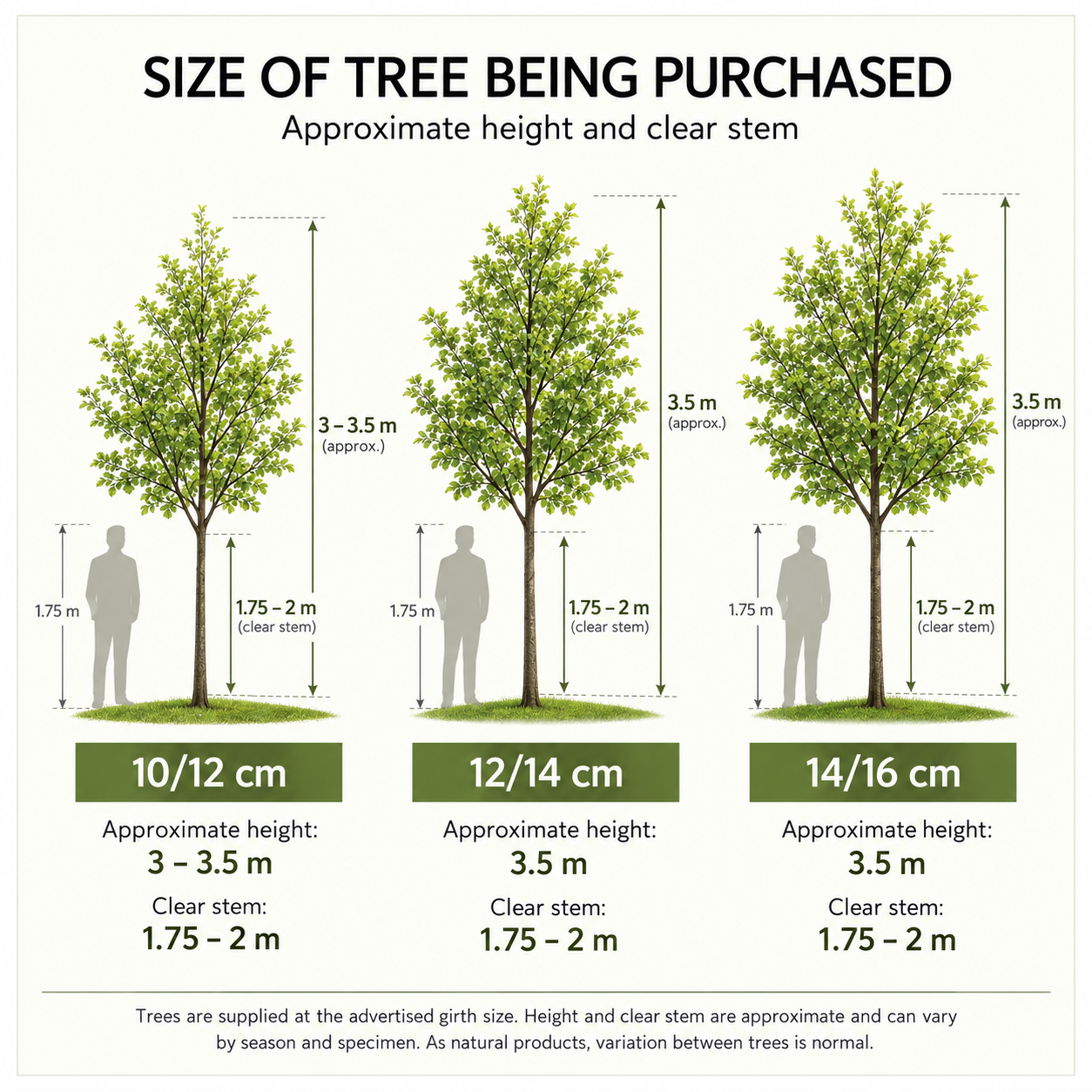 Image 11 of 13
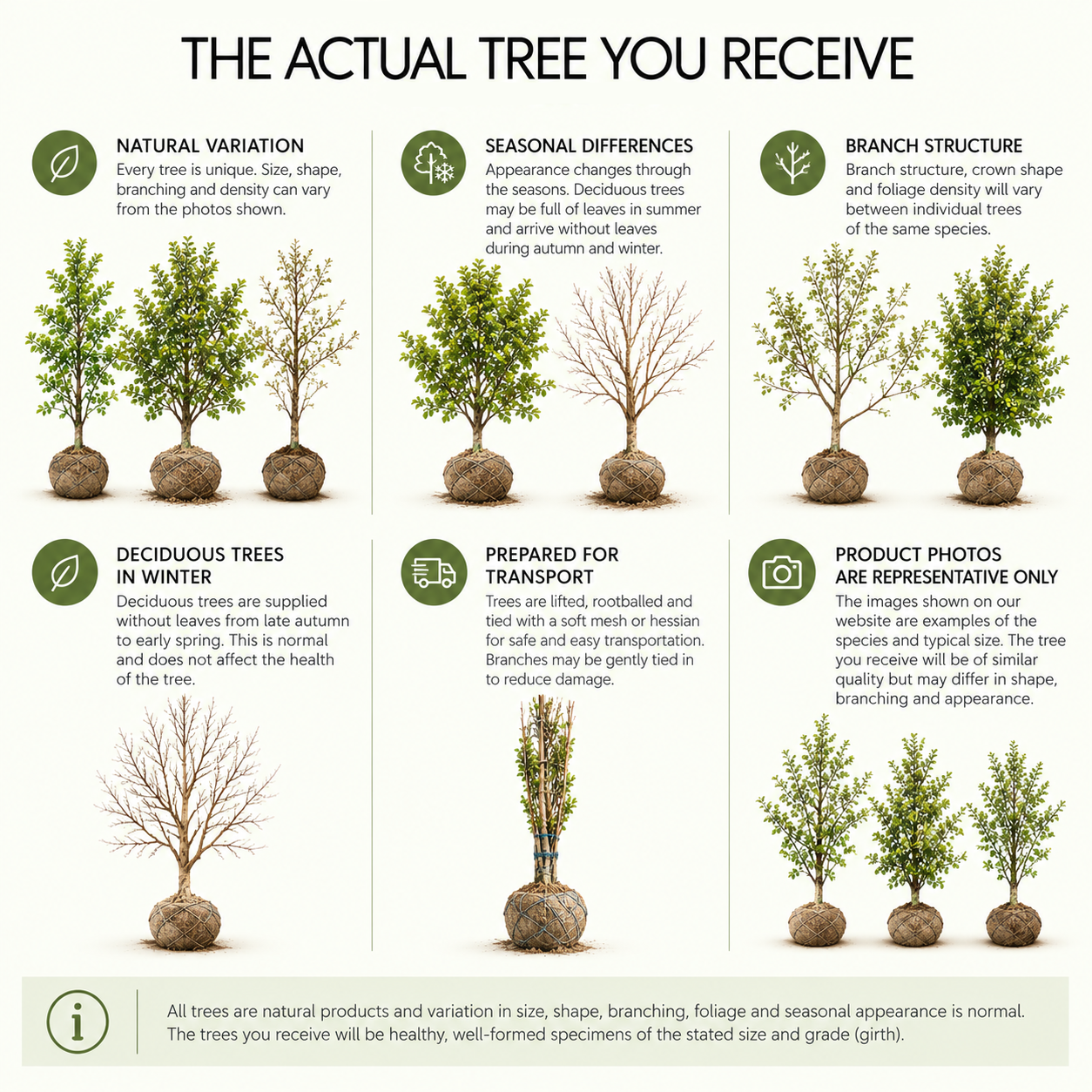 Image 12 of 13
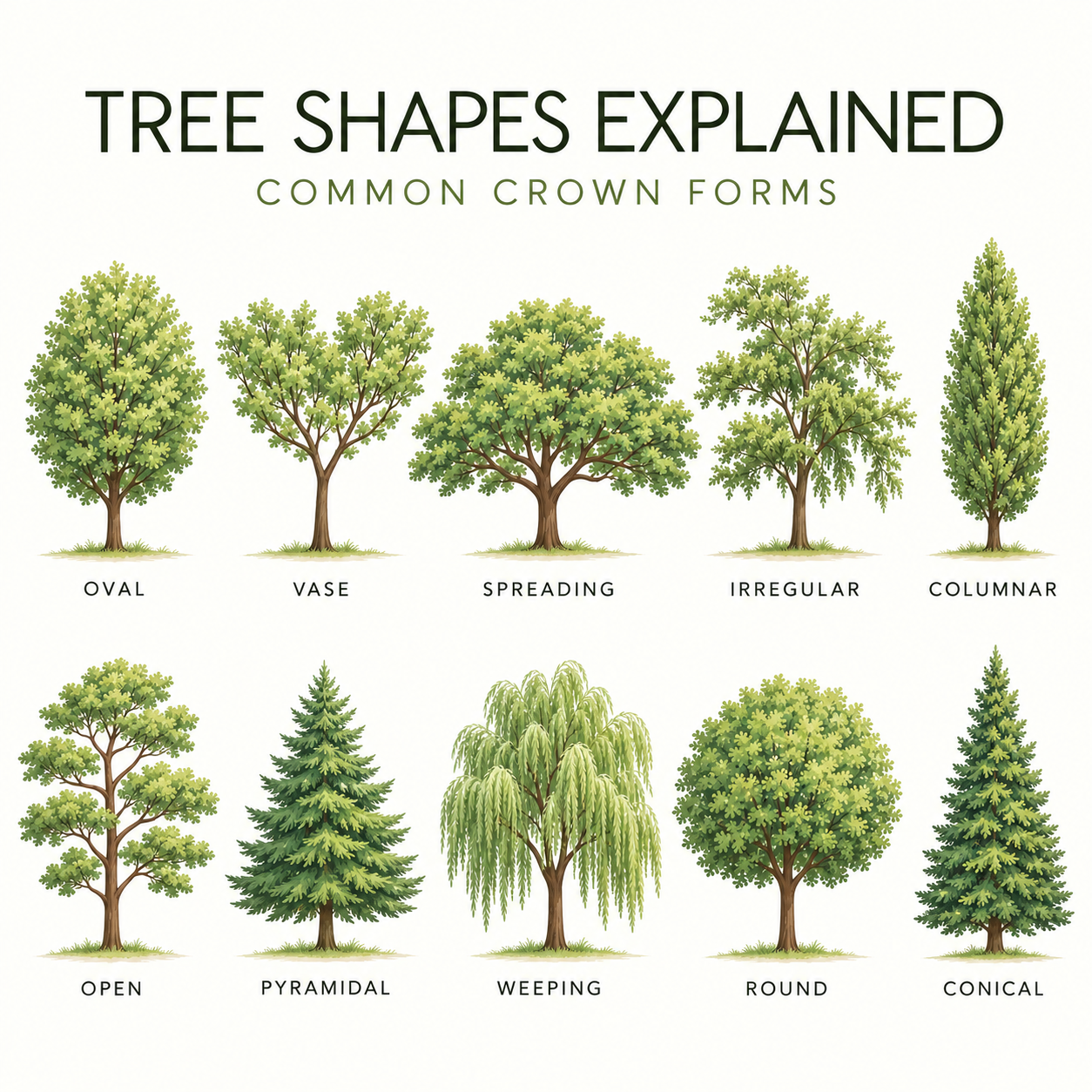 Image 13 of 13