Landscaping Emporium | Hedging
Best Hedging Plants for Exposed and Windy Sites
Looking for a hedge that will withstand
strong winds, open countryside or an
exposed garden boundary?
Discover wind-resistant evergreen and
deciduous hedging plants, with advice
on creating shelter, screening and
long-lasting garden structure.
Shop Hedging for Exposed Sites
Strong winds can damage foliage,
dry out soil and destabilise newly
planted hedging. The six species
below offer different advantages
for exposed inland gardens and
rural boundaries.
Select a plant to explore sizes
and buying options.
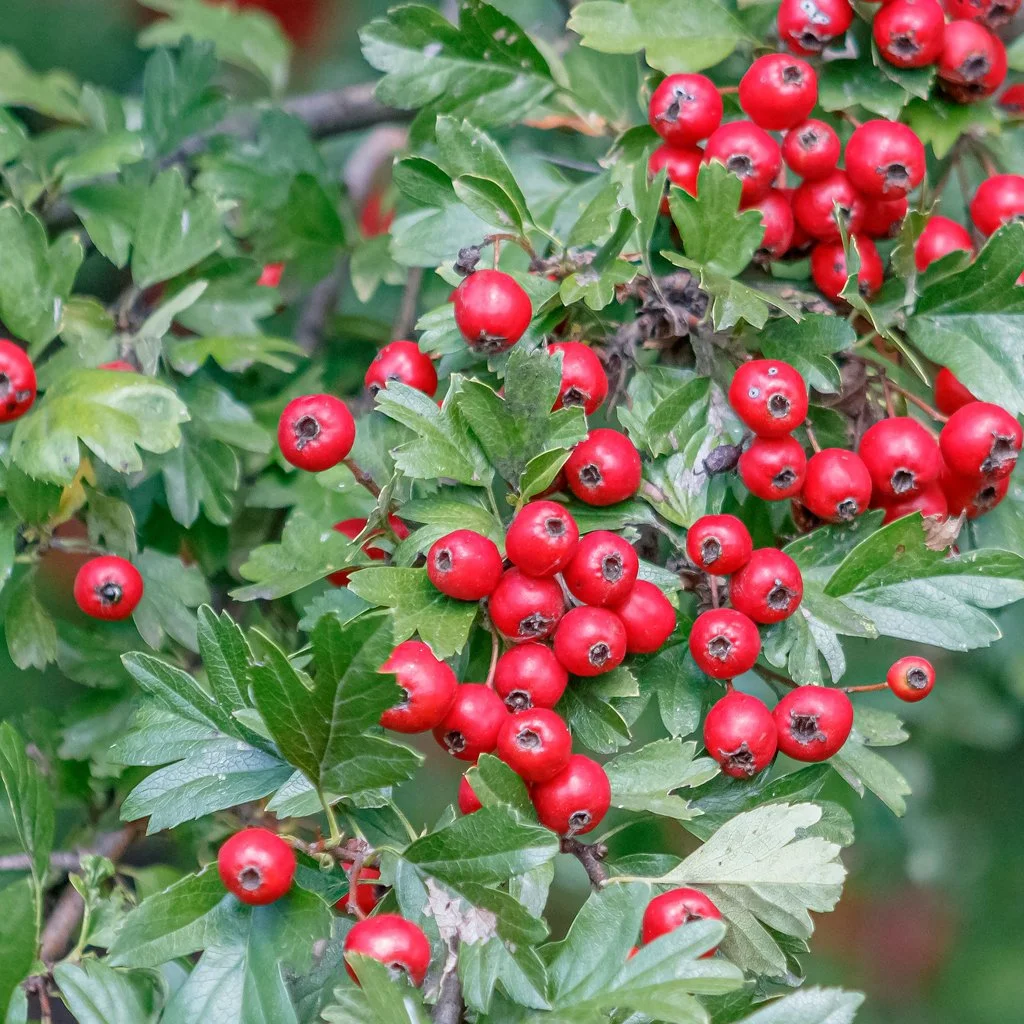
Native | Exposed Rural Sites
Hawthorn Hedging
Crataegus monogyna
An excellent choice for exposed
rural boundaries. Hardy and
adaptable, Hawthorn creates
a dense, thorny hedge that
filters wind and provides
valuable wildlife habitat.
Shop Hawthorn →

Native | Heavy Soils | Wind Resistant
Hornbeam Hedging
Carpinus betulus
A highly useful deciduous hedge
for windy inland gardens,
particularly where soil is heavy
or moisture-retentive.
Hornbeam responds well to
clipping and may retain some
copper-brown winter foliage.
Shop Hornbeam →

Evergreen | Formal Hedging
English Yew Hedging
Taxus baccata
Dense, long-lived evergreen
hedging suitable for many
exposed inland gardens
once established.
Yew provides year-round
structure and responds
exceptionally well to clipping.
Good drainage is essential.
Shop English Yew →
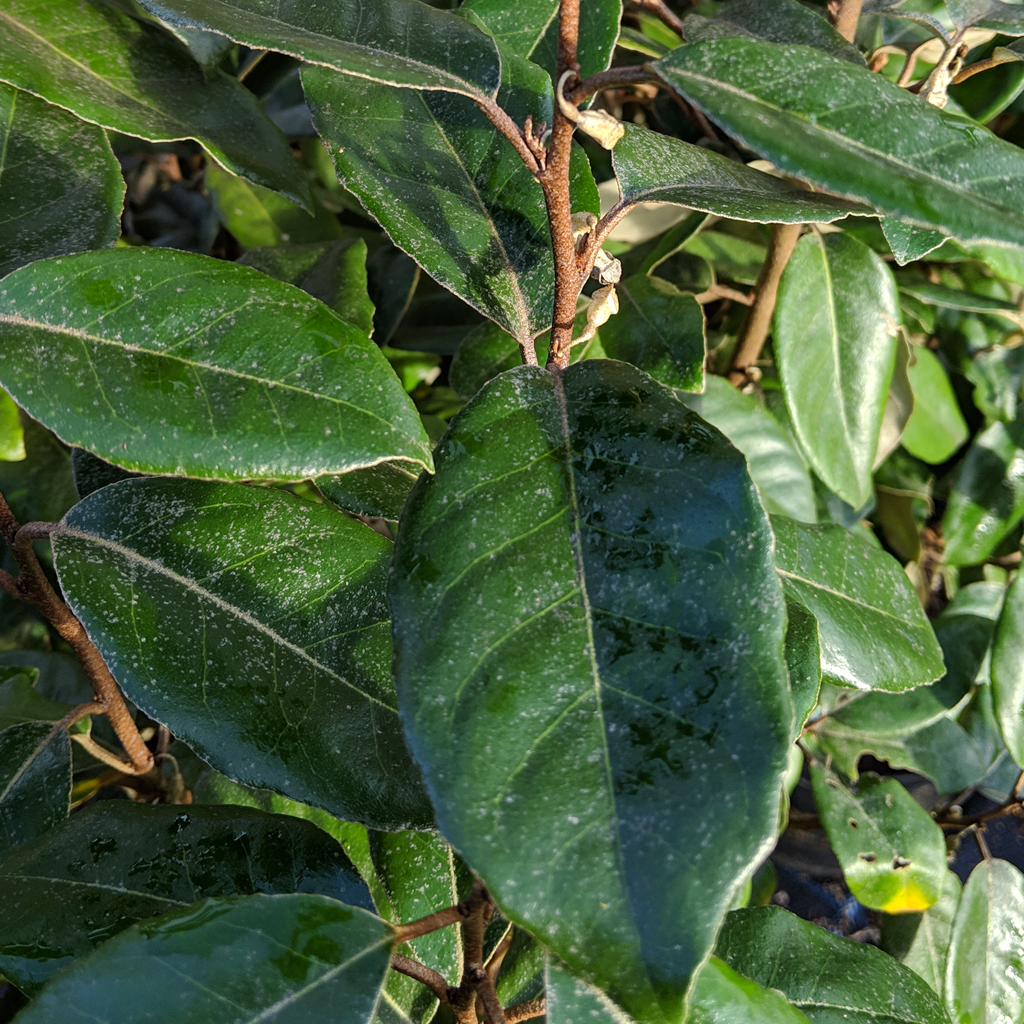
Evergreen | Wind & Coastal Tolerance
Oleaster Hedging
Elaeagnus × submacrophylla
(syn. Elaeagnus × ebbingei)
A robust evergreen hedge
with attractive silvery-backed
foliage. Oleaster tolerates
many exposed, sunny and
free-draining sites once
established, making it
particularly useful for
windy garden boundaries.
View Oleaster →
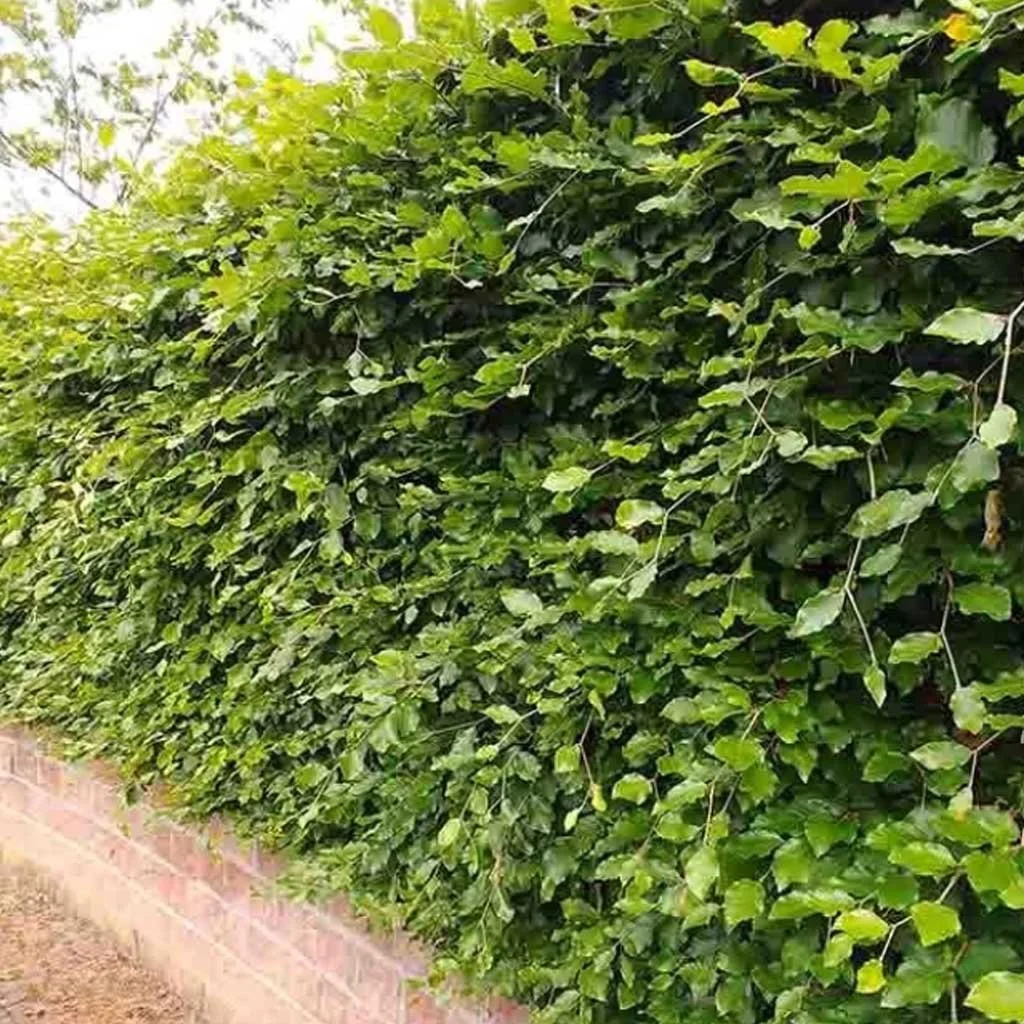
Deciduous | Traditional Garden
Green Beech Hedging
Fagus sylvatica
Traditional hedging for
suitable exposed inland gardens
where drainage is good.
Beech develops attractive
green summer foliage and may
retain copper-brown leaves
through winter.
Hornbeam is often preferable
on heavier or wetter soils.
Shop Green Beech →
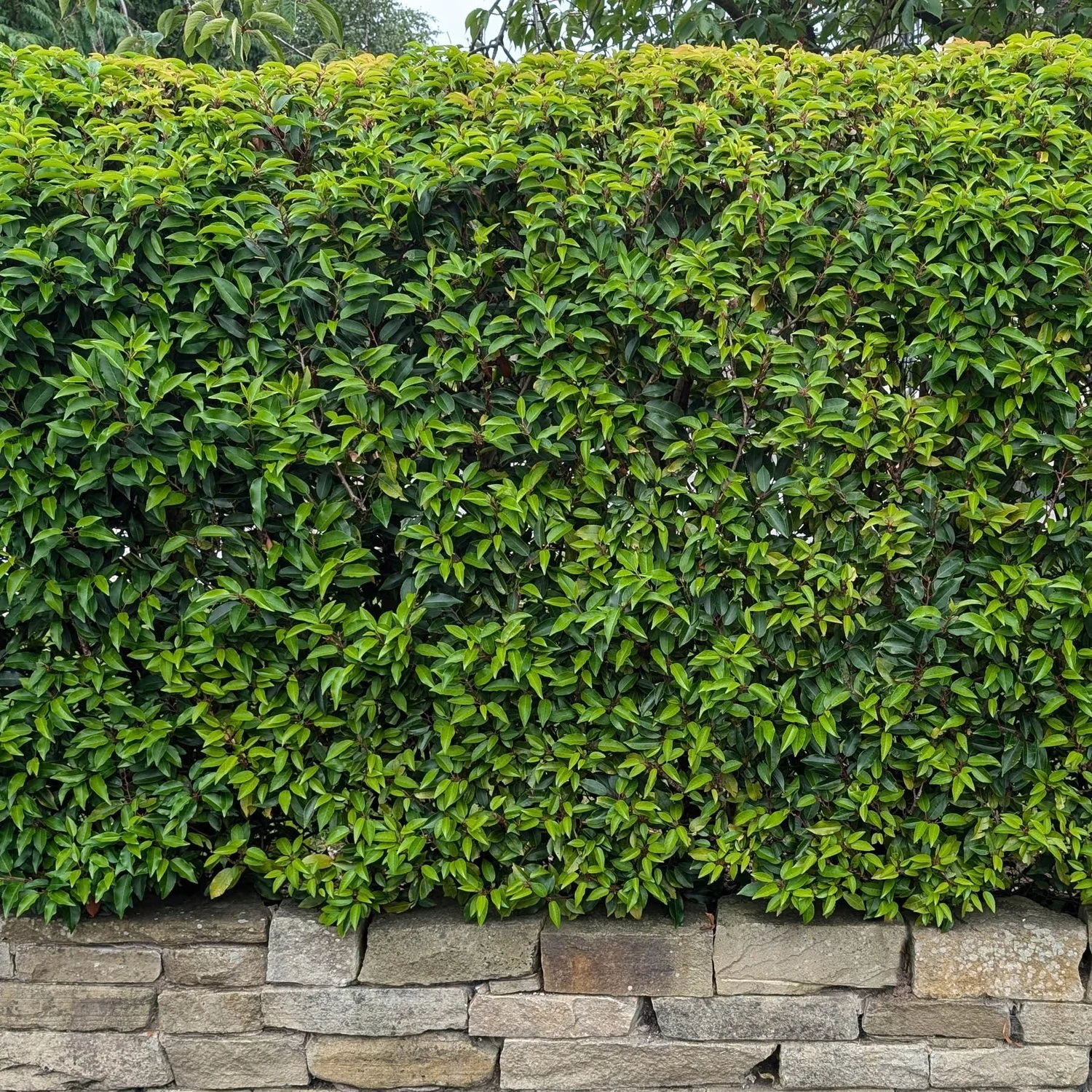
Evergreen | Moderately Exposed Sites
Portuguese Laurel
Prunus lusitanica
Elegant evergreen hedging
with relatively small,
glossy foliage.
Suitable for moderately
exposed inland gardens
where soil conditions
and drainage are appropriate.
More severe exposure may
favour Hawthorn or Hornbeam.
Shop Portuguese Laurel →
Why Wind-Filtering Hedges Work Better Than Solid Barriers
An effective hedge allows some wind
to pass through its branches
and foliage, reducing wind speed
without creating the same degree
of turbulence often associated
with a solid wall or fence.
This is particularly useful
in open countryside and exposed
gardens where prevailing winds
can affect outdoor seating,
planting and day-to-day
enjoyment of the garden.
The best windbreak is not
necessarily the densest
evergreen hedge.
Deciduous and mixed native
hedging can provide effective
shelter through their
branching structure.
Which Hedge Is Best for a Windy Garden?
The right choice depends on
wind exposure, soil conditions,
available space and whether
year-round privacy is essential.
| Plant |
Best Situation |
Foliage |
Considerations |
| Hawthorn |
Exposed rural boundaries |
Deciduous |
Thorny and wildlife-friendly |
| Hornbeam |
Windy gardens and heavy soil |
Deciduous |
May retain some winter leaves |
| Yew |
Formal inland hedges |
Evergreen |
Requires good drainage |
| Oleaster |
Exposed sunny sites |
Evergreen |
Allow sufficient growing width |
| Beech |
Well-drained inland gardens |
Deciduous |
Less suited to wet soil |
| Portuguese Laurel |
Moderately exposed gardens |
Evergreen |
Needs establishment care |
What Is an Exposed Garden?
An exposed garden is a location
where planting receives relatively
little protection from prevailing
winds and adverse weather.
Common examples include:
- Elevated or hillside properties
- Gardens adjoining open fields
- Rural properties without established shelter
- Long, unprotected boundaries
- New-build gardens with little mature planting
- Sites exposed to strong prevailing winds
Consider the prevailing wind
direction, drainage, soil type,
available planting width and
desired mature hedge height
before selecting a species.
Evergreen or Deciduous Hedging for Exposed Sites?
Evergreen Hedging
Evergreen plants retain foliage
throughout the year, offering
consistent screening and
shelter when properly established.
However, cold winter winds
can dry evergreen foliage,
particularly if the soil
is frozen or excessively dry.
Yew and Oleaster can be
useful choices in suitable
situations. Portuguese Laurel
is another option for
moderately exposed sites.
Deciduous Hedging
Deciduous hedges can still
provide effective wind filtering
through their branches
after leaf fall.
Hawthorn and Hornbeam are
particularly useful across
many inland exposed gardens.
Mixed Native Hedging
For extensive rural boundaries,
mixed native hedging can combine
shelter, screening, seasonal
interest and wildlife benefits.
Discover our
native hedging options
for country gardens
and rural properties.
How to Plant Hedging in an Exposed Location
1. Assess the Prevailing Wind
Identify the direction of the
strongest winds and consider
how surrounding buildings,
valleys or open spaces
influence airflow.
2. Allow Adequate Growing Space
Hedges intended to provide
shelter need sufficient width
for healthy branch development.
An excessively narrow hedge
may provide less effective
wind protection.
3. Prepare the Soil
Remove persistent weeds,
inspect drainage and address
compaction where appropriate.
Healthy root development
improves establishment
and long-term stability.
4. Support Newly Planted Hedging
Larger specimens or plants
exposed to significant wind
movement may need suitable
temporary support.
The method should be chosen
according to plant size,
planting conditions and
professional nursery guidance.
5. Water During Establishment
Wind increases moisture loss
from foliage and soil.
Even wind-resistant hedges
require appropriate watering
during establishment.
6. Mulch and Maintain
Suitable organic mulch can
help retain moisture and
suppress competing weeds.
Keep mulch clear of the stems
and root collars.
Follow our
hedging delivery and planting guide
for additional practical advice.
Hedging for Exposed Gardens Across North West England
Landscaping Emporium supplies
hedging for residential gardens,
rural properties and extensive
countryside boundaries.
We also offer professional
planting through Kirman Design
in applicable areas across
Lancashire, the Ribble Valley,
Greater Manchester, Cheshire,
Merseyside and Cumbria.
Whether your garden adjoins
farmland, occupies an elevated
position or requires a
wind-resistant boundary,
we can advise on the
appropriate plants,
sizes and installation
requirements.
Frequently Asked Questions
What is the best hedge for a very windy garden?
Hawthorn and Hornbeam are
excellent options for many
exposed inland gardens.
Selection also depends
on soil conditions and
available growing space.
Which evergreen hedges tolerate strong winds?
Established Yew and Oleaster
can be suitable choices.
Yew requires good drainage,
while Oleaster is useful
in many sunny, exposed
and coastal situations.
Will a hedge reduce wind in my garden?
Yes. A correctly designed
wind-filtering hedge can
reduce wind speed and
help create sheltered
garden areas.
Are native hedges suitable for exposed sites?
Many native species are
useful in exposed locations.
Hawthorn and Hornbeam are
particularly valuable
for inland conditions.
Can large hedging plants be planted in a windy garden?
Yes, but larger plants
may require additional
support and establishment
care before their roots
develop sufficiently.
Is coastal hedging the same as hedging for exposed sites?
Not necessarily. Coastal
conditions may involve
salt spray in addition
to strong winds, so
different species
may be preferable.
When should hedging be planted in exposed gardens?
Autumn and the dormant
season are often suitable
for bare-root and rootballed
hedging, provided the soil
and weather conditions
are appropriate.
Find the Right Hedge for Your Exposed Garden
Explore our hedging collection
and compare species, sizes
and planting options.
Landscaping Emporium can
help you select suitable
plants for windy boundaries
and challenging gardens.
