Landscaping Emporium | Ornamental Trees
Small Ornamental Trees for UK Gardens
Small ornamental trees
bring beautiful blossom,
decorative foliage,
colourful autumn displays
and interesting bark
to gardens where space
is limited.
From compact Magnolias
to elegant Amelanchier
and colourful Japanese
Maples, the right
ornamental tree can
transform a courtyard,
patio garden or
smaller landscaped space.
Discover six attractive
ornamental trees,
compare their mature
dimensions and learn
how to select the
right species for
your garden.
Landscaping Emporium
supplies selected
specimen trees,
with professional
planting available
for suitable projects
across North West England.
Six Beautiful Small Ornamental Trees
These species are
valued for their
ornamental features
and can be suitable
for smaller gardens
when their eventual
height and crown
spread are considered.
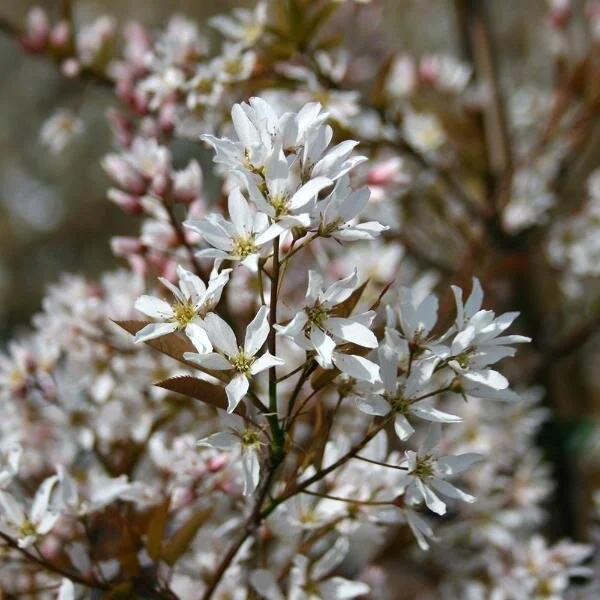
Blossom | Autumn Colour
Amelanchier
Amelanchier lamarckii
A graceful ornamental
tree with white
spring blossom,
attractive berries
and brilliant
autumn colour.
Particularly effective
as a multi-stem
specimen in
contemporary gardens.
Allow for its
eventual crown
spread and
multi-stem form.
View Amelanchier →
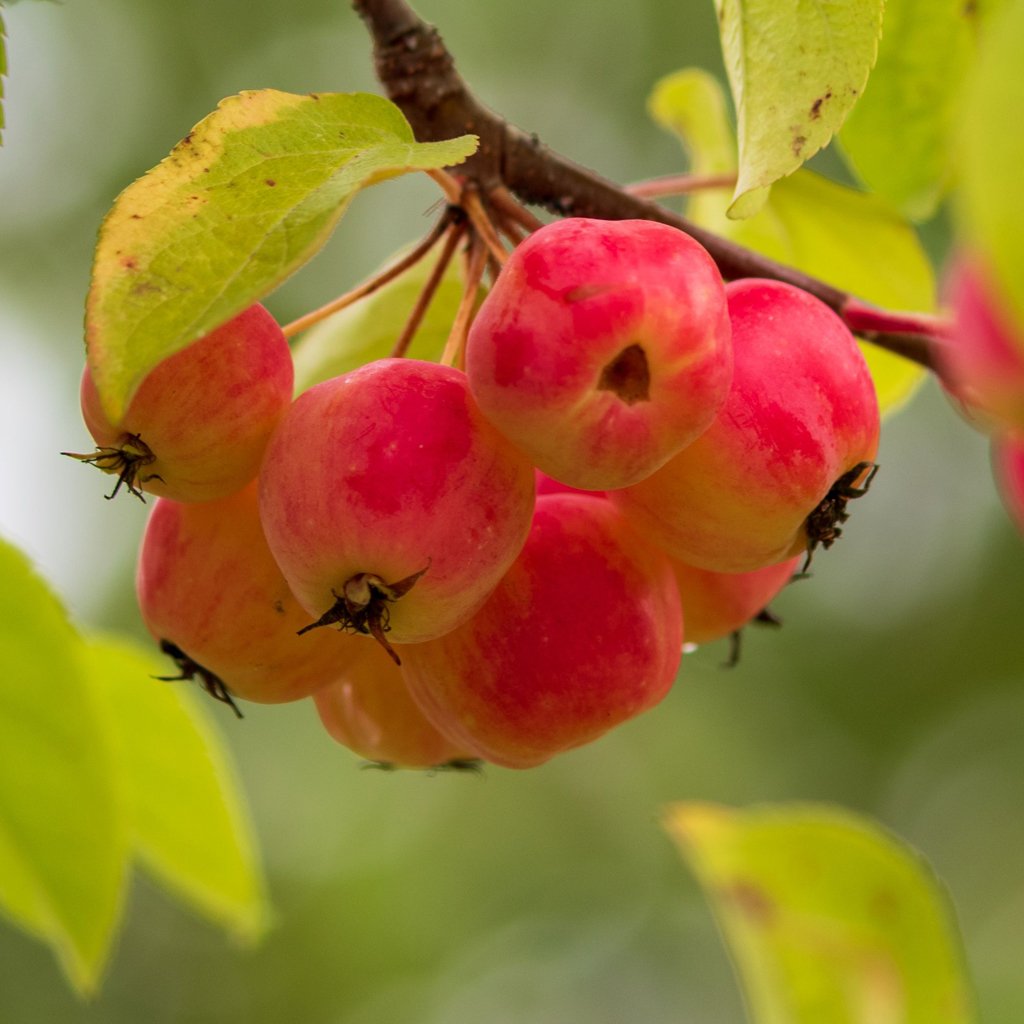
Spring Blossom | Fruit
Crab Apple ‘Evereste’
Malus ‘Evereste’
A beautiful ornamental
crab apple producing
spring blossom
followed by
decorative fruits.
An excellent
feature tree
for domestic
gardens where
seasonal interest
is important.
Flowers support
pollinators and
fruits can
provide food
for wildlife.
View Crab Apple →
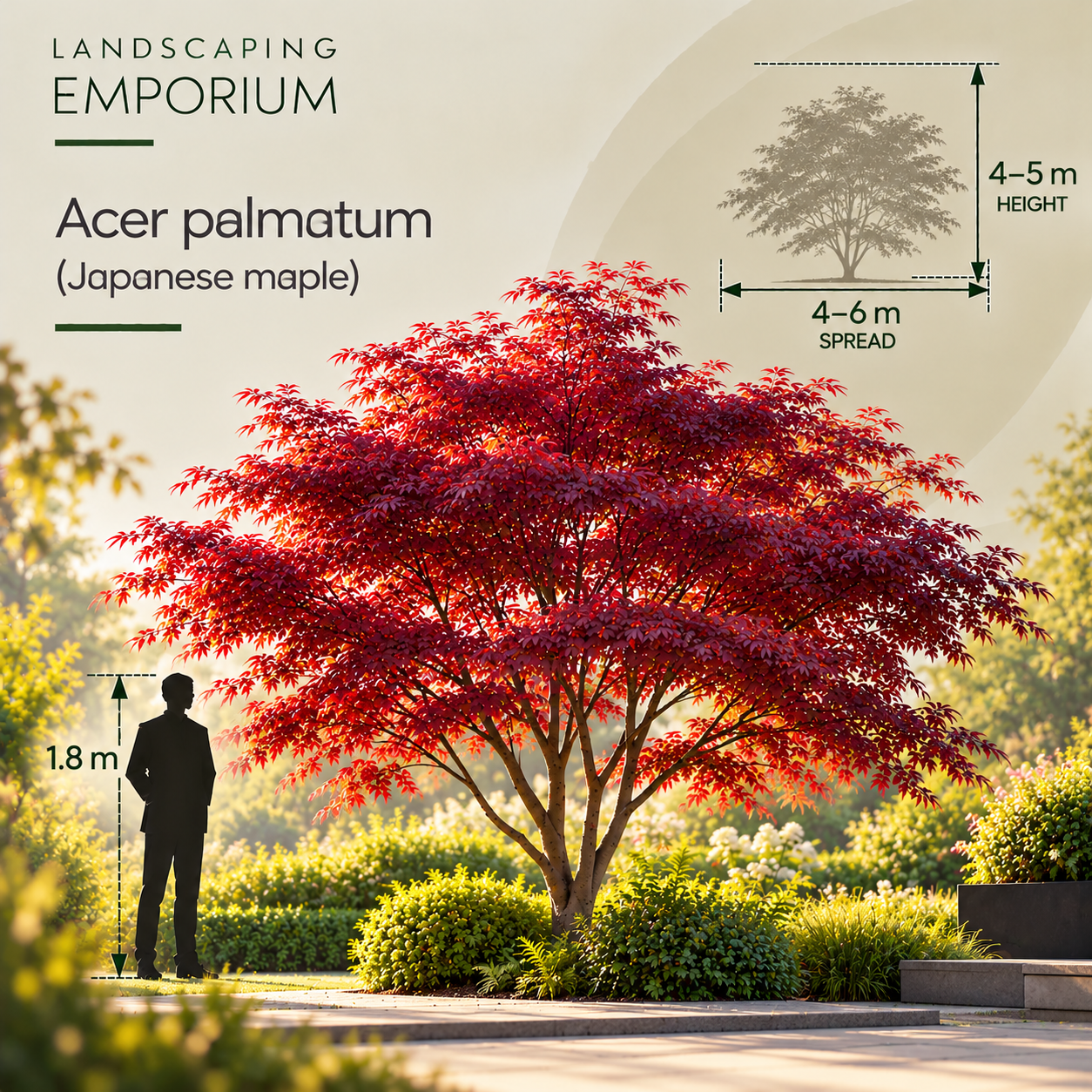
Foliage | Autumn Colour
Japanese Maple
Acer palmatum
A highly ornamental
small tree valued
for delicate
leaves and
attractive branching.
Many cultivars
provide spectacular
autumn colour
and compact
growth habits.
Choose the
specific cultivar
carefully, as
mature size
varies considerably.
View Japanese Maple →
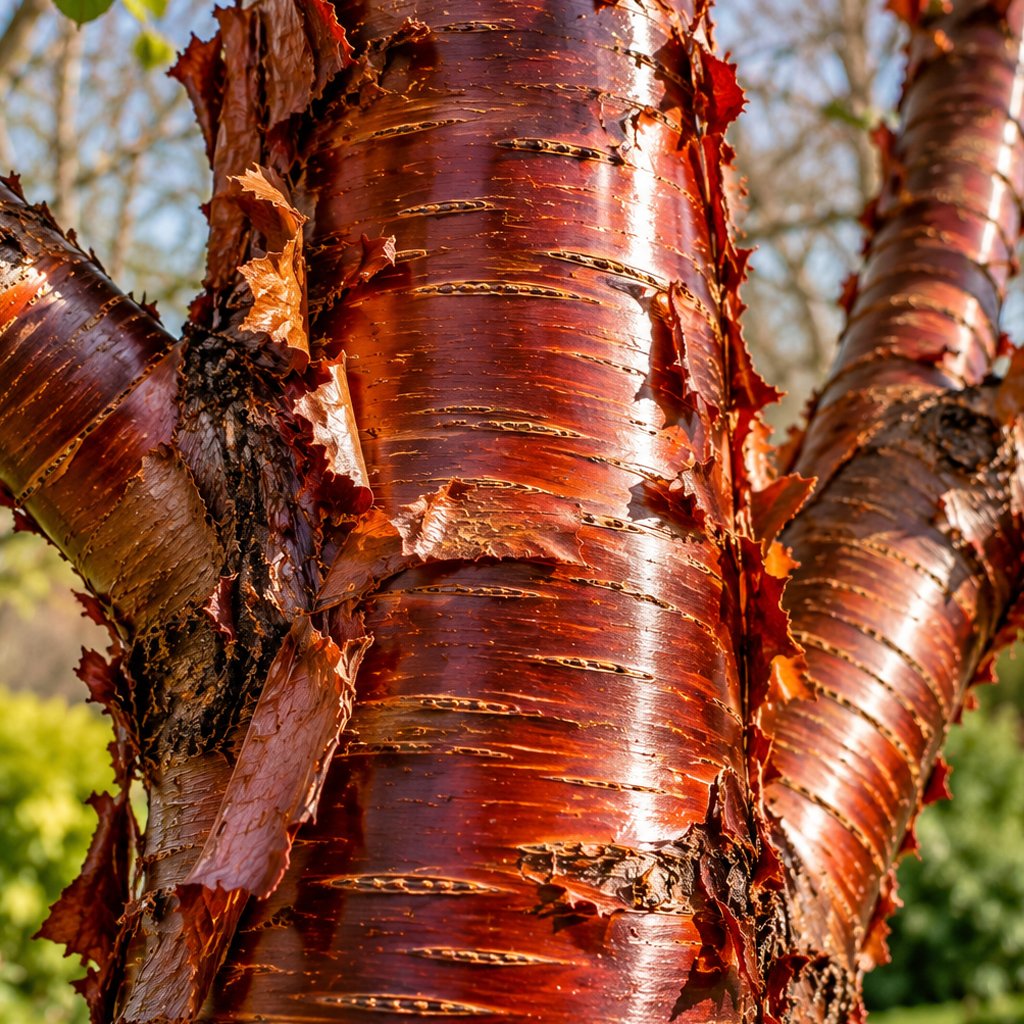
Copper Bark | Winter Interest
Tibetan Cherry
Prunus serrula
A distinctive
ornamental cherry
with glossy,
copper-red bark
that creates
exceptional
winter interest.
Particularly
attractive as
a feature
tree in
contemporary
landscapes.
Can become
too large
for very
restricted
gardens, so
allow sufficient
space.
View Tibetan Cherry →
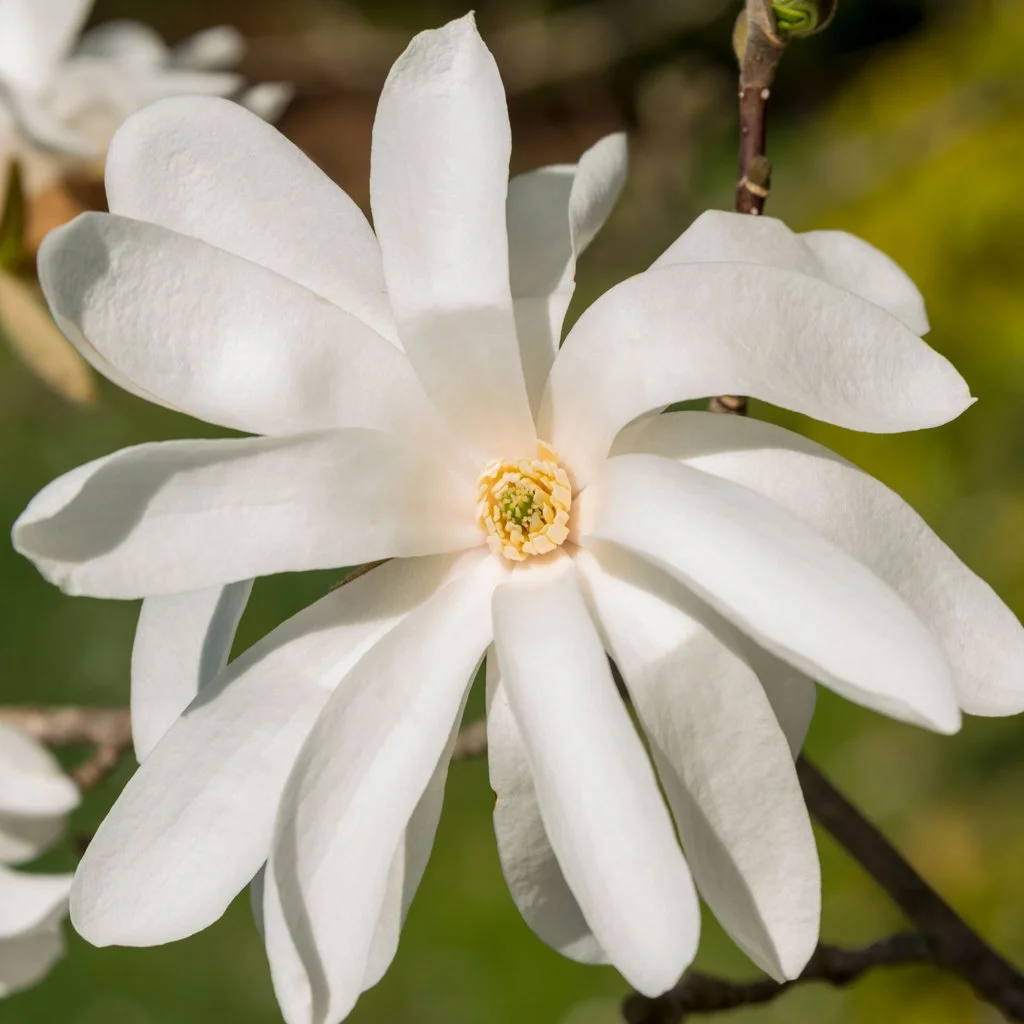
Spring Flowers | Compact
Star Magnolia
Magnolia stellata
A compact
ornamental Magnolia
producing beautiful
star-shaped flowers
in early spring.
Suitable for
smaller gardens
and sheltered
courtyard settings.
Prefers suitable
moisture-retentive
but well-drained
soil and
protection from
harsh exposure.
View Star Magnolia →
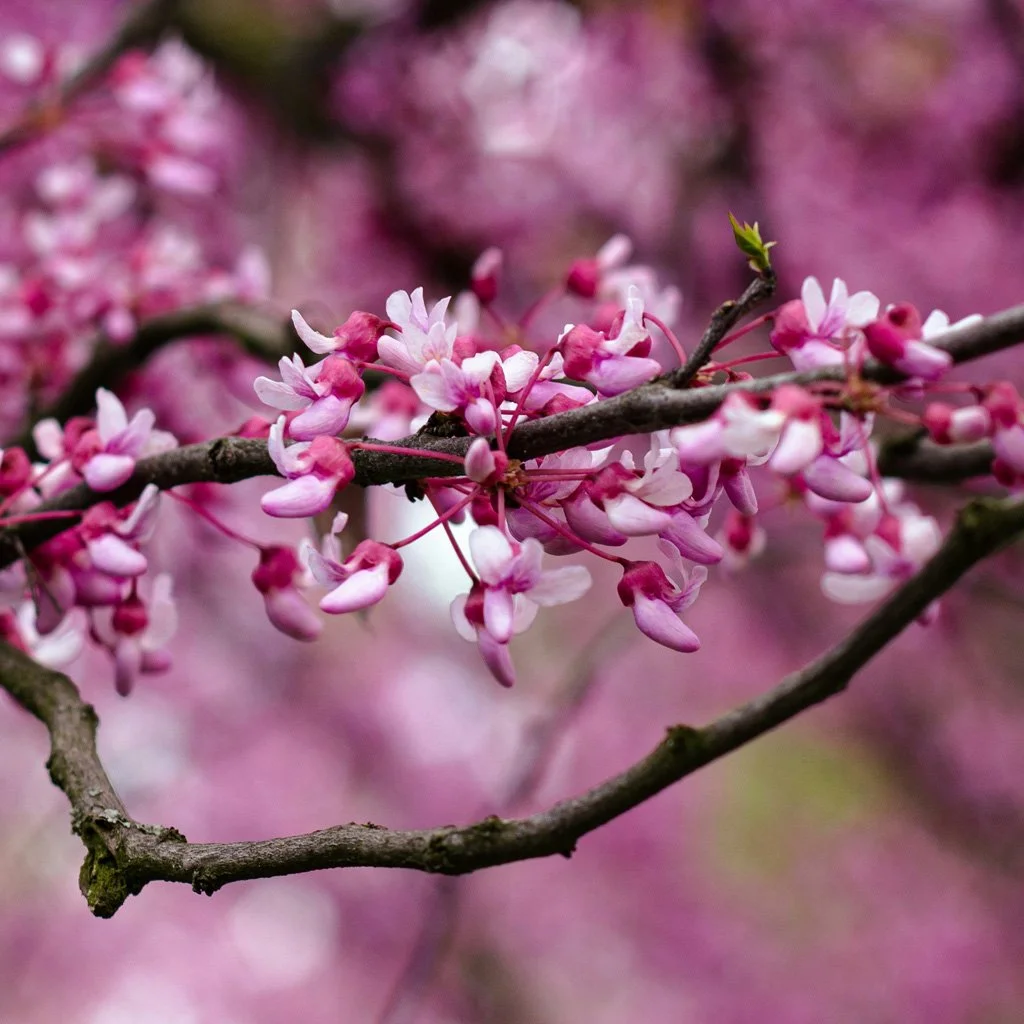
Spring Flowers | Feature Tree
Eastern Redbud
Cercis canadensis
A beautiful
ornamental tree
producing pink
spring flowers
and attractive
heart-shaped foliage.
Compact cultivars
can be particularly
useful for
sheltered
smaller gardens.
Choose a
cultivar suited
to the
available space
and local
growing conditions.
View Eastern Redbud →
What Is a Small Ornamental Tree?
A small ornamental
tree is selected
primarily for
its decorative
qualities and
relatively modest
eventual size.
Ornamental features
may include
blossom, foliage,
bark, fruit,
autumn colour
or distinctive
branching structure.
Many small
ornamental trees
eventually reach
approximately
3–8 metres
in height,
although some
species and
cultivars become
considerably larger.
Important:
A tree sold
at a small
nursery size
is not
necessarily a
small-growing tree.
Always check
its eventual
height and
crown spread.
Compare Small Ornamental Trees
| Tree |
Indicative Mature Height |
Main Attraction |
Garden Suitability |
| Amelanchier lamarckii |
4–8m |
Blossom and autumn colour |
Small to medium gardens with adequate width |
| Crab Apple ‘Evereste’ |
4–8m |
Blossom and fruit |
Domestic gardens |
| Japanese Maple |
2–8m depending on cultivar |
Foliage and autumn colour |
Courtyards and sheltered gardens |
| Tibetan Cherry |
7–12m |
Ornamental copper bark |
Medium gardens with adequate space |
| Magnolia stellata |
2.5–4m |
Early spring flowers |
Smaller sheltered gardens |
| Cercis canadensis |
4–10m depending on cultivar |
Pink flowers and foliage |
Sheltered gardens; select compact cultivars |
Sizes are approximate
and depend on
cultivar, growing
conditions and
long-term development.
Crown spread
must also be
considered.
Why Choose Small Ornamental Trees?
Beautiful Seasonal Interest
Blossom, fruit,
foliage and
autumn colour
can create
interest throughout
the year.
Suitable for Smaller Spaces
Carefully selected
compact species
can provide
attractive structure
without dominating
the garden.
Architectural Character
Distinctive forms,
ornamental bark
and multi-stem
structures can
complement contemporary
garden design.
Wildlife Benefits
Flowering trees
can support
pollinators, while
some species
produce fruits
valuable to
birds and
other wildlife.
Small Ornamental Trees for Front Gardens
Front gardens
benefit from
trees that
provide attractive
seasonal interest
without overwhelming
the house.
Crab Apple
‘Evereste’
can provide
blossom and
decorative fruit,
while compact
Japanese Maple
cultivars can
introduce colourful
foliage and
architectural form.
Consider the
relationship between
the eventual
canopy and
windows, paths,
entrances and
neighbouring
properties.
Avoid planting
solely according
to the
tree's size
at purchase.
Small Ornamental Trees for Courtyard Gardens
Courtyards often
benefit from
one carefully
selected ornamental
specimen rather
than several
competing trees.
Japanese Maples
can provide
elegant foliage
and sculptural
branching in
sheltered conditions.
Magnolia stellata
is another
attractive option
where there
is adequate
root space
and suitable
growing conditions.
Consider the
amount of
direct sunlight,
reflected heat,
wind exposure
and soil
volume available.
Small Flowering Ornamental Trees
Flowering trees
are among
the most
popular choices
for ornamental
garden planting.
Magnolia stellata
provides beautiful
early spring
flowers, while
Amelanchier
produces delicate
white blossom.
Crab Apple
‘Evereste’
offers spring
blossom followed
by ornamental
fruit.
Cercis canadensis
is admired
for its
pink spring
flowers, although
cultivar and
site selection
are important.
Explore our
Flowering Specimen Trees
guide.
Small Ornamental Trees for Autumn Colour
Autumn foliage
can transform
a smaller
garden with
vibrant colour.
Japanese Maples
are particularly
valued for
red, orange
and gold
autumn displays.
Amelanchier
can also
provide excellent
seasonal colour,
often developing
warm orange
and red
foliage.
Autumn colour
varies with
species, cultivar,
weather and
growing conditions.
Read our
Trees for Autumn Colour
guide.
Small Ornamental Trees with Attractive Bark
Ornamental bark
creates garden
interest even
when deciduous
trees have
lost their
leaves.
Tibetan Cherry
is particularly
admired for
its polished
copper-red bark.
However, it
can become
a substantial
tree and
is more
appropriate for
medium-sized gardens
than very
restricted
courtyards.
See our
Trees with Attractive Bark
guide.
Multi-Stem Small Ornamental Trees
Multi-stem trees
have several
stems rising
from near
the base,
creating an
attractive
architectural
form.
Amelanchier
is particularly
effective as
a multi-stem
ornamental specimen.
Japanese Maples
can also
develop beautiful
branching structures.
Multi-stem
specimens may
have a
broader crown
than single-stem
alternatives,
so consider
the available
width.
Explore our
Multi-Stem Specimen Trees
guide.
Small Ornamental Trees for Modern Gardens
Contemporary garden
design often
uses trees
as architectural
features rather
than simply
background planting.
A carefully
positioned
multi-stem
Amelanchier
can soften
modern paving
and walls.
Japanese Maple
provides elegant
foliage and
sculptural form.
Tibetan Cherry
can create
a striking
bark feature
where sufficient
space is
available.
Consider how
the tree
will look
from inside
the house,
particularly
through large
windows and
glazed doors.
Small Ornamental Trees for Wildlife
Ornamental trees
can provide
important benefits
for garden
wildlife.
Crab Apples
offer spring
blossom for
pollinators and
decorative fruit
that may
be eaten
by birds.
Amelanchier
also produces
flowers and
berries that
can support
wildlife.
A diverse
planting scheme
combining trees,
shrubs and
herbaceous plants
can extend
seasonal food
and habitat
availability.
Read our
Trees for Wildlife
guide.
Small Ornamental Trees for Clay Soil
Soil conditions
are important
when selecting
ornamental trees.
Some species
tolerate heavier
soils better
than others.
Poor drainage
and compaction
can restrict
root development
and lead
to establishment
problems.
Japanese Maples
and Magnolias
generally benefit
from suitable
well-drained,
moisture-retentive
soil.
Where clay
is particularly
heavy, assess
drainage before
planting and
choose species
suited to
the conditions.
See our
Trees for Clay Soil
guide.
Can Small Ornamental Trees Be Grown in Containers?
Some compact
ornamental trees
can be
grown in
large containers,
particularly
selected Japanese
Maple cultivars.
Container planting
requires adequate
root space,
drainage and
regular monitoring
of moisture
and nutrition.
Not all
small ornamental
trees are
suitable for
permanent container
growing.
For long-term
success, choose
an appropriate
cultivar and
provide sufficient
growing medium.
Choosing the Right Ornamental Tree Size
Ornamental trees
are available
in different
nursery sizes,
including smaller
container-grown
plants and
larger established
specimens.
A larger
nursery-grown
tree can
provide greater
immediate visual
impact, while
a smaller
specimen may
be easier
to handle
and establish.
Always compare
overall height,
crown width,
trunk girth
where relevant
and rootball
or container
specification.
For larger
specimens, explore
our
Semi-Mature Specimen Trees
and
Mature Specimen Trees
guides.
Planting Small Ornamental Trees
-
Choose the right location.
Consider sunlight,
exposure and
eventual crown
dimensions.
-
Assess the soil.
Check drainage,
moisture and
compaction.
-
Allow adequate space.
Consider buildings,
paths, boundaries
and nearby plants.
-
Plant at the correct depth.
Keep the
root flare
at the
appropriate
finished soil
level.
-
Provide support if required.
Use suitable
staking for
the size
and form
of the
tree.
-
Water during establishment.
Monitor rootball
moisture according
to weather
and soil
conditions.
-
Mulch correctly.
Reduce weed
competition while
keeping mulch
clear of
the trunk.
-
Monitor growth.
Check tree
health and
remove damaged
growth where
appropriate.
Read our
Planting Guide
for further advice.
Professional Ornamental Tree Supply and Planting
Landscaping Emporium
supplies selected
ornamental specimen
trees for
domestic gardens,
contemporary landscapes
and larger
planting schemes.
Through Kirman Design,
professional planting
may be available
for suitable
projects across
Lancashire, the
Ribble Valley,
Greater Manchester,
Cheshire, Merseyside
and Cumbria.
Our usual
installation postcode
areas include:
BB, BL, CH1–CH5,
CW8, CW9, FY, L,
LA1–LA6, M, OL,
PR, SK1–SK12,
WA and WN.
Availability depends
on tree size,
site access,
ground conditions
and project
requirements.
Telephone:
01942 604976
Email:
hello@landscapingemporium.co.uk
Frequently Asked Questions About Small Ornamental Trees
What are the best small ornamental trees for UK gardens?
Amelanchier,
Crab Apple
‘Evereste’,
selected Japanese
Maples and
Magnolia stellata
are attractive
options, depending
on the site.
Which small ornamental trees have flowers?
Magnolia stellata,
Amelanchier,
Crab Apple
‘Evereste’
and Cercis
canadensis
are valued
for their
ornamental flowers.
Which ornamental trees stay small?
Compact Japanese
Maple cultivars
and Magnolia
stellata are
among the
smaller choices.
Check cultivar
dimensions before
purchasing.
Can small ornamental trees be planted near houses?
Some can
be suitable
where adequate
space is
available, but
planting distances
depend on
species, soil
and building
conditions.
Which small ornamental trees have autumn colour?
Japanese Maples
and Amelanchier
are particularly
attractive for
autumn foliage.
Are there small ornamental trees with attractive bark?
Tibetan Cherry
has striking
copper-red bark,
although it
requires more
space than
genuinely compact
ornamental trees.
Can ornamental trees grow in pots?
Some compact
cultivars can
grow successfully
in sufficiently
large containers
with appropriate
drainage and
care.
Which small ornamental trees attract wildlife?
Crab Apples
and Amelanchier
can provide
flowers and
fruits beneficial
to garden
wildlife.
Are small ornamental trees suitable for front gardens?
Yes. Carefully
selected species
can provide
attractive seasonal
interest without
dominating the
property.
When is the best time to plant ornamental trees?
Planting periods
depend on
species, stock
type, weather
and soil
conditions.
How quickly do small ornamental trees grow?
Growth rates
vary considerably.
Some compact
cultivars grow
slowly, while
others develop
more quickly
in suitable
conditions.
Can Landscaping Emporium supply and plant ornamental trees?
We can
discuss suitable
species, nursery
availability,
delivery and
professional planting
for appropriate
projects across
our North
West England
service area.
Find the Right Small Ornamental Tree for Your Garden
Whether you
want beautiful
spring blossom,
colourful autumn
foliage or
an architectural
garden feature,
the right
ornamental tree
can transform
a smaller
outdoor space.
Browse our
specimen trees
or contact
Landscaping Emporium
to discuss
suitable species,
nursery sizes,
delivery and
professional planting.
