Landscaping Emporium | Privacy & Screening
Trees for Instant Privacy and Garden Screening
Create privacy from the moment your trees are planted.
Established evergreen trees, mature specimen trees and
pleached trees can provide immediate screening where
young planting would take years to develop.
Whether you want to reduce overlooking from neighbouring
houses, screen an unattractive view or create a more
secluded outdoor living area, the right tree can make
a significant difference from day one.
Discover six popular screening options, compare their
foliage and screening characteristics, and learn how
to select the right height, crown form and planting
arrangement for your garden.
Landscaping Emporium supplies selected specimen trees,
with professional planting available for suitable
projects across North West England.
Six Trees for Immediate Garden Privacy
These species can be used in privacy planting when
supplied at an appropriate nursery size and form.
Actual screening depends on the individual specimen's
height, crown density, clear stem height and position.
Stock availability varies.
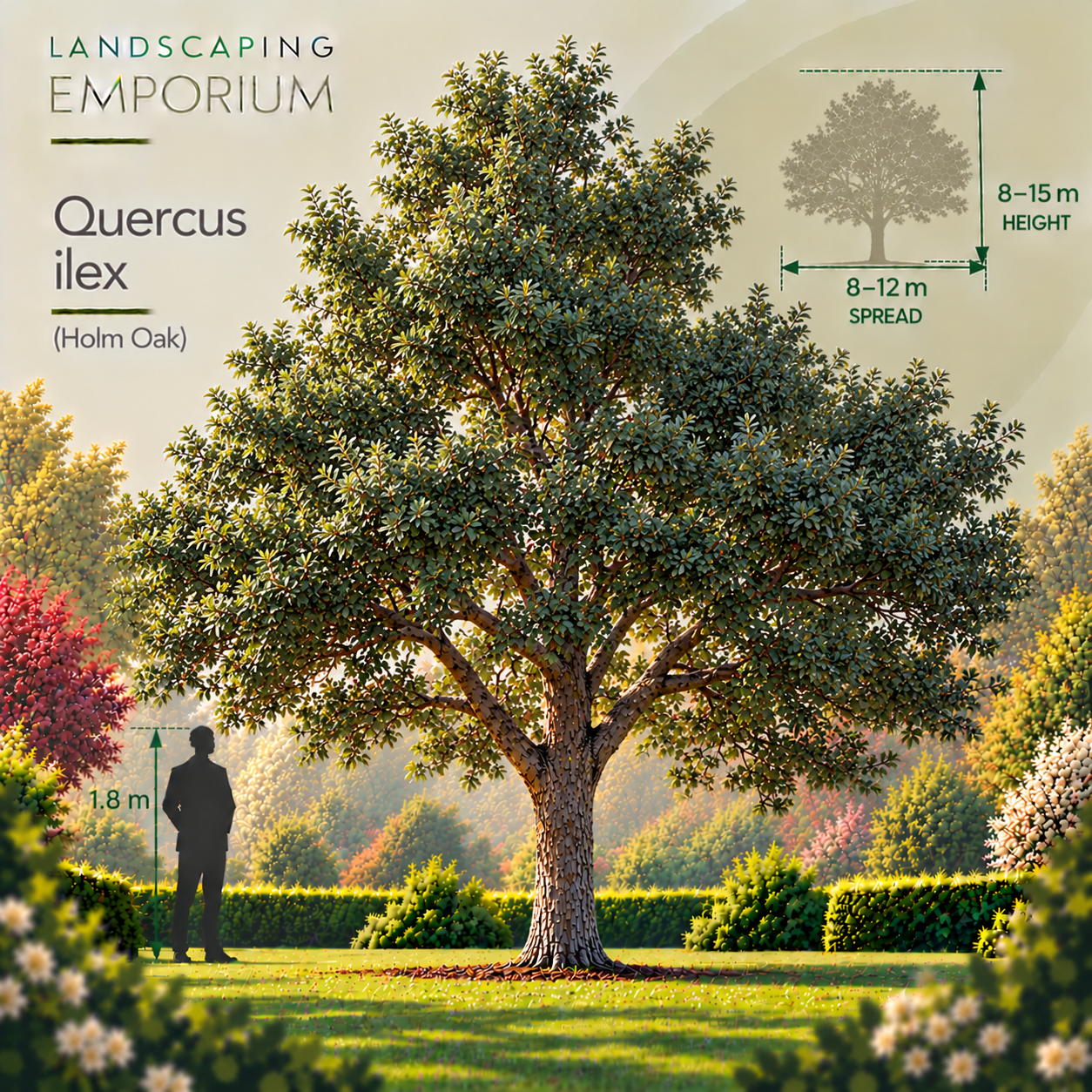
Evergreen | Year-Round Privacy
Holm Oak
Quercus ilex
A substantial evergreen oak with dense,
leathery foliage and a strong architectural form.
Established specimens can create an effective
year-round visual screen where there is room
for the tree's eventual crown.
Particularly suitable for larger gardens
and spacious boundary planting.
View Holm Oak →
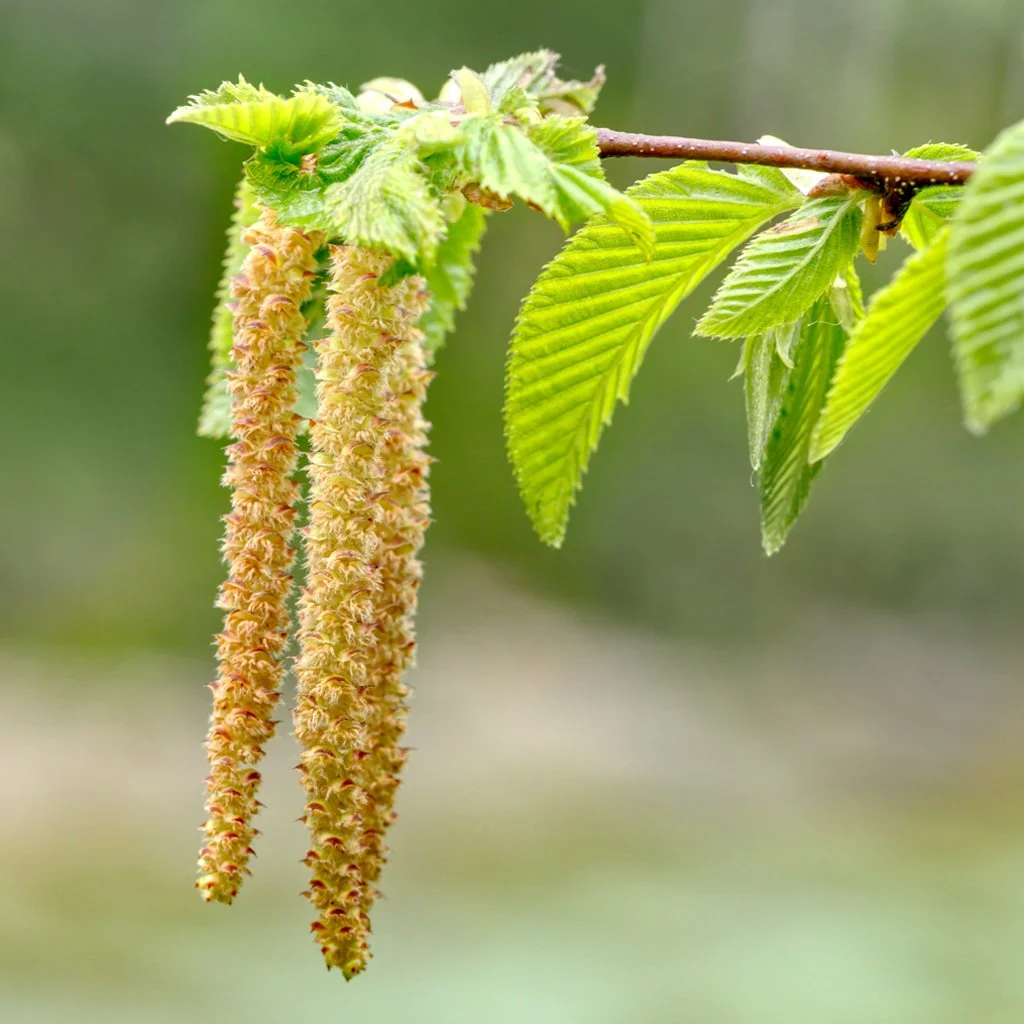
Dense Foliage | Pleached Options
Hornbeam
Carpinus betulus
A versatile deciduous tree with dense summer
foliage and an attractive natural form.
Available in different nursery forms, including
pleached trees where offered, making it useful
for screening above fences.
Hornbeam is not reliably evergreen; winter
screening is less complete than in summer.
View Hornbeam →
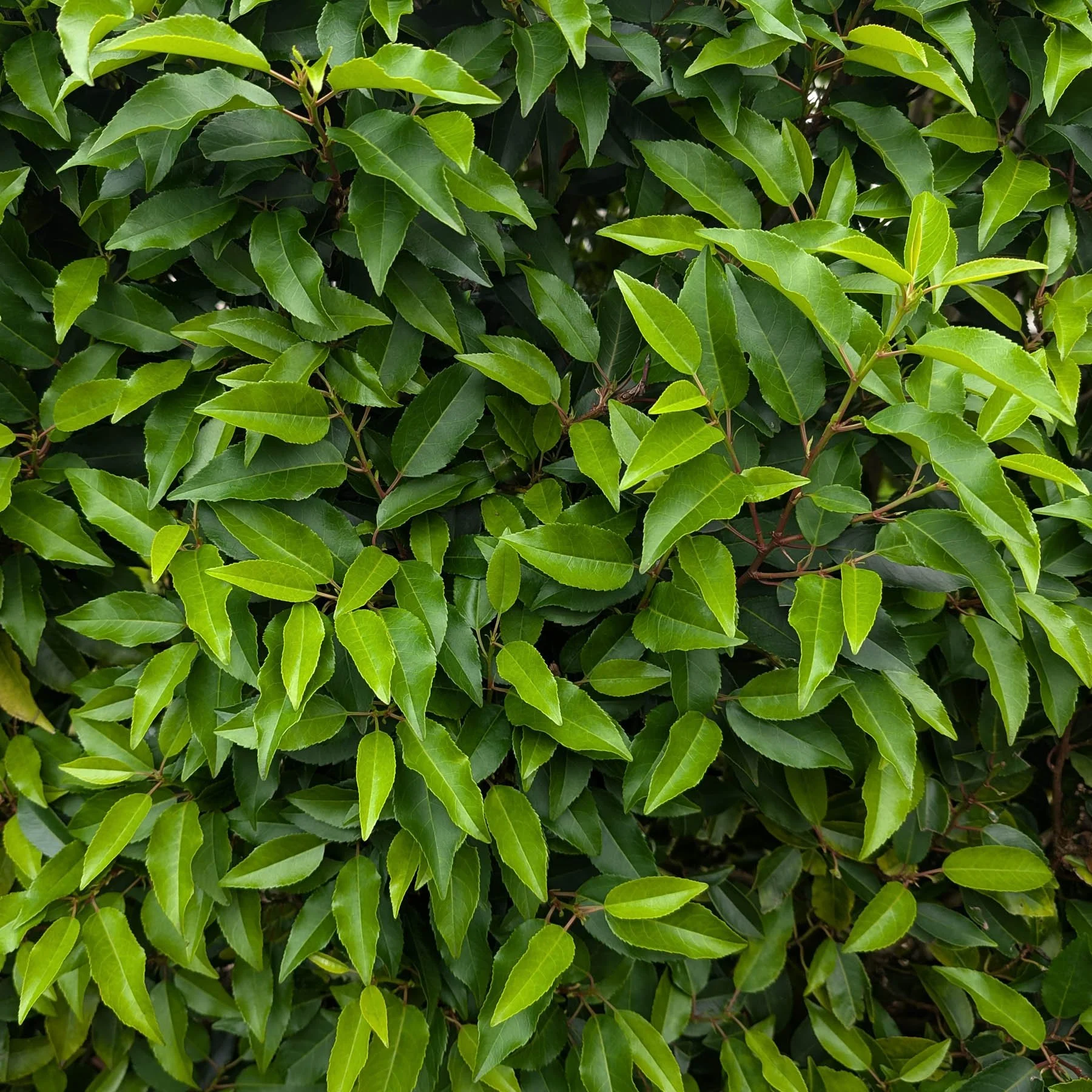
Evergreen | Formal Screening
Portuguese Laurel
Prunus lusitanica
An attractive evergreen with glossy foliage
and a refined appearance suitable for formal
and contemporary gardens.
Standard and pleached forms can provide
screening above boundaries when supplied
at the appropriate size.
Check the precise nursery form and
availability before ordering.
View Portuguese Laurel →
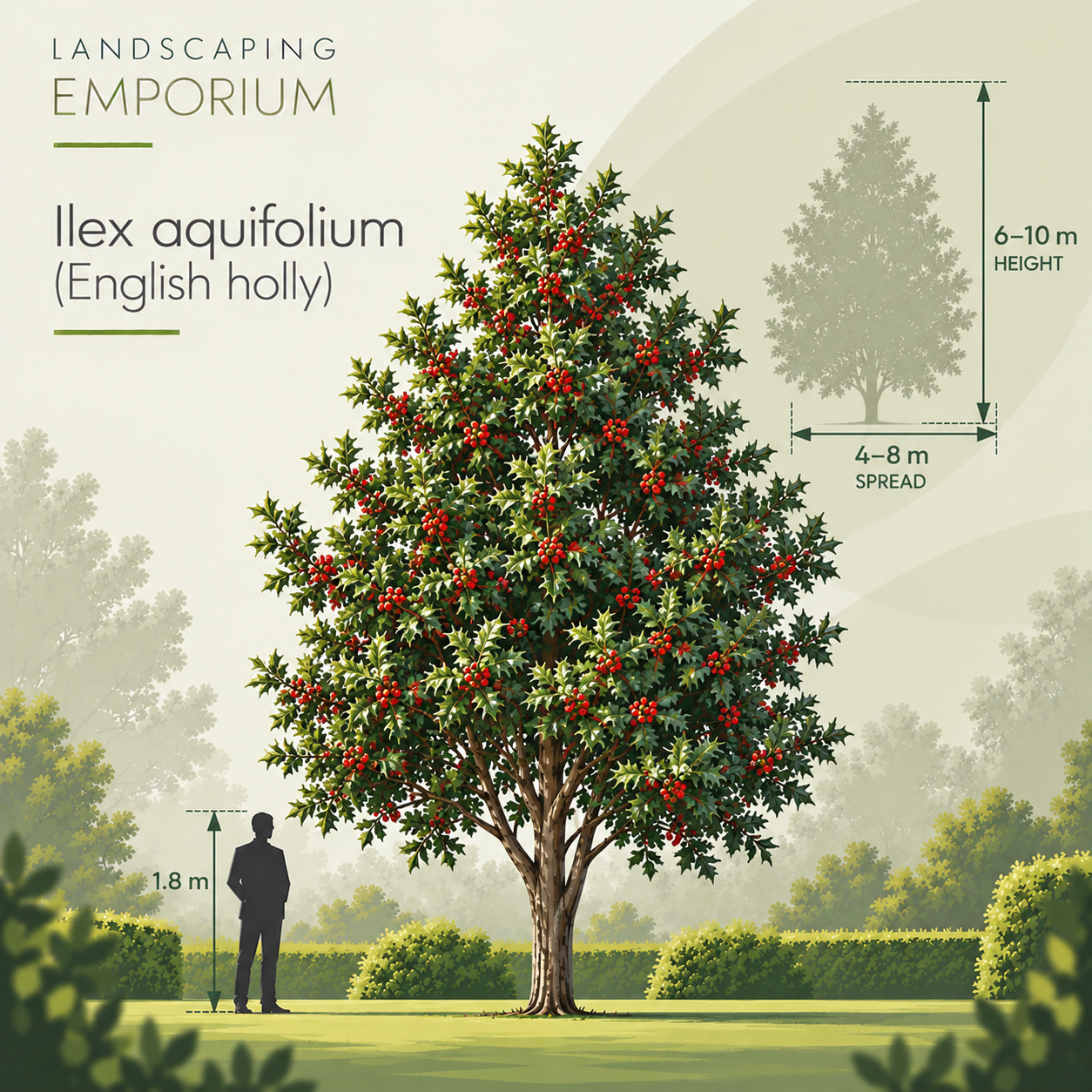
Evergreen | Native
English Holly
Ilex aquifolium
A native evergreen tree with dense foliage,
year-round structure and valuable wildlife benefits.
Established Holly specimens can help provide
immediate screening, especially when planted
in a suitable group.
Growth is relatively slow, so choosing
the correct initial size is important.
View Holly →
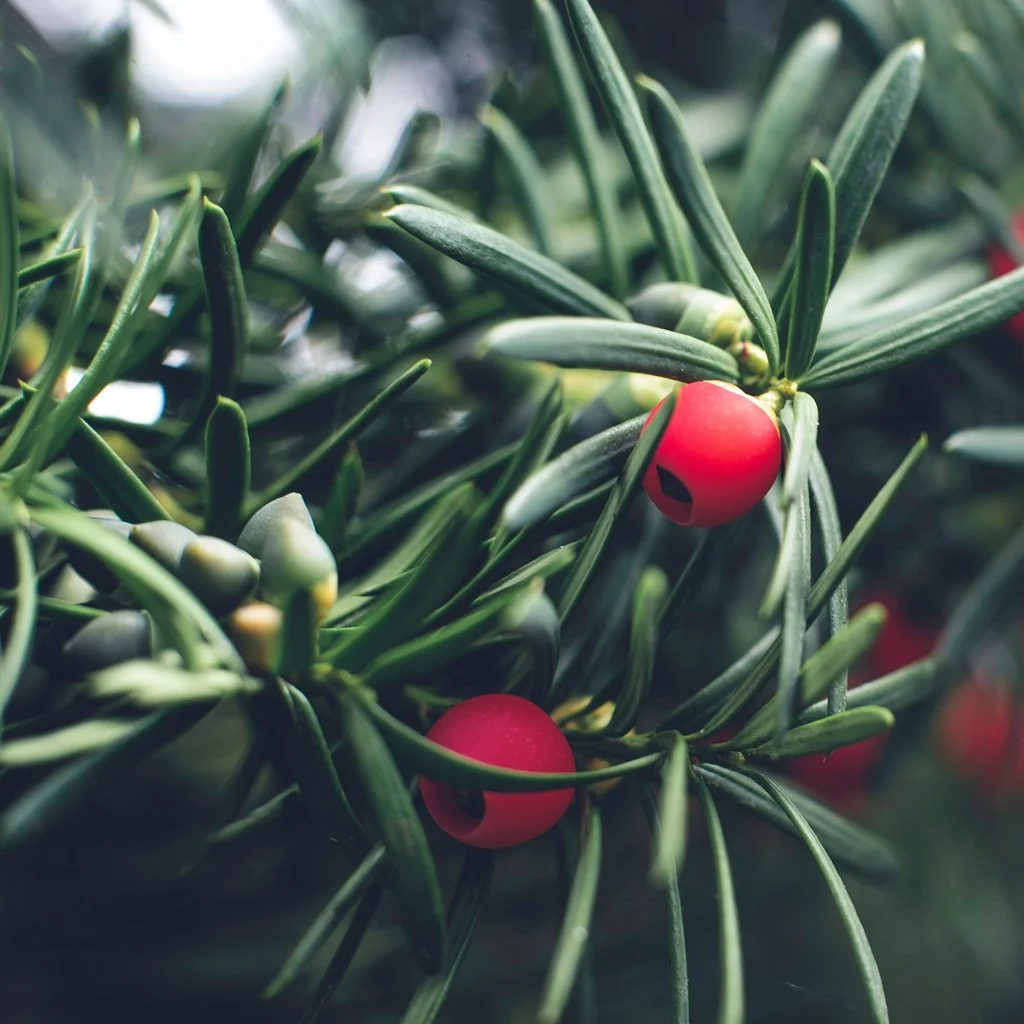
Evergreen | Dense Screening
English Yew
Taxus baccata
A dense evergreen conifer valued for its
dark foliage and suitability for formal
garden screening.
Larger nursery specimens can provide
immediate coverage, while Yew responds
well to appropriate clipping.
All parts are poisonous if eaten,
so assess suitability around children,
pets and grazing animals.
View English Yew →
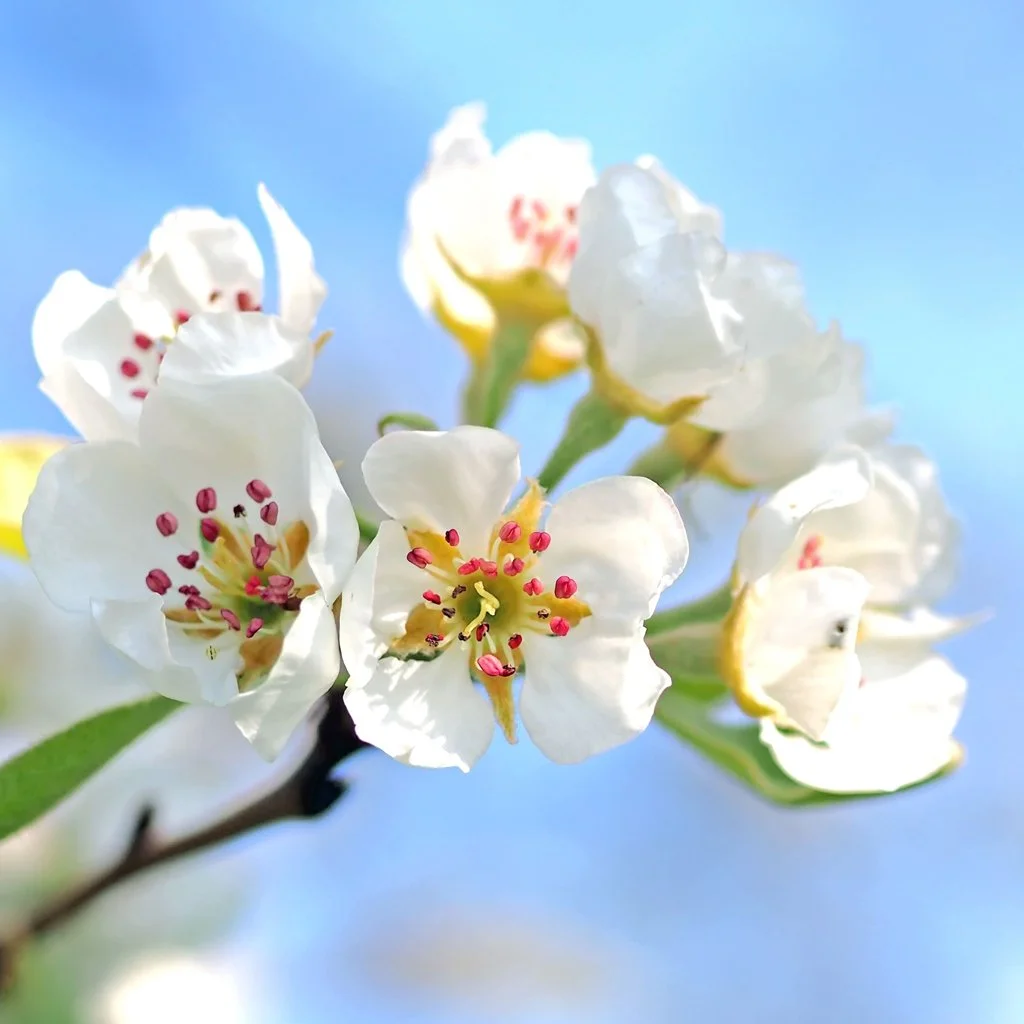
Upright Form | Seasonal Privacy
Ornamental Pear ‘Chanticleer’
Pyrus calleryana ‘Chanticleer’
An attractive upright deciduous tree with
spring blossom and colourful autumn foliage.
Larger specimens can provide useful seasonal
screening where horizontal space is limited.
Not suitable where dense year-round
screening is essential.
View Ornamental Pear →
What Does Instant Privacy Really Mean?
Instant privacy means that a tree or group of trees
provides useful visual screening immediately after
planting, rather than relying on several years
of future growth.
The result depends on the size and form of the
actual nursery specimens, the spacing between
trees and the angle from which the garden
is overlooked.
Important: A tree advertised as
4 metres tall will not necessarily provide
screening at 4 metres. Its crown may begin
much higher than the area requiring privacy,
or the foliage may be too open to block views.
Compare Trees for Instant Privacy
| Tree |
Foliage |
Ground-Level Privacy |
Upper-Level Screening |
Key Consideration |
| Holm Oak |
Evergreen |
Good if crown extends low enough |
Good with suitable established crown |
Substantial eventual size |
| Hornbeam |
Deciduous |
Good in summer with low branching |
Good in summer, especially pleached |
Reduced winter privacy |
| Portuguese Laurel |
Evergreen |
Good with suitable form |
Good as standard or pleached stock |
Confirm exact nursery form |
| Holly |
Evergreen |
Good with dense low foliage |
Depends on specimen height and crown |
Slow growth after planting |
| Yew |
Evergreen |
Very good with dense low foliage |
Depends on height and form |
Poisonous if ingested |
| Ornamental Pear |
Deciduous |
Limited if clear-stemmed |
Useful seasonal screening |
Winter leaf loss |
Screening assessments are indicative.
Actual performance must be checked against
the supplied tree's crown dimensions and
the specific viewing position.
Choosing the Right Type of Privacy Tree
Option 01
Established Evergreen Trees
Suitable for customers seeking year-round
coverage, provided the trees are tall
and dense enough at planting.
Option 02
Pleached Trees
Raised rectangular crowns can create
a screen above an existing fence
while leaving usable space below.
Option 03
Mature Specimen Trees
Larger individual specimens can
screen particular sightlines and
create immediate garden structure.
Option 04
Instant Hedging
Established hedging may be a better
option when continuous screening
is needed from ground level.
Pleached Trees for Instant Privacy
Pleached trees are particularly useful
where neighbouring properties overlook
a garden above an existing boundary.
Their branches are trained into a
raised framework, often forming a
rectangular panel of foliage.
Several trees can be positioned
to create a continuous elevated screen.
Pleached Hornbeam offers dense
seasonal foliage, while suitable
evergreen pleached species can
provide coverage throughout the year.
For immediate screening, check the
clear stem height, frame height,
frame width and foliage density
of the actual trees.
Explore our
Pleached Specimen Trees
guide.
Evergreen Trees for Year-Round Privacy
Evergreen trees are usually preferable
when screening is required throughout
winter as well as summer.
Holm Oak, Holly, Yew and Portuguese
Laurel can all provide evergreen
structure, although their suitability
varies with soil, exposure, available
space and the required nursery form.
Evergreen does not automatically
mean completely opaque. Foliage
density, gaps between specimens
and the position of the crown
remain important.
See our
Evergreen Specimen Trees
guide.
Instant Privacy from Overlooking Windows
First-floor windows and elevated
neighbouring gardens can overlook
patios and seating areas even
where a substantial boundary
fence is already present.
In these situations, simply
buying the tallest available
tree may not solve the problem.
The important consideration is
whether dense foliage intersects
the line of sight between the
overlooking window and the
area requiring privacy.
Pleached trees can be effective
where an elevated screen is
needed above fence height.
Established specimen trees
may be better where the
viewing angle is diagonal
or the area to be screened
is relatively small.
A site-specific assessment
can help identify the correct
screening height and position.
Instant Privacy for Patios and Outdoor Seating Areas
A patio or outdoor dining area
may need privacy from only one
or two particular directions.
In these situations, a small
number of carefully positioned
established trees can sometimes
provide a better result than
planting an entire boundary.
Consider the view from seated
eye level, the position of
neighbouring windows and
whether the tree will cast
unwanted shade over the patio.
A well-positioned tree can
also soften hard landscaping
and create a more enclosed,
comfortable outdoor space.
Instant Privacy for New-Build Gardens
New-build gardens often have
limited established planting
and may be overlooked by
several neighbouring houses.
Established trees can provide
useful screening much sooner
than young planting.
However, many new-build plots
have compacted ground, restricted
soil volumes and relatively
narrow boundaries.
Choose species according to
their eventual crown spread
and rooting requirements,
not simply their appearance
at the time of planting.
For narrow boundaries,
pleached or suitably upright
tree forms may be more
practical than broad-crowned
mature specimens.
Instant Privacy for Narrow Gardens
Narrow gardens present a
particular challenge because
privacy planting must not
consume too much usable space.
Pleached trees can provide
an elevated screen with
a relatively controlled
framework width.
Upright deciduous trees
may also be useful for
seasonal screening, although
they may not provide
complete privacy in winter.
Remember that roots still
require adequate growing
space, even where the
crown is trained narrowly.
How Tall Should Privacy Trees Be?
The correct height depends
on the position of the
person looking into the
garden and the area
you want to screen.
For ground-floor privacy,
a lower, dense screen
may be sufficient.
For overlooking from
first-floor windows,
screening often needs
to extend above
ordinary fence height.
However, there is no
universal tree height
that guarantees privacy.
Distance from the window,
garden levels and the
position of the foliage
all affect the result.
Before ordering expensive
established trees, confirm
the required screening
height and width on site.
How Many Trees Are Needed for Instant Screening?
The number of trees depends
on their crown width, the
length of boundary to be
screened and the desired
level of coverage.
One large specimen may
screen a particular window
or viewing angle.
A longer boundary may
require several trees
or a continuous row
of pleached specimens.
Trees should not be
planted so closely that
their long-term health
or development is compromised.
Always compare the
actual nursery crown
widths and anticipated
future growth before
calculating spacing.
Instant Privacy Trees vs Instant Hedging
Trees and hedging solve
different screening problems.
Established trees
are often preferable where
privacy is needed at
height or where the
screening should appear
natural and informal.
Instant hedging
may be preferable where
a continuous dense
screen is required
from ground level.
Some gardens benefit
from a combination:
hedging for lower-level
privacy and selected
trees for screening
overlooking windows.
Explore our
Hedging Collection
for alternative
screening options.
Instant Privacy Trees vs Fast-Growing Trees
A fast-growing tree
is not necessarily
an instant privacy tree.
A small fast-growing
specimen may still
take several years
to reach the
required screening height.
By contrast, a
larger established
tree can provide
useful screening
immediately after planting.
Where privacy is
urgent, nursery size
and crown form
may matter more
than annual growth rate.
Compare our
Fast-Growing Trees
and
Mature Specimen Trees
guides.
How Much Do Trees for Instant Privacy Cost?
The cost depends on the
species, nursery grade,
crown dimensions and
number of trees required.
Established specimens
usually cost more than
young trees because
they have been grown
and maintained at
the nursery for longer.
Pleached trees may
also involve specialist
production and training.
Delivery, lifting,
access restrictions,
ground preparation
and planting can
significantly affect
the overall project cost.
For an accurate
comparison, obtain
the actual nursery
specifications and
assess the site
before ordering.
Professional Planting for Instant Privacy Trees
Larger privacy trees
may have substantial
rootballs and require
specialist handling.
Successful planting
depends on suitable
soil conditions,
correct planting depth,
appropriate anchoring
and reliable aftercare.
-
Assess the overlooking.
Identify the viewing angle
and exact area requiring privacy.
-
Choose the tree form.
Compare evergreen specimens,
standard trees and pleached trees.
-
Confirm nursery dimensions.
Check overall height, clear stem,
crown width and foliage density.
-
Check delivery access.
Consider gateways, overhead
obstructions and lifting equipment.
-
Prepare the planting area.
Assess drainage, compaction
and available root space.
-
Plant correctly.
Maintain the appropriate
planting depth and support.
-
Establish an aftercare plan.
Monitor watering, stability
and tree health over
successive growing seasons.
Read our
Planting Guide
for further advice.
Tree Supply and Professional Planting in North West England
Landscaping Emporium
supplies selected specimen
trees for private gardens,
contemporary landscapes
and screening projects.
Through Kirman Design,
professional planting may
be available for suitable
projects across Lancashire,
the Ribble Valley,
Greater Manchester,
Cheshire, Merseyside
and Cumbria.
Our usual installation
postcode areas include:
BB, BL, CH1–CH5, CW8, CW9,
FY, L, LA1–LA6, M, OL,
PR, SK1–SK12, WA and WN.
Availability depends on
tree size, access, ground
conditions and project requirements.
Telephone:
01942 604976
Email:
hello@landscapingemporium.co.uk
Frequently Asked Questions About Trees for Instant Privacy
What are the best trees for instant privacy?
Established Holm Oak, Holly, Yew,
Portuguese Laurel and suitable
pleached trees can provide useful
immediate screening when supplied
at the correct size and form.
Can trees provide privacy immediately after planting?
Yes. Established trees can provide
immediate visual screening where
their foliage is positioned across
the relevant viewing angle.
Which trees provide privacy all year?
Evergreen species such as Holm Oak,
Holly, Yew and Portuguese Laurel
retain foliage throughout the year.
Are pleached trees good for instant privacy?
Yes. Established pleached trees can
provide screening above fence height,
especially when planted in a
correctly spaced row.
How tall should trees be to screen upstairs windows?
The required height depends on
garden levels, distances and
the viewing angle. A site
assessment is recommended.
Are mature trees better than fast-growing trees for immediate privacy?
Mature nursery-grown specimens
can provide screening immediately,
whereas small fast-growing trees
may need years to develop.
Can instant privacy trees be planted in small gardens?
Some forms can be suitable,
particularly appropriately sized
pleached trees, provided adequate
root space and long-term
growing room are available.
What is the difference between privacy trees and hedging?
Trees can screen elevated views
and provide canopy structure.
Hedging is often better for
continuous screening near
ground level.
How many privacy trees will I need?
The number depends on crown
width, boundary length and
the area requiring screening.
Exact spacing should be
planned for the site.
Are established privacy trees expensive?
Larger trees generally cost
more than young specimens.
Delivery, machinery and
planting requirements also
influence the total cost.
Do instant privacy trees require special aftercare?
Larger newly planted trees
need careful watering,
appropriate support and
monitoring while their
roots establish.
Can Landscaping Emporium supply and plant instant privacy trees?
We can discuss suitable
nursery specimens, delivery
and professional planting
for appropriate projects
across our North West
England service area.
Create Privacy Without Waiting Years
Whether you want to screen
overlooking windows, create
a secluded patio or establish
year-round boundary privacy,
the right trees can make
a difference immediately.
Browse our specimen trees
or contact Landscaping Emporium
to discuss species, nursery
sizes, delivery and professional
planting for your garden.
