Landscaping Emporium | Privacy & Screening
Trees to Screen Overlooking Windows
Being overlooked by neighbouring windows can
make an otherwise attractive garden feel exposed.
Carefully selected trees can provide privacy
without necessarily creating a continuous
high hedge around the entire boundary.
Whether the overlooking comes from a
first-floor bedroom, a ground-floor living
room, a balcony or an elevated neighbouring
property, successful screening depends on
the position of the foliage relative to
the viewing angle.
Discover suitable pleached, evergreen and
upright specimen trees, compare their
screening characteristics and learn how
to position them for effective privacy.
Landscaping Emporium supplies selected
specimen trees, with professional planting
available for suitable projects across
North West England.
How Do Trees Screen Overlooking Windows?
The most effective screening tree is not
necessarily the tallest tree available.
It is the tree that places sufficient
foliage between the overlooking window
and the area where privacy is needed.
A tree with a tall clear stem and a high
crown may leave a patio completely exposed.
Conversely, a correctly positioned pleached
tree may screen the same view with a more
controlled crown and less visual bulk.
Simplified illustration only. Actual screening
depends on garden levels, distances, crown
dimensions and the position of the window.
The illustration is not a measured design.
Three measurements matter most
1. Window height:
Where is the overlooking viewpoint relative
to the garden?
2. Screening position:
Where can a tree be planted between
the window and the area requiring privacy?
3. Crown height and width:
Will the foliage actually interrupt
the line of sight?
Six Trees for Screening Overlooking Windows
These options provide different combinations
of elevated screening, evergreen coverage,
narrow growth and ornamental appearance.
For immediate results, choose specimens
with suitable existing crown dimensions.

Elevated | Seasonal
Pleached Hornbeam
Carpinus betulus
A popular choice for creating a raised
panel of foliage above fences and walls.
Pleached Hornbeam provides dense summer
screening, but winter foliage retention
varies and should not be guaranteed.
Confirm clear stem height, frame size
and nursery stock specifications.
Explore Pleached Trees →
Pleached Portuguese Laurel
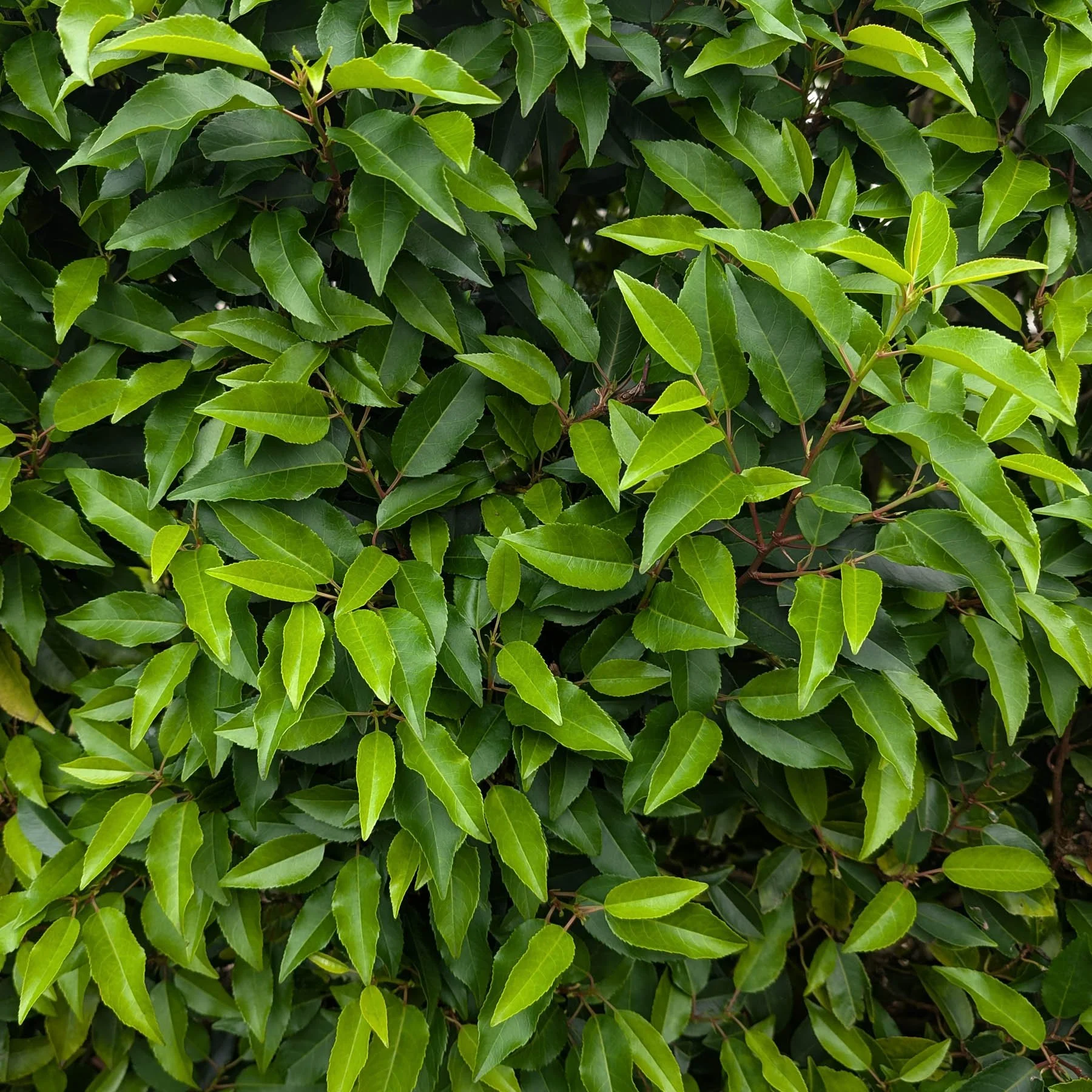
Elevated | Evergreen
Pleached Portuguese Laurel
Prunus lusitanica
An attractive evergreen option for
formal elevated screening where
pleached stock is available.
Dark foliage can provide useful
year-round coverage above an
existing boundary.
Requires suitable growing conditions
and ongoing framework maintenance.
Explore Evergreen Pleached Trees →
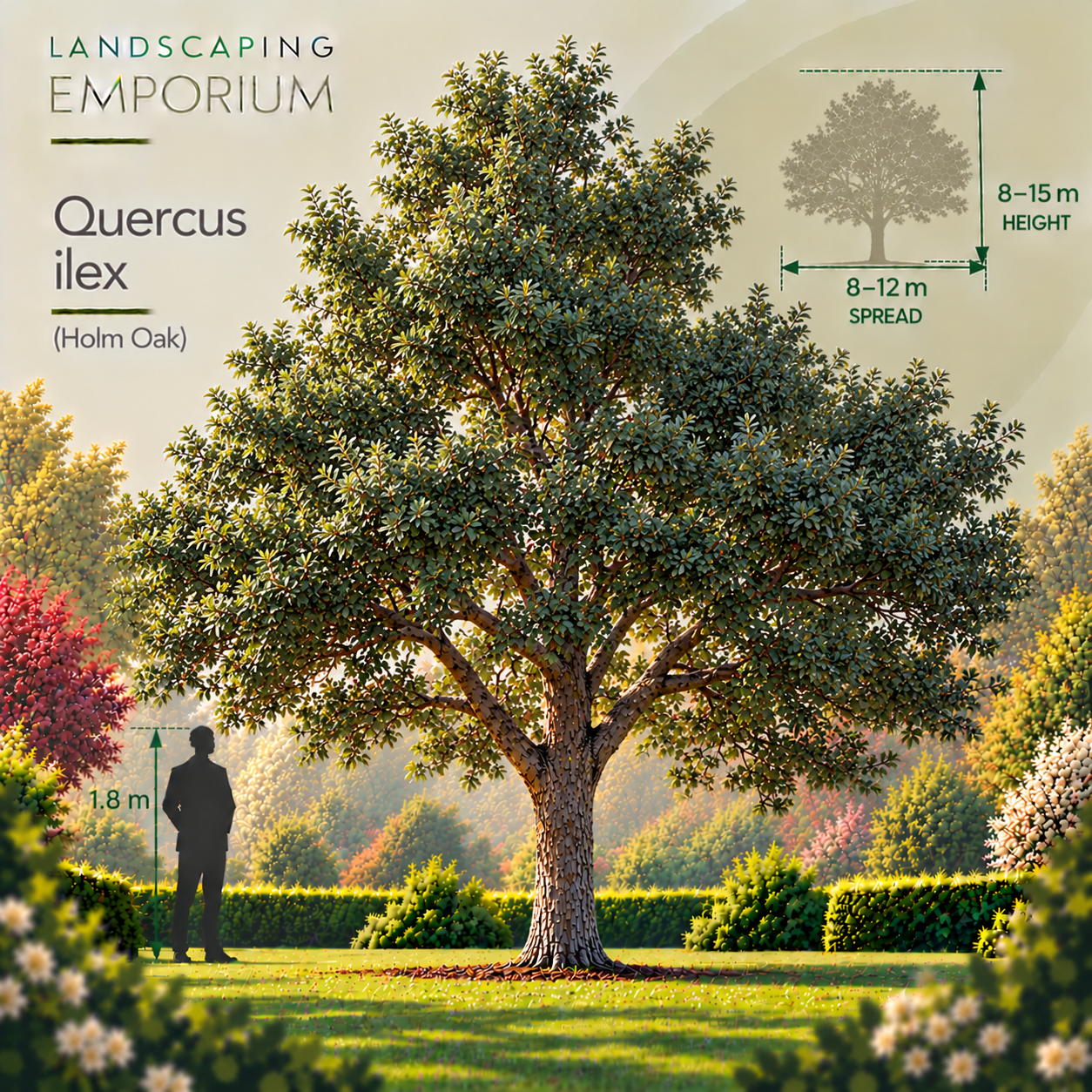
Evergreen | Larger Gardens
Holm Oak
Quercus ilex
A substantial evergreen specimen
with dense foliage and a strong
architectural presence.
Suitable for screening selected
windows where there is room
for the eventual crown.
The actual crown position matters:
a tall clear stem may leave
lower views unobstructed.
View Holm Oak →
Ornamental Pear ‘Chanticleer’
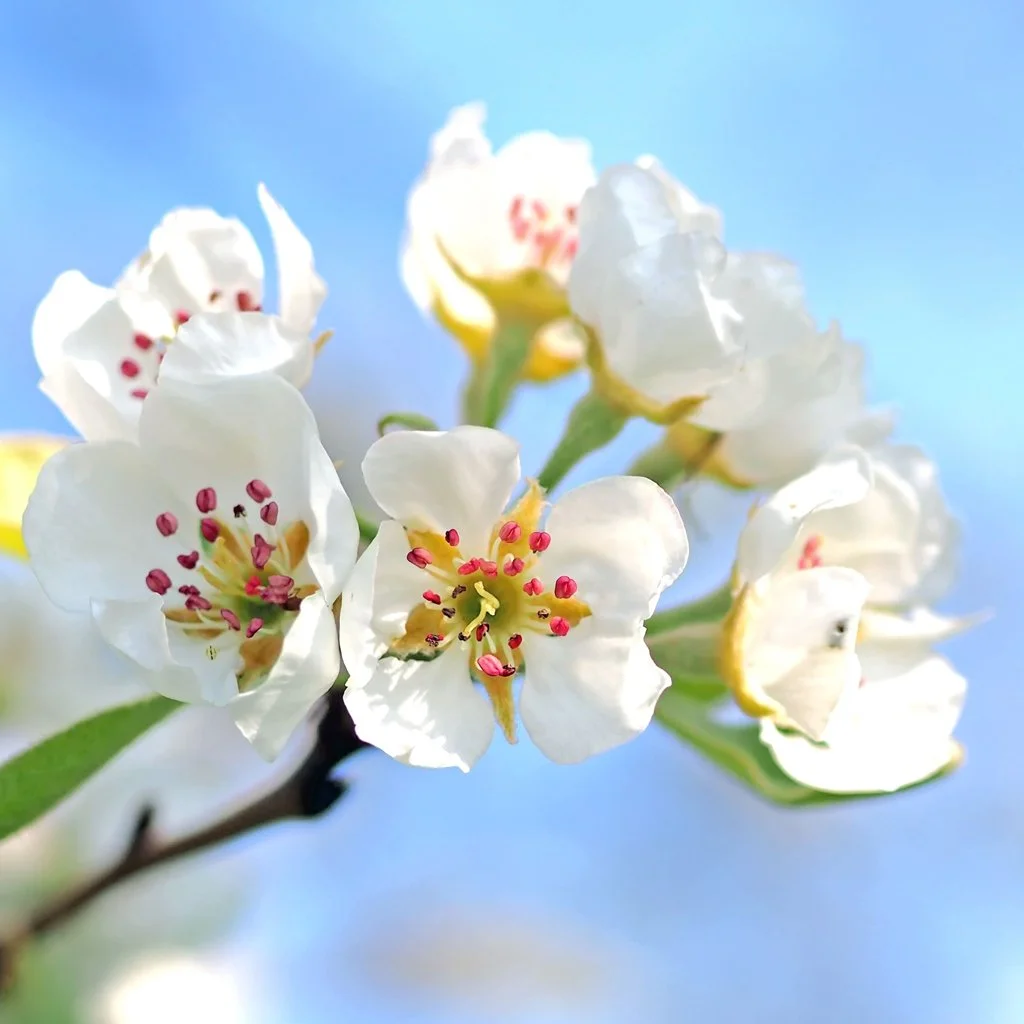
Upright | Seasonal
Ornamental Pear ‘Chanticleer’
Pyrus calleryana ‘Chanticleer’
An upright ornamental tree
with spring blossom and
attractive autumn foliage.
Useful where a relatively
narrow crown is desirable.
Deciduous, so it does not
provide reliable winter privacy.
View Ornamental Pear →
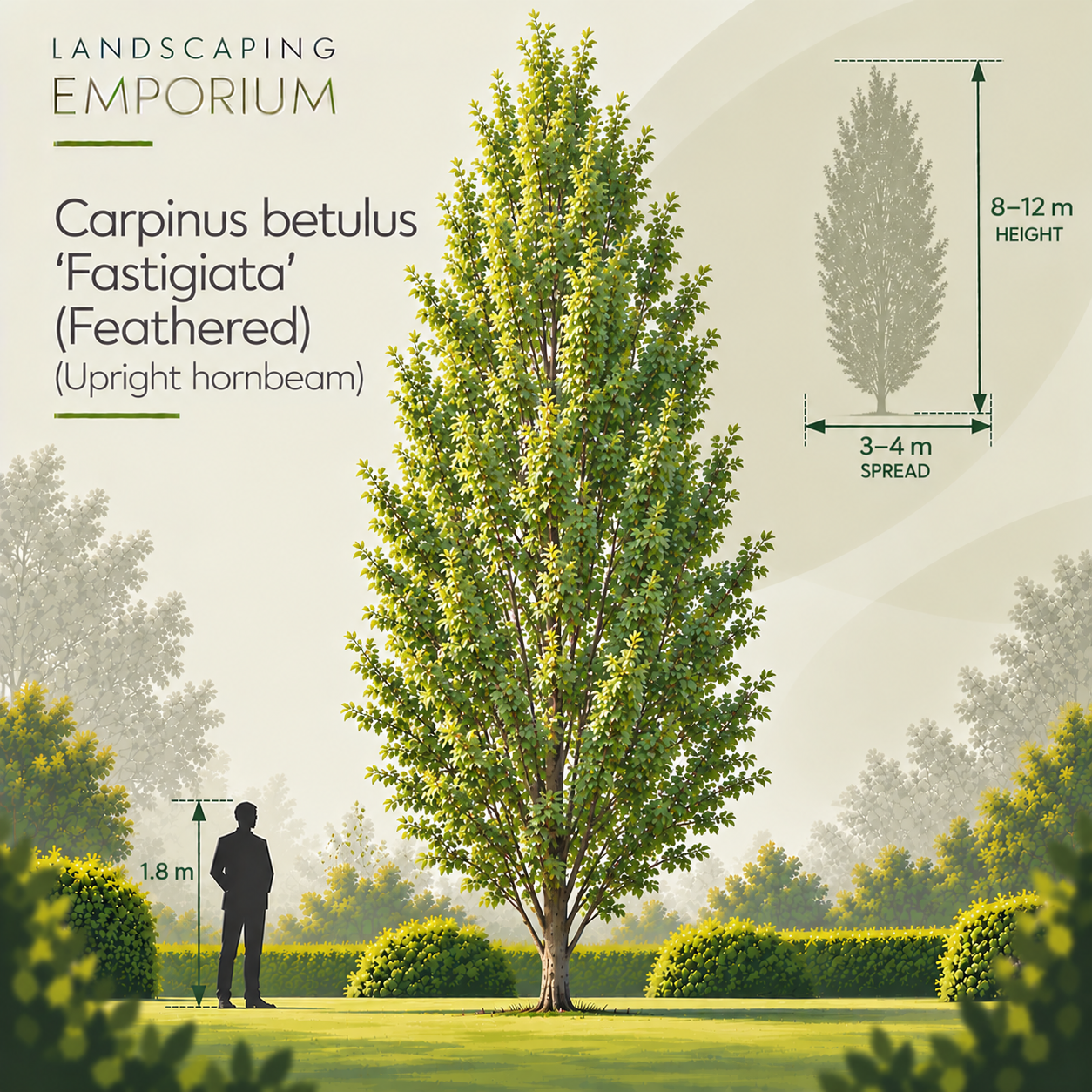
Upright | Structured
Hornbeam ‘Fastigiata’
Carpinus betulus ‘Fastigiata’
An upright-growing Hornbeam
suitable for structured planting
and seasonal screening.
Useful where a conventional
broad-crowned tree would be
inappropriate, although the
crown broadens with age.
Not evergreen and not
permanently columnar.
View Upright Hornbeam →

Evergreen | Dense Foliage
English Holly
Ilex aquifolium
A native evergreen tree
with dense foliage and
year-round ornamental value.
Established specimens can
help interrupt particular
overlooking sightlines.
Its relatively slow growth
makes initial nursery size
especially important.
View English Holly →
Compare Trees for Overlooking Windows
| Tree |
Winter Privacy |
Screening Form |
Best Situation |
| Pleached Hornbeam |
Reduced; variable retained leaves |
Raised rectangular crown |
Screening above a fence |
| Pleached Portuguese Laurel |
Evergreen |
Raised rectangular crown |
Formal year-round elevated screening |
| Holm Oak |
Evergreen |
Broad natural crown |
Large gardens and selected sightlines |
| Ornamental Pear ‘Chanticleer’ |
Deciduous |
Upright crown |
Narrower spaces needing summer screening |
| Hornbeam ‘Fastigiata’ |
Deciduous |
Upright, broadening with age |
Structured seasonal screening |
| English Holly |
Evergreen |
Dense natural crown |
Targeted year-round screening |
Screening Ground-Floor Windows
Where neighbouring ground-floor windows
overlook a garden, screening may only
need to interrupt views at approximately
eye level.
A suitable evergreen hedge, dense
shrub planting or low-branched
specimen tree may be sufficient.
Consider privacy from seated positions
as well as standing positions,
particularly around patios and
outdoor dining areas.
For continuous ground-level screening,
hedging may be more effective than
a row of clear-stemmed trees.
Screening First-Floor Bedroom Windows
Upstairs windows often require foliage
positioned above the height of a
conventional garden fence.
Pleached trees can be particularly
effective because their raised
rectangular crowns provide screening
at a controlled height.
Standard specimen trees can also
work where their crown occupies
the relevant sightline.
The required screening height
depends on the distance between
the window, the tree and the
part of the garden requiring privacy.
See our
Pleached Trees
guide.
Screening Windows from Elevated Properties
A neighbouring house positioned
uphill may overlook a garden
from a much higher angle.
In these situations, a tree
planted directly along the
boundary may not provide
effective screening.
It may be better to position
the tree closer to the patio
or seating area, subject
to sufficient planting space.
The most suitable position
should be established by
assessing the actual line
of sight on site.
Where Should Privacy Trees Be Planted?
There is no universal distance
from a boundary that guarantees
screening from an overlooking window.
A tree planted closer to the
area requiring privacy may
intercept the viewing angle
more effectively than one
positioned against the fence.
However, tree placement must
also consider mature crown
spread, root development,
neighbouring properties,
underground services and
available soil volume.
Avoid placing a large-growing
tree in a restricted position
simply to achieve a particular
short-term screening height.
Pleached Trees or Standard Specimen Trees?
Pleached Trees
Best where a structured,
elevated screen is needed
along a relatively straight
boundary or above a wall.
Particularly suitable for
formal and contemporary
garden layouts.
Standard Specimen Trees
Best where a natural
appearance is preferred
or one individual tree
can interrupt a
specific viewing angle.
Crown density and
clear stem height
must be checked.
Evergreen or Deciduous Screening?
Evergreen trees are preferable
where overlooking is a concern
throughout the year.
Holm Oak, Holly and suitable
evergreen pleached specimens
can provide winter coverage.
Deciduous trees such as
Hornbeam and Ornamental Pear
provide more screening during
the growing season.
Seasonal privacy may be
entirely appropriate where
a patio is mainly used
during spring and summer.
Compare our
Evergreen Specimen Trees
and
Deciduous Specimen Trees
guides.
Trees for Overlooking Windows in Small Gardens
Small gardens require careful
selection because screening
should not consume most
of the usable space.
Pleached trees can provide
an elevated foliage panel
while retaining more open
space below the crown.
Upright ornamental trees
may be suitable where
seasonal privacy is sufficient.
Always allow for root
development and the tree's
eventual crown dimensions.
Explore our
Trees for Small Gardens
guide.
Screening Overlooking Windows in New-Build Gardens
New-build gardens are frequently
overlooked by neighbouring
houses with little established
planting between properties.
Rather than screening every
boundary, identify the windows
that create the greatest
loss of privacy.
A combination of hedging
for lower boundaries and
selected trees for elevated
sightlines may be more
effective than one
continuous tall hedge.
Check soil compaction,
drainage and available
root space before planting.
Can Trees Provide Instant Screening?
Yes, if the selected
nursery-grown specimens
already have the necessary
height, crown width
and foliage density.
Semi-mature or mature
trees can offer useful
screening immediately
after planting.
However, a tall tree
with an open crown
may still leave gaps
in the view.
See our
Trees for Instant Privacy
guide.
How Many Trees Are Needed?
One carefully positioned
specimen may be sufficient
to screen a particular window.
A longer line of overlooking
windows may require several
trees or a continuous
pleached arrangement.
Tree numbers and spacing
should be calculated using
the actual nursery crown
dimensions and the intended
future growth.
Do not plant trees excessively
close together simply to
eliminate all gaps on
the day of installation.
Privacy Without Excessive Shade
A successful privacy scheme
should balance screening
with natural light.
Dense evergreen trees
may cast considerable
shade, particularly
in smaller gardens.
Deciduous trees can allow
more light through during
winter, while pleached
forms may provide
greater control over
crown shape.
Consider the effect
on both your own
garden and neighbouring
properties before planting.
Professional Advice Before Buying Screening Trees
Large privacy trees can
represent a significant
investment, particularly
where specialist delivery
and planting are required.
Before ordering, establish:
- The exact overlooking window or viewpoint.
- The area of the garden requiring privacy.
- Differences in ground level.
- The proposed planting position.
- The required height and width of foliage.
- Whether winter screening is essential.
- The tree's eventual mature dimensions.
- Delivery access and lifting requirements.
- Soil conditions and establishment watering.
- Long-term pruning and maintenance requirements.
For more general species advice,
visit our
Trees for Screening Neighbours
guide.
Professional Tree Supply and Planting
Landscaping Emporium supplies
selected specimen trees for
garden screening and privacy.
Through Kirman Design,
professional planting may
be available for suitable
projects across Lancashire,
the Ribble Valley,
Greater Manchester,
Cheshire, Merseyside
and Cumbria.
Our usual installation
postcode areas include:
BB, BL, CH1–CH5, CW8, CW9,
FY, L, LA1–LA6, M, OL,
PR, SK1–SK12, WA and WN.
Availability depends on
tree size, site access,
ground conditions and
project requirements.
Telephone:
01942 604976
Email:
hello@landscapingemporium.co.uk
Frequently Asked Questions
What are the best trees to screen overlooking windows?
Pleached Hornbeam, suitable evergreen
pleached trees, Holm Oak and selected
upright specimen trees can be effective,
depending on the viewing angle and site.
Which trees are best for screening upstairs windows?
Pleached trees are often useful because
their raised foliage can screen views
above an existing fence or wall.
How tall should a tree be to block a first-floor window?
There is no single correct height.
The required foliage position depends
on distances, levels and the
area requiring privacy.
Can one tree screen a neighbouring window?
Yes. A single correctly positioned
tree may interrupt a particular
sightline, provided its crown
is wide and dense enough.
Are pleached trees better than hedging for upstairs privacy?
Pleached trees can be more efficient
where foliage is needed above
fence height without creating
a continuous tall hedge.
Which trees provide privacy all year?
Evergreen species such as
Holm Oak and Holly retain
foliage throughout the year.
Evergreen pleached trees may
also be suitable.
Can deciduous trees screen windows?
Yes, especially during spring
and summer. Winter coverage
is generally reduced.
Where should screening trees be positioned?
Position them where their foliage
interrupts the relevant line
of sight, while allowing for
long-term root and crown growth.
Can screening trees be planted in small gardens?
Yes, where suitable forms
and adequate growing space
are available. Pleached and
selected upright trees
may be useful.
Will privacy trees block sunlight?
They may. The effect depends
on tree size, crown density,
position and orientation.
Can mature trees provide immediate privacy?
Yes, where the actual
nursery specimen already
has sufficient foliage
at the required height.
Can Landscaping Emporium supply and plant screening trees?
We can discuss suitable
specimen trees, nursery
availability, delivery and
professional planting for
appropriate projects across
our North West England
service area.
Find the Right Trees to Reduce Overlooking
Whether you need privacy from
an upstairs bedroom window,
an elevated neighbouring
property or a ground-floor
living room, the right
tree can make your garden
feel more secluded.
Compare screening options
or contact Landscaping Emporium
to discuss suitable species,
nursery sizes and planting.
