A timeless native evergreen tree for architectural planting, year-round structure and garden privacy.
Taxus baccata, commonly known as English Yew, is one of Britain's most distinctive and long-lived native evergreen trees. Its dense, deep green foliage, elegant branching structure and remarkable longevity make it an exceptional choice for both traditional and contemporary garden designs.
Although widely recognised as a hedging plant, English Yew also develops into a magnificent individual specimen tree. Left to grow naturally, it forms a substantial, often broadly conical or irregular crown that brings permanence, character and year-round greenery to the landscape.
At Landscaping Emporium, we offer selected English Yew specimen trees for gardens, private estates and landscaping projects, with professional planting available through Kirman Design in suitable areas of North West England.
Why Choose an English Yew Specimen Tree?
English Yew is particularly valued for its combination of ornamental quality, adaptability and longevity.
Evergreen foliage: Dense, dark green needles provide year-round structure and visual screening.
Native British species: A traditional tree with considerable ecological and landscape value.
Excellent privacy potential: The naturally dense crown can help screen neighbouring buildings and unwanted views.
Suitable for sun or shade: Performs in full sun, partial shade and many shaded positions.
Architectural character: Develops an increasingly impressive form as it matures.
Responds well to pruning: Can be maintained as a formal specimen or allowed to develop naturally.
Long-lived: Capable of becoming a defining feature of a garden for generations.
English Yew for Privacy and Screening
Taxus baccata is particularly useful where a garden requires year-round evergreen structure.
Unlike deciduous trees, which lose their leaves in autumn, English Yew retains its dense foliage throughout winter. This makes it a valuable option for helping to screen neighbouring windows, soften buildings and improve privacy around outdoor seating areas.
As a specimen tree, Yew can be positioned individually or incorporated into a wider planting scheme to provide evergreen interest alongside deciduous ornamental trees.
Its relatively slow growth and tolerance of pruning make it particularly useful where a permanent, carefully managed garden feature is required.
For detailed advice on tree positioning and elevated screening, explore our Trees for Privacy & Screening guide.
Growth Habit and Mature Size
English Yew is a slow-growing to moderately growing evergreen, depending on site conditions, age and starting size.
Young trees commonly develop a broadly conical or upright habit, although mature specimens can become increasingly broad and irregular, with substantial branching and a distinctive architectural silhouette.
When left to mature naturally over many decades, Taxus baccata can exceed 12 metres in height and 8 metres in spread.
Its ultimate size makes it particularly suitable for larger gardens, country properties and estates. Smaller gardens may accommodate Yew where sufficient space is available and a suitable long-term pruning regime is maintained.
Specimen size, crown form and nursery preparation vary between individual trees.
Growing Conditions
Taxus baccata is adaptable to a wide range of British garden conditions.
Sunlight: Full sun, partial shade or full shade.
Soil: Suitable for many clay, loam, chalk and sandy soils, provided drainage is adequate.
Soil pH: Tolerates acidic, neutral and alkaline conditions.
Drainage: Prefers well-drained soil. Avoid persistently waterlogged ground.
Exposure: Suitable for many sheltered and exposed locations, subject to establishment conditions.
Growth rate: Generally slow, particularly compared with vigorous screening species.
Hardiness: Fully hardy in most UK garden conditions.
Once established, English Yew can tolerate periods of dryness, although newly planted trees require appropriate watering and aftercare.
Planting Your English Yew Tree
Correct planting is essential, particularly when installing larger specimen trees.
Choose a position that allows for the eventual crown spread and provides sufficient space for root development.
Prepare a broad planting area, ensuring the ground is not compacted or waterlogged. The tree should be planted at the correct depth, with the root flare positioned at or just above the surrounding finished soil level.
Larger specimens may require specialist handling, appropriate support and a carefully planned watering programme.
Apply an organic mulch around the planting area, keeping it clear of the trunk.
Where access is restricted or the specimen is particularly large, professional installation is recommended.
Watering and Aftercare
English Yew is relatively adaptable once established, but newly planted specimens must be monitored carefully.
During the first growing seasons:
Water according to weather conditions, soil moisture and tree size.
Avoid both prolonged drought and waterlogged root conditions.
Maintain a weed-free mulched planting area.
Check stakes, anchors and ties where fitted.
Inspect the crown for signs of stress or damage.
Prune only where necessary to maintain the intended form.
Yew has an excellent ability to respond to pruning, including regrowth from older wood, although substantial pruning should be planned carefully.
Wildlife and Seasonal Interest
English Yew provides valuable evergreen shelter for birds and other wildlife.
Female trees may produce distinctive red, fleshy, berry-like structures known as arils, which are attractive to certain birds. Fruit production depends on plant sex and pollination, so it should not be assumed that every specimen will bear fruit.
Its dark green foliage also creates a contrasting backdrop for flowering trees, ornamental grasses and seasonal planting.
Important Safety Information
Taxus baccata is highly poisonous if eaten. Its foliage, seeds, bark and other plant parts contain toxic compounds. The red fleshy aril is the exception, but the seed enclosed within it is highly poisonous.
Do not plant Yew where grazing livestock or horses can access it. Take particular care in gardens used by young children or pets, and dispose of pruning material responsibly.
English Yew Trees Supplied by Landscaping Emporium
Landscaping Emporium supplies selected specimen trees for residential gardens, country properties and professional landscaping projects.
Through our associated garden design and landscaping business, Kirman Design, we can also provide advice on tree selection, delivery access, planting and establishment across suitable locations in Lancashire, the Ribble Valley, Greater Manchester, Cheshire, Merseyside and Cumbria.
Explore our Specimen Tree Collection or use our Tree Finder to compare suitable trees for your garden.

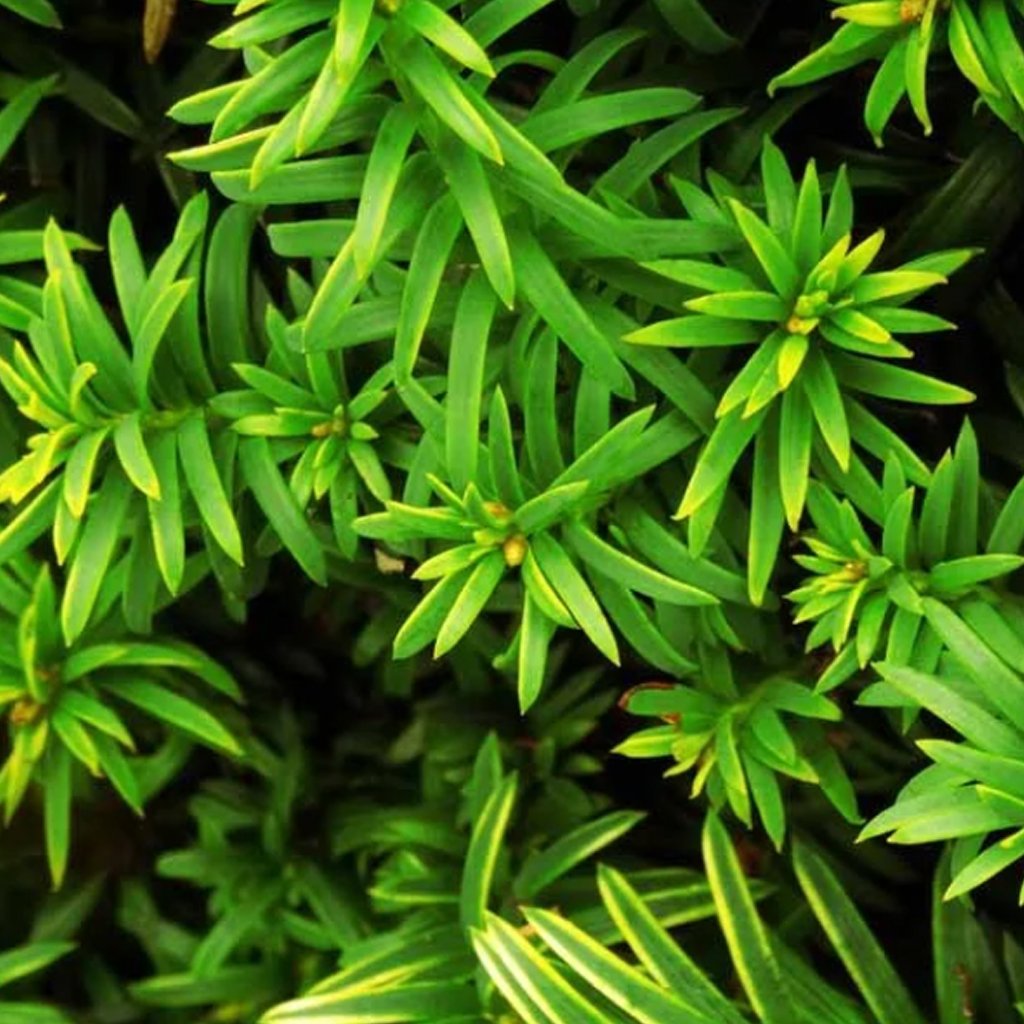 Image 1 of 17
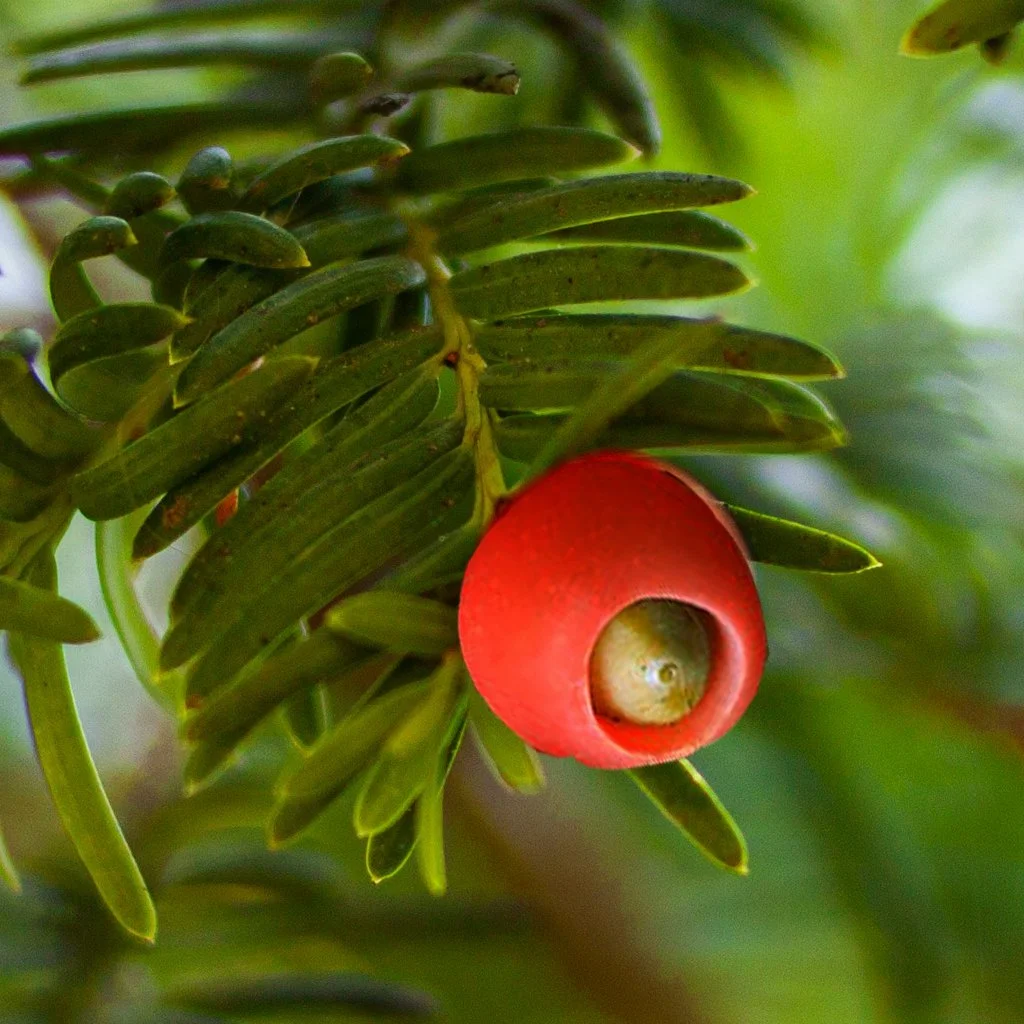 Image 2 of 17
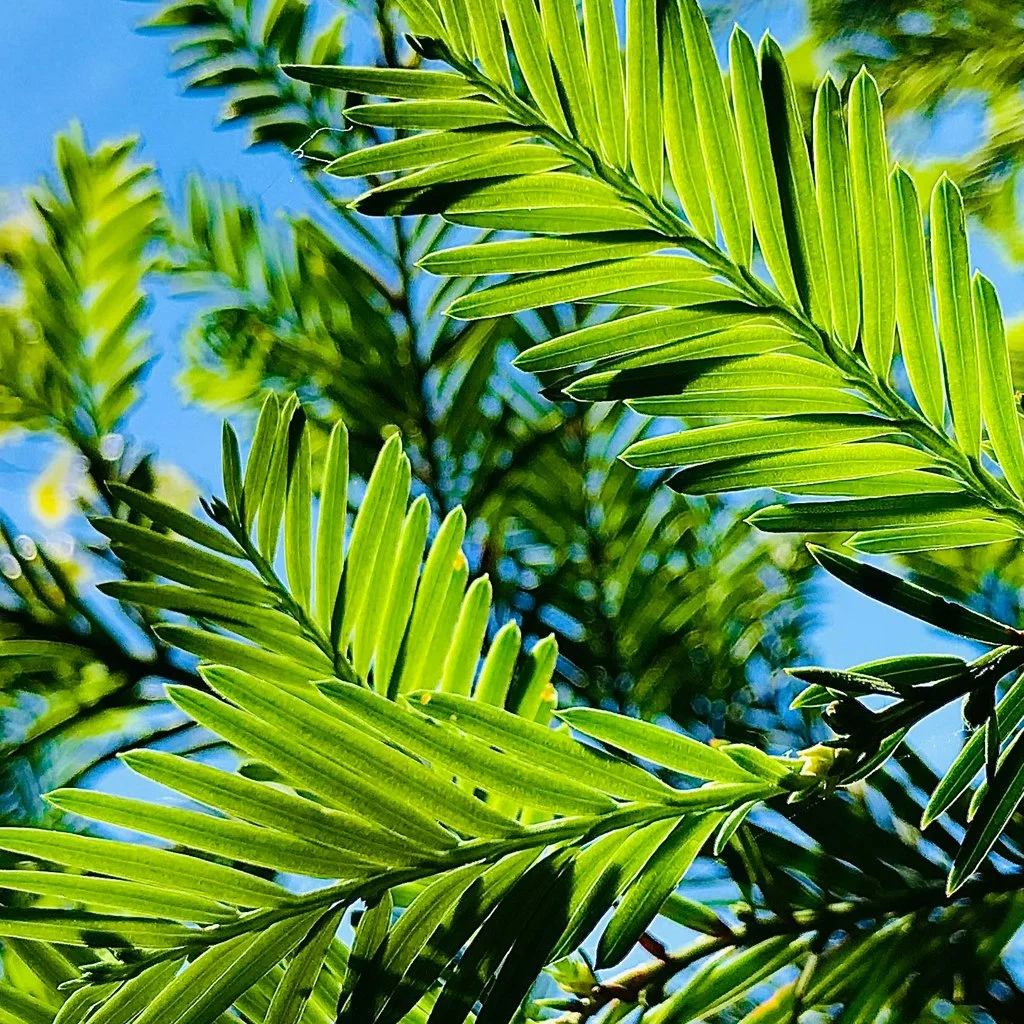 Image 3 of 17
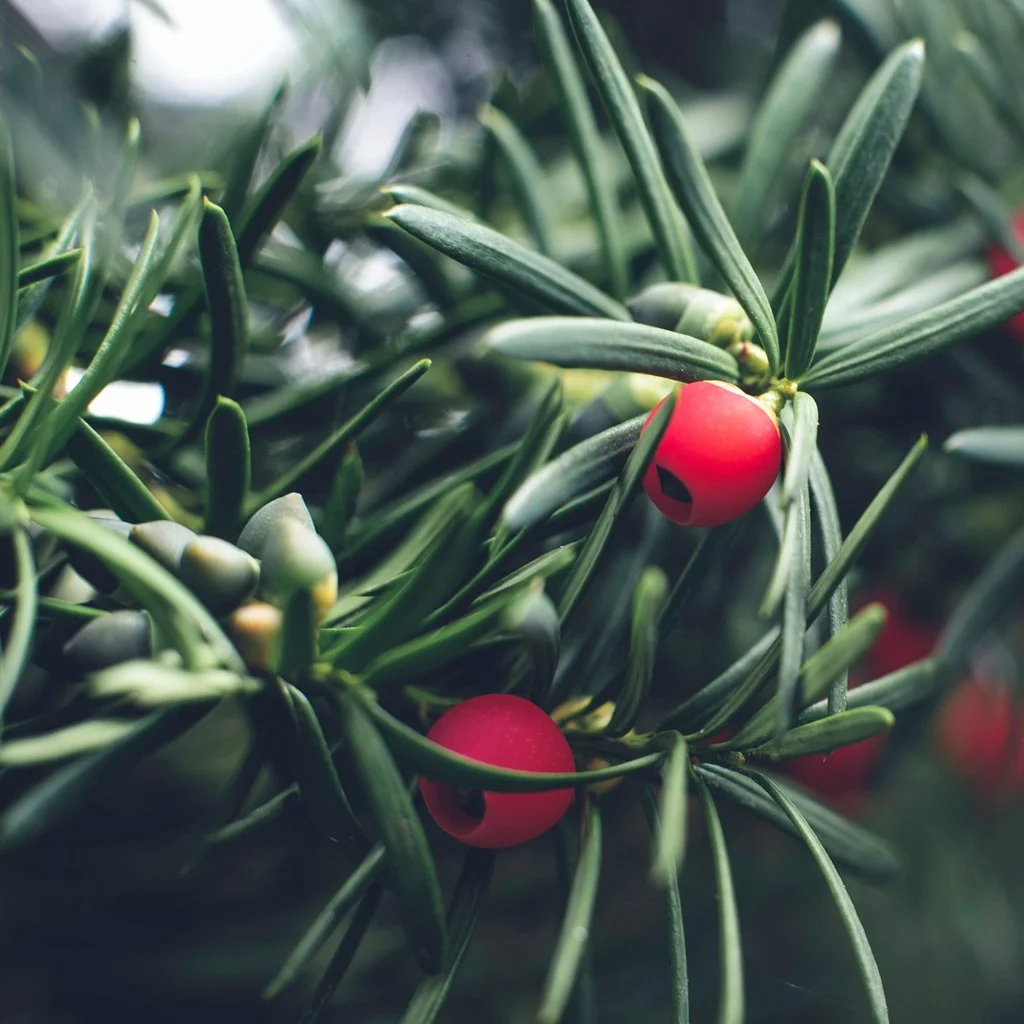 Image 4 of 17
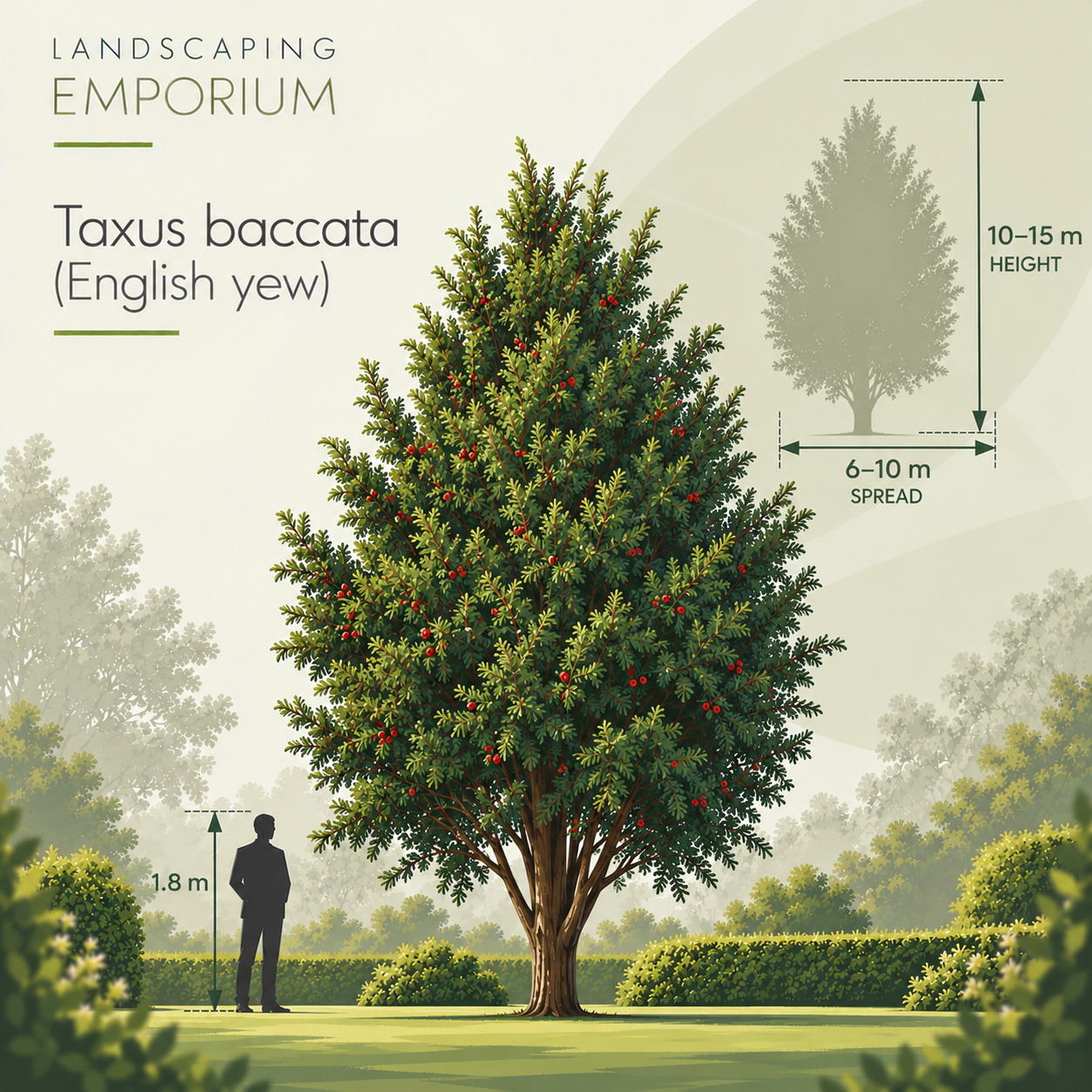 Image 5 of 17
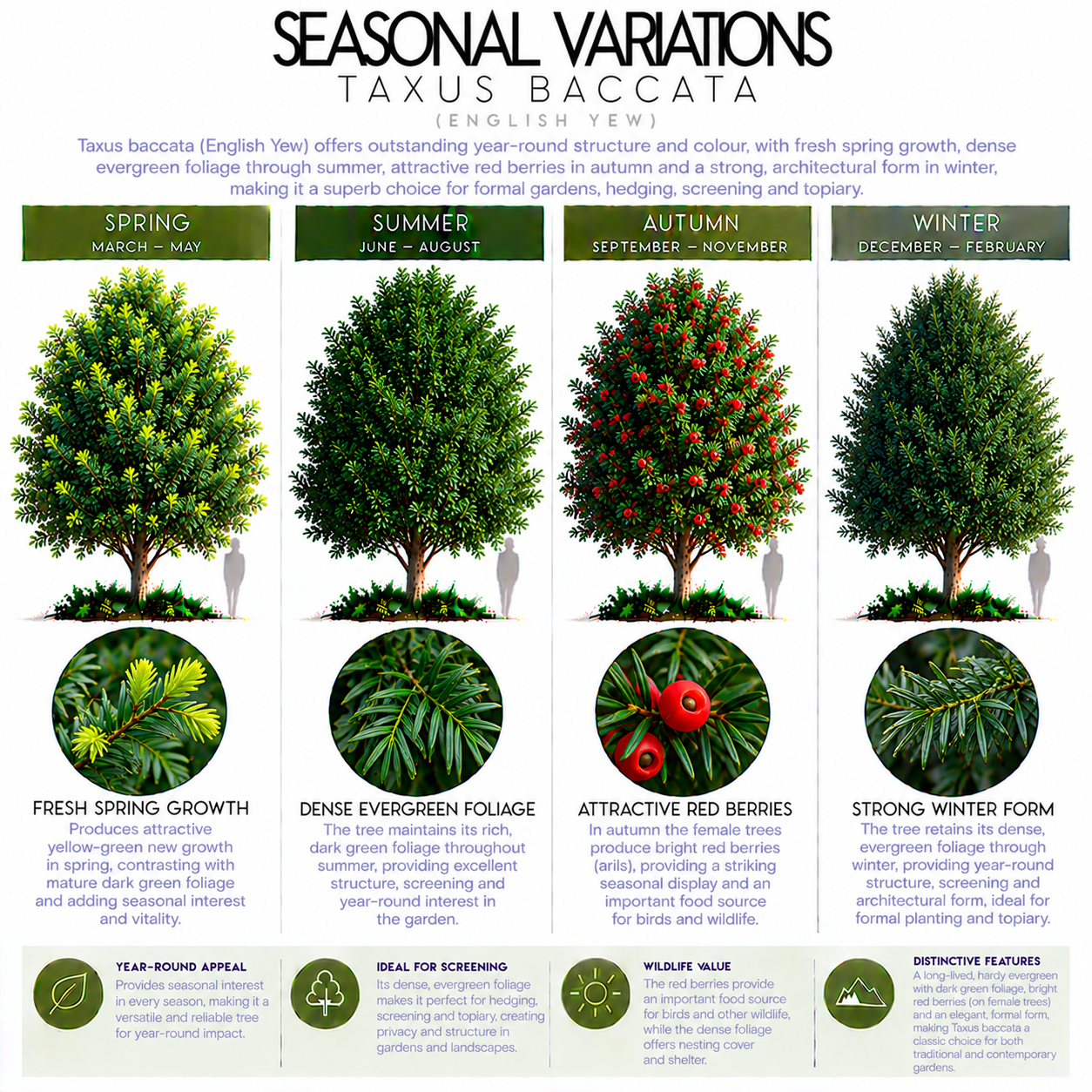 Image 6 of 17
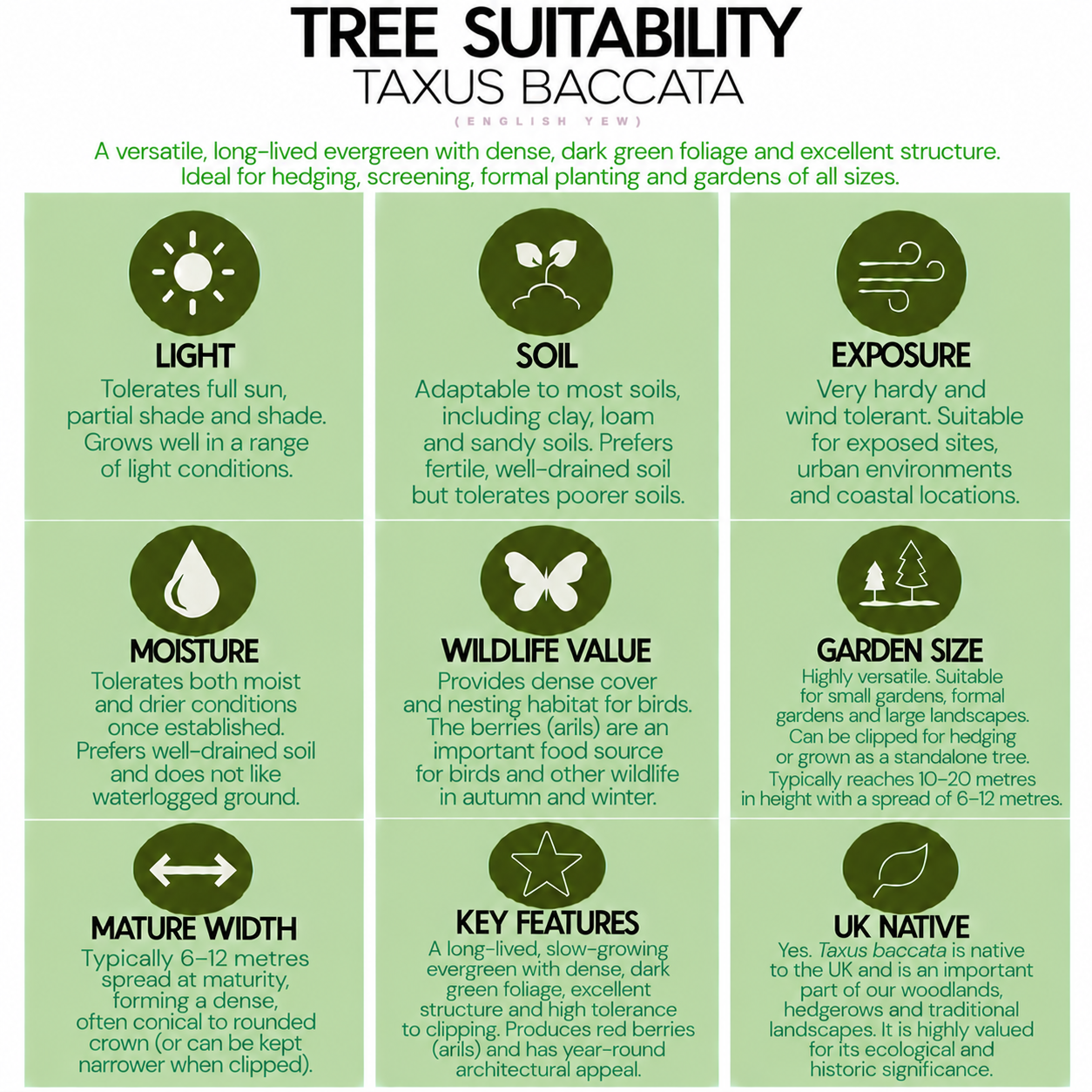 Image 7 of 17
 Image 8 of 17
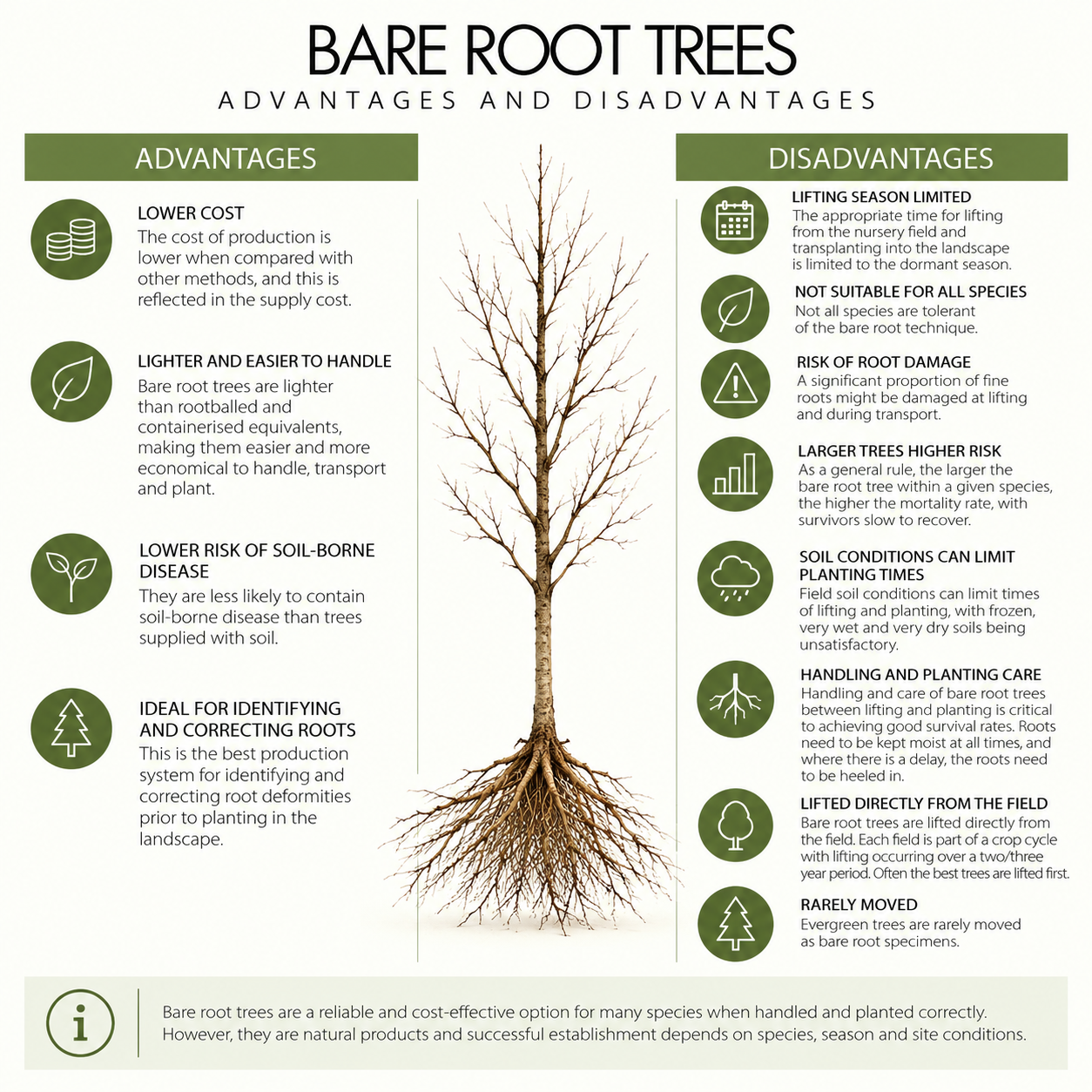 Image 9 of 17
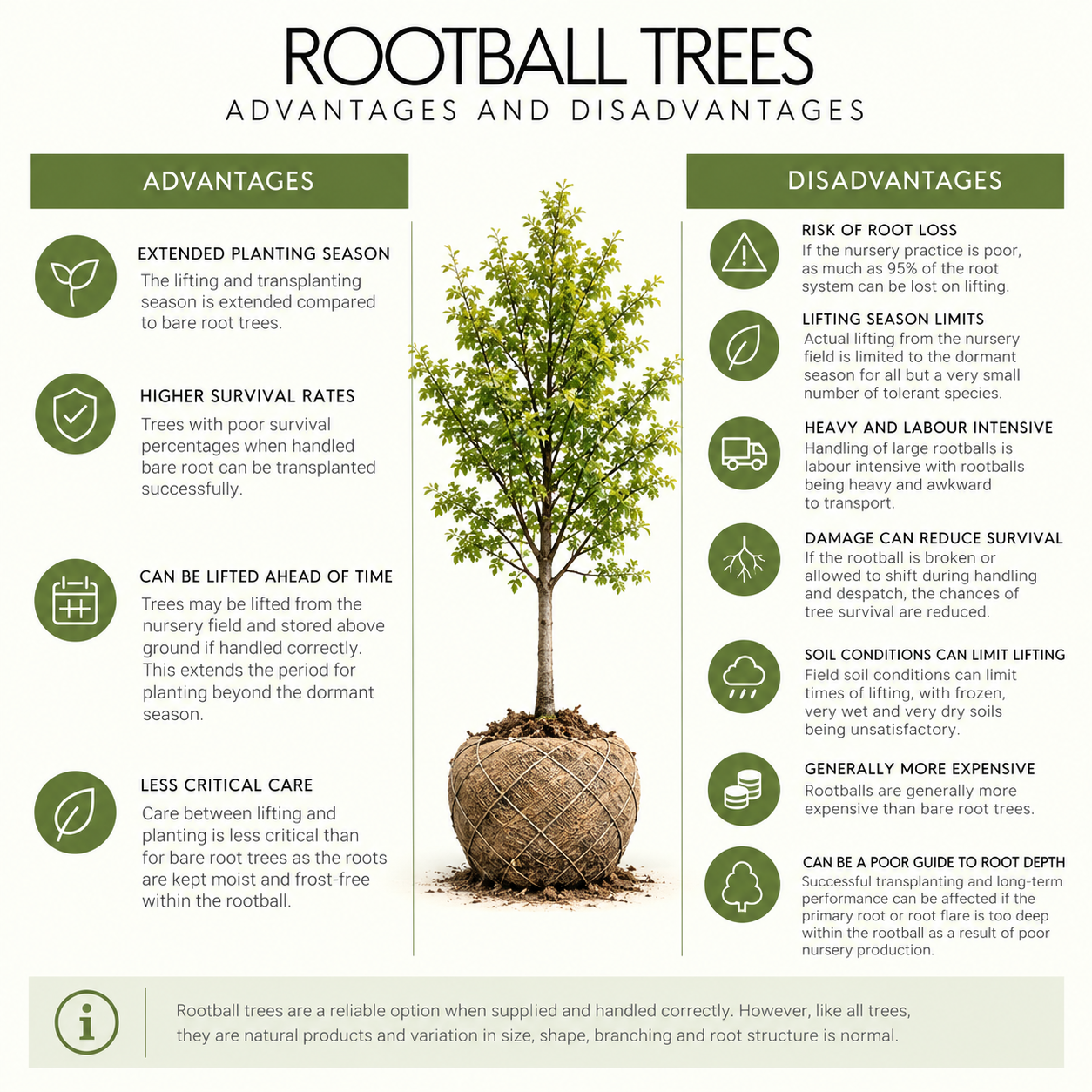 Image 10 of 17
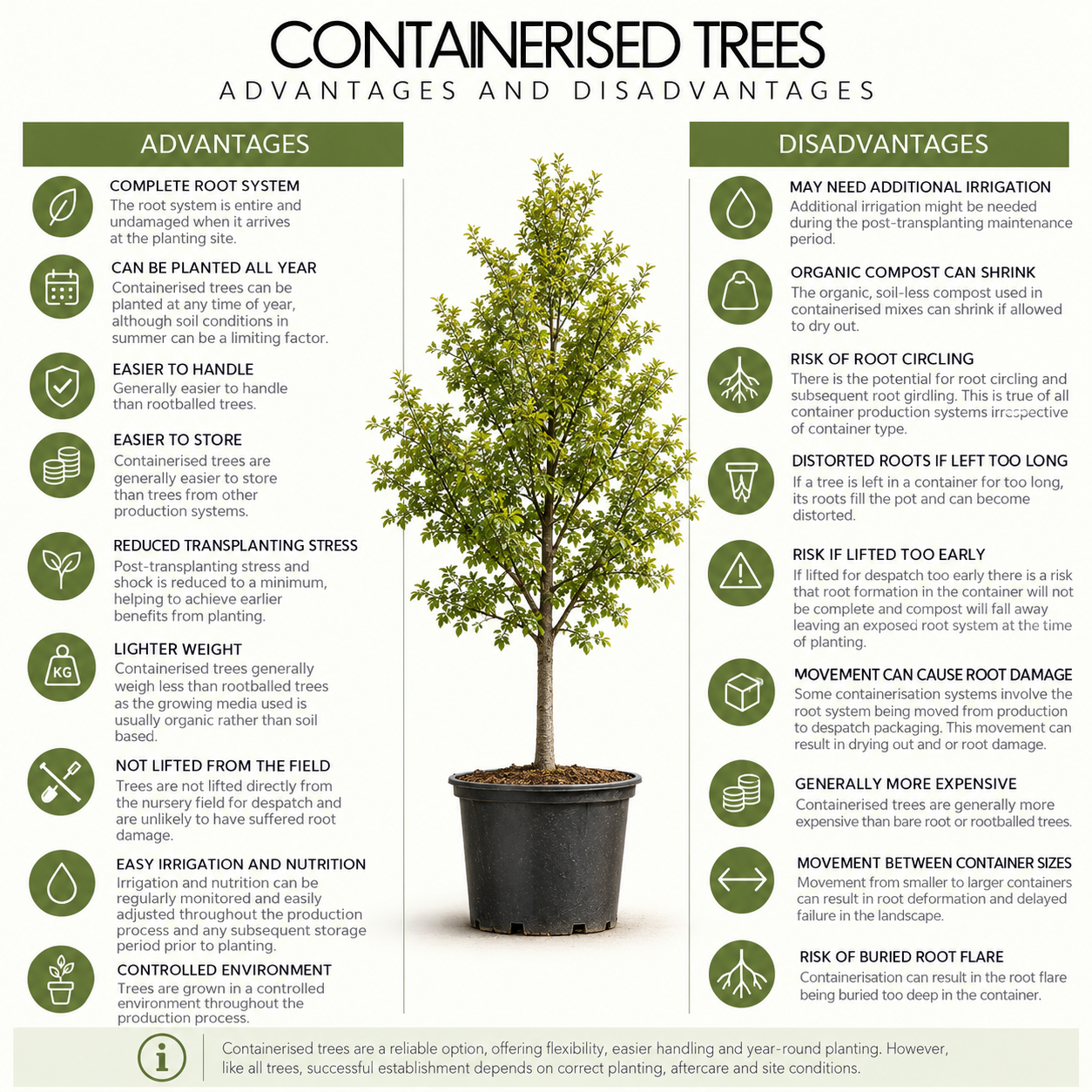 Image 11 of 17
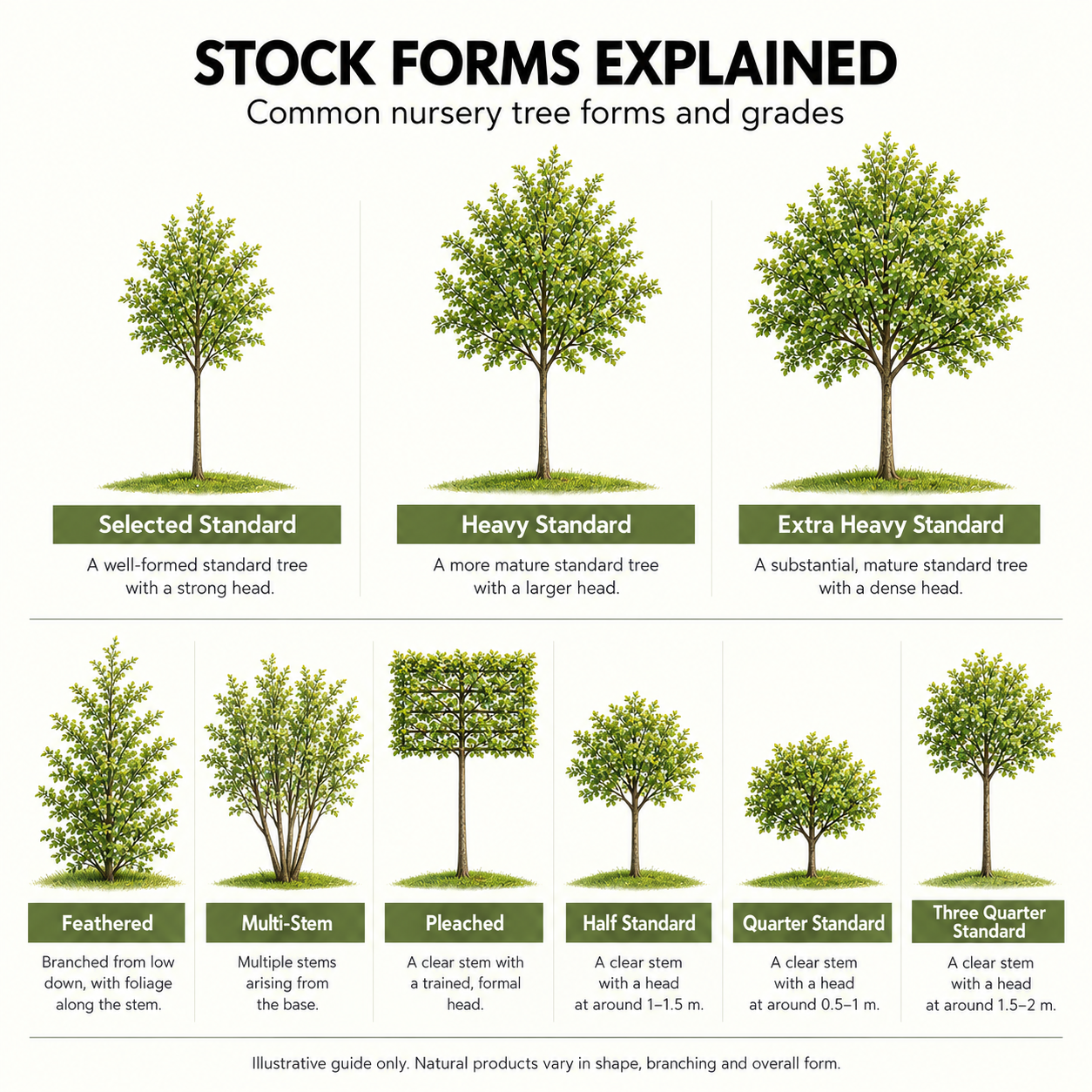 Image 12 of 17
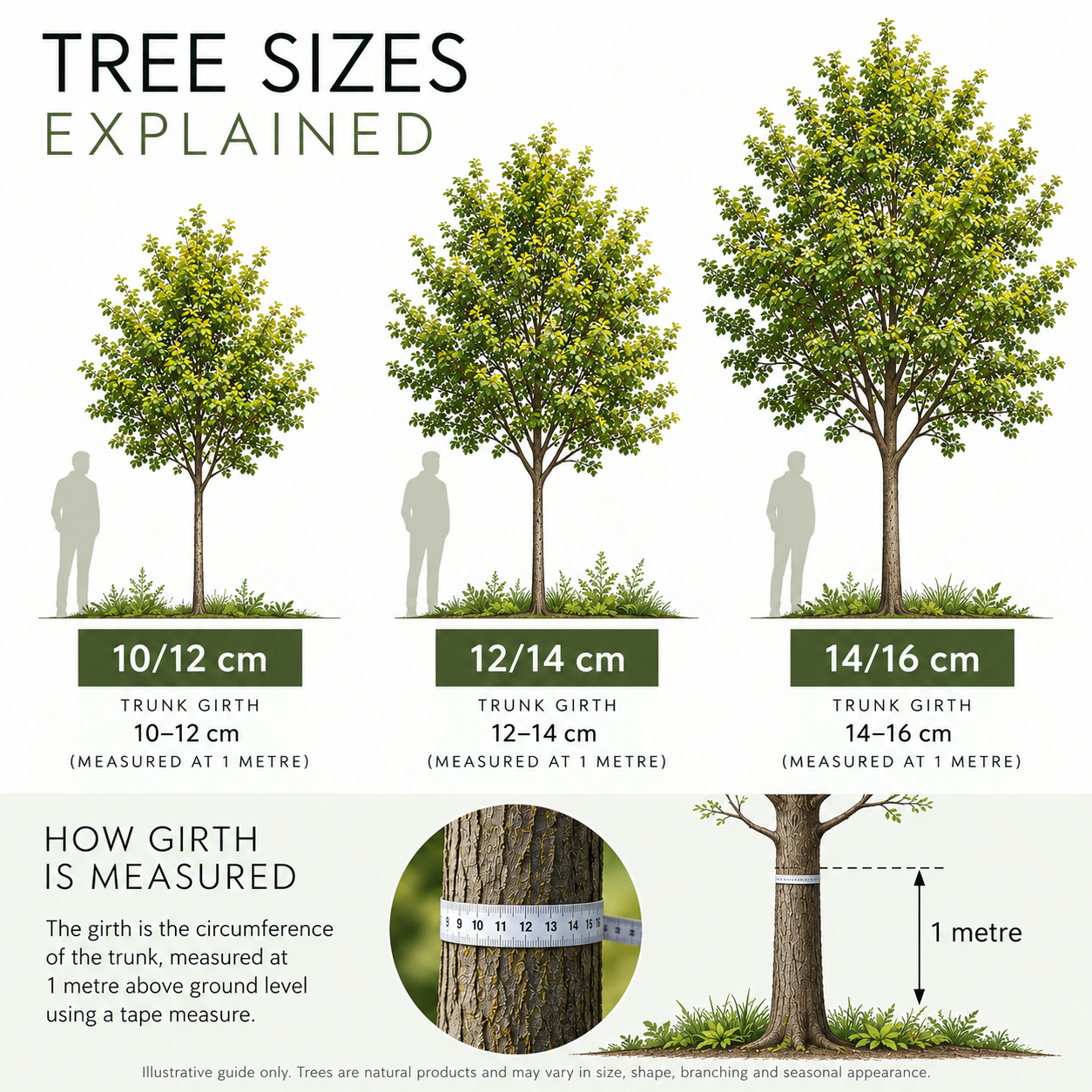 Image 13 of 17
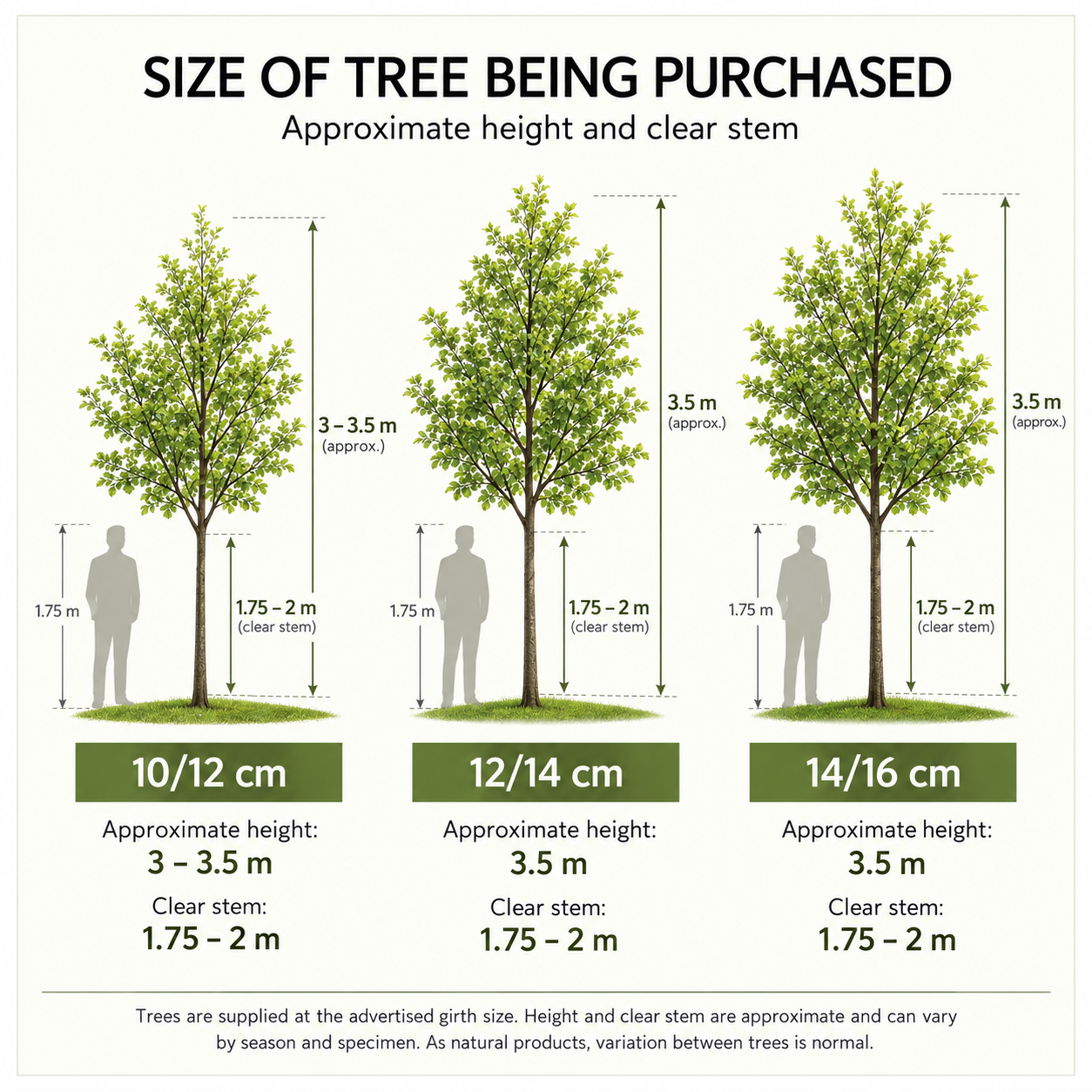 Image 14 of 17
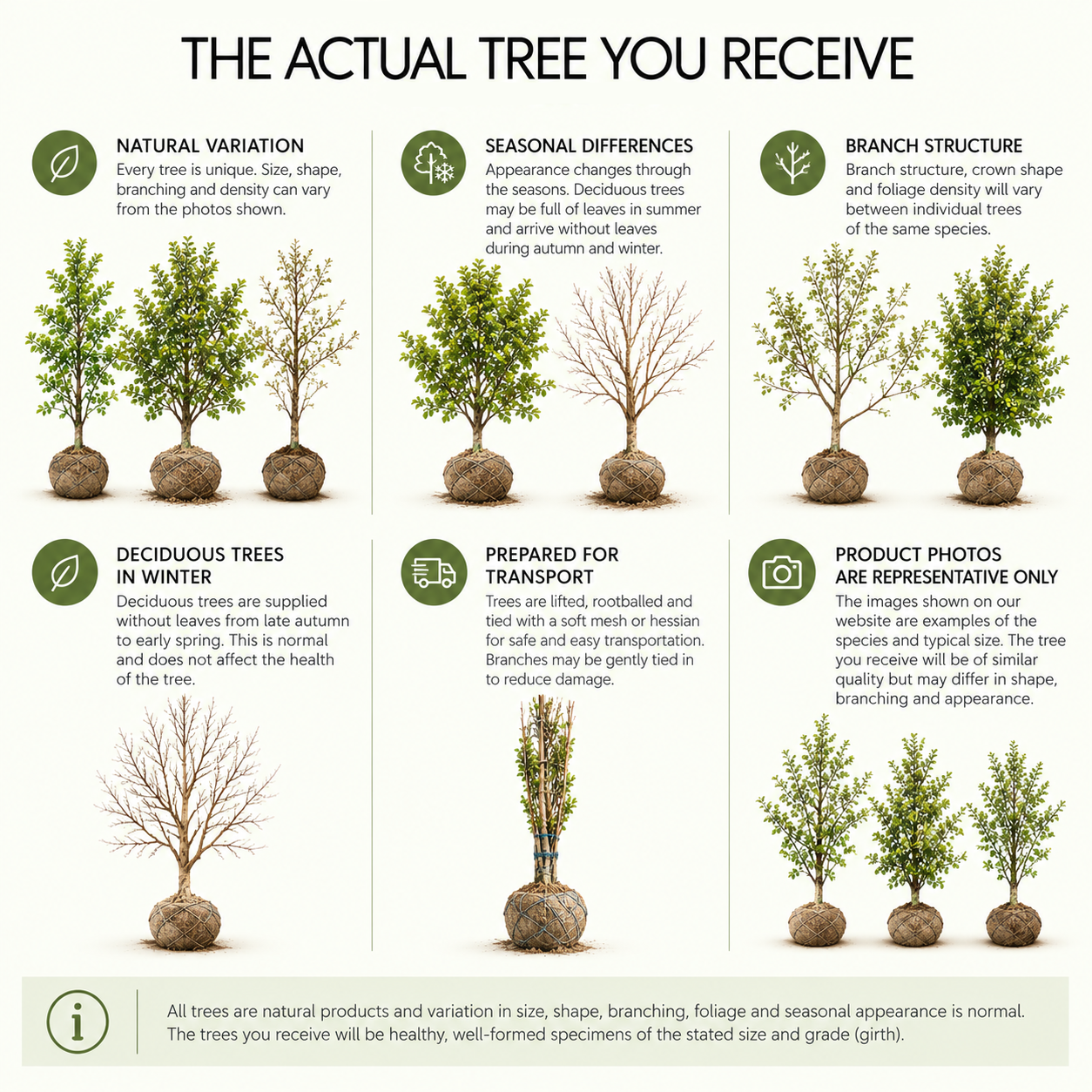 Image 15 of 17
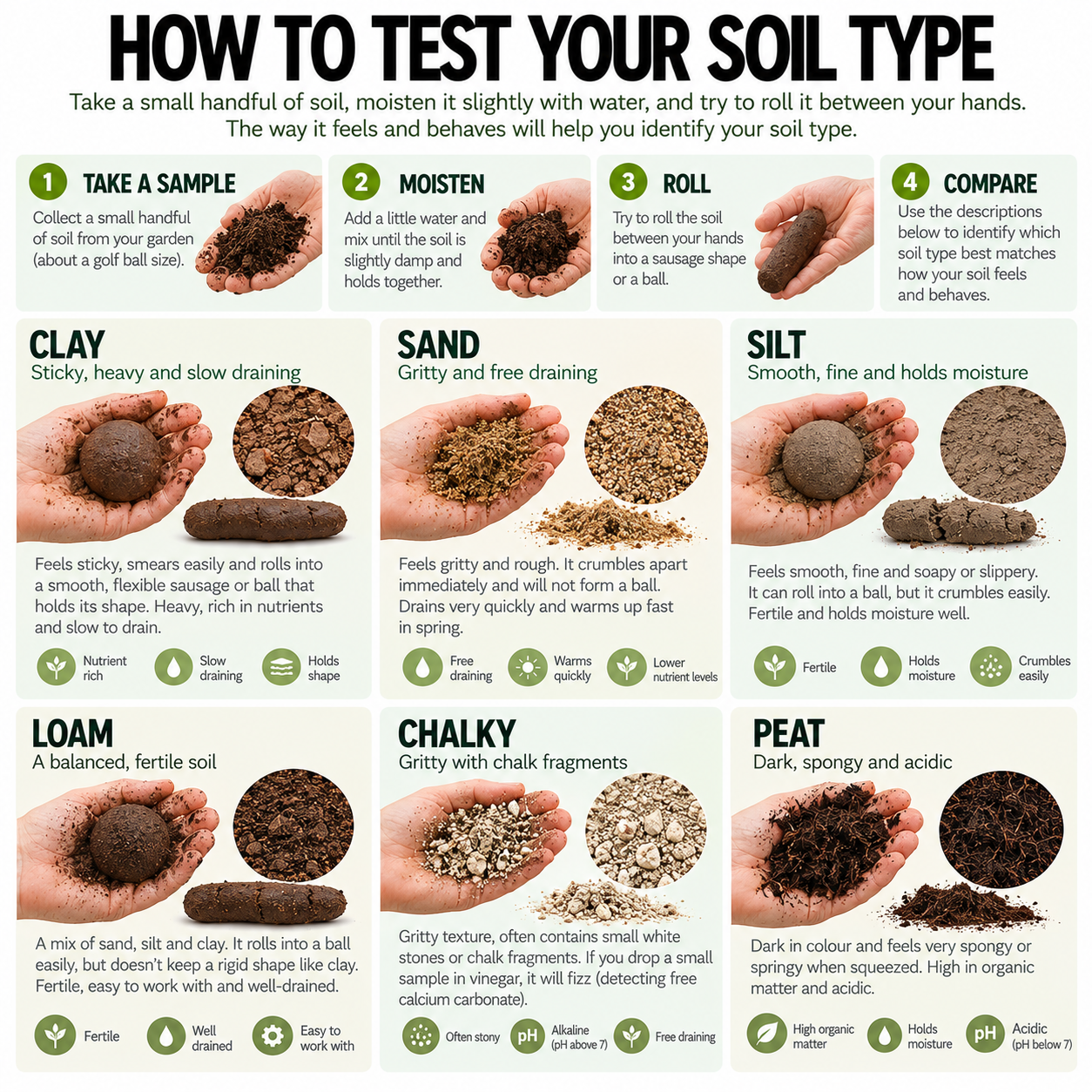 Image 16 of 17
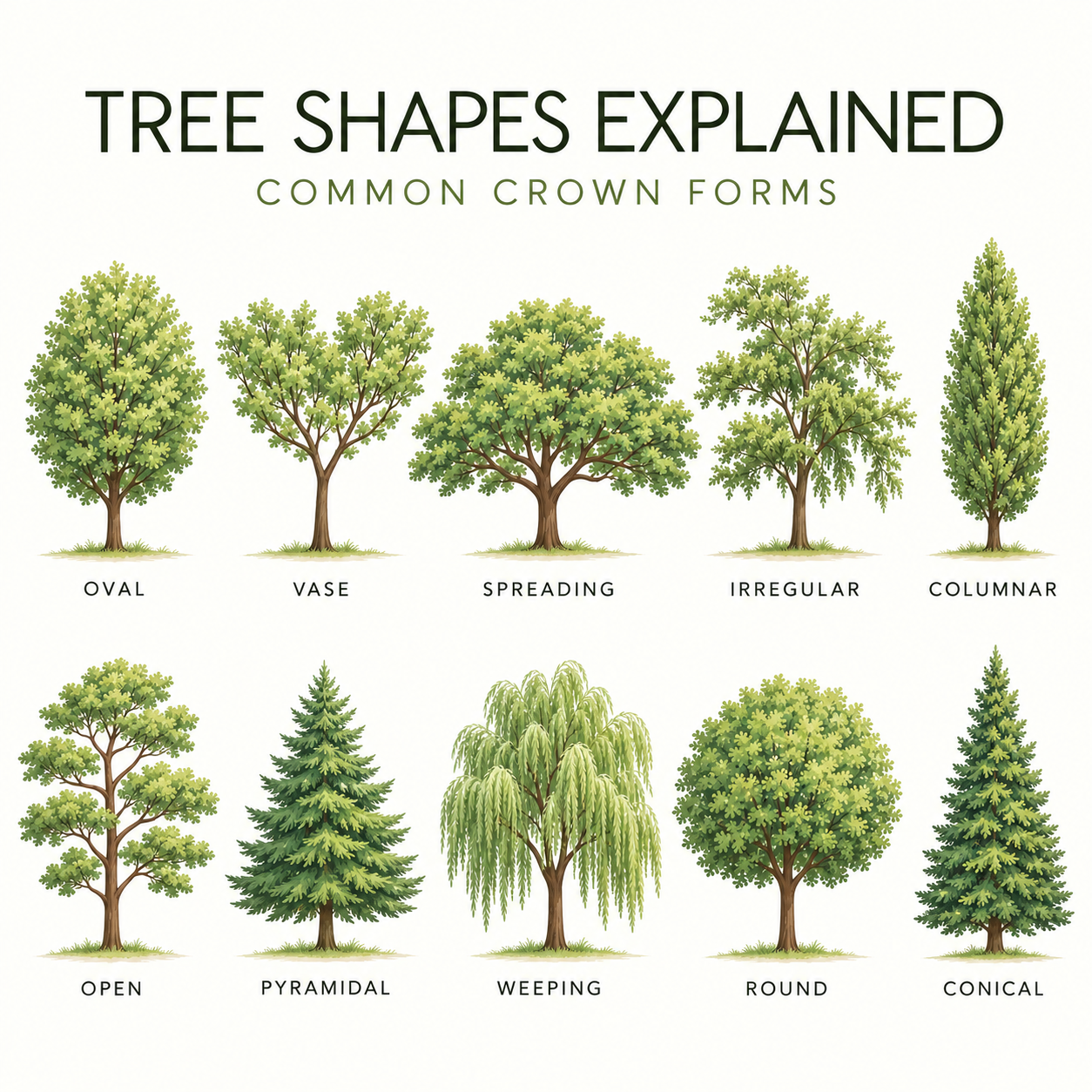 Image 17 of 17