
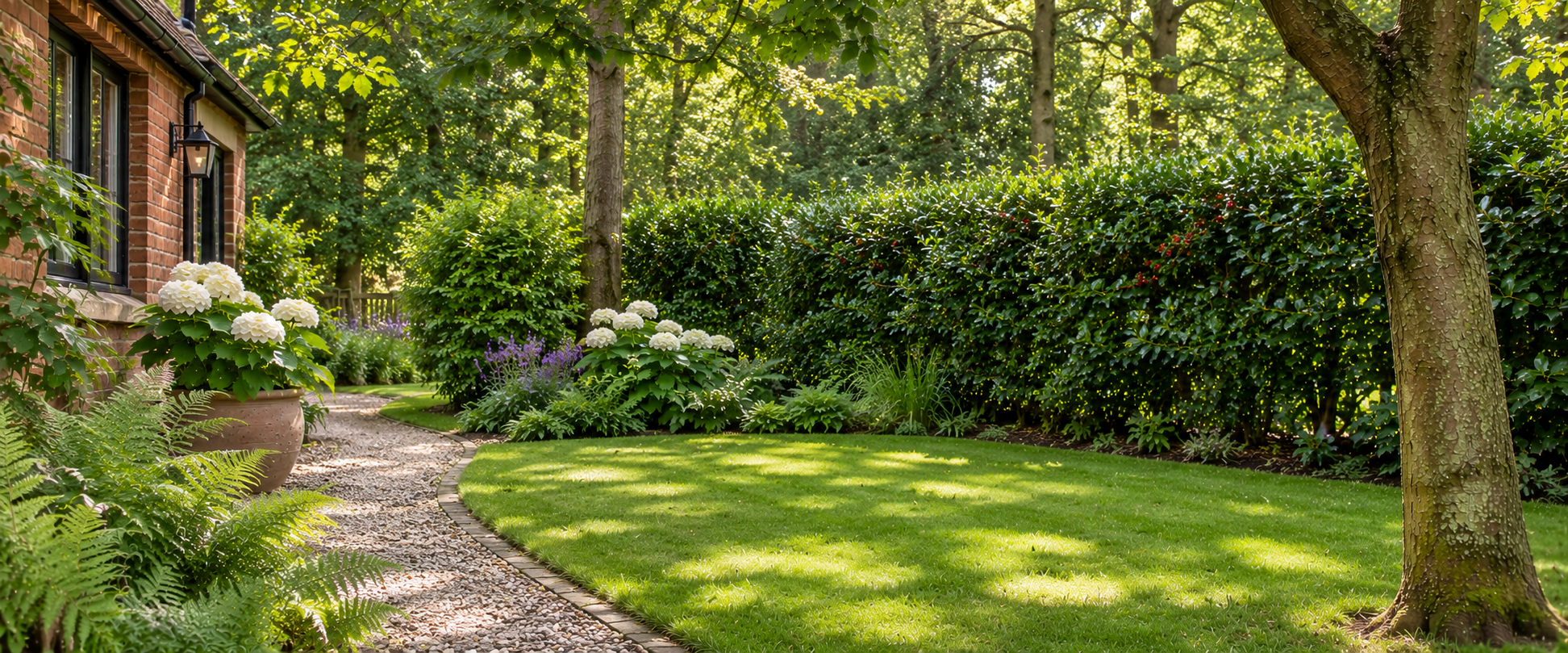
Hedging Plants & Professional Hedge Planting in Delamere
Evergreen, native and deciduous hedging for woodland-edge gardens, country properties, shaded boundaries and natural garden screening throughout Delamere and the surrounding Cheshire countryside.
Delamere's wooded landscape creates distinctive opportunities for garden hedging. Established trees, changing light levels, root competition and the transition between gardens and woodland all influence which species will establish successfully.
Landscaping Emporium supplies quality hedging plants for residential and country properties, with professional supply and planting available for suitable projects.
Whether you are creating privacy around a country home, replacing an established boundary or introducing a natural hedge alongside mature trees, the correct planting position is just as important as the species selected.
Selected by designers. Installed by professionals.
Hedging for Woodland-Edge & Country Gardens
A hedge in a woodland setting often needs to provide enclosure without looking out of place among established trees and natural planting.
Formal evergreen hedging can create structure close to a house, while native and mixed hedgerows may provide a softer transition towards surrounding woodland or countryside.
For larger properties, combining different hedging types can be more effective than using one species throughout the garden.
Woodland-Edge Boundaries
Natural hedging for gardens adjoining trees and countryside, with species chosen according to available light and soil moisture.
Evergreen Privacy
Yew and Holly for year-round structure in suitable locations, including some partially shaded gardens.
Traditional Country Gardens
Beech and Hornbeam for clipped garden boundaries with seasonal colour and a traditional appearance.
Wildlife-Friendly Hedgerows
Hawthorn and suitable native mixtures for natural boundaries, flowers, fruit and wildlife shelter.
Choosing Hedging for Shade Beneath Mature Trees
Planting a hedge near established trees can be challenging. Tree roots compete for moisture and nutrients, while the canopy reduces the amount of light reaching the new plants.
English Yew and Holly tolerate some shade and may be suitable for woodland-edge planting. However, shade tolerance does not guarantee success in very dry, densely rooted ground.
Dry Shade Is Different from Ordinary Shade
Beneath mature trees, the soil can remain surprisingly dry even after rainfall. Tree canopies intercept rain, while established roots absorb much of the available moisture.
Newly planted hedging has a comparatively limited root system and may struggle to compete until it becomes established.
Assess the Light Throughout the Growing Season
A planting position that appears bright in winter may become heavily shaded once deciduous trees develop their leaves. Consider the actual light conditions between spring and autumn before choosing the hedge.
Delamere Planting Advice
Where shade, dry soil and root competition are severe, moving the proposed hedge further from the tree canopy may produce a better result than choosing a supposedly shade-tolerant species.
Planting Hedging Without Damaging Mature Tree Roots
Mature trees are an important feature of many woodland and country gardens. Hedge planting should not compromise their health or stability.
Excavating a continuous trench through an established root system can damage important roots and create unnecessary stress for the tree.
Consider the Root Protection Area
Where a hedge is proposed close to a mature tree, check whether the planting would fall within its root protection area. Tree protection requirements and any applicable Tree Preservation Order or conservation area controls should be considered before excavation.
Choose an Appropriate Planting Method
Depending on the site, individual planting pits or a revised hedge alignment may reduce root disturbance. Any excavation near important roots should be assessed carefully, with specialist arboricultural advice where necessary.
Avoid raising soil levels over existing roots or damaging major roots simply to achieve a straight planting line.
Design Before Digging
On a woodland-edge property, the most successful hedge alignment may follow the available planting space rather than a rigid geometric line.
Six Hedging Plants to Consider for Delamere Gardens
These species offer different combinations of evergreen screening, shade tolerance, traditional garden character and wildlife value. Suitability depends on the individual planting position.
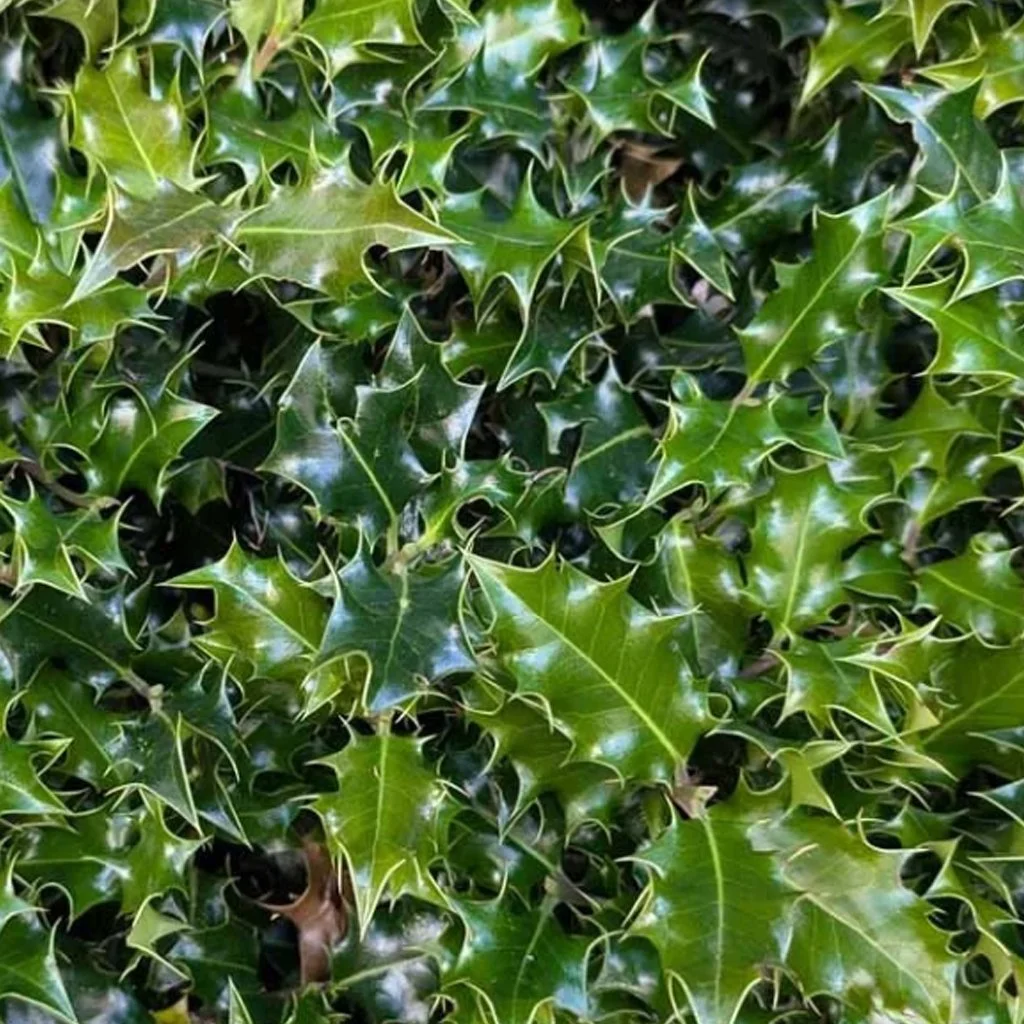
English Holly
Native evergreen hedging with glossy, often spiny foliage. Tolerates partial shade and provides year-round structure and wildlife shelter.
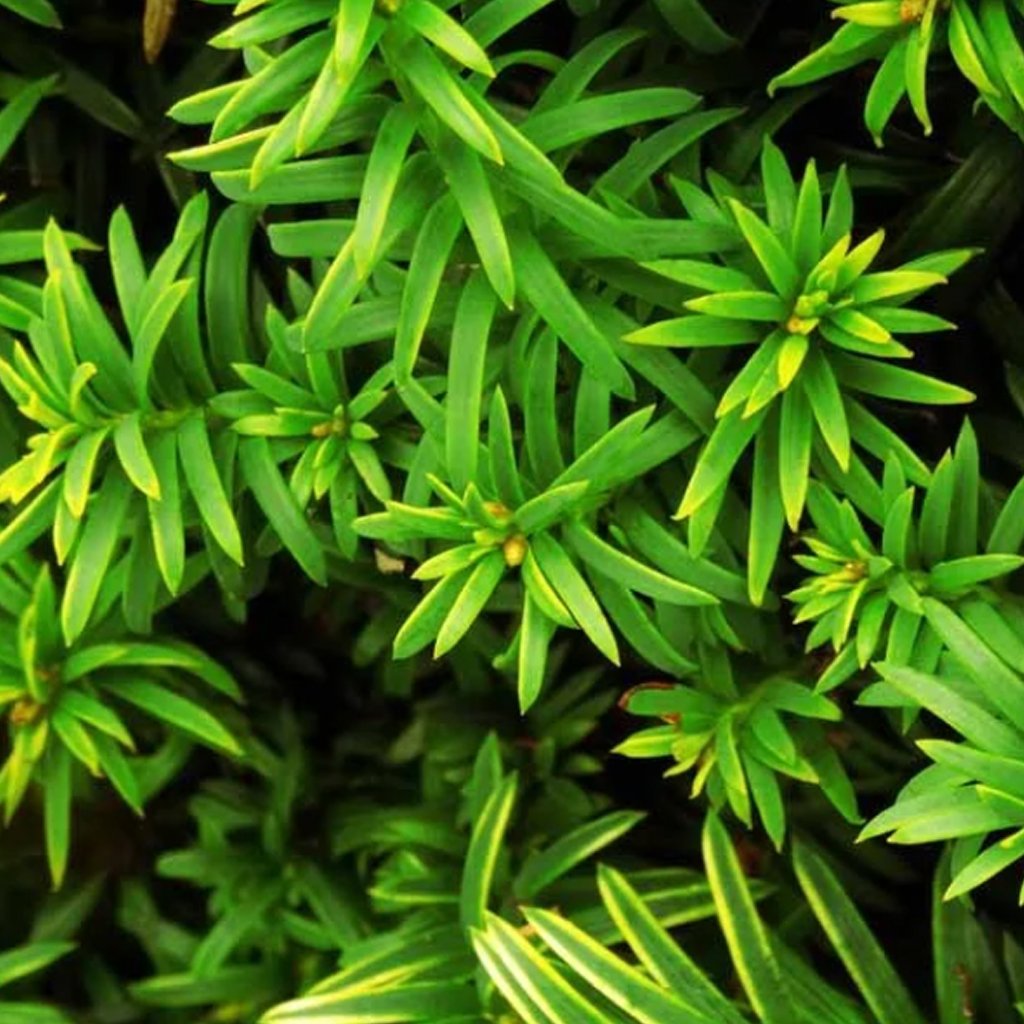
English Yew
Dense evergreen hedging for formal privacy and selected shaded locations. Requires adequate drainage and is highly toxic if ingested.
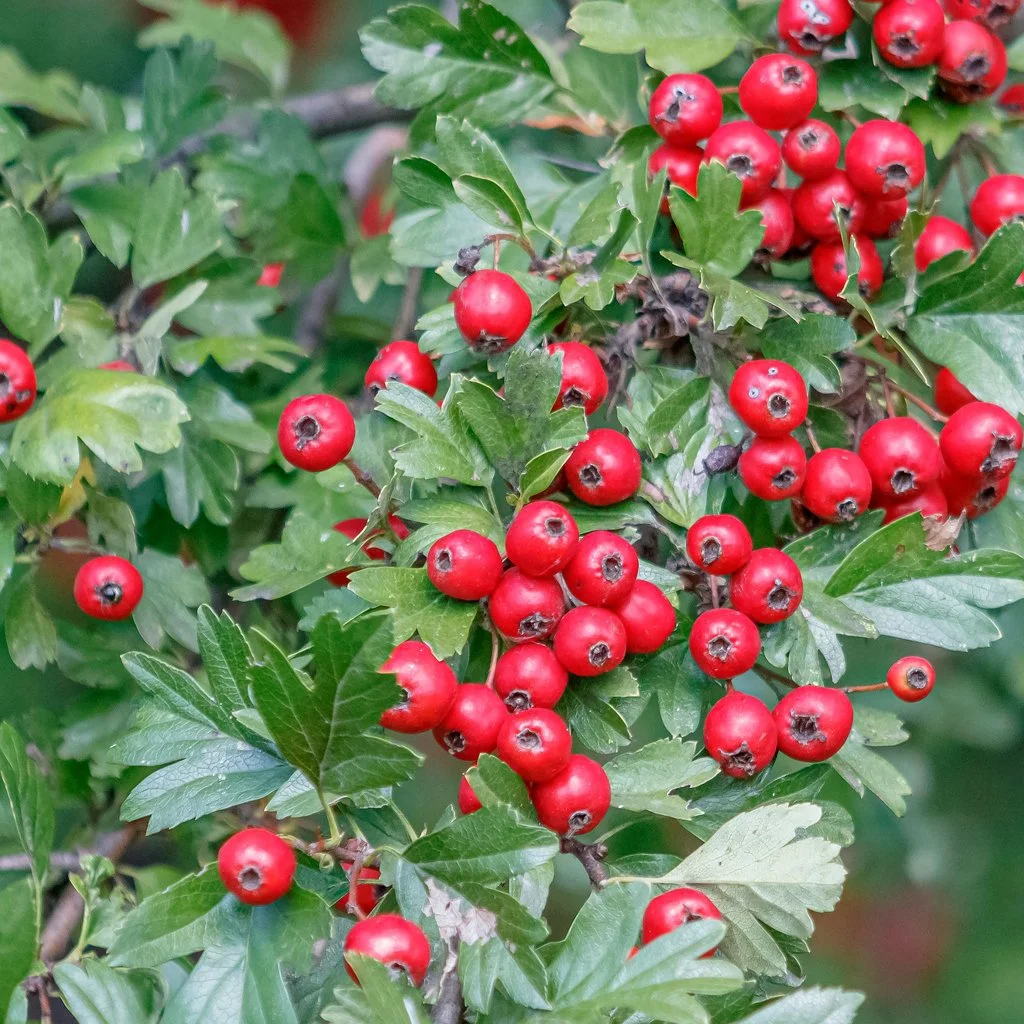
Hawthorn
Traditional native hedging with spring blossom, autumn berries and thorny growth. Best considered for reasonably open woodland edges and countryside boundaries.
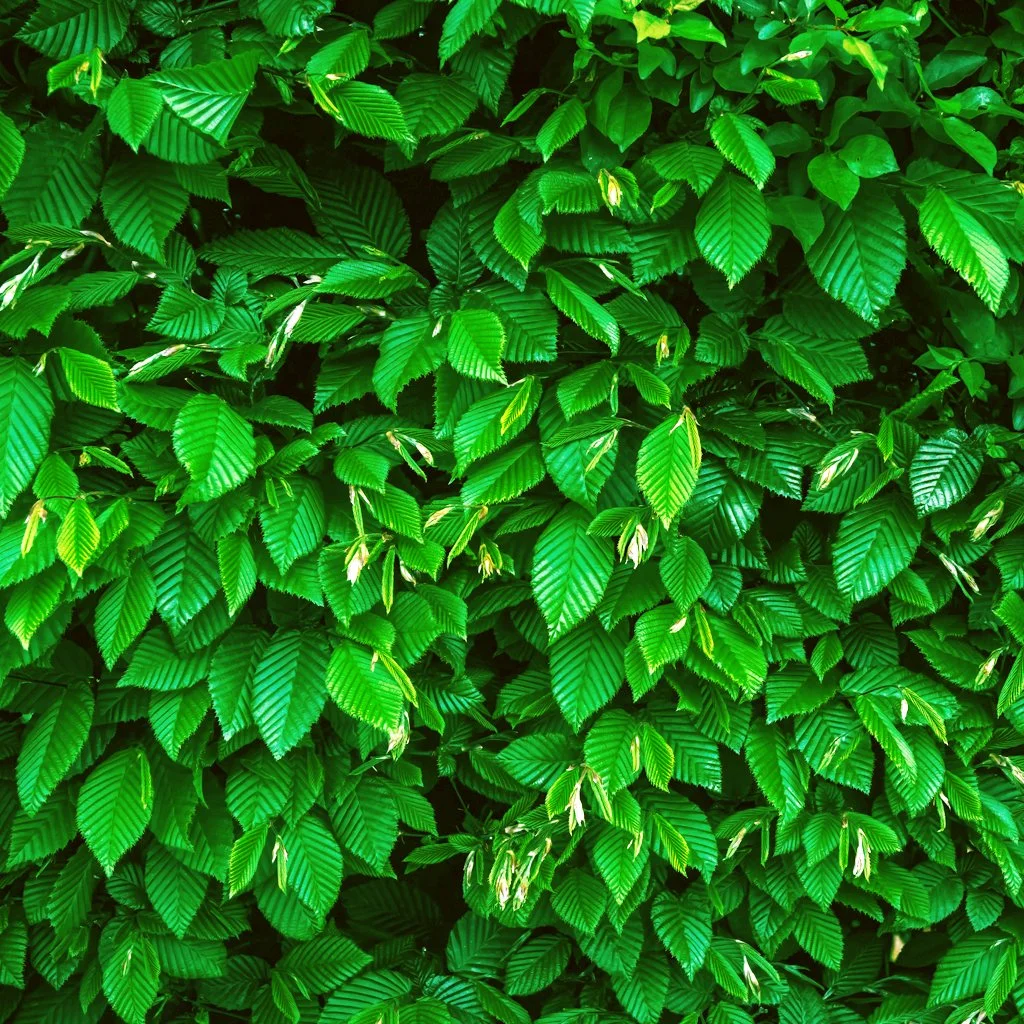
Hornbeam
Traditional deciduous hedging that tolerates partial shade and many heavier soils, provided the ground is not persistently waterlogged.
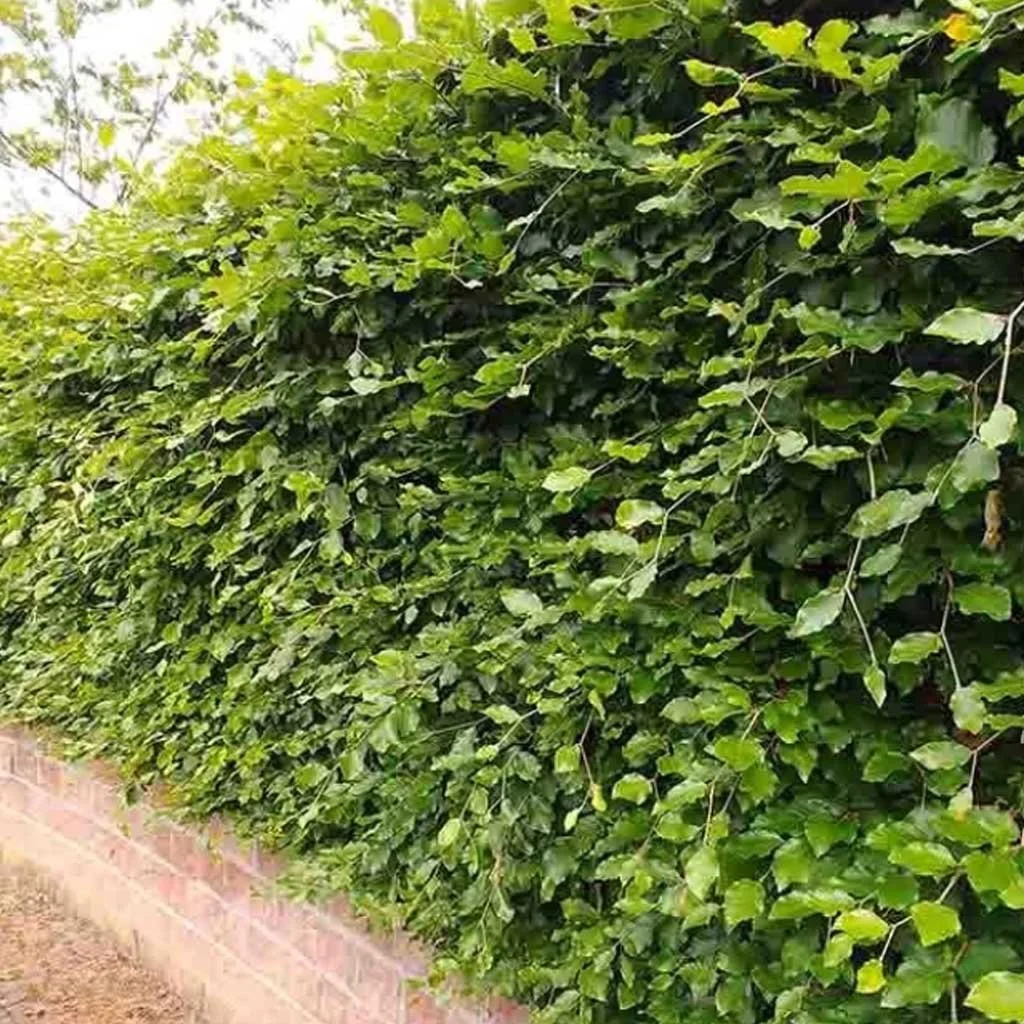
Green Beech
Traditional clipped hedging with green summer foliage and coppery autumn colour. Clipped hedges may retain some dry leaves in winter. Prefers adequately drained soil.
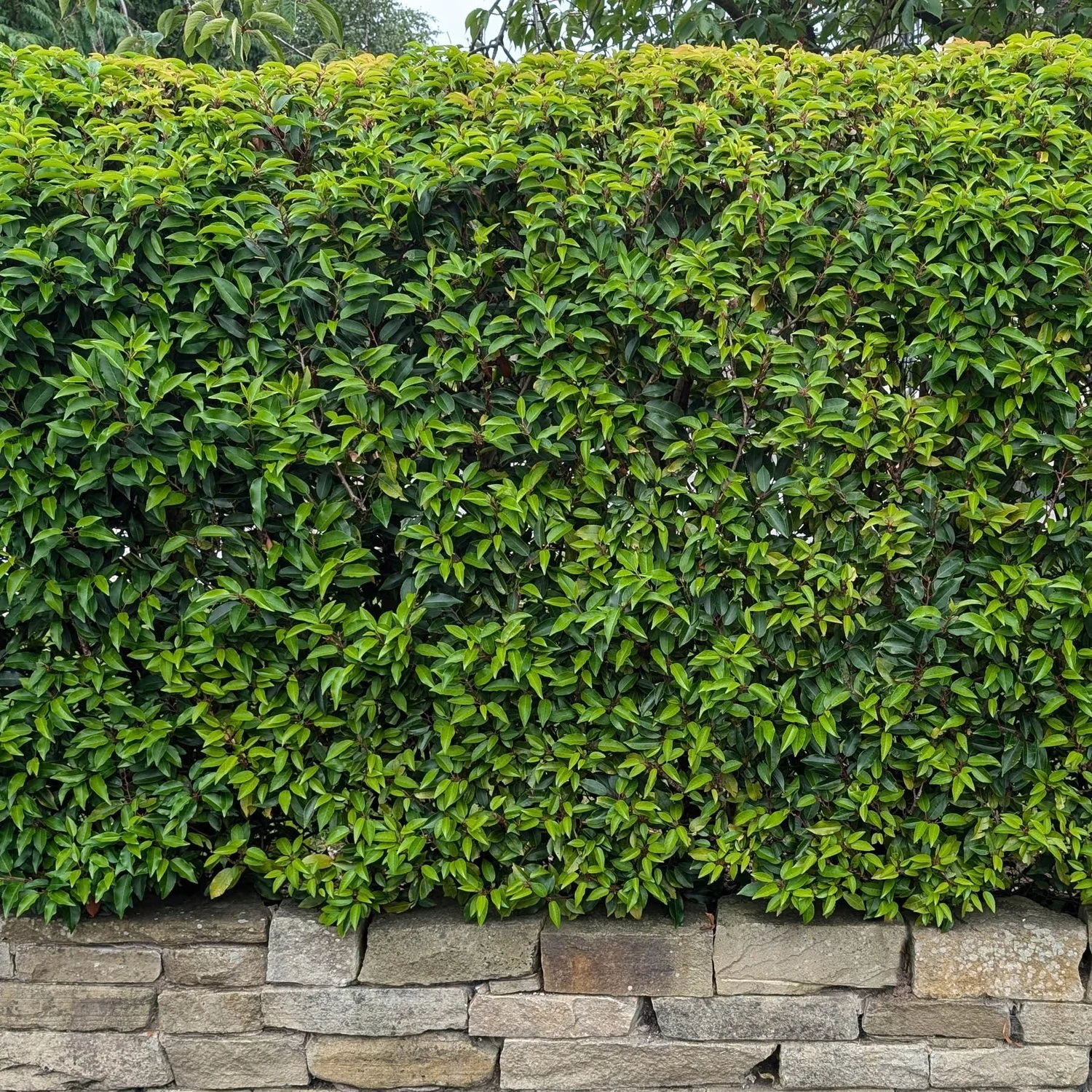
Portuguese Laurel
Evergreen hedging with glossy foliage and reddish stems. A useful privacy option in suitable sheltered positions with adequate light, drainage and planting space.
Plant sizes, prices, stock types and availability vary by species and season. Check individual product listings.
Creating Hedging That Complements the Woodland Landscape
A garden bordering woodland or open countryside may benefit from a softer boundary than a tightly clipped evergreen hedge.
Hawthorn and suitable native mixtures can provide seasonal interest, flowers, fruit and wildlife value in positions with sufficient light.
Choosing Between Native and Ornamental Hedging
Native hedging is often appropriate where the boundary should blend into the countryside. Ornamental evergreen hedging may be better suited to a formal terrace, driveway or private seating area.
The design can combine both approaches, with a natural boundary at the edge of the property and a more formal hedge nearer the house.
Allow for the Mature Hedge Width
Informal native hedges generally need sufficient space to develop naturally. Plan for their eventual width, future cutting access and the relationship with existing trees and neighbouring land.
Creating Privacy Around Woodland & Country Homes
Privacy can be important around patios, driveways, windows and outdoor seating areas, even in a rural setting.
English Yew and Holly may provide effective year-round screening in suitable positions. Portuguese Laurel can also be considered where adequate light and growing conditions are available.
Position the Hedge Where Privacy Is Needed
A carefully placed hedge close to a seating area may provide better screening than a much taller hedge along a distant boundary.
Consider sightlines from neighbouring properties, the intended mature height and the space required to maintain the hedge.
Understanding Woodland-Edge Soil Conditions
Woodland-edge gardens can contain very different growing conditions within the same property.
Ground beneath mature trees may be dry and root-congested, while lower areas can retain moisture during winter.
Do not assume that woodland proximity means the soil is consistently moist or suitable for all hedging species.
Check Drainage Before Planting
Yew and Beech require adequate drainage, while Hornbeam can tolerate many heavier soils. No species should be selected solely from a general description of local soil.
Inspect the actual planting position after heavy rain and assess the soil structure, compaction and drainage before preparing a planting specification.
Establishing a New Hedge Near Mature Trees
New hedging planted near established trees may need particular attention during its first growing seasons.
Watering in Dry Shade
Tree roots can remove moisture quickly from the surrounding soil. New hedging may require careful, regular watering during dry weather while its roots establish.
Watering should respond to actual soil moisture rather than a fixed schedule. Avoid prolonged saturation in poorly drained ground.
Mulching and Weed Control
An appropriate organic mulch can help conserve moisture and reduce weed competition. Keep mulch away from stems and avoid changing soil levels around established trees.
Monitoring Establishment
Check for wilting, poor growth and signs of water stress. Where root competition is substantial, additional establishment care may be required.
Practical Aftercare Advice
For difficult woodland-edge planting positions, consider how watering can be delivered before the hedge is installed. Access to water can be as important as the initial planting specification.
Native Hedgerows for Wildlife & Biodiversity
Native hedges can provide shelter, nesting opportunities and seasonal food for garden wildlife.
Hawthorn produces spring blossom and autumn berries. Holly provides evergreen cover and, on pollinated female plants, berries.
Mixed native hedging can increase the diversity of flowers, foliage and fruit within a garden boundary.
Protect Existing Wildlife
Hedge cutting and removal must avoid damaging or disturbing active bird nests. Some established countryside hedgerows may also be legally protected.
Check relevant restrictions before removing or substantially altering an existing boundary.
Bare-Root, Rootballed & Container-Grown Hedging
The appropriate stock type depends on the species, initial height, planting season and project requirements.
Bare-Root Hedging
Generally available during the dormant season and often economical for longer native hedgerows and countryside boundaries.
Rootballed Hedging
Available in selected species and sizes, generally from mid-October to late April, weather permitting.
Container-Grown Hedging
Offers greater flexibility in planting dates, subject to suitable conditions and establishment care.
Choosing Plant Sizes
Larger plants may provide more immediate screening but require additional handling, access and aftercare.
For woodland-edge planting, larger stock is not always the most practical choice. Root competition, handling requirements and establishment conditions should all influence plant size selection.
What Does Hedge Supply & Planting Cost in Delamere?
Hedge planting costs depend on the species, length, plant size, stock type and site conditions.
Woodland-edge gardens can introduce additional considerations, particularly where existing roots restrict excavation or where access for deliveries and plant handling is limited.
Factors Affecting the Quotation
Plant Size & Quantity
The initial hedge height, planting density and species determine the quantity and cost of plants.
Ground Preparation
Compacted soil, existing vegetation and difficult planting conditions can affect preparation requirements.
Tree Root Constraints
Planting near established trees may require an alternative alignment or a more careful planting method.
Access & Aftercare
Restricted access, irrigation, mulch and other agreed establishment measures may influence costs.
For an accurate quotation, provide the approximate hedge length, intended height, site photographs and details of any nearby mature trees.
Professional Hedge Supply & Planting in Delamere
Landscaping Emporium works alongside Kirman Design to offer professional hedge supply and planting for suitable projects in Delamere and surrounding Cheshire areas.
Depending on the agreed specification, services may include plant selection, quantity calculations, delivery, ground preparation, setting out, planting, irrigation and aftercare advice.
How to Request a Hedge Planting Quotation
Describe the Hedge
Tell us the approximate length, desired initial height, purpose and any preferred species.
Show the Planting Area
Provide your postcode, photographs, access details and information about mature trees, shade or drainage.
Review Your Options
We can discuss suitable stock types, species, planting requirements and quotation arrangements.
Learn more about our professional hedge supply and planting service.
Hedging in Delamere & Surrounding Cheshire Communities
We welcome hedging supply and planting enquiries from Delamere and nearby villages across central Cheshire.
Delamere
Woodland-edge hedging, evergreen privacy and natural garden boundaries.
Oakmere
Native hedgerows and planting for countryside-facing gardens.
Sandiway
Formal evergreen hedging and established residential boundaries.
Cuddington
Privacy screening and traditional clipped garden hedges.
Norley
Native countryside hedging and natural garden boundaries.
Kelsall
Evergreen hedging and planting for larger country gardens.
Professional planting availability depends on location, project requirements and site access.
Delamere Hedging FAQs
Which hedging plants are suitable for Delamere gardens?
Holly, Yew, Hawthorn, Hornbeam, Beech and Portuguese Laurel may be suitable depending on soil, drainage, light and exposure.
Which hedge is best for a shaded garden?
Yew and Holly tolerate shade, but dry soil and competition from mature tree roots may limit establishment.
Can I plant a hedge beneath mature trees?
It may be possible, but root protection, soil moisture, shade and the planting method must be considered first.
Will hedge planting damage existing tree roots?
Excavation can damage established roots. A revised hedge alignment or carefully assessed planting method may be necessary.
Which hedge suits a woodland boundary?
Hawthorn and suitable mixed native hedging can provide a natural appearance where sufficient light is available.
Which hedging provides winter privacy?
Evergreen species such as Yew, Holly and Portuguese Laurel can provide year-round screening where growing conditions suit.
When is bare-root hedging available?
Generally during the dormant season, subject to weather and stock availability.
When is rootballed hedging available?
Generally from mid-October to late April, weather permitting and subject to stock availability.
How many hedging plants will I need?
Quantities depend on hedge length, species, supplied size, stock type and recommended spacing.
Do you offer professional hedge planting in Delamere?
We welcome enquiries for suitable supply and planting projects, subject to availability and site requirements.
How much does professional hedge planting cost?
Costs depend on plant sizes, quantities, site access, ground preparation and any special planting requirements.
Explore Hedging Across Cheshire
Visit our Cheshire Hedging Guide for regional planting advice and species selection.
Explore nearby guides for Kelsall, Northwich and Tarporley.
Alternatively, browse our hedging plant collection or use the Hedge Selector to compare species by growing conditions and purpose.
Planning a New Hedge in Delamere?
Whether you need evergreen privacy, a natural woodland-edge boundary or professional planting near established trees, explore our hedging range or request a quotation.
Telephone: 01942 604976
Email: hello@landscapingemporium.co.uk
Selected by designers. Installed by professionals.