
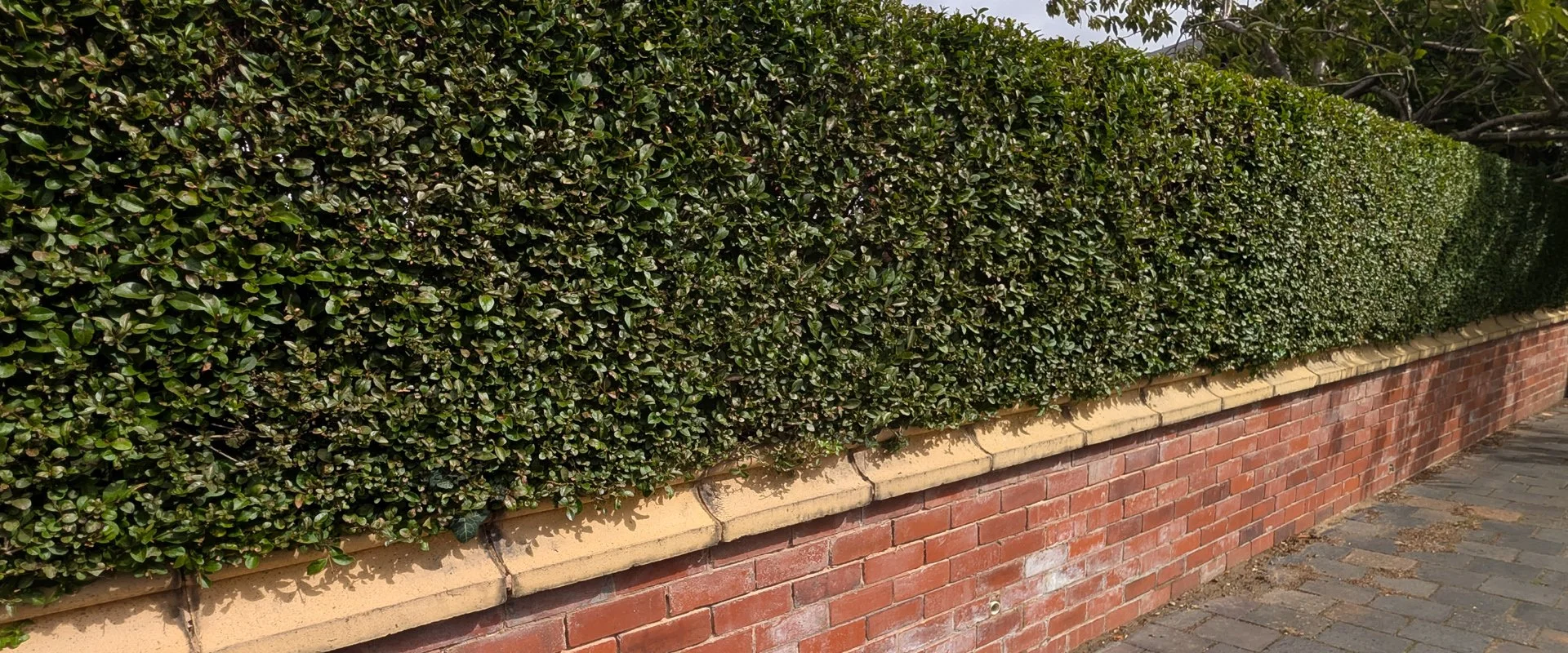
Hedging Plants & Professional Hedge Planting in Orrell
Quality hedging plants for privacy, garden boundaries and wind filtering in Orrell, Orrell Post and surrounding parts of Wigan.
A carefully designed hedge can provide year-round privacy, soften exposed garden boundaries and create a more attractive alternative to conventional fencing.
Landscaping Emporium supplies evergreen, deciduous and native hedging plants, with professional planting available for suitable projects across North West England.
Whether you have an established residential garden or a property adjoining more open land, we can help you consider the appropriate hedge species, planting arrangement and establishment requirements.
Selected by designers. Installed by professionals.
Hedging for Established and Exposed Gardens in Orrell
Gardens around Orrell vary considerably, from compact residential plots to larger established properties. Some sites adjoining open land may experience greater wind exposure than sheltered gardens surrounded by buildings.
A hedge should therefore be selected for the actual conditions of the property, not simply for its appearance in a nursery photograph.
Overlooked Residential Gardens
Evergreen hedging can provide consistent privacy around patios and seating areas where adequate planting width is available.
Wind-Exposed Boundaries
A suitable hedge can filter wind rather than creating the abrupt barrier associated with a solid fence.
Mature Garden Landscapes
Carefully selected hedging can complement established trees, shrubs and traditional garden planting.
Natural Garden Edges
Native hedging can soften the transition between a garden and neighbouring open land where space permits.
Can a Hedge Provide Shelter from Wind in an Orrell Garden?
Yes. A well-positioned hedge can reduce wind speed and make parts of a garden more comfortable to use.
Unlike a solid wall or fence, a hedge allows some air to pass through its foliage and branches. This permeability can help reduce turbulent airflow on the sheltered side.
The effectiveness of a wind-filtering hedge depends on its height, density, continuity, position and the surrounding landscape.
A Windbreak Is Not Necessarily a Completely Solid Screen
For wind filtering, a moderately permeable hedge can be more effective than an entirely solid barrier. The aim is to slow and diffuse the wind rather than stop it abruptly.
Where year-round visual privacy is also required, the balance between foliage density and shelter should be considered during plant selection.
Hedging Plants Worth Considering for Orrell Gardens
These six hedging options offer different approaches to privacy, wind filtering and natural boundaries. Final suitability depends on the individual garden.

Hawthorn
A robust native deciduous hedge often used for countryside boundaries. Its dense, thorny growth, spring blossom and autumn berries offer wildlife benefits.
A useful option for many exposed positions, subject to soil and drainage conditions.

Hornbeam
A versatile deciduous species suitable for formal clipped hedges and many heavier soils.
Clipped Hornbeam may retain some dry leaves in winter, although it is not evergreen.

English Holly
A native evergreen option for year-round screening and structure. Its foliage can provide valuable shelter for garden wildlife.
Holly generally grows more slowly than many commonly used evergreen screening species.

English Yew
Dense evergreen foliage for formal screening in suitable, well-drained soil. Yew is poisonous if eaten.
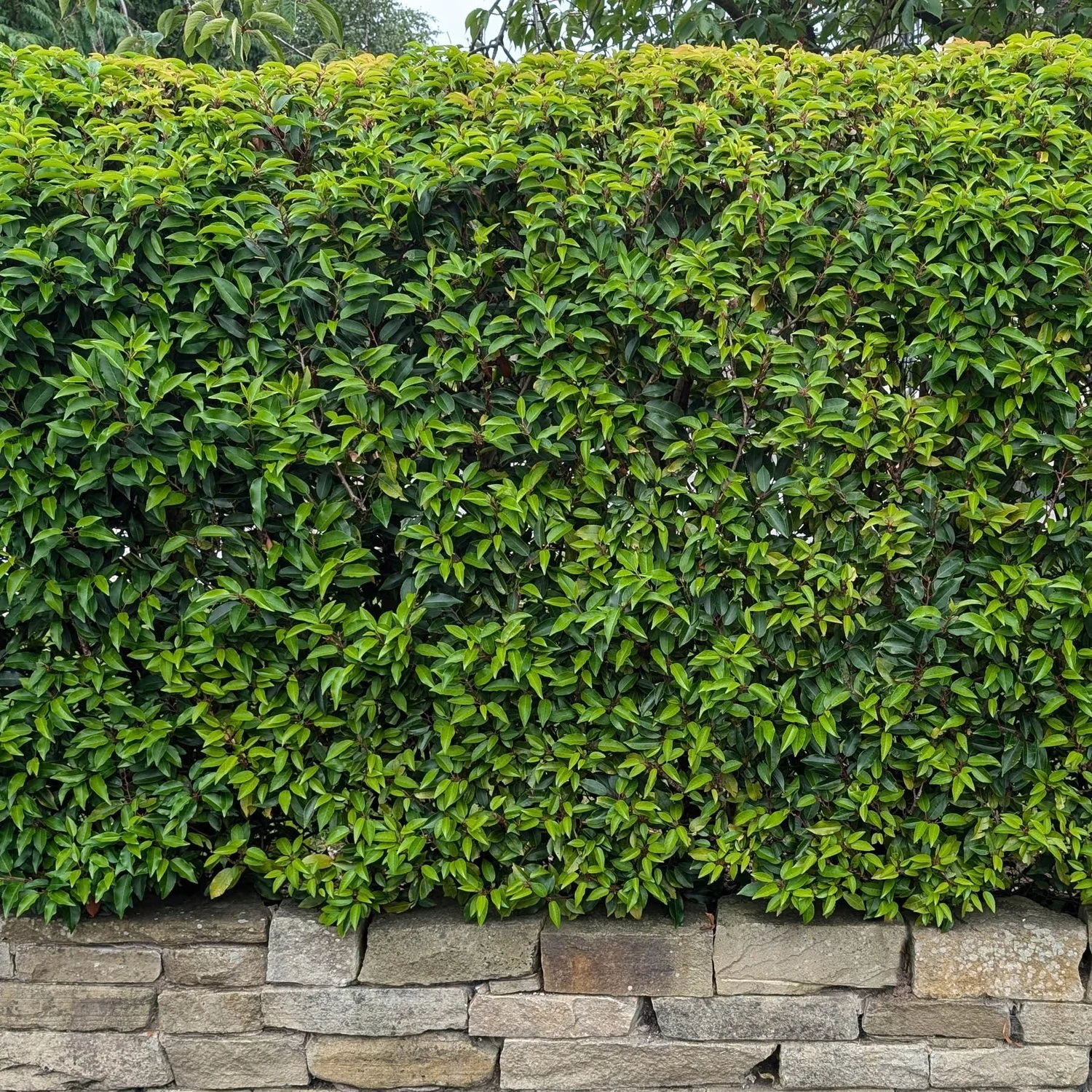
Portuguese Laurel
Elegant evergreen foliage and reddish stems for sheltered or moderately exposed gardens with suitable drainage. Plant parts are poisonous if eaten.
Mixed Native Hedging
A combination of native plants can create a natural boundary with seasonal blossom, berries and shelter for wildlife. Species selection depends on site conditions.
For more formal evergreen privacy, English Yew and Portuguese Laurel may also be considered where the ground conditions and exposure are suitable.
Four Things to Check Before Planting an Exposed Hedge
Direction of Exposure
Identify the directions from which the garden experiences troublesome winds. The position of a hedge can matter as much as its species.
Soil and Drainage
Check for compacted soil and prolonged waterlogging. Species that tolerate heavier ground may still struggle where drainage is persistently poor.
Available Planting Width
Allow for the intended mature hedge width, maintenance access and the spread of neighbouring plants.
Establishment Protection
Newly planted hedges may require appropriate staking, protection from damage, watering and weed control while establishing.
Privacy Hedge or Windbreak? Understanding the Difference
Privacy hedging and windbreak hedging can overlap, but they do not always require the same planting approach.
Privacy Hedging
The priority is usually visual screening at a particular height. Evergreen species are often preferred where winter privacy matters.
Windbreak Hedging
The priority is reducing wind speed and improving shelter. Position, height, continuity and permeability are important considerations.
For a garden requiring both privacy and shelter, the planting design should balance these functions rather than simply selecting the fastest-growing hedge.
Establishing Hedging in North West England
Successful establishment depends on appropriate ground preparation, planting depth, watering and ongoing care.
Exposed sites can increase moisture loss from foliage and place additional stress on newly planted specimens. Larger plants may require suitable support depending on their size and root system.
Newly planted hedges should be monitored during dry periods, including after the first growing season. Watering requirements depend on weather, soil and plant size.
Avoid Planting into Persistently Waterlogged Ground
Although some hedging species tolerate moisture-retentive soils, prolonged saturation can damage roots. Where drainage is poor, identify and address the cause before planting.
Bare-Root, Rootballed and Container-Grown Hedging
Bare-Root Hedging
Commonly used for native and deciduous hedges during the dormant season. Often economical for longer boundaries.
Rootballed Hedging
Suitable for larger established plants. Generally available from mid-October to late April, weather permitting.
Container-Grown Hedging
Offers greater seasonal flexibility, provided planting conditions and establishment watering are suitable.
Larger plants can provide more immediate screening, but they require careful handling and aftercare. Smaller plants may establish effectively when planted and maintained correctly.
Professional Hedge Supply and Planting in Orrell
Landscaping Emporium works alongside Kirman Design to offer professional hedge supply and planting for suitable projects in Orrell and surrounding areas.
Depending on the agreed specification, services may include plant selection, quantity calculations, delivery, ground preparation, setting out, planting, irrigation and aftercare advice.
What We Need for a Quotation
Please provide your postcode, approximate hedge length, preferred supplied plant height, photographs of the planting area and any access restrictions.
If the site is particularly exposed, please mention the direction of prevailing winds, any known drainage problems and the purpose of the proposed hedge.
Learn more about our professional hedge supply and planting service .
Orrell Hedging FAQs
Can a hedge reduce wind in my garden?
Yes. A suitably designed hedge can filter wind and improve shelter. Effectiveness depends on its height, density, position and continuity.
Is a dense evergreen hedge always the best windbreak?
Not necessarily. A moderately permeable hedge can filter wind more effectively than a completely solid barrier in some situations.
Which hedges suit exposed positions?
Hawthorn and Hornbeam may be suitable for some exposed gardens, depending on soil, drainage and the degree of wind exposure.
Can a hedge provide privacy and wind protection?
Yes, although the design should balance visual density, height and wind permeability.
Should I plant larger hedging for immediate shelter?
Larger plants may provide earlier screening, but their establishment needs careful planning and aftercare.
Do new hedges need support in windy gardens?
Some plants may require suitable support depending on supplied size, root system and site exposure.
Can I plant hedging in heavy clay soil?
Some species tolerate heavier soils, but persistent waterlogging must be considered.
When should I plant a new hedge?
Bare-root and rootballed hedging is generally planted during dormancy. Container-grown plants offer greater flexibility.
Do you offer professional hedge planting in Orrell?
We welcome enquiries for suitable projects, subject to site conditions, scope, access and availability. Request a quotation .
Hedging in Orrell and Surrounding Wigan Communities
Landscaping Emporium welcomes hedging enquiries from Orrell, Orrell Post and nearby communities across Wigan.
Explore our Wigan Hedging Guide , Shevington Hedging Guide and Greater Manchester Hedging Guide .
You can also browse hedging plants or use the Hedge Selector to compare species.
Planning a New Hedge in Orrell?
Whether you need evergreen privacy screening, a natural garden boundary or a hedge designed to filter wind, we can help you consider suitable planting options.
Telephone: 01942 604976
Email: info@kirmandesign.com
Selected by designers. Installed by professionals.