Landscaping Emporium | Specimen Trees
Best Specimen Trees for Avenue Planting
A beautifully planted avenue can transform an ordinary driveway into an impressive entrance, creating structure, symmetry and a strong sense of arrival.
Whether you are designing a formal tree-lined driveway, a country estate entrance or an avenue through a large private garden, selecting the right specimen trees is essential.
Discover six excellent trees for avenue planting, from upright Hornbeam and Ornamental Pear to magnificent Lime, Field Maple and Liquidambar.
We also explain tree spacing, mature crown widths, planting layouts, soil preparation and professional installation for successful long-term avenue planting.
Six of the Best Trees for Avenue Planting
The best avenue trees combine a predictable growth habit, attractive appearance and suitability for the available space. Some create formal, upright avenues while others are better suited to broad country driveways and parkland settings.
Formal | Upright
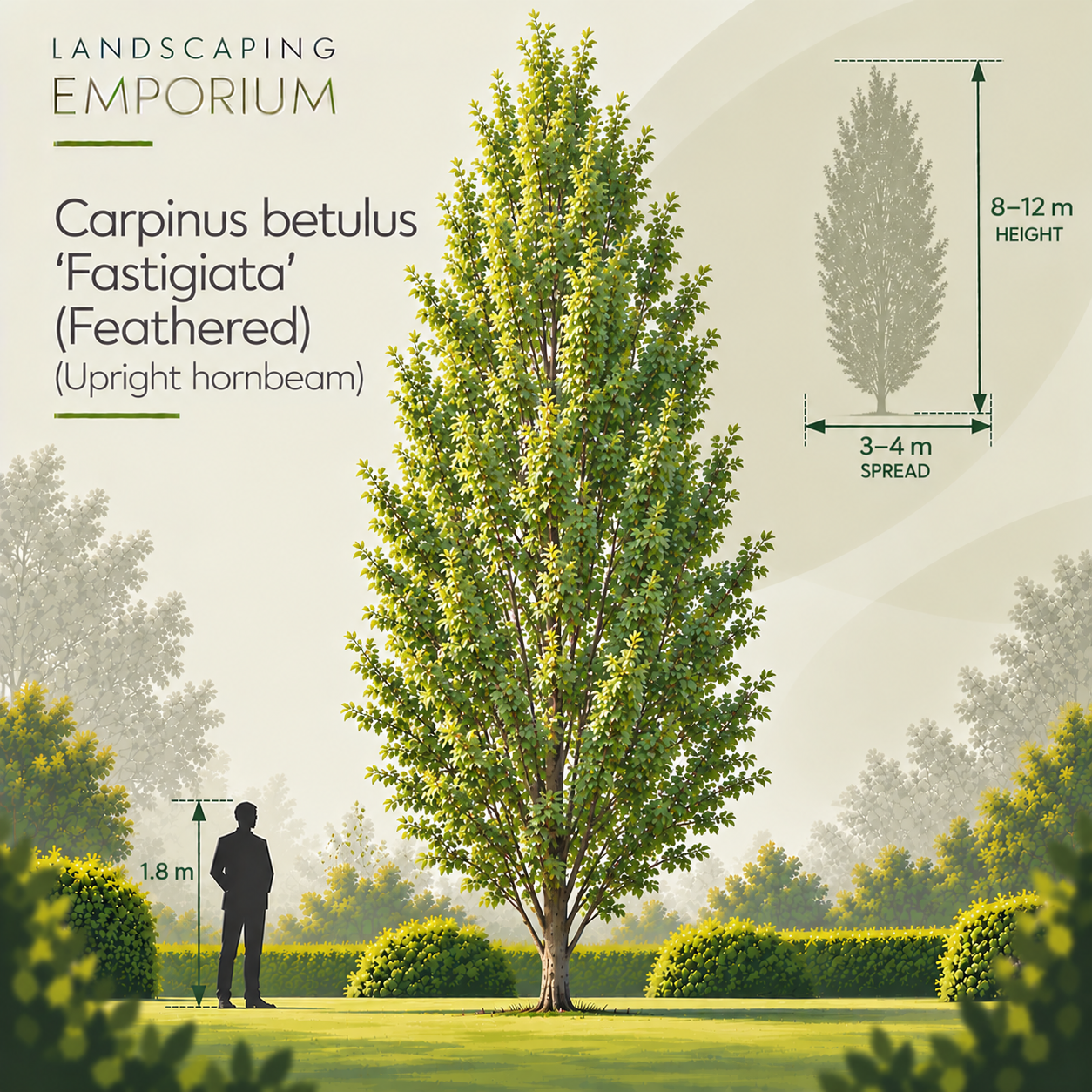
Hornbeam ‘Fastigiata’
Carpinus betulus ‘Fastigiata’
Hornbeam ‘Fastigiata’ is an excellent choice for formal avenues, with a strong upright habit when young and attractive green foliage.
It is adaptable to many soils, including clay, and develops a substantial, broadly ovoid crown with age. Allow for its eventual spread rather than relying on its youthful narrow shape.
View Hornbeam →
Blossom | Upright Crown
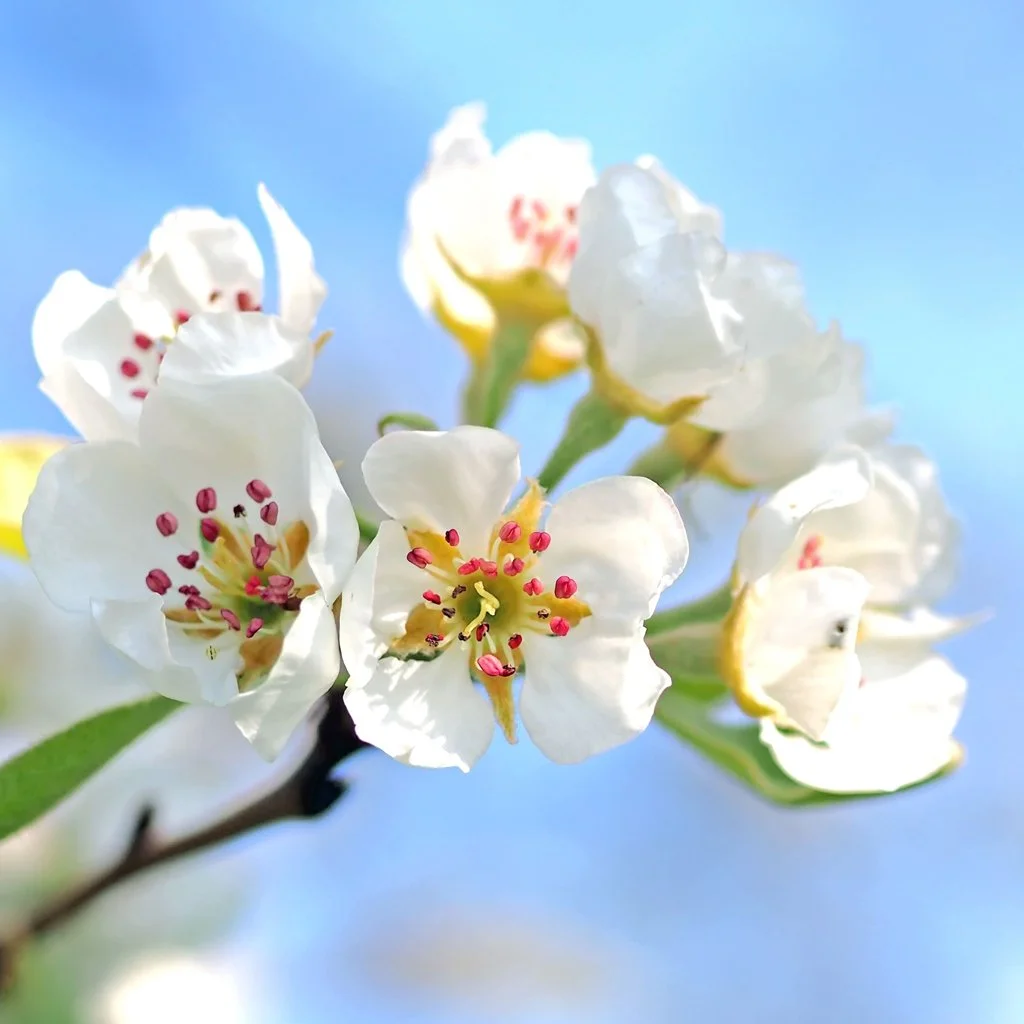
Ornamental Pear ‘Chanticleer’
Pyrus calleryana ‘Chanticleer’
This ornamental pear is a popular avenue tree because of its relatively upright growth habit, spring blossom and attractive autumn colour.
It can create a striking formal entrance where a consistent tree shape is required.
View Ornamental Pear →

Traditional | Large Avenues
Lime ‘Greenspire’
Tilia cordata ‘Greenspire’
Lime ‘Greenspire’ is a classic choice for substantial tree-lined avenues and formal landscape schemes.
Its consistent growth habit and dense summer foliage create an impressive sense of scale.
Best suited to larger sites with adequate rooting space and room for its mature canopy.
View Lime →
Native | Country Gardens
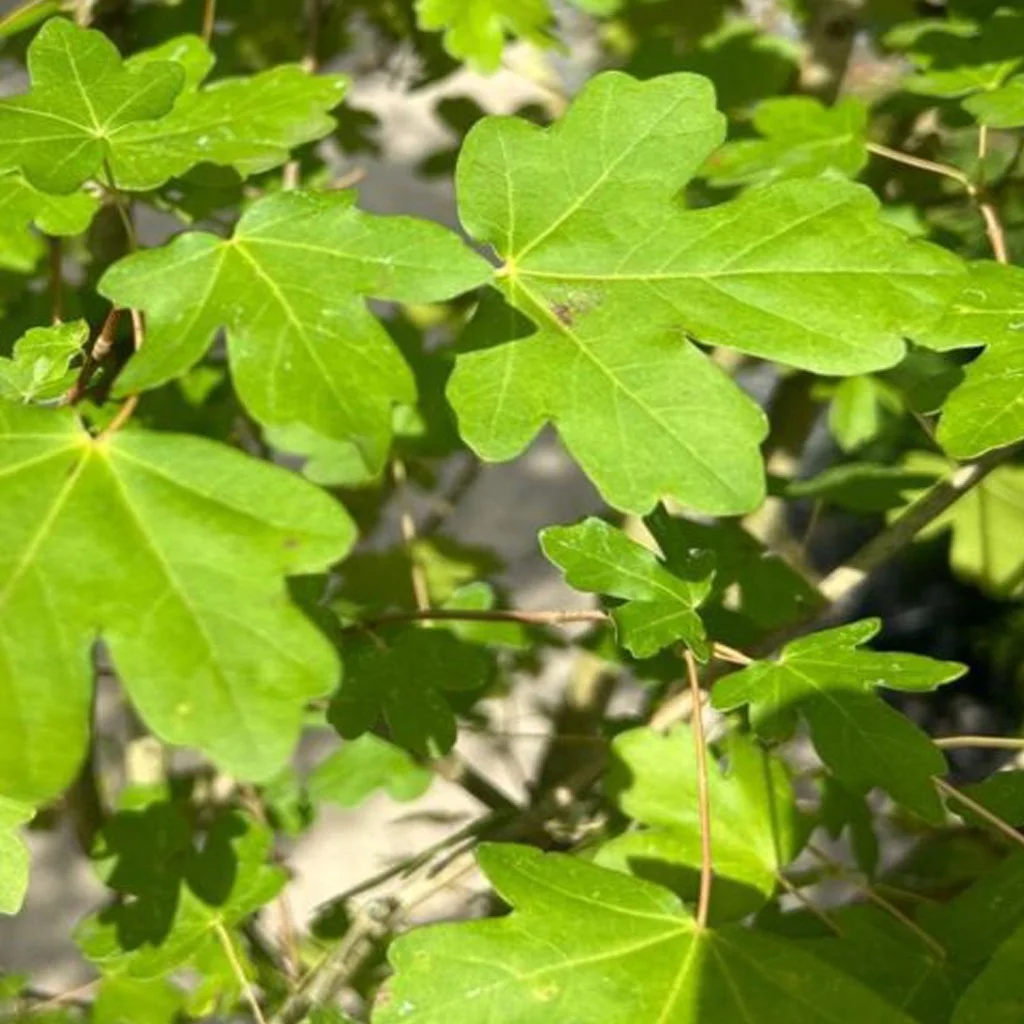
Field Maple
Acer campestre
Field Maple is a beautiful native tree for informal avenues, country driveways and rural properties.
It offers attractive lobed foliage and yellow autumn colour, with a natural branching structure.
It is particularly useful where a less formal avenue is desired.
View Field Maple →

Architectural | Strong Form
Turkish Hazel
Corylus colurna
Turkish Hazel is an attractive tree with a naturally regular, broadly pyramidal growth habit.
It is useful for avenue planting where a strong architectural form is required.
Once established, it can tolerate some relatively dry conditions.
View Turkish Hazel →
Autumn Colour | Statement Avenue
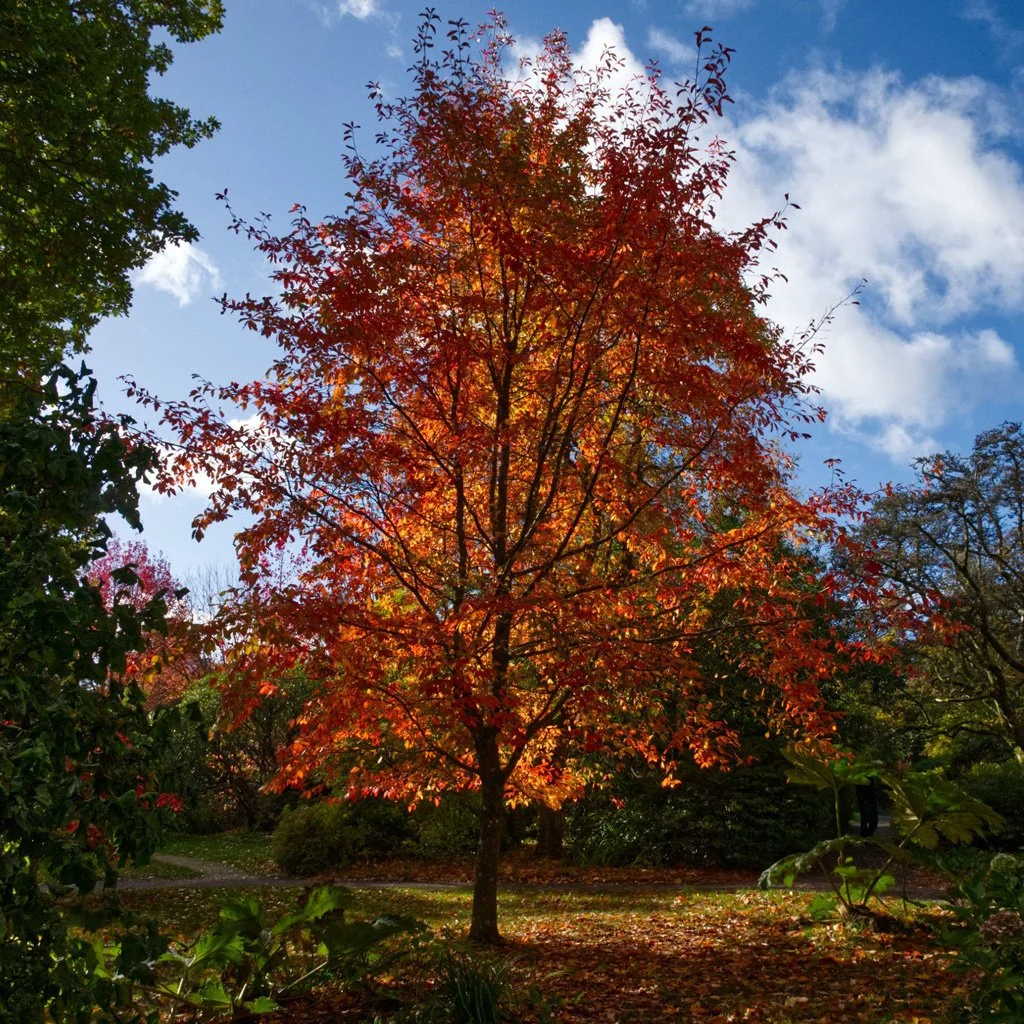
Liquidambar ‘Worplesdon’
Liquidambar styraciflua ‘Worplesdon’
Liquidambar ‘Worplesdon’ creates an impressive ornamental avenue, particularly during autumn when its foliage develops rich red, orange and purple tones.
It is best suited to sunny positions with reasonably fertile, moisture-retentive but well-drained soil.
View Liquidambar →
Planning an Avenue: Allow for Mature Tree Size
Avenue planting is a long-term landscape investment. Trees that look relatively small when first planted may develop substantial crowns over the following decades.
The spacing between trees, distance from the driveway and available rooting area should therefore be based on their expected mature dimensions rather than their size at delivery.
Important: An upright tree is not necessarily a narrow tree throughout its life. Hornbeam ‘Fastigiata’, for example, becomes much broader as it matures.
Compare the Best Trees for Avenue Planting
| Tree | Growth Habit | Best Use | Main Feature | Space Required |
|---|
| Hornbeam ‘Fastigiata’ | Upright, broadening with age | Formal driveways | Dense foliage and structure | Medium to large |
| Ornamental Pear ‘Chanticleer’ | Relatively narrow and upright | Formal entrances | Spring blossom | Medium |
| Lime ‘Greenspire’ | Regular, substantial crown | Large avenues | Traditional appearance | Large |
| Field Maple | Rounded, natural crown | Country driveways | Native character | Medium to large |
| Turkish Hazel | Regular pyramidal form | Architectural avenues | Consistent shape | Medium to large |
| Liquidambar ‘Worplesdon’ | Broadly pyramidal | Ornamental avenues | Autumn colour | Medium to large |
What Is Avenue Planting?
Avenue planting involves positioning trees in a deliberate linear arrangement, usually along a driveway, road, path or landscape axis.
Trees may be planted in a single row or in two parallel rows to create a formal entrance.
Single-Row Avenue
Trees are planted along one side of a driveway or path, providing rhythm and structure without requiring a symmetrical layout.
Double-Row Avenue
Matching trees are planted on both sides of a driveway to create a formal, balanced entrance.
Formal Avenue
Uses consistent species, spacing and tree form to create a strong architectural effect.
Informal Avenue
Uses naturalistic tree forms and more relaxed spacing to suit rural and country landscapes.
Best Trees for Long Driveways
Long driveways offer opportunities to create a dramatic approach to a property.
For formal driveways, Hornbeam ‘Fastigiata’ and Lime ‘Greenspire’ can create a strong repeating rhythm.
For more naturalistic country entrances, Field Maple can be an excellent choice.
Where autumn colour is a priority, Liquidambar ‘Worplesdon’ can create a particularly memorable entrance.
Best Trees for Narrow Driveways
A narrow driveway requires careful consideration of mature crown spread and vehicle clearance.
Ornamental Pear ‘Chanticleer’ may be suitable where an upright tree is preferred, provided sufficient rooting space is available.
Hornbeam ‘Fastigiata’ can also provide an attractive formal effect, but its mature crown becomes significantly broader with age.
Do not select avenue trees solely on their appearance when young.
Best Trees for Country Estate Entrances
Large country properties provide opportunities for substantial avenue planting.
Lime ‘Greenspire’ can create a traditional formal avenue with a strong sense of scale.
Turkish Hazel offers a more architectural pyramidal shape, while Field Maple can suit rural and naturalistic settings.
English Oak may also be appropriate for very large parkland avenues where sufficient space is available.
How Far Apart Should Avenue Trees Be Planted?
There is no single spacing that suits every avenue.
The correct distance depends on the species, expected mature crown spread, desired appearance, available land and whether the crowns are intended to remain separate or eventually meet.
As an initial design exercise, avenue trees may be considered at centres of approximately 5–12 metres or more, depending on the species and intended mature effect.
These figures are illustrative, not planting specifications. Some narrow cultivars may be planted more closely, while broad parkland trees can require considerably greater spacing.
The final layout should be developed from the selected tree's expected mature dimensions and the specific site.
How Far Should Avenue Trees Be Planted from a Driveway?
Trees should be positioned to allow adequate space for roots, future trunk growth and mature crowns.
Consider the type of driveway, vehicle width, turning areas and any underground services.
Where large vehicles or delivery lorries will use the driveway, additional crown clearance may be required.
Tree roots can also interact with paving and hard surfaces, particularly where soil volume is restricted.
Professional layout planning is recommended for larger avenue planting projects.
Formal Avenue Planting vs Naturalistic Avenue Planting
Formal Avenue Planting
Formal avenues use consistent species, spacing, tree size and alignment.
Hornbeam ‘Fastigiata’, Ornamental Pear ‘Chanticleer’ and Lime ‘Greenspire’ can all suit formal schemes.
Naturalistic Avenue Planting
Naturalistic avenues may use broader crowns and a less rigid appearance.
Field Maple, English Oak and other native species can create an attractive rural character.
Evergreen or Deciduous Trees for an Avenue?
Deciduous trees are commonly used for traditional avenue planting because they provide seasonal interest and allow more winter light through their branches.
Evergreen trees can create strong year-round structure but may also produce more substantial shade and visual enclosure.
For large properties, Holm Oak may be worth considering where a broad evergreen avenue is desired and space permits.
Browse Evergreen Specimen Trees for additional options.
Best Avenue Trees for Clay Soil
Many properties in Lancashire, Greater Manchester and Cheshire have heavy clay soils.
Hornbeam and Field Maple are useful candidates for many clay-soil sites.
However, soil compaction and persistent waterlogging must be assessed before planting.
Read our Trees for Clay Soil guide for more information.
Best Avenue Trees for Exposed Sites
Open driveways and rural properties may experience strong winds.
Wind exposure affects tree establishment, water requirements and the stability of larger specimens.
Field Maple and Hornbeam can be suitable for many exposed sites, depending on soil conditions.
Explore Trees for Exposed Gardens for further guidance.
Using Mature Trees for Immediate Avenue Impact
Planting larger specimen trees can create a more established appearance from the outset.
For formal avenues, matching tree sizes and crown forms help create a consistent visual effect.
However, larger trees require careful handling, appropriate lifting equipment and reliable establishment watering.
The cost of a mature avenue also depends on tree size, quantity, access and ground preparation.
Read our Mature Trees vs Younger Trees guide before choosing stock sizes.
How to Plan a Successful Tree-Lined Driveway
- Measure the driveway. Record its length, width, bends and turning areas.
- Choose the desired style. Decide whether you want a formal avenue or a more naturalistic appearance.
- Select the species. Consider soil, drainage, exposure and mature crown dimensions.
- Plan tree spacing. Use mature tree dimensions rather than current nursery sizes.
- Check underground services. Locate drainage, utilities and other buried infrastructure.
- Assess vehicle clearance. Allow for cars, vans, delivery vehicles and maintenance access.
- Prepare the soil. Provide sufficient rooting space and address compaction.
- Choose suitable tree sizes. Consider visual impact, installation cost and establishment requirements.
- Install appropriate support. Use staking or anchoring systems suited to the tree and site.
- Provide aftercare. Monitor watering, stability, mulching and tree condition throughout establishment.
Professional Avenue Tree Supply and Planting in North West England
Landscaping Emporium supplies selected specimen trees for avenue planting, private driveways, country estates and large garden projects.
Through Kirman Design, professional planting may be available across selected parts of Lancashire, the Ribble Valley, Greater Manchester, Cheshire, Merseyside and Cumbria.
Our usual installation postcode areas include:
BB, BL, CH1–CH5, CW8, CW9, FY, L, LA1–LA6, M, OL, PR, SK1–SK12, WA and WN.
For larger avenue projects, we can discuss tree selection, quantities, delivery access and professional installation requirements.
Telephone: 01942 604976
Email: hello@landscapingemporium.co.uk
Frequently Asked Questions
What are the best trees for avenue planting?
Hornbeam ‘Fastigiata’, Ornamental Pear ‘Chanticleer’, Lime ‘Greenspire’, Field Maple, Turkish Hazel and Liquidambar ‘Worplesdon’ are attractive options for different avenue planting schemes.
What is the best tree for a long driveway?
The best tree depends on the driveway width, soil, exposure and desired appearance. Lime and Hornbeam are useful formal choices, while Field Maple can suit rural settings.
Which trees are suitable for a narrow driveway?
Ornamental Pear ‘Chanticleer’ may be suitable where a relatively upright crown is required, provided sufficient space is available.
How far apart should avenue trees be planted?
Spacing depends on the species, mature crown width and desired effect. A site-specific layout is recommended.
How far from a driveway should trees be planted?
Allow for mature trunks, roots, crowns, vehicle clearance and underground services. There is no single distance suitable for every tree and driveway.
Can I plant mature trees to create an instant avenue?
Yes. Larger specimen trees can create a more immediate effect, although installation and aftercare requirements are greater.
What is the best tree for a formal avenue?
Hornbeam ‘Fastigiata’ and Lime ‘Greenspire’ are useful options for formal avenues with adequate space.
Are native trees suitable for avenue planting?
Yes. Field Maple, Hornbeam and English Oak can be excellent choices for appropriate sites.
Can avenue trees be planted in clay soil?
Yes. Some species tolerate clay well, but drainage and compaction must be considered.
What trees create the best autumn colour in an avenue?
Liquidambar ‘Worplesdon’ is particularly attractive for autumn colour, while Field Maple and Ornamental Pear also provide seasonal interest.
Should avenue trees all be the same size?
For formal avenues, matching tree sizes and crown forms generally create the most consistent appearance.
Can Landscaping Emporium supply and plant avenue trees?
We supply selected specimen trees and may arrange professional planting through Kirman Design in eligible North West England areas.
Create an Impressive Tree-Lined Entrance
Whether you are planning a formal driveway avenue, a country estate entrance or a new landscape scheme, choosing the correct specimen trees will shape the character of the property for decades.
Explore our tree collection or contact Landscaping Emporium to discuss species, available sizes, quantities, delivery and professional planting.
