Landscaping Emporium | Specimen Trees
Best Specimen Trees for Dry Soil
Dry soil can make establishing specimen trees difficult, particularly in sunny gardens, free-draining sandy ground and areas where established trees or buildings compete for available moisture.
Choosing a tree that tolerates dry conditions once established can reduce long-term maintenance and help create a resilient, attractive garden.
Discover six specimen trees to consider for dry soil, including native deciduous species, evergreen trees and ornamental options for larger gardens.
We also explain the difference between dry sandy soil and dry clay soil, how to prepare the ground and why even drought-tolerant trees need watering during establishment.
Six of the Best Trees for Dry Soil
These trees offer different combinations of drought tolerance, ornamental interest and mature size. Suitability depends on soil depth, drainage, exposure and the amount of water available during establishment.
Native | Adaptable
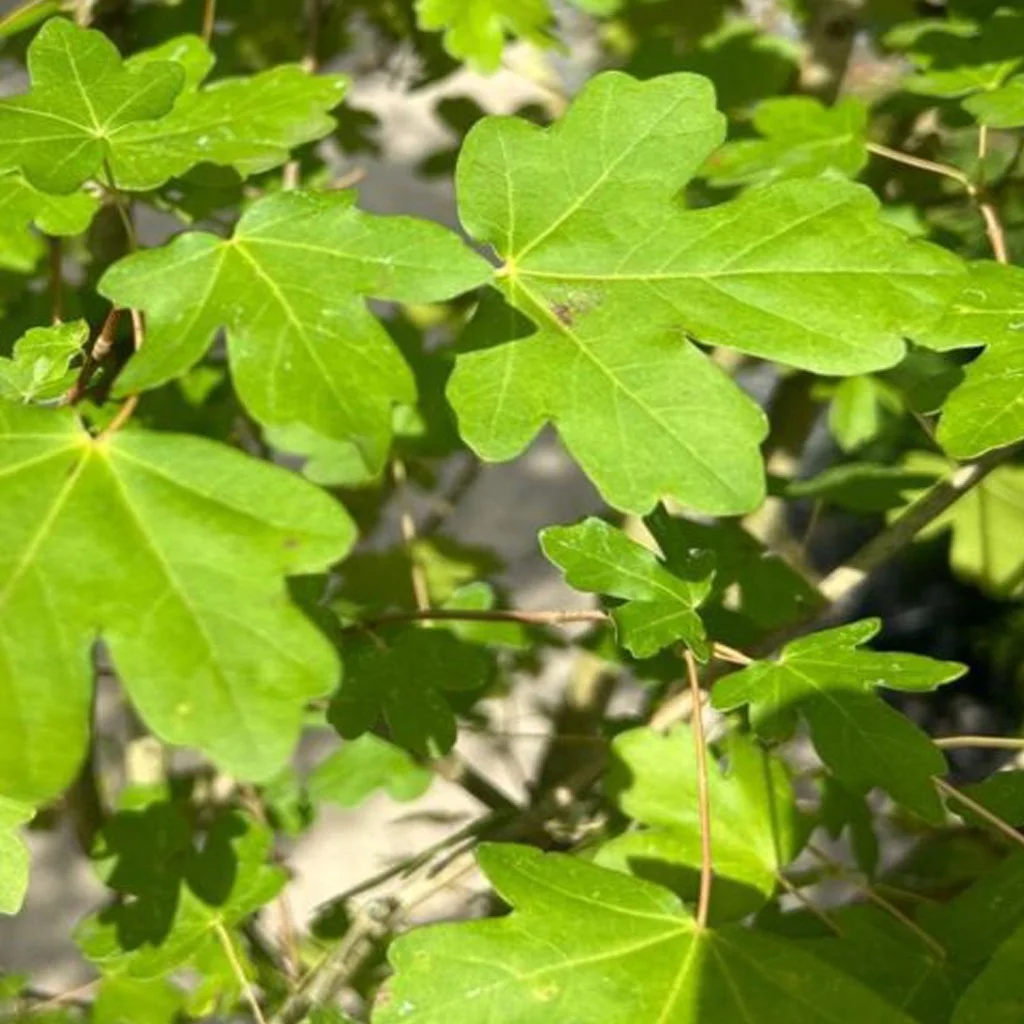
Field Maple
Acer campestre
Field Maple is a hardy native deciduous tree that can tolerate periods of dry weather once established, particularly where the soil provides sufficient rooting depth.
Its attractive lobed foliage develops yellow autumn colour, making it useful for naturalistic gardens and larger planting schemes.
View Field Maple →
Deciduous | Sandy Soil
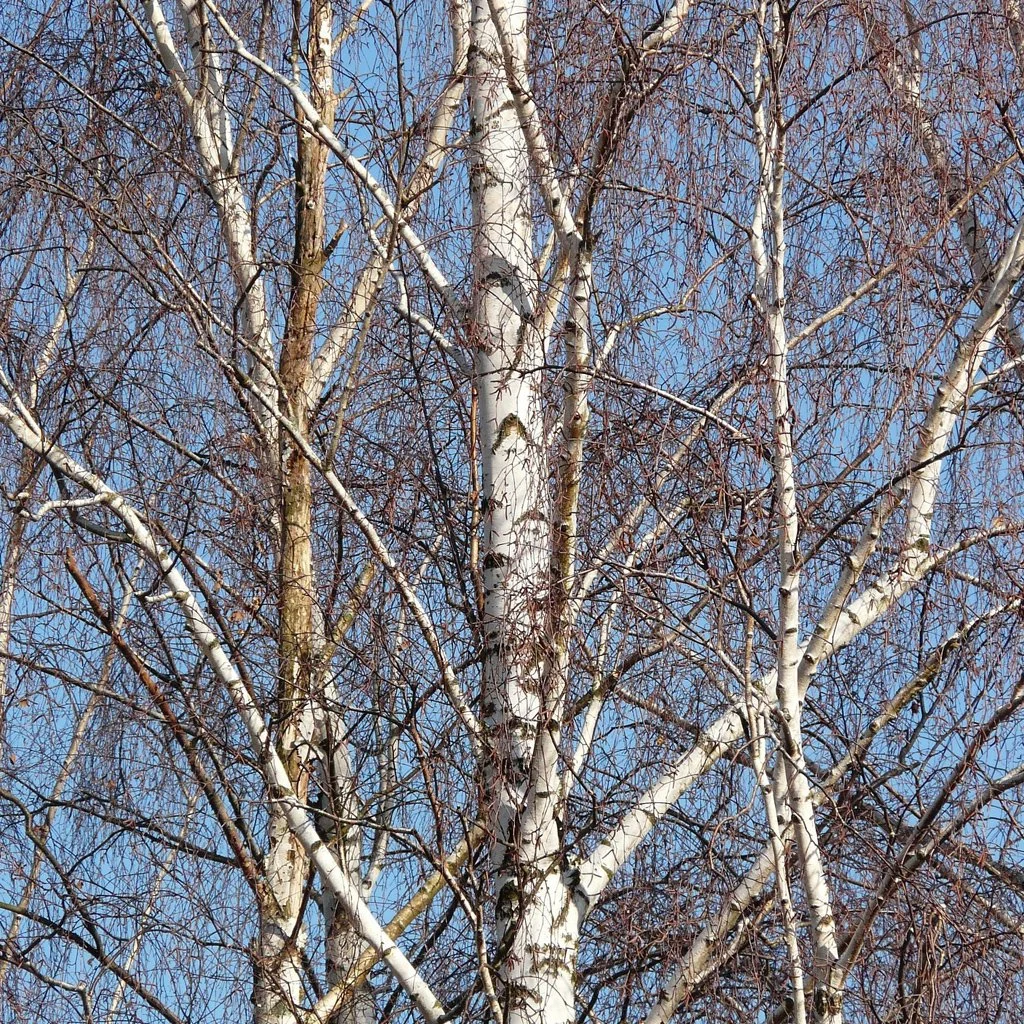
Silver Birch
Betula pendula
Silver Birch is naturally associated with many free-draining, sandy and relatively poor soils.
Its white bark, fine branches and light canopy provide year-round ornamental value. It can tolerate some dry conditions once established, but prolonged severe drought can cause stress and premature leaf loss.
View Silver Birch →
Evergreen | Dry Free-Draining Soil
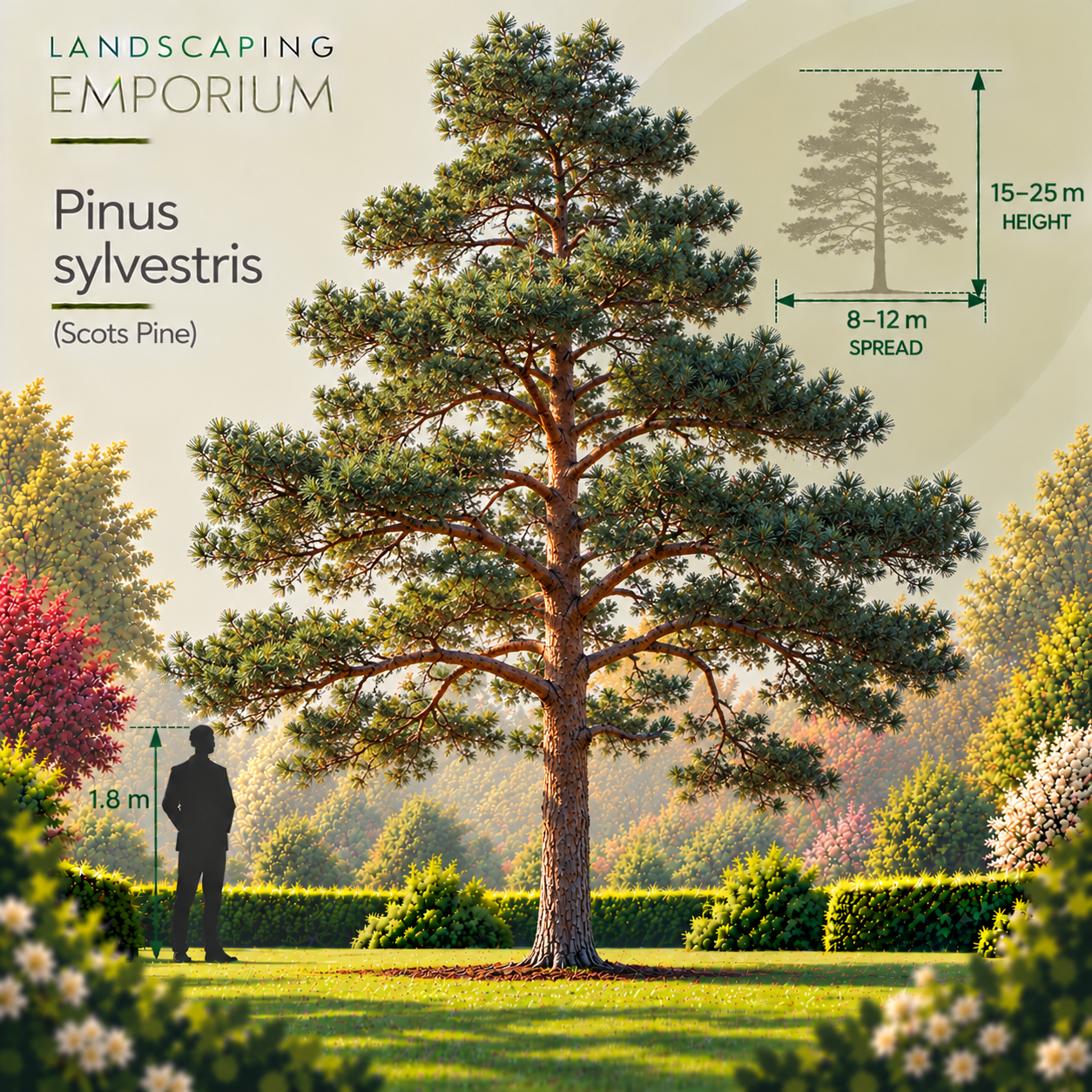
Scots Pine
Pinus sylvestris
Scots Pine is an attractive native evergreen that can perform well on dry, free-draining soils.
Its distinctive orange-toned bark and architectural crown make it particularly appealing for larger gardens and naturalistic landscapes.
Avoid planting in persistently waterlogged ground.
View Scots Pine →
Evergreen | Drought Tolerant
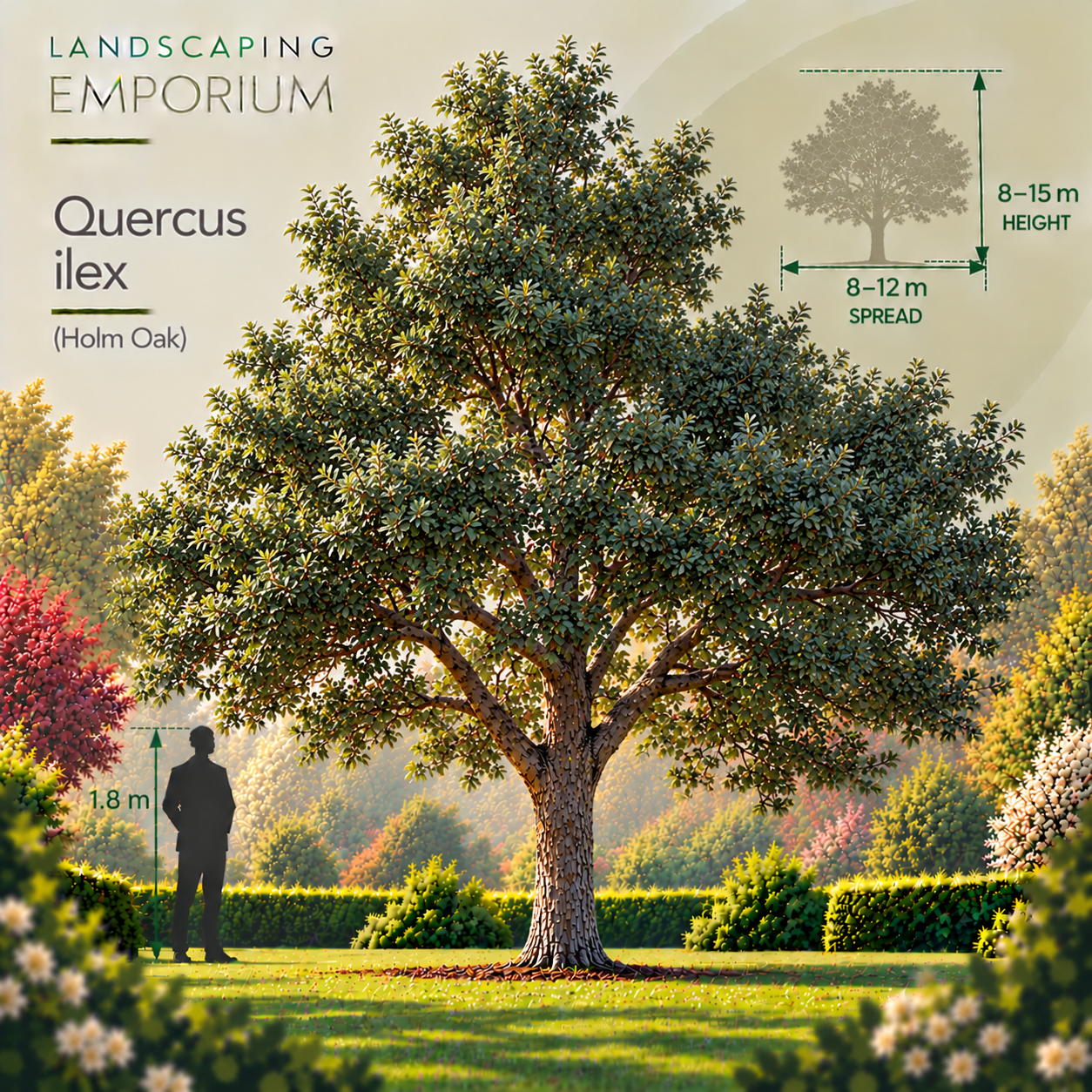
Holm Oak
Quercus ilex
Holm Oak is one of the stronger evergreen choices for gardens with dry, well-drained soil.
Its leathery foliage helps it cope with dry conditions once established. It can also tolerate wind and coastal exposure, making it versatile in suitable larger gardens.
View Holm Oak →
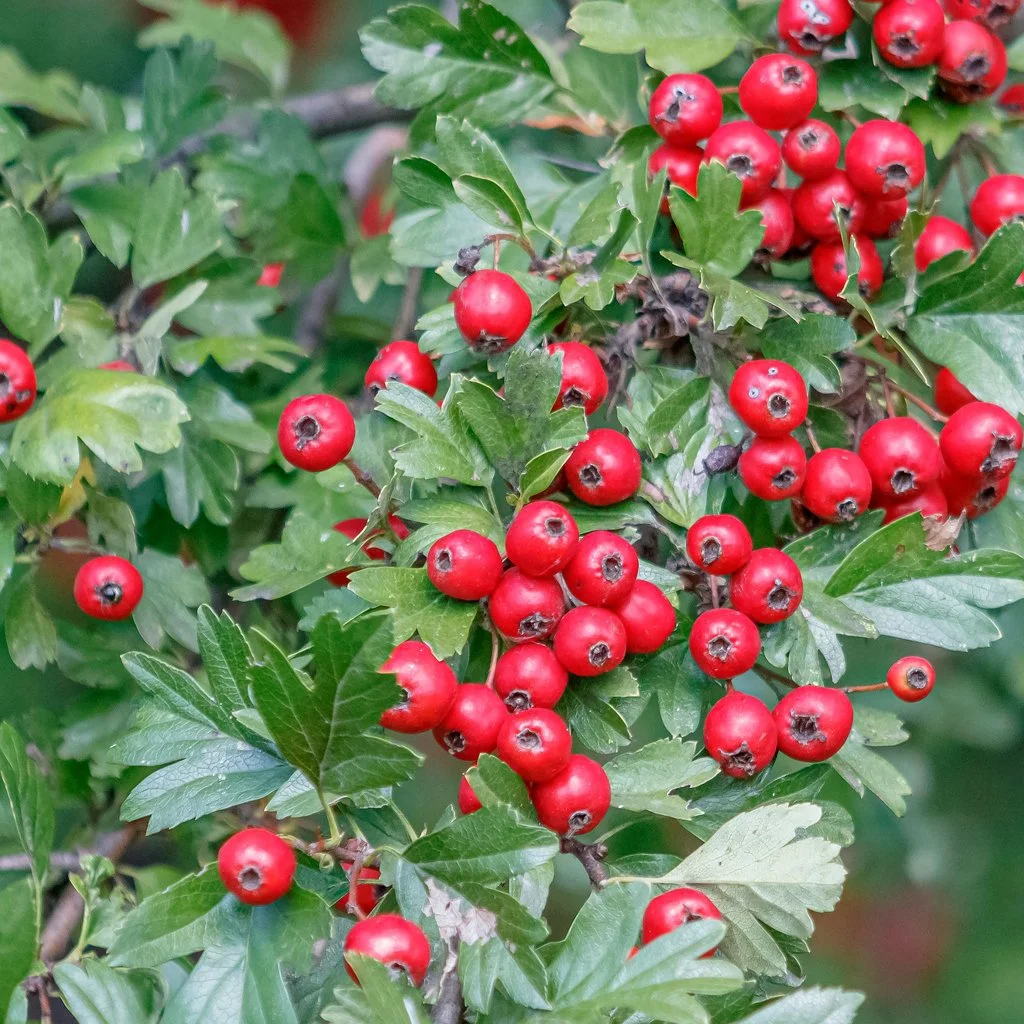
Native | Blossom & Wildlife
Hawthorn
Crataegus monogyna
Hawthorn is a resilient native species suitable for many relatively dry, well-drained garden soils.
Its spring blossom, autumn berries and dense branching make it especially useful for wildlife-friendly gardens and more naturalistic planting schemes.
View Hawthorn →

Deciduous | Urban & Dry Sites
Turkish Hazel
Corylus colurna
Turkish Hazel is an attractive deciduous tree with a naturally regular, broadly conical crown.
Once established, it can tolerate periods of dry weather and challenging urban conditions. It is particularly useful where a strong architectural tree is required and there is adequate space for maturity.
View Turkish Hazel →
Drought Tolerant Does Not Mean No Watering
A tree described as drought tolerant has the potential to withstand periods of limited moisture once its roots have established.
Newly planted trees have a restricted root system and cannot immediately access water from a large area of surrounding soil.
Important: All six trees featured here need appropriate watering during establishment. Larger rootballed specimens may require particular attention because their initial root systems are limited relative to their crowns.
Drought tolerance is also affected by soil depth, temperature, exposure, root competition and the duration of dry weather.
Compare the Best Trees for Dry Soil
Use this table as an initial guide to the different characteristics of the six featured species.
| Tree | Foliage | Suitable Dry Conditions | Key Benefit | Space Required |
|---|
| Field Maple | Deciduous | Many dry, established garden soils | Native character and autumn colour | Medium to large |
| Silver Birch | Deciduous | Free-draining sandy soils | White bark and light canopy | Medium to large |
| Scots Pine | Evergreen | Dry, well-drained soils | Year-round architectural structure | Large |
| Holm Oak | Evergreen | Dry, well-drained ground | Evergreen foliage and resilience | Large |
| Hawthorn | Deciduous | Many relatively dry, well-drained soils | Blossom, berries and wildlife | Small to medium |
| Turkish Hazel | Deciduous | Dry soils with adequate rooting depth | Architectural crown and urban tolerance | Medium to large |
Why Does Garden Soil Become Dry?
Dry soil can occur for several reasons. Identifying the cause helps determine which specimen trees are likely to establish successfully.
Free-Draining Sandy Soil
Sandy soils often allow water to drain quickly, leaving less moisture available to tree roots during prolonged dry weather.
Heavy Clay Soil in Summer
Clay soil can retain considerable moisture but may become hard, dry and cracked during extended summer drought.
Root Competition
Established trees, hedges and vigorous shrubs can compete with newly planted specimens for available soil moisture.
Buildings and Rain Shadows
Walls, roof overhangs and other structures can prevent rainfall from reaching the ground, creating persistent dry areas.
Best Evergreen Trees for Dry Soil
Evergreen specimen trees provide year-round structure, privacy and foliage. However, they continue to lose moisture through their leaves or needles during winter.
Holm Oak
Holm Oak is a strong evergreen candidate for dry, well-drained gardens. Its leathery foliage is adapted to relatively dry conditions.
It can eventually become a substantial tree, so allow adequate space for its mature canopy.
Scots Pine
Scots Pine is useful on suitable free-draining soils and brings distinctive year-round character.
It is especially effective in larger naturalistic gardens and rural landscapes.
Explore our Evergreen Specimen Trees for more options.
Best Deciduous Trees for Dry Gardens
Deciduous trees offer seasonal interest and can be useful where winter sunlight is important.
Field Maple
An adaptable native tree with attractive autumn colour, suitable for many established gardens where summer dryness is a consideration.
Hawthorn
A relatively compact native choice with spring blossom and autumn berries.
Turkish Hazel
A distinctive architectural tree that can tolerate dry conditions once established, provided there is adequate rooting space.
Silver Birch
Particularly associated with sandy and free-draining soils. However, it is not ideal for every drought-prone location, especially where water availability is extremely limited.
Best Trees for Dry Sandy Soil
Sandy soils are often easy to work but can lose moisture rapidly. They may also contain relatively little organic matter.
Scots Pine and Silver Birch are worth considering for suitable sandy sites. Holm Oak may also be appropriate where drainage and exposure are suitable.
The main challenge is frequently the establishment period.
- Check soil depth before planting.
- Improve wider soil structure where appropriate.
- Maintain a suitable mulch layer.
- Monitor soil moisture beneath the surface.
- Water deeply and appropriately during dry periods.
- Avoid allowing a new rootball to dry out completely.
Do not assume that a tree adapted to sandy ground can survive immediately without irrigation.
Best Trees for Dry Clay Soil
Clay soils can present a different challenge. They may be wet and poorly drained during winter, then become hard and dry in summer.
Field Maple and Hawthorn can be useful options depending on the site conditions.
However, selecting a tree purely for drought tolerance is not sufficient if the same ground becomes waterlogged during winter.
For sites with heavy soil, read our Trees for Clay Soil guide.
If the soil remains saturated for extended periods, our Trees for Poorly Drained Soil page may be more relevant.
Trees for Dry, Sunny Gardens
Full sun increases evaporation from the soil and can place additional demands on newly planted trees.
Holm Oak, Scots Pine and Turkish Hazel may be appropriate for sunny positions where the soil conditions suit their requirements.
When choosing a tree for a hot, sunny garden, consider the combination of temperature, soil moisture, wind and available rooting space.
For more guidance, visit our Trees for Full Sun page.
Trees for Dry Shade
Dry shade can be particularly challenging because a tree may receive limited sunlight while competing with established vegetation for water.
A species that tolerates dry soil in full sun will not necessarily perform well beneath the canopy of another large tree.
Where dry shade occurs, assess:
- How much direct or filtered sunlight reaches the site.
- Whether existing roots occupy the planting area.
- How much rainfall reaches the ground.
- Whether supplementary watering is practical.
- How much space is available for future growth.
Our Trees for Partial Shade guide explores additional considerations.
Best Trees for Small Gardens With Dry Soil
In smaller gardens, mature size is just as important as drought tolerance.
Hawthorn may be a useful smaller choice, particularly where a naturalistic appearance and wildlife value are priorities.
Field Maple, Turkish Hazel and Silver Birch can become too large for restricted plots unless sufficient space is available.
Holm Oak and Scots Pine generally require more room as they mature.
Explore our Trees for Small Gardens guide for further size considerations.
Using Trees to Create Shade in Dry Gardens
A well-positioned specimen tree can create shade over seating areas, lawns and planting beds.
Over time, this may help reduce the amount of direct sunlight reaching the soil.
However, trees also compete for water.
The best design balances the benefits of canopy shade against root competition and the space required by the mature tree.
For patios and seating areas, consider the eventual crown spread, leaf fall and proximity to buildings.
Planting Mature Specimen Trees in Dry Soil
Larger specimen trees create immediate impact but can be more demanding to establish.
Rootballed trees arrive with a defined volume of soil and roots. Until new roots extend into the surrounding ground, the tree depends heavily on the moisture available within and around that rootball.
Before ordering a large tree, consider:
- Availability of reliable irrigation.
- Soil depth and drainage.
- Compaction around the planting position.
- Access for delivery and lifting.
- Suitable staking or anchoring.
- Mulching and weed control.
- Ongoing establishment inspections.
A smaller nursery tree may sometimes establish more readily than a much larger specimen in a particularly difficult site.
How to Establish Trees in Dry Soil
- Choose the right species. Match the tree to soil texture, drainage, exposure and mature size.
- Assess the soil. Check whether the ground is sandy, clayey, compacted or affected by root competition.
- Prepare the planting area. Provide adequate rooting space and address severe compaction where practical.
- Plant at the correct depth. Keep the root flare at the appropriate finished soil level.
- Water thoroughly after planting. Ensure the rootball and surrounding soil are adequately moistened.
- Apply mulch. Use suitable organic mulch to reduce evaporation and weed competition, keeping it away from the trunk.
- Monitor soil moisture. Check below the surface rather than relying on appearance alone.
- Adjust watering to conditions. Water according to weather, soil type and tree requirements, avoiding both drought stress and waterlogging.
- Maintain support systems. Inspect stakes, ties or anchors and adjust them as necessary.
- Continue aftercare. Do not assume that one growing season is enough for a large specimen to be fully established.
Professional Specimen Tree Planting in North West England
Landscaping Emporium supplies selected specimen trees for dry gardens, new landscaping projects and established properties.
Through Kirman Design, professional planting may be available in selected parts of Lancashire, the Ribble Valley, Greater Manchester, Cheshire, Merseyside and Cumbria.
Our usual installation postcode areas include:
BB, BL, CH1–CH5, CW8, CW9, FY, L, LA1–LA6, M, OL, PR, SK1–SK12, WA and WN.
Availability depends on the project, tree size, access and site conditions.
Telephone: 01942 604976
Email: hello@landscapingemporium.co.uk
Frequently Asked Questions
What is the best tree for dry soil?
Holm Oak, Scots Pine, Field Maple, Hawthorn and Turkish Hazel are among the species worth considering. The best choice depends on soil conditions and available space.
Which trees tolerate drought?
Some trees can tolerate extended dry periods once established. Holm Oak and Scots Pine are useful examples for suitable sites. Newly planted specimens still require watering.
What evergreen trees grow in dry soil?
Holm Oak and Scots Pine can perform well in dry, well-drained ground where their mature size can be accommodated.
Which trees grow in dry sandy soil?
Scots Pine and Silver Birch are associated with many free-draining sandy soils. Establishment watering remains essential.
Can trees grow in dry clay soil?
Yes, but the soil may also become wet in winter. Choose species that tolerate the full range of site conditions.
What is a good small tree for dry soil?
Hawthorn may be a useful smaller native choice where the site is suitable.
Can Silver Birch tolerate drought?
Silver Birch can grow in relatively dry, sandy soils, but severe prolonged drought may cause stress. It should not be treated as suitable for every extremely dry site.
Do drought-tolerant trees need watering?
Yes. Drought tolerance generally improves as the root system establishes. Newly planted trees require appropriate watering.
Can I plant mature trees in dry soil?
Yes, provided the species is suitable and there is a reliable establishment and irrigation plan.
Should I add compost to dry soil?
Organic matter can improve some soils, but planting-hole amendments should be considered carefully. Improving the wider rooting area is often more useful than creating an isolated pocket of different soil.
Will mulch help trees in dry soil?
Suitable mulch can reduce evaporation, moderate soil temperatures and suppress weeds. Keep mulch clear of the trunk.
Can Landscaping Emporium supply and plant trees for dry gardens?
We supply selected specimen trees and may arrange professional planting through Kirman Design in eligible North West England areas.
Find the Right Specimen Tree for Your Dry Garden
Whether you are planting into sandy soil, a sunny garden or an established landscape where summer moisture is limited, choosing the correct tree is essential.
Browse our specimen-tree collection or contact Landscaping Emporium to discuss species, available sizes, delivery and professional planting.
