Landscaping Emporium | Specimen Trees
Best Fast-Growing Trees for Screening
Fast-growing screening trees can transform
an exposed garden, soften unwanted views
and introduce valuable privacy.
From dense evergreen conifers to elegant
pleached trees and tall deciduous specimens,
the right tree can provide screening at
the height where it is needed.
However, growth speed is only part of
the decision. A tree that grows quickly
may also become very large, while a
slower-growing mature specimen can
provide greater privacy from the
day it is planted.
Explore six screening trees selected
for different garden situations,
including large rural properties,
overlooked patios, tall boundaries
and ornamental landscapes.
Six Trees for Fast and Effective Garden Screening
Our selection includes three evergreen
species and three deciduous options,
each offering different screening
characteristics. Some are genuinely
fast growing, while others are included
because larger nursery-grown specimens
can deliver useful privacy immediately.
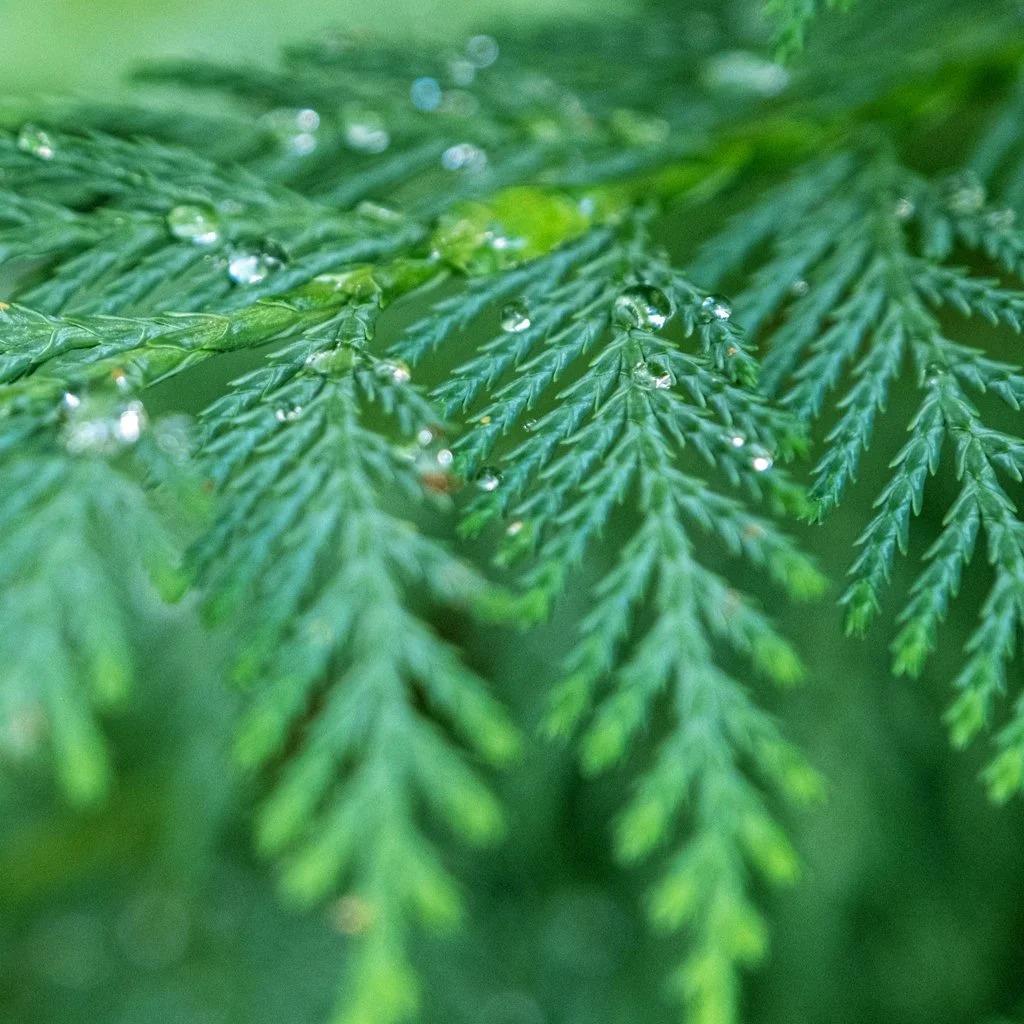
Very Fast | Evergreen
Leyland Cypress
Cupressus × leylandii
One of the fastest-growing evergreen
screening trees commonly planted in
the UK, with dense foliage and a
strong upright form.
Best for substantial gardens and
larger properties where its eventual
height and width can be accommodated.
Regular management is essential
where growth must be restricted.
View Leyland Cypress →
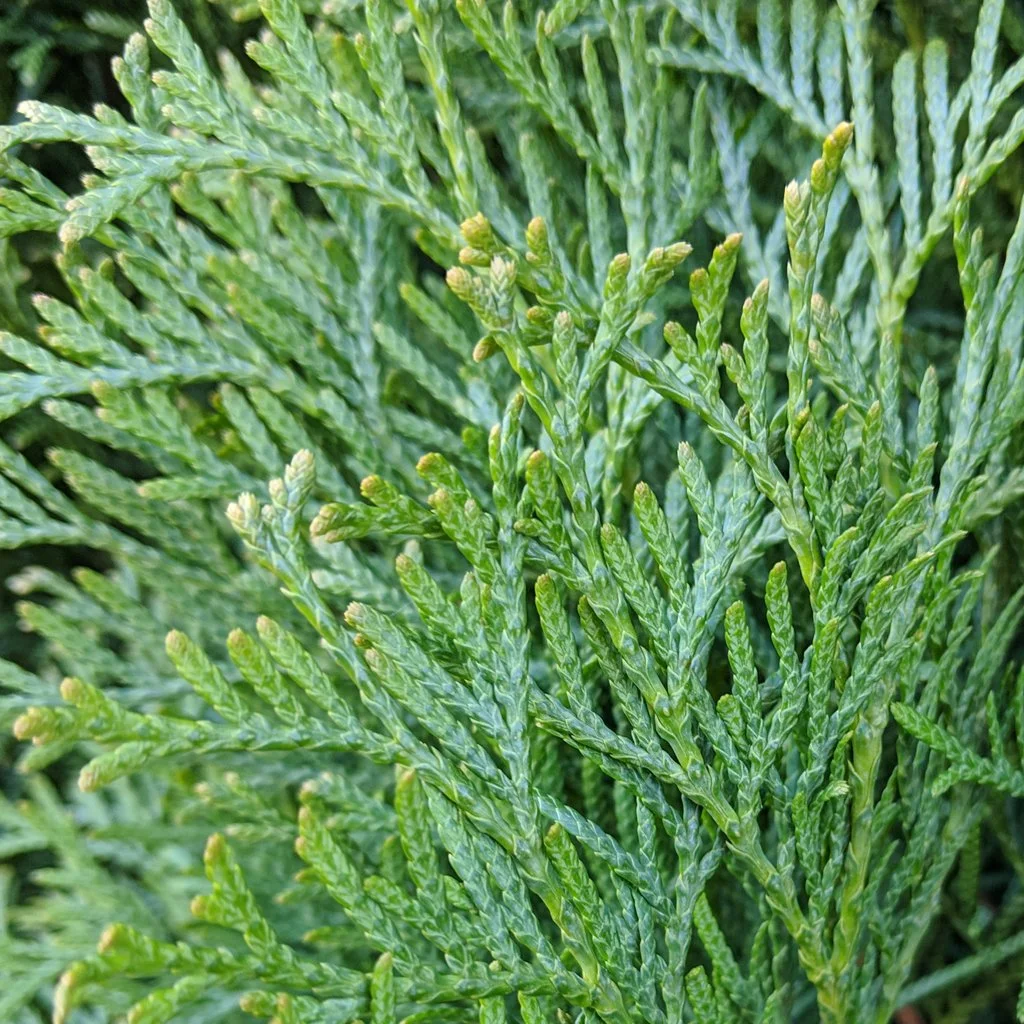
Fast | Evergreen
Western Red Cedar
Thuja plicata
A handsome evergreen conifer
with aromatic foliage, a naturally
pyramidal crown and attractive
year-round colour.
Provides substantial screening
and evergreen structure in
large gardens and landscapes.
It needs generous growing space
and reliable moisture during
establishment.
View Western Red Cedar →
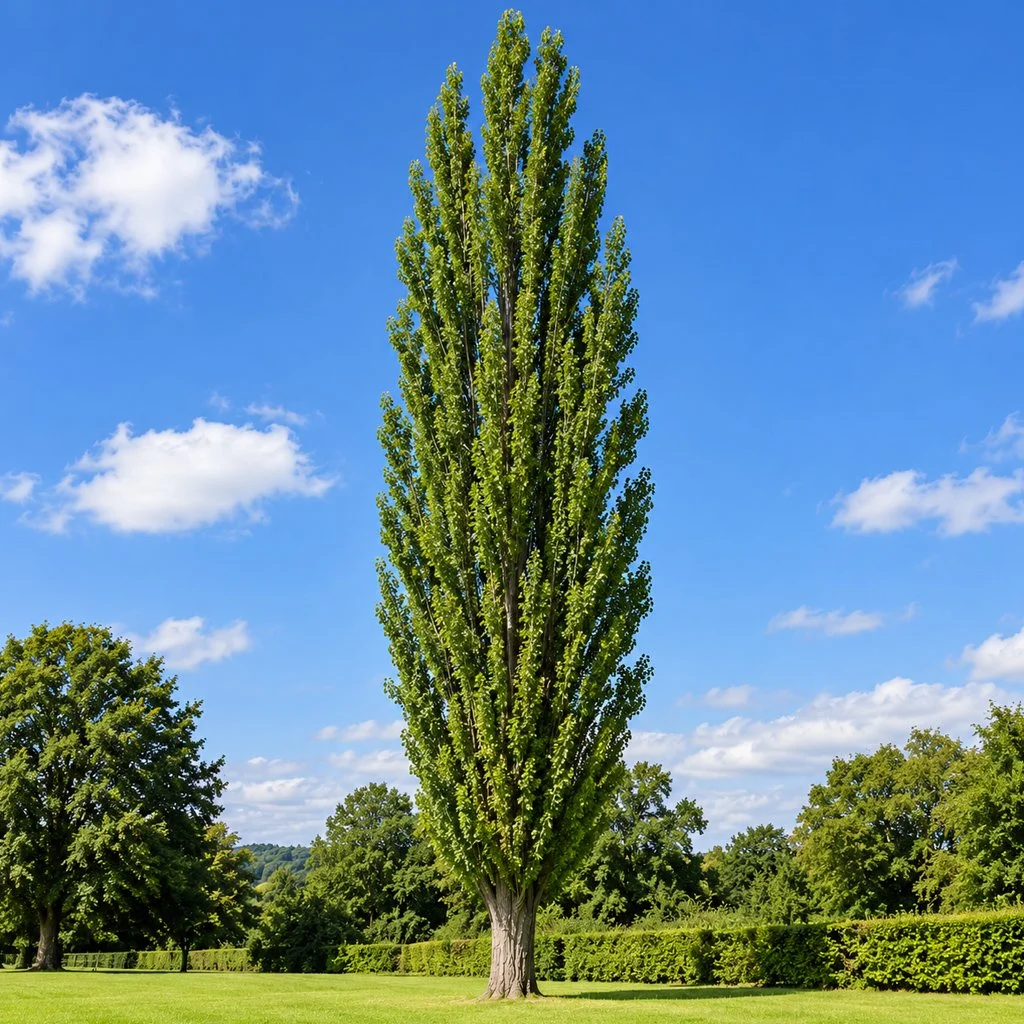
Very Fast | Deciduous
Lombardy Poplar
Populus nigra 'Italica'
A tall, fast-growing poplar with
a distinctive narrow, columnar
outline and strong vertical impact.
Useful for tall seasonal screening,
avenues and large rural properties.
Its substantial roots, potential
suckering and mature height
make careful siting essential.
View Lombardy Poplar →
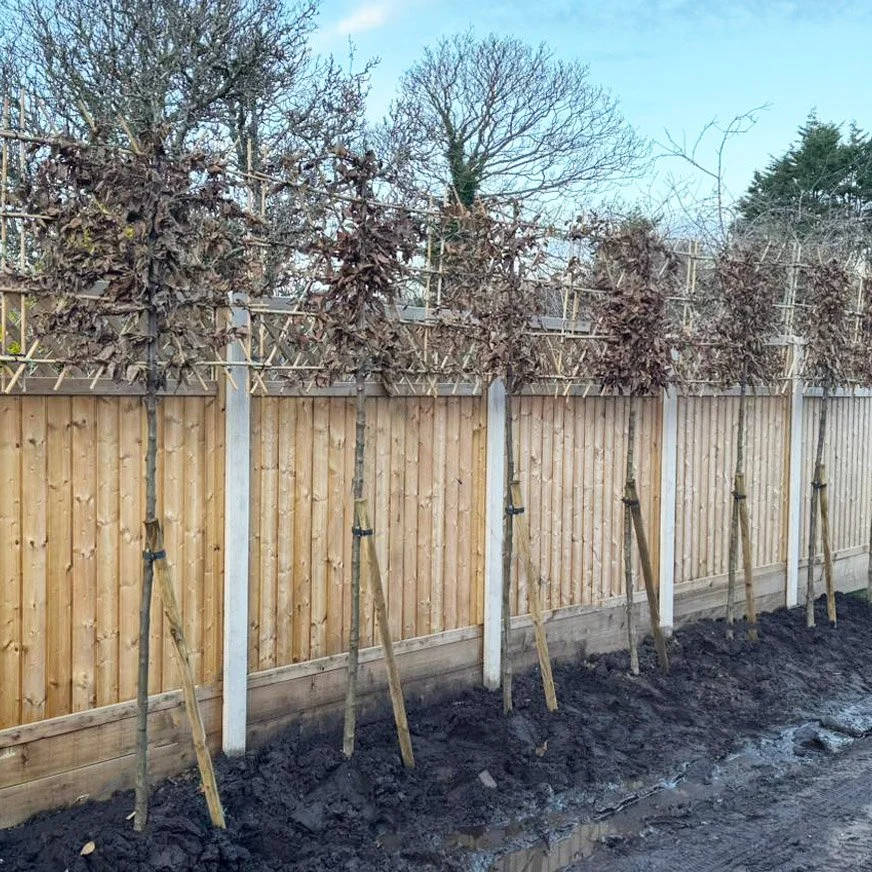
Elevated Screening | Deciduous
Pleached Hornbeam
Carpinus betulus – pleached form
Hornbeam trained into a raised,
formal panel of foliage above
a clear stem.
Particularly useful for screening
first-floor windows and overlooking
above fences. Larger specimens can
provide a useful screening framework
immediately, without relying on
exceptionally fast annual growth.
View Pleached Hornbeam →
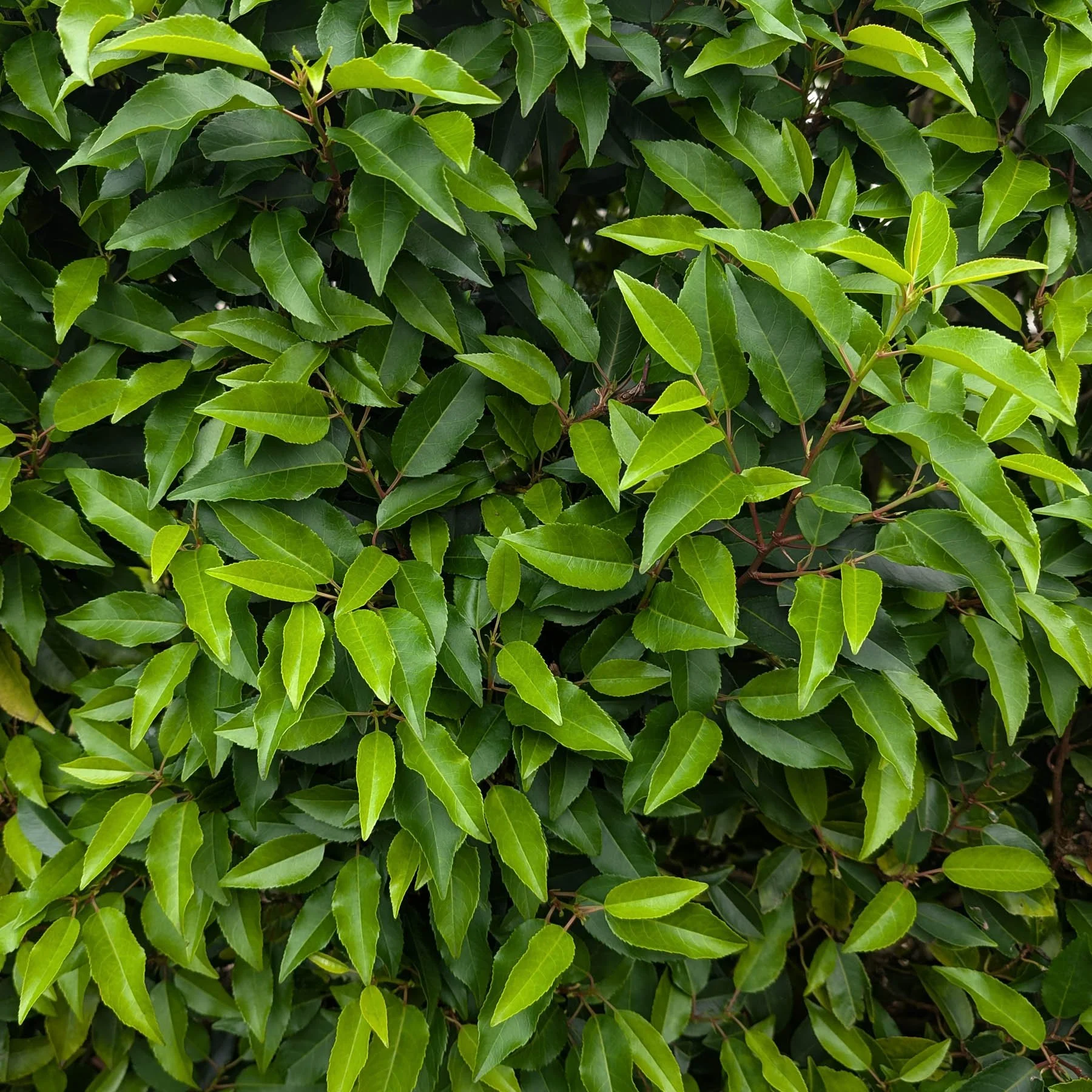
Evergreen | Established Privacy
Portuguese Laurel
Prunus lusitanica
An elegant evergreen specimen
with glossy dark-green leaves,
reddish stems and attractive
summer flowers.
It is generally moderate growing
rather than exceptionally fast,
but a larger standard or multi-stem
specimen can provide immediate
evergreen screening.
View Portuguese Laurel →
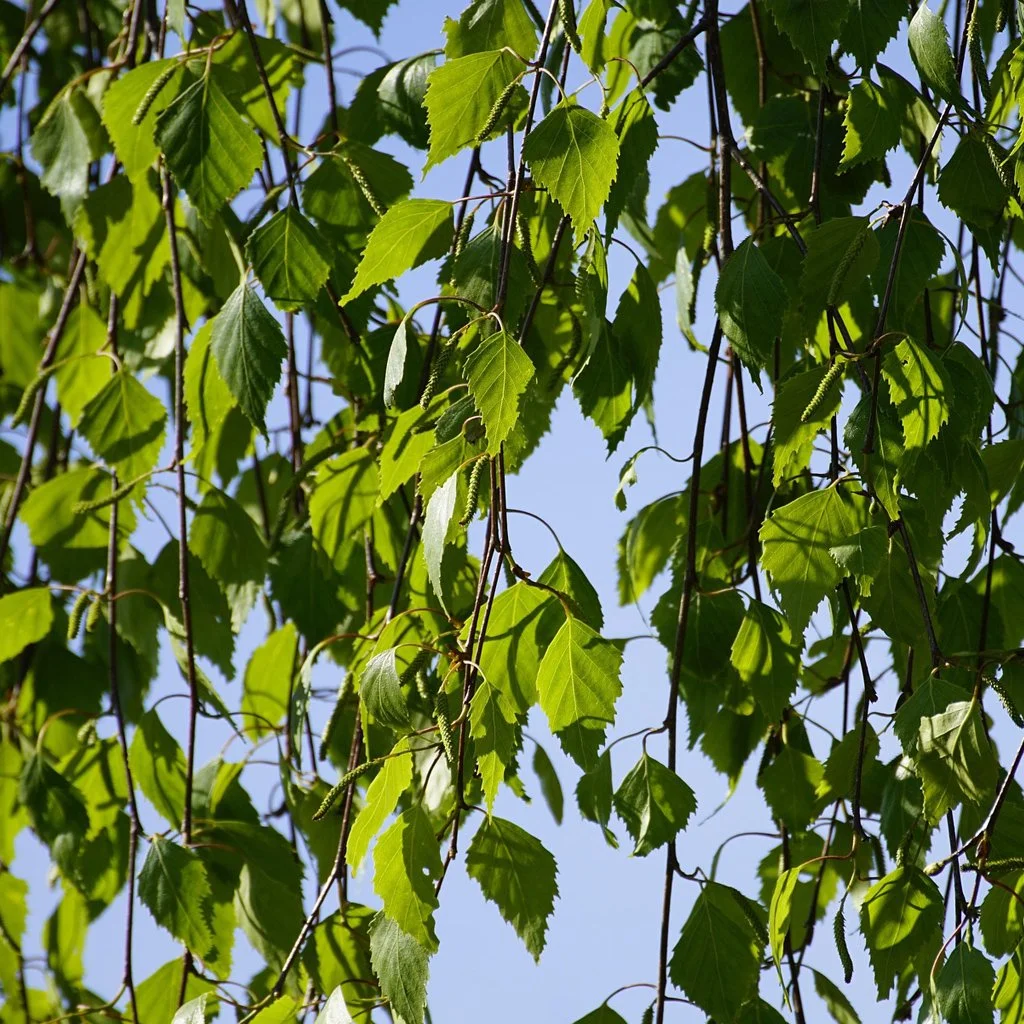
Fast | Filtered Screening
Silver Birch
Betula pendula
A graceful native deciduous tree
with attractive white bark,
light foliage and a naturally
informal outline.
Useful for softening unwanted
views and creating filtered
seasonal screening. It is
not suitable where a dense,
opaque privacy screen
is essential.
View Silver Birch →
Fast Growth or Immediate Privacy?
A fast-growing tree does not
necessarily provide privacy
immediately after planting.
A small Leyland Cypress may
grow rapidly but still take
several years to reach the
required screening height.
By contrast, a larger pleached
Hornbeam or Portuguese Laurel
specimen may provide useful
screening from the day
it is installed.
Before choosing, consider
the height of the view you
want to block, the initial
size of the tree, its
mature dimensions and
the maintenance required.
Compare the Best Screening Trees
The following comparison highlights
the principal differences between
our six selections. Mature dimensions
are indicative and vary with
growing conditions, nursery form
and long-term management.
| Tree |
Growth |
Foliage |
Screening Type |
Space Required |
| Leyland Cypress |
Very fast |
Evergreen |
Dense, tall screening |
Very large |
| Western Red Cedar |
Fast |
Evergreen |
Dense, tall screening |
Very large |
| Lombardy Poplar |
Very fast |
Deciduous |
Tall, vertical, seasonal screening |
Large; allow for roots |
| Pleached Hornbeam |
Moderate to fast once established |
Deciduous |
Raised screening above boundaries |
Managed framework |
| Portuguese Laurel |
Moderate |
Evergreen |
Dense ornamental screening |
Medium to large |
| Silver Birch |
Fast when young |
Deciduous |
Light, filtered seasonal screening |
Medium to large |
Important:
Pleached Hornbeam is a trained
tree form rather than a separate
species. Its screening dimensions
depend on the supplied clear-stem
height, panel width and panel height.
Best Evergreen Trees for Fast Screening
Evergreen trees are usually
the strongest option where
screening is required
throughout the year.
Leyland Cypress
Best suited to very large
gardens and substantial
boundaries where rapid
growth is a priority
and long-term maintenance
can be managed.
Western Red Cedar
An attractive alternative
for large landscapes,
providing dense foliage,
year-round greenery and
a naturally conical outline.
Portuguese Laurel
An ornamental broad-leaved
evergreen, particularly
effective when supplied
as a larger standard or
multi-stem specimen.
Choosing Evergreen Screening
Consider the eventual
height, crown width,
rooting area and potential
loss of light. The fastest
tree is not necessarily
the best long-term choice.
Best Trees for Screening Overlooking Windows
Where a garden is overlooked
from a first-floor bedroom,
balcony or elevated property,
a conventional hedge may
need to grow excessively tall
before providing privacy.
In these situations,
Pleached Hornbeam
can be particularly effective.
Its foliage is trained into
a raised panel above a clear
stem, positioning the screen
closer to the height
where privacy is required.
Pleached trees can also
create a formal architectural
effect along boundaries
and behind seating areas.
Hornbeam is deciduous,
so screening is strongest
during the growing season.
Trained trees may retain
some brown leaves during
winter, but complete
winter privacy should
not be assumed.
For further guidance, read
Trees for Screening Neighbours
.
Fast-Growing Trees for Tall Screening
Where screening is needed
at considerable height,
the choice of tree
becomes particularly important.
Leyland Cypress
Leyland Cypress is among
the quickest-growing
evergreen options.
Its dense foliage can
form an effective visual
barrier, but the species
can become extremely tall
and broad if unmanaged.
Western Red Cedar
Western Red Cedar also
develops into a substantial
evergreen tree. Its dense
foliage makes it suitable
for large properties
where long-term screening
and landscape structure
are priorities.
Lombardy Poplar
Lombardy Poplar has a
distinctive upright,
columnar outline and
can provide rapid
vertical impact.
It is deciduous, however,
and its narrow silhouette
does not create the same
dense horizontal screen
as a broad evergreen.
Its vigorous root system,
potential for suckering
and substantial mature
height make it unsuitable
for restricted planting
near buildings and
underground services.
Screening Without Making the Garden Too Dark
Dense evergreen trees
can provide privacy,
but they can also
create substantial shade.
Where the aim is to soften
a view rather than block
it completely, a lighter
deciduous specimen may
be more appropriate.
Silver Birch for Filtered Screening
Silver Birch has an
open, graceful crown
that allows light to
pass through its foliage.
Its white bark, fine
branches and delicate
leaves create a natural
screen that can soften
neighbouring buildings
without forming a
solid evergreen wall.
This makes Silver Birch
a useful choice for
larger gardens where
filtered seasonal
screening is desirable.
For year-round privacy,
choose a denser evergreen
species or consider
layered planting.
How Quickly Will Screening Trees Grow?
Growth depends on species,
plant size, soil conditions,
weather, exposure and
the quality of establishment.
A vigorous tree planted
into compacted, poorly
drained or drought-prone
ground may grow much more
slowly than expected.
Newly planted specimens
also need time to establish
their roots before producing
strong extension growth.
For this reason, annual
growth rates should be
treated as indicative,
not as a guarantee
of screening height
after a fixed number
of years.
If privacy is needed
immediately, compare
larger nursery-grown
specimens with smaller
fast-growing trees.
Choosing Trees for Privacy in Large Gardens
Large gardens provide
greater flexibility
when selecting screening
trees because they can
accommodate wider crowns,
larger root systems and
greater mature heights.
Leyland Cypress,
Western Red Cedar and
Lombardy Poplar are
primarily suited to
substantial landscapes
where their ultimate
size can be accommodated.
Portuguese Laurel and
Pleached Hornbeam can
provide more controlled
screening where an
ornamental or formal
appearance is preferred.
Silver Birch is especially
effective where a softer,
naturalistic screen is
more appropriate than
a dense green boundary.
For other substantial
specimens, explore our
Trees for Large Gardens
guide.
Should You Plant Screening Trees or Hedging?
Specimen Trees
Useful for elevated
screening, architectural
planting and selectively
blocking unwanted views.
Individual crowns may
leave gaps between trees.
Hedging
Better suited to creating
a continuous boundary
screen from ground level.
Hedges require appropriate
planting density and
regular formative pruning.
Pleached Trees
Ideal where a raised
screen is required
above an existing
fence or wall,
especially in
formal garden designs.
Combined Planting
A combination of
hedging, specimen trees
and pleached forms
can provide screening
at several heights
without relying on
one continuous tall wall.
For ground-level boundary
screening, visit our
Best Trees for Privacy
guide, which compares
hedging options.
Planting Distances and Mature Tree Size
A tree's mature crown
and root system are
more important than
its size at delivery.
Before planting, consider:
-
Buildings:
Allow for the mature crown,
root development and
potential shading.
-
Boundaries:
Consider neighbouring
properties and future
access for maintenance.
-
Underground services:
Identify drains, pipes
and other infrastructure
before planting.
-
Overhead restrictions:
Check for cables,
rooflines and other
obstructions.
-
Soil conditions:
Assess drainage,
compaction and the
available rooting area.
-
Long-term management:
Consider whether pruning
will remain practical
as the tree matures.
There is no single
safe planting distance
that applies to all
screening trees.
Seek professional advice
where large specimens
are proposed near
buildings or sensitive
structures.
Establishing Fast-Growing Screening Trees
-
Choose the correct species.
Match mature size,
foliage density and
growth habit to the
privacy requirement.
-
Check the planting position.
Assess soil, light,
drainage, exposure
and available space.
-
Plan delivery access.
Large rootballed trees
may need specialist
lifting equipment.
-
Plant at the correct depth.
Keep the root flare
at the appropriate
finished soil level.
-
Provide suitable support.
Use staking or anchoring
appropriate to the
tree size and site.
-
Water thoroughly.
Reliable watering during
establishment is essential,
particularly for larger
specimens.
-
Control weeds and grass.
Maintain a clear,
mulched area around
the root zone.
-
Monitor growth.
Check tree condition,
supports, soil moisture
and any developing
maintenance requirements.
A fast-growing species
cannot perform well
without successful
establishment.
Professional Screening Tree Planting in North West England
Landscaping Emporium
supplies selected
specimen trees for
garden screening,
privacy and
landscape projects.
Through Kirman Design,
professional specimen-tree
planting may be available
in selected areas of
Lancashire, the Ribble Valley,
Greater Manchester,
Cheshire, Merseyside
and Cumbria.
Our usual specimen-tree
installation postcode
areas include:
BB, BL, CH1–CH5, CW8, CW9,
FY, L, LA1–LA6, M, OL, PR,
SK1–SK12, WA and WN.
If your property is outside
these areas, please contact
us before selecting
professional planting
at checkout.
Telephone:
01942 604976
Email:
hello@landscapingemporium.co.uk
We can discuss available
tree sizes, delivery
access and the practical
requirements of planting
larger screening specimens.
Frequently Asked Questions
What is the fastest-growing tree for screening?
Leyland Cypress and
Lombardy Poplar are
among the fastest-growing
trees in this selection.
Leyland Cypress provides
dense evergreen foliage,
while Lombardy Poplar
offers tall seasonal
screening.
Which fast-growing screening tree stays green all year?
Leyland Cypress and
Western Red Cedar
are evergreen conifers.
Portuguese Laurel
also provides evergreen
screening, although
its growth is generally
more moderate.
Which tree is best for screening a first-floor window?
Pleached Hornbeam can
be particularly effective
because its trained
foliage panel sits
above a clear stem.
The correct panel height
depends on the position
of the overlooking window.
Are Silver Birch trees good for privacy?
Silver Birch is useful
for softening views
and providing filtered
seasonal screening.
Its open crown and
deciduous foliage
mean it does not
provide complete
year-round privacy.
Is Portuguese Laurel fast growing?
Portuguese Laurel is
generally moderate growing
rather than exceptionally
fast. Larger standard
or multi-stem specimens
can nevertheless provide
useful evergreen coverage
from installation.
Do pleached Hornbeam trees provide winter privacy?
Pleached Hornbeam is
deciduous. Some dried
leaves may remain during
winter, especially on
regularly maintained
trees, but dense winter
coverage is not guaranteed.
Can I plant Leyland Cypress in a small garden?
Leyland Cypress is
generally unsuitable
for small gardens
when grown as an
unrestricted specimen.
Its eventual size and
maintenance requirements
must be considered
before planting.
Are Lombardy Poplar roots a concern?
Yes. Lombardy Poplar
has vigorous roots
and may produce suckers.
It should be planted
well away from sensitive
structures and services
unless a professional
assessment supports
the proposed location.
How many screening trees will I need?
The number depends
on the species,
nursery size, mature
crown width and the
specific view being
screened. Individual
specimen trees should
not automatically be
spaced like hedging plants.
Can Landscaping Emporium plant my screening trees?
Professional planting
may be available
through Kirman Design
in selected areas of
North West England,
subject to tree size,
site access and
project requirements.
Find the Right Trees for Your Screening Project
Whether you need tall
evergreen coverage,
a formal pleached screen
or a naturalistic planting
scheme, selecting the
right species and
nursery size is essential.
Explore our specimen-tree
collection, compare
the six options above
or contact Landscaping
Emporium for help
with tree supply
and professional planting.
