Landscaping Emporium | Specimen Trees
Best Specimen Trees for Large Gardens
Large gardens offer an opportunity to plant
trees that can develop into magnificent
landscape features. From broad-canopied
specimens and elegant ornamental trees
to formal avenues and parkland planting,
the right tree can transform the scale
and character of an outdoor space.
Choosing a specimen tree for a large
garden is about more than height.
Mature crown spread, seasonal interest,
soil conditions, wildlife value and
the relationship between trees and
surrounding landscape features
all influence the final result.
Explore six impressive specimen trees
suited to substantial gardens,
country properties and larger
landscape designs.
Six Outstanding Trees for Large Gardens
These six trees have been selected
for their landscape presence,
distinctive characteristics and
suitability for gardens with
generous planting space.
Each offers a different combination
of structure, foliage, seasonal colour
and long-term visual impact.
![Platanus hispanica London Plane specimen tree]()
Parkland | Large Canopy | Attractive Bark
London Plane
Platanus × hispanica
A magnificent large-growing tree
with a broad spreading crown,
large maple-like leaves and
distinctive mottled bark.
London Plane is particularly
effective as a landmark specimen
in expansive lawns, parkland
and substantial country gardens.
Its eventual size requires
generous space.
View London Plane →
![Fagus sylvatica Common Beech specimen tree]()
Native | Autumn Colour | Parkland
Common Beech
Fagus sylvatica
A majestic native tree with
smooth grey bark, an elegant
branching structure and
rich green summer foliage.
Beech develops a substantial
spreading crown and beautiful
copper and golden autumn tones,
making it an excellent choice
for country-house gardens
and parkland settings.
View Common Beech →
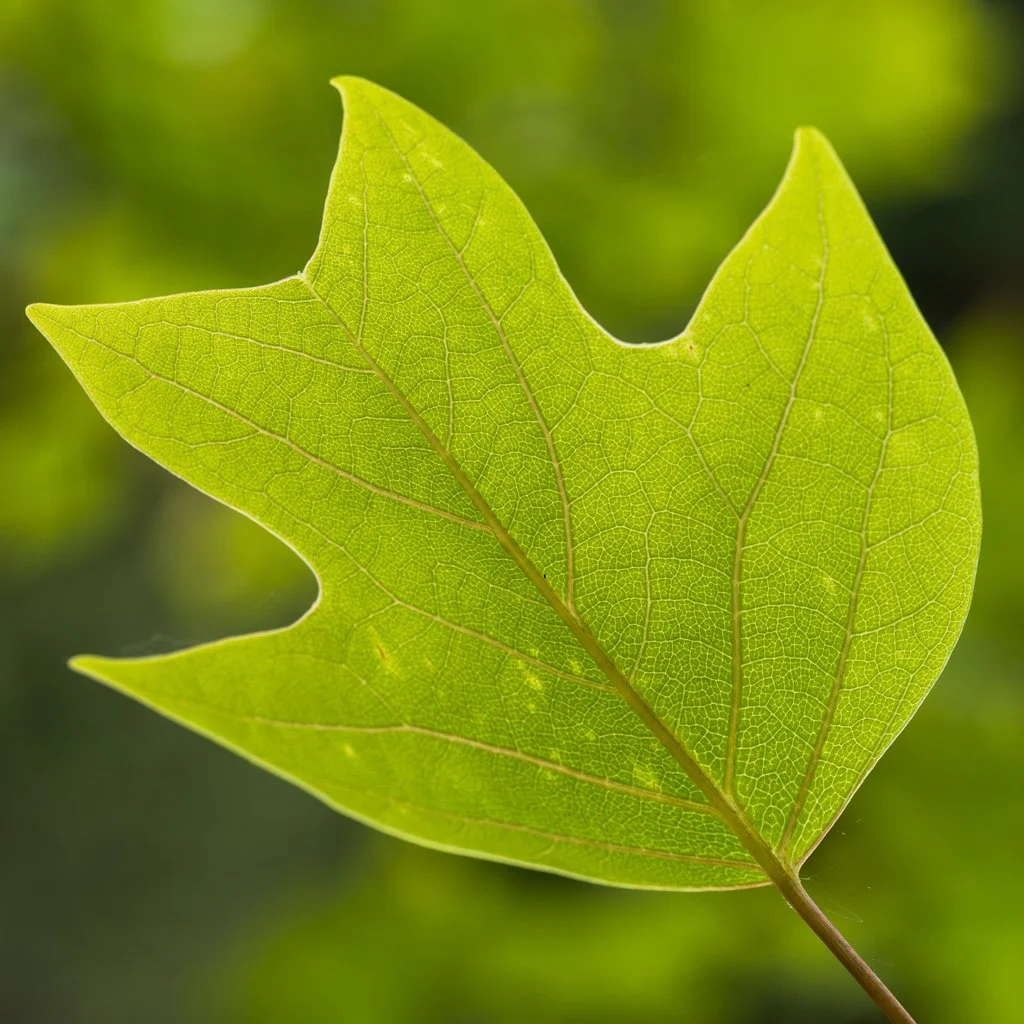
Distinctive Foliage | Autumn Colour
Tulip Tree
Liriodendron tulipifera
An impressive ornamental tree
with unusually shaped leaves,
an elegant crown and
striking golden autumn colour.
Mature specimens may produce
distinctive tulip-shaped flowers.
An excellent feature tree for
substantial lawns and
country gardens with
adequate growing space.
View Tulip Tree →
![Liquidambar Worplesdon autumn specimen tree]()
Autumn Colour | Ornamental
Sweet Gum 'Worplesdon'
Liquidambar styraciflua 'Worplesdon'
An elegant ornamental tree
particularly admired for
its spectacular autumn
foliage in shades of red,
orange, purple and yellow.
A strong choice for large
gardens where seasonal
colour is a priority.
It develops an attractive
crown and distinctive
star-shaped leaves.
View Sweet Gum →
Small-Leaved Lime 'Greenspire'
![Tilia cordata Greenspire avenue specimen tree]()
Avenues | Formal Structure | Pollinators
Small-Leaved Lime 'Greenspire'
Tilia cordata 'Greenspire'
A refined lime cultivar
with a relatively regular,
upright crown and attractive
heart-shaped foliage.
Excellent for avenues,
formal landscapes and
large garden designs
where repeated planting
creates structure
and visual rhythm.
View Small-Leaved Lime →
![Carpinus betulus Common Hornbeam specimen tree]()
Native | Structure | Clay Soil
Common Hornbeam
Carpinus betulus
A strong, adaptable native
tree with attractive ribbed
bark, finely toothed leaves
and golden autumn foliage.
Particularly useful for
large gardens with heavier
soils, naturalistic planting
and substantial landscape
schemes where a durable,
long-lived tree is required.
View Common Hornbeam →
Choosing Trees for a Large Garden
Large gardens allow greater freedom
when selecting specimen trees,
but successful planting still
depends on choosing the correct
species for the available space.
The most important considerations
include mature height, crown spread,
soil conditions, exposure, root
space and the intended relationship
between trees and the surrounding
garden.
A carefully positioned specimen
can become a defining landscape
feature for generations, while
groups of trees can create
woodland character, frame views
or establish a formal avenue.
Compare the Best Trees for Large Gardens
| Tree |
Main Attraction |
Ideal Setting |
Considerations |
| London Plane |
Impressive crown and mottled bark |
Parkland and very large lawns |
Very substantial mature size |
| Common Beech |
Majestic form and autumn colour |
Country estates and parkland |
Needs generous crown and root space |
| Tulip Tree |
Distinctive leaves and golden autumn colour |
Large lawns and ornamental landscapes |
Requires suitable soil and growing space |
| Sweet Gum 'Worplesdon' |
Exceptional autumn foliage |
Large ornamental gardens |
Best colour often occurs in sunny conditions |
| Small-Leaved Lime 'Greenspire' |
Regular crown and formal structure |
Avenues and estate landscapes |
Allow for mature height and crown width |
| Common Hornbeam |
Strong structure and adaptability |
Country gardens and heavier soils |
Develops a substantial mature crown |
Mature dimensions vary with species,
soil conditions and growing environment.
Always check the individual product
specification before selecting a
planting position.
How to Design a Large Garden with Trees
Landmark Specimen Trees
A single large tree can become
the focal point of an expansive
lawn or country garden.
London Plane and Common Beech
are particularly effective
where there is ample space.
Avenues and Driveways
Repeated trees can establish
strong lines, frame an entrance
and create a sense of arrival.
Small-Leaved Lime 'Greenspire'
is a useful option for
formal avenue planting.
Seasonal Colour
Sweet Gum 'Worplesdon'
and Tulip Tree bring
outstanding autumn interest,
adding seasonal contrast
to larger landscapes.
Naturalistic Planting
Combining native trees,
ornamental specimens,
hedging and meadow planting
can create a softer,
more natural landscape
with varied habitats.
Specimen Trees for Large Lawns
An expansive lawn provides an
excellent opportunity to display
a specimen tree with a natural,
unrestricted crown.
London Plane and Common Beech
can create magnificent landmark
features where their eventual
size can be accommodated.
Tulip Tree offers a more ornamental
character with distinctive foliage,
while Sweet Gum 'Worplesdon'
is particularly effective where
autumn colour is important.
When positioning a tree in a lawn,
consider its mature canopy,
future shade, leaf fall,
maintenance access and the
long-term relationship with
the surrounding landscape.
Trees for Country Houses and Rural Gardens
Country-house gardens often benefit
from trees that complement the scale
of the property and surrounding
landscape.
Large specimens can soften
the appearance of substantial
buildings, connect the garden
with the wider countryside
and establish a sense of
permanence.
Common Beech and Hornbeam
are particularly appropriate
where a traditional,
naturalistic character
is required.
London Plane provides a more
imposing architectural presence,
while Tulip Tree can introduce
a distinctive ornamental feature
within extensive grounds.
A successful planting scheme
should consider views from
the house, existing mature trees,
boundary planting and the
character of the surrounding
countryside.
Creating Avenues and Formal Tree Planting
Tree avenues can introduce
structure and perspective
to large gardens, estates
and long driveways.
Repeated specimens establish
rhythm and can draw the eye
towards a house, entrance
or distant landscape feature.
Small-Leaved Lime 'Greenspire'
is a strong choice where a
regular crown and consistent
appearance are desired.
Hornbeam can also be useful
for formal planting,
particularly where the soil
is heavier or moisture-retentive.
Spacing must be based on
the intended mature dimensions,
not simply the size of
the trees at delivery.
Large Trees for Autumn Colour
Autumn colour can become one
of the defining features
of a substantial garden.
Sweet Gum 'Worplesdon'
Liquidambar styraciflua
'Worplesdon' is especially
valued for its vibrant
red, orange, purple and
yellow autumn foliage.
Tulip Tree
Liriodendron tulipifera
develops attractive golden
autumn colour, providing
a striking seasonal display.
Common Beech
Fagus sylvatica offers
a more traditional autumn
palette of gold, copper
and warm brown.
Combining trees with
different autumn characteristics
can extend seasonal interest
throughout a larger landscape.
Large Gardens and Wildlife
Larger gardens offer excellent
opportunities to create
varied habitats using trees,
hedges, shrubs and
ground-level planting.
Native trees such as Common
Beech and Hornbeam can form
part of a wildlife-friendly
landscape, supporting insects,
birds and other species.
Flowering trees, mixed hedging,
meadow areas and ponds can
provide additional resources
throughout the year.
Where biodiversity is a
primary objective, consider
combining ornamental specimens
with native species appropriate
to the local conditions.
Read our
Trees for Wildlife
guide for further planting ideas.
Architectural Trees for Large Gardens
Large gardens can accommodate
trees with strong architectural
character, including
distinctive trunks,
sculptural branches
and carefully defined
crown shapes.
London Plane provides
a striking example through
its broad canopy and
unusual mottled bark.
Other architectural species
may be more suitable for
courtyards, formal garden
areas and locations closer
to the house.
Explore our
Architectural Specimen Trees
guide to compare different
forms and planting styles.
How Many Trees Should You Plant in a Large Garden?
There is no fixed number
of trees that should be
planted in a large garden.
The correct quantity depends
on the size of the property,
the chosen species and
the intended landscape design.
A single mature specimen
may provide enough visual
impact for a large open lawn,
while an avenue or parkland
scheme may require several
trees arranged in a
considered pattern.
When planning groups of trees,
consider:
- Mature canopy spread and spacing
- Available soil and rooting volume
- Future shading of lawns and planting
- Views from the house and garden
- Access for maintenance equipment
- Underground services and nearby structures
- Long-term tree management
Avoid overcrowding large
specimens simply to achieve
an immediate sense of maturity.
A well-spaced planting scheme
will generally produce a
more successful long-term result.
Choosing the Right Size of Specimen Tree
Specimen trees are available
in different nursery sizes,
including smaller established
trees and substantial
rootballed specimens.
Larger trees can provide
greater immediate impact,
but they also require
more careful planning
for delivery, handling,
planting and establishment.
Before ordering, consider
the following:
- Tree height and stem girth
- Rootball or container dimensions
- Vehicle access to the property
- Gate widths and overhead restrictions
- Ground conditions and lifting requirements
- Availability of establishment watering
The largest available tree
is not necessarily the
best choice. Selecting a
suitable specimen and
establishing it correctly
is more important than
purchasing size alone.
Planting Large Specimen Trees
-
Assess the site.
Check soil type, drainage,
sunlight, exposure and
available planting space.
-
Allow for mature growth.
Consider the eventual
height, crown spread
and root development.
-
Plan delivery access.
Large rootballed trees
may require mechanical
handling and specialist
lifting equipment.
-
Prepare the planting area.
Ensure suitable rooting
conditions and avoid
compacted or poorly
drained ground.
-
Plant at the correct depth.
The root flare should
remain at the appropriate
finished soil level.
-
Provide appropriate support.
Use suitable staking
or underground anchoring
where required.
-
Water thoroughly.
Maintain consistent
moisture during the
establishment period.
-
Apply mulch.
Use an appropriate
organic mulch while
keeping it clear
of the trunk.
-
Monitor establishment.
Check soil moisture,
tree condition and
support systems regularly.
Professional installation
can be particularly valuable
for larger specimens,
where handling and
establishment requirements
are more demanding.
Specimen Tree Supply and Planting in North West England
Landscaping Emporium supplies
selected specimen trees for
large gardens, country estates
and substantial landscape
projects.
Through Kirman Design,
professional specimen tree
planting may also be available
across suitable areas of
Lancashire, the Ribble Valley,
Greater Manchester, Cheshire,
Merseyside and Cumbria.
We can help you consider
tree selection, nursery
sizes, delivery access,
planting requirements
and establishment.
Browse our
Specimen Tree Collection
or use our
Find the Right Specimen Tree
selector.
Frequently Asked Questions
What are the best trees for large gardens?
London Plane, Common Beech,
Tulip Tree, Sweet Gum 'Worplesdon',
Small-Leaved Lime 'Greenspire'
and Common Hornbeam are all
excellent options for substantial
gardens where their mature
dimensions can be accommodated.
Which tree is best for a large open lawn?
London Plane and Common Beech
can create magnificent landmark
specimens in expansive lawns.
The best choice depends on
the available space, soil
conditions and intended
landscape character.
What trees are suitable for country estates?
Common Beech, Hornbeam,
London Plane and Small-Leaved
Lime can all contribute
to substantial country-house
and estate landscapes.
Which large trees have the best autumn colour?
Sweet Gum 'Worplesdon'
is particularly renowned
for its colourful autumn
foliage. Tulip Tree
and Common Beech also
provide attractive
seasonal colour.
What trees are suitable for avenues?
Small-Leaved Lime 'Greenspire'
is a useful option for
formal avenues, while
Hornbeam can also be
effective in structured
landscape planting.
Which large trees are suitable for clay soil?
Common Hornbeam is often
a good choice for heavier,
moisture-retentive soils.
However, persistent
waterlogging and poor
soil structure should
be assessed before planting.
Can I plant a mature specimen tree?
Yes. Larger nursery-grown
specimens can be supplied
and planted where access,
soil conditions and
specialist handling
requirements are suitable.
How far should a large tree be planted from a house?
There is no universal
planting distance suitable
for every species and property.
The mature size, root
characteristics, soil type,
building foundations and
underground services must
all be considered.
Seek professional advice
for substantial trees
near buildings.
Can Landscaping Emporium plant large specimen trees?
Professional specimen tree
planting may be arranged
through Kirman Design
across selected areas
of North West England,
subject to site access
and project requirements.
Find the Right Tree for Your Large Garden
Whether you are planning
a single landmark specimen,
an avenue of trees or
a complete country-garden
planting scheme, selecting
the correct species is
essential for long-term
success.
Explore our specimen
tree collection and
compare different trees,
nursery sizes and
growing requirements.
