Landscaping Emporium | Size & Maturity
Mature Specimen Trees for Immediate Garden Impact
Give a new garden an established appearance
with carefully selected mature and semi-mature
specimen trees. Larger nursery-grown trees
can introduce immediate structure, architectural
character, seasonal interest and screening.
From evergreen Holm Oak to elegant Himalayan
Birch, explore six specimen tree species,
understand how larger trees are graded
and learn what is involved in safe delivery,
planting and establishment.
Landscaping Emporium supplies selected
specimen trees, with professional planting
available for suitable projects across
North West England.
Six Specimen Trees to Consider in Larger Sizes
These species can make impressive established
specimens. Availability, dimensions and
nursery stock form must be confirmed individually.
A standard species product is not necessarily
a mature-sized product.
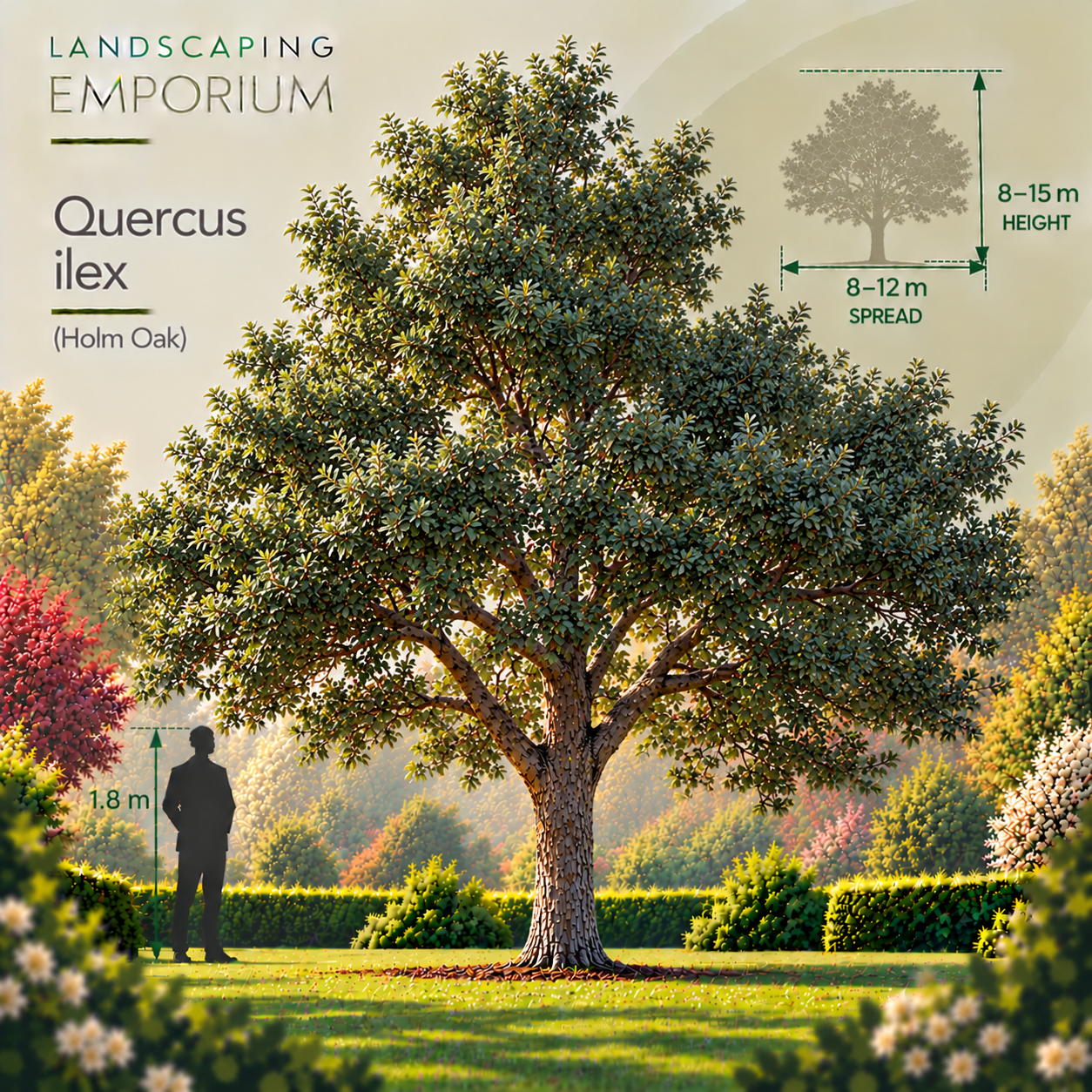
Evergreen | Structure
Holm Oak
Quercus ilex
An evergreen oak with dense, leathery
foliage and a strong architectural
presence throughout the year.
Useful for substantial garden structure
and privacy where the mature crown
has sufficient space to develop.
Consider exposure, soil drainage
and long-term canopy spread.
View Holm Oak →
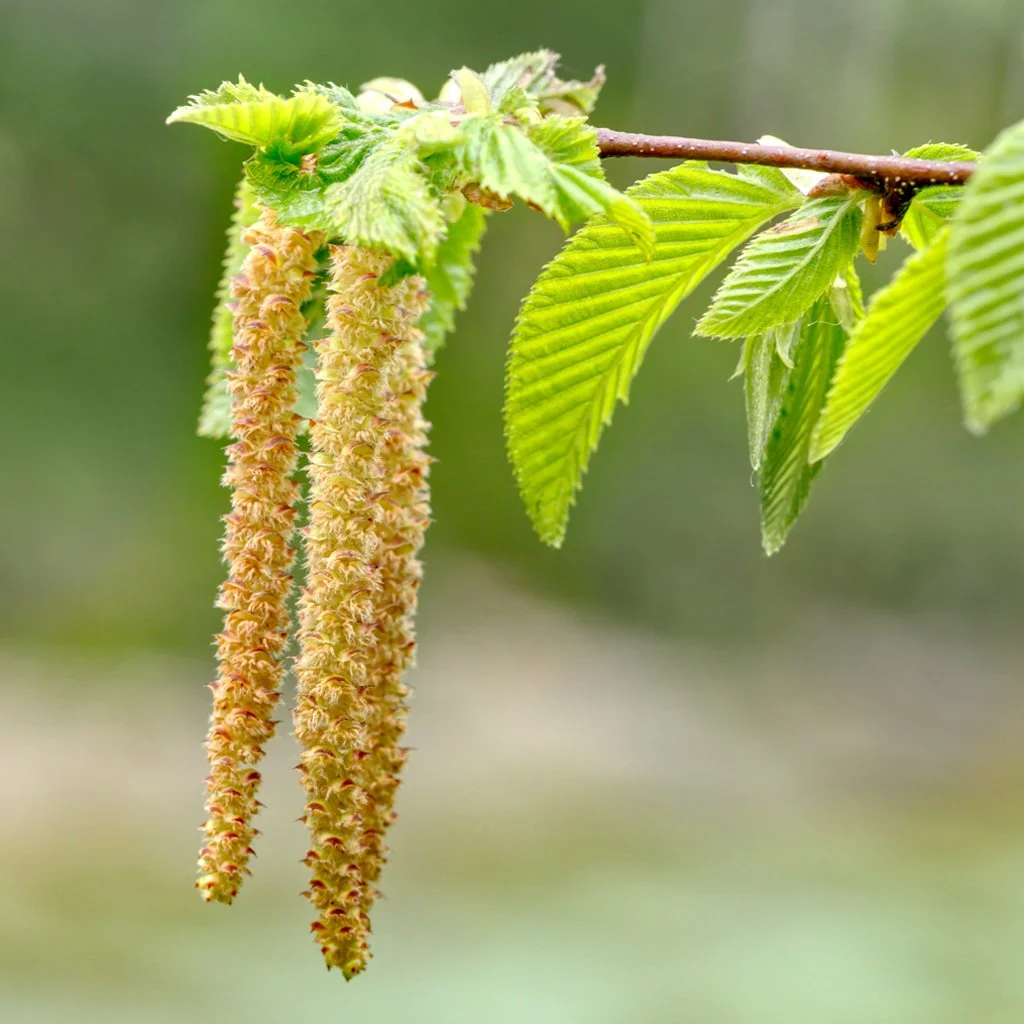
Deciduous | Screening
Hornbeam
Carpinus betulus
A versatile deciduous tree valued
for dense foliage, formal appearance
and its ability to respond to pruning.
Suitable for structural planting
and seasonal screening, including
many heavier soils with adequate drainage.
Larger specimens require room for
their natural crown or a planned
maintenance regime.
View Hornbeam →

White Bark | Winter Interest
Himalayan Birch
Betula utilis var. jacquemontii
Distinctive white bark creates
an immediate ornamental feature,
particularly on established
multi-stem specimens.
Excellent for contrasting with
evergreen hedges, dark boundary
walls and contemporary landscaping.
Allow for its eventual height
and crown spread.
View Himalayan Birch →
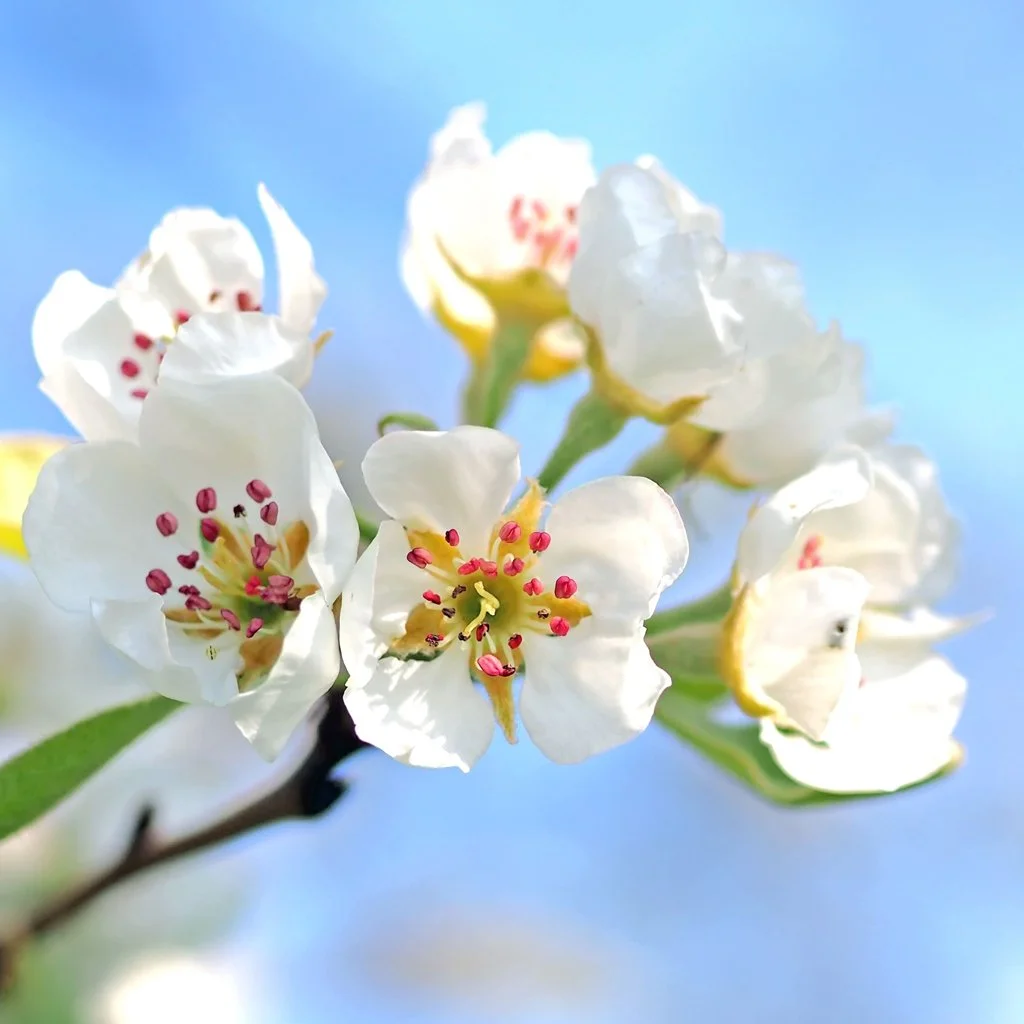
Blossom | Upright Crown
Ornamental Pear ‘Chanticleer’
Pyrus calleryana ‘Chanticleer’
An ornamental pear valued
for its upright crown,
spring blossom and
colourful autumn foliage.
A useful option for formal
gardens, avenues and
situations where a more
upright tree is desirable.
Its crown will broaden
with age, so check the
long-term space available.
View Ornamental Pear →
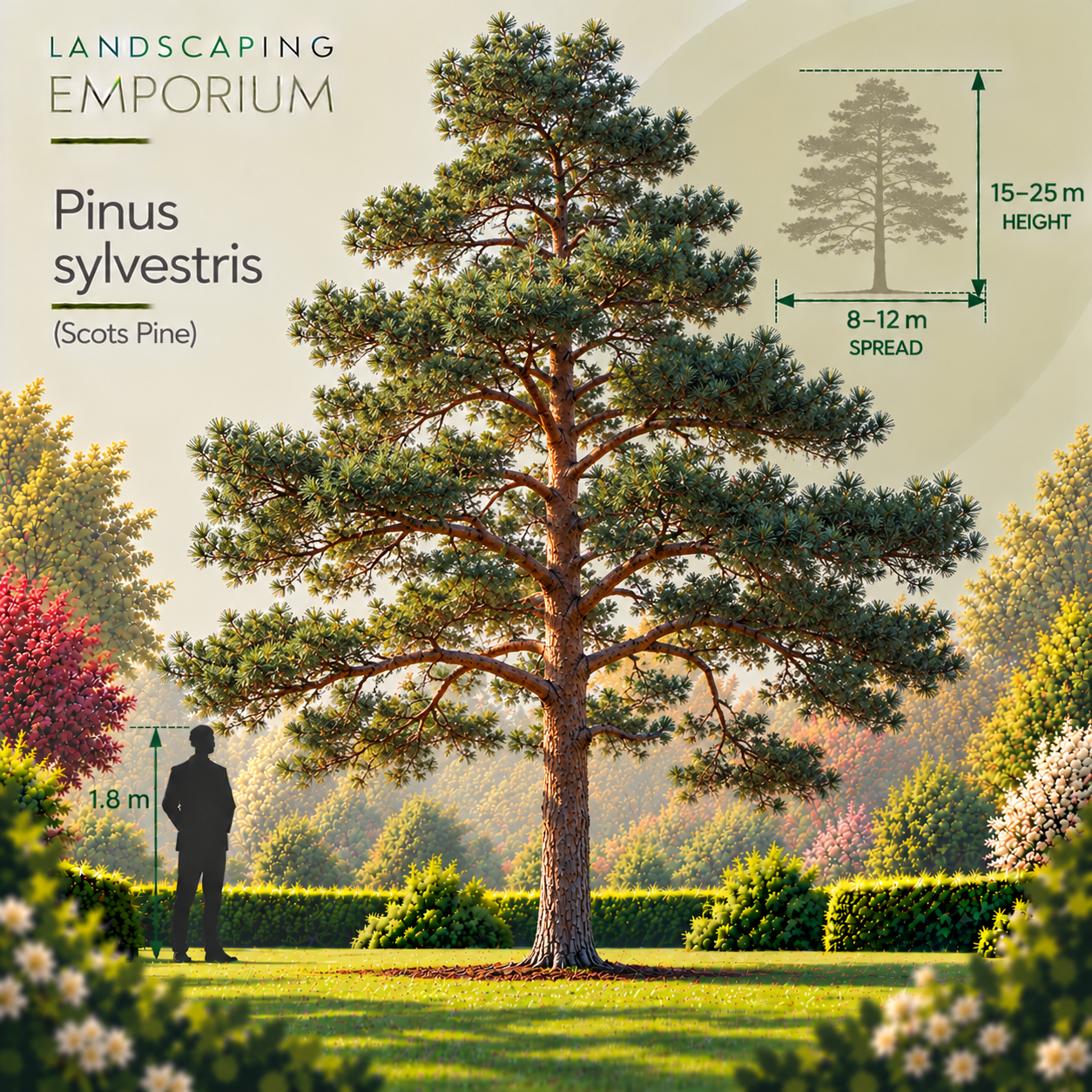
Evergreen | Architectural
Scots Pine
Pinus sylvestris
A native evergreen conifer
valued for its distinctive
form and warm orange-red
bark on mature upper trunks.
Larger specimens introduce
immediate architectural
character to naturalistic
gardens and landscapes.
Requires sufficient room
for long-term crown
and root development.
View Scots Pine →

Native | Landscape Character
English Oak
Quercus robur
An iconic British native tree
with strong landscape character
and significant wildlife value.
Suitable for large gardens,
country estates and parkland
where there is ample room
for future growth.
A nursery-grown larger specimen
can introduce early structure,
but an oak's eventual size
must be carefully considered.
View English Oak →
What Is a Mature Specimen Tree?
In nursery and landscaping terminology,
a mature specimen tree generally means
a substantial tree grown and prepared
for transplanting at a larger size.
However, the terms mature, semi-mature
and established are used differently
by different suppliers. A tree described
as mature is not necessarily at
its full biological maturity.
The important measurements are:
overall height, trunk girth, crown
dimensions, clear stem height,
rootball or container size
and nursery production history.
These specifications allow customers
to compare trees meaningfully and
understand what will actually
arrive on site.
Mature vs Semi-Mature vs Young Trees
| Tree Type |
Typical Description |
Immediate Effect |
Key Consideration |
| Young specimen |
Smaller nursery-grown tree |
Limited initial height and canopy |
Allow time for growth |
| Semi-mature specimen |
Larger nursery-grown tree with developed form |
Useful immediate structure |
Higher cost and greater planting requirements |
| Mature-sized specimen |
Substantial established nursery stock |
Strong immediate landscape presence |
Specialist handling and careful establishment |
These are descriptive categories,
not universal grading standards.
Compare individual nursery specifications
before making a purchasing decision.
How Are Large Specimen Trees Measured?
Overall Height
The measured height from the
base of the tree to the
highest point of its crown.
Height alone does not indicate
how full or established
the tree will look.
Trunk Girth
The circumference of the
trunk, normally measured
at a specified height
above the root collar.
For many nursery standards,
this is measured at 1 metre.
Crown Spread
The approximate width
of the canopy.
This is particularly
important for privacy,
screening and visual impact.
Clear Stem Height
The distance from the
ground to the start
of the main crown.
Important where views,
pedestrian clearance
or screening height
are considerations.
Rootball Size
The dimensions and weight
of the rootball influence
delivery, lifting equipment,
planting preparation
and establishment.
Nursery Production
Root pruning, transplanting
history and growing conditions
can influence how successfully
a larger specimen establishes
after relocation.
Why Choose Mature Specimen Trees?
Larger trees are often selected
where waiting for a small tree
to develop would not achieve
the desired landscape effect.
They can provide immediate
height, garden structure
and an established appearance.
Mature-sized specimens
can be particularly valuable
for newly built properties,
substantial garden renovations,
country houses and
commercial landscapes.
The correct choice depends
on the design objective,
available budget, access,
soil conditions and
long-term maintenance.
Mature Trees for Immediate Privacy and Screening
Larger trees can introduce
screening at a greater
height than young planting.
However, privacy depends
on more than overall
tree height.
Crown density, clear stem
height, canopy width,
viewing angle and
seasonal leaf retention
all influence the result.
Evergreen species such
as Holm Oak can provide
year-round foliage,
while deciduous Hornbeam
offers denser screening
during the growing season.
For overlooking windows,
carefully assess the
sightline before selecting
a specimen.
Read our
Trees for Screening Neighbours
guide.
Evergreen Mature Specimen Trees
Evergreen specimens
provide permanent foliage
and year-round visual
structure.
Holm Oak can form
an impressive architectural
tree, while Scots Pine
introduces a more open,
naturalistic character.
The right choice depends
on the intended screening,
mature crown dimensions,
exposure and soil conditions.
Explore our
Evergreen Specimen Trees
collection.
Deciduous Mature Specimen Trees
Deciduous trees provide
seasonal variation,
often combining spring
growth, summer shade,
autumn colour and
winter branching structure.
Himalayan Birch is
particularly attractive
for its white bark,
while Ornamental Pear
‘Chanticleer’ provides
spring blossom and
autumn foliage.
English Oak is
an important choice
for traditional
landscape character
where sufficient
space is available.
See our
Deciduous Specimen Trees
guide.
Mature Trees for New-Build Gardens
Newly built properties
often lack established
planting and garden
structure.
Carefully chosen larger
specimens can help
soften the appearance
of a new house,
introduce seasonal
interest and provide
valuable screening.
However, newly developed
sites may contain
compacted subsoil,
construction debris
and drainage problems.
These conditions should
be assessed before
investing in expensive
mature-sized trees.
Mature Trees for Large Gardens and Estates
Large gardens and
country properties
can accommodate
substantial specimens
that would be unsuitable
for smaller domestic plots.
English Oak, Scots Pine,
Holm Oak and Hornbeam
can all contribute
strong landscape
character.
When designing larger
schemes, consider
grouping, spacing,
long-distance views,
future crown development
and access for maintenance.
Explore our
Trees for Large Gardens
guide.
Mature Specimen Trees for Avenue Planting
Larger nursery-grown
trees can create
an immediate sense
of rhythm and structure
along drives and
formal approaches.
Hornbeam and Ornamental
Pear ‘Chanticleer’
can be considered
for avenue schemes,
subject to spacing
and site conditions.
Consistency of
crown shape, girth,
clear stem height
and nursery grade
is particularly
important when
selecting multiple
specimens.
See our
Trees for Avenue Planting
guide.
Multi-Stem Mature Specimen Trees
Multi-stem specimens
offer a different
appearance from
standard single-trunk
trees.
Their multiple stems
create a sculptural
effect and can display
ornamental bark
particularly well.
Himalayan Birch is
especially effective
in multi-stem form.
Multi-stem stock should
be assessed by overall
dimensions, stem
arrangement, rootball
size and actual
specimen photographs
rather than a single
girth figure.
See our
Multi-Stem Specimen Trees
and
Trees with Attractive Bark
guides.
How Much Do Mature Specimen Trees Cost?
The cost of a mature
specimen tree depends
on its species, size,
quality, nursery
production, rootball
or container specification
and transport requirements.
Two trees of the same
species can differ
considerably in price
if their girth,
crown development
and production history
differ.
Installation may
require lifting
equipment, specialist
delivery, ground
preparation, anchoring
and irrigation.
Ask for a specification-based
quotation that separates
tree supply, delivery
and planting where
appropriate.
Delivery and Access for Large Trees
Before ordering a
large specimen,
assess access from
the road to the
final planting
position.
Important considerations
include gate width,
overhead cables,
narrow passages,
gradients, soft ground,
paving load limits
and room for machinery.
A rootball can
be substantially
wider and heavier
than expected.
Some sites require
a crane or other
specialist lifting
equipment.
Never assume that
a tree can be
moved through an
access route simply
because its trunk fits.
Planting Mature Specimen Trees
-
Survey the site.
Assess soil, drainage,
underground services,
exposure and long-term
growing space.
-
Confirm the specimen.
Check species, form,
overall height, girth,
crown and rootball
dimensions.
-
Plan access and lifting.
Select appropriate
delivery and handling
equipment before dispatch.
-
Prepare the planting area.
Avoid compaction and
address drainage
or soil limitations.
-
Set the correct depth.
Position the root flare
at the appropriate
finished soil level.
-
Provide suitable anchoring.
Use a support system
appropriate to the
tree and site.
-
Water thoroughly.
Establish a monitored
irrigation programme
matched to the rootball,
weather and soil.
-
Mulch correctly.
Reduce weed competition
while keeping mulch
clear of the trunk.
-
Inspect after planting.
Monitor moisture,
stability, ties,
pests and signs
of stress over
successive seasons.
See our
Planting Guide
for general establishment advice.
Establishment and Aftercare
A mature-sized tree
is not automatically
established in its
new location.
Even a well-grown
nursery specimen
needs time to
regenerate roots
and adapt to
its planting site.
Larger transplanted
trees may take
several growing
seasons to establish.
Watering should
be based on
rootball moisture,
soil conditions,
weather and
species requirements,
rather than a
fixed amount
applied regardless
of conditions.
Prolonged drought,
waterlogging and
poor anchoring
can jeopardise
establishment.
For high-value
specimens, consider
professional planting
and a documented
aftercare programme
before purchase.
Professional Mature Tree Supply and Planting
Landscaping Emporium
can discuss suitable
nursery-grown specimens,
stock specifications
and delivery arrangements.
Through Kirman Design,
professional planting
may be available
for appropriate
projects across
Lancashire, the
Ribble Valley,
Greater Manchester,
Cheshire, Merseyside
and Cumbria.
Our usual installation
postcode areas include:
BB, BL, CH1–CH5,
CW8, CW9, FY, L,
LA1–LA6, M, OL,
PR, SK1–SK12,
WA and WN.
Installation is
subject to project
suitability, access
and availability.
Telephone:
01942 604976
Email:
hello@landscapingemporium.co.uk
Frequently Asked Questions About Mature Specimen Trees
What is a mature specimen tree?
In nursery retail,
the term commonly
refers to a substantial,
established specimen.
It does not necessarily
mean the tree has
reached full biological
maturity. Always compare
measured specifications.
Can I buy mature trees for immediate garden impact?
Large nursery-grown
specimens can provide
immediate height,
structure and character,
subject to species,
size and stock
availability.
What is the difference between mature and semi-mature trees?
Terminology varies
between suppliers.
Height, girth,
crown dimensions
and production history
provide a more reliable
comparison than
the label alone.
Which mature trees are evergreen?
Holm Oak and
Scots Pine are
evergreen species
that can provide
year-round presence
where suitable
stock and site
conditions are available.
Which mature trees are best for privacy?
Dense evergreen
crowns can provide
year-round screening,
while Hornbeam and
other deciduous species
offer seasonal coverage.
Position and sightlines
are essential.
Can mature trees be planted in small gardens?
Some larger nursery-grown
specimens can suit
appropriately sized
gardens, but eventual
height, crown spread,
roots and access
must be assessed.
How are mature trees delivered?
Depending on size
and weight, delivery
may involve specialist
vehicles, lifting
equipment or cranes.
Site access must
be checked before
ordering.
Are mature trees supplied in containers or rootballs?
Both forms may
be available,
depending on species,
size, nursery
production and season.
Confirm the exact
stock type before
purchase.
When is the best time to plant mature trees?
The suitable planting
window depends on
species, stock type,
weather and site
conditions. Rootballed
deciduous trees are
often planted during
dormancy.
Do mature trees need more watering after planting?
Large newly transplanted
trees require careful,
consistent moisture
monitoring during
establishment. Requirements
vary with rootball size,
species, soil and weather.
How long do mature trees take to establish?
Establishment can take
several growing seasons,
particularly for larger
specimens. It depends
on tree size, species,
planting quality
and aftercare.
Can Landscaping Emporium supply and plant mature trees?
We can discuss
specimen availability
and specifications,
with professional
planting considered
for suitable projects
in our North West
England service area.
Find the Right Mature Specimen Tree for Your Project
Whether you are creating
an established garden,
screening a neighbouring
property or introducing
a major architectural
feature, the correct
species, size and
planting method
are essential.
Contact Landscaping
Emporium to discuss
available specimens,
tree dimensions,
delivery access
and professional
planting.
