Landscaping Emporium | Size & Maturity
Large Specimen Trees for Gardens and Landscapes
Large specimen trees create
impressive architectural
features, substantial garden
structure and a sense
of permanence within
spacious landscapes.
From magnificent English
Oaks to evergreen Holm
Oaks and colourful
Liquidambar, carefully
selected large trees
can transform gardens,
country estates and
substantial landscaping
projects.
Discover six outstanding
large specimen tree
species, compare their
characteristics and learn
how to select, plant
and establish trees
that will develop
successfully over time.
Landscaping Emporium
supplies selected
specimen trees,
with professional
planting available
for suitable projects
across North West England.
Six Impressive Large Specimen Trees
These species can
develop substantial
height and canopy
spread when mature.
Their eventual size
makes them particularly
suitable for larger
gardens and landscapes
with adequate space.

Native | Landscape Character
English Oak
Quercus robur
One of Britain's
most iconic native
trees, valued
for its broad
crown, longevity
and ecological
importance.
English Oak
is particularly
suitable for
country estates,
parkland and
spacious gardens.
Requires
substantial
long-term
growing space.
View English Oak →
Evergreen | Architectural
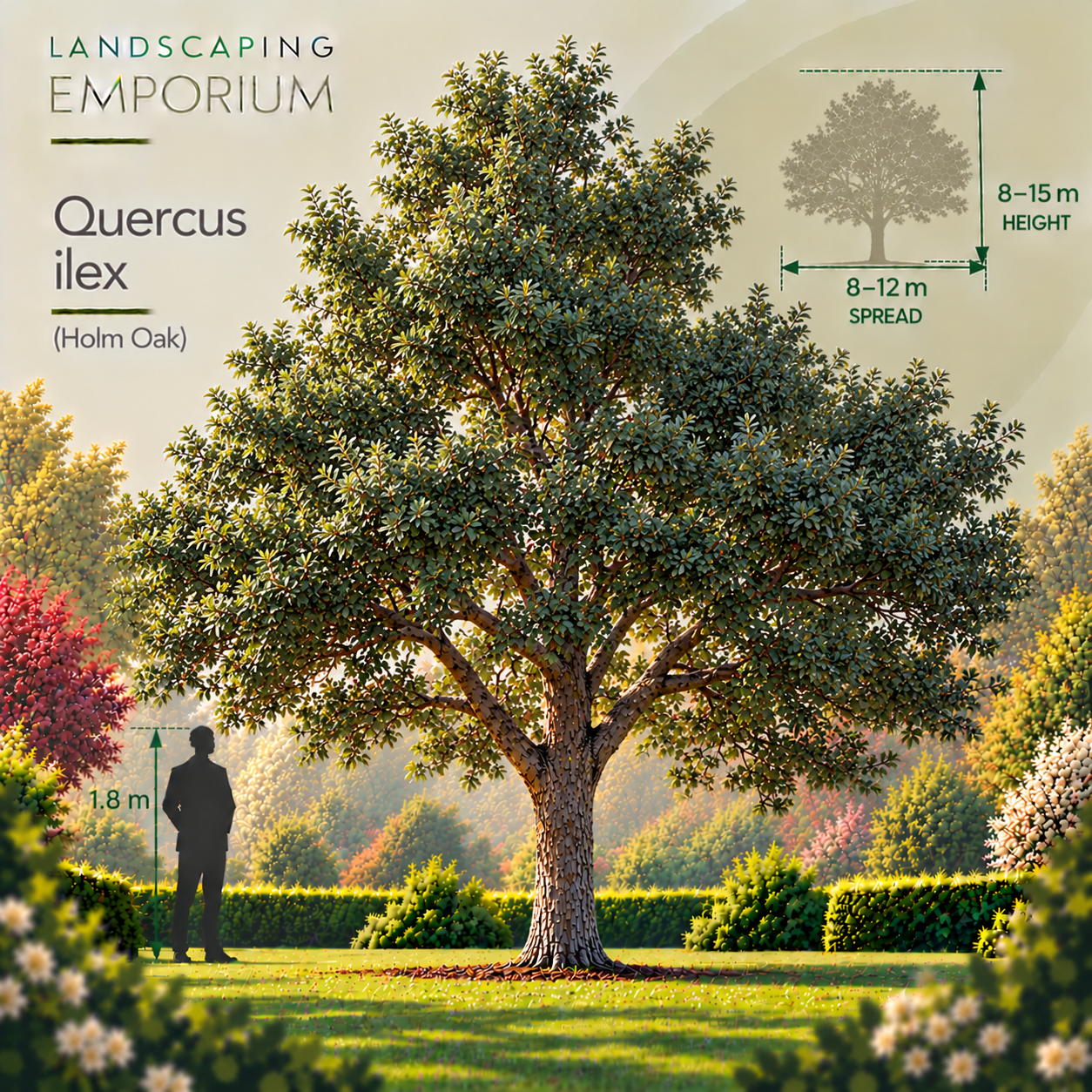
Holm Oak
Quercus ilex
A magnificent
evergreen oak
with dense
foliage and
a substantial
architectural
presence.
Holm Oak
can provide
year-round
structure
and screening
within larger
landscapes.
Allow for
its eventual
broad crown
and substantial
root system.
View Holm Oak →
Distinctive Foliage | Feature Tree
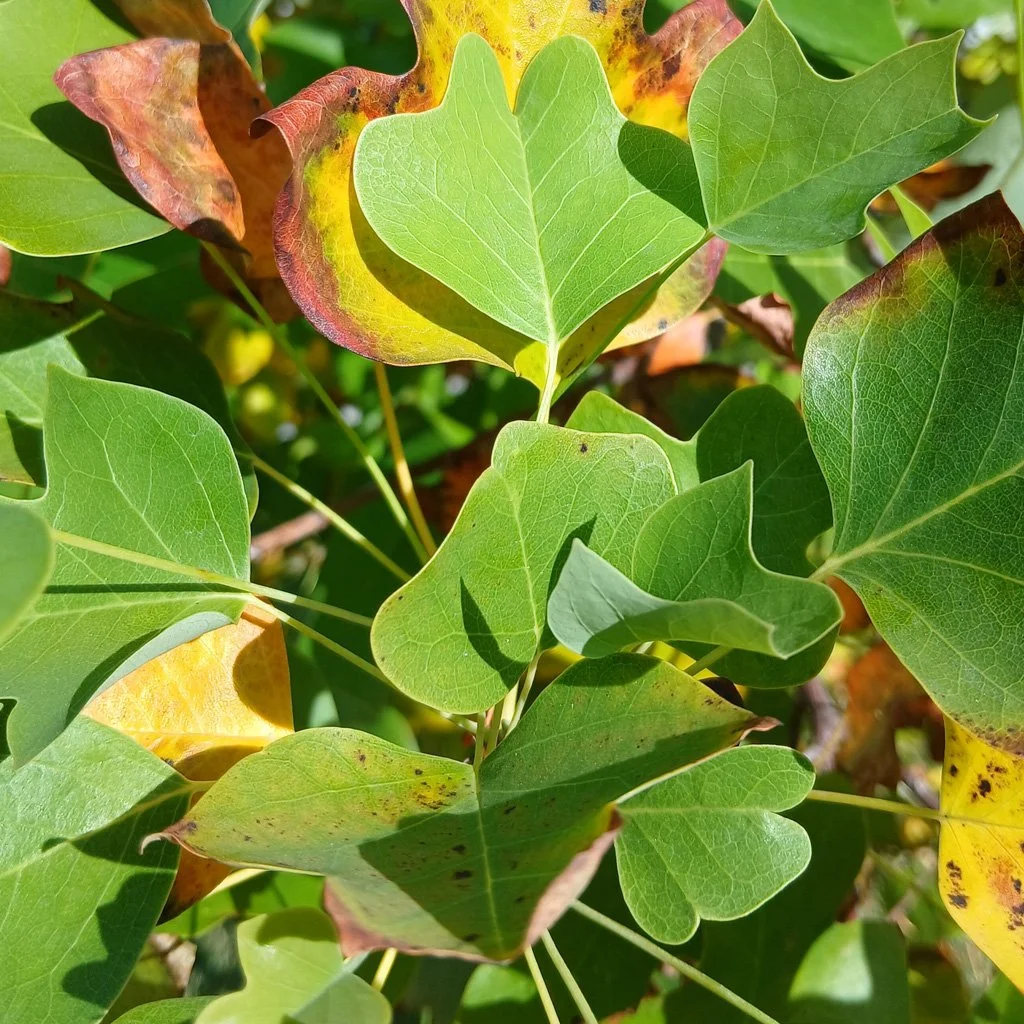
Tulip Tree
Liriodendron tulipifera
A striking
deciduous tree
with distinctive
leaves and
unusual tulip-like
flowers on
sufficiently
mature specimens.
Its tall
stature and
elegant crown
make it
suitable for
substantial
gardens and
estates.
Best planted
where ample
long-term
space is
available.
View Tulip Tree →
Autumn Colour | Ornamental
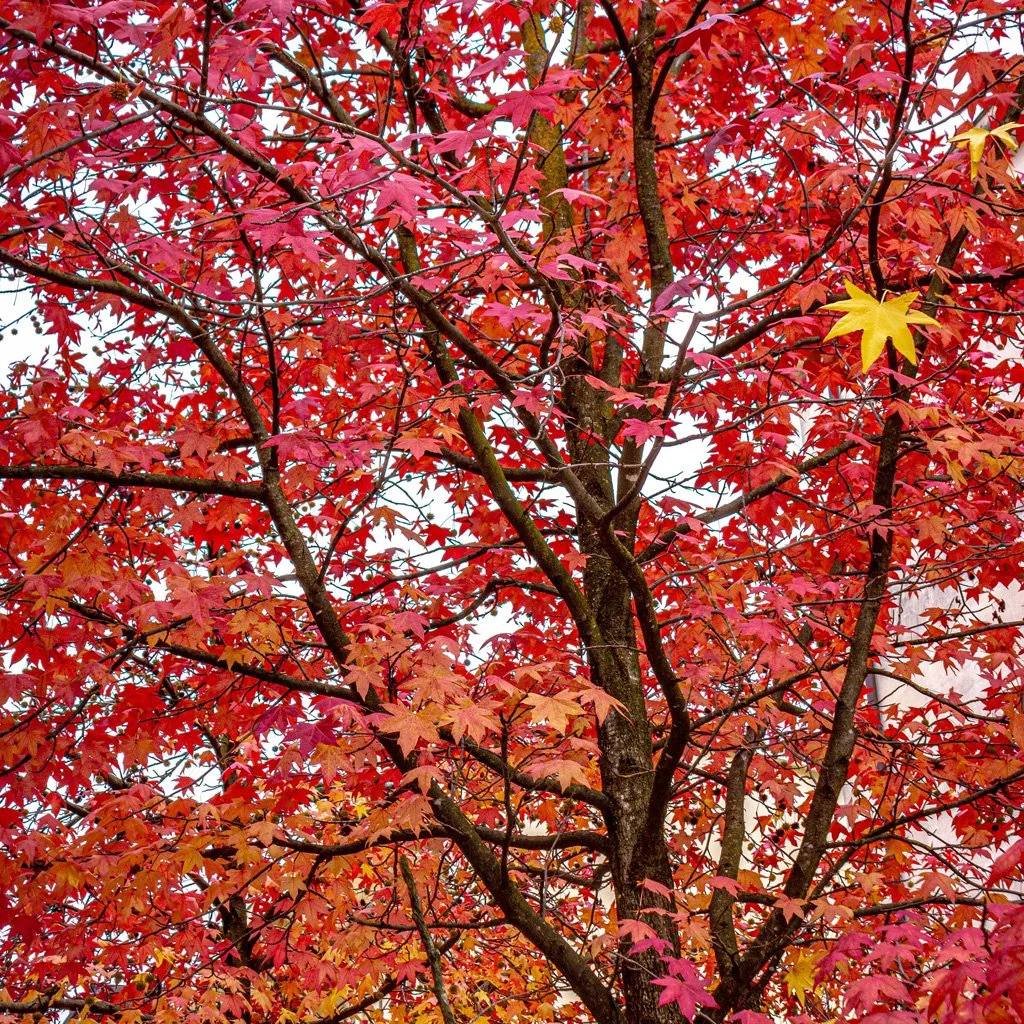
Liquidambar ‘Worplesdon’
Liquidambar styraciflua ‘Worplesdon’
A spectacular
ornamental tree
valued for
brilliant autumn
foliage in
shades of
red, orange
and burgundy.
Large specimens
create strong
focal points
within contemporary
gardens and
landscaped
grounds.
Requires
sufficient
space for
its developing
crown.
View Liquidambar →
Evergreen | Native
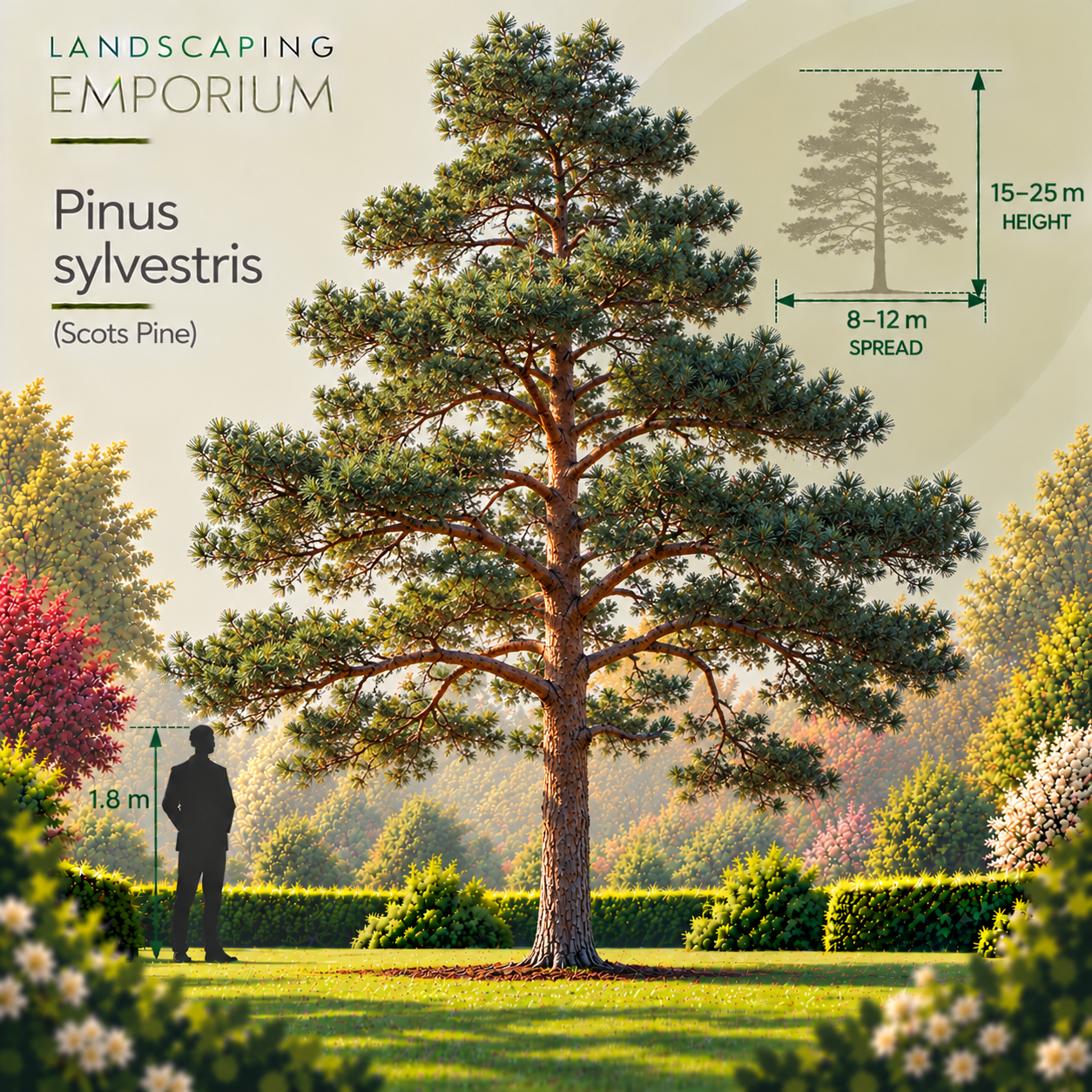
Scots Pine
Pinus sylvestris
A distinctive
British native
conifer with
evergreen foliage
and attractive
orange-red bark
on mature
upper trunks.
Its natural
form provides
architectural
character within
spacious gardens
and landscapes.
Particularly
effective in
naturalistic
planting schemes.
View Scots Pine →
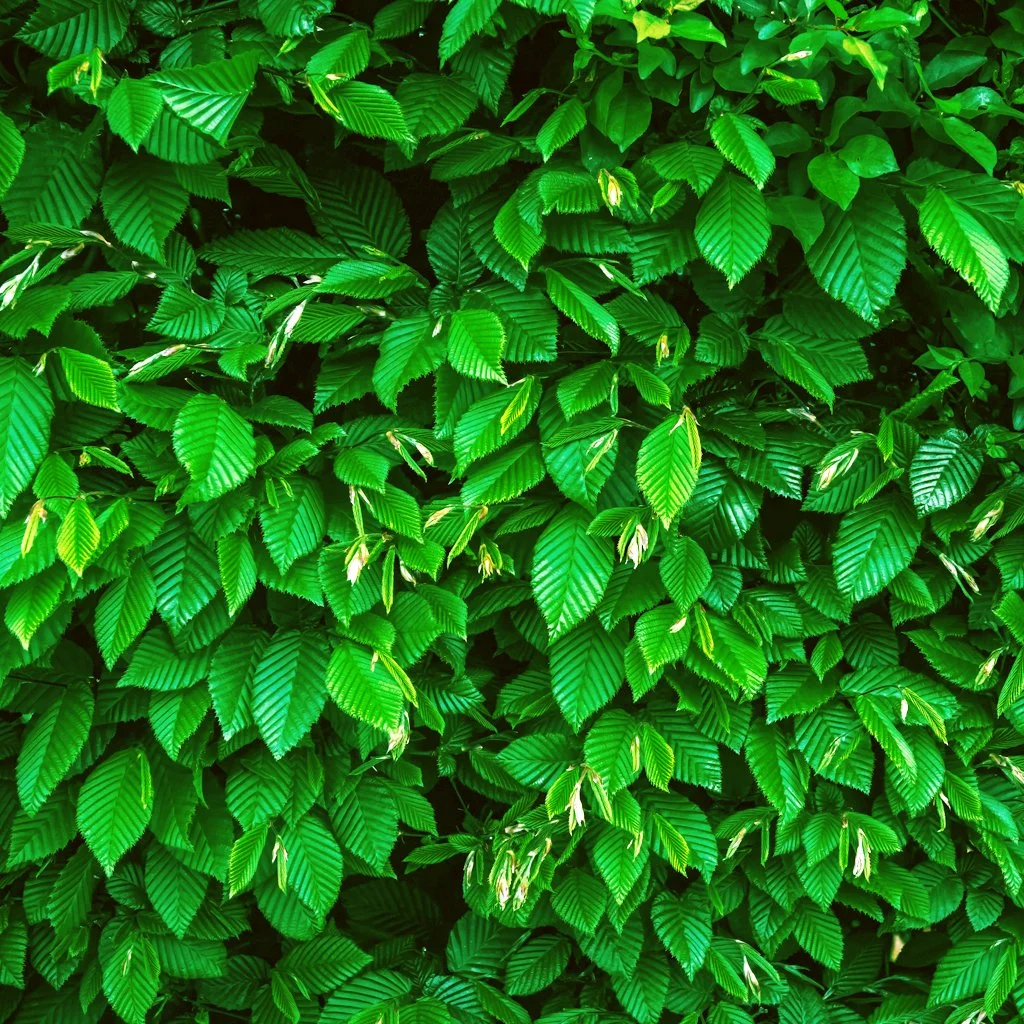
Structure | Deciduous
Hornbeam
Carpinus betulus
A versatile
deciduous tree
with a
strong natural
form and
dense foliage.
Hornbeam
is suitable
for substantial
garden structure,
formal planting
and selected
avenue schemes.
Responds well
to appropriate
formative
pruning and
maintenance.
View Hornbeam →
What Is a Large Specimen Tree?
A large specimen
tree is a
tree selected
for its
substantial
eventual height,
crown spread
and landscape
presence.
Some large-growing
species can
reach 20
metres or
more in
suitable conditions,
while others
develop broad,
substantial crowns.
Important:
A large-growing
tree is
not necessarily
supplied as
a mature
or semi-mature
specimen.
Nursery stock
may be
available in
a range
of sizes,
from young
trees to
substantial
established
specimens.
Compare Large Specimen Trees
| Tree |
Indicative Mature Height |
Foliage |
Main Attraction |
Best Setting |
| English Oak |
20–40m |
Deciduous |
Native landscape character |
Large gardens and estates |
| Holm Oak |
15–25m |
Evergreen |
Year-round structure |
Spacious gardens |
| Tulip Tree |
20–30m |
Deciduous |
Distinctive leaves and flowers |
Large gardens and parkland |
| Liquidambar ‘Worplesdon’ |
15–25m |
Deciduous |
Autumn colour |
Substantial ornamental landscapes |
| Scots Pine |
20–35m |
Evergreen |
Natural form and bark |
Naturalistic landscapes |
| Hornbeam |
15–25m |
Deciduous |
Structure and adaptable form |
Formal and naturalistic planting |
Mature dimensions
are indicative.
Actual height
and spread
depend on
growing conditions,
climate and
time.
Why Choose Large Specimen Trees?
Strong Landscape Structure
Large trees
establish the
scale and
character of
substantial
gardens and
landscapes.
Architectural Presence
Distinctive
crowns, trunks
and branching
structures can
create impressive
garden focal
points.
Shade and Shelter
Developed
canopies can
provide valuable
shade and
contribute to
comfortable
outdoor spaces.
Wildlife and Biodiversity
Suitable large
trees provide
habitat, food
and ecological
value within
the wider
landscape.
Large Specimen Trees for Country Estates
Country estates
and substantial
rural properties
provide opportunities
to establish
impressive trees
that develop
over generations.
English Oak
is particularly
valued for
its native
character and
longevity.
Scots Pine
introduces
architectural
evergreen form,
while Tulip
Tree offers
distinctive
ornamental
foliage.
Tree placement
should consider
important views,
mature canopy
spread, landscape
character and
future management.
Large Specimen Trees for Modern Gardens
Large trees
can provide
striking contrast
against contemporary
architecture,
paving and
garden structures.
Holm Oak
provides dense
evergreen foliage,
while Liquidambar
‘Worplesdon’
creates spectacular
autumn colour.
A single
carefully positioned
specimen can
be more
effective than
several trees
competing for
limited space.
Consider views
from inside
the house
and how
the crown
will develop
over time.
Large Evergreen Specimen Trees
Evergreen trees
retain foliage
throughout the
year and
provide permanent
landscape structure.
Holm Oak
can develop
a substantial
dense crown,
while Scots
Pine offers
a more
open and
distinctive
architectural
form.
Both require
adequate space
for their
eventual size.
Explore our
Evergreen Specimen Trees
guide.
Large Deciduous Specimen Trees
Deciduous trees
provide changing
seasonal interest,
summer canopy
and winter
branching structure.
English Oak,
Tulip Tree,
Hornbeam and
Liquidambar
are all
impressive
large-growing
deciduous
species.
Their autumn
appearance and
crown form
can make
them important
elements within
garden design.
See our
Deciduous Specimen Trees
guide.
Large Trees for Privacy and Screening
Large specimen
trees can
provide substantial
screening where
overlooking occurs
above normal
fence height.
However, screening
depends on
crown density,
clear stem
height, position
and seasonal
leaf retention.
Holm Oak
can provide
evergreen coverage,
while Hornbeam
offers dense
seasonal foliage.
Trees should
be positioned
to address
the actual
viewing angle,
rather than
selected solely
by overall
height.
Read our
Trees for Screening Neighbours
guide.
Large Specimen Trees for Avenue Planting
Large-growing
trees can
create impressive
formal avenues
and estate
approaches.
Hornbeam is
a versatile
choice for
structured
planting schemes.
Species selection
should consider
spacing, future
crown development,
maintenance access
and the
scale of
the landscape.
For formal
avenues, consistency
of nursery
grade and
crown shape
is particularly
important.
Explore our
Trees for Avenue Planting
guide.
Large Trees with Autumn Colour
Large deciduous
trees can
create spectacular
seasonal displays.
Liquidambar
‘Worplesdon’
is particularly
admired for
its red,
orange and
burgundy
autumn foliage.
Tulip Tree
can develop
attractive
yellow autumn
colour, while
Hornbeam often
produces warm
yellow tones.
See our
Trees for Autumn Colour
guide.
Large Specimen Trees for Wildlife
Large trees
can provide
important habitat
and ecological
benefits.
English Oak
is especially
valuable for
supporting
a wide
range of
wildlife.
Native trees
can contribute
to local
biodiversity,
particularly
when combined
with suitable
understorey
planting.
Explore our
Trees for Wildlife
guide.
Large Specimen Trees for Clay Soil
Some large-growing
trees tolerate
heavier soils
better than
others.
Hornbeam can
perform well
in many
clay soils
where drainage
is adequate.
English Oak
is also
adaptable to
a range
of soil
conditions.
However, compacted
clay and
persistent
waterlogging
can restrict
establishment.
Site preparation
and species
selection should
be based
on actual
soil conditions.
Read our
Trees for Clay Soil
guide.
Large Specimen Trees vs Mature Trees
These terms
describe different
characteristics.
Large specimen trees
are selected
because the
species can
develop substantial
eventual dimensions.
Mature specimen trees
are selected
because they
are already
substantial
nursery-grown
specimens when
supplied.
A young
English Oak
is a
large-growing
species, even
if supplied
at a
relatively
small nursery
size.
A mature
ornamental
tree may
have significant
immediate impact
without becoming
exceptionally
tall.
Compare our
Mature Specimen Trees
and
Semi-Mature Specimen Trees
guides.
How Much Space Do Large Specimen Trees Need?
Large trees
require sufficient
space for
their crowns,
roots and
long-term
development.
Before planting,
consider the
eventual height
and spread,
nearby buildings,
underground services,
access routes
and neighbouring
properties.
Planting distances
should be
assessed for
the individual
species and
site rather
than relying
on a
universal
distance rule.
Professional advice
is particularly
important where
large trees
are proposed
near buildings
or infrastructure.
Choosing the Right Nursery Size
Large-growing
tree species
can often
be purchased
in different
nursery sizes.
Smaller stock
is generally
easier to
transport and
establish, while
larger nursery
specimens provide
greater immediate
landscape impact.
Compare trunk
girth, height,
crown spread,
clear stem
height and
rootball
specification.
The correct
size depends
on budget,
site access,
planting conditions
and the
required
visual effect.
Planting Large Specimen Trees
-
Assess the site.
Check soil,
drainage, exposure
and long-term
growing space.
-
Choose the correct species.
Consider mature
height, crown
spread and
root requirements.
-
Confirm nursery specifications.
Check tree
height, girth,
crown dimensions
and rootball size.
-
Plan delivery and access.
Larger specimens
may require
specialist vehicles
or lifting
equipment.
-
Prepare the planting area.
Address compaction
and drainage
problems before
planting.
-
Plant at the correct depth.
Keep the
root flare
at the
appropriate
finished soil
level.
-
Provide suitable support.
Use staking
or anchoring
appropriate
to tree
size and
site conditions.
-
Water during establishment.
Monitor rootball
moisture and
adjust watering
to conditions.
-
Maintain and monitor.
Inspect stability,
health and
establishment
over successive
seasons.
Read our
Planting Guide
for further advice.
Professional Large Tree Supply and Planting
Landscaping Emporium
supplies selected
specimen trees
for substantial
gardens, country
properties and
landscaping projects.
Through Kirman Design,
professional planting
may be available
across selected
areas of Lancashire,
the Ribble Valley,
Greater Manchester,
Cheshire, Merseyside
and Cumbria.
Our usual
installation postcode
areas include:
BB, BL, CH1–CH5,
CW8, CW9, FY, L,
LA1–LA6, M, OL,
PR, SK1–SK12,
WA and WN.
Availability depends
on tree size,
site access,
ground conditions
and project
requirements.
Telephone:
01942 604976
Email:
hello@landscapingemporium.co.uk
Frequently Asked Questions About Large Specimen Trees
What is a large specimen tree?
A large
specimen tree
is generally
selected for
its substantial
eventual height,
crown spread
and landscape
presence.
Which trees grow largest in the UK?
English Oak,
Tulip Tree
and Scots
Pine can
become substantial
trees in
suitable
conditions.
Are there large evergreen specimen trees?
Yes. Holm
Oak and
Scots Pine
are examples
of large-growing
evergreen species.
Which large trees are best for country estates?
English Oak,
Scots Pine,
Tulip Tree
and other
substantial
species can
be suitable
depending on
the landscape
design.
Can large specimen trees provide privacy?
Yes, where
their crown
density, position
and height
provide suitable
screening.
Which large trees have autumn colour?
Liquidambar
‘Worplesdon’
is particularly
admired for
its colourful
autumn foliage.
Can large trees be planted near houses?
Planting distances
depend on
species, soil,
building conditions
and eventual
tree dimensions.
Professional advice
is recommended.
How quickly do large specimen trees grow?
Growth rates
vary considerably
between species
and depend
on soil,
weather and
establishment.
Can large-growing trees be purchased as mature specimens?
Some species
are available
as larger
nursery-grown
specimens,
subject to
stock availability.
Do large trees need specialist planting?
Larger nursery
specimens may
require mechanical
lifting, specialist
delivery and
professional
planting.
When is the best time to plant large trees?
Planting periods
depend on
species, stock
type, weather
and site
conditions.
Can Landscaping Emporium supply and plant large specimen trees?
We can
discuss suitable
species, nursery
availability,
delivery and
professional planting
for appropriate
projects across
our North
West England
service area.
Find the Right Large Specimen Tree for Your Landscape
Whether you
are creating
a country
estate landscape,
introducing an
architectural
garden feature
or establishing
substantial tree
planting, the
correct species
and planting
location are
essential.
Browse our
specimen trees
or contact
Landscaping Emporium
to discuss
species selection,
nursery sizes,
delivery and
professional planting.